• Win a Free Custom Engraved Brass Coin!!!
    As a way to introduce our brass coins to the community, we will raffle off a free coin during the month of August. Follow link ABOVE for instructions for entering.
  • SUBSCRIBE TO SHIPS IN SCALE TODAY!

    The beloved Ships in Scale Magazine is back and charting a new course for 2026!
    Discover new skills, new techniques, and new inspirations in every issue.

    NOTE THAT OUR NEXT ISSUE WILL BE MARCH/APRIL 2026

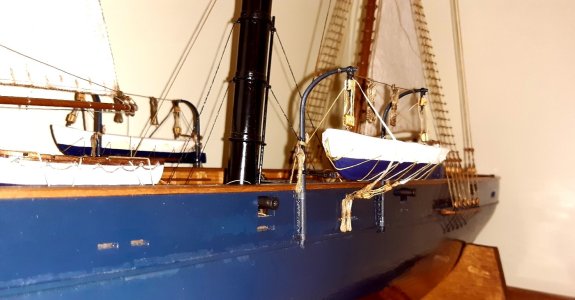
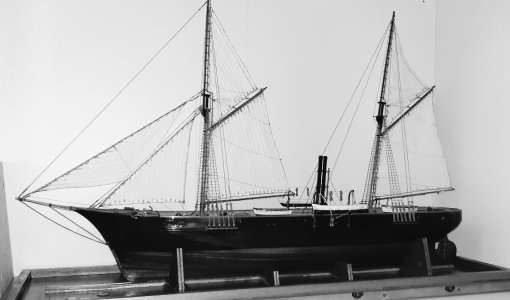
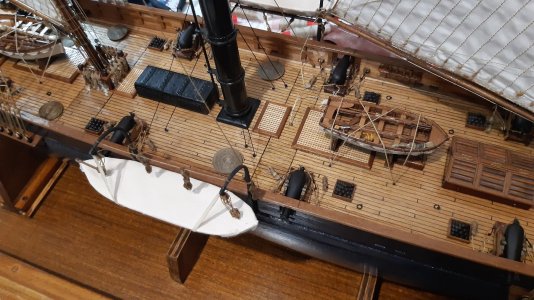
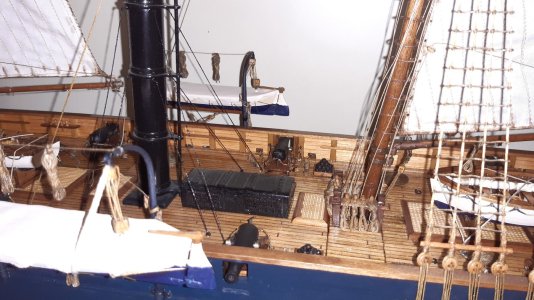
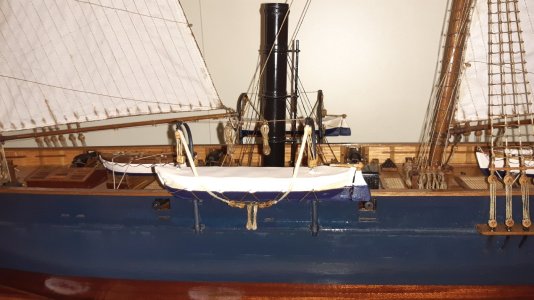
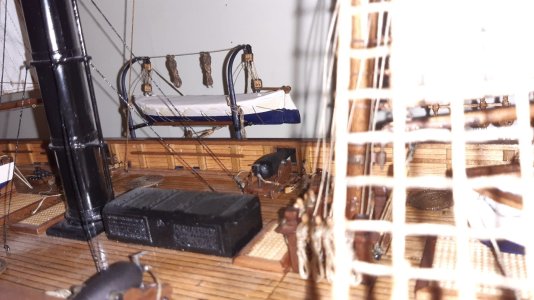
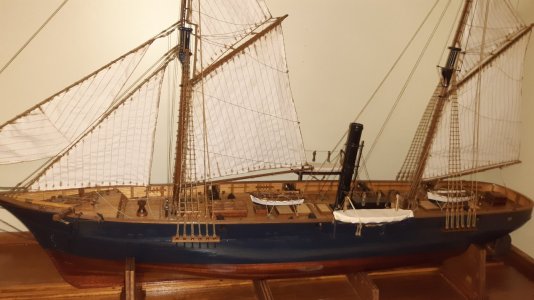
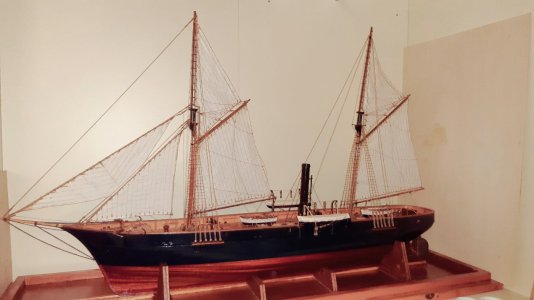
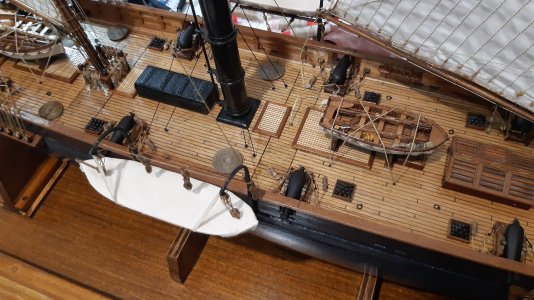
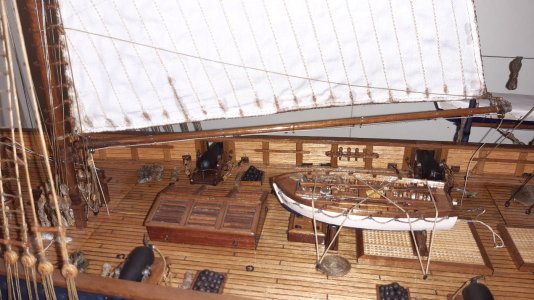
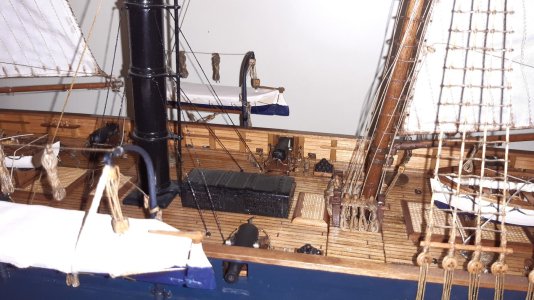
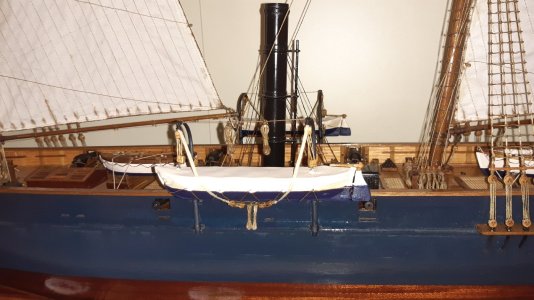
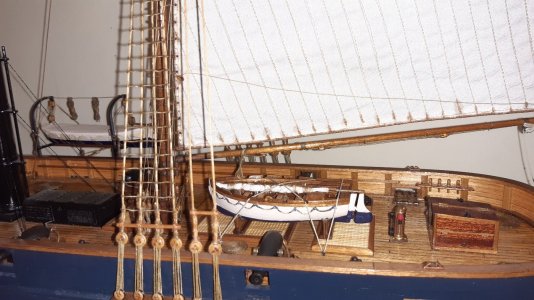
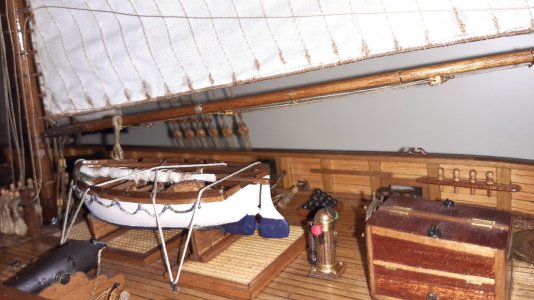
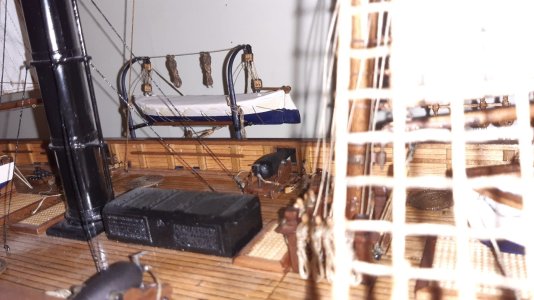
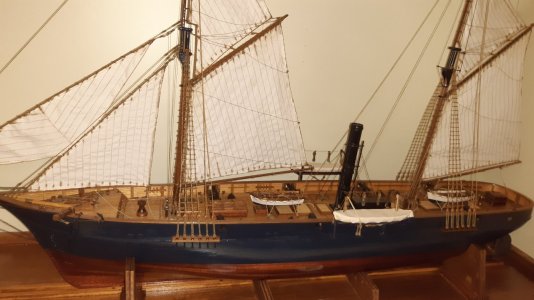
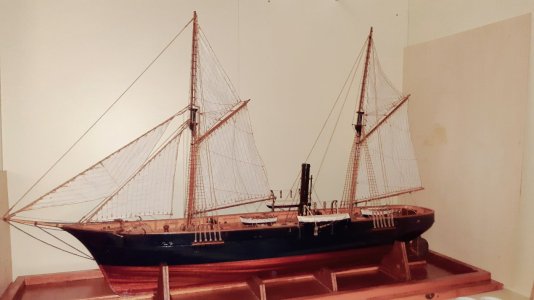
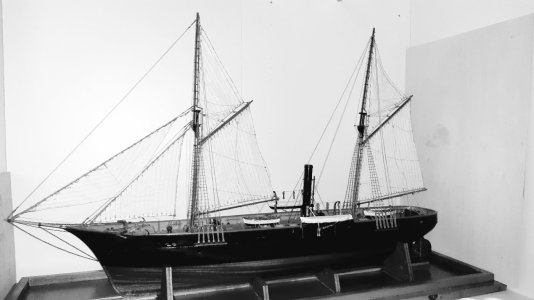
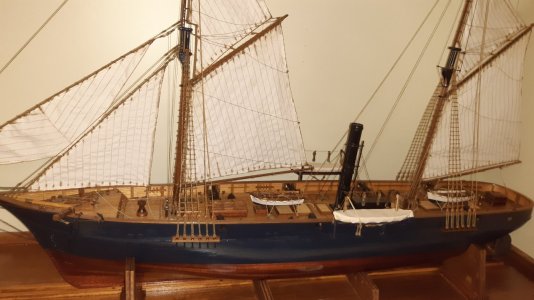
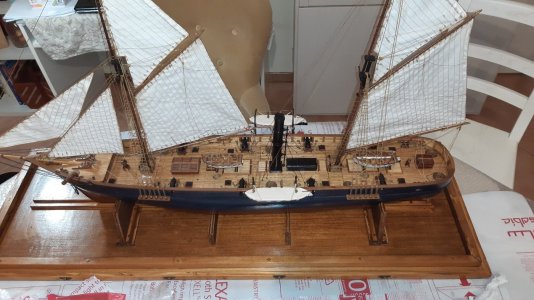
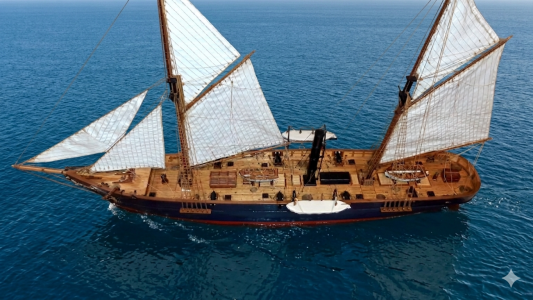
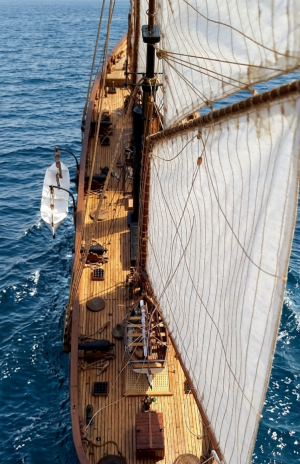
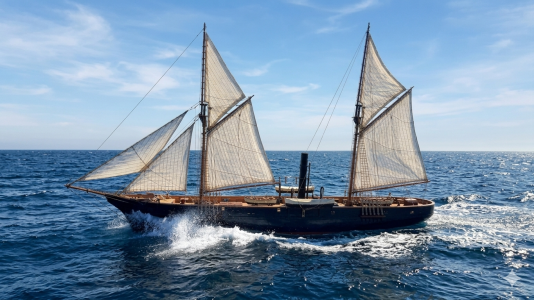
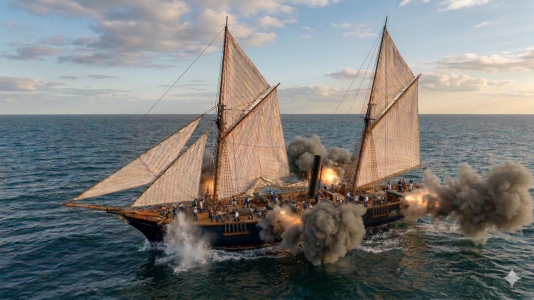
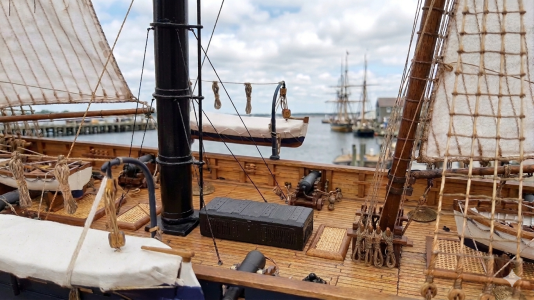
1/60 scale RC model of a schooner, loosely based on a gunboat steamship from the second half of the 19th century.

Grazie mille Johan, sempre troppo buono. Spero che tu sia indulgente anche con i video, ma eventuali critiche sono più che giustificate, non ti preoccupare.

Thanks so much, Johan, always so kind.
I hope you're being lenient with the videos, too, but any criticism is more than justified, don't worry.
Saw your YT videos as well and, no, they don't disappoint.
Building a static scale model is an art in itself, but designing and building a sailing scale model is something else; buoyancy, weight, CoG, etc, etc.
Project mission accomplished, cum laude.
 
You have courage and a lot of confidence, Alessandro. To build a model with so many details and then let it sail away. The videos showed that she is in her element on the water. Congratulations with this result.
Regards, Peter
Ciao Peter, grazie per le tue bellissime parole.

In effetti confido molto sulla buona chiusura dei coperchi del ponte perché non ho reso inaffondabile la nave.
Sarebbe stato meglio renderla inaffondabile (perché in caso di ingresso di acqua nella stiva si possono danneggiare le parti elettroniche ma non perdiamo il modello) ma stavolta c'erano obiettivamente molte difficoltà.


Hi Peter, thanks for your kind words.

I'm actually very confident that the deck lids are properly closed, because I didn't make the ship unsinkable.
It would have been better to make it unsinkable (because if water were to enter the hold, the electronics could be damaged, but we wouldn't lose the model), but this time there were objectively many difficulties.
 
Saw your YT videos as well and, no, they don't disappoint.
Building a static scale model is an art in itself, but designing and building a sailing scale model is something else; buoyancy, weight, CoG, etc, etc.
Project mission accomplished, cum laude.
Grazie mille Johan, un complimento che vale molto per me.
Sappiamo entrambi quante sono le pecche e gli errori che non sono riuscito a modificare su questo modello (molte le hai scoperte tu stesso).
Ciononostante qualche aspetto positivo che mi da soddisfazione c'è stato perciò apprezzo molto il tuo commento.

Thank you so much, Johan, that's a huge compliment for me.
We both know how many flaws and errors I haven't been able to fix on this model (many of which you discovered yourself).
Nevertheless, there were some positive aspects that gave me satisfaction, so I really appreciate your comment.
 
Buonasera a tutti gli appassionati di modellismo navale.

Ecco alcuni aggiornamenti passati.

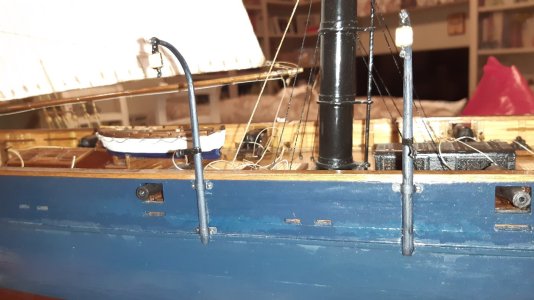
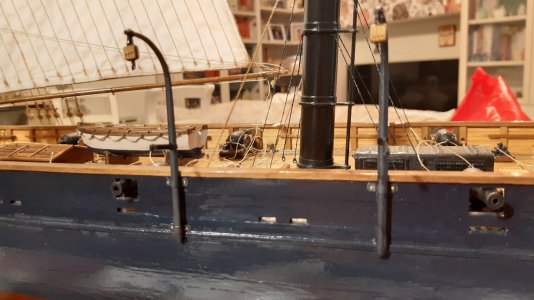
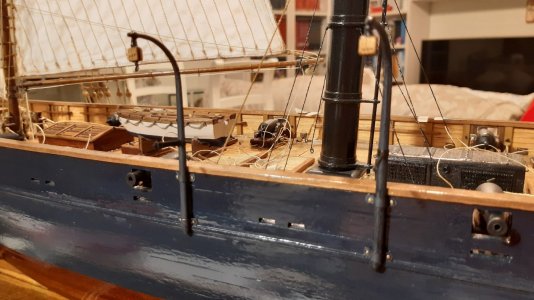
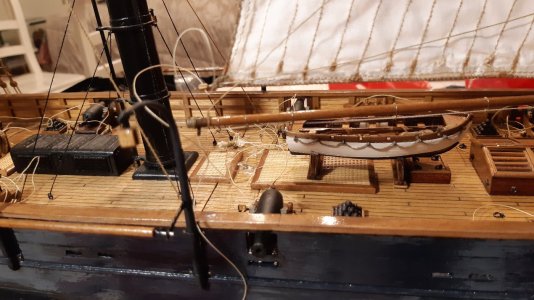
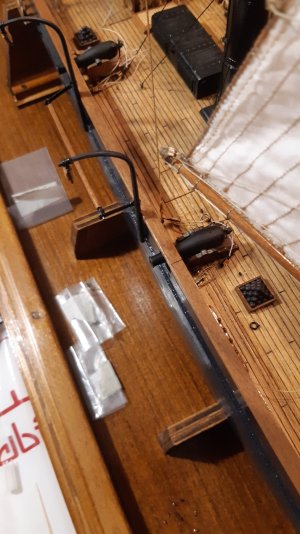
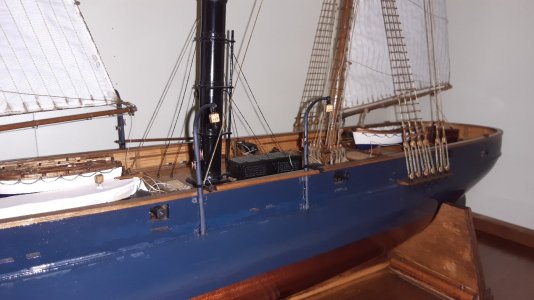
L'obiettivo era costruire le gru laterali per le due scialuppe di salvataggio (già pronte) da posizionare all'esterno delle fiancate.
Non avendo un progetto predefinito da seguire, ho dovuto decidere la forma, le dimensioni e il materiale da utilizzare per le gru.

L'unica cosa che avevo previsto nel progetto iniziale (che, tuttavia, non affrontava tutti i dettagli fin dall'inizio) era la loro posizione.

Innanzitutto, ho deciso approssimativamente la forma osservando decine di immagini e disegni, scegliendo quelli più vicini al periodo storico in questione.

Ho optato per una gru curva con sezione trasversale circolare/ellittica.

Poi ho dovuto fare delle ricerche sulle misure.

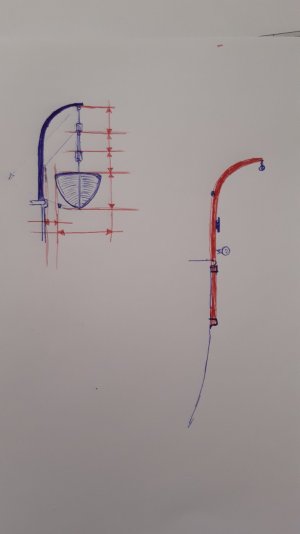
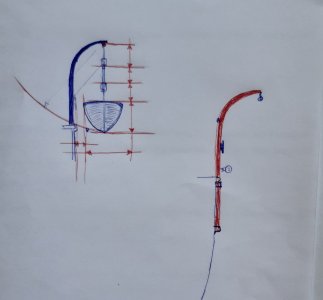
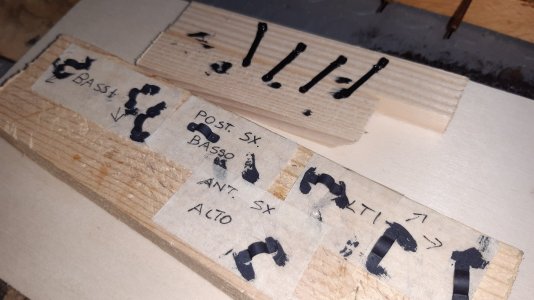
Come potete vedere negli schizzi a mano, ho misurato le distanze necessarie basandomi sulla nave principale e sulle dimensioni delle scialuppe di salvataggio (ad esempio: altezza totale delle gru, massima sporgenza del braccio curvo, distanza dal lato). Per l'altezza massima, oltre a considerare un aspetto armonioso, ho dovuto tenere conto delle dimensioni complessive dei paranchi.

Per quanto riguarda lo spessore della gru, ho fatto delle ricerche e alla fine ho trovato i diametri minimo e massimo per i tubi dritti e curvi.

Per quanto riguarda il materiale, ho escluso definitivamente il legno a causa dell'impossibilità di realizzare la parte curva e della sua fragilità.
Metalli e plastiche rimanevano da valutare:

Metalli o leghe:
Non mi piace il ferro perché ho sempre paura che arrugginisca.
L'acciaio armonico torna alla sua forma originale e sarebbe stato molto difficile per me dargli una forma curva e mantenerla per sempre (a meno che non avessi usato un tirante, come un arco).
L'ottone non arrugginisce; può essere saldato, ma può piegarsi (soprattutto una barra così sottile). È facile che la gru subisca urti accidentali, e finirei per avere gru in ottone sempre piegate o deformate.
La stagnatura esterna o altri trattamenti termici avrebbero potuto rendere il tubo di ottone rigido e indeformabile.

Tuttavia, non avrei potuto rastremarlo. Non ho gli strumenti adatti.

Materiali plastici:
Anni fa, ho provato a stampare gru basate su miei progetti.
Resistevano a un impatto leggero e tornavano alla loro forma originale, ma con un impatto più forte si rompevano facilmente. Ho scoperto che i materiali plastici utilizzati dalle stampanti 3D non sono adatti a questo scopo, mancando di resilienza (per spessori così sottili).

Alla fine, ho optato per una soluzione che avevo già sperimentato in passato.
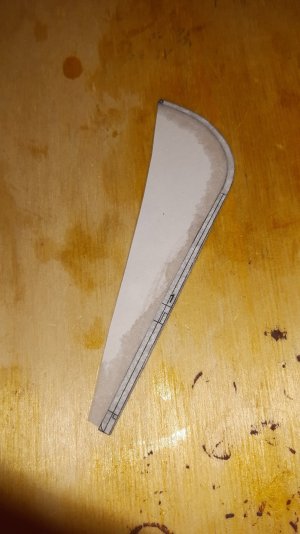
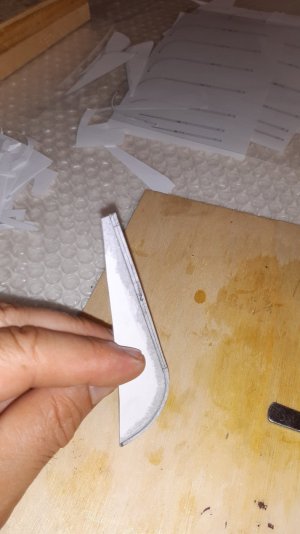
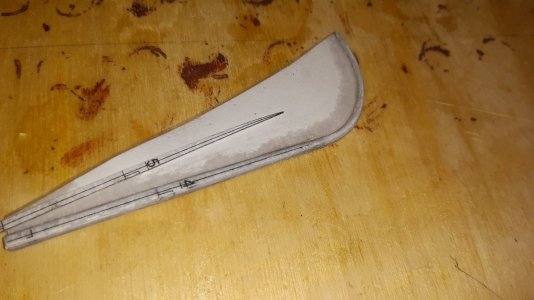
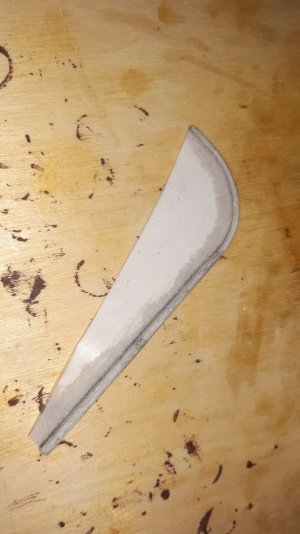
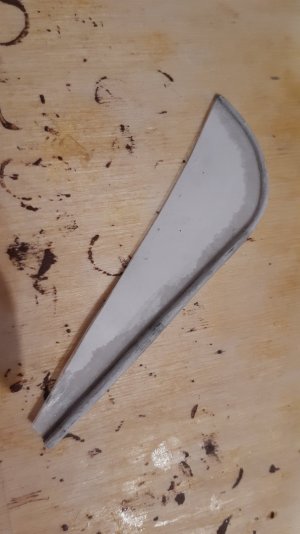
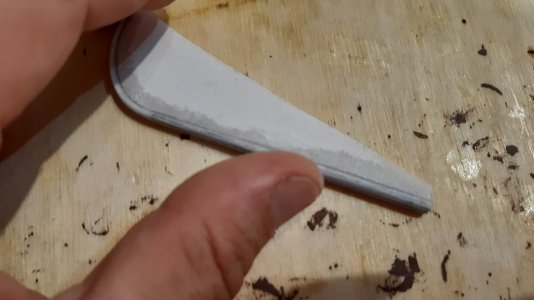
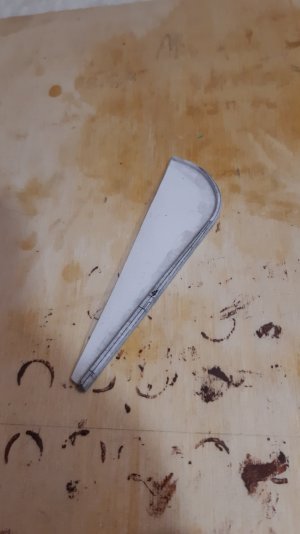
In breve, ho creato un multistrato di fogli di plastica molto sottili, incollati e sovrapposti.

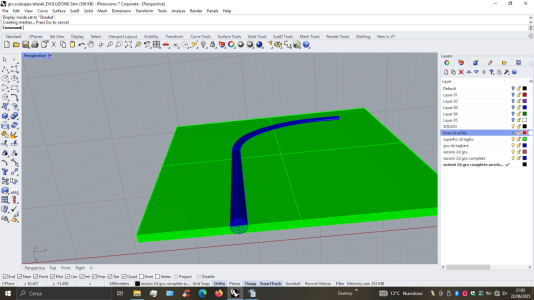
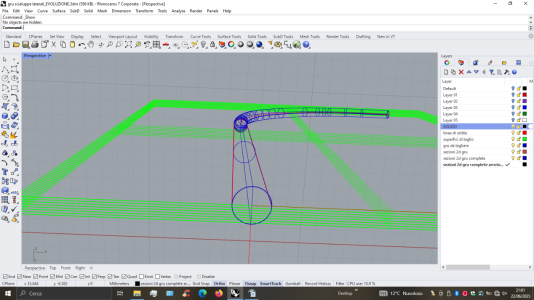
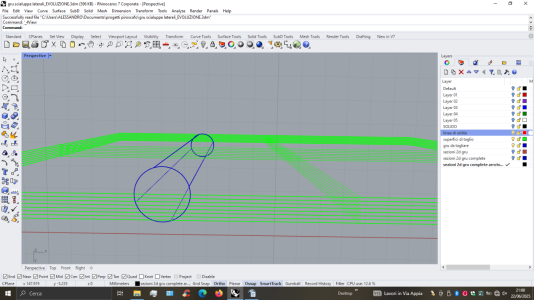
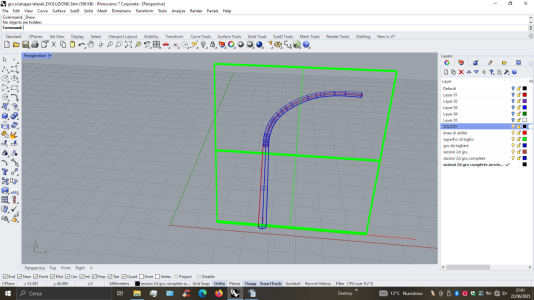
Come potete vedere dagli screenshot, dopo diversi tentativi, ho trovato la forma che sembrava più adatta (intendo, adatta in termini di dimensioni e curvatura complessiva).

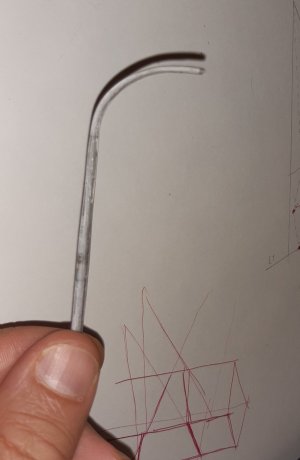
Il tubo è dritto e non rastremato alla base (la parte attaccata al lato), poi curvo e rastremato, con il diametro minimo all'estremità.

In sostanza, la prima parte è un cilindro dritto, la seconda un tronco di cono curvo. La curvatura non è un semplice arco di circonferenza.
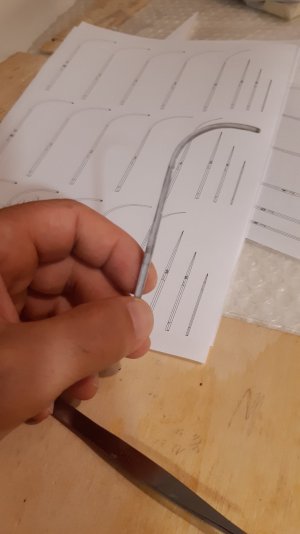
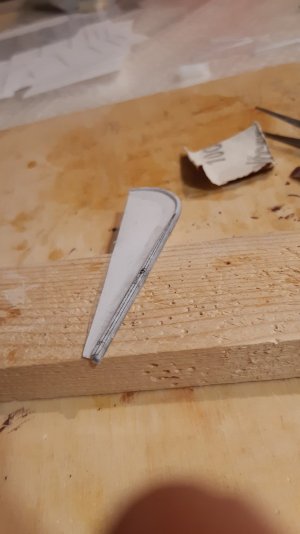
Una volta individuato il solido, questo è stato "sezionato" con diverse superfici parallele ed equidistanti.
L'intersezione del solido con le superfici di taglio ha generato vari profili.
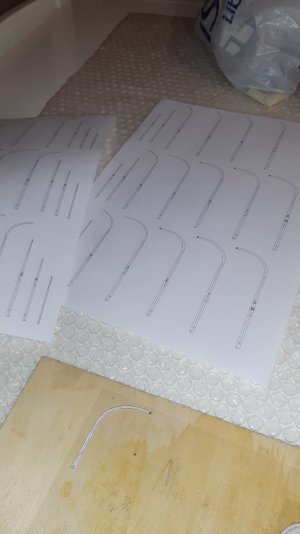
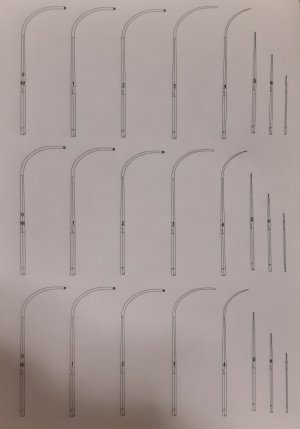
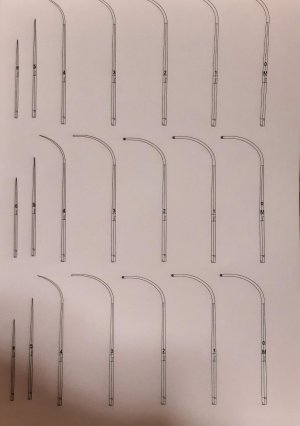
I profili sono stati trasferiti in un PDF e stampati.

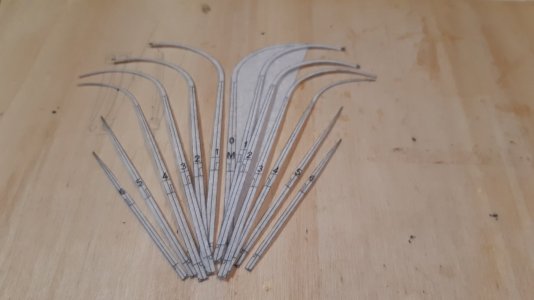
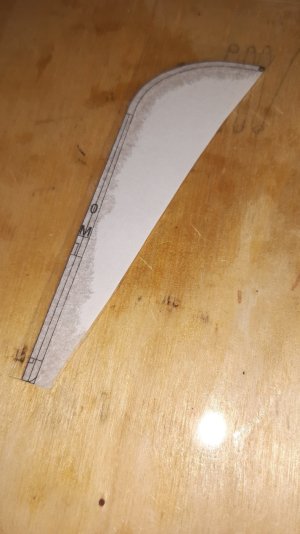
Quindi ritagliati e incollati su fogli di plastica trasparente.

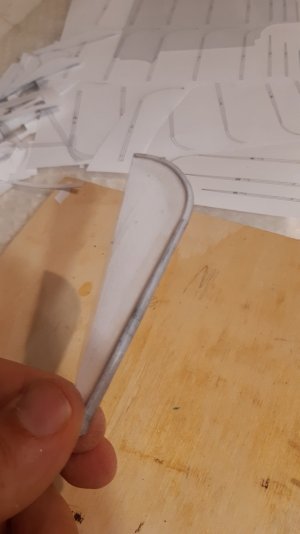
I vari profili, uniti con cianoacrilato, hanno ricreato la forma del solido iniziale (con una buona levigatura si ottiene una sezione trasversale circolare/ellittica).
Per fare un paragone con il mondo dell'elettronica e delle telecomunicazioni, è come se un segnale analogico (il tubo curvo) fosse stato campionato e poi ricostruito a partire dai campioni.

Ripeto: non ho fatto stampare direttamente il solido che ho progettato perché sarebbe troppo fragile e totalmente inadatto allo scopo.


Il difetto della struttura è la carta. Non posso evitare di incollarla perché sarebbe impossibile ritagliare il profilo senza il disegno guida. Ogni profilo differisce dagli altri di decimi di millimetro.

Ci sono dettagli pratici di costruzione che non ho voluto approfondire perché sono molto difficili da spiegare. Senza alcune precauzioni, però, il lavoro non riuscirà.


Good evening, all ship modelers.

Here are some updates

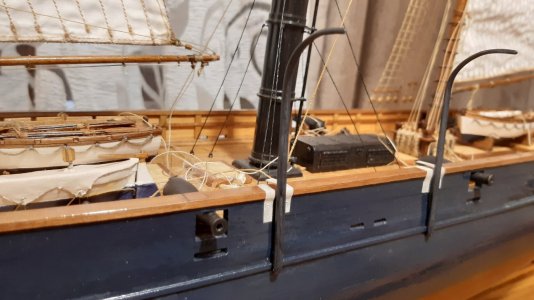
The goal was to build the lateral davits for the two lifeboats (already ready) to be positioned on the outside of the sides.
Since I don't have a pre-made plan to follow, I had to decide on the shape, size, and material to use for the davits.
The only thing I had foreseen in the initial design (which, however, didn't address all the details from the outset) was their position.

First, I roughly decided on the shape by looking at dozens of images and drawings, choosing those closest to the historical period in question.
I opted for a curved davit with a circular/elliptical cross-section.

Then I had to research the measurements.
As you can see in the hand sketches, I measured the distances needed based on the main ship and the dimensions of the lifeboats (for example: total height of the davits, maximum projection of the curved arm, distance from the side). For the maximum height, in addition to considering a harmonious appearance, I had to consider the overall dimensions of the hoists.

Regarding the thickness of the crane, I did some research and finally found the maximum and minimum diameters for the straight and curved tubes.

Regarding the material, I definitely ruled out wood due to the impossibility of making the curved part and its fragility.
Metals and plastics remained to be considered:

Metals or alloys:
I don't like iron because I'm always afraid it will rust.
Spring steel springs back into place, and it would have been very difficult for me to give it a curved shape and keep it there forever (unless I used a tie rod, like a bow).
Brass doesn't rust; it can be soldered, but it can bend (especially such a thin rod). It's easy for the crane to sustain accidental impacts, and I'd end up with brass cranes that were always bent or deformed.
External tinning or other heat treatment could have made the brass tube stiff and non-deformable.
However, I couldn't have tapered it. I don't have the right tools.

Plastics:
Years ago, I tried printing cranes from my own designs.
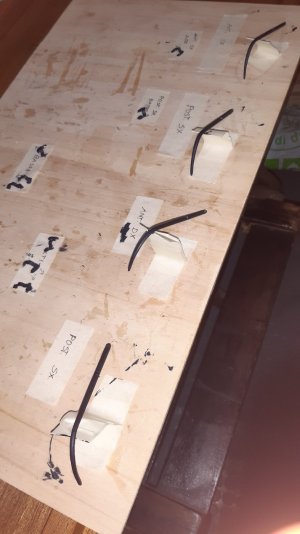
They resisted a light impact and returned to their original shape, but with a stronger impact, they broke easily. I found that the plastic materials used by 3D printers are unsuitable for this purpose, lacking the resilience (for such thin thicknesses).

In the end, I opted for a solution I'd already experimented with in the past.
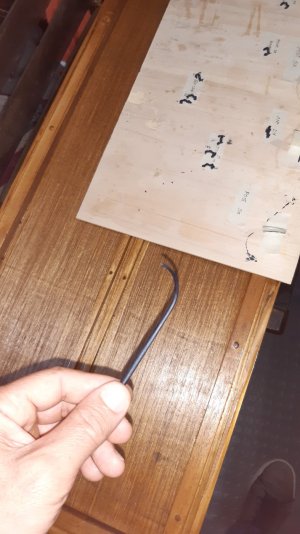
In short, I create a multilayer of very thin plastic sheets, glued and overlapped.

As you can see from the screenshots, after several attempts, I found the shape that seemed most suitable (I mean, suitable in terms of size and composite curvature).
The tube is straight and untapered at the base (the part attached to the side), then curved and tapered, with its smallest diameter at the tip.
Essentially, the first part is a straight cylinder, the second is a curved truncated cone. The curvature is not a simple arc of circumference.
Once the solid was found, it was "sliced" with several parallel and equidistant surfaces.
The intersection of the solid and the cut surfaces generated various profiles.
The profiles were transferred to a PDF and printed.
Then cut out and glued onto sheets of transparent plastic.
The various profiles, joined with cyanoacrylate, recreated the shape of the initial solid (with good sanding, a circular/elliptical cross-section is obtained).
To draw a parallel with the world of electronics and telecommunications, it's as if an analog signal (the curved tube) were sampled and then reconstructed from the samples.
I repeat: I don't have the solid I designed printed directly because it would be too fragile and totally unsuitable for the purpose.


The flaw in the structure is the paper. I can't avoid gluing it because it would be impossible to cut out the profile without the guide drawing. Each profile differs from the others by tenths of a millimeter.

There are practical construction details that I didn't want to delve into because they're very difficult to explain. Without certain precautions, however, the work will not succeed.


20250519_113256.jpg

20250519_124557.jpg

2n.png

3n.png

4n.png

5n.png

20250621_191839.jpg

20250717_230801.jpg

20250717_230838.jpg

20250803_182334.jpg

20250621_191824.jpg

20250622_002646.jpg

20250622_003750.jpg

20250622_020006.jpg

20250622_122742.jpg

20250622_122754.jpg

20250622_122812.jpg

20250622_123853.jpg

20250622_191445.jpg

20250622_193004.jpg

20250622_203832.jpg

20250717_231314.jpg

20250914_160630.jpg

20250914_160644.jpg

20250914_163856.jpg
 
Last edited:
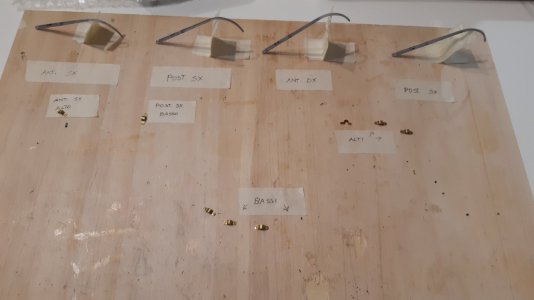
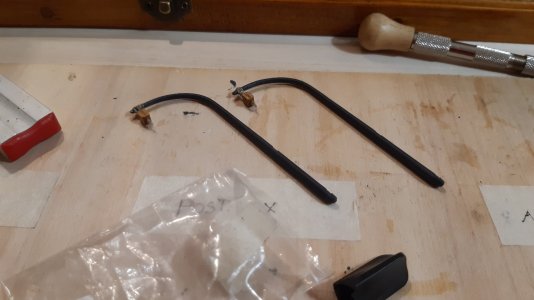
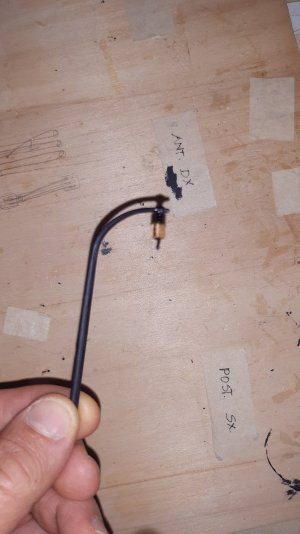
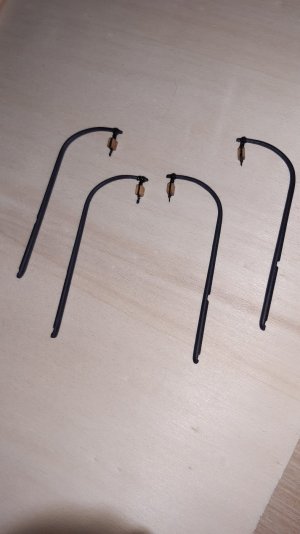
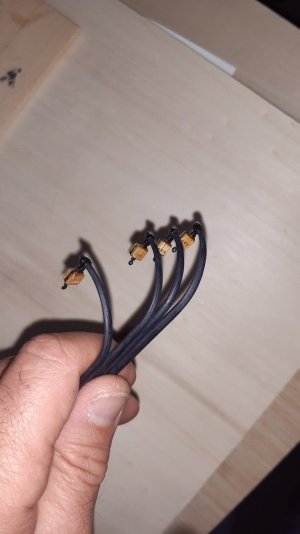
Sono particolarmente soddisfatto perché, dopo la verniciatura, non si nota né alla vista né al tatto che ciascuna delle quattro gru non è un pezzo unico, ma la composizione di molte parti unite tra loro.
Sono anche contento (tecnicamente, è uno degli aspetti migliori di questo modello, sebbene il meno evidente) di aver creato una struttura molto robusta e flessibile, nonostante le dimensioni ridotte e il peso contenuto.
Come ho detto, avrei risparmiato molto tempo se avessi stampato in 3D il pezzo, ma di certo non sarebbe stato altrettanto resistente.
Come potete vedere nelle foto, ho realizzato le piastre in ottone.
I'm particularly pleased because, after painting, you can't tell either by sight or touch that each of the four cranes isn't a single piece but is the composition of many parts joined together.
I'm also pleased (technically, it's one of the best things about this model, although the least noticeable) with having created a very strong, flexible structure, despite being so small and so light.
As I said, I would have saved a lot of time if I had 3D-printed the part, but it certainly wouldn't have been as resilient.
As you can see in the photos, I created the brass plates.


20250914_163856.jpg

20250914_171400.jpg

20250915_201853.jpg

20250915_201939.jpg

20250920_185840.jpg

20250921_123846.jpg

20250921_123846.jpg

20250921_123849.jpg

20251004_181015.jpg

20251004_184252.jpg

20251004_212835.jpg

20251007_210956.jpg

20251007_211108.jpg

20251007_211219.jpg

20251007_211320.jpg

20251012_161044.jpg

20251012_161051.jpg

20251012_162441.jpg

20251012_174308.jpg

20251012_174316.jpg
 
Last edited:
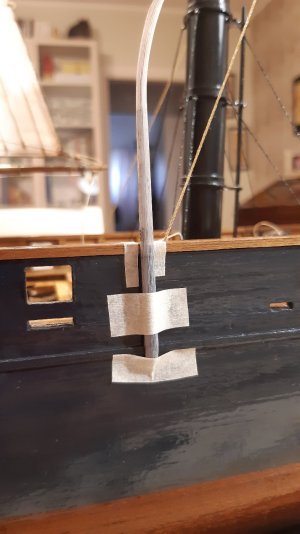
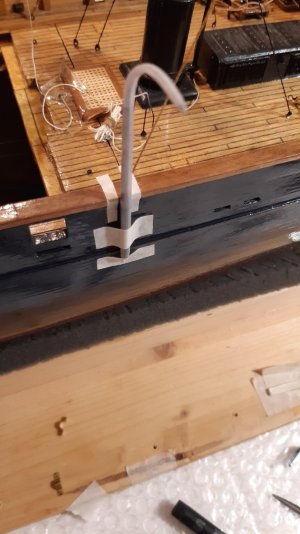
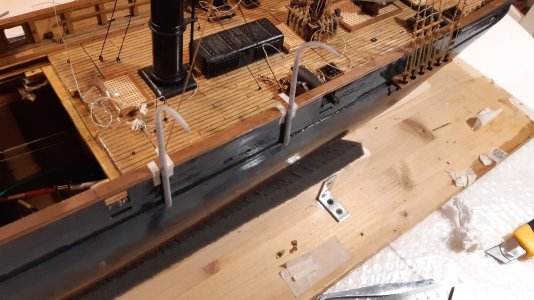
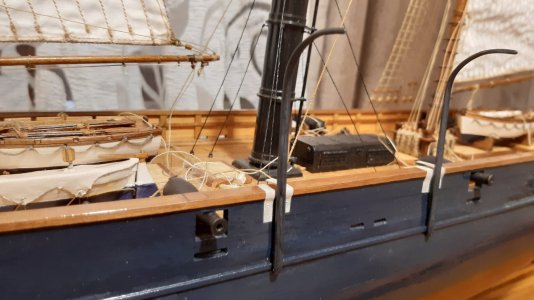
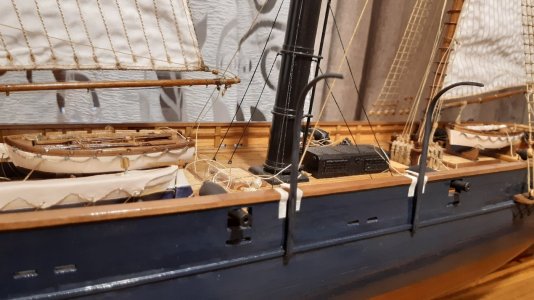
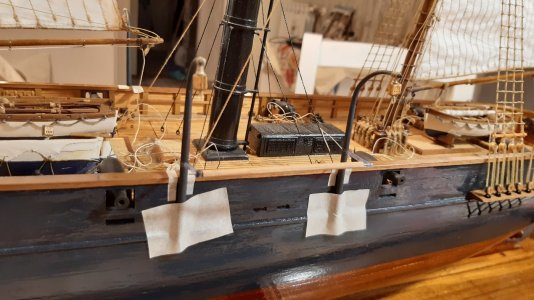
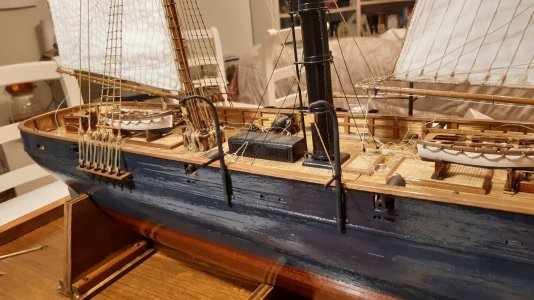
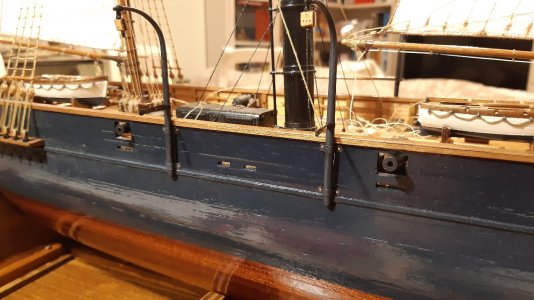
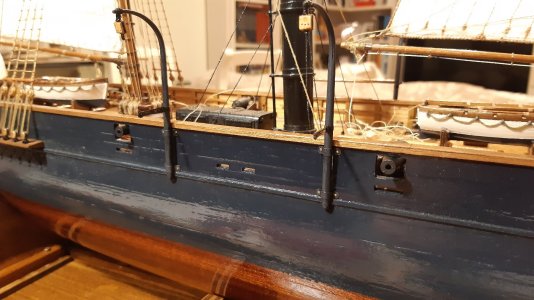
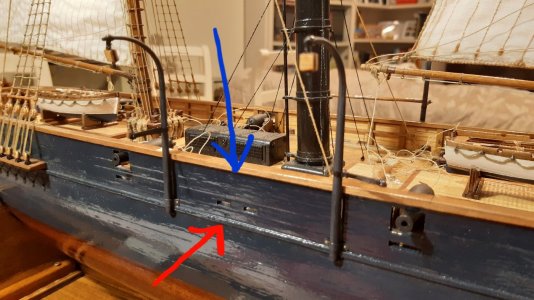
Solo dopo aver incollato le gruette ai lati della nave... ORRORE!

Un errore madornale!

Mi sono reso conto troppo tardi che le due gruette a prua impedivano (seppur di poco) l'apertura del boma durante la navigazione con vento in poppa.
Non potevo certo lasciare la situazione così com'era.
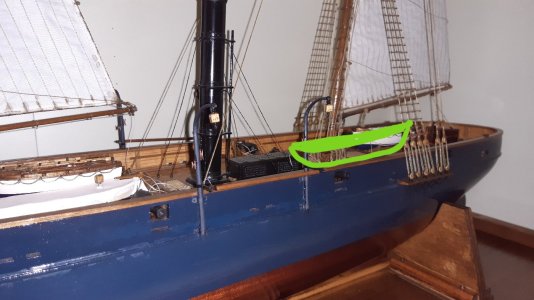
Avrei potuto spostare le gruette più a poppa; la scialuppa di salvataggio si sarebbe trovata sopra il cannone, ma troppo vicina alle sartie (vedi il contorno verde nella foto).
Il problema, però, non era quello; il problema era che staccare le due gruette avrebbe rovinato la falchetta e la fiancata.
Ci avrei messo un'eternità a riparare il danno.
Dato che avevo un certo margine di manovra, ho deciso di accorciare il boma tagliandone l'estremità.
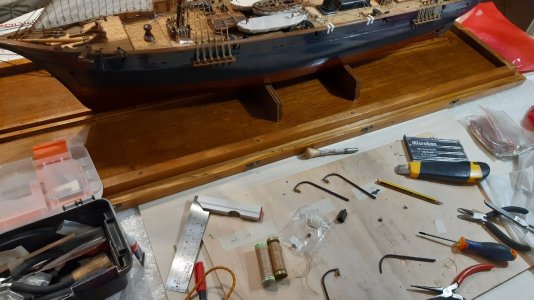
Non capivo perché fosse così difficile da tagliare. Ho usato un seghetto senza manico. Sì, era scomodo in quella posizione, e con così tante corde e oggetti che mi impedivano di muovermi, mi sembrava comunque strano.

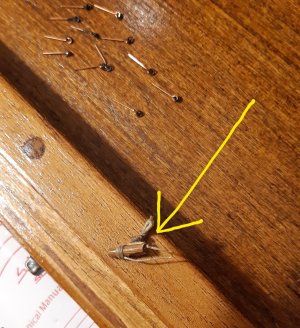
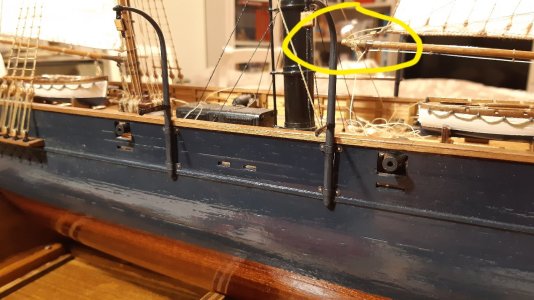
Me ne sono accorto solo dopo aver finito di tagliare e aver rimosso completamente il pezzo terminale (vedi la foto allegata con la freccia gialla).

In passato (ma non ricordo esattamente quando) avevo allungato il boma per facilitare l'installazione delle manovre correnti della drizza di randa, della scotta di bugna e della scotta del boma.

Quando devo allungare un palo, non mi limito a incollare i due pezzi, ma inserisco sempre un'anima (un rinforzo o un perno di collegamento) all'interno.

Questa volta avevo inserito un'asta di ottone.
Ecco perché ho avuto tanta difficoltà a tagliare l'estremità del boma.

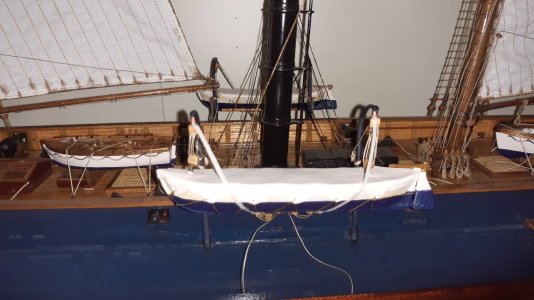
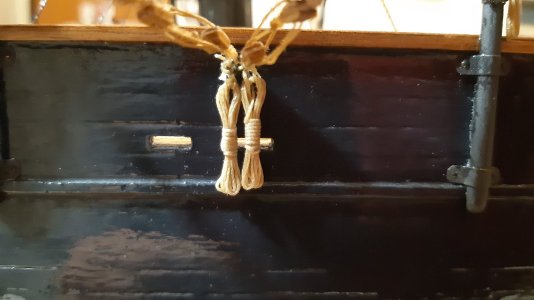
Ho installato i paranchi principali con pulegge a tre vie.

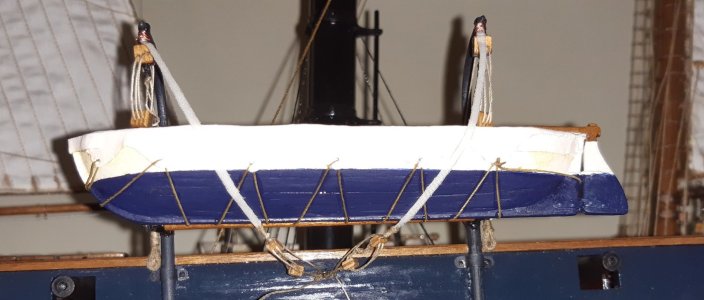
Ho installato le cinghie (per impedire alle scialuppe di salvataggio di oscillare), fissate con due pulegge a due vie.
Tagliare le strisce di tessuto è da impazzire.

Non fate caso al sartiame disordinato sul ponte; va sistemato tutto.


Only after gluing the davits to the sides of the ship...HORROR!
A huge mistake!

I realized too late that the two davits forward were preventing (albeit slightly) the boom from opening when sailing downwind.
I certainly couldn't leave the situation like that.
I could have moved the davits further aft; the lifeboat would have been positioned above the gun but too close to the shrouds (see the green outline in the photo).
That wasn't the problem, however; the problem was that detaching the two davits would have ruined the gunwale and the side.
It would have taken me a long time to repair the damage.
Since I had some leeway, I decided to shorten the boom by cutting off the end.
I didn't understand why it was so difficult to cut. I used a hacksaw without a handle. Yes, it was uncomfortable there, and with so many ropes and objects impeding my movement, it still seemed strange.
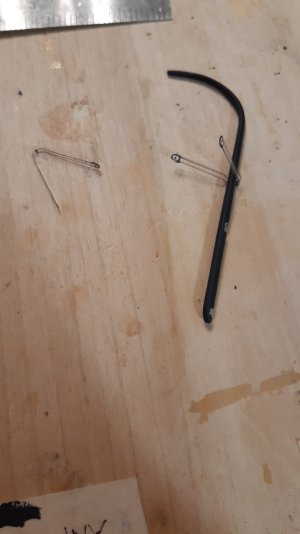
I only realized it when I finished cutting and completely removing the end piece (see the attached photo with the yellow arrow).
In the past (but I don't remember exactly when) I had lengthened the boom to facilitate the application of the running rigging of the topping lift (uphaul), the clew outhaul, and the boom sheet.
When I have to lengthen a boom, I don't just glue the two pieces together but always insert a core (a reinforcement or connecting pin) inside.
This time I had inserted a brass rod.
That's why I had so much trouble cutting the end of the boom.

I've currently installed the main tackles with three-way blocks (three pulleys).
I've installed the straps (to keep the lifeboats from swinging), secured with two two-way blocks.
Cutting the fabric strips is crazy.

Don't mind the messy rigging on the deck; it all needs to be fixed.


20251012_174318.jpg

20251012_190530.jpg

20251012_190540.jpg

20251012_192207.jpg

20251012_214248.jpg

20251021_164607.jpg

20251021_164958.jpg

20251021_174418.jpg

20251025_182752.jpg

20251025_182801.jpg

20251108_194602.jpg

20251116_194822.jpg

20251116_194840.jpg


20260327_213130.jpg

20260328_002159.jpg

20260328_002210.jpg

20260328_002242.jpg

20260328_002253.jpg

20260329_151114.jpg
 
Last edited:
Buongorno a tutti i modellisti navali.

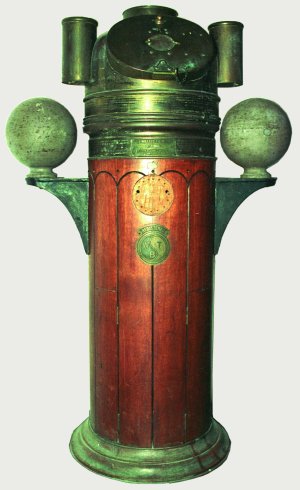
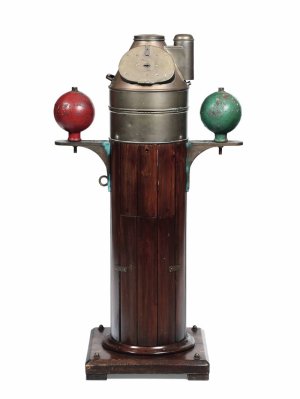
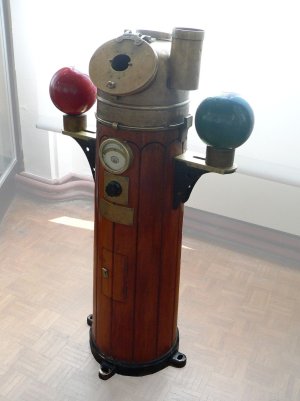
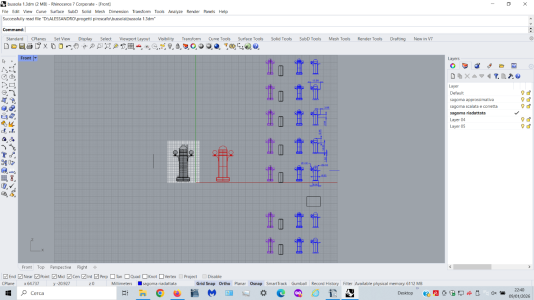
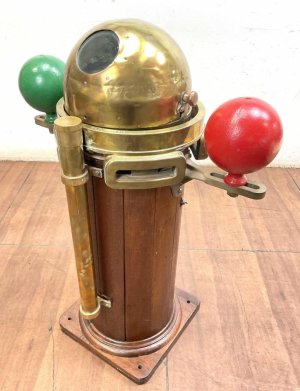
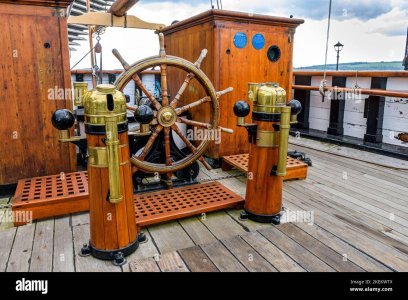
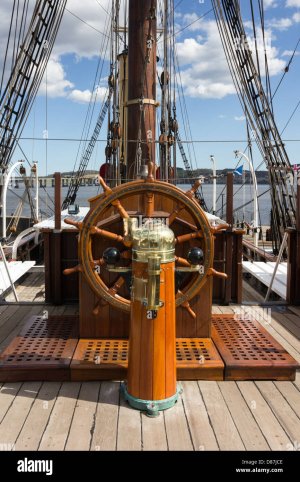
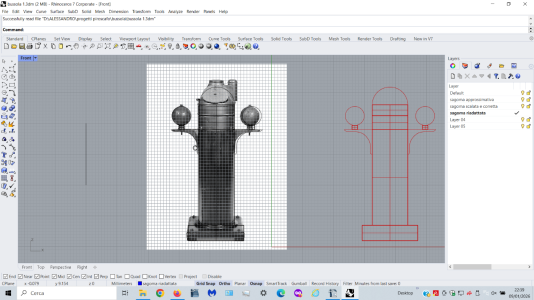
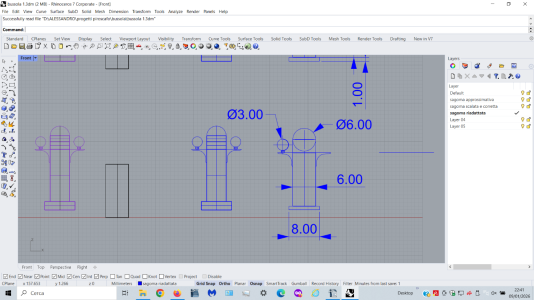
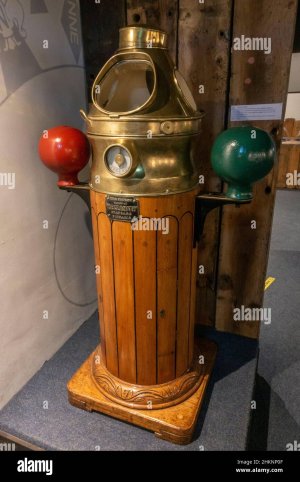
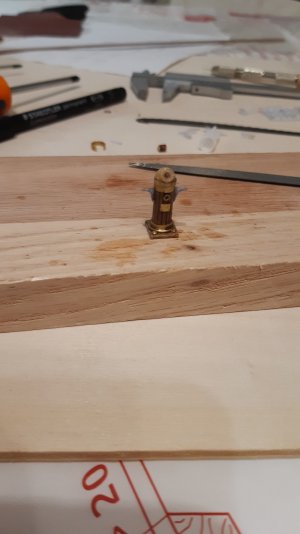
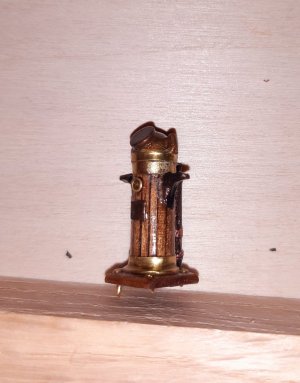
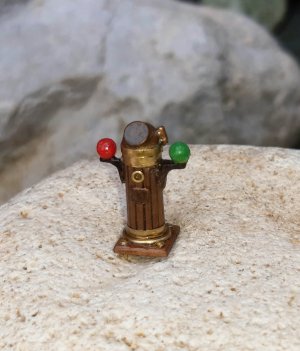
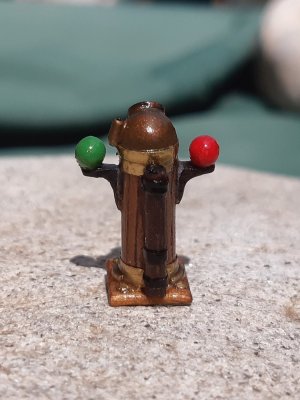
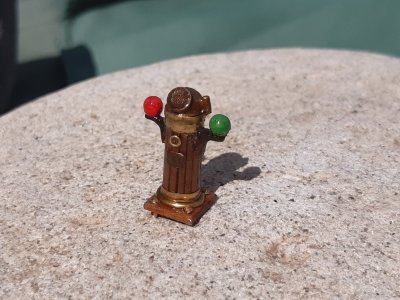
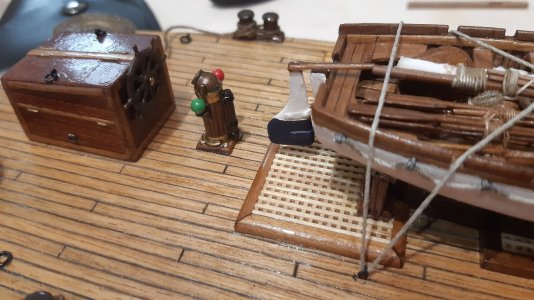
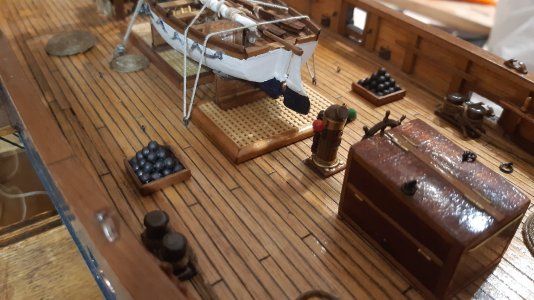
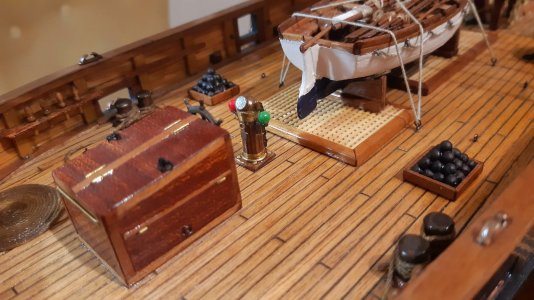
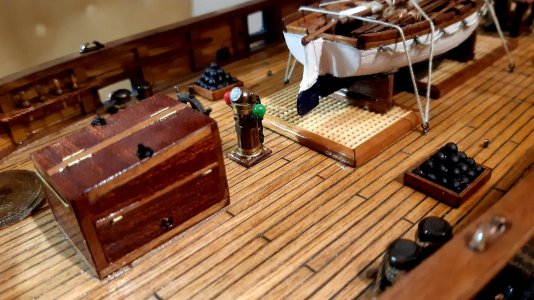
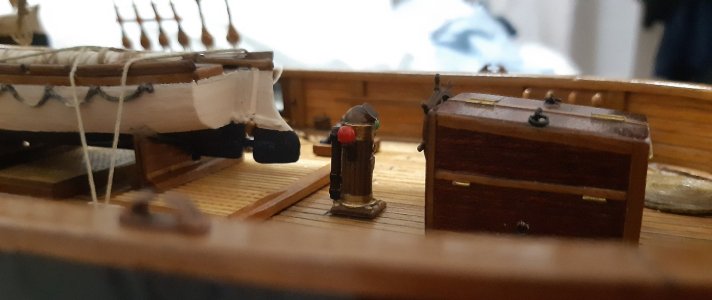
Queste sono le foto della realizzazione della bussola.
Le prime foto sono quelle che ho trovato su internet (bussole dell'epoca per quel tipo di nave).
Poi ci sono foto dei disegni.
Non ho potuto riportare fedelmente le misure ma ho dovuto adattare il disegno iniziale (ricalcato su un'immagine della bussola vera) ai materiali che avevo, come ad esempio le sfere e il cilindro.
Infine ho inziato a costruire prendendo spunto da tutte le foto raccolte.
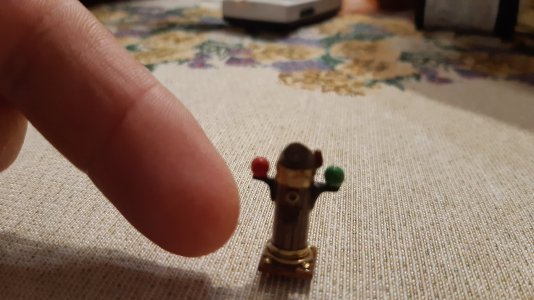
In scala 1/60 tutta la bussola è piccolissima (entra nella falangetta del dito mignolo) perciò non sono riuscito a fare di meglio.

Hello to all ship modelers.

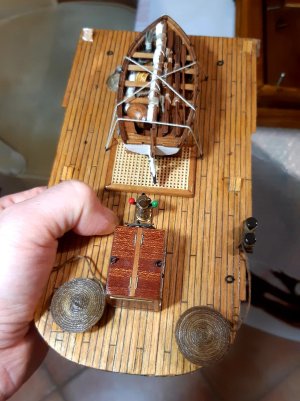
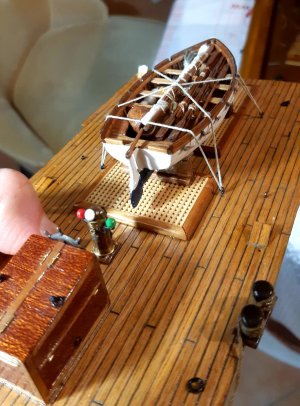
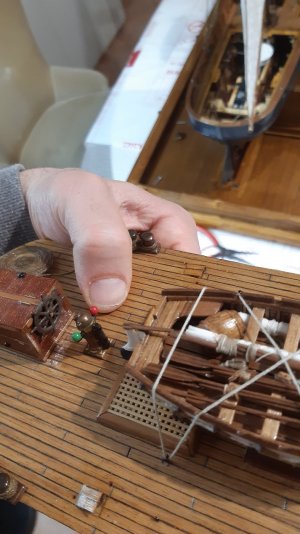
These are photos of the compass being built.
The first photos are those I found online (period compasses for that type of ship).
Then there are photos of the drawings.
I couldn't faithfully reproduce the measurements, but I had to adapt the initial drawing (traced from an image of the actual compass) to the materials I had, such as the spheres and the cylinder.
Finally, I began building, drawing inspiration from all the photos I had collected.
At 1/60 scale, the entire compass is tiny (it fits under the little finger), so I couldn't do any better.


75.jpg

800.jpg

1280px-MuseeMarine-compas-p1000468 (1).jpg

adattamento.png

il_1080xN.4240458719_face.jpg

la-ruota-e-i-due-binnacoli-della-bussola-sul-ponte-superiore-della-rrs-discovery-discovery-poi...jpg

ponte-della-posizione-dello-sterzo-e-bussola-chiesuola-rss-discovery-il-discovery-point-dundee...jpg

ricalco.png

scala.png

un-binnacolo-a-bussola-tradizionale-in-mostra-nel-grimsby-fishing-heritage-centre-grimsby-regn...jpg

20260307_215408.jpg

20260315_143444.jpg

20260319_191852.jpg

20260321_114340.jpg

20260321_114445.jpg

20260321_114525.jpg

20260321_141421.jpg

20260321_141428.jpg

20260321_141445.jpg

20260321_165555.jpg

20260321_175437.jpg

20260321_175452.jpg

20260321_175457.jpg

20260321_193506.jpg
 

Attachments

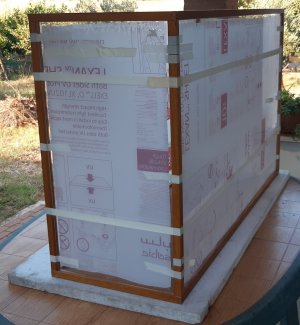
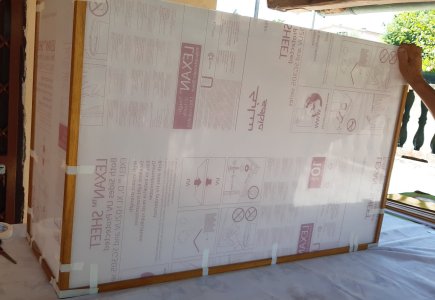
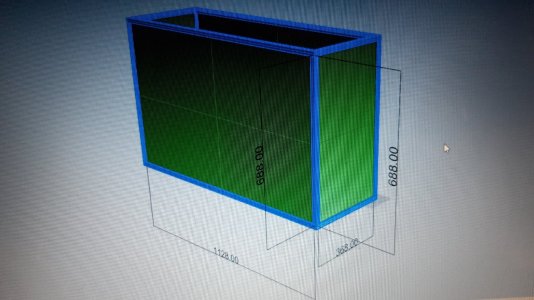
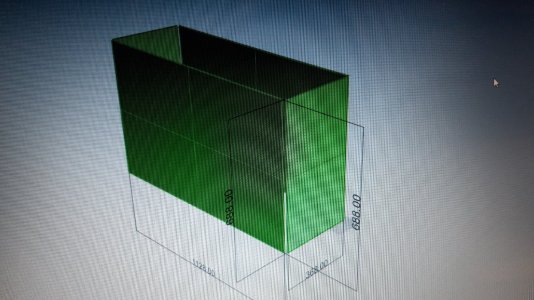
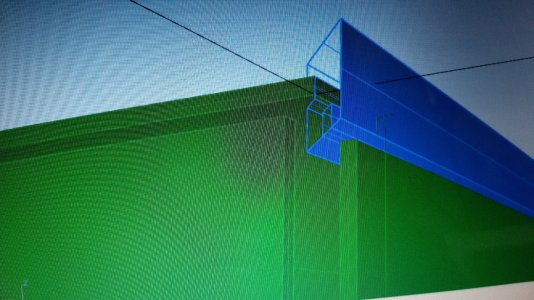
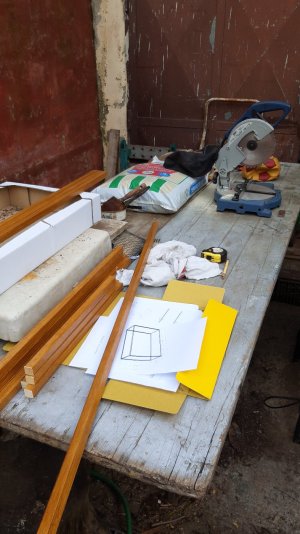
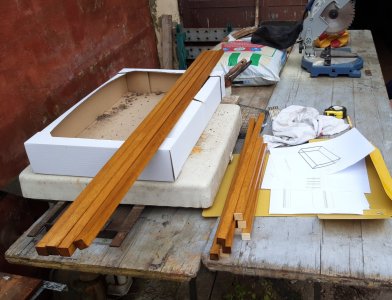
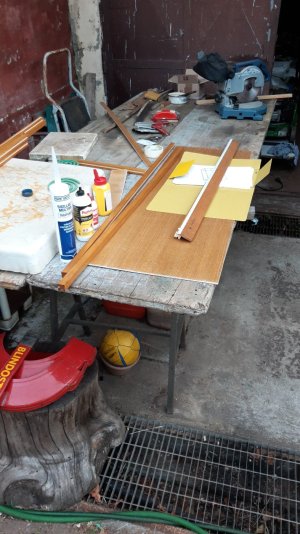
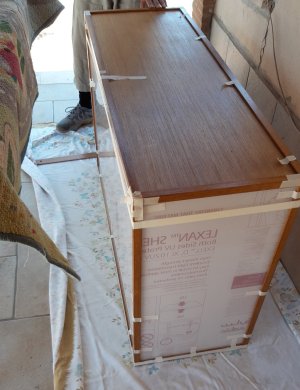
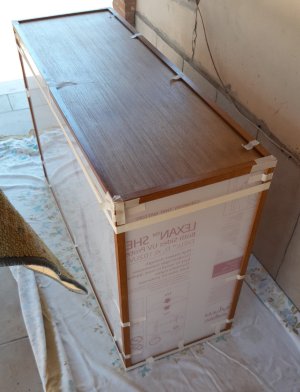
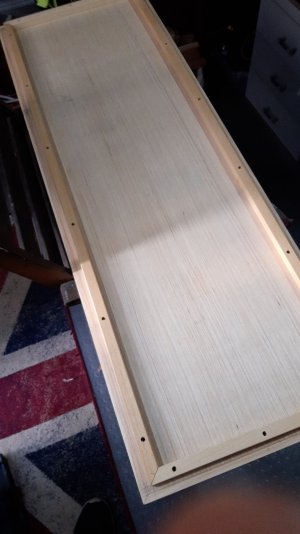
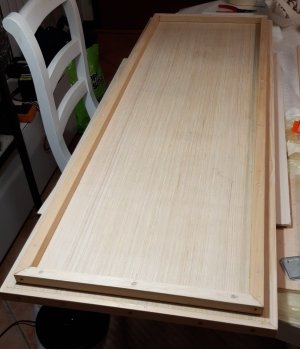
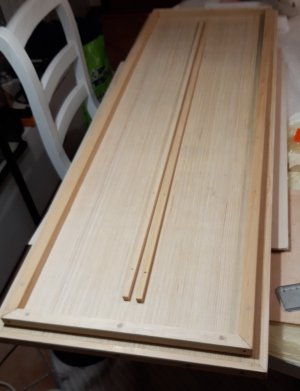
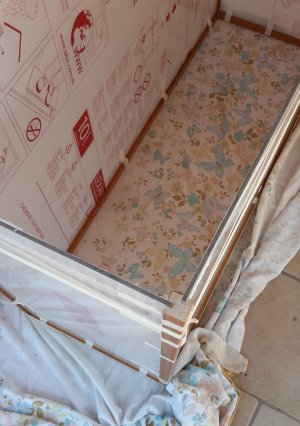
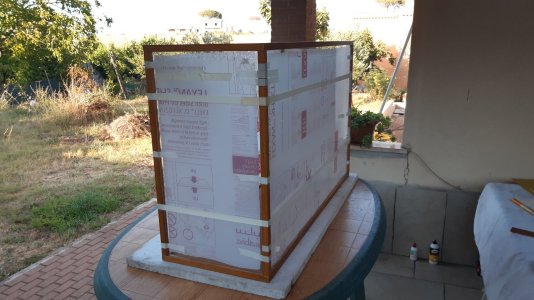
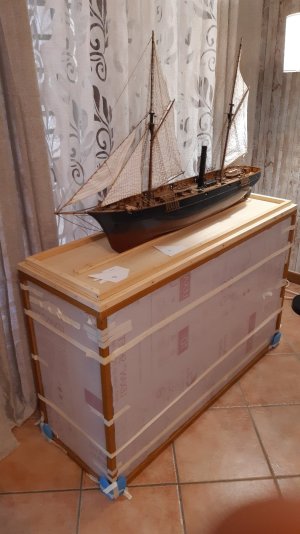
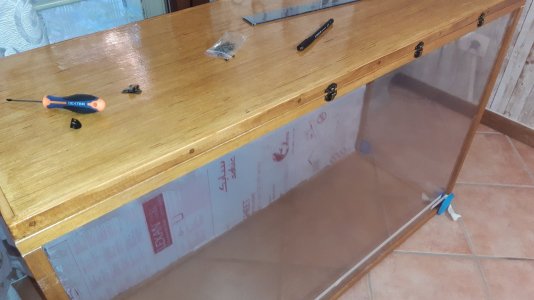
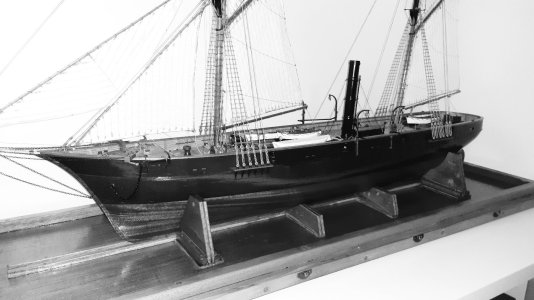
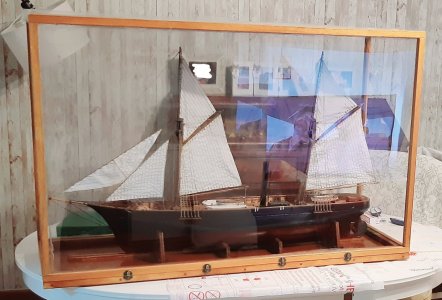
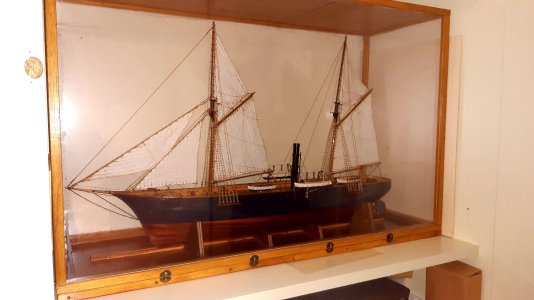
Per il modello ho costruito tempo fa una teca dove verrà custodito in attesa della prossima navigazione.
Ecco le immagini che riassumo la costruzione della teca.

For the model, I built a display case some time ago where it will be kept until its next voyage.
Here are the images summarizing the construction of the display case.


20251017_101741.jpg

20251017_101856.jpg

IMG-20241104-WA0011.jpeg

IMG-20241104-WA0013.jpeg

IMG-20241104-WA0019.jpeg

IMG-20250426-WA0005.jpeg

IMG-20250426-WA0007.jpeg

IMG-20250628-WA0003.jpeg

IMG-20250705-WA0005.jpeg

IMG-20250705-WA0007.jpeg

IMG-20250905-WA0063.jpeg

IMG-20250905-WA0066.jpeg

IMG-20250905-WA0070.jpeg

20250705_150418.jpg

20250715_192109.jpg

20250906_153713.jpg

20250920_182043.jpg

20251017_153532.jpg

20251024_085433.jpg

20260328_002253.jpg

20260406_180720.jpg

20260406_214959.jpg
 
Grazie a tutti per i like, fra poco inserirò una scheda riepilogativa dei dati del modello a suggellare la conclusione del lavoro e mi dedicherò ad altri progetti.

Grazie a tutti per i like, e sopratutto i commenti che avete inserito in questa sezione dall'inizio fino ad oggi.
Oltre ad avermi fatto molto piacere perchè contenevano apprezzamenti e parole molto gentili che incoraggiano e stimolano molto, ho constatato la preparazione, la bravura e la competenza assoluta di molti di voi, nonostante molta umiltà e modestia.
Sono rimasto sorpreso dall'acume di molte delle costre domande, veramente argute. Le critiche, se così si possono chiamare, sono state sempre gentili ma precise e costruttive, utilissime per me.

Thank you all for the likes. I'll soon post a summary of the model data to mark the completion of this work, and I'll focus on other projects.

Thank you all for the likes, and especially for the comments you've posted in this section from the beginning until now.

Besides being very pleased with the kind words of appreciation and encouragement, I also noted the preparation, skill, and absolute competence of many of you, despite your considerable humility and modesty.

I was surprised by the insightfulness of many of your questions, which were truly insightful. The criticisms, if you can call them that, were always kind but precise and constructive, invaluable to me.
 
ecco la scheda riepilogativa.

Here is the summary sheet.

Name:
Not yet established

Scale: 1/60.

Flag: none at the moment.

Type of ship
Type: Steam gunboat from the second half of the 19th century, propeller-driven.
Sailing rig: Schooner. Gaff rig with two mainsails, two counter-mainsails, two jibs.
Reference vessel: There is no reference vessel. It is not a scale reproduction of a real-life ship.
Reference ship type: It is freely inspired by the "Unadilla" class ships, also known as "90-day gunboats", are gunboats that fought for the Union against the Confederates during the American Civil War.

Major differences with the reference ship:
1. The bowsprit is a little longer than it should be for having a single spindle; initially it was designed correctly, then I gradually added a few centimeters (but it's a personal obsession to increase every time I reconsider the piece).
2. All four lifeboats were arranged laterally in the reference class, whereas in the model there are two lateral and two central.
3. The hull has a totally different size and shape as it is completely invented. The model has no equal in any existing ship. Compared to the reference ones it has a greater displacement as the central ordinates are wider. Although it maintains a harmonious and slender line, it is reminiscent (limited to the hull) more of a commercial ship than a warship.
4. The cannons (in a completely independent way I tried to reproduce the Dahlgren typical of that period) in the model are all placed in battery, i.e. on the sides, while on the ships of the reference class they were also placed in fighter (at the bow) or amidships, of larger caliber.
5 Rudder: The rudder is different from the original ones of the period, both in size and shape. It also lacks construction details such as the gudgeons and pintles. A faithfully reproduced rudder would have had little or no effectiveness in RC navigation. In hindsight, I could have faithfully reproduced it and, only during navigation, I could have applied a removable addition (perhaps made of transparent plastic) that would be invisible once underwater.
6 Propeller: The propeller is different from the original ones of the period, in terms of its shape and number of blades.


Dimensions
Overall length: 111.5cm (1115mm).
Length on perpendiculars: 94cm (940mm).
Length at waterline: 84cm (840mm).
Width (maximum beam): 17cm (170mm).
Maximum lateral dimensions (including side lifeboats): 25.5 cm (255 mm).
Draft (distance between the waterline and the deepest end of the keel): 8.5 cm (85 mm).
Maximum height (distance between the deepest end of the keel and the highest tip of the mainmast): 65 cm (650 mm).
Height of masts from main deck: 51.5cm (515mm)
Predicted theoretical displacement: 5 dm3 (submerged volume at the drawn waterline) = 5kg
Displacement (total weight) without batteries: 4900 -720-720=3460 gr.
Displacement (total weight) with batteries: 4900 gr. (4.9kg)


Dynamic features
Propeller type: plastic (with internal brass core) with three blades.
Propeller diameter: 40 mm.
Propeller pitch: not known precisely, however medium short.
Commercial reference of the one currently applied to the model: Graupner.
Direction of rotation of the propeller: right-handed.
Axle fixing system: metal thread with steel cotter.


RC features

Transmission system:

The electric motor is directly connected to the propeller shaft without reduction gears.
The transmission axis is made up of a brass rod, on one end directly connected to the propeller via thread and on the other end connected to the motor pinion via a fixed joint.
The transmission axis rotates inside an aluminum tube thanks to three ball bearings placed two at the ends and one in the center.
The axis line is parallel to the keel and therefore has zero inclination. In this way all the thrust is used for propulsion and there is no component that is dispersed downwards; furthermore the hull, especially at the start, does not undergo the typical bowing (the bow sinks during the start or sudden accelerations).

Rudder: The rudder is made of a piece shaped with a 3D printer pivoted on a brass axis.
The brass axis rotates inside a vertical aluminum tube thanks to microbearings.

Electric motor:
Currently it is a Graupner Speed 600 brush motor with the following characteristics:
Rated voltage:7.2
Operating voltage: 3.6 - 8.4 V
Speed: 18200 rpm
No-load output current: 2A
Output current at maximum efficiency: 12 A
Output current at lock: 85 A
Length (excluding shaft): 57 mm
Diameter: 35.8mm
Shaft diameter: 3.17 mm
Weight: 195g
Gear: forward and backward.
Positioned as low as possible under the main mast (in fact the mast does not reach the bottom of the bilge but stops before).

Radio receiver:
Currently it is a Turnighy 9x 2.4 Ghz 8 channel with the following characteristics:
Frequency: 2.4Ghz.
supply voltage: 4.8 – 6.5 Volts.
dimensions: 52x35x15 mm
weight 18 g.
positioned immediately under the deck in a central position, forward of the funnel.

ESC with integrated BEC:
ESC for commercial-type RC cars, very economical and widespread, with a fairly standardized shape and size. In this way you can easily find an identical spare part in the event of failure and subsequent replacement:
It has the following characteristics:
Brushed ESC 320A:
Direct Current: 320A
Reverse Current: 240A
Braking Current: 250A
Voltage range: 4.8-8.4V
PWM Frequency: 1.5KHZ
BEC Voltage: 5.6V, 2A
Size: approx. 34x34x16mm/1.34x1.34x0.63in (without heatsink)
Reference brand: bought on Amazon.
Located high up immediately under the deck in a central position forward of the mainmast.

Rudder servo mechanism:
Analogic Servo 6001 MG da HobbyKing
Features:
Torque(4.8V): 6.0 kg-cm (83.3 oz/in)
Torque(6.0V): 7.0 kg-cm (97.2 oz/in)
Speed: 0.16 sec (4.8V) │ 0.14 sec (6.0V)
Operating Voltage:4.8 ~ 6.0 DC Volts
Weight: 56.0 g (1.98 oz)
Bearing Type:Ball Bearing x 2
Motor Type:DC Motor
Gear Type:Copper
Operating Temperature:-20℃~60℃
Working frequence:1520μs / 50hz
Size:40.7 x 20.5 x 39.5 mm ( 1.60 x 0.81 x 1.56 in)

Winch 1:
Sail Winch Servo 13 kg / 0.7 sec (360 deg) /55 gr. from HobbyKing
Specifications:
weight: 55 gr.
dimensions 40.5 x 20, 2 x 38 mm
speed: 0.9 sec. / 360 deg (4.8 Volt) – 0.7 sec / 360 deg (6.0 Volt)
torque: 11 Kg (4.8 V) – 13 kg (6.0 Volt)
operating voltage: 4.8 Volts – 6.0 Volts
gear train: metal
Positioned abaft the foremast, it controls the foremast boom and the two jibs.

Winch 2:
Same features as the first.
Positioned forward of the rudder winch immediately below the deck, it controls the mainmast boom.

Batteries:
two AGM batteries, voltage 6 Volt, charge 4.5 Ah.
The compartment is configured for batteries with the same dimensional characteristics as the FIAMM FG 10451 which has the following dimensions: 70 x 47 x 100 mm, weight: 720 grams each.
The compartment allows you to move the batteries a little further forward or backwards in order to adjust the longitudinal attitude of the ship. It is advisable to position them all forward for correct alignment. If, however, you use the small compartment further forward, then it is better to move them backwards. The small room is currently not used and is empty.
Instead of the AGM batteries described above (which do not fully exploit the electrical power of the engine) it is possible to use batteries of different types, such as 7.2 Volt, 5 Ah NiMh battery, with the following dimensions 47 x 24.5 x 139.5 mm, because space allows it.
It is also possible to place one or more batteries above the AGM batteries or in the other free compartment forward. In this case the overall weight will increase slightly and the lateral righting thrust will decrease (as the ship's center of gravity will rise) but still in completely acceptable terms.
The configuration should be changed.


Current electrical configuration:
One of the two batteries described above is connected to the ESC and therefore powers the electric motor. It does not power the receiver because the ESC BEC positive lead has been isolated. The receiver with the winches and the rudder servo are powered by the other battery.
There is a fuse between the motor and ESC.
It is easily reconfigurable by placing both batteries in parallel and resetting the positive cable of the BEC.
Or the two 6 volt AGM batteries that power the ESC can be placed in parallel (with isolated BEC positive) and dedicate a small battery pack to the receiver and servos.
Alternatively, one or even two (because there is space) 7.2 Volt, 5 Ah batteries can be dedicated to the ESC; in this way the power of the Speed 600 motor will be fully exploited (7.2 Volts instead of 6 Volts). If only these two batteries are used, it will be necessary to use the BEC of the ESC (not isolating the positive) to power the receiver and servos. I would prefer to use the remaining space for a smaller 6 volt battery to dedicate to the receiver and servos; a 6 Volt 3.2 Ah AGM battery, measuring 34 x 67 x 103 mm, or an even smaller and lighter NiMh battery would be fine.
As another alternative, you can use a 6-volt, 6-ah LiFePO4 (Lithium-Iron-Phosphate) battery. As I recently discovered, batteries are sold that are the same size as the 6-volt, 4.5-ah AGM ones (i.e., 70 x 47 x 100 mm) and with the same faston connectors. In practice, the two cylindrical LiFePO4 batteries are inserted into the same container as the AGM ones. This way, while taking up the same amount of space, we can increase the electrical charge by 3,000 to 4,000 mAh (12 Ah instead of 8 or 9 Ah).
Other solutions, aimed at introducing an electricity reserve, involve the use of an exchange relay and a remote control switch that engages a channel on the radio receiver (which has three free).


Construction Details
The hull is built using the classic frame-and-plank method, starting from a completely new design. The planking is made of double overlapping battens. The hull has 32 frames, connected to each other by longitudinal reinforcements (made of wooden squares) as well as the hull and decks.
In addition to the hull, the following parts were built from scratch (with drawings and independent design inspired by images and videos): masts (including the cheek, mast cap, asthead, cross tress, spars, moorings, spreaders, gooseneck [parrel, boom claw, jae-rope]), both standing and running rigging, sails, ladders between the two decks, davits, compass, rudder, propeller shaft, pegs, gratings, skylight, cannons, lifeboats, lifeboat davits, anchor bit, large cleats, funnel and rear structure, baskets, sail hoops, rings, and padeyes, fife rail, cathead and pin rail.
The following components were purchased and already complete: bow winch, anchors, blocks, deadeyes, belay pin, rings, steering wheel, propeller, hawsehole, cleats, and fairleads.


Maintenance and repair details.
The deck has four access points, starting from the bow and going aft: a small one forward of the foremast, one aft of the foremast, one forward of the mainmast near the funnel, and the last one aft of the mainmast.
The first cover (the one forward of the foremast) can be opened by unscrewing four hidden screws.
After removing the screws to hold the cover, the capstan can be used as a knob. The compartment is empty. There is no need to open it unless you decide to use this space.
The second cover (the one aft of the foremast) provides access to the battery compartment and the first winch. This is the only cover that will need to be constantly opened and closed to allow navigation for battery insertion and removal.
To open it, you need to remove the four cannons above it (the cannons are secured to the deck with a small nail inserted into the wood and four hooks) and the six screws.
After removing the cannons and screws, you can use the large skylight in front of the lifeboat for support.
The third cover (the one forward of the mainmast, near the funnel) provides access to the radio receiver, fuse, and ESC. It does not need to be opened for normal navigation, but only in the event of a malfunction. This compartment should be opened if you need to check or replace the ESC, receiver, fuse, and related wiring.
To open it, you need to remove the two cannons above it (the cannons are secured to the deck with a small nail inserted into the wood and four hooks) and the four screws.
After removing the cannons and screws, you can grab the black superstructure just behind the funnel.
The fourth cover (aft of the mainmast) provides access to the second winch, rudder servo, electric motor, rudder shaft, fixed coupling, and propeller shaft. It does not need to be opened for normal navigation, but only in the event of a malfunction. This compartment should be opened if you need to check or replace the second winch, rudder servo, electric motor, rudder shaft, fixed coupling, or propeller shaft.
To open it, you must remove the two cannons above it (the cannons are secured to the deck with a small nail that penetrates the wood and four hooks) and the six screws.
After removing the cannons and screws, you can grab the superstructure behind the rudder wheel.
There are 20 hidden screws in total.
All the screws are hidden under the deck (a section of the floorboard near the screw is removable). Above the piece of floorboard near the screw is usually a ship component, such as cannons, cannonball boxes, or rigging.
A small manual with explanatory images and videos has been prepared to help you remove the individual parts. Some parts, such as the ESC, require freeing the wooden cotter pins and joints before replacing them. The most difficult part to reach is the electric motor. To remove it, you must first remove the winch.
To replace the propeller, remove a piece of wood aft of the propeller. It's not necessary to break it because it's secured with a wooden cotter pin, but the paint may have bonded the pieces together, and the cuts may need to be refinished. Before unscrewing the propeller, you must remove the spring steel cotter pin. A dedicated guide with text and images has been created for replacing the propeller.
Replacing the rudder is possible, but requires removing the vertical pin and a spring steel cotter pin. A dedicated replacement guide with text and images has been created.


Summary of materials used (excluding electrical equipment)
4 mm plywood for keel, frames, decks, and internal supports (for the servomechanism, winches, and ESC)
Basswood strips (first planking)
Mahogany strips (second planking)
Tanganyika walnut strips (deck covering and gunwale)
Walnut rods (all mast spindles, booms, and gaffs)
Walnut strips, rods, and squares (internal hull reinforcements, cathead, fife rail, pin rail, bitts, mooring bitt, truck carriage and gunwale, skylight, gratings, compass, ladders).
Other walnut materials (deadeyes, belay pins, blocks, capstans)
Bass squares (internal longitudinal hull reinforcements, gratings)
Brass (hawsehole, boom gooseneck [parrel, boom claw, jae-rope], various hinges, various rings, nails, handles, propeller shaft, rudder shaft, ballast bar, compass, chain plate, etc.)
Miscellaneous metals (anchors, chains, fairleads, horn cleat, screws, hooks, bearings, steering wheel, fixed joint)
Aluminum: Propeller shaft tube, rudder shaft tube, funnel.
Spring steel (connecting bar between rudder and servomechanism)
3D-printed ABS and PLA for gun carriages and rudder.
Plastic sheeting (side cranes, hawsehole, gooseneck [parrel, boom claw, jae-rope] for the gaff and reinforcement of other wooden pieces, funnel rings, gun carriages reinforcing the walnut wood)
Plastic (cannon balls, propeller)
Rope (of various thicknesses for the standing and running rigging, single and double tackle).
Polyester thread (sail seams).
Cyanoacrylate glue, various brands.
Mastic glue, various brands.
Paint: Spinnaker Wood Protection (all exterior surfaces except the sails).
Humbrol enamels (hull above the waterline combination HUM104 = 7 ml; HUM33 = 6 ml; HUM230 = 3 ml, lifeboats, guns, mast caps, rings, padeyes and hooks, funnel cables, funnel and superstructure aft of the funnel, chain plate, compass)
Poxylam 125 epoxy resin. Used inside the hull, in the hulls of all lifeboats, and on the side lifeboat canvases.
Lithium grease.


Reserve Buoyancy: It does not have sufficient reserve buoyancy to make it unsinkable.
If water enters the hold, the model is destined to sink.
It was not possible to create non-flooding volumes (with lightweight, non-waterproof materials such as polystyrene) due to lack of available space.
The only measure to prevent water from entering the hold is to close the lids with stepped stops. The seal is also ensured by the presence of grease between the contact surfaces and the tight closure achieved with the screws.
No water infiltration was detected anywhere, not even near the propeller shaft.
It goes without saying that in the event of a hull leak, sinking is unavoidable.

 
Back
Top