
- Joined
- Feb 14, 2019
- Messages
- 70
- Points
- 88

An Expert Analysis of Ragusan Naval Architecture The Carrack, Nava, and Galleon 14th-17th Centuries
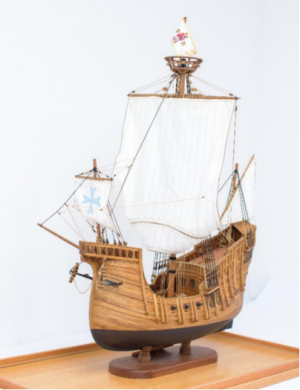
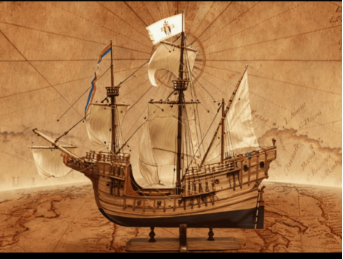
from China: Ragusian Carrack - Nava 217 wagons... shipping included, no tax calculated in the price: 505 €
link to China:
 shipmodelkits.com
EU stock: Ragusian Carrack - Nava 217 wagons- 77,5cm, 30.51'', 1:59 ... shipping not included in the price, no tax calculated in the price: 448.55 €
shipmodelkits.com
EU stock: Ragusian Carrack - Nava 217 wagons- 77,5cm, 30.51'', 1:59 ... shipping not included in the price, no tax calculated in the price: 448.55 €
link to the EU: http://www.marisstella.hr/model-ship-kits-details,118,ragusian-carrack-nava-217-wagons-77-5cm-3051-1-59
from China: Ragusian Cog 16th Century Wooden Ship Model Kit ... shipping included, no tax calculated in the price: 423 €
link to China: https://shipmodelkits.com/product/ragusian-cog-16th-century-wooden-ship-model-kit/
EU stock: RAGUSIAN COG 16th c. 65cm, 25.59'', 1:48... shipping not included in the price, no tax calculated in the price: 376.25 €
link to the EU: http://www.marisstella.hr/model-ship-kits-details,104,ragusian-cog-16th-c-65cm-2559-1-48
from China: ARGOSY – Ragusian Galleon Model Ship Kits ... shipping included, no tax calculated in the price: 455 €
link to China:
shipmodelkits.com
EU stock: ARGOSY - Ragusian Galleon 71,7cm, 28.23'', 1:59... shipping not included in the price, no tax calculated in the price: 413.97 €
link to the EU: http://www.marisstella.hr/model-ship-kits-details,123,argosy-ragusian-galleon-71-7cm-2823-1-59
Important Notice Regarding This Model Kit: Nava of Ragusa
This kit is designed as a ship modeling school-level project. It emphasizes hands-on craftsmanship and relies primarily on manual modeling tools. The kit includes a very limited number of laserengraved and no photoetched parts; most components must be shaped, assembled, and finished by hand using traditional modeling tools.
Please follow the instructions provided in the manual and refer closely to the drawings throughout the building process. This approach ensures an authentic modeling experience that develops advanced manual skills.
Note: Recommended for modelers comfortable with handtool work and seeking a challenging, craftfocused project.
from China: Nava of Ragusa Model Ship Kit By Maris Stella ... shipping included, no tax calculated in the price: 229 €
link to China: https://shipmodelkits.com/product/nava-of-ragusa-model-ship-kit/
EU stock: Nava of Ragusa 16th c. 63,1cm 1:63 Old Seller ... shipping not included in the price, no tax calculated in the price: 206.48 €
link to the EU:http://www.marisstella.hr/model-ship-kits-details,1113,nava-of-ragusa-16th-c-63-1cm-1-63-old-seller
An Expert Analysis of Ragusan Naval Architecture: The Carrack, Nava, and Galleon (14th-17th Centuries)
Date: December 28, 2025
Name: Zuan
Title: Project Manager
Focus Areas: Research and Design
北京双翼之忆咨询有限公司 Beijing Two Wings Memory Consulting Limitedfrom China: Ragusian Carrack - Nava 217 wagons... shipping included, no tax calculated in the price: 505 €
link to China:
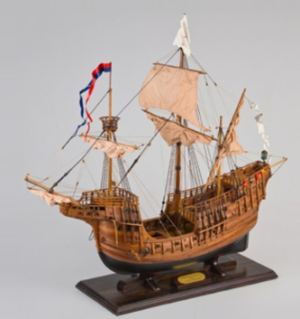
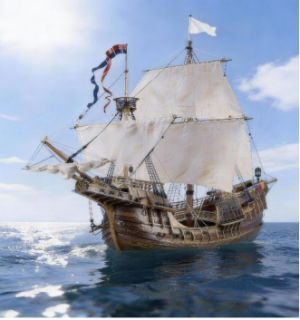
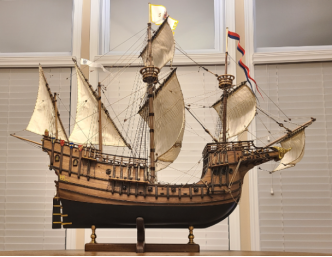
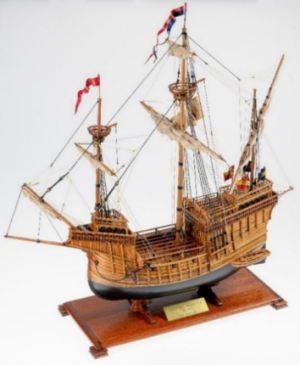
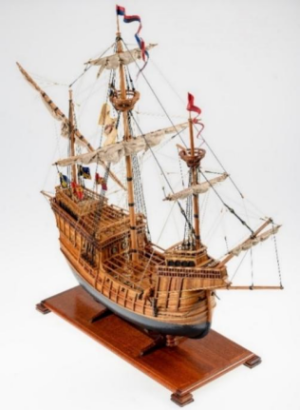
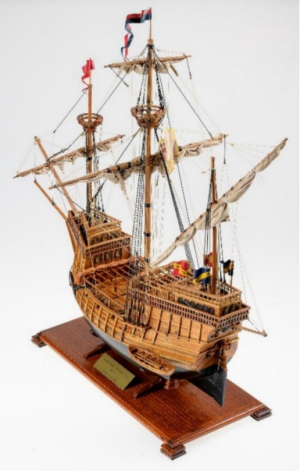
Ragusian Carrack - Nava 217 wagons - Model Ship Kits Shop By Maris Stella
Scale: 1:59 Length: 77.5 cm / 30.51'' Ship Type: Ragusian Carrack Historical Period: 16th Century Skill Level / Difficulty: Intermediate to Advanced Design Style: Mediterranean / Dubrovnik fleet Bring the Ragusian Carrack – Nava 217 Wagons to life and experience the glory of Dubrovnik’s maritime...
shipmodelkits.com
link to the EU: http://www.marisstella.hr/model-ship-kits-details,118,ragusian-carrack-nava-217-wagons-77-5cm-3051-1-59
from China: Ragusian Cog 16th Century Wooden Ship Model Kit ... shipping included, no tax calculated in the price: 423 €
link to China: https://shipmodelkits.com/product/ragusian-cog-16th-century-wooden-ship-model-kit/
EU stock: RAGUSIAN COG 16th c. 65cm, 25.59'', 1:48... shipping not included in the price, no tax calculated in the price: 376.25 €
link to the EU: http://www.marisstella.hr/model-ship-kits-details,104,ragusian-cog-16th-c-65cm-2559-1-48
from China: ARGOSY – Ragusian Galleon Model Ship Kits ... shipping included, no tax calculated in the price: 455 €
link to China:
ARGOSY - Ragusian Galleon Model Ship Kits - Model Ship Kits Shop By Maris Stella
Scale: 1:59 Length: 71.7 cm / 28.23'' Ship Type: Ragusian Galleon (Merchant & Warship) Historical Period: 16th Century Skill Level / Difficulty: Intermediate to Advanced Design Style: Mediterranean / Dubrovnik fleet, museum-quality wooden model Maris Stella Model Ship Kit – Argosy Ragusian...
shipmodelkits.com
link to the EU: http://www.marisstella.hr/model-ship-kits-details,123,argosy-ragusian-galleon-71-7cm-2823-1-59
Important Notice Regarding This Model Kit: Nava of Ragusa
This kit is designed as a ship modeling school-level project. It emphasizes hands-on craftsmanship and relies primarily on manual modeling tools. The kit includes a very limited number of laserengraved and no photoetched parts; most components must be shaped, assembled, and finished by hand using traditional modeling tools.
Please follow the instructions provided in the manual and refer closely to the drawings throughout the building process. This approach ensures an authentic modeling experience that develops advanced manual skills.
Note: Recommended for modelers comfortable with handtool work and seeking a challenging, craftfocused project.
from China: Nava of Ragusa Model Ship Kit By Maris Stella ... shipping included, no tax calculated in the price: 229 €
link to China: https://shipmodelkits.com/product/nava-of-ragusa-model-ship-kit/
EU stock: Nava of Ragusa 16th c. 63,1cm 1:63 Old Seller ... shipping not included in the price, no tax calculated in the price: 206.48 €
link to the EU:http://www.marisstella.hr/model-ship-kits-details,1113,nava-of-ragusa-16th-c-63-1cm-1-63-old-seller
An Expert Analysis of Ragusan Naval Architecture: The Carrack, Nava, and Galleon (14th-17th Centuries)
Date: December 28, 2025
Name: Zuan
Title: Project Manager
Focus Areas: Research and Design
北京市朝阳区建国门外大街乙12号十层东塔A117单元
Suite A117, Twins Tower (East), 10th floor, B-12 Jianguomenwai Avenue, Chaoyang District, Beijing
Table of Contents
1.0 Introduction: The Republic of Ragusa – A Maritime Power
2.0 The Mažibradić Brothers and Ragusan Maritime Service in the Spanish Empire
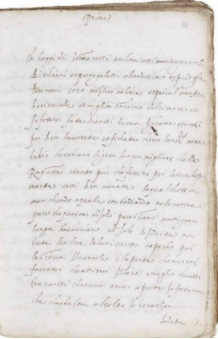
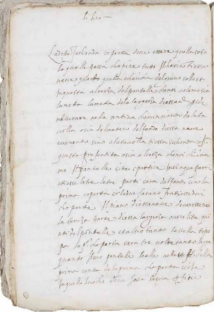
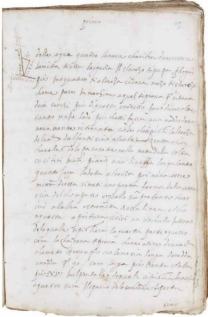
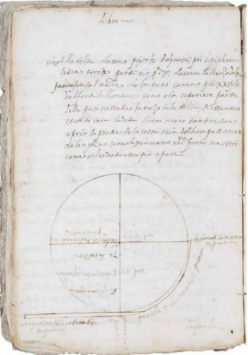
3.0 The Sagri Manuscript and the Michael of Rhodes Codex: A Comparative Analysis of Fifteenth and Sixteenth Century Ragusan Naval Architecture
4.0 The Medieval Metrological System of Dubrovnik: Scientifically Confirmed Weights and Measures
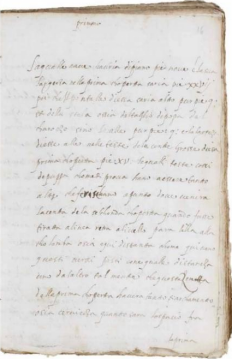
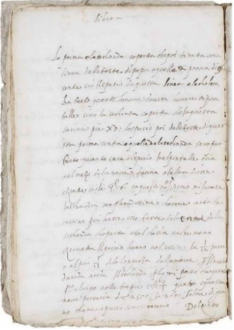
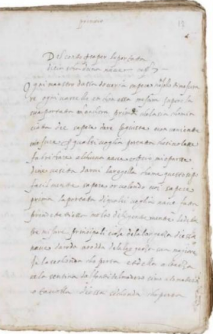
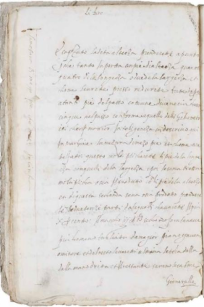
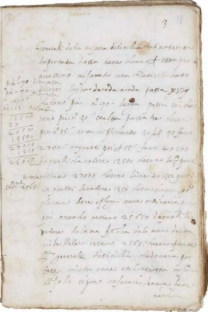
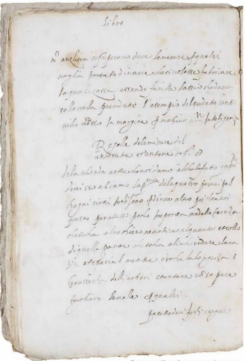
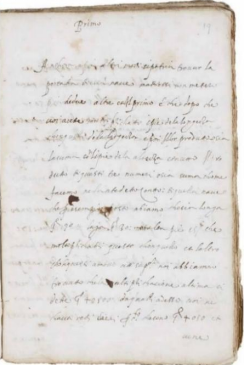
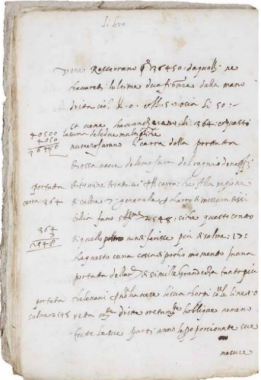
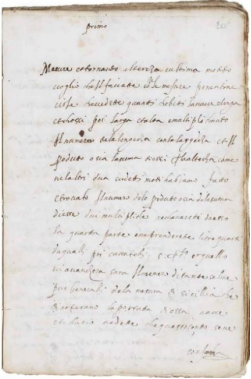
5.0 Analysis of a Passage from the Sagri Manuscript on 16th-Century Ragusan Shipbuilding
6.0 Nikola Sagri: A Ragusan Mariner and His Cartographic Legacy
7.0 A Biographical Sketch of the Ragusan Mariner and Scholar Nikola Sagri (c. 1538 – post 1571)
8.0 The Published Works of Nikola Sagri: A Posthumous Legacy in Renaissance Maritime Science
9.0 The Maritime Republic of Dubrovnik: Ships, Statecraft, and the Pursuit of Libertas
10.1.0 The Cog: Dubrovnik's Transitional Merchant Vessel in Medieval Maritime Trade
10.1.7 The Portolan Chart: A Navigator's Revolution
10.1.8 The Manuscript and the Mariner: The World of Michael of Rhodes
10.1.9 The Mighty Mude: Life on the Venetian Galley Convoys
10.1.10 An Early Enlightenment Odyssey
10.1.11 Reconstructed Route of Marsili's Voyage: Venice to Constantinople
10.2.0 Ragusan Carrack - Nava (16th Century)
10.2.1.1 The Concept of Arboragi (Jarbolarina) in Nikola Sagri's Il Chartigatore (1570)
10.2.6 The 16th c. Cog: Dubrovnik's Merchant Vessel in the Early Modern Era
10.3.0 The list detailing the ships of the (Dubrovnik) Ragusa Republic from 1584 to 1654, organized by their home ports.
10.4 Lokrum, 1513. Carrack, approximately 600 Ragusan wagons
10.5 The Dubrovnik Carrack: A Maritime Powerhouse of the Renaissance
10.5.5 The Carrack (Karakun) – The Apogee of Ragusan Shipbuilding
2.0 The Mažibradić Brothers and Ragusan Maritime Service in the Spanish Empire
3.0 The Sagri Manuscript and the Michael of Rhodes Codex: A Comparative Analysis of Fifteenth and Sixteenth Century Ragusan Naval Architecture
4.0 The Medieval Metrological System of Dubrovnik: Scientifically Confirmed Weights and Measures
5.0 Analysis of a Passage from the Sagri Manuscript on 16th-Century Ragusan Shipbuilding
6.0 Nikola Sagri: A Ragusan Mariner and His Cartographic Legacy
7.0 A Biographical Sketch of the Ragusan Mariner and Scholar Nikola Sagri (c. 1538 – post 1571)
8.0 The Published Works of Nikola Sagri: A Posthumous Legacy in Renaissance Maritime Science
9.0 The Maritime Republic of Dubrovnik: Ships, Statecraft, and the Pursuit of Libertas
10.1.0 The Cog: Dubrovnik's Transitional Merchant Vessel in Medieval Maritime Trade
10.1.7 The Portolan Chart: A Navigator's Revolution
10.1.8 The Manuscript and the Mariner: The World of Michael of Rhodes
10.1.9 The Mighty Mude: Life on the Venetian Galley Convoys
10.1.10 An Early Enlightenment Odyssey
10.1.11 Reconstructed Route of Marsili's Voyage: Venice to Constantinople
10.2.0 Ragusan Carrack - Nava (16th Century)
10.2.1.1 The Concept of Arboragi (Jarbolarina) in Nikola Sagri's Il Chartigatore (1570)
10.2.6 The 16th c. Cog: Dubrovnik's Merchant Vessel in the Early Modern Era
10.3.0 The list detailing the ships of the (Dubrovnik) Ragusa Republic from 1584 to 1654, organized by their home ports.
10.4 Lokrum, 1513. Carrack, approximately 600 Ragusan wagons
10.5 The Dubrovnik Carrack: A Maritime Powerhouse of the Renaissance
10.5.5 The Carrack (Karakun) – The Apogee of Ragusan Shipbuilding
Abstract: This paper provides a detailed synthesis and analysis of historical documents pertaining to the maritime supremacy of the Republic of Ragusa (Dubrovnik). Focusing on the seminal work of the Ragusan master shipwright Nikola Sagri (Sagrojević), it examines the sophisticated mathematical principles and regulatory frameworks that underpinned Ragusan shipbuilding. The study analyzes the design, construction, and operational history of key vessel types—most notably the Carrack (Karakun) and the Nava,and Galleon later—situating them within the broader context of Mediterranean and transoceanic trade. It argues that Ragusa's ascendancy was not accidental but the result of a deliberate fusion of state policy, scientific inquiry, and master craftsmanship, which together produced vessels of unparalleled quality and durability.
1.0 Introduction: The Republic of Ragusa – A Maritime Power
On the Maritime Prowess of the Ragusan Republic: An Examination of Early Regulation and Contemporary Acclaim
Since the distant year of 1312, a systematic oversight of the maximum permissible loading level of ships' cargo began within the heart of the Republic of Ragusa (Dubrovnik). This practice was formalized in 1361 with the enactment of a specific law, known as "De oneratione navigiorum fienda" (On the Stowage of Ships). This regulatory measure was pioneering, as analogous legislation in Western European states would only emerge during the seventeenth and eighteenth centuries. In January 1390, the Ragusan government proclaimed subsidies for the construction of large vessels, instituting strictly defined conditions and obligations for the owners of the newly built ships.
According to scholarly research, by the fourteenth century, the Republic of Ragusa held the third position in importance within the Mediterranean, immediately after Genoa and Venice. However, by the sixteenth century, the Ragusan Republic had ascended to the primary position in the Mediterranean. In terms of its fleet of transoceanic merchant sailing vessels, operating under both domestic and foreign flags, it was the third largest in the world, surpassed only by the maritime powers of Spain and the Netherlands.
The republic's exceptional standing is corroborated by contemporary sources.
The renowned quality of Ragusan shipbuilding is further detailed by the Ragusan mariner and scholar, Nikola Sagri (Sagrojević). In his 1574 treatise, "Ragionamenti sopra la varietà de i flussi et riflussi del Mare Oceano Occidentale"(Discourses on the Variety of the Tides and Ebb and Flow of the Western Ocean Sea, Venice, 1574, pp. 35-37), he expressed profound confidence in the quality of Ragusan craftsmanship, noting the belief that "Le vostre navi sono più forti di tutte l’altre del mondo e di miglior legname". This translates to the assertion that Ragusan ships were "the strongest in the world,"constructed from the finest timber. This superior construction meant that the underwater hull of these vessels did not require repairs for ten years or more, a period significantly longer than the more frequent maintenance needed by ships of other maritime nations.
The reputation of Ragusan argosies for wealth and seaworthiness had permeated European culture, finding a lasting testament in the works of William Shakespeare. In "The Merchant of Venice," the proud argosies evoke powerful imagery of mercantile success and maritime power:
"There, where your argosies with portly sail,
Like signiors and rich burghers on the flood,
Or, as it were, the pageants of the sea..."
The term "argosy" itself is a linguistic derivative of "Ragusa," a testament to how strongly the city's name was associated with large, richly-laden merchant vessels in the early modern European imagination.
The Ragusan "Argosy": Naval Architecture and Maritime Influence in the Early Modern Period
The term "argosy" fundamentally denotes a specific type of Ragusan merchant vessel. The word itself is a linguistic derivative of the Italian name for Dubrovnik, "Ragusa". This etymology is formally recognized; for instance, the Encyclopaedia Britannica (XIVth edition, London, 1929, p. 336) specifies that "argosy" was the original term for a large merchant ship from Ragusa, which in poetry came to signify any vessel carrying rich cargo.
The scale and opulence of these ships were documented by contemporaries such as the Dominican friar Serafin Razzi, author of the first printed history of Dubrovnik. In his work "Viaggio in Abbruzzo", he provides a detailed account of a Ragusan carrack capable of carrying 1,200 kola (a unit of capacity) and a crew of 140 men. His description vividly illustrates the self-sufficiency and grandeur of life aboard these floating communities:
"...We saw the main room with a carved, painted, and gilded ceiling, and immediately next to it a large salon with a ceiling ‘à la rose’. In a secluded spot under some planks, we saw a herd of piglets and a large number of rabbits, very many chickens throughout the ship and coops, and also several beautiful cats. There were blacksmiths with their forge and carpenters with their workshop. And approximately in the middle of the ship, under the main mast, we saw a well of fresh water, with a windlass and buckets. ...we glimpsed under the deck in another section about twenty boys, whom they call ‘the ship's small ones’... The discipline on the ship need not even be mentioned, for it was much greater than what is usually encountered in monasteries. ...They say that a rusk soaked in vinegar and oil is a delicacy, because it is a very tasty and good food for all who sail the sea. ...Such large ships – as they recounted – cause much worry and danger, but if they successfully complete one or two voyages, they repay all that was spent on their construction."
Beyond the carrack (karaka), the Ragusan fleet comprised various vessel types, including galleons, šambeke, gripovi, ormanice, galijice, and filjuke. The Mediterranean type of sailing ship known as the pinka(pinco) was less represented in the Ragusan commercial fleet. During the 17th century, the number of such vessels fluctuated between 1 and 4, while in the 18th century, the fleet expanded to include between 22 and 66 carracks, each manned by 7 to 12 crew members, all retaining excellent navigational qualities.
The reputation of Ragusan maritime prowess extended beyond commerce. The Ragusan fleet was present in the military campaigns of King Charles V of Spain in Africa, as well as in the Spanish "Invincible Armada" of 1588, thereby solidifying its prestige on the naval stage.
A figure of exceptional importance in this context was Vice Martološić, who represented foreign expertise in Spanish shipbuilding during the early 1640s. The Spanish Crown tasked him with drafting new ordenanzas (ordinances) to improve shipbuilding. Martološić brought not only his knowledge but also the ambition to build a "perfect ship," offering new data derived from extensive study. In return, he requested citizenship for his two sons and, for himself, the title and salary of a general, considering this a fair exchange for his "eternal knowledge". King Philip IV, acquiesced to this proposal. In 1643, Martološić was honored with the rank of general and became the author of the promptly applied ordenanzas. His son, Tomo, who worked with him, was tasked with taking the specifications to Italy to oversee the construction of six galleons for the Atlantic fleet.
The newly prescribed construction methods were never officially published, but it is known that Martološić introduced a specific shaping of the keel, which was to be wider in relation to the total beam of the ship in a 1:3 ratio. This innovation influenced the construction of the fleet's new flagship in 1649, which showed a 5% improvement over its predecessor from 1628. This detail underscores the tangible impact of Ragusan naval architectural principles on European shipbuilding.
In the historical kaleidoscope of the Ragusan navy, the influences and significance this city had on Mediterranean and global shipbuilding achievements are clearly visible. Through its robust vessels, skilled mariners, and innovative shipwrights like Martološić, the Republic of Ragusa secured a legacy that transcended its modest size, leaving an indelible mark on maritime history.
Galleons and 'Q' Ships: An Analysis of the Spanish Conspiracy Against Venice (1618)
Abstract: This paper provides a detailed analysis of the clandestine naval campaign waged by the Spanish Viceroy of Naples, Don Pedro Téllez Girón, the Duke of Osuna, against the Republic of Venice between 1616 and 1619. Drawing primarily from the seminal 1952 article by G.B. Rubin de Cervin, this study examines the geopolitical context, the composition and tactics of the opposing fleets, and the infamous "Bedmar Plot." A central focus is the analysis of a unique set of architectural plans for a covert assault vessel—a 'Q' Ship—designed for Osuna to penetrate the Venetian lagoon. This work argues that the conspiracy, while ultimately unsuccessful, represents a critical episode in early modern naval history, highlighting the transition from galley-based to ship-of-the-line warfare in the Mediterranean and the use of deception and special operations in state conflict.
1.1 Introduction: The Geopolitical Crucible of the Adriatic
In the early 17th century, the Republic of Venice found itself in a precarious position. Despite the peace treaty of Asti (1615), Spain, under the Habsburg Philip III, and the Duke of Savoy, Charles Emmanuel I, continued to threaten Venice's Lombard borders, forcing the Republic to maintain a costly state of military readiness. The catalyst for open conflict, however, originated in the east, from the depredations of the Uskok pirates. These Slavic refugees, operating from Segna (Senj) under the nominal authority of the Habsburg Archduke Ferdinand, had made Adriatic shipping routes perilous.
In 1615, Venice dispatched a naval force under Lorenzo Venier to eradicate the Uskok stronghold, an action that inadvertently triggered a wider conflict with Austria. By 1616, hostilities had flared across northern Italy. It was into this volatile arena that the Duke of Osuna, the ambitious and ruthless Viceroy of Naples, injected himself. Responding to an appeal from the beleaguered Archduke Ferdinand, Osuna saw an opportunity to realize his long-held ambition of subjugating the Venetian Republic, which he viewed as a heretical state. He initiated a blockade against Venetian commerce and opened Neapolitan ports to the Uskok pirates, effectively declaring an undeclared war.
1.2 The Antagonists: Osuna's Ambition vs. Venetian Resilience
1.2.1 Don Pedro Téllez Girón, The Duke of Osuna
A figure of formidable reputation, Osuna was a seasoned commander from a lineage of royal blood. As Viceroy of Sicily (1611-1616) and later Naples (from 1616), he demonstrated a penchant for autonomous action. He privately financed a personal squadron, which flew his own standard—a black square with his arms and the insignia of the Conception, on sails striped white and blue—rather than the flag of Spain. Esteemed by Spanish chroniclers like Francisco Quevedo as "the most loyal vassal, the most successful governor, humane, generous, pious, valiant," Osuna was nonetheless regarded with suspicion by his contemporaries in Italy for his ruthless and unpredictable nature.
1.2.2 The Venetian Republic: A Maritime Power in Transition
Venice, though financially strained, remained a formidable naval power. However, its Admiralty was slow to recognize the obsolescence of its traditional fleet, the armata sottile (light fleet), composed primarily of galleys. The new threat posed by Osuna's squadron of heavy, broadside-firing galleons forced a rapid and ad-hoc modernization. The Serenissima hastily assembled a fleet of armed merchantmen, recalling vessels like the galleon S. Marco (chartered by Almerigo Balbi) and chartering English ships such as the Gran Tigreand Gran Naranzer. Command was initially given to Giusto Antonio Belegno as Provveditore Generale, a choice that would later prove inadequate.
1.3 Naval Operations in the Adriatic (1617-1618)
Hostilities commenced in earnest in April 1617, when the Spanish Admiral Don Francisco Ribera, with five galleons, engaged Venetian forces off Lesina (Hvar). The Venetian response, under Belegno and the captain of the sailing ships, Lorenzo Venier, was plagued by indecision and internal discord. A major encounter occurred on 19 November 1617 near Santa Croce Bay (Ragusa). Venier, now in command, deployed his mixed fleet of galleons, galleasses, and galleys in a classic crescent formation. The battle proved inconclusive, with several Venetian and foreign captains showing a reluctance to press the attack, allowing Ribera to disengage. The engagement underscored the tactical difficulty of integrating oared galleys with sailing ships in a single battle line.
The Venetian Senate, frustrated by these failures, appointed Lorenzo Venier as Capitano Generale da Mar (Plate 1). Meanwhile, Osuna, despite receiving contradictory orders from a vacillating Madrid, continued his preparations. To circumvent the recall of the royal Spanish galleys, he attempted to covertly acquire English and Dutch vessels through intermediaries like Alexander Rose. These efforts were thwarted by the vigilance of Venetian diplomats and the English Crown.
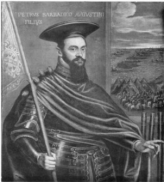
Plate 1: Lorenzo Venier, Commander-in-Chief of the Venetian Fleet (Museo Storico Navale, Venezia)
1.4 The Bedmar Plot and the 'Q' Ships of 1619
The most intriguing aspect of the conflict was the so-called "Bedmar Plot" of 1618. The Venetian Council of Ten, through a network of informants including the French soldier-of-fortune Baldassare Juven and the adventurer Jacque Pierre, uncovered a sophisticated conspiracy. The plan, allegedly orchestrated by Osuna with the possible involvement of the Spanish Ambassador in Venice, the Marqués de Bedmar, was to overthrow the Venetian government through internal subversion and a decisive external strike.
The most striking element of this plot was the design of specialized assault vessels, referred to in the documents as 'Q' Ships. A secret dispatch from the Venetian Resident in Naples, Spinelli, dated 2 July 1619, contained detailed plans for these ships, which had been procured from a source close to Osuna.
1.4.1 Design and Specifications of the 'Q' Ship
The vessel was a masterpiece of clandestine naval architecture, designed to appear as a merchantman while possessing the capabilities of a warship. Its primary characteristic was a shallow draught of only 10-11 feet, allowing it to cross the shallows of the Venetian lagoon (la fuosa). The design was a hybrid, combining features of a galleon and a galleass.
· Hull and Armament: The sheer plan (Plate 3) reveals a galleon-like hull with a high sterncastle and a pronounced beakhead, adorned with a figurehead of a galloping horse—a direct reference to the emblem of Naples and a provocation against Venice. It was designed to carry a powerful armament, with seven guns on the main deck and five smaller pieces on the upper deck. The structure was reinforced "a cassoni" (with transverse bulkheads) to withstand gunfire.
· Propulsion: The deck plan (Plate 4) shows its most innovative feature: oar ports for 22 oars per side, arranged in the manner of a galleass. This provided maneuverability independent of the wind, crucial for navigating the lagoon. The sails (Plate 6) followed a standard galleon rig: square sails on the fore and main masts, and a lateen on the mizzen.
· Tactical Plan: The audacious plan was for two of these vessels to enter the lagoon via the Malamocco gateway disguised as merchants. At a pre-arranged signal (the ringing of St. Mark's bell at 1:30 AM), they would reveal their true nature. One ship would land troops at the Arsenal to seize its gates, while the other would anchor off San Giorgio Maggiore and bombard the Ducal Palace. This would coincide with a fifth-column uprising within the city.
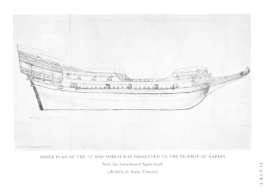
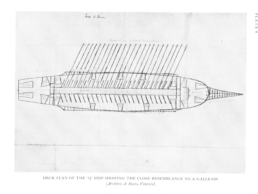
Plate 3: Sheer plan of the 'Q' ship presented to the Viceroy of Naples, showing the horse-shaped figurehead (Archivio di Stato, Venezia).
Plate 4: Deck plan showing the oar arrangement, resembling a galleass (Archivio di Stato, Venezia).
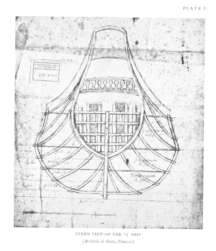
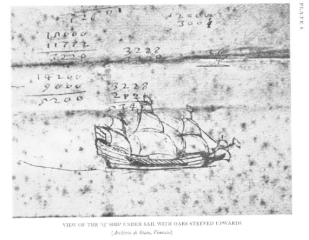
Plate 6: View of the 'Q' ship under sail with oars steeved upwards (Archivio di Stato, Venezia).
1.5 Denouement: The End of the Crisis
The conspiracy, combined with the escalating Thirty Years' War, forced Madrid to seek a settlement. Osuna's ambitions were increasingly viewed as a liability. In 1619, he was implicated in rumors of seeking to establish an independent kingdom in Naples. In May 1620, Cardinal Gaspare Borgia was sent by Madrid to peacefully remove Osuna from power. The once-powerful Viceroy returned to Spain, where, following the death of Philip III, he fell victim to court intrigue, was imprisoned by the new minister Olivares, and died in 1624。
The conspiracy, combined with the escalating Thirty Years' War, forced Madrid to seek a settlement. Osuna's ambitions were increasingly viewed as a liability. In 1619, he was implicated in rumors of seeking to establish an independent kingdom in Naples. In May 1620, Cardinal Gaspare Borgia was sent by Madrid to peacefully remove Osuna from power. The once-powerful Viceroy returned to Spain, where, following the death of Philip III, he fell victim to court intrigue, was imprisoned by the new minister Olivares, and died in 1624。
Last edited: