




7. Annie Buck Build Log
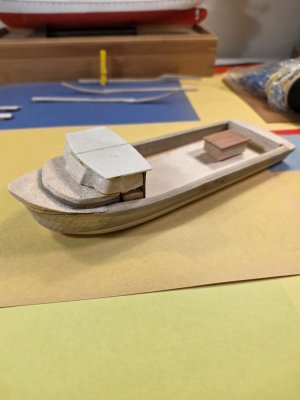
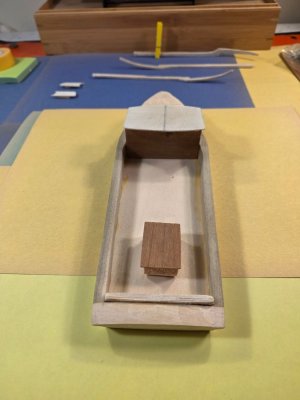
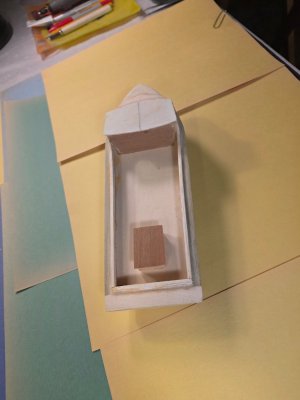
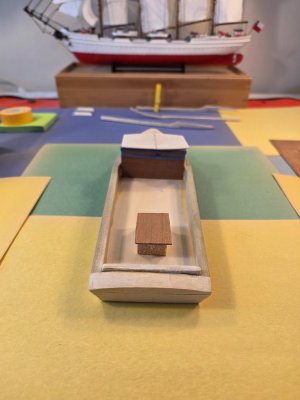
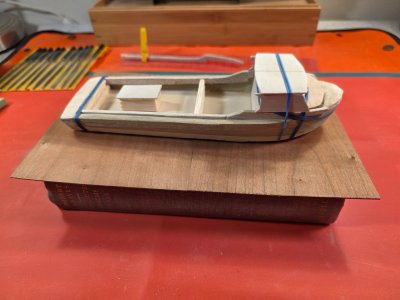
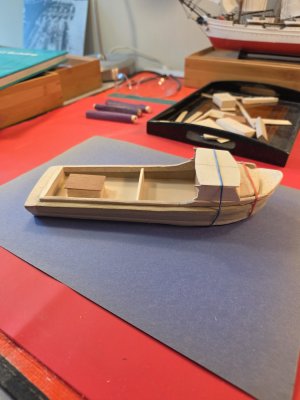
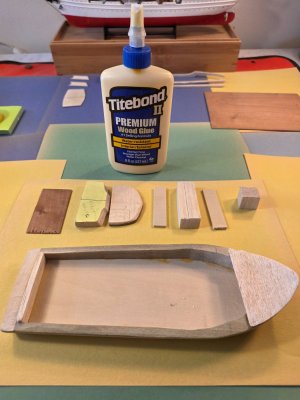
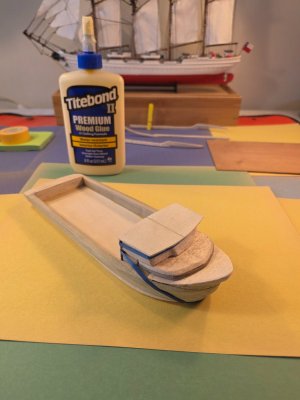
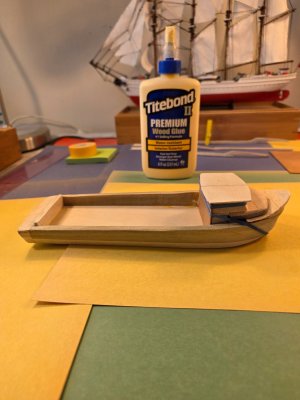
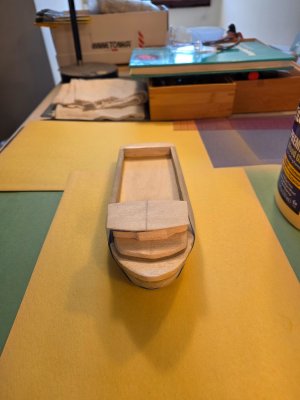
Today's tasks: Fairing the hull, final dry fitting and gluing Pilot House and Cabin, re-doing engine block.
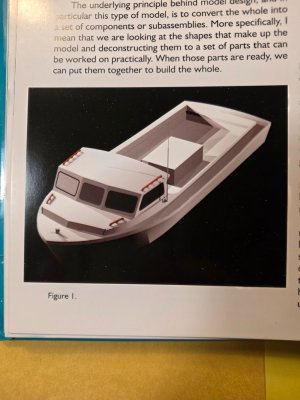
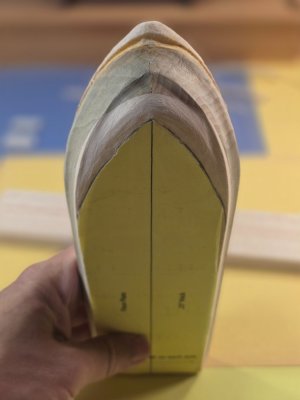
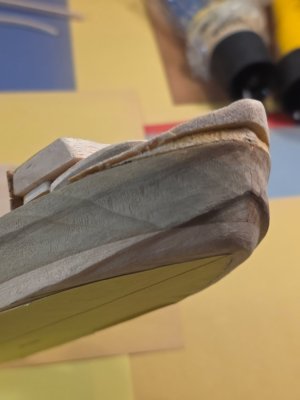
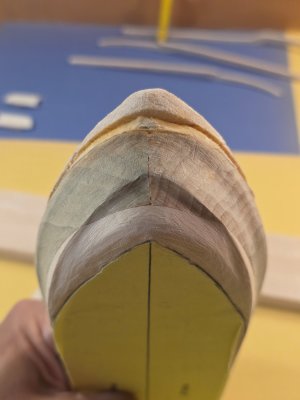
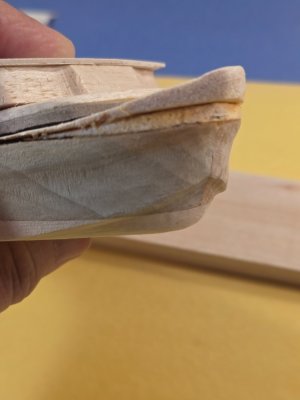
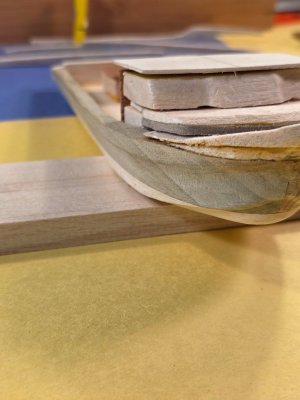
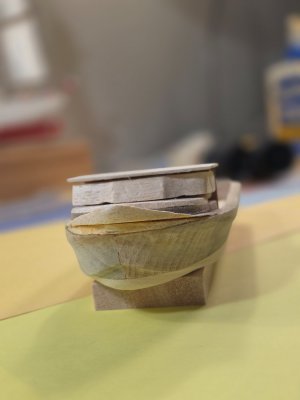
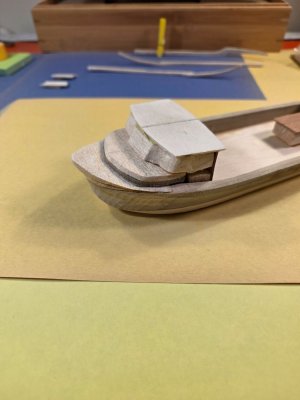
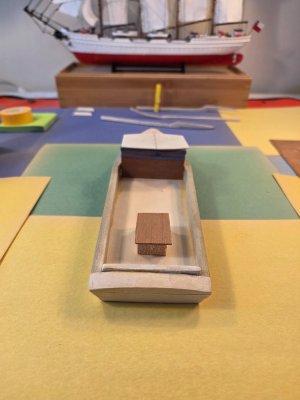
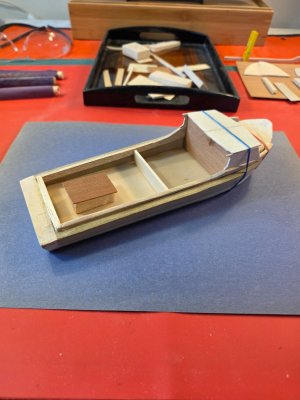
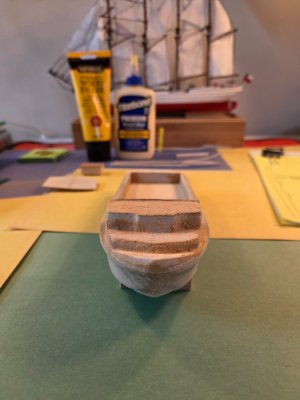
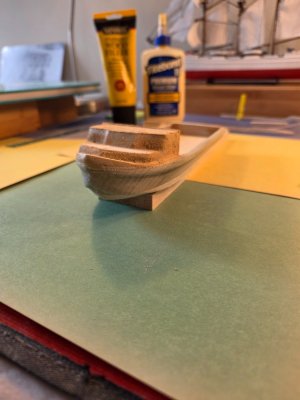
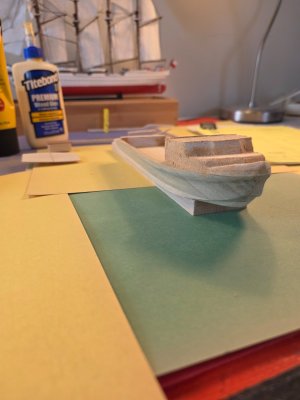
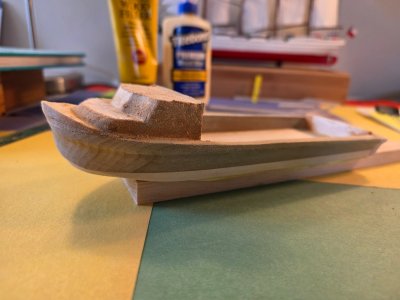
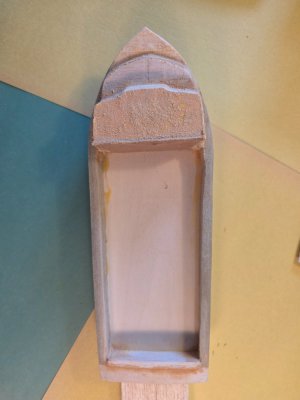
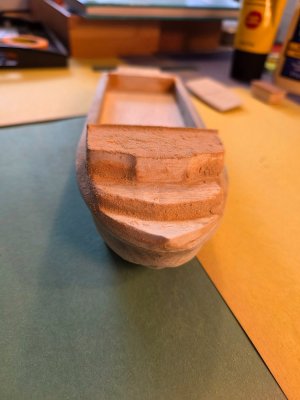
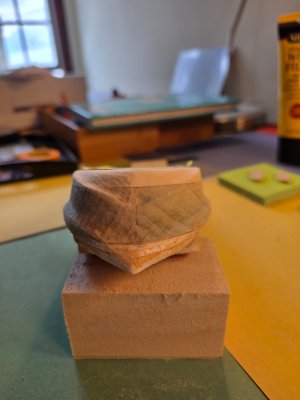
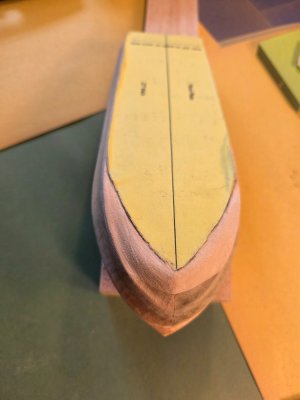
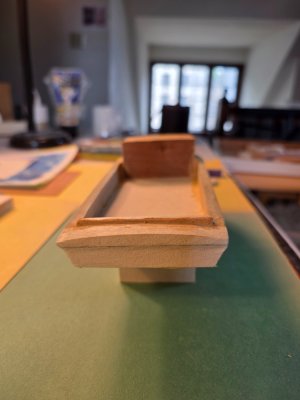
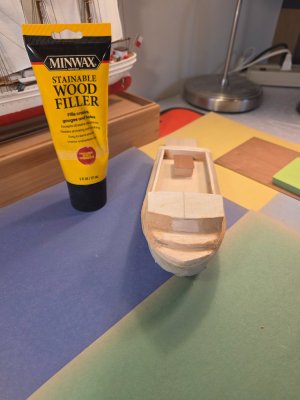
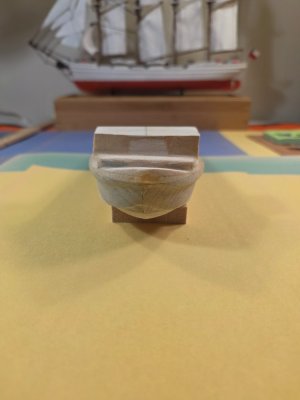
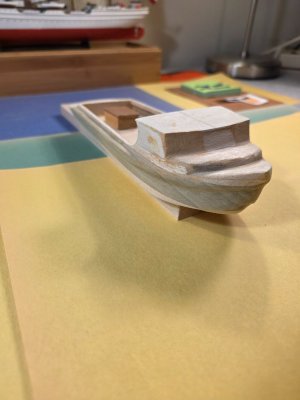
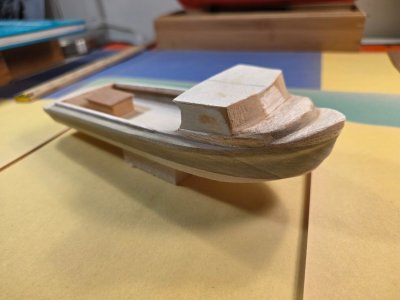
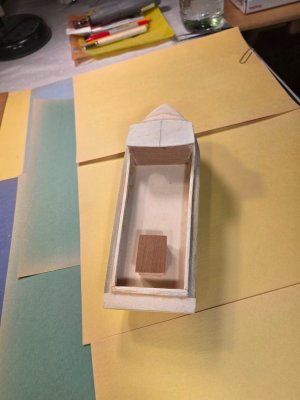
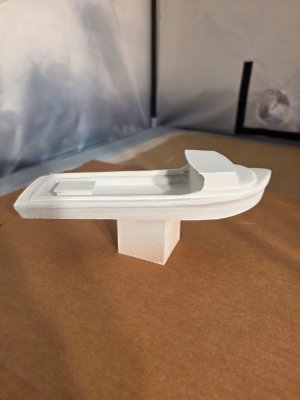
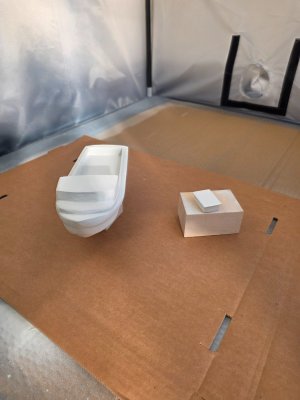
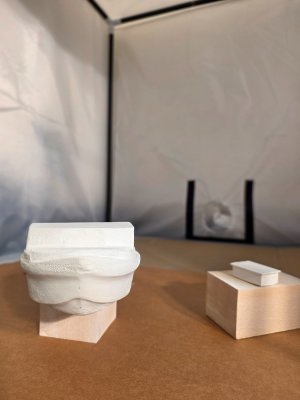
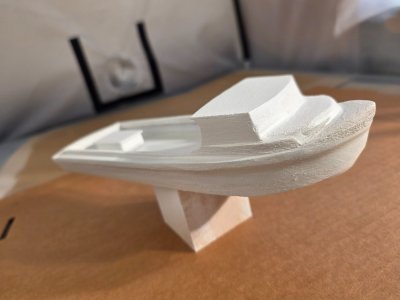
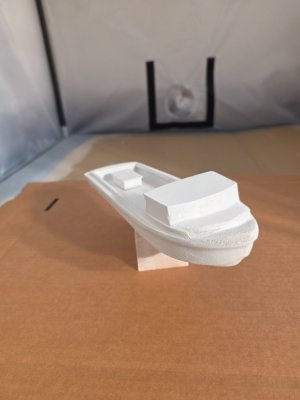
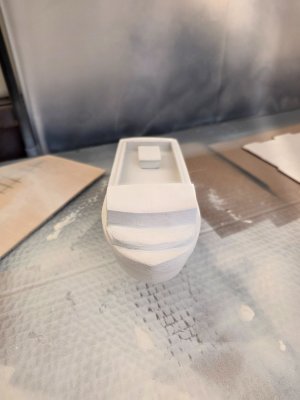
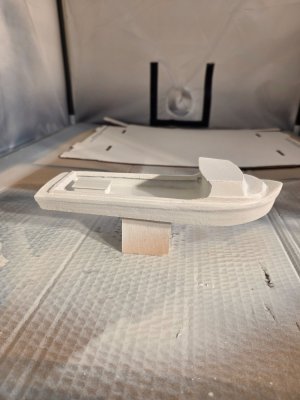
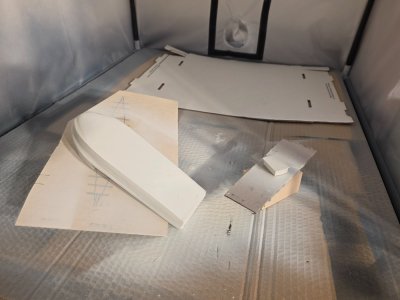
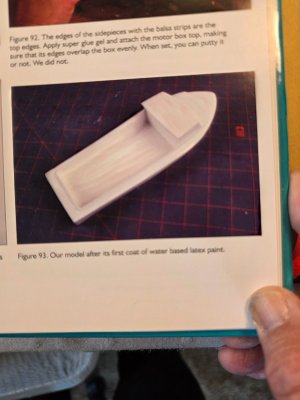
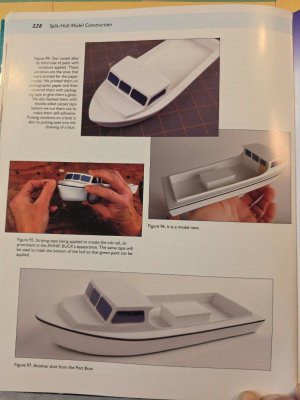
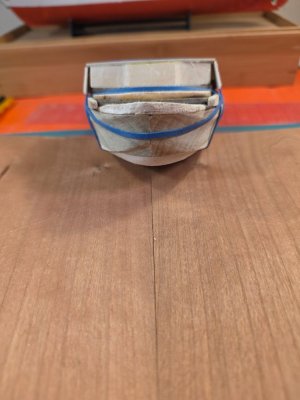
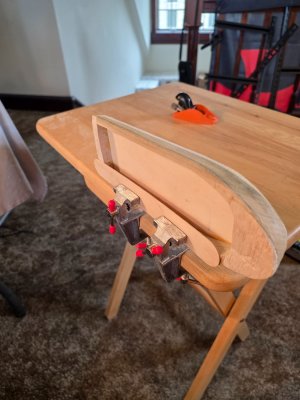
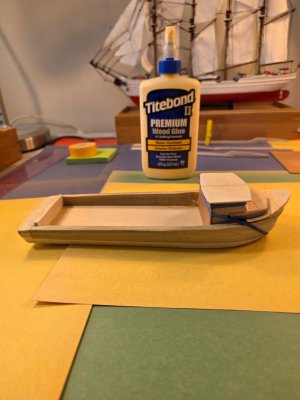
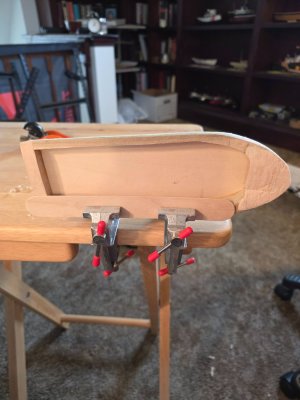
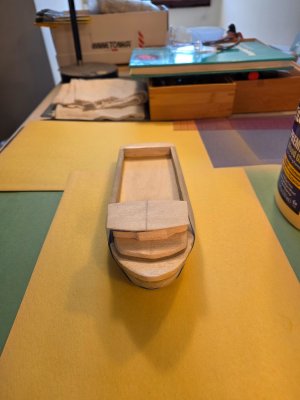
Progress pictures from the last couple of bench sessions. Spent alot of time shaping the hull following the 4 component hull lines:
(1) chine line rising at the bow from waterline to flare line,
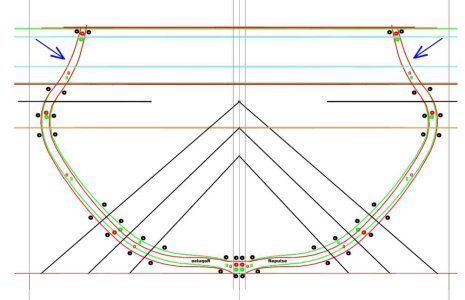
(2) flare line with concave sides, from chine to sheer line,
(3) the sheer line from transom to bow, and
(4) bow line from false stem to tumblehome.
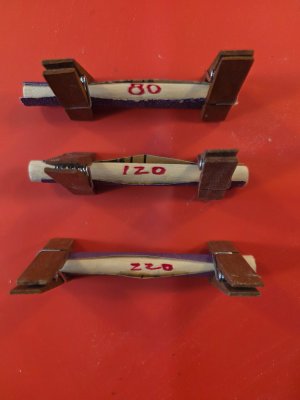
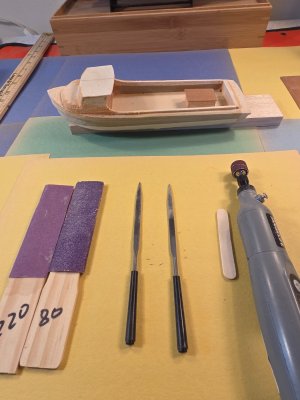
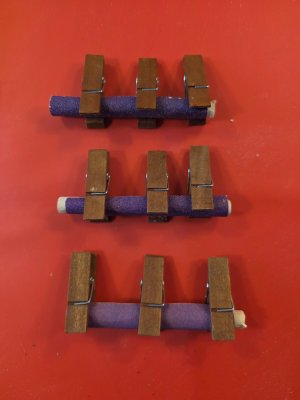
Shaping done mostly with home-made dowel/sandpaper jigs in 80, 120 and 220 grit.
Started using some cherry sheet stock for the top of the engine box and the back wall of the pilot house. It's the only 1mm sheet stock I have.
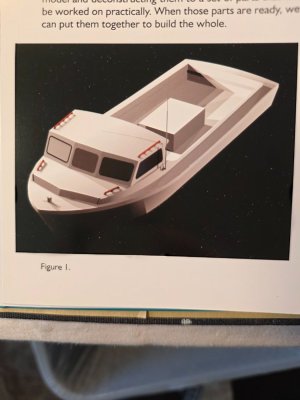
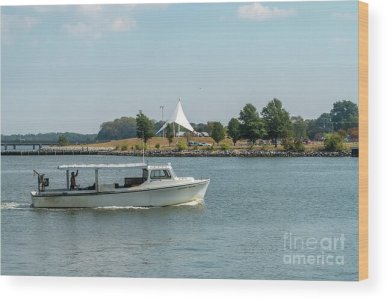
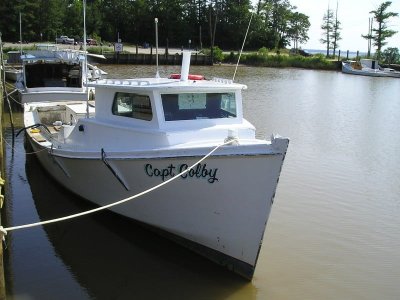
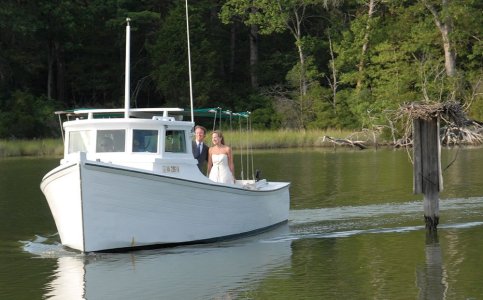
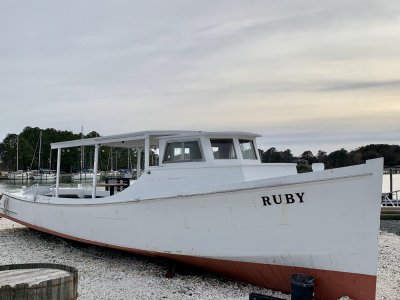
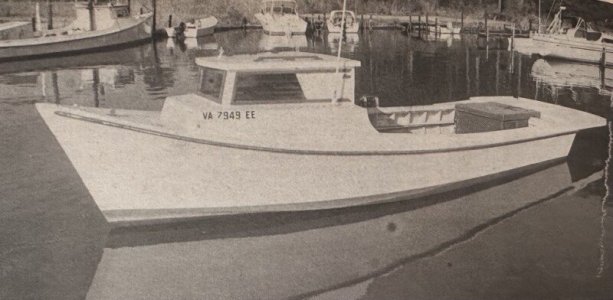
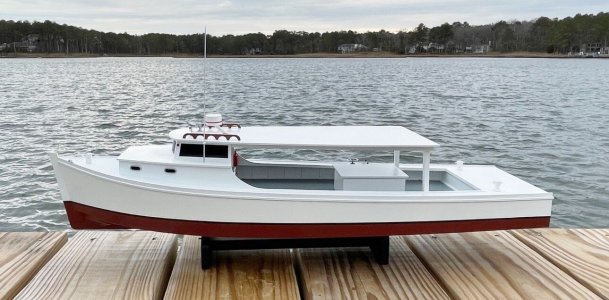
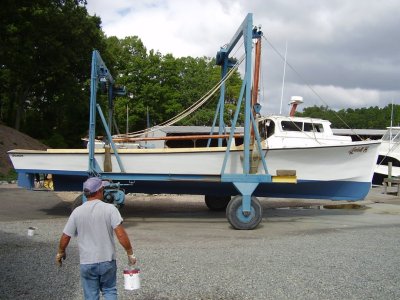
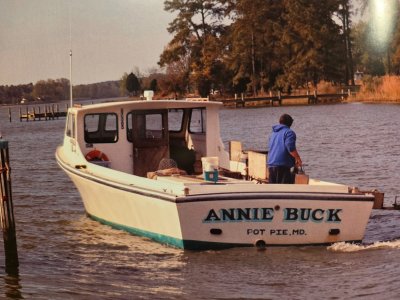
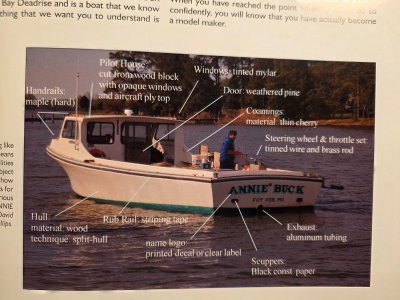
Showing pics of some real Chesapeake Bay deadrise oyster/crab working boats. The flare in the port and starboard sides has to be concave and the vertical angle of the bow is severe (over 60 degrees) in these type of boats. I added another layer of balsa at the bow to increase the verticality of the bow, which ultimately (after much sanding) will join both sides into a false stem.
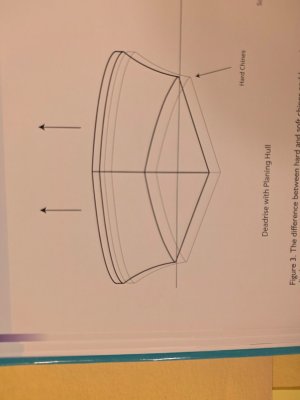
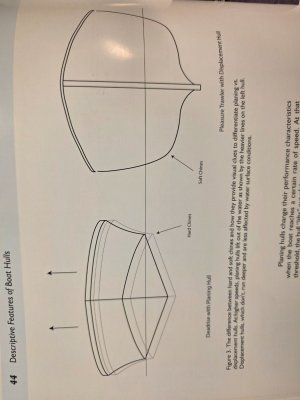
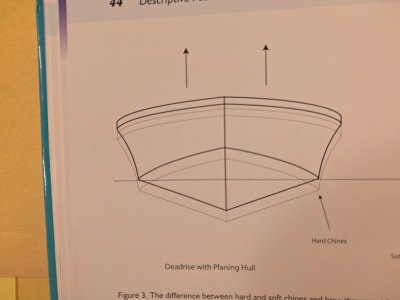
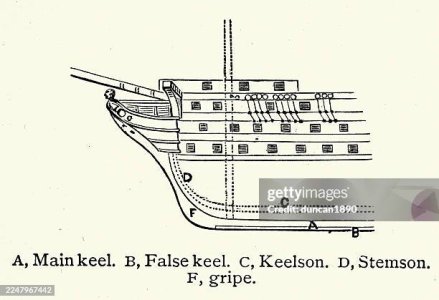
I learned alot about the difference between "planing" hulls and "displacement" hulls. The Annie Buck has a planing hull because the chine and flared sides effectively lift the boat slightly above water by forcing water down along the line of propulsion -- as opposed to displacement hulls like a ship of the line or tall sailing ship which effectively pushes water outward from the hull for stability from the line of the keel.
After fairing the sides of the hull from the sheer line to the chine line, I planed the toprails to get the sheer line as close to smooth as possible. This pine stock that I am using for the hull is pretty grainy and accepts the planer well. The trick is that the grain of the transom is cross-ways (perpendicular) to the grain on the hull sides. So using the planer I had to pull up as the plane approached the transom. I separately used my sandpaper jigs to also sand a flare into the transom cross-wise from the line of the hull.
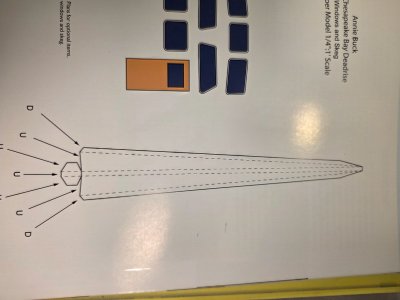
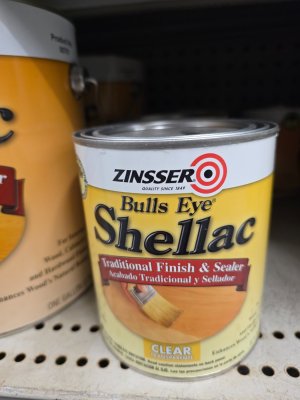
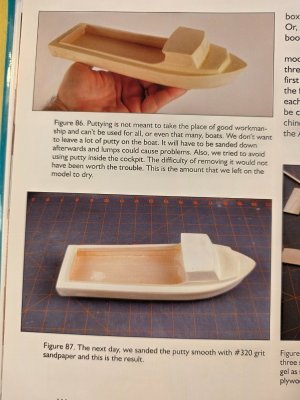
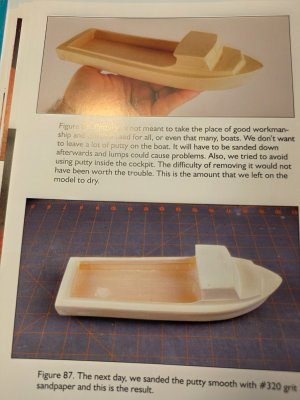
The front of the vessel will dry overnight, then tomorrow will be spent filling the sides of the pilot house with wood putty (homemade or store-bought), fixing a couple of divots in the inner wales and prepping everything for pre-staining / pre-painting with shellac. After the shellac dries, I will use the window decals as templates for stenciling on the window outlines and painting the windows. For the rear door of the pilot house, I will probably fabricate the door out of the 1mm cherry stock I have on hand.
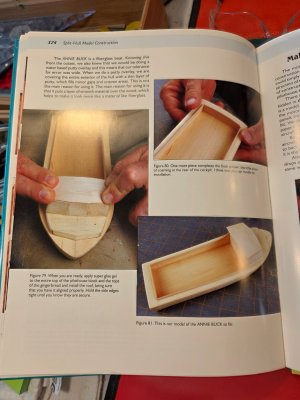
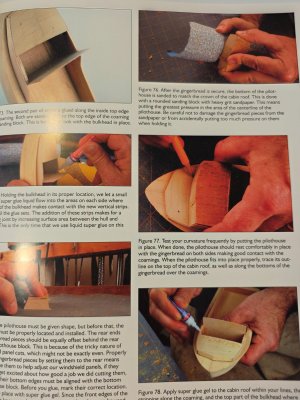
Today's tasks: Fairing the hull, final dry fitting and gluing Pilot House and Cabin, re-doing engine block.
Progress pictures from the last couple of bench sessions. Spent alot of time shaping the hull following the 4 component hull lines:
(1) chine line rising at the bow from waterline to flare line,
(2) flare line with concave sides, from chine to sheer line,
(3) the sheer line from transom to bow, and
(4) bow line from false stem to tumblehome.
Shaping done mostly with home-made dowel/sandpaper jigs in 80, 120 and 220 grit.
Started using some cherry sheet stock for the top of the engine box and the back wall of the pilot house. It's the only 1mm sheet stock I have.
Showing pics of some real Chesapeake Bay deadrise oyster/crab working boats. The flare in the port and starboard sides has to be concave and the vertical angle of the bow is severe (over 60 degrees) in these type of boats. I added another layer of balsa at the bow to increase the verticality of the bow, which ultimately (after much sanding) will join both sides into a false stem.
I learned alot about the difference between "planing" hulls and "displacement" hulls. The Annie Buck has a planing hull because the chine and flared sides effectively lift the boat slightly above water by forcing water down along the line of propulsion -- as opposed to displacement hulls like a ship of the line or tall sailing ship which effectively pushes water outward from the hull for stability from the line of the keel.
After fairing the sides of the hull from the sheer line to the chine line, I planed the toprails to get the sheer line as close to smooth as possible. This pine stock that I am using for the hull is pretty grainy and accepts the planer well. The trick is that the grain of the transom is cross-ways (perpendicular) to the grain on the hull sides. So using the planer I had to pull up as the plane approached the transom. I separately used my sandpaper jigs to also sand a flare into the transom cross-wise from the line of the hull.
The front of the vessel will dry overnight, then tomorrow will be spent filling the sides of the pilot house with wood putty (homemade or store-bought), fixing a couple of divots in the inner wales and prepping everything for pre-staining / pre-painting with shellac. After the shellac dries, I will use the window decals as templates for stenciling on the window outlines and painting the windows. For the rear door of the pilot house, I will probably fabricate the door out of the 1mm cherry stock I have on hand.
Last edited: