• Win a Free Custom Engraved Brass Coin!!!
    As a way to introduce our brass coins to the community, we will raffle off a free coin during the month of August. Follow link ABOVE for instructions for entering.
  • PRE-ORDER SHIPS IN SCALE TODAY!

    The beloved Ships in Scale Magazine is back and charting a new course for 2026!
    Discover new skills, new techniques, and new inspirations in every issue.

    NOTE THAT OUR FIRST ISSUE WILL BE JAN/FEB 2026

Bluenose I - YuanQuin 1:72 - Loracs (in progress)

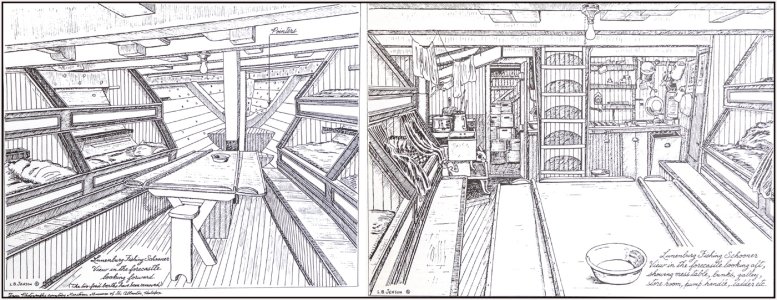
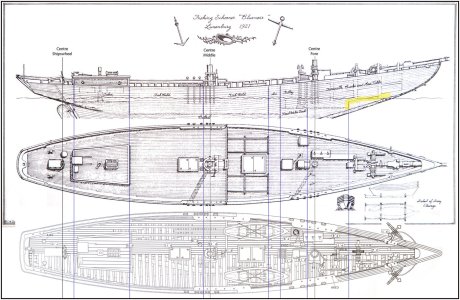
Unclear about the forecastle deck: The first picture is from the documentation showing the forecastle deck. However, I just can't seem to see it in any of the plans for the Bluenose I or II? I'm including a picture from the saga below too. All I'm seeing is a deck quite far down, almost at the waterline. Am I missing something or is the deck outlined in the kit just.... kit specific?

Happy new year all!

View attachment 567684View attachment 567685
I supposed that it was there interpretation for the basement for all the uprights.
I have never found pictures or detailed drawings of the construction of that area. Only different interpretations by Jenson, Eisnor, Lankford and Chapelle.
Regards, Peter
 
Greeting all, thanks for the comments. Looking back at several log/posts, I see that this was indeed discussed before. It is reassuring to see that I'm not just missing something, but that this is an area that the kit developer may have taken some freedom in design. This makes sense since they did not intent to represent the interior at all. Good to know though, I will take this in account and do more dry fitting to see how I would implement this area.
 
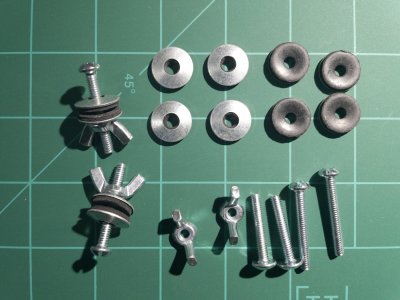
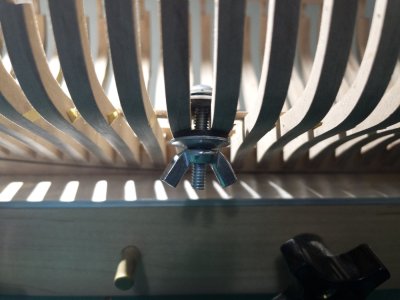
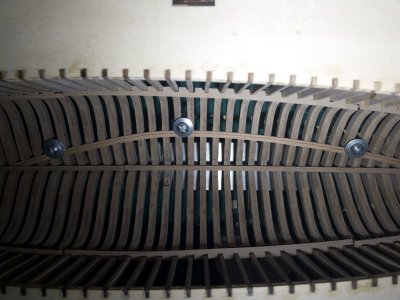
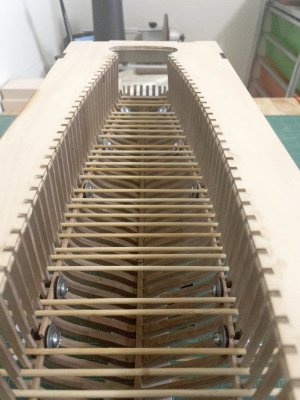
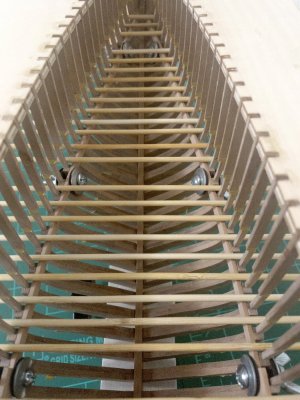
Fasteners: While visiting our local hardware store for screws and butterfly nuts #8, I came across these - Sealing washers. They are basically conical washers with a 2mm undercoat of rubber. You are seeing where am going... the lazy approach fasteners, very similar to many posts using similar screws, only without the effort of building it. The conical shape and the play around the #8 screw allow for flat placement in irregular places. Thin and grippy, even with little pressure.

IMG_3743.jpegIMG_3746.jpegIMG_3747.jpeg
 
Last edited:
I supposed that it was there interpretation for the basement for all the uprights.
I have never found pictures or detailed drawings of the construction of that area. Only different interpretations by Jenson, Eisnor, Lankford and Chapelle.
Regards, Peter
Due to my deviating from plans in this area, I didn't pay attention to the drawings nor the description. what I did pay attention to, were the bits and pieces which are located on the foredeck and had locator holes in the deck.
 
New year resolution: This year, I was thinking about a few resolutions - not health related - that I would likely enjoy in the long term but require that I push myself short term. My new year resolution is to:

Learn CAD software: As I build ship, I found myself increasingly thinking of ways to increase accuracy and, of course, historical representation. Since I won't be doing scratch build anytime soon due to space constraints, I thought I could add some skills in CAD, more precisely the open source FreeCAD. I hope this will help designing and executing modifications, and the bluenose interior would be a great practical example. This will slow my build log, but I can incorporate it as reference to other. Let see IF I will have the diligence. Hehe!

Learn Blender: In the same area, Blender is quite attractive to me. Looking at many examples of virtual ship representation is fascinating. As an extension to physical building, why not try virtual modeling. This is long term but, like mostly anything, you need to start with the basic and walk your way up. Blender seen a great example of that and I think it will be fun... once the basic is out of the way and I could start modeling ships. Likely couple years? no idea but I'm not in a rush.
 
Learn CAD software: As I build ship, I found myself increasingly thinking of ways to increase accuracy and, of course, historical representation. Since I won't be doing scratch build anytime soon due to space constraints, I thought I could add some skills in CAD, more precisely the open source FreeCAD. I hope this will help designing and executing modifications, and the bluenose interior would be a great practical example. This will slow my build log, but I can incorporate it as reference to other. Let see IF I will have the diligence. Hehe!
Expect a steep learning curve. I'm using FreeCAD to generate 3D-models for my Kolibrie-build and for sure it ain't an easygoing process. Professionally I was used to the Assault Systémes CATIA software, but transferring to another application means basically starting from scratch again, although many features, like axis systems, surface definitions, boolean operations, to name a few, are used by all applications.
There are numerous free instruction vids and addons to FreeCad, which are really helpful, but you have to develop your own methods on how to create your parts and assemblies. At the same time, you'll also need to develop ideas on the manufacturing of your parts.
I also considered the free version of Autodesk Fusion, but if I understood correctly, Autodesk only allows you ten different models to be generated with the free version. And again, also Autodesk Fusion has a steep learning curve.
Enjoy the experience!

Below the redo of my initial models. I initially modeled full scale, but when I tried to scale down to 1:24, I ran into serious issues. That's when I decided to model in 1:24.
I am also using imported images to ease the work. If you're using images, make sure to check the ratios, both vertical and horizontal...
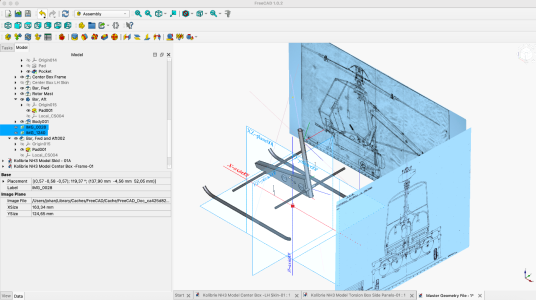

Scherm­afbeelding 2026-01-04 om 17.02.50.png
 
@RDN1954, thanks for the inputs. Your model seen to be coming along nicely. This is exactly what I would like to achieve one day. I have been thinking about it for literally years... but never took the plunge due to the steep learning curve. What discourage me was that I try to move ahead too rapidly... and got overwhelmed. Will try to be more patient this time. Before jumping to helicopter or ship... learn with simpler objects. I never realized that scaling could become an issue... nice to know.
 
What discourage me was that I try to move ahead too rapidly... and got overwhelmed. Will try to be more patient this time.
Before jumping to complex parts or assemblies, try the details on small, simple examples with basic features. Once feeling more confident, try the more complex part. It'll save you quite some frustrations and too rapidly filling swear jars.
 
Last edited:
Before jumping to complex parts or assemblies, try the details on small, simple examples with basic features. Once feeling more confident, try the more complex part. It'll save you quite some frustrations and too rapidly filling swear jars.
A good advice from Johan. I consider my first two attempts to be part of the ‘steep learning curve’. With the third new setup, I was able to achieve my desired result. But it was still far from a fully 3D model.
Regards, Peter
 
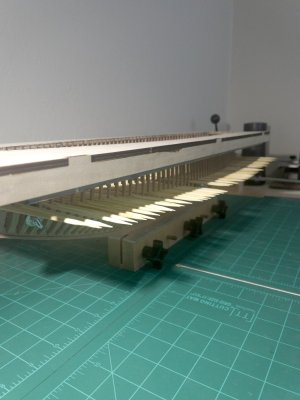
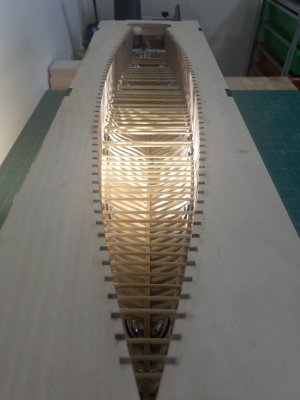
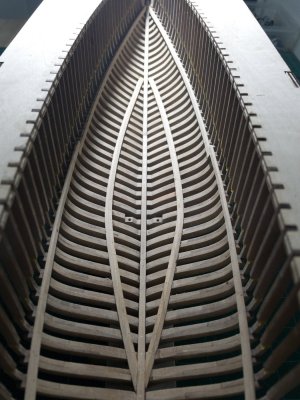
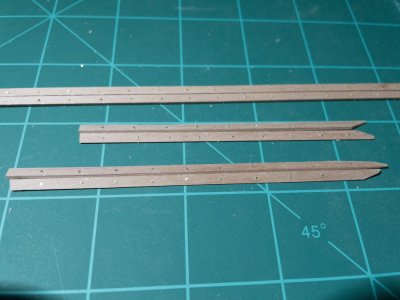
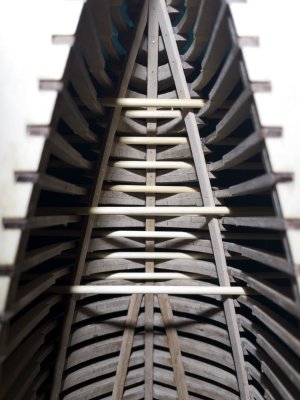
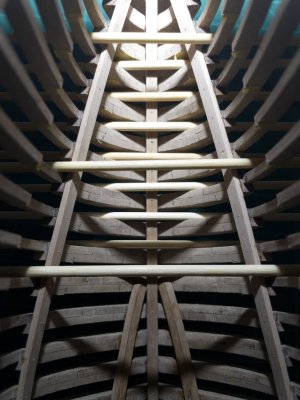
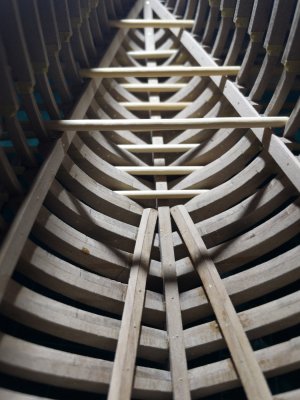
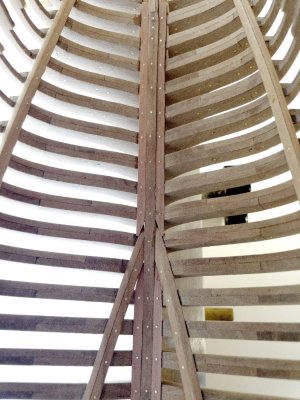
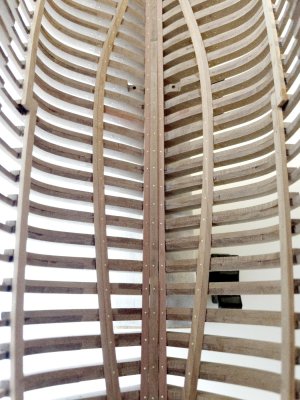
Bearing beams, dry fit: The bearing beams, fared and fixed, are tested using Peter's idea of using bamboo sticks. Faring took a while to do manually, but all seen ok. The front-end and transition in the middle still needs a little tweaking.

IMG_3753.jpegIMG_3759.jpegIMG_3748.jpegIMG_3749.jpeg
 
Last edited:
Back
Top