• Win a Free Custom Engraved Brass Coin!!!
    As a way to introduce our brass coins to the community, we will raffle off a free coin during the month of August. Follow link ABOVE for instructions for entering.
  • PRE-ORDER SHIPS IN SCALE TODAY!

    The beloved Ships in Scale Magazine is back and charting a new course for 2026!
    Discover new skills, new techniques, and new inspirations in every issue.

    NOTE THAT OUR FIRST ISSUE WILL BE JAN/FEB 2026

Colors/Colours

Joined
Oct 3, 2025
Messages
5
Points
13

I am interested in members view on the colour e used on 18th century ships, it would seem that there is quite a propensity for toy town Colors. But bright colours were not really a thing until coal tar dyes were invented in the late 19th century. So most paints prior to this involved natural pigments, ie Red ochre, and to have good clolor fasteness high ratios of pigment to brinder woulhd be required = expensive. So one would assume decks etc would be become quite muted, any ideas?
 
Here's a post that may help.

 
I am interested in members view on the colour e used on 18th century ships
What year? 100 years is a long time, and things changed drastically in ship building during the 18th century. In addition to the contemporary paintings that Iutar mentioned there are hundreds of photos of contemporary models on the RMG site and Preble Hall site and elsewhere that you may find helpful. I am pretty sure there was no set rule regarding paint colors, a lot depended on the amount of money in the captain's wallet. The amount of detail on the old models varies. An example for the 18th century would be the hull below the water line. They were coated with white stuff—a mixture of whale oil, rosin, and brimstone (sulfur) for more than half the century then had copper sheathed bottoms. Most contemporary models of ships that had coppered bottoms do not show the copper plating. Years ago I asked about this and RMG responded that it was, as today, near impossible to produce sheathing to scale so occasionally the model builder would just paint the bottom copper color or leave it with no coating at all.
Allan
 
Last edited:
Also, Nationality and type of ship. Most paint was expensive so humble vessels and lesser warships favored cheap colors, dull red (iron oxide), black (lampblack, and yellow ochre.

Prestige vessels that the Rulers were willing to spend money on would decorate their ships with more expensive colors, notably blue.

Roger
 
What year? 100 years is a long time, and things changed drastically in ship building during the 18th century. In addition to the contemporary paintings that Iutar mentioned there are hundreds of photos of contemporary models on the RMG site and Preble Hall site and elsewhere that you may find helpful. I am pretty sure there was no set rule regarding paint colors, a lot depended on the amount of money in the captain's wallet. The amount of detail on the old models varies. An example for the 18th century would be the hull below the water line. They werecoated with white stuff—a mixture of whale oil, rosin, and brimstone (sulfur) for more than half the century then had copper sheathed bottoms. Most contemporary models of ships that had coppered bottoms do not show the copper plating. Years ago I asked about this and RMG responded that it was, as today, near impossible to produce sheathing to scale so occasionally the model builder would just paint the bottom copper color or leave it with no coating at all.
Allan
Hi Allan,
It was partly a general question about mid to late 18th century ships, but I have a VM Indefatigable kit (1794) which I am about to start and do not like the Colors as shown in the manual etc., particularly the bright red of the inner bulwarks, gun carriages and other deck furniture and would like it to look less toy like. I have used stains in the past with pleasing results, which also preserves the appearance of wood more. But was looking for inspiration as I like to pre plan my builds.
 
I did quite a bit of research for use on my Granado. The basic colors are not very much of a problem. For white, I used a very light gray and like the appearance. For black, I intend to use a very dark gray. Pure black starts to look toy-like to me. To me, the main concern is the color red used on these vessels. I've always felt it should be something close to barn red, red ochre or red oxide, red ochre being one of the earliest red colors. Wikipedia describes a color called English Red, used from around 1700, but don't specify if it was for naval use. I played around with dozens of red colors, bought about 10 of what I thought was best, mixed others to match samples I'd found online, etc. The most accurate colors, to me, ended up not bright enough when compared to a medium red-brown wood or stain. Red Ochre color is sold by some companies, although the hue varies. I ended up using Pro Acryl Red Oxide, a slightly later color but, to me, a good contrast to use - not too bright, not too dull. Online color shown, color on my model (camera color can vary):
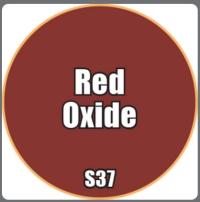
1763826654415.png 1763826576841.png 1763827393657.png

The color that confuses me is the quite bright red color purported to be on the HMS Victory. On the Wiki English Red page, it's quite close to Venetian Red. I personally think this is too bright, at least for me common bomb vessel. Too fancy, too striking. I want to see the red, but I want it to look like it's part of the model, that it belongs, and fits in with the other colors. For me, that's Red Oxide.

Likewise, if you have a yellow color, it's should almost certainly be Yellow Ochre, also made by some companies.

In the end, it should be what's pleasing to you and fits in with your model. Even the Victory colors were apparently far off from accurate for many years, and many still disagree with the latest recommendations. Suit yourself. Just remember, it's a scale model and not a toy.

 
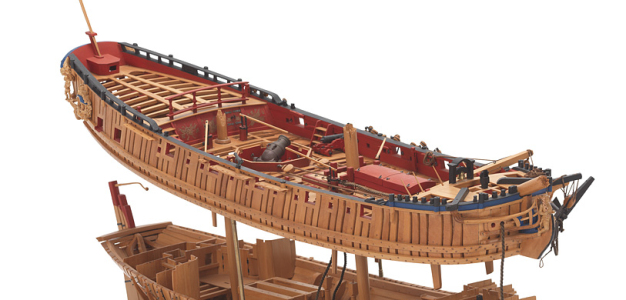
Here is a photo of the model of the 1742 Granado in the National Maritime museum, and basically what I'm going for on my Granado. A lot of red, yet due to the hue, it all seems to fit together and seems appropriate:
1763828094876.png
 
My career involved shop fabrication of heavy steel piping that would be insulated once it was erected in the field. Specifications commonly required painting with Red Oxide Primer as a temporary protective coating. Why red oxide? It’s cheap. The color also varied by manufacturer from Signet’s sample posted above to a much brighter red. This is in modern times with pre mixed paint and synthetic resins.

Imagine how the color “red oxide” must have varied 200 or so years ago without paint chip color standards and using natural pigments. Red Oxide is iron ore, and that can vary widely in color and other properties depending on its mineral deposit.

So, trying to figure out the “real red” used to paint these sailing warships is probably impossible. I would, however, avoid a garish look with bright red.

Roger
 
Hi Allan,
It was partly a general question about mid to late 18th century ships, but I have a VM Indefatigable kit (1794) which I am about to start and do not like the Colors as shown in the manual etc., particularly the bright red of the inner bulwarks, gun carriages and other deck furniture and would like it to look less toy like. I have used stains in the past with pleasing results, which also preserves the appearance of wood more. But was looking for inspiration as I like to pre plan my builds.
You can't go by the colours shown in manuals as they are only a guide. Brighter ones are used to enhance the photos, in many cases.
 
While the following will be no help in choosing colors, you may find it interesting. It is from the original contract for HMS Nassau (64) 1782, so contemporary to Indy.
Allan

1763915716085.jpeg
 
VM Indefatigable kit
VM makes a good quality kit to be sure, but beware, some of their ship's boats have pretty glaring mistakes on the pictures on their website that are easily corrected if you want to. Hopefully they have fixed them even if the photos on their website photos still show their mistakes on the tholes and planking.
Allan
 
In about 1990 master modeler and maritime history researcher Eric Ronnberg wrote a lengthy article about paint colors of the past. It was published in the Nautical Research Journal and republished in abbreviated form in the Guild’s Shop Notes and on their website. Ronnberg’s interest is Nineteenth Century vessels but he explains that the color chips included in the article are for colors used prior to the development of synthetic pigments. Ronnberg was editor of the Journal when this article was published and could control the quality of the presentation. He writes that he took care to ensure that the color samples presented in the article were not changed by the publishing process.

I know of no better, readily accessible reference.

Roger
 
It is something of a myth that bright colours were not available before the chemical processes of the 19th century. This is true for dyes for cloth, which were mostly (but not entirely) based on organic compounds derived from plants until the development of aniline dyes. Pigments for paints are almost all ground minerals, and have been for thousands of years, as evidence from Bronze Age sites in the Mediterranean show. These pigments can produce dull or vivid colours depending on the pigment, how it is mixed, and even to how it is applied. Pigments vary widely in cost, which does affect colour choice (as noted above). Bright yellow was available from orpiment (an arsenic compound), bright red from some expensive minerals such as carnelian, but also from relatively inexpensive mine tailings from the copper industry. A reasonably bright blue was made from smalt (another byproduct of mining), while the most intense blue came from cobalt-rich ores that were rare and quite expensive. At the extreme end of the scale were semi-precious stones such as lapis lazuli, crushed to make the most intense blue, and malachite, to make bright green

We have studied the pigments on Vasa in detail, and it shows the use of a bright, garish, even vulgar selection of colours typical of the late Renaissance in northern Europe. The colour scheme is dominated by reds and yellows, with lesser use of blues, greens and purples, almost all derived from minerals, many of them waste products of the copper mining industry. A deep, rich black was made from lampblack, with the best quality lampblack produced from burning animal bone. Later in the 17th century, Swedish ships moved to a less outrageous colour palette, but this was due to fashion, not the limitations of the pigments.

Bright colours could also be suggested by careful painting. On Vasa, gilding is simulated (or enhanced) in some places by a base coat of yellow ochre (an iron product and cheap) with highlights in bright yellow orpiment (a little more expensive but not prohibitive) and a small amount of actual gilding. This technique was also used to enhance sculptures on British ships in the 18th century, as analysis of some surviving pieces has shown.

In 18th-century England, vivid colours were often in fashion for house interiors and exteriors, although most people today think about colours that have remained popular, such as the more muted "Williamsburg" blues and greens. If you visit a Georgian country house that has been restored to its original colours, it can be a little shocking to step into a room painted in intense lemon yellow. So it is entirely possible that colours on a warship could also be vivid - the pigments were available, and taste veered in that direction some of the time.

Fred
 
Erik Ronnberg Nautical Research Journal
  • Paint and Colors for American Merchant Vessels, 1800-1920: Their Study and Interpretation for Modelmaking, 36:202-208
 
Back
Top