

- Joined
- Aug 8, 2019
- Messages
- 5,922
- Points
- 738

I work between 3000-5000 RPMThank you,
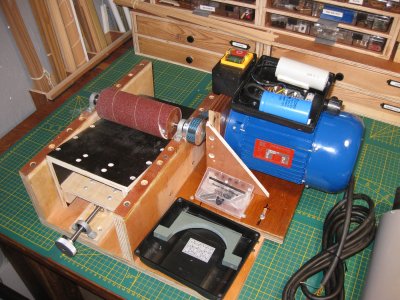
What is a good RPM for the sanding drum?

 |
The beloved Ships in Scale Magazine is back and charting a new course for 2026! Discover new skills, new techniques, and new inspirations in every issue. NOTE THAT OUR NEXT ISSUE WILL BE July/August 2026 |
|
 |
As a way to introduce our brass coins to the community, we will raffle off a free coin during the month of August. Follow link ABOVE for instructions for entering. |
|
I work between 3000-5000 RPMThank you,
What is a good RPM for the sanding drum?
I have received most of the parts now and cut the plywood. Did you use the nut insert and machine screws to fasten the ball bearings and normal wood screws for the rest?I work between 3000-5000 RPM
Yes. The parts that you have to release now and then. Like the bearings.I have received most of the parts now and cut the plywood. Did you use the nut insert and machine screws to fasten the ball bearings and normal wood screws for the rest?
Starting to come together.Yes. The parts that you have to release now and then. Like the bearings.
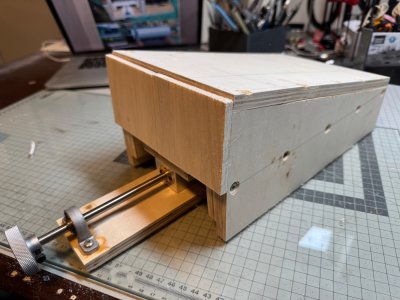
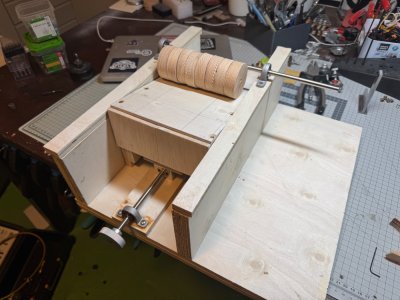
That's the difficult part. Make sure everything is lined up correct. This will give you advantage in the future.Dry fitting the rest of the parts.
Yes. I need a break now before the final assembly. I am not super happy with the height difference between left and right side. If I start raising one side then it will no longer be parallel with the top plate (F). I will see where I stand after creating the drum.That's the difficult part. Make sure everything is lined up correct. This will give you advantage in the future.
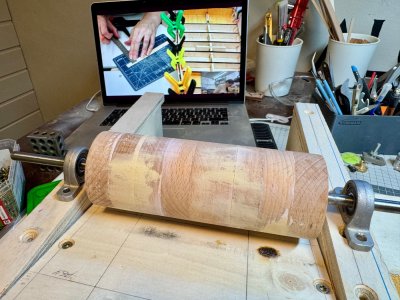
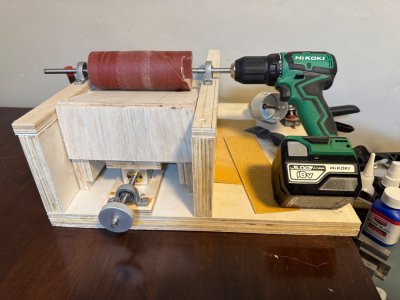

No Idea, I used for the drum hardwood. And when the wood changes it wil do it over the lenght. So you will never novice in your result. Because you sand and measure till your result is goodGreat design. I'm looking to sand rather thin material reliably. Frequently down to 0.4mm. I've always wondered, do these wooden drums become distorted from humidity changes?
Thanks. It is also stable, because the sled will always be straight to the drum. I had to sold mine, because someone needed one. But there are plans to build a new one in the future.I guess any minor inconsistencies are averaged out by the rotation. I've been wanting to turn my spindle sander into a thicknesser for some time and your design is the best I've seen for making adjustment.
Thank for sharing it.

I go by the rule: 1700 RPM max - too fast and there could be char.What is a good RPM for the sanding drum?
And it will cover EVERYTHING in the environment - especially if the grit is 220-240.A dust cover/suction is a luxury you will need. The very fine dust that comes from the machine will give you bad lungs
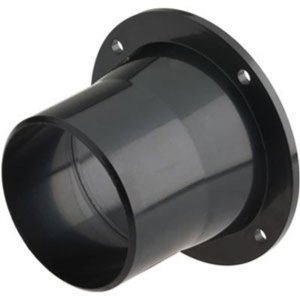
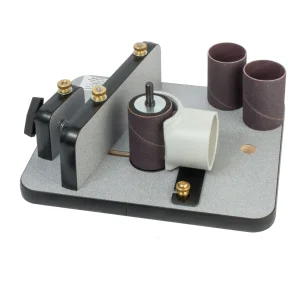
Well, I'm a year late to the party, but I found that the links to Parts 1, 3, and 4 in the parts list no longer work. Seems like the parts aren't available. Are there any substitute parts that you can recommend? Thanks!!!!While sanding the drum, the motor got very hot and I realized that indeed it has to work harder now. I solved this problem by opening up the top of the housing and mounting a small computer fan on it that I had left in a box. Power supply of 12 Volts to it and the whole thing is cooled. (Suction effect)
View attachment 324197
Then I placed the sanding cloth, which I wrapped diagonally around it and cut to size. By making a flat piece at the end of the drum and placing a screw socket in it, I can fix the sanding sheet there.
View attachment 324198
The machine is ready after everything is assembled and a first test gives a perfect result.
View attachment 324199View attachment 324200View attachment 324201
Thanks for reading this DIY
Attached are the pdf files needed.
If there are any questions I would love to hear about them.
No problemWell, I'm a year late to the party, but I found that the links to Parts 1, 3, and 4 in the parts list no longer work. Seems like the parts aren't available. Are there any substitute parts that you can recommend? Thanks!!!!