





- Joined
- Dec 7, 2022
- Messages
- 217
- Points
- 113
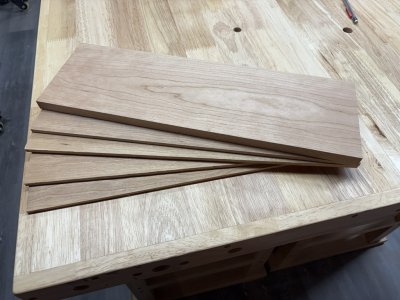
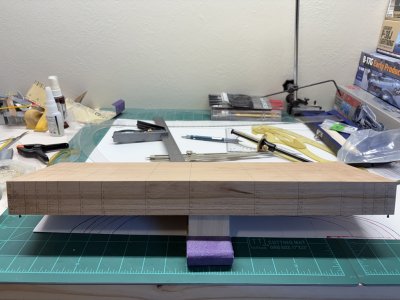
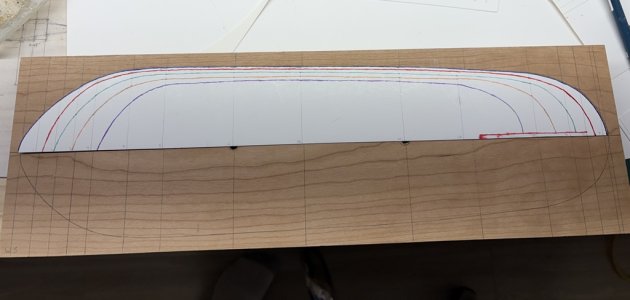
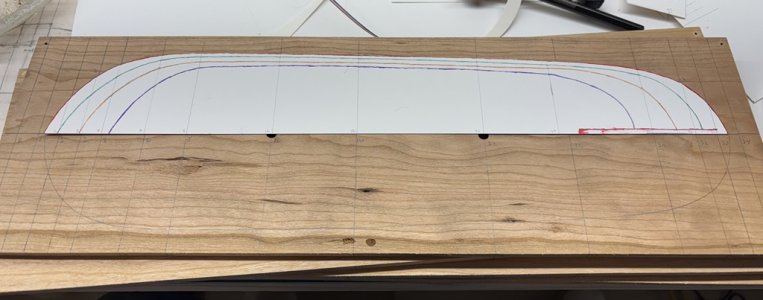
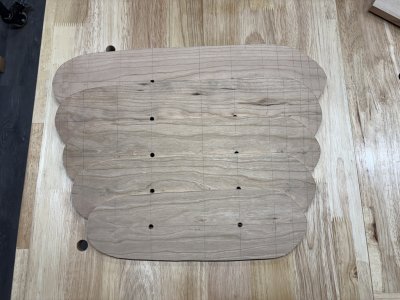
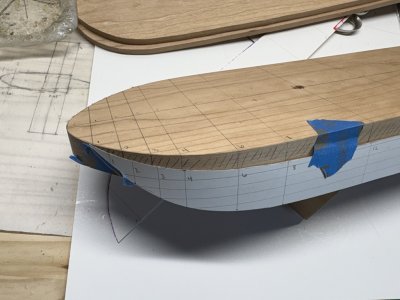
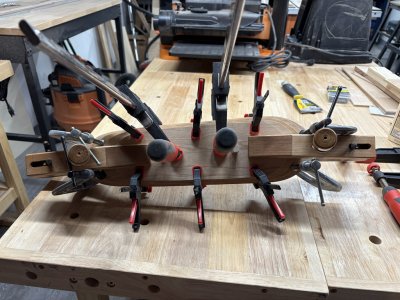
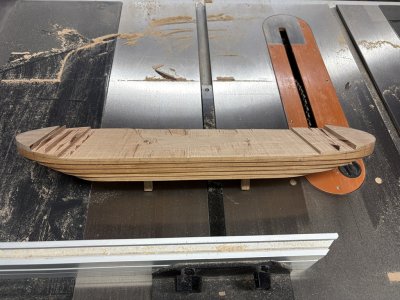
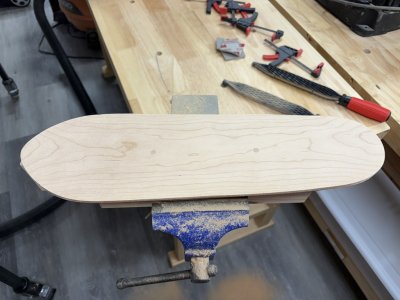
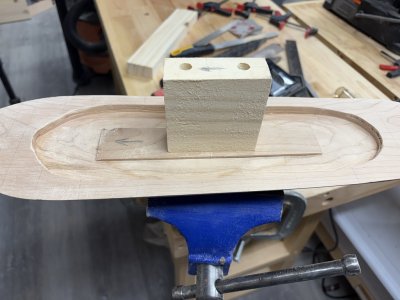
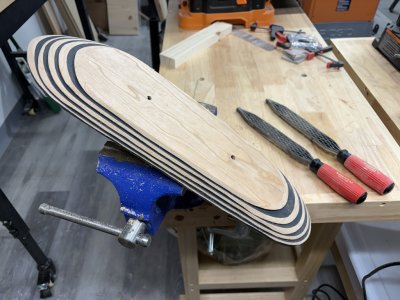
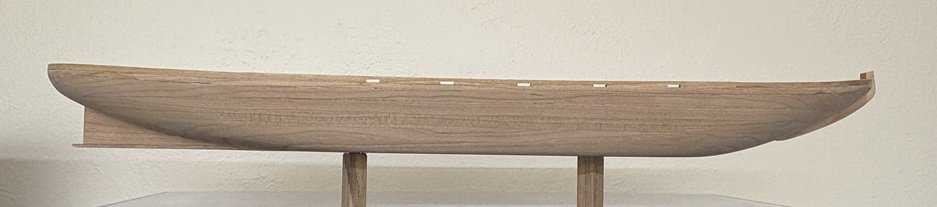
When I led the Chapelle to build or not build discussion, I mentioned the classic book American Ship Models and How to Build Them by V.R. Grimwood. At that time I had gotten some Cherry wood and milled some lifts for Fanny M. As I have been working on Gracie S, in particular near the sternpost where there is a good deal of concave work with small radius curves, I started to wonder if it might be worthwhile to take a look at how Fanny M can be modeled using lifts. The hull of Fanny M is much simpler to shape due to the fact there are no concave surfaces to shape. Also, in contrast to Gracie where there was a choice between horizontal and vertical lifts, Fanny is a natural for the traditional horizontal lift construction.
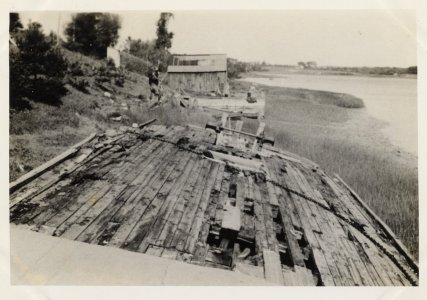
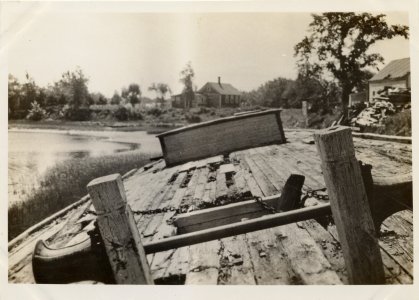
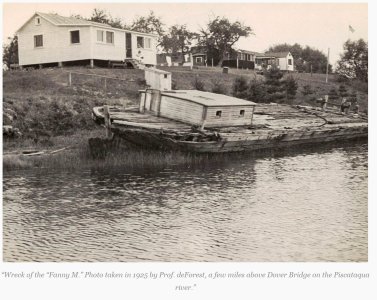
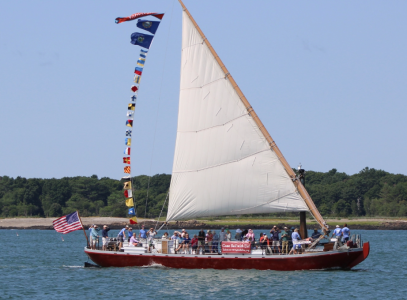
According to Grimwood, Fanny M. - a Piscataqua River Gundalow - was built in 1886 by Captain Adams of Adams Point, Mass. Fanny M. was wrecked at Dover Point, New Hampshire. A few pictures of the wreck in 1925 are held by the Smithsonian and can be located on the web.
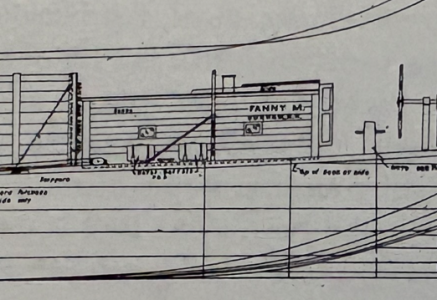
D. Foster Taylor measured the wreck, and in conjunction with an original builder's model created draughts for Fanny M which appear in the Historic American Merchant Marine Survey (HAMMS). While, I haven't seen the actual HAMMS drawings, there appears to be a reproduction of such in the Chapelle book National Watercraft Collection Plans:
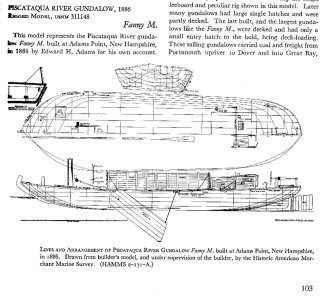
It is from these plans that Grimwood redrew with slightly less detail and placed in his book. The plans in the book are drawn to 1:96 scale and Grimwood suggests building the model to the scale of 1:48. That is what will be done here.
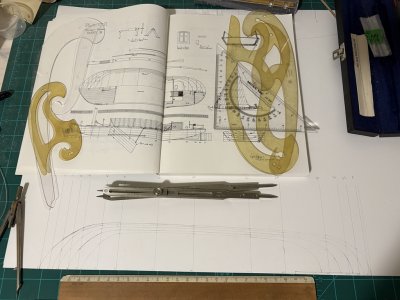
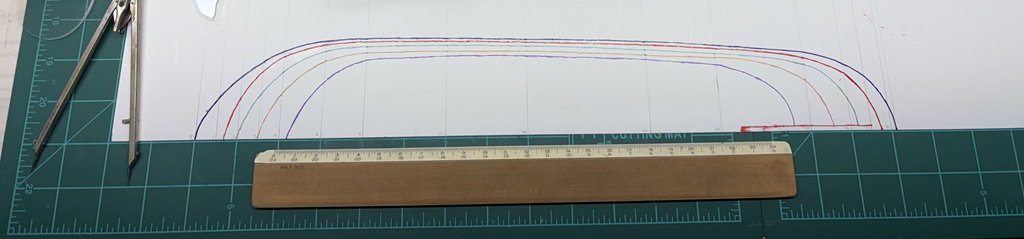
Thus the first step is to redraw portions of the plan twice as large. To construct the lifts, it is the waterlines that need enlargement. Photocopy enlargement was not the way to go as part of the plans have been lost in the book's seam! I took a sheet of poster board and aligned the bottom edge with a straightedge. Using a triangle, station lines noted in the plans were drawn perpendicular to the edge of the poster board. The edge of the poster board represents the centerline of the hull. Using the plan showing waterlines, measurements were taken, doubled and then marked on the poster board. There are 5 waterlines to reproduce. There are various ways that the needed measurements can be developed; the most basic being to measure with a ruler and then double the measurement, and without recourse to actual measurements proportional dividers can be used to double and transfer the dimensions.
I find my proportional dividers bulky to use (wish I had a smaller one), so I actually went with a third option. I took off the needed measurements with regular dividers and then used a 1/2" to 1" drafting ruler to double the dimension, opened the dividers to the need dimension (on the back side of the ruler) and transferred to the poster board. Once all the measurements had been transferred, I got out some French curves and ship curves to draw the waterlines. Here is the result:
According to Grimwood, Fanny M. - a Piscataqua River Gundalow - was built in 1886 by Captain Adams of Adams Point, Mass. Fanny M. was wrecked at Dover Point, New Hampshire. A few pictures of the wreck in 1925 are held by the Smithsonian and can be located on the web.
D. Foster Taylor measured the wreck, and in conjunction with an original builder's model created draughts for Fanny M which appear in the Historic American Merchant Marine Survey (HAMMS). While, I haven't seen the actual HAMMS drawings, there appears to be a reproduction of such in the Chapelle book National Watercraft Collection Plans:
It is from these plans that Grimwood redrew with slightly less detail and placed in his book. The plans in the book are drawn to 1:96 scale and Grimwood suggests building the model to the scale of 1:48. That is what will be done here.
Thus the first step is to redraw portions of the plan twice as large. To construct the lifts, it is the waterlines that need enlargement. Photocopy enlargement was not the way to go as part of the plans have been lost in the book's seam! I took a sheet of poster board and aligned the bottom edge with a straightedge. Using a triangle, station lines noted in the plans were drawn perpendicular to the edge of the poster board. The edge of the poster board represents the centerline of the hull. Using the plan showing waterlines, measurements were taken, doubled and then marked on the poster board. There are 5 waterlines to reproduce. There are various ways that the needed measurements can be developed; the most basic being to measure with a ruler and then double the measurement, and without recourse to actual measurements proportional dividers can be used to double and transfer the dimensions.
I find my proportional dividers bulky to use (wish I had a smaller one), so I actually went with a third option. I took off the needed measurements with regular dividers and then used a 1/2" to 1" drafting ruler to double the dimension, opened the dividers to the need dimension (on the back side of the ruler) and transferred to the poster board. Once all the measurements had been transferred, I got out some French curves and ship curves to draw the waterlines. Here is the result:

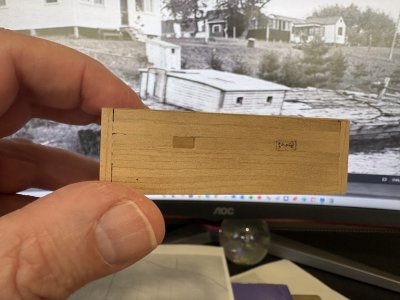

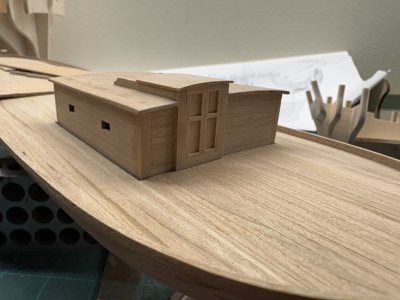
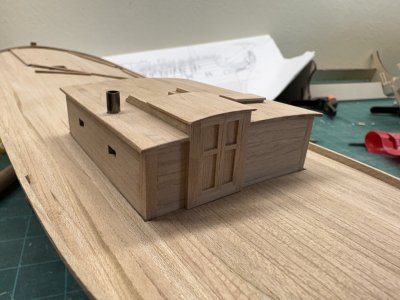
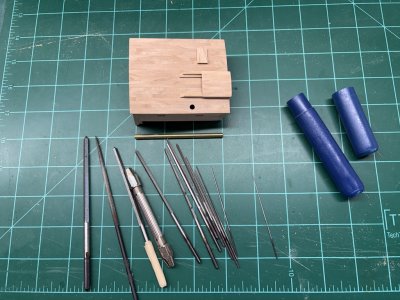

 I went up on TEMU to check on low cost reamers. While there - I thought about what I would do if the hole that I drilled had the exhaust pipe rattling in an over large hole. I then thought paper collar. Then I thought: hot metal pipe, tight fit, wooden roof - char or fire? Then I thought loose fit, insulate from the wood, but what about rain? What tech did they have in 1886? Do you think they had double wall sheet metal? Was it Asbestos? Clay? Mica?
