- Joined
- Jun 30, 2026
- Messages
- 4
- Points
- 3
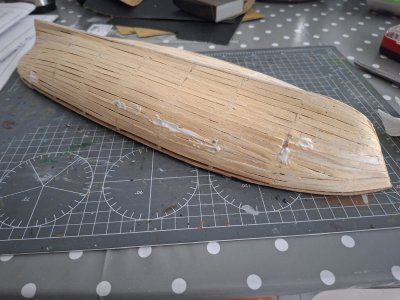
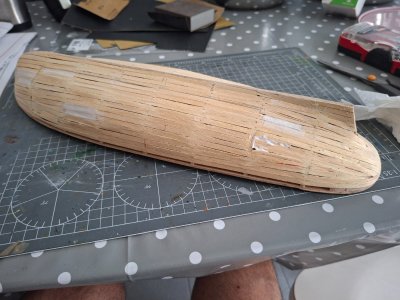
this is my first layer of planks, I started to sand it (overdid) before using some putty and more sanding. I'm not sure I'll get an smooth enough surface for the second layer of planks. any advice, thx!!

 |
The beloved Ships in Scale Magazine is back and charting a new course for 2026! Discover new skills, new techniques, and new inspirations in every issue. NOTE THAT OUR NEXT ISSUE WILL BE July/August 2026 |
|
 |
As a way to introduce our brass coins to the community, we will raffle off a free coin during the month of August. Follow link ABOVE for instructions for entering. |
|

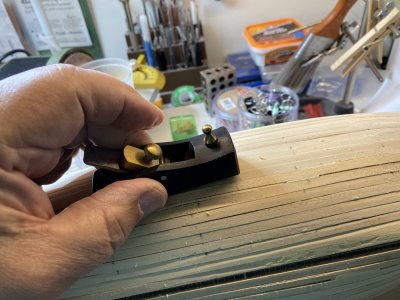

I second Rob's suggestion on mini planes - a big help to quickly get convex areas smooth.I have also used a small plane to help even out the planks first. I found this to save a lot of work on rough sanding.



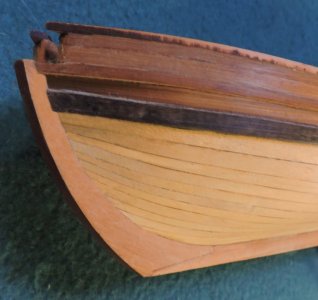

PVA bonds by snaking chains around and between surface irregularities on the bonding surfaces. The smoother the surface -the weaker the bond. I think that 220 grit is right at the OK edge of being too smooth. From 320 grit on up it becomes like bonding glass to glass. This needs Van der Waals forces (CA) instead of mechanical (PVA).i do not know if this is true or not but i heard when sanding the first layer use an 80 grit sandpaper the reason i heard is you want score marks and a sort of rough surface this gives the glue for the second layer a surface to grab on to.


This would be my suggestion.For the dips - you need wood scabs. I
