• Win a Free Custom Engraved Brass Coin!!!
    As a way to introduce our brass coins to the community, we will raffle off a free coin during the month of August. Follow link ABOVE for instructions for entering.
  • SUBSCRIBE TO SHIPS IN SCALE TODAY!

    The beloved Ships in Scale Magazine is back and charting a new course for 2026!
    Discover new skills, new techniques, and new inspirations in every issue.

    NOTE THAT OUR NEXT ISSUE WILL BE MARCH/APRIL 2026

Harold Hahn

Hello,
First of all...great report. My request to you > please post a link to where you can buy your saw blades. That would be great.
Thank you
 
.​
Hello,
First of all...great report. My request to you > please post a link to where you can buy your saw blades. That would be great.
Thank you

Hi Charlie,

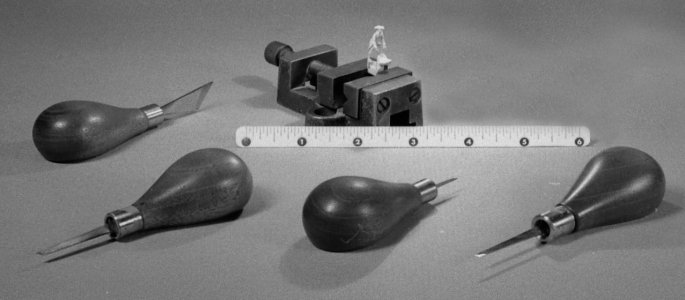
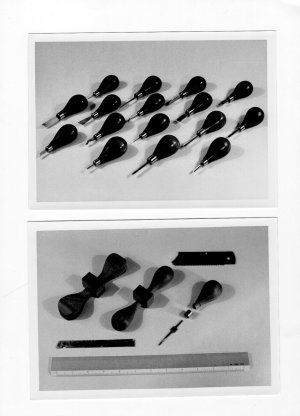
The carbide saw blades shown in the photo are German-made. I found and purchased them on German eBay.

Most of the HSS saw blades shown in the photo are Polish-made. As a result, it is probably easiest to buy them on Allegro (the Polish equivalent of eBay). Below is a link to this platform with the search filter "frez piłkowy" (i.e. ‘sawing milling blade’) already entered. These metal cutting cutters are generally marked "NFTe" according to local industry standards, and this symbol can also be used for filtering. They are normally sold as ‘new’ (which should be understood as equivalent to ‘unused’), and this information should always be included in the description and is worth paying attention to.


In addition, they are sold online by numerous local tool companies, but usually at correspondingly higher prices.

Only a very few have been purchased in person at local markets from people from even further East, usually the most miniature ones.

.​
 
.​


Hi Charlie,

The carbide saw blades shown in the photo are German-made. I found and purchased them on German eBay.

Most of the HSS saw blades shown in the photo are Polish-made. As a result, it is probably easiest to buy them on Allegro (the Polish equivalent of eBay). Below is a link to this platform with the search filter "frez piłkowy" (i.e. ‘sawing milling blade’) already entered. These metal cutting cutters are generally marked "NFTe" according to local industry standards, and this symbol can also be used for filtering. They are normally sold as ‘new’ (which should be understood as equivalent to ‘unused’), and this information should always be included in the description and is worth paying attention to.


In addition, they are sold online by numerous local tool companies, but usually at correspondingly higher prices.

Only a very few have been purchased in person at local markets from people from even further East, usually the most miniature ones.

.​
Thank you very much for your detailed reply. Thank you, that helps me a lot.
 
The Figures

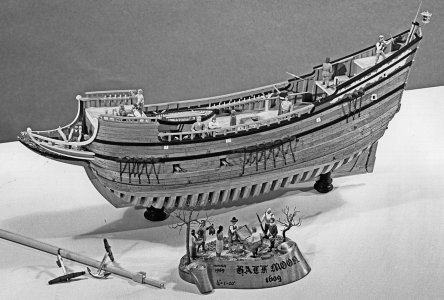
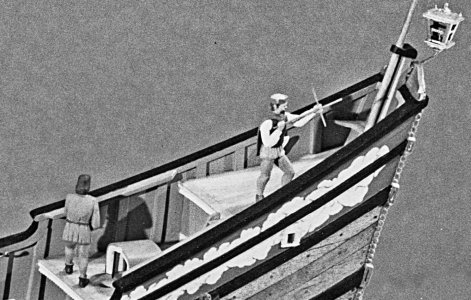
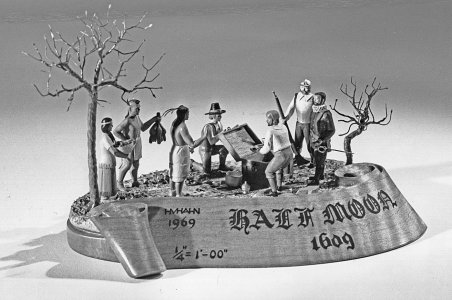
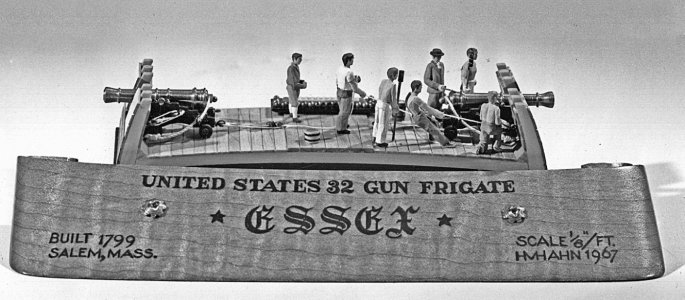
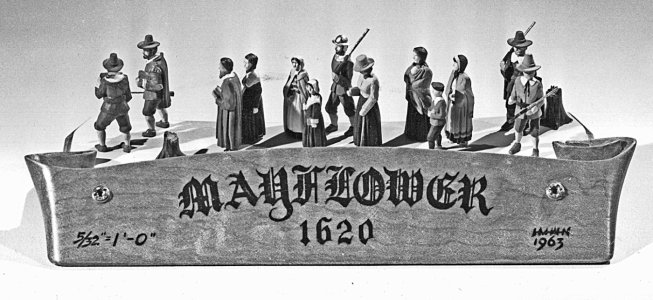
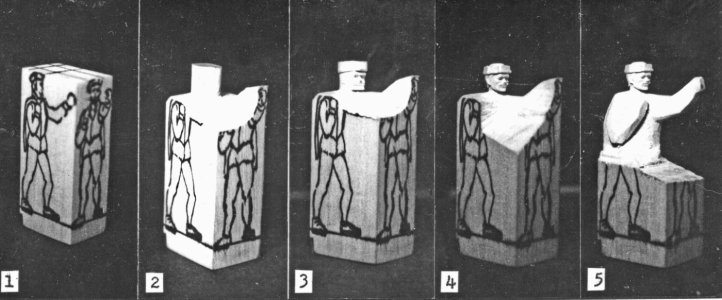
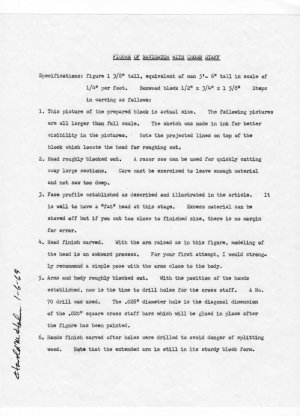
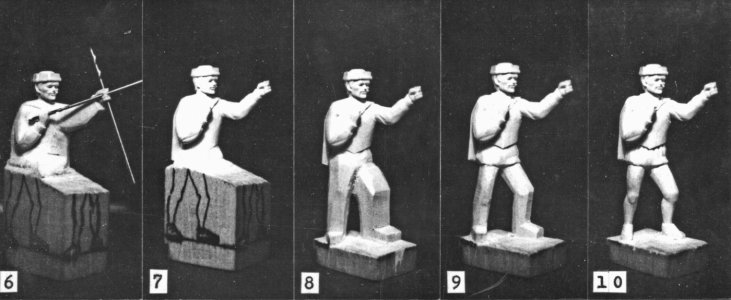
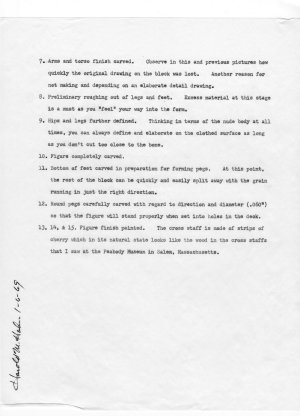
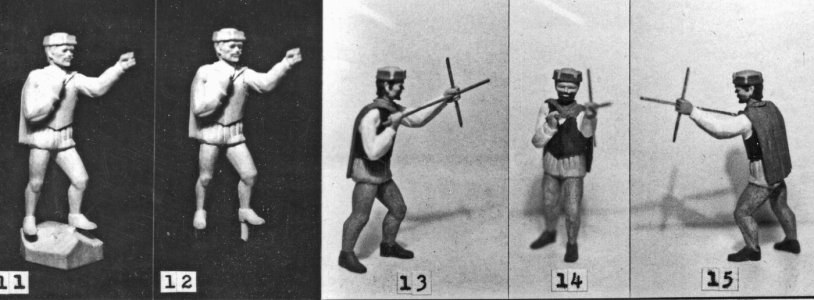
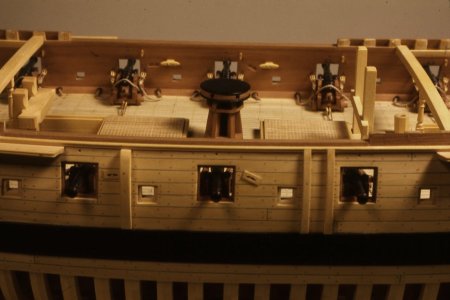
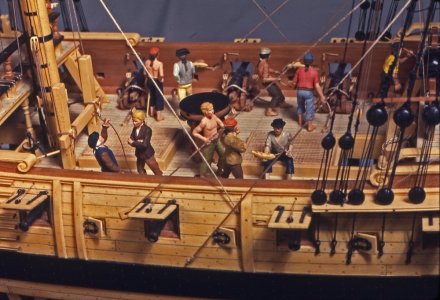
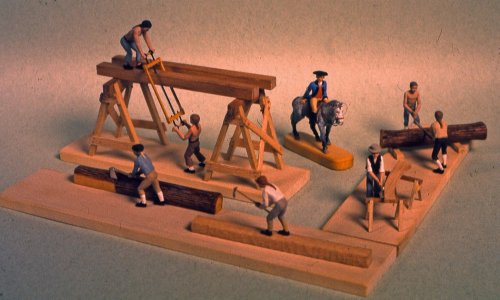
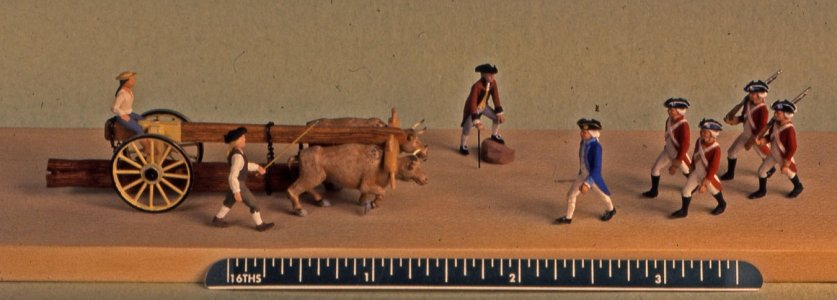
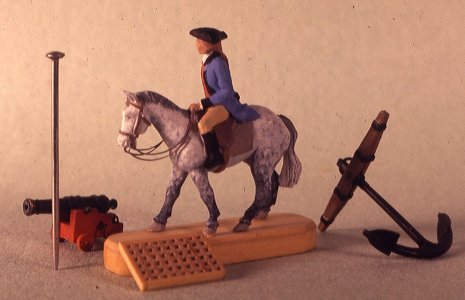
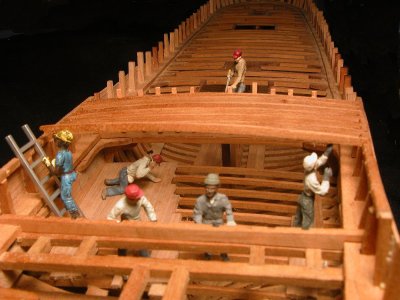
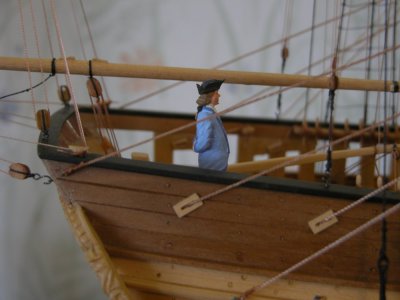
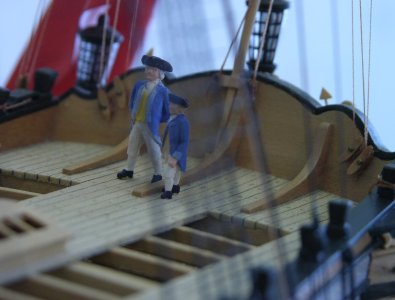
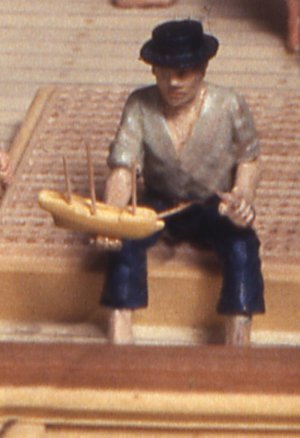
Harold Hahn was recognized for his carving of figures, and he was also criticized for putting figures on ship models. If you are building ships in the admiralty style then figures do not belong on the models, so the experts said. From the start Harold always carved figures in tiny dioramas going as far back as his first models, carving hundreds of figures over the years. From the start of every project Harold said it had to interest him and a challenge to build and it had to convey a story to the viewer. Harold also strived to make each model unique both to him and the viewer.

A570.jpgAA570.jpgA571.jpgimg572.jpgimg573.jpg
 
I am seeing a difference in the way that Hahn used figures.
Hahn's figures are individuals. They are actors telling a story.
They are not there just to take up space and demonstrate the scale.
They are not figures from random places that had their costumes and tools carved away.


If you are building ships in the admiralty style then figures do not belong on the models, so the experts said.
The irrelevance of the criticism is that the "If" did not apply to Hahn's purpose.
He built vessels that matched the quality of "admiralty" style. They were not built to perform the usual admiralty style function.
His method is certainly suited to produce an admiralty style ship that serves the admiralty style function. Hahn just used it to serve his personal vision.
 
Say what you will about Hahn's use of figures (I agree with your analysis in the post above,) at least he didn't have Henry Hudson's navigator taking sights with a sextant before they were invented, like some people we know! :rolleyes:
 
Say what you will about Hahn's use of figures (I agree with your analysis in the post above,) at least he didn't have Henry Hudson's navigator taking sights with a sextant before they were invented, like some people we know! :rolleyes:

Well hold on there! if you do not take scale model ship building serious and you just want to have fun with it than anything goes. your now in the catagory of Legos and toys.
Even the kit builder takes pride and accomplishment in what was built. Just to have fun is more of an insult that deludes the skill, craftsmanship and dedication it takes to build a simple kit to a scratch built admiralty style model ship.
 
Last edited:
It was made clear to Harold figures on model ships were unacceptable. They would be tolerated in diorama settings and dioramas only, and even in this case kept to a minimum. It was suggested his models do not fall into the category of "ship models" but rather in a category of dioramas like model railroad layouts or doll houses. According to the critics within the community of ship modeling a model ship should look like this

oliver7c.jpg


certainly not like this.

oliver08.jpg

At first is was low key and a hint that the figures have to go, but as time passed the quite murmur and subtle hints became louder to a point Harold addressed the issue in published articles.

"to my mind the feature that really brings the diorama to life are the many carved figures. There are approximately one hundred of them including two horses, two oxen and two dogs. personally i am completely sold on using figures on my models. On the other hand, there are some authorities who decry this practice. I am forced to agree with their criticism as it relates to the way in which poorly done figures detract from the aspect of a well done model. However, if a figure is done in good proportions with a natural life like quality so that it appears to belong, then i can find no fault with its use. Certainly, i would never have started my colonial shipyard diorama if i could not have furnished it with a most important ingredient, people."


File0006.jpgFile0008.jpgFile0012.jpg

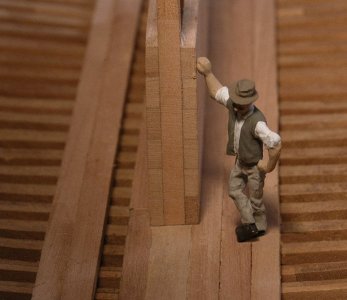
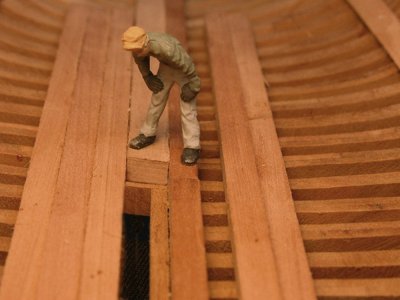
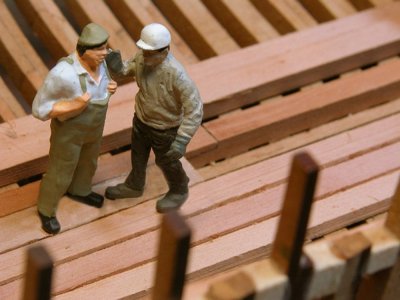
What Harold was saying is just sticking little people on a model out of the historic period, poorly done or have no purpose of being there may indeed degrade a model, placing out of time and place of figures "for the fun of it" on a ship model is not fun it is mockery of the art form, they need to look as if they belong there. . I consulted with Harold over the use of figures in my Alvin Clark dioramas and in the following examples by placing a figure in a natural pose or if they make you wonder what is he looking at or what are they talking about adds that realistic look. Harold's reply to my use of the figures was "you got the right idea."

centerboard5.jpghold4.jpghold5.jpgwork crew.jpg
 
Despite the outcry from the critics Harold continued to use figures in his ship modeling. Harold's explanation of the little people fell on deaf ears and the fiercely criticized use of figures on ship models continued.
In another published article Harold had this to say

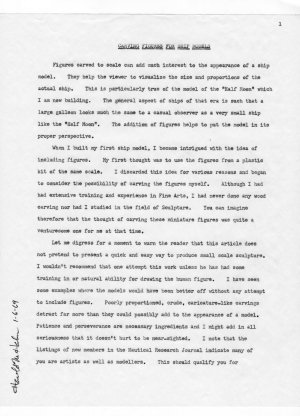
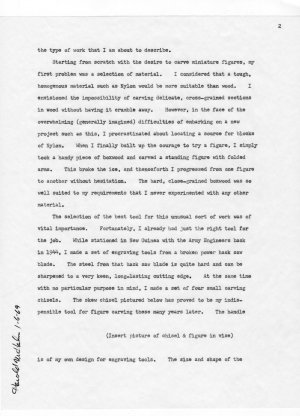
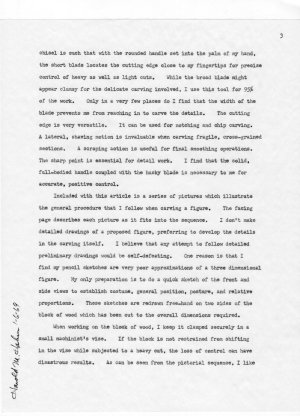
"some critics reject the use of human figures on models. I agree that if carvings are stick like and fail to provide the impression of real people they distract from the quality of the model. However, if they fit in well, I believe they are useful for suggesting the relative size of a ship and for adding a human touch. In any case, I won't permit anyone to legislate what i may or may not do on a model project."

Assuming the published response to the use of little people would resolve the issue and give a satisfactory explanation of why they were there Harold continued to use the little people on his models.

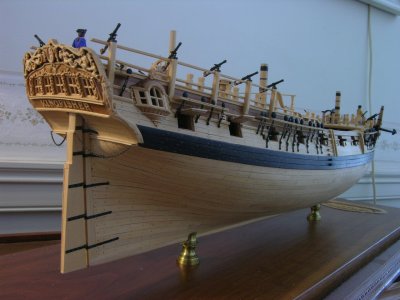
At some point Harold Hahn attempted a compromise and the little people showed up less on his models. the little people did not completely disappear from Harold's models, On every model there was always the captain which became his signature.


DSCN2954.JPGbounty07c.jpgDSCN5081.JPGDSCN5224.JPG

The population in the community of ship modeling was in an uproar the very foundations are shaken and the definition of what a ship model should look like and how it should be built and what materials used all came into question. The critics within the ship modeling community never let up, the criticisms and nit picking went on and on to not only the use of figures on models but how the models were built, the historical accuracy and down to the tiniest detail of a gun port being 1/64th out of place.
In one respect the keepers of fine art models were the watch dogs and tried to maintain high standards. Then along comes an artist and in the true form of art upsets the rules.

People should think things out fresh and not just accept conventional terms and the conventional way of doing things.
“You never change things by fighting the existing reality.
To change something, build a new model that makes the existing model obsolete.”


In the middle of it all sat Harold Hahn an artist carving a figure carving a model ship.


oliver7.jpg

 
Here again, I believe we have an example of how valuable the work of Napier and others a quarter century ago was in defining what a high-quality scale ship model should be:

"A high-quality scale ship model provides a compelling impression of an actual vessel within the constraints of historical accuracy."
When disputes such as the one described over Hahn's use of figures arise today, folks would do well to stop and take a close look at the generally accepted definition of a "high-quality scale ship model." In this instance, if the subject model "provides a compelling impression of an actual vessel within the constraints of historical accuracy," the figures "work" to produce such a "compelling impression." If, upon examining a model with figures, the figures detract from its providing "a compelling impression of an actual vessel within the constraints of historical accuracy," the model is better off without them.

In making a determination whether a model "provides a compelling impression of an actual vessel within the constraints of historical accuracy," the model speaks for itself. Its builder's intentions, such as whether he was "serious" or "just building for fun" is of no moment, nor is any other extraneous factor such as whether the model was built from scratch or assembled from a purchased kit or whether the builder was a novice or an old hand.

In a side-by-side comparison of most any two scale ship models, it is usually rather easy for even an unpracticed eye to pick the better one. A practiced eye can spot the higher-quality model instantaneously. A scale ship model is either of high-quality, as defined, or it is not. The test is not a checklist of rules. It matters only how well the model itself does its job.
 
Last edited:
Hahn’s figures are works of art, not crude Lego like figures seen on many models built today and I should add shown in articles published in recent NRJ articles. I personally find them less offensive than belaying pins that scale to the size of bowling pins and hatch ringbolts the size of barrel hoops.

Roger
 
Before Hahn got involved in model ship building he was already an established and recognized artist. When he appeared on the ship modeling scene it was through the Nautical Research Guild at that time the guild was at the crossroads facing an identity crisis questing who are we and what are we all about? The guild back in the 1970s did not want to be associated with the hobby builder assembling ship kits. So they put boots on the ground and marched toward Academia. Here ship modeling is taken seriously very serious models are built from archaeological data. At the time the ship modeling community was seeking recognition and a serious approach to model building.
in early ads you found statements like "for the discriminating model ship builder and better models through research. Harold Hahn did not quite fit the requirements of "A high-quality scale ship model provides a compelling impression of an actual vessel within the constraints of historical accuracy." the models were fine art and of high quality but not within the constraints of historical accuracy or within the standards of the academic world. The ship modeling community tried to confine Hahn and label his work as artistic expression placing it in a catagory of doll houses. The problem was Harold Hahn was a force to be reconned with his work was impeccable he did meet the compelling impression of an actual vessel just not in the standards of the academic world. Harolds vision was to raise the level of model ship building so anyone with the desire can accomplish a fine built plank on frame model.
I knew Harold Hahn for many years and one day out of the blue he sold all his tools, handed me all his ship drawings, cleaned out his shop and never looked back at model ship building. His eye sight was not failing nor were his hands starting to shake he had projects and drawings in various stages of development, so his intent was not to quit, but he did. I asked him and he said he just lost interest in ship modeling. I think there was more to him quitting than just losing interest. I suspect he did not get tired of model ship building i think he got tired of model ship builders. Sometimes when i went to visit i asked if i could look through his library and he would say sure i will be in the other room if you have questions. Among the papers i found letters people sent some with sketches to correct the errors he made on his plans concerning the framing. Some letters stated they were first time scratch builders and did not want to put the time and effort into a model with the wrong framing and requested information on the correct way to frame the model. There were people in the ship modeling community warning builders the Hahn plans were wrong, the framing was some stylized form made up by Hahn, don't waste your time with Hahn plans because they are not historically correct and the framing was not how a real ship would have been built. Personally, i think this got to Harold after years of being bashed about using figures on models he is now being harassed over his plans and the framing he chose to use.
i knew what Harold felt because for 28 years i worked as a commercial artist also called graphic artists in the trade. At one point I would design product packaging and there were times i was called in to sit at the big table to go over a project with a client. When i asked if they had anything in mind the answer was usually "no that is why we are here your the artist so create something" After a week or so of working on the project it is shown to the client. As i sat there the client would say "what the hell did they teach you in art school, i don't like the colors you used, this should be on the back panel not on the side of the box, change this and do that. Countless times clients would rip apart your work and you had to start over, in time one gets use to the constant feed back good and bad. i just walk out of the room with the thought of so what i still cash that big fat paycheck and bigger yet because now i got to do it again on overtime. I saw in Harold the same thing he poured thousands of hours into research, drafting plans and building models, creating a system to teach builders how to build from scratch. He did get praise for his work but a heck of a lot of bashing about his use of framing, little people, up side down building method, wasting of wood with building frame blanks, moving a gun port 1/32 of an inch and on it went. I think it reached a point where Harold Hahn just thought the hell with all of you I'm out of here.
That might seem a little thin skin on Harold's part but any artist can expect the critics can get quite harsh especially when you are going against the established system of doing things.
The grinding of the critics does wear you down in time.

choosing a career in art is brutal and i admit it finally broke me it took 28 years but i walked out, well i walked out a few times i guess because it was so intense and the money was so nice i kept coming back to it and every time i did come back i came back with an attitude and developed a combative nature. The very title as "graphic artist" took a lot of abuse "oh your one of those artists selling your soul to commercialism" i could take the critique from one artist to another it is the person who looks at something and says really that's art! i can do that or my 7 year old can do better.

Harold was a gentile artist doing what he did for the sake of art, i thought about Hahn and his work and maybe it was trying to combine art with a historical craft and engineering that was just to volatile.
 
At first is was low key and a hint that the figures have to go, but as time passed the quite murmur and subtle hints became louder
The normal reaction should have been to celebrate serious talent. A deeper reason for serious resistance was probably because there was worry that figures could go from being an individual choice and vision to becoming a generally expected component. Expending the effort to censure and make rules against suggests that this potential threat was perceived.

He did get praise for his work but a heck of a lot of bashing about his use of framing, little people, up side down building method, wasting of wood with building frame blanks, moving a gun port 1/32 of an inch and on it went.
Boy! Hahn was sure dealing an audience with no imagination and little if any perspective.
The way Hahn demonstrated to assemble frames is a separate thing from the assembly of those frames or frames assembled using a different technique into a hull.
The framing style was just a choice. Any other framing style works just as well.

His plans are just a convenience for a builder who is too lazy to loft his own project from original plans. Hahn's reply should have been: Accept them for what they are or go somewhere else.

There were people in the ship modeling community warning builders the Hahn plans were wrong, the framing was some stylized form made up by Hahn, don't waste your time with Hahn plans because they are not historically correct and the framing was not how a real ship would have been built.
All model framing is stylized. Hahn did not "make up" the style that he used. He kept the bends and omitted the filling frames. The RN shifted to accommodate gunport framing too. They moved the top timbers. Hahn moved the whole bend. If the only part of Hahn's framing being objected to was a gunport being shifted, well, cut into the frame on one side and add a scab on the other.
It is a bogus idea that any model is framed how a real ship would have been. One can be built matching what the idealized framing was on paper. Very few of the contemporary models from the shipyards were built using the literal framing. It takes too long and is too much work and except for a classroom demo model it does not serve the purpose for building it.

Upside down - uses gravity - it removes at least one degree of possible error over rightside up. At 1/8" scale the whole thing is 0.8% the size of the original - how realistic is that to begin with?

I would not bemoan Hahn abandoning ship modeling too much. He pretty much mined out the vein that is his chosen slice of history. Anything more would have just repeating himself. He came in presented his gifts and it was time to move on. He does not seem to have been an obstinate, curmudgeon, solitary, Vulcan. If he was, he would have just raised his shields and built for himself. He was social. He did his job

 
I suspect he did not get tired of model ship building i think he got tired of model ship builders.
I have to say, these are likely the most revealing words within this whole topic (all 7 pages of it) and it surely resonates given today's online context within the ship modeling community.
But anyways ...
G.
 
Back
Top