You can use the Titebond II as a contact cement. Apply a total coverage, but just wet layer of the PVA to both meeting surfaces. Let the PVA polymerize - i.e. wait 24 hrs. Place the veneer and iron it. The heat activates the PVA to bond.
Be careful with the heat.
An excellent bender is the now extinct aeropiccola bender
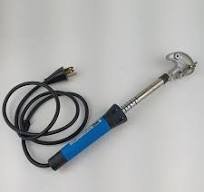
On Amazon is a - from the convoluted description: Chinese substitute
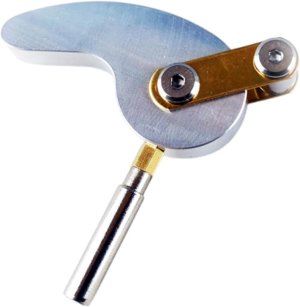
"Wood Board Bending Pliers Boat Models Making Tool Wooden Strips Bender Part for 936 Series Soldering Irons"
Same school as AYBABTU ?
You are on your own for what a 936 series soldering iron is or where to get one.
Something in-line like a dimmer switch for to control the temp is probably prudent.
Now for the unpleasant part: the veneer that you have been provided.
The economical way to produce veneer is to rotary cut it. Turn the log against a blade and peal off one continuous sheet.
Like a roll of paper towels. The veneer is cupped. It is always going to "want" to be cupped. That is its equilibrium state.
If your planking was plane cut - tablesaw/bandsaw - it is likely to "want" to lay flat forever.
My bet is the species of wood for your show layer is a Walnut color African species that is brittle and open pore. It was probably chosen because it is a popular color ( in no way the color of any species of wood used to plank an actual ship ) and does not cost much.








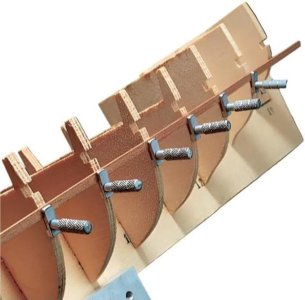


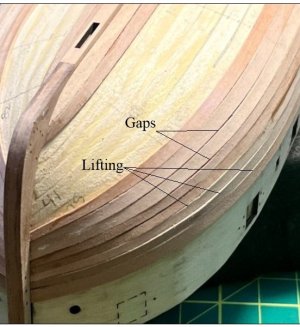
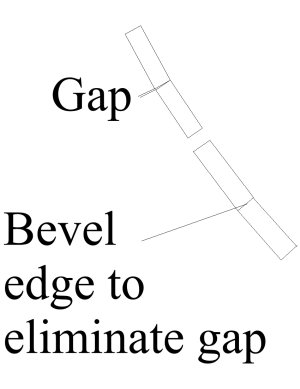

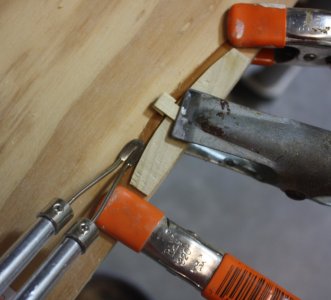


 If the plank is spiled or pre-edge bent I find regular PVA (carpenter's glue) and finger pressure for a minute is sufficient to hold it properly. Then there is always CA, but the fumes are killer for many so needs to be used sparingly, if at all.