



• Win a Free Custom Engraved Brass Coin!!!
    As a way to introduce our brass coins to the community, we will raffle off a free coin during the month of August. Follow link ABOVE for instructions for entering.
  • PRE-ORDER SHIPS IN SCALE TODAY!

    The beloved Ships in Scale Magazine is back and charting a new course for 2026!
    Discover new skills, new techniques, and new inspirations in every issue.

    NOTE THAT OUR FIRST ISSUE WILL BE JAN/FEB 2026

HMS Enterprise 1774 POF 1:48.

Good morning everyone. Whew what a hectic month so far. Between business , birthdays and another wedding I have hardly sat down to look at SOS. I got a bit of me time this morning so catching up on all your stunning models.

Justin got married to Nikita on Friday evening. I am extremely proud of my young man. Some pics on my iPhone(not the best quality)
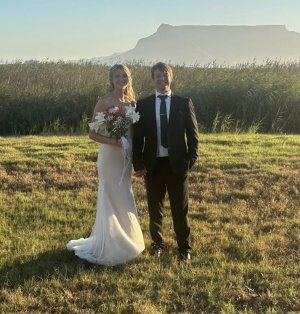
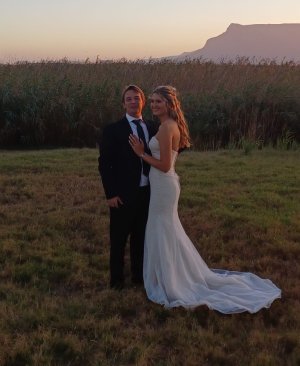
7100265d-619f-4b1b-922a-280ba41cff03.jpeg97abd25b-786f-456d-a445-c1aeb3261d6b.jpeg0c080792-5e2c-4016-9303-e324ee07e181.jpeg

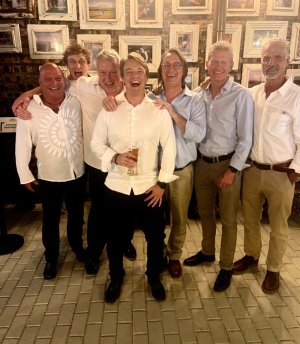
The party went late and I have to share this pic of “The Amigos “. We have been friends for over 30 years (In fact Paul - the skinny one- and I have been friends since we were 9 years old) and have so many memories as a group of adventures, tales and troubles.
647c8743-0a29-486b-9156-fc3e365d174e.jpeg
The two “youngen” in the pic are Justin and his best man Josh. These are Amigos in training ROTF .

Cheers Grant
 
Congratulations!!
The bride is beautiful and your son is the spitting image of you. Nikita made a great choice. You can also tell her that she has the best father-in-law in the world ;)
¨Tus amigos¨ look like ¨Buena gente¨.

Cheers!

BeerBeer
 
Last edited:
Good morning everyone. Whew what a hectic month so far. Between business , birthdays and another wedding I have hardly sat down to look at SOS. I got a bit of me time this morning so catching up on all your stunning models.

Justin got married to Nikita on Friday evening. I am extremely proud of my young man. Some pics on my iPhone(not the best quality)
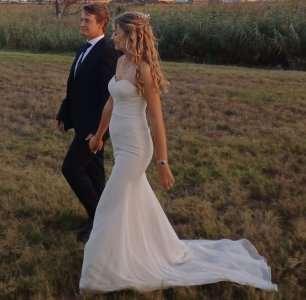
View attachment 580008View attachment 580009View attachment 580010

The party went late and I have to share this pic of “The Amigos “. We have been friends for over 30 years (In fact Paul - the skinny one- and I have been friends since we were 9 years old) and have so many memories as a group of adventures, tales and troubles.
View attachment 580011
The two “youngen” in the pic are Justin and his best man Josh. These are Amigos in training ROTF .

Cheers Grant
Also my congratulations for this wedding, Grant. For sure those ‘Young Amigo’ will have excellent trainers ……
Regards, Peter
 
Congrats Grant
All the best for the young couple, now tell him to R U N...


Just kidding...

And in a fashion late
Happy Birthday and all the best wishes for you Birthday-Cake
Thank you Guy. I did tell him but you know young chaps - never take their father’s adviceROTF.
Congratulations!!
The bride is beautiful and your son is the spitting image of you. Nikita made a great choice. You can also tell her that she has the best father-in-law in the world ;)
¨Tus amigos¨ look like ¨Buena gente¨.

Cheers!

BeerBeer
Thank you kindly Lorenzo. Nikita certainly made a beautiful bride. I always see her in her motocross kit or horse riding gear and transformed into a stunning bride. She is a very outdoor and adventurous young lady. Yep Justin is definitely my child, luckily he has a lot of Arlene’s personality ;).
Amigos are really good people- such good friends.
Also my congratulations for this wedding, Grant. For sure those ‘Young Amigo’ will have excellent trainers ……
Regards, Peter
Thank you Peter. Two in a month and a half, it was awesome. Hopefully I don’t have wait as long for some grandchildren nowROTF. 3 of the trainees couldn’t make it as they are in the Netherlands and Australia and had work commitments- if their friendship can last like the Amigos it will be a special thing.
Congratulations Grant with Justin and Nikita's wedding. A beautiful couple. It's also nice to see the group photo with the Amigos. It radiates friendship.
Much appreciated Herman. They are really good together which makes me very happy.
How wonderful, Grant! I'm happy for you and your family! A month to remember!
Thank you very much indeed. It hs been a very blessed and joyous month for Arlene, Ashtyn, Justin and myself. My bank account not so muchROTF.
Cheers Grant
 
Good morning everyone.
Some more progress with my wales.

I completed the cutting and making of the top butt pattern wales -

IMG_7863.jpeg

Nailing my wales.
I did a lot of reading about nails and treenails on an 18th century ships. I found no complete consensus from multiple articles however I drew these conclusions in summary:
1. No ship was exactly the same
2. A combination of wooden pegs and metal nails was used. Even on some decks metal nails were used. Some ships used bungs while others did not e.g the Vasa’s deck was nailed down without bungs.
3. Copper was only used in the 19th Century with a few exceptions
4. Planks were almost never fastened with a single nail/treenail and some wider planks had up to 3.
5. Treenails had the end grain exposed so they tended to look darker when the wood was dry. When wet one hardly saw these.
6. On Ships with bungs which where cut long grain and matched to the deck grain it is very difficult to actual see these especially when scaled down to model dimensions.
7. British and French naval yards tended to follow a published specification however the construction still varied.
8. Metal nails were used on the outer planks mainly at the butt join tips and scarfs while wooden nails along the rest of the plank.

To quote Fred Hocker : “ The bottom line is that reality is a lot messier than either contemporary treatises or modern modellers' handbooks would lead you to believe. “
As I struggle to get neat and tidy I really liked this comment ROTF.

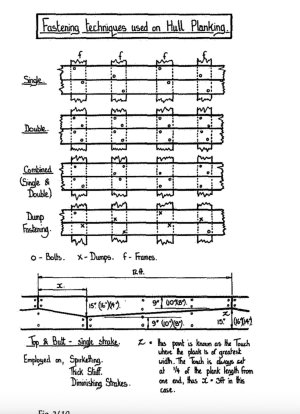
For my nails on the wales I used this pattern from “ The construction and fitting of the sailing man of war” by Peter Goodwin.
IMG_7993.jpeg

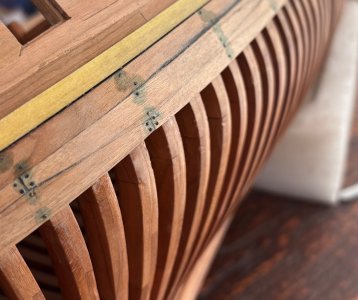
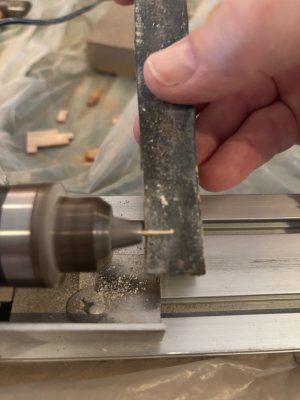
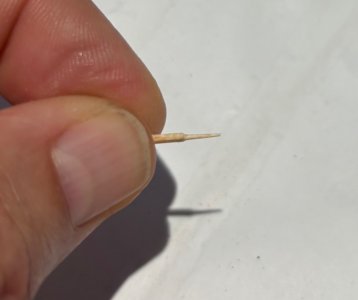
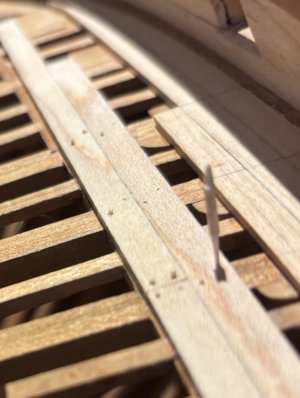
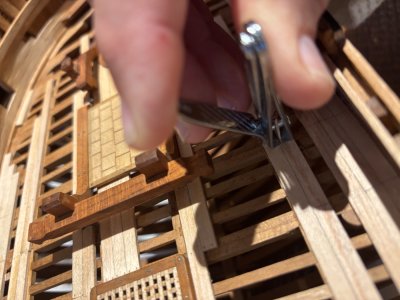
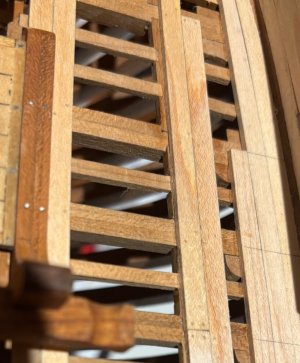
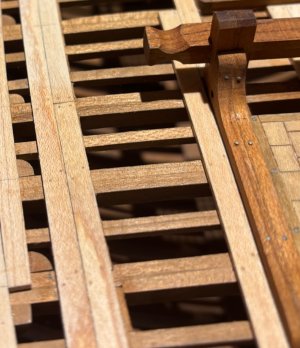
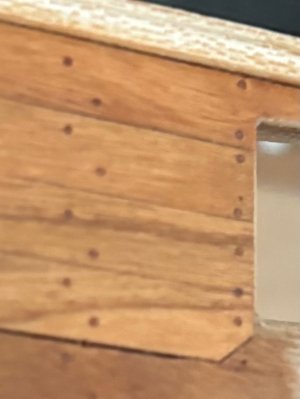
I really wanted all the work I did making this pattern to show in some way so I left my nails a little exposed :
IMG_7896.jpegIMG_7908.jpegIMG_7934.jpeg
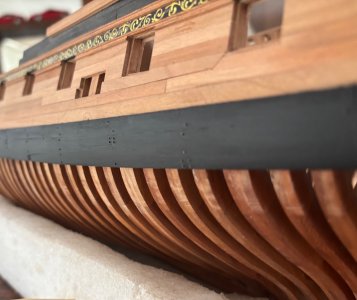
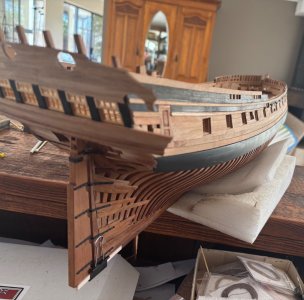
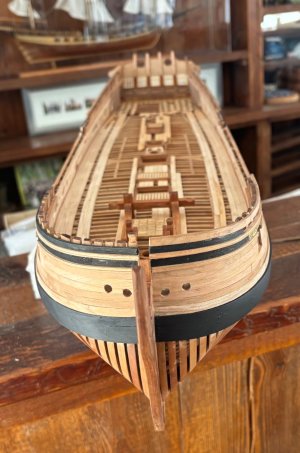
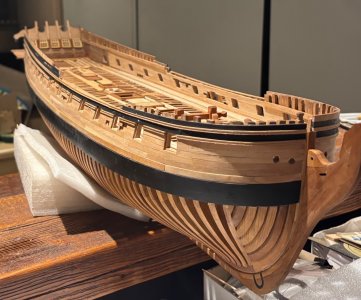
I stained my wales with Indian ink and rubbed it into the wood with a damp cloth.

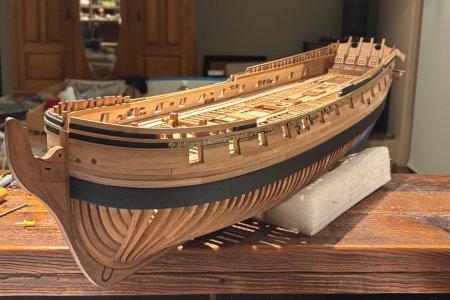
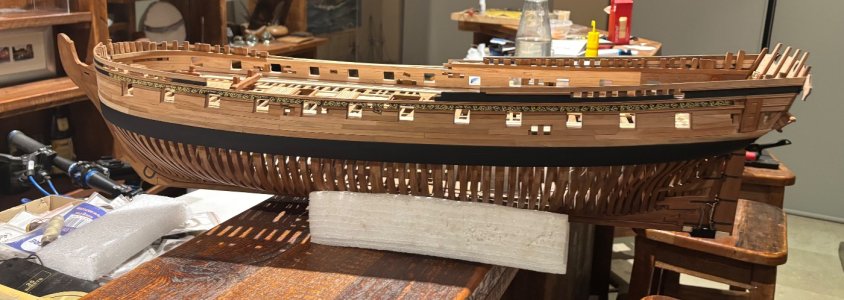
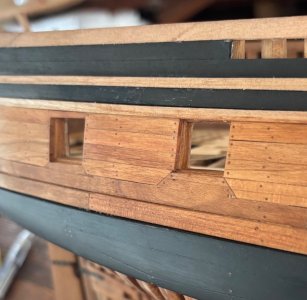
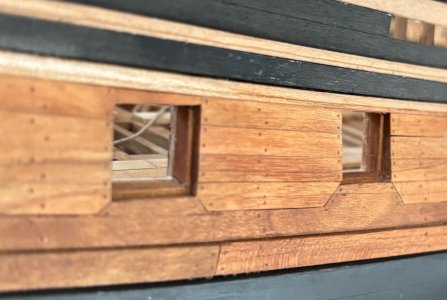
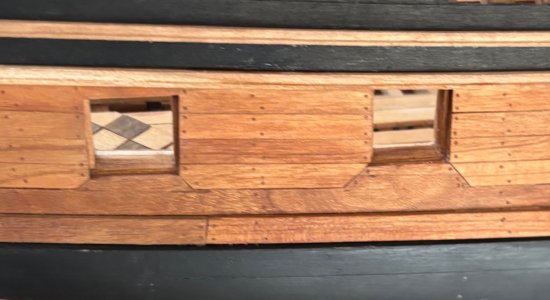
Progress so far :
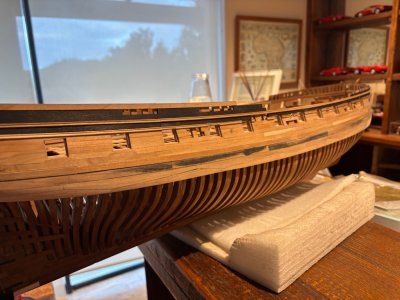
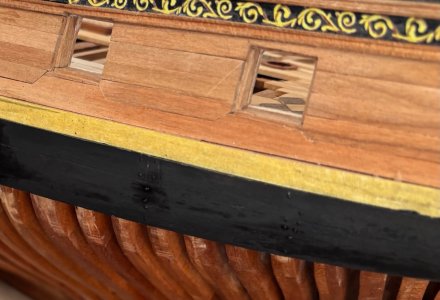
IMG_7963.jpegIMG_7958.jpegIMG_7982.jpegIMG_7984.jpegIMG_7988.jpeg
I deliberately left the cracks and lines to show the pattern (which you can see from some angles) however after staining I’m not sure I like these. I am deciding whether to fill these or not. I really don’t like spending many hours on something not to be seen ROTF. A final finish will be done - pretty happy so far.

Cheers Grant
 
Outstanding! She's a a true beauty. You're the best CAF's ambassador at the moment. It's hardly arguable how good this kit is from its official site.
 
Good morning everyone.
Some more progress with my wales.

I completed the cutting and making of the top butt pattern wales -

View attachment 580649

Nailing my wales.
I did a lot of reading about nails and treenails on an 18th century ships. I found no complete consensus from multiple articles however I drew these conclusions in summary:
1. No ship was exactly the same
2. A combination of wooden pegs and metal nails was used. Even on some decks metal nails were used. Some ships used bungs while others did not e.g the Vasa’s deck was nailed down without bungs.
3. Copper was only used in the 19th Century with a few exceptions
4. Planks were almost never fastened with a single nail/treenail and some wider planks had up to 3.
5. Treenails had the end grain exposed so they tended to look darker when the wood was dry. When wet one hardly saw these.
6. On Ships with bungs which where cut long grain and matched to the deck grain it is very difficult to actual see these especially when scaled down to model dimensions.
7. British and French naval yards tended to follow a published specification however the construction still varied.
8. Metal nails were used on the outer planks mainly at the butt join tips and scarfs while wooden nails along the rest of the plank.


As I struggle to get neat and tidy I really liked this comment ROTF.

For my nails on the wales I used this pattern from “ The construction and fitting of the sailing man of war” by Peter Goodwin.
View attachment 580653

I really wanted all the work I did making this pattern to show in some way so I left my nails a little exposed :
View attachment 580650View attachment 580651View attachment 580652
I stained my wales with Indian ink and rubbed it into the wood with a damp cloth.

Progress so far :
View attachment 580654View attachment 580655View attachment 580656View attachment 580657View attachment 580658
I deliberately left the cracks and lines to show the pattern (which you can see from some angles) however after staining I’m not sure I like these. I am deciding whether to fill these or not. I really don’t like spending many hours on something not to be seen ROTF. A final finish will be done - pretty happy so far.

Cheers Grant
I do like your little exposed nailing and Indian ink, Grant. It gives her a very nice personal touch!
Regards, Peter
 
Good morning everyone.
Some more progress with my wales.

I completed the cutting and making of the top butt pattern wales -

View attachment 580649

Nailing my wales.
I did a lot of reading about nails and treenails on an 18th century ships. I found no complete consensus from multiple articles however I drew these conclusions in summary:
1. No ship was exactly the same
2. A combination of wooden pegs and metal nails was used. Even on some decks metal nails were used. Some ships used bungs while others did not e.g the Vasa’s deck was nailed down without bungs.
3. Copper was only used in the 19th Century with a few exceptions
4. Planks were almost never fastened with a single nail/treenail and some wider planks had up to 3.
5. Treenails had the end grain exposed so they tended to look darker when the wood was dry. When wet one hardly saw these.
6. On Ships with bungs which where cut long grain and matched to the deck grain it is very difficult to actual see these especially when scaled down to model dimensions.
7. British and French naval yards tended to follow a published specification however the construction still varied.
8. Metal nails were used on the outer planks mainly at the butt join tips and scarfs while wooden nails along the rest of the plank.


As I struggle to get neat and tidy I really liked this comment ROTF.

For my nails on the wales I used this pattern from “ The construction and fitting of the sailing man of war” by Peter Goodwin.
View attachment 580653

I really wanted all the work I did making this pattern to show in some way so I left my nails a little exposed :
View attachment 580650View attachment 580651View attachment 580652
I stained my wales with Indian ink and rubbed it into the wood with a damp cloth.

Progress so far :
View attachment 580654View attachment 580655View attachment 580656View attachment 580657View attachment 580658
I deliberately left the cracks and lines to show the pattern (which you can see from some angles) however after staining I’m not sure I like these. I am deciding whether to fill these or not. I really don’t like spending many hours on something not to be seen ROTF. A final finish will be done - pretty happy so far.

Cheers Grant
As always a beautiful solution !
 
Back
Top