



• Win a Free Custom Engraved Brass Coin!!!
    As a way to introduce our brass coins to the community, we will raffle off a free coin during the month of August. Follow link ABOVE for instructions for entering.
  • PRE-ORDER SHIPS IN SCALE TODAY!

    The beloved Ships in Scale Magazine is back and charting a new course for 2026!
    Discover new skills, new techniques, and new inspirations in every issue.

    NOTE THAT OUR FIRST ISSUE WILL BE JAN/FEB 2026

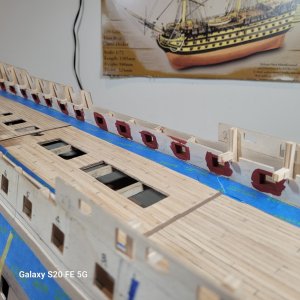
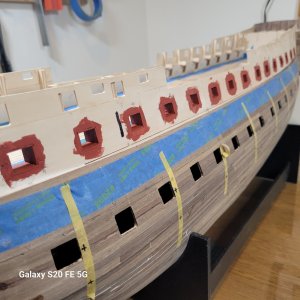
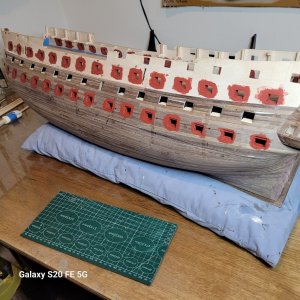
Hms Victory by Caldercraft

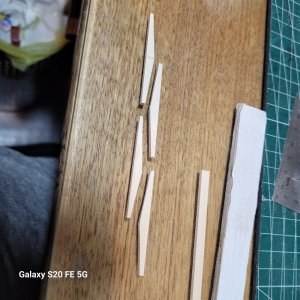
these two curves enables them to sit flat against the hull with virtually no edge set.
Thanks Mallacoota Sorry, I was talking about using tick strips or other methods, but as you point out, if coppering is going on, it is not so critical as it will be covered from the waterline down anyway. For shaping I used to prefer spiling but have had equal success the past several years using the method you show in the first two photos. I did go from an iron to a hot air gun though as it is easier to control the temperature and covers the wood better than an iron. As a side note, tight grained woods like castello, box, and pear are much easier to bend compared to brittle woods like sapele still found in some kits. I soak the planks in water beforehand and it works much more easily.
Allan
 
Last edited:
Agree Allan. I misunderstood the question and I use the tick strip method when I need it. With hulls like Victory I find it not really necessary ( not because of copper) because after you get around the bluff bow the run of planks is relatively very simple....even the bow is not very cramped vertically.
 
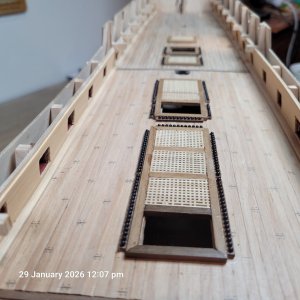
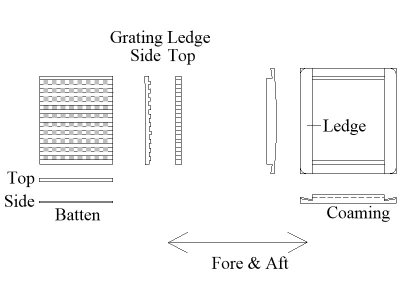
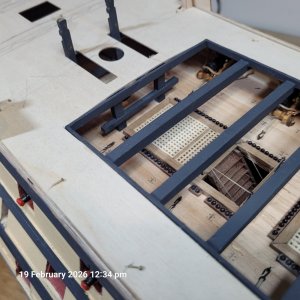
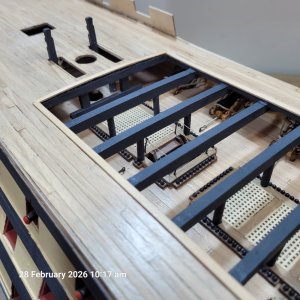
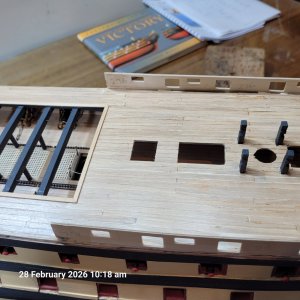
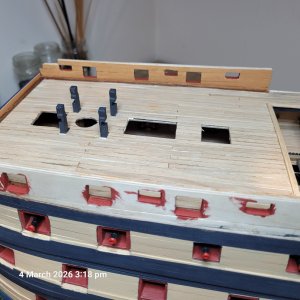
Not something the majority of viewers of your model will know about or care and may be of little concern but just in case, for the future, the head ledges and coamings had lap joints rather than mitered joints at the corners and the battens ran fore and aft rather than athwartships.
Allan

1769687592013.jpeg
 
On Victory (and generally in late-18th-century Royal Navy practice), deck hatch coamings were made with mitred corners, typically a clean 45° mitre at each corner.


Why mitred?


  • Water shedding: Mitres avoid end grain facing directly into runoff, which reduces rot — a big deal on an exposed weather deck.
  • Strength with fastenings: The mitre itself wasn’t relied on for strength; it was backed by knees, lodging pieces, or internal fastenings.
  • Aesthetics & practice: Mitred coamings were considered proper shipwright finish on first-rate ships like Victory.

What they were not


  • ❌ Square butt joints at the corners — uncommon for deck coamings in RN ships of this class
  • ❌ Simple lap joints — more likely on rough internal structures, not exposed hatch coamings

Extra detail (often missed):


  • Coamings were usually let into the deck planking and sat on ledges/carlin structure below.
  • The mitres were sometimes very slightly relieved internally to prevent splitting.
  • On Victory specifically, surviving structure and contemporary dockyard practice both point to mitred construction, and this is how they are represented in serious plans and museum-grade models.
 
  • On Victory specifically, surviving structure and contemporary dockyard practice both point to mitred construction, and this is how they are represented in serious plans and museum-grade models.
So many things were inconsistent in the days of sail, I would not be surprised if there are examples of both types of construction.
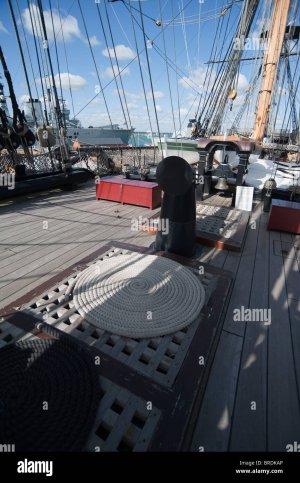
The below photo shows a hatch on HMS Victory with lap construction. This is obviously modern day so maybe they did not duplicate the original type of construction during past renovations.

1769737262376.jpeg

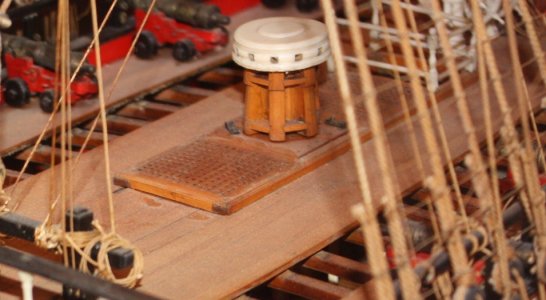
The below is an example of a museum grade model built in England circa 1780. By the same token I would not be surprised to find examples on contemporary models with mitered corners as well.
1769737856780.jpeg

Regarding serious plans, they are usually some of the best sources, but I cannot find any that show how the head ledges and coamings were assembled. While modern publishings, both David Antscherl and Peter Goodwin show the lap construction for these parts in their books. Could you please post or give a link to a site that shows these contemporary drawings or plans with mitered joints. I am truly curious about this and learned a long time ago not to dismiss any possibility when it comes to the age of sail. Thanks Mallacoota, I would appreciate your help on this.

Allan
 
Last edited:
Back
Top