


- Joined
- Dec 7, 2025
- Messages
- 18
- Points
- 47

Hi everyone, a few weeks ago when I introduced myselt I wrote about using a black oxidative patina and @BigBad asked my to explain more abou it.
the basics of these method y makeing a solution of tetraamine copper with thing we can almost all find at home or near home.
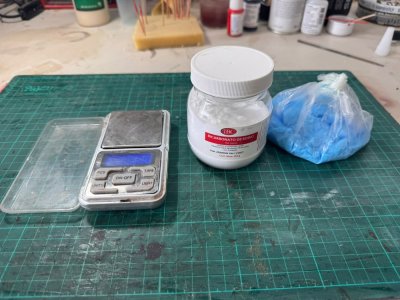
Firts we need to obtain copper carbonate from sodium bicarbnate (baking soda) an copper sulphate ( ligh blue crystals that you can find it in pool shops or garden centers), for those who likes chemistry we ar about to do this: CuSO₄ + 2 NaHCO₃ → CuCO₃ ↓ + Na₂SO₄ + CO₂ ↑ + H₂O
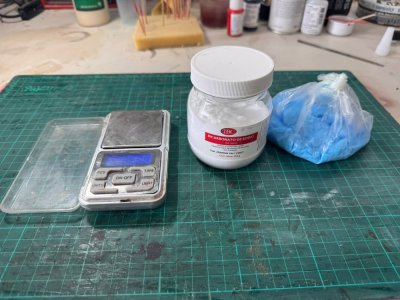
With a scale you have to prepair 2 solution, the firts one of 500 cc of hot distilled water and 125 gr of copper sulfate and the other of 500 cc of hot distilled water and 95 gr of sodium bicarbonate.
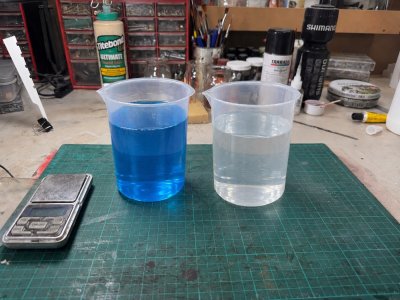
Next you are going to mix them very slowly in a larger container because of the effervescence it produce and it will immediatelly apear a greenish colour, that is copper carbonate ( basic copper carbonate in this case)
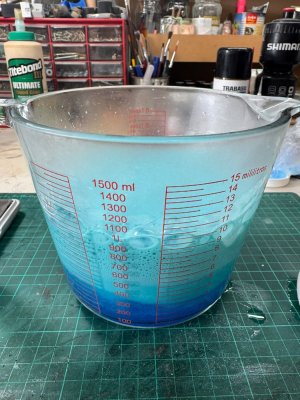
Since it is insoluble in water it will slowly settle out
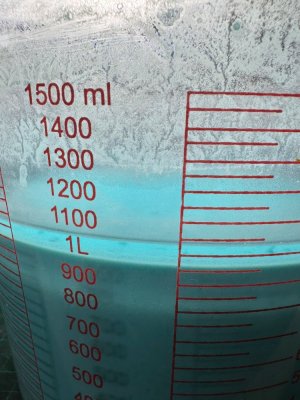
You can leave it overnight to remove excess water and then filtering with paper filters (I used coffee filters)
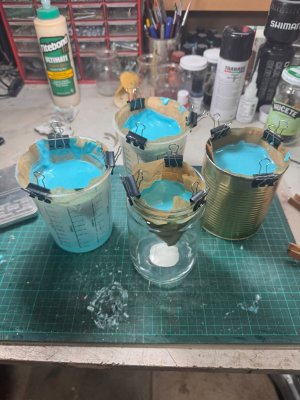
Once you take all de water you can by filering you need to completelly dry the paste, you can use your kitchen oven at the minimun temperature because if you overheat it it will become copper oxide ( it will turn balck) and you will have to throw it in the trash. In my case I place it in the top of my wife´s pottery kiln
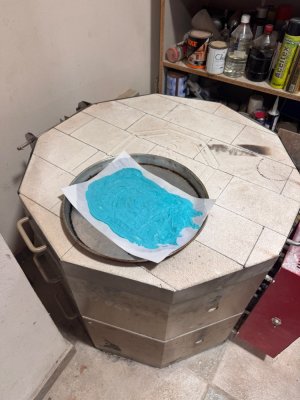
One it´s completelly dry you will habe a greenish powder ready to use.
You will have to make a new solution but this time you will need 25% liquid ammonia (amonium hidroxide 25%), just be sure to make it in a very well ventilated area and you will have a blue solution of tetraamine copper.
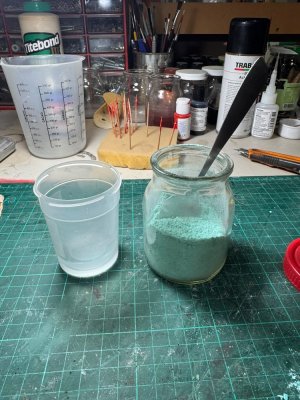
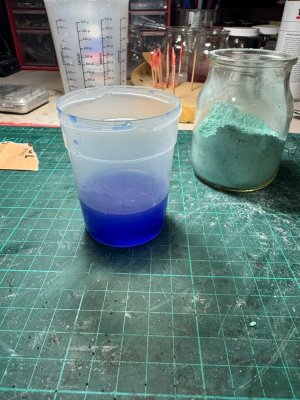
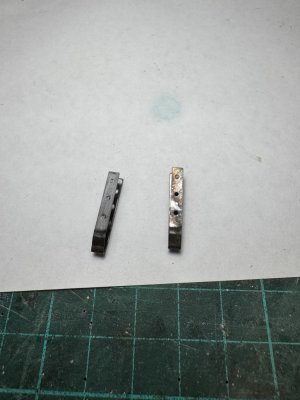
Now we have our final product ready, clean very well all the brass parts you need to treat with alcohol and steel wool and submerge them for a few minutes or the time you wish , the longest time the blakest color you will get .
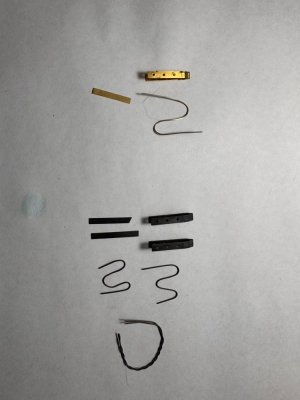
You can try differets times of expositions anda ratios of solution but allway in well ventilated areas because of the ammonia.
Hope it helps.
the basics of these method y makeing a solution of tetraamine copper with thing we can almost all find at home or near home.
Firts we need to obtain copper carbonate from sodium bicarbnate (baking soda) an copper sulphate ( ligh blue crystals that you can find it in pool shops or garden centers), for those who likes chemistry we ar about to do this: CuSO₄ + 2 NaHCO₃ → CuCO₃ ↓ + Na₂SO₄ + CO₂ ↑ + H₂O
With a scale you have to prepair 2 solution, the firts one of 500 cc of hot distilled water and 125 gr of copper sulfate and the other of 500 cc of hot distilled water and 95 gr of sodium bicarbonate.
Next you are going to mix them very slowly in a larger container because of the effervescence it produce and it will immediatelly apear a greenish colour, that is copper carbonate ( basic copper carbonate in this case)
Since it is insoluble in water it will slowly settle out
You can leave it overnight to remove excess water and then filtering with paper filters (I used coffee filters)
Once you take all de water you can by filering you need to completelly dry the paste, you can use your kitchen oven at the minimun temperature because if you overheat it it will become copper oxide ( it will turn balck) and you will have to throw it in the trash. In my case I place it in the top of my wife´s pottery kiln
One it´s completelly dry you will habe a greenish powder ready to use.
You will have to make a new solution but this time you will need 25% liquid ammonia (amonium hidroxide 25%), just be sure to make it in a very well ventilated area and you will have a blue solution of tetraamine copper.
Now we have our final product ready, clean very well all the brass parts you need to treat with alcohol and steel wool and submerge them for a few minutes or the time you wish , the longest time the blakest color you will get .
You can try differets times of expositions anda ratios of solution but allway in well ventilated areas because of the ammonia.
Hope it helps.
Last edited: