


• Ships of Scale has incorportated an extra level of security when you log In. Please follow on-screen prompts to acknowledge that you are not a robot via a "Check Box" or a "Pictorial Check Box Puzzle". This is needed due to higher level of AI Activity Security.
  • SUBSCRIBE TO SHIPS IN SCALE TODAY!

    The beloved Ships in Scale Magazine is back and charting a new course for 2026!
    Discover new skills, new techniques, and new inspirations in every issue.

    NOTE THAT OUR NEXT ISSUE WILL BE July/August 2026
  • Win a Free Custom Engraved Brass Coin!!!
    As a way to introduce our brass coins to the community, we will raffle off a free coin during the month of August. Follow link ABOVE for instructions for entering.

Homemade blackening solution

Joined
Dec 7, 2025
Messages
16
Points
47

Hi everyone, a few weeks ago when I introduced myselt I wrote about using a black oxidative patina and @BigBad asked my to explain more abou it.
the basics of these method y makeing a solution of tetraamine copper with thing we can almost all find at home or near home.
Firts we need to obtain copper carbonate from sodium bicarbnate (baking soda) an copper sulphate ( ligh blue crystals that you can find it in pool shops or garden centers), for those who likes chemistry we ar about to do this: CuSO₄ + 2 NaHCO₃ → CuCO₃ ↓ + Na₂SO₄ + CO₂ ↑ + H₂O
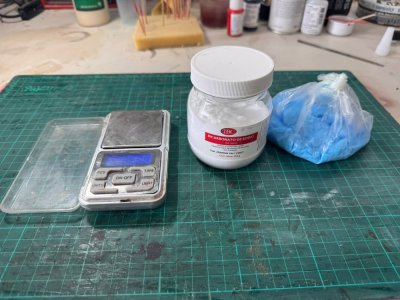
WhatsApp Image 2026-09-28 at 19.33.38 (2).jpeg

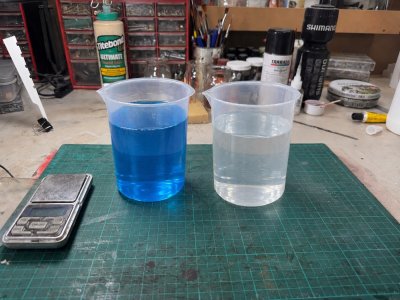
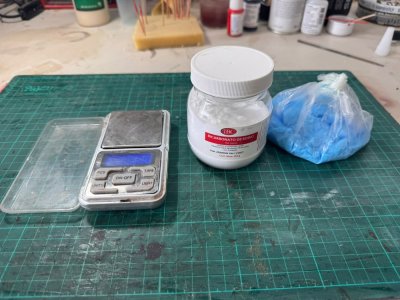
With a scale you have to prepair 2 solution, the firts one of 500 cc of hot distilled water and 125 gr of copper sulfate and the other of 500 cc of hot distilled water and 95 gr of sodium bicarbonate.
WhatsApp Image 2026-09-28 at 19.33.40.jpeg

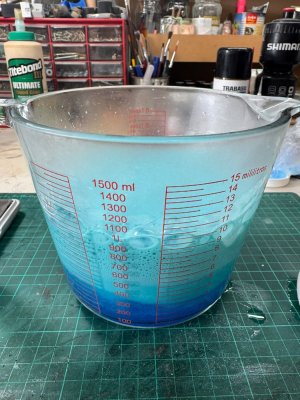
Next you are going to mix them very slowly in a larger container because of the effervescence it produce and it will immediatelly apear a greenish colour, that is copper carbonate ( basic copper carbonate in this case)
WhatsApp Image 2026-09-28 at 19.33.38 (1).jpeg
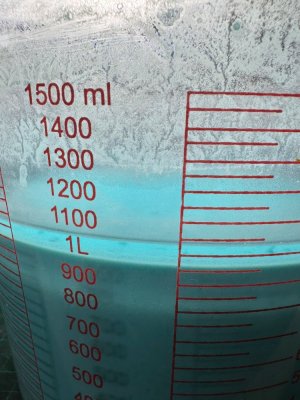
Since it is insoluble in water it will slowly settle out
WhatsApp Image 2026-09-28 at 20.19.47.jpeg
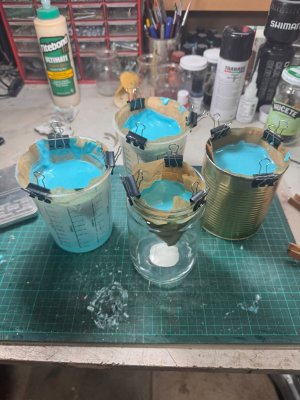
You can leave it overnight to remove excess water and then filtering with paper filters (I used coffee filters)
WhatsApp Image 2026-09-28 at 19.33.37 (3).jpeg
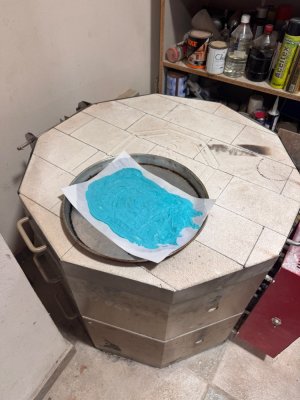
Once you take all de water you can by filering you need to completelly dry the paste, you can use your kitchen oven at the minimun temperature because if you overheat it it will become copper oxide ( it will turn balck) and you will have to throw it in the trash. In my case I place it in the top of my wife´s pottery kiln
WhatsApp Image 2026-09-28 at 19.33.37 (1).jpeg
One it´s completelly dry you will habe a greenish powder ready to use.
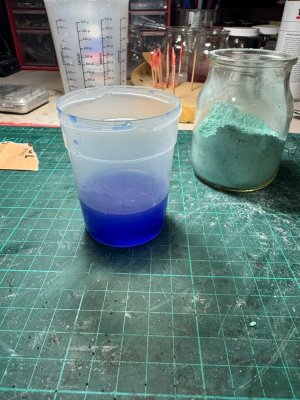
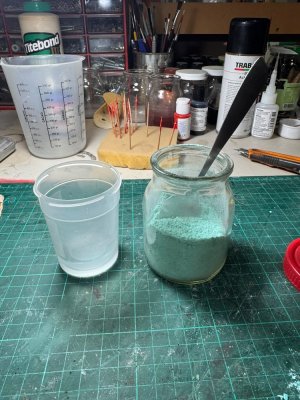
You will have to make a new solution but this time you will need 25% liquid ammonia (amonium hidroxide 25%), just be sure to make it in a very well ventilated area and you will have a blue solution of tetraamine copper.
WhatsApp Image 2026-09-28 at 19.33.37.jpeg
WhatsApp Image 2026-09-28 at 19.33.36 (1).jpeg
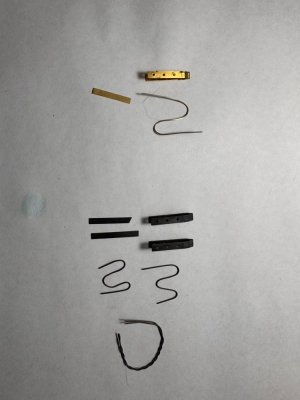
Now we have our final product ready, clean very well all the brass parts you need to treat with alcohol and steel wool and submerge them for a few minutes or the time you wish , the longest time the blakest color you will get .
WhatsApp Image 2026-09-28 at 19.33.36.jpeg
You can try differets times of expositions anda ratios of solution but allway in well ventilated areas because of the ammonia.

Hope it helps.
WhatsApp Image 2026-09-28 at 19.33.38 (2).jpeg
 
Last edited:
Hello Ivan,
Thanks for a very clear explanation, nevertheless, I have a few question.

Since I was kicked out of the chemistry class after the fire brigade had to extinguish a few experiments, I have no workable experience in chemistry at all.
(Our last attempt was the home brewing of beer: it exploded against the ceiling!)

But I really like to try it , because the examples you presented look very decent !

Therefore:
1 - The 25% liquid ammonia (amonium hidroxide 25%) - you buy it in that composition or do you have to make that 25% solution yourselves ?
2 - How do you mix the final blue solution of tetraamine copper; how much fluid and how much powder?
3 - Do you have to take extra precautions as:
wearing rubber gloves
fumes (like the ammonia part)
is it poisonous?

Thanks for your further elaboration
looking forward to hearing from you (and to a very black future for some copper elements)
Yves
 
Hello Ivan,
Thanks for a very clear explanation, nevertheless, I have a few question.

Since I was kicked out of the chemistry class after the fire brigade had to extinguish a few experiments, I have no workable experience in chemistry at all.
(Our last attempt was the home brewing of beer: it exploded against the ceiling!)

But I really like to try it , because the examples you presented look very decent !

Therefore:
1 - The 25% liquid ammonia (amonium hidroxide 25%) - you buy it in that composition or do you have to make that 25% solution yourselves ?
2 - How do you mix the final blue solution of tetraamine copper; how much fluid and how much powder?
3 - Do you have to take extra precautions as:
wearing rubber gloves
fumes (like the ammonia part)
is it poisonous?

Thanks for your further elaboration
looking forward to hearing from you (and to a very black future for some copper elements)
Yves
Hi iglo I used a comercial solution from a soil laboratory of a friend because here it is not available over the counter, you can use other less concentrated too, it will only take more volume and time to achieve the desired colour ( anxiety beats me that’s why I use 25%).
The proportions of ammonia and the powder may vary a bit but the point here is to make a completely saturated solution so start adding de powder little by little until you see it precipitate, at that point you will have the maximum concentration.
The smell of the solution is really intense cause of the ammonia ( like a baby dippers) if you use less concentrated ammonia (e.g. 5%) the smell is lower too, fumes can be irritating in large quantities but here we use really small volumes so leave an open window that’s all.
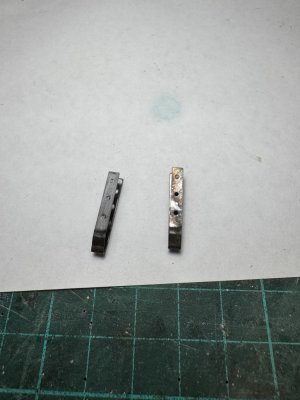
One important thing is the pre-cleaning of the parts, use what ever you consider necessary to perfectly clean the parts ( if refer steel wool or a synthetic fiber
IMG_4449.jpeg
On the right is a poorly cleaned hinge

Best wishes
 
Thanks for your prompt response
No toxic elements to take care of, Ivan ?

Capt. Iglo is my nickname (because of the beard)
I am Yves
regards, friend
 
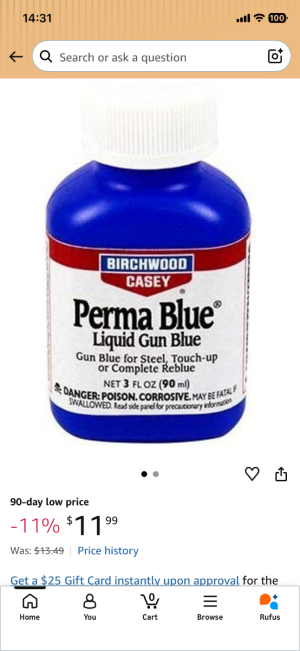
probably making your own solution is lots of fun but cost of commercial brass blackener on Amazon is only $11 Canadian. It will be hard to beat this price even making this solution at home.

IMG_1676.png
 
Hello Yves,
Being a chemist, I thought I would jump in here. To answer your question, yes, most of these materials are toxic. However, I would not call them particularly dangerous. As long as they are handled properly, they are perfectly safe. handled properly means using gloves and wearing eye protection. Never use containers for handling chemicals that you intend to use for food. When handling ammonia, you definitely want to have good ventilation (or be outside).

Sodium Bicarbonate - this is just baking soda. No toxicity issues to be concerned about
Copper Sulfate - This is toxic, but you would basically have to eat it to have a problem. being a solid, it is not going to be easily absorbed by your skin, although you should still use gloves when handling. it is a common chemical found in pool algaecides and root killer. Once dissolved in water, you just want to make sure you don't get it on your skin or in your mouth.
Ammonia - This is technically toxic, however, you would have to breathe alot of it to have problems and you would be choking long before that. Your body actually contains some amount of ammonia and people use it in cleaning solutions all over the world. The biggest issue with ammonia is that at 25%, it can cause sever skin irritation and burning, so wear gloves and don't get it on your skin. It is particularly damaging to the eyes if you get it in your eyes, so wear eye protection and of course as mentioned before, you need good ventilation.
Tetramine copper sulfate - This is toxic, but like Copper sulfate, it is a solid and so you would have to eat it to have problems.

All of these copper compounds are very toxic to aquatic life, so make sure they do not make their way into streams, rivers, etc.

Finally, as YT pointed out, the standard blackening agents available commercially are relatively cheap. The difference is that for about the same amount of money, you can make alot more at home. The question is do you really need that much, since a little goes a long way. Whatever you decide, have fun and be safe
 
probably making your own solution is lots of fun but cost of commercial brass blackener on Amazon is only $11 Canadian. It will be hard to beat this price even making this solution at home.

View attachment 641340
You are totally right I just love the fun part of making my own stuff ( also made a nailer with an Old Ford falcon antena).
Over the years international purchases were a bit difficult where I live, we still have a limit of 5 purchases a year without customs exhaustive controls, last week I bought birchwood BRASS BLACK but didn’t have the chance to try it yet (42 usd dollars here)
 
Hello Yves,
Being a chemist, I thought I would jump in here. To answer your question, yes, most of these materials are toxic. However, I would not call them particularly dangerous. As long as they are handled properly, they are perfectly safe. handled properly means using gloves and wearing eye protection. Never use containers for handling chemicals that you intend to use for food. When handling ammonia, you definitely want to have good ventilation (or be outside).

Sodium Bicarbonate - this is just baking soda. No toxicity issues to be concerned about
Copper Sulfate - This is toxic, but you would basically have to eat it to have a problem. being a solid, it is not going to be easily absorbed by your skin, although you should still use gloves when handling. it is a common chemical found in pool algaecides and root killer. Once dissolved in water, you just want to make sure you don't get it on your skin or in your mouth.
Ammonia - This is technically toxic, however, you would have to breathe alot of it to have problems and you would be choking long before that. Your body actually contains some amount of ammonia and people use it in cleaning solutions all over the world. The biggest issue with ammonia is that at 25%, it can cause sever skin irritation and burning, so wear gloves and don't get it on your skin. It is particularly damaging to the eyes if you get it in your eyes, so wear eye protection and of course as mentioned before, you need good ventilation.
Tetramine copper sulfate - This is toxic, but like Copper sulfate, it is a solid and so you would have to eat it to have problems.

All of these copper compounds are very toxic to aquatic life, so make sure they do not make their way into streams, rivers, etc.

Finally, as YT pointed out, the standard blackening agents available commercially are relatively cheap. The difference is that for about the same amount of money, you can make alot more at home. The question is do you really need that much, since a little goes a long way. Whatever you decide, have fun and be safe
Great comments thanks
 
Back
Top