• Win a Free Custom Engraved Brass Coin!!!
    As a way to introduce our brass coins to the community, we will raffle off a free coin during the month of August. Follow link ABOVE for instructions for entering.
  • SUBSCRIBE TO SHIPS IN SCALE TODAY!

    The beloved Ships in Scale Magazine is back and charting a new course for 2026!
    Discover new skills, new techniques, and new inspirations in every issue.

    NOTE THAT OUR NEXT ISSUE WILL BE MARCH/APRIL 2026

IJN Pre-Dreadnought Battleship Mikasa by Merit 1:200 with Pontos and KA Models

Joined
Mar 22, 2026
Messages
32
Points
48

Location
Germany
Ahoy, friends of the adhesive guild.

A ship I've been eagerly anticipating is currently sitting on my workbench. It's the Pre-Dreadnought, or Unit Battleship, Mikasa of the Imperial Japanese Navy (IJN).
The project was started in February 2024. That means I've made considerable progress with the model's construction, and I'll start the time-lapse sequence again here, up to the present day.

There are two reasons why I was particularly looking forward to this ship.
First there is the shape of the hull. Really archaic. Reminds me of a Greek trireme because of the suggested ram. I like it incredibly much. And on deck everything on this ship is so different than on my Bismarck, for example.
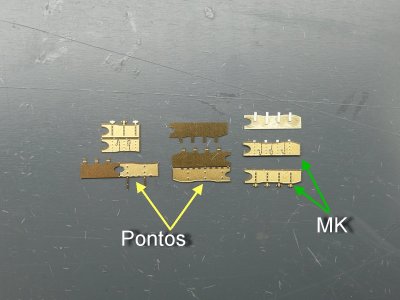
Secondly, I don’t just have a Pontos Detail Up Set for this model. No, as a bonus there is also the MK1 Deluxe package from KA Models. There are a few details that are missing from Pontos. Probably not researched thoroughly enough, or what?!. But more on that later.
Well, it’s going to be an etching orgy in the very first cabin. What fun.
Then I would like to introduce you to the available material for this project.

First of all, the model.
This is available from a number of manufacturers such as I Love Kit, Wave Corporation or HobbyBoss. But everything is definitely Trumpeter, which you can see immediately when you open the box.

After all, my Mikasa comes from Merit International. It’s amazing how many names this model is sold under.
The picture shows the box from the company I Love Kit, as I no longer have mine.
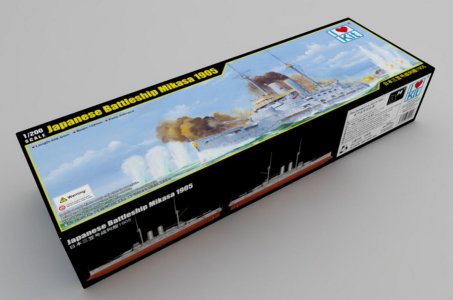
s-l1600 (1).jpg

Of course there is also my favorite etched part set from Pontos.
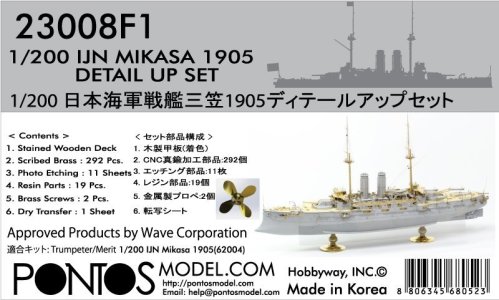
0fcb125c22757fce6fe306503d4a2835.jpg

And now I’m exaggerating, I know, but this model also comes with the MK1 Deluxe package from Ka Models. I’ll explain what motivated me to do this later in my construction report.
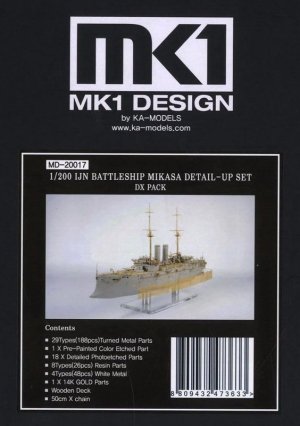
klein3p.jpg

Unfortunately there isn’t much from Veteran Models for this model, but at least this:
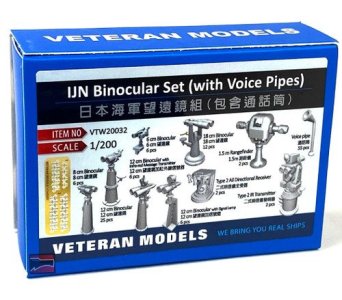
vtw20032-1200-veteran-models-ijn-binocular-set-with-voice-pipes-squadron-model-models__70953.jpg

This time the figures come from the company ION, which I appropriately won as a prize for my Bismarck.
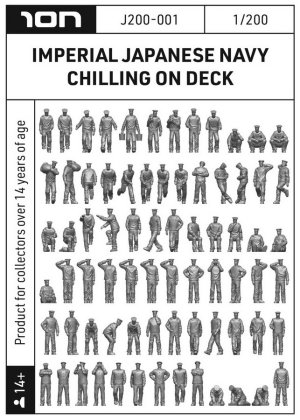
J200-001_6.jpg

It is still incomprehensible to me that the manufacturers, regardless of whether it is the model or the expensive aftermarket products, that anchor chains have no double bar links. So they became worried.
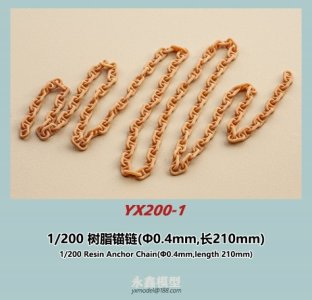
YX200-1-1.jpg

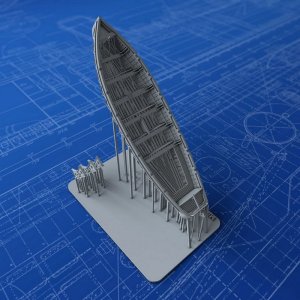
Let's move on to another exquisite accessory, these fantastic boats from Micro Master in New Zealand.
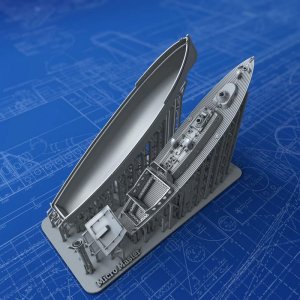
350-50ft-Steam-Pinnace-1_Hero-Camera_a_1000x1000.jpg

A little dream.

32ft-Cutter-1.jpg

So, this is the first list of ingredients for my new project. Although I can’t or don’t want to rule out the possibility that one or two particles could come along.
On to the next two years of fun.

Lets start.
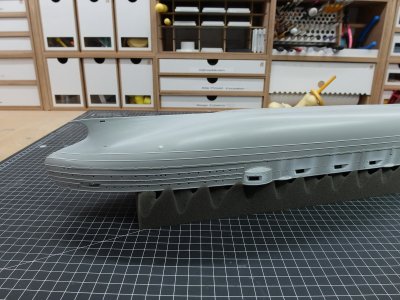
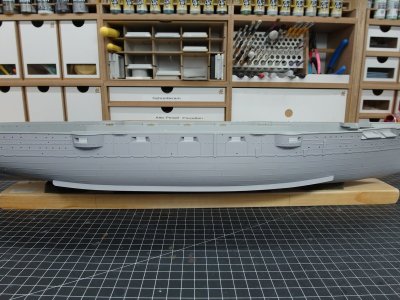
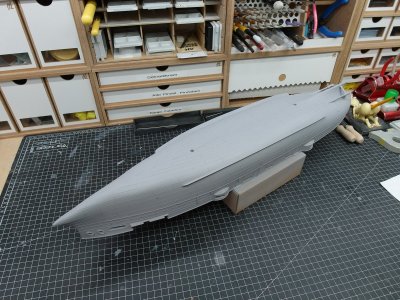
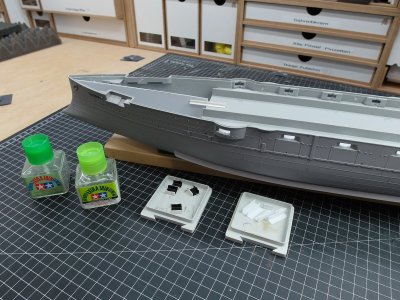
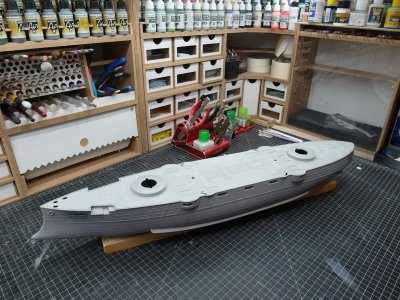
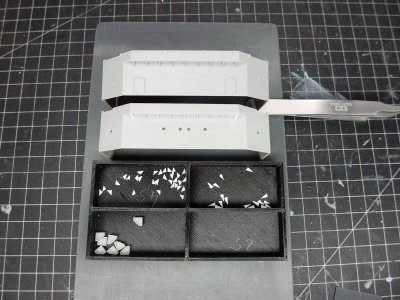
First the basics, with glue the fuselage together.
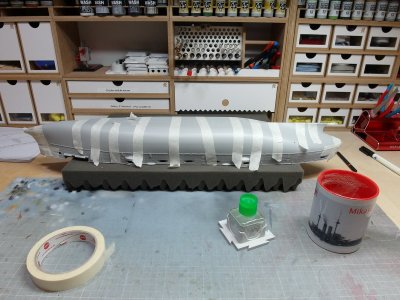
1.JPG

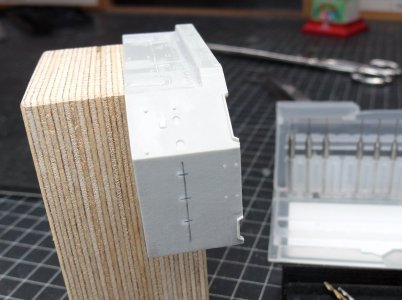
Next, drilled holes for the stand nuts.
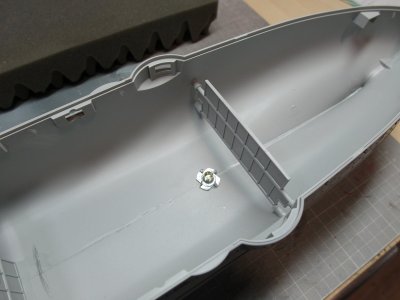
2.JPG

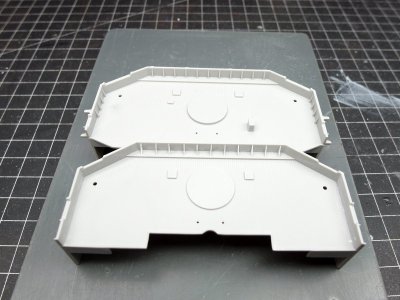
Neatly glued in with two components resin. Just like the internal structures to stiffen the torso.
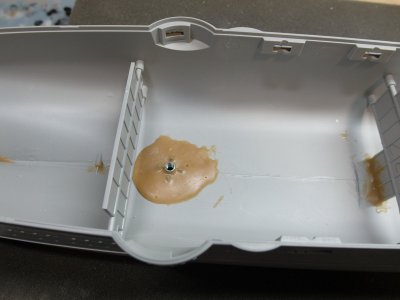
3.JPG

Then the first lower deck comes into the hull. Now it is really very stable.
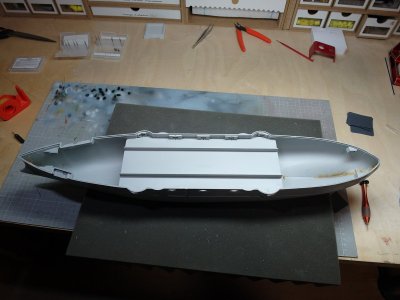
7.JPG

Next, the holes for the crampons. Nice straight through the drilling templates from Pontos.
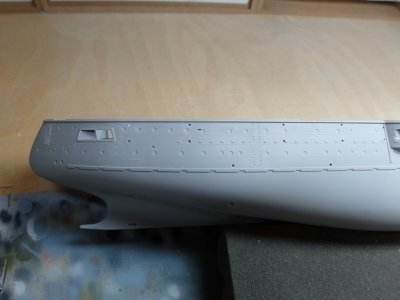
5.JPG

And the usual drilling out of the portholes.
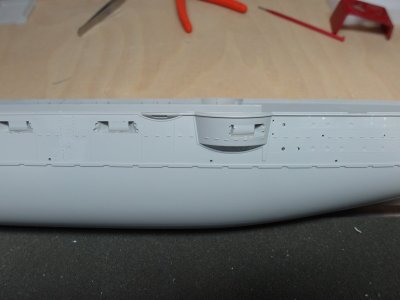
6.JPG

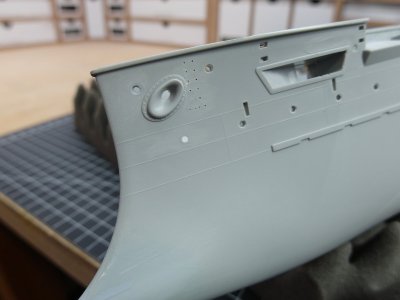
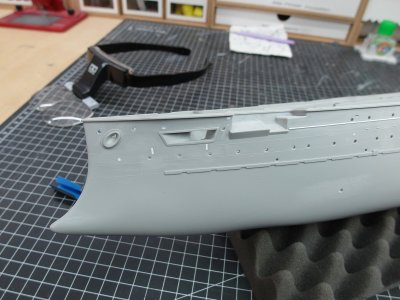
After researching the few images available, I noticed that the porthole that sits on the model below the anchor hawse did not exist.
This was then closed with a round styrene profile.
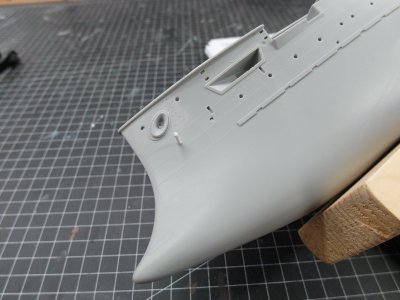
8.JPG

Filled and sanded.

9.JPG

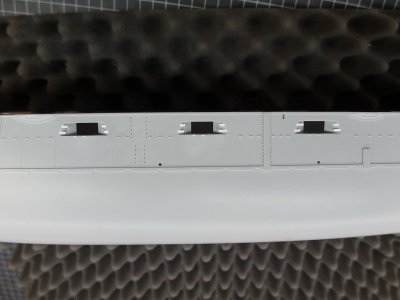
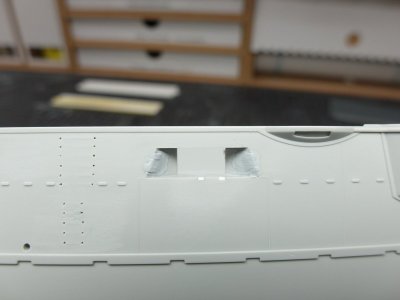
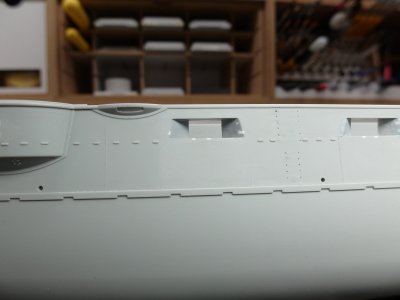
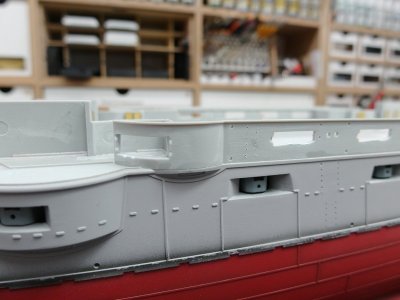
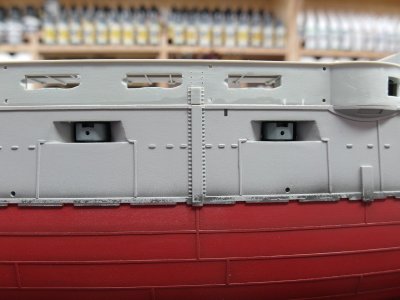
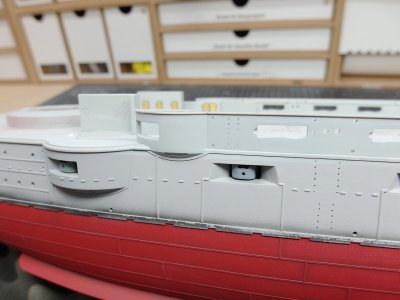
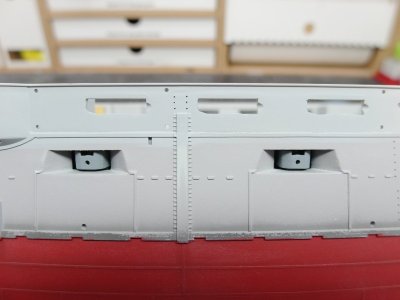
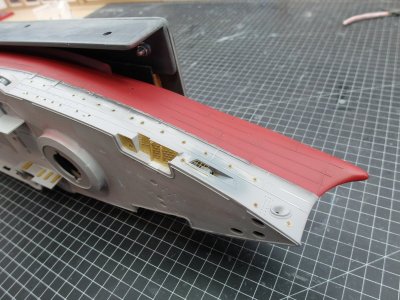
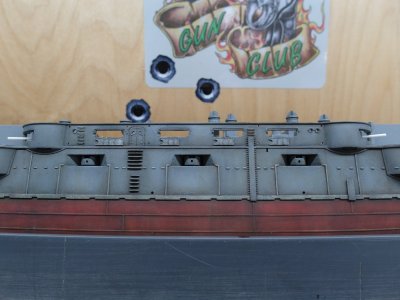
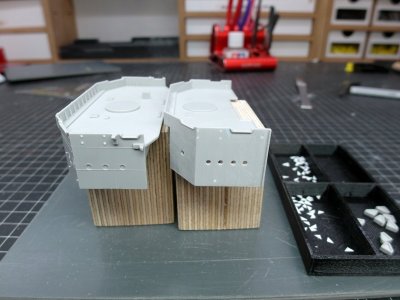
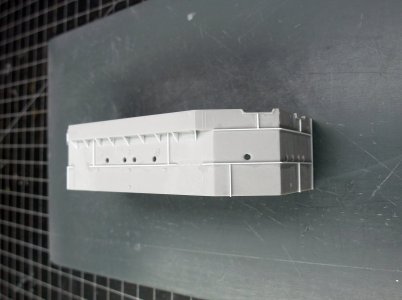
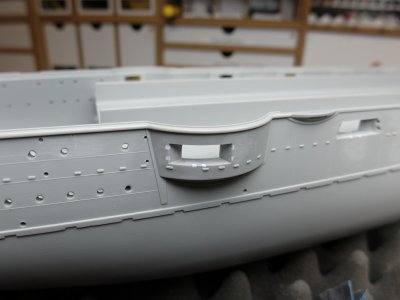
Another mistake that needs to be corrected. Merit made recesses in the fuselage to accommodate the etched piece gunports from the model in the correct location.
Since I’m using the pontos set here and the hinges of the gunport on the original ship were riveted onto the hull from the outside, I close them with styrene.
10.JPG

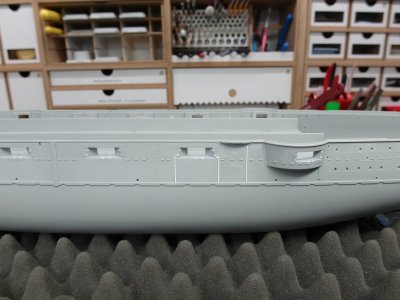
I’ll be busy with that for a while.
11.JPG
 
Continue working on the hull, which will probably take quite some time.
Because after I filled the recesses with styrene profiles, I noticed significant sinkholes that unfortunately had to be thickly filled.
On the right side, I think you can still clearly see the small dent of the sink under the filler.

11a.JPG

Since I had to do a lot of filing and sanding here, I could no longer take the surface structure of the hull into account and removed it. Which isn’t a big deal since I’ll be making them again with styrene.

11b.JPG

After the first sanding process, the worked areas were primed as a check and I am quite happy with the result.

11c.JPG

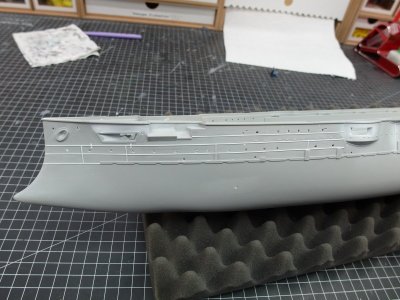
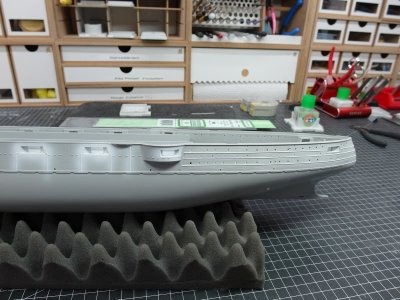
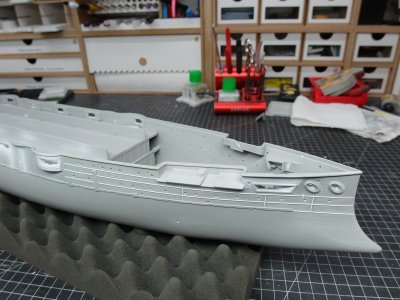
So, I have created the removed surface structure with my styrene profiles.
It's a little bit wider than the original line, but if it's painted afterwards it should fit.

12.JPG

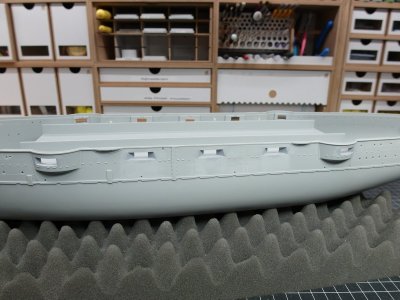
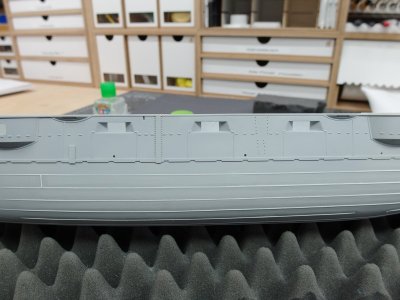
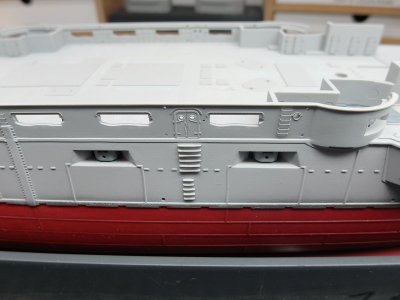
And so I continued on the port side and completed the areas around the casemates.
Consequently, all structures of this type on the fuselage are now being replaced by styrene profiles. As can be seen above.
Otherwise it would no longer look consistent.

12a.JPG

Ok, let’s fill the holes that I don’t need due to the etched parts sets.

12b.JPG

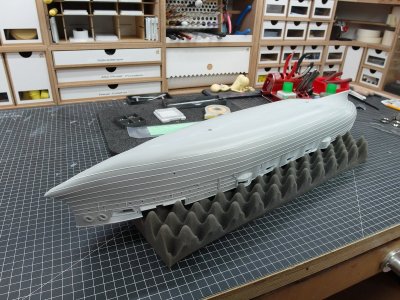
Then we come to my beloved Styren profiles.

13.JPG

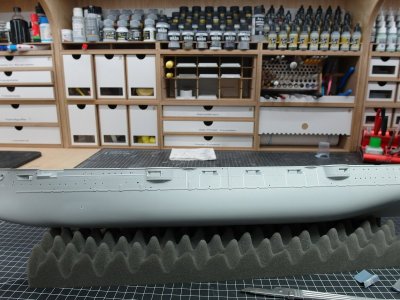
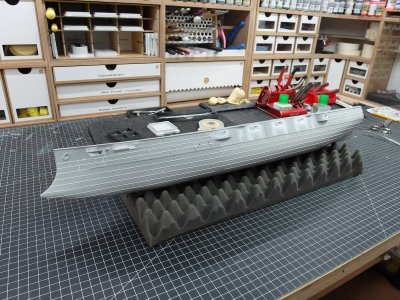
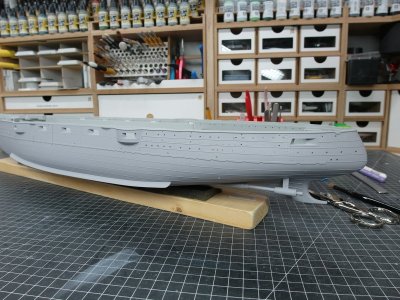
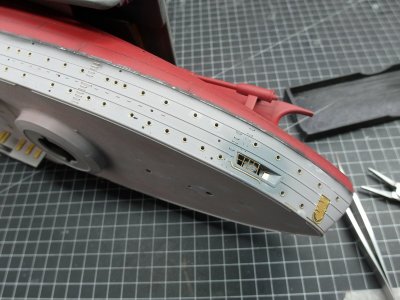
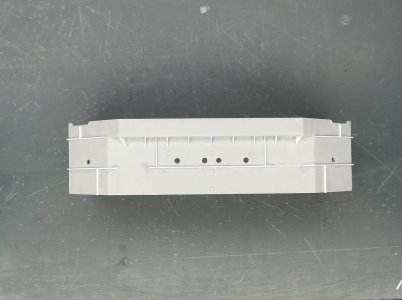
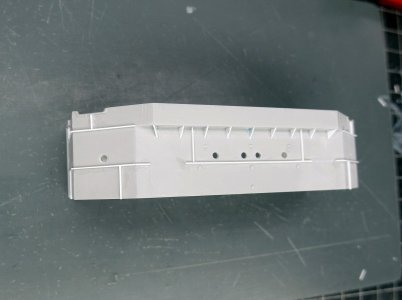
I use this to imitate the seams of the armor plates. At that time, riveting was still taking place, not welding. However, you can hardly see the rivets under the paint on the original. So that’s enough for me.

13a.JPG

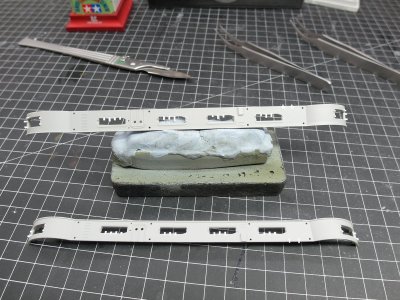
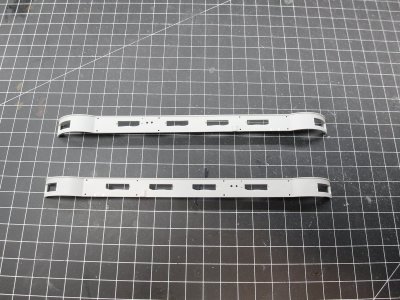
The storage areas for the anchors were sanded smooth, as Pontos also fills everything here with brass.

13b.JPG

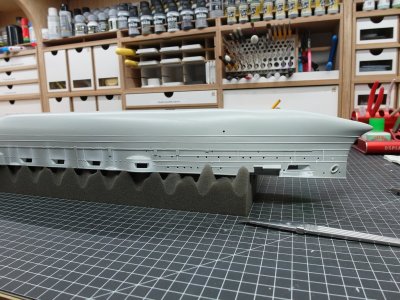
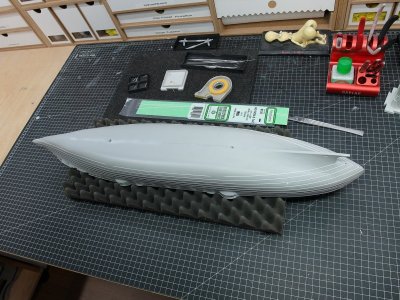
Continue with the seams for the armor plates.
This time on the underwater ship.
It takes a bit of effort and nerves. They have to be attached very precisely and parallel.
But it seems to work:

15.JPG

However, I have to move the torpedo tube opening a little at the stern, so I first closed it with styrene.

15a.JPG

It’s slowly going faster now.

15b.JPG

But there are still a lot.

15c.JPG

Now, however, I also have to take add-on parts into account, such as roll keels and propulsion.
They will only be attached to the fuselage after all the profiles have been done so that I can sand them properly beforehand.

15d.JPG

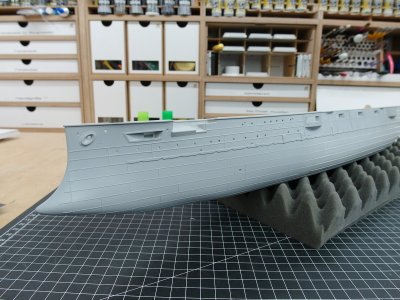
Now I created the vertical joints on the bow and sanded everything well.
Now I had to paint part of the fuselage to see if I didn’t make a mistake with the profiles.
I think you can take it.

16.JPG

The casemates were also checked again.
Can stay like that.

16a.JPG

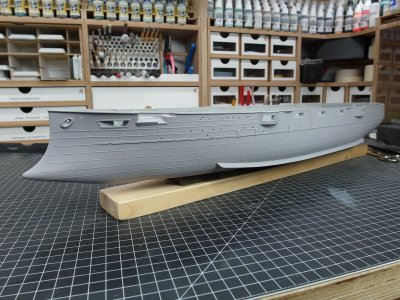
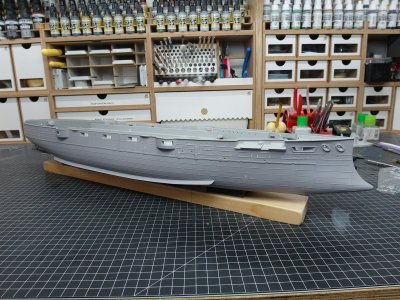
Done with the profiles.

16b.JPG

At first I wasn’t sure if I liked it because it’s actually shown the wrong way around.

16c.JPG

Because the plates would have to create a gap and not an elevation.

16d.JPG

I also sanded down the profiles on the underwater hull a lot

16e.JPG

Of course also in the places that you can hardly see afterwards.

16g.JPG

And so I think it’s going to look really good at the end.
 
Let’s continue with the basics.
A privacy screen must be created so that you cannot see light to the portholes from one side to the other side.
That’s why styrene plates were placed in the middle. The whole thing is flexible so I can move the plate back and forth a little. This is how I get the front 3 inch cannons to fit into their openings.

17.JPG

After that I need a little individual privacy protection.

17b.JPG

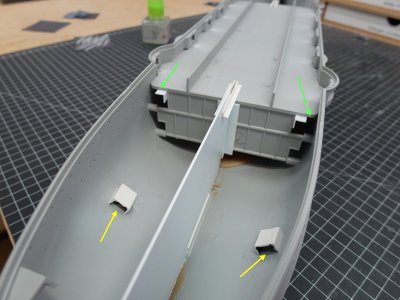
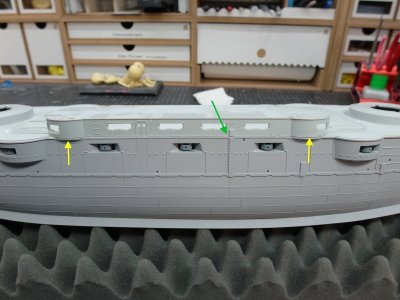
One for the muzzle openings of the torpedo launchers, yellow arrows. And for four small portholes that are located under the first deck near the green arrows. It’s hard for me to get the plates right here, hence the angles.

17c.JPG

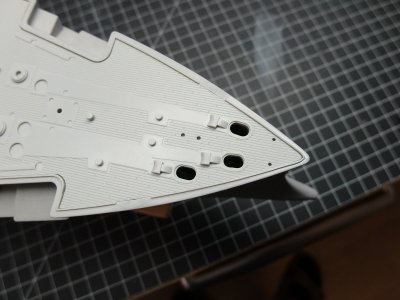
Then i creating tubes for the anchor hawse. Which should be completely sufficient. It’s just a matter of ensuring that no light shines through on the chain.

17f.JPG

Nice and dark. That’s the way it has to be. :cool:

17g.JPG

Then let us make more details in the inner values of the ship.
I’m going about this a little differently than usual.
For me, the cannon barrels are attached to the model much later and the deck has to be closed early.
There are two reasons for this.
The special feature of the Mikasa is its casemates with the protruding gun barrels. They get in the way and you quickly get stuck with them as you continue building.
In general, I always attach large pieces very late.
I will also raise the hull to the next level earlier than usual. It’s about the upper row of casemates.
If you glue this fuselage part later, which is actually logical and intended, you can get to the internal structures much better.
But you also end up with a very unsightly slot that can no longer be removed.
More on that in a moment.
First I soldered the shields of the cannons on the bow and stern.

18.JPG

Then, since you can’t see anything behind the shields anyway, I simply replaced the cannon body with a small piece of styrene pipe.

18a.JPG

This was then glued in and I’ll simply put the barrel of the cannon through the hole later.

20.JPG

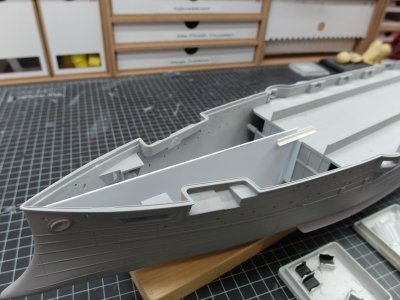
Now that all the cannons in the hull are installed, I can prepare the deck.
First say goodbye to unnecessary details. I got a small electric chisel, it simplifies things a lot.

19.JPG

After the grinding orgy, the deck was glued to the bow. Great, deck ready.

20a.JPG

Let’s come to the slot mentioned at the beginning.
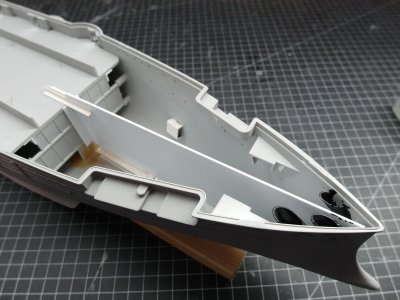
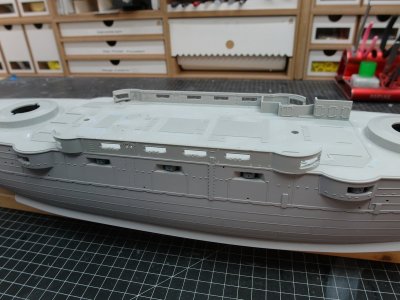
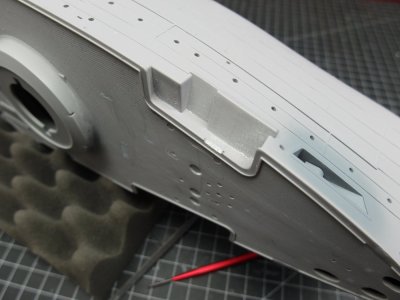
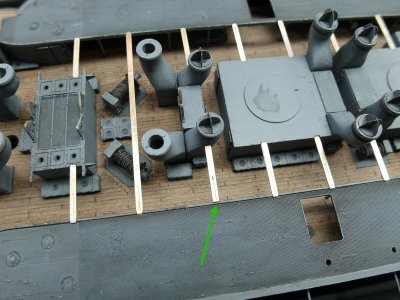
Here you see the culprit. I might still put up with the gap at the yellow arrows. But the one with the green arrow, no, doesn’t work at all.

20c.JPG.711a95805b268705abcd22754fd22100.jpg

And that’s exactly the problem.
What I would then have to mask off on the wooden deck, superstructure and other details if I wanted to fill and paint the gap late was almost impossible.
That’s why I’m going to say it in advance.

20d.JPG

Continue with additional small details.
The next picture shows why I add large parts like gun barrels as late as possible. I would like to implement this device with which the anchor was lowered into the water. To do this I first have to remove material from the fuselage.

21a.JPG

Then all profiles are checked again and some are sanded down a little further

21b.JPG

The torpedo tube opening also has a riveted ring.

21c.JPG

On to preshading.

21d.JPG

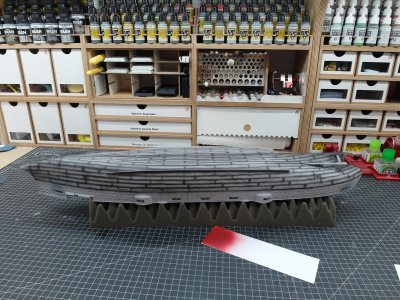
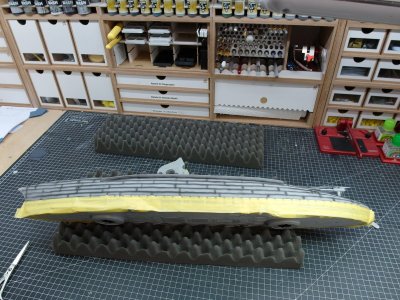
And then tape it off. I’m doing this relatively precisely, even though I’m only in the basic color.
Of course I could spray the red without masking it off, but then too many layers would overlap afterwards and the whole thing would be too thick for me.

21e.JPG

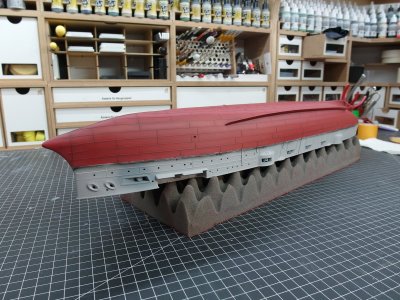
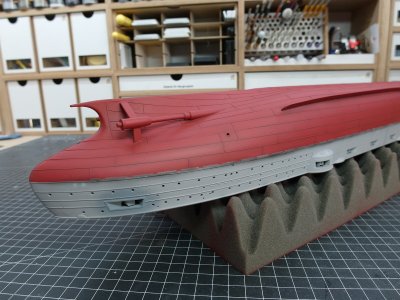
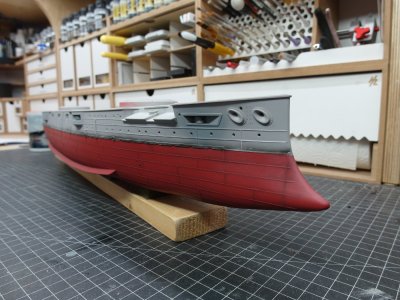
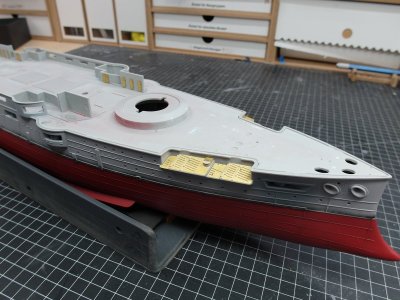
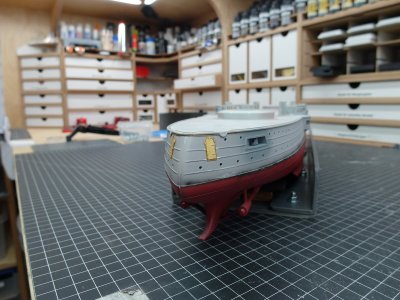
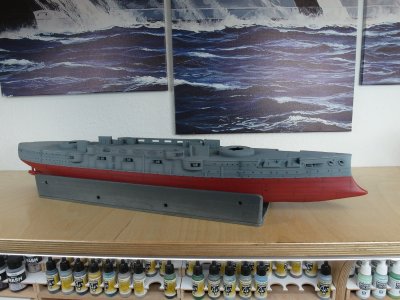
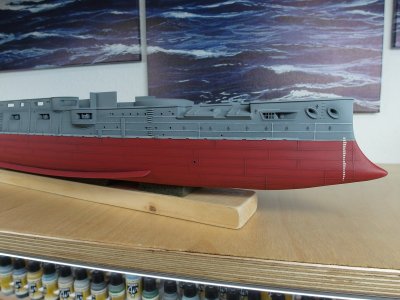
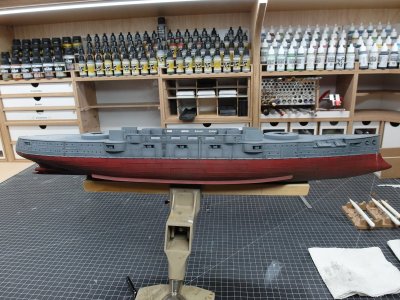
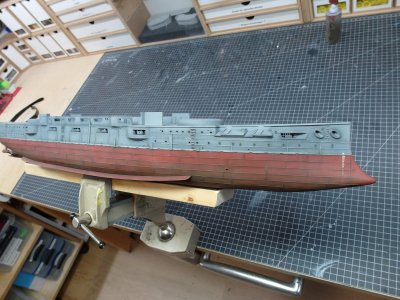
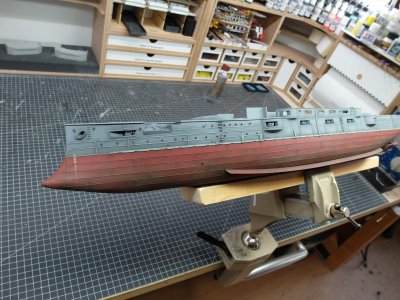
And now the antifouling paint is on the underwater hull.

22.JPG

The waterline is running great. Profiles attached at the correct height.

22a.JPG

Here are the two recesses for the side with the double anchor.

22b.JPG

I really like the structure I made from the styrene profiles.

22c.JPG

And the preshading also comes into its own.

22e.JPG
 
Thanks Buster.
Yes, I was instantly smitten when I saw this hull.

Then to the upper casemates. Unnecessary holes closed again.

23.JPG

Sanded and found to be good.

23 (2).JPG

So the etched parts battle could finally begin.

23a.JPG

The MK1 set has already scored its first points.
Shortly before I had sanded away the rather rough details, I thought about taking a quick photo of them. Pontus had not planned anything here. Incomprehensible, even if you can hardly see it on the finished model.

23b.JPG

So, one to zero for KA Models.
Still processing the remaining doors…

23c.JPG

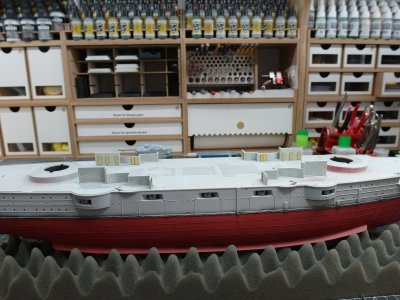
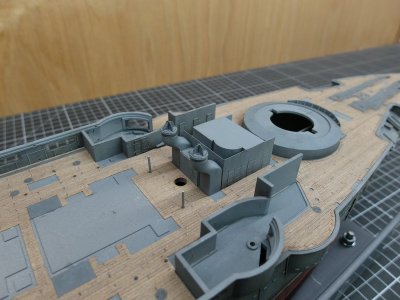
Then the first superstructures can go on the deck.

23d.JPG

The holes for the crampons were still missing on the upper casemates.
I repeat myself, but this is one of Ponto’s great strengths. The drilling templates!

23e.JPG

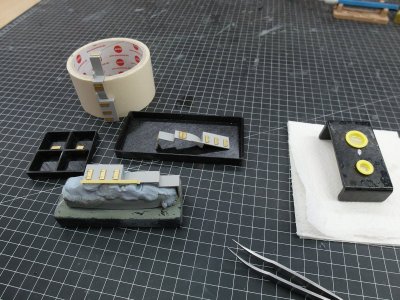
Simply fix it with an adhesive strip and off you go…

23f.JPG

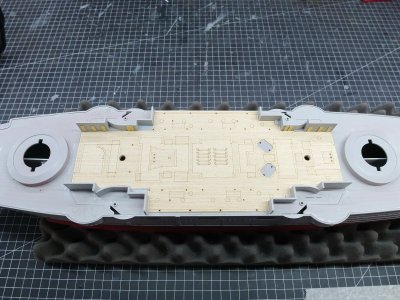
Next I checked the wooden deck amidships. It had to be trimmed a bit to get it to fit properly. Because of the slightly different approach, I have little leeway when installing the parts.
But done satisfactorily.

24.JPG

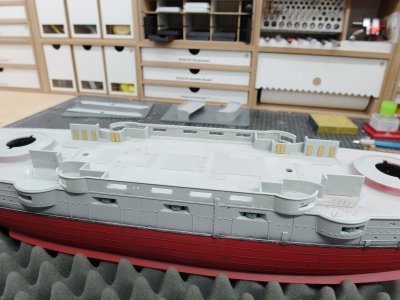
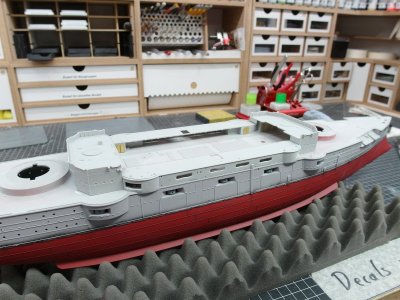
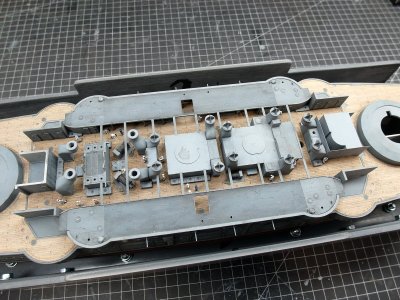
So I was able to add the next floor.

24a.JPG

Additional parts placed on top to check whether everything is in the correct position.
Everything fits perfectly.

24b.JPG

Here are the pictures to show why I go to this length.
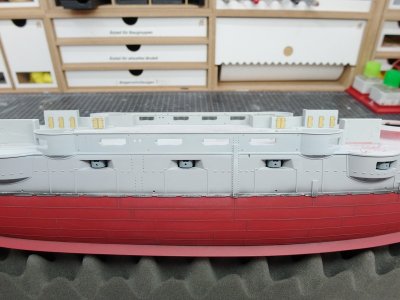
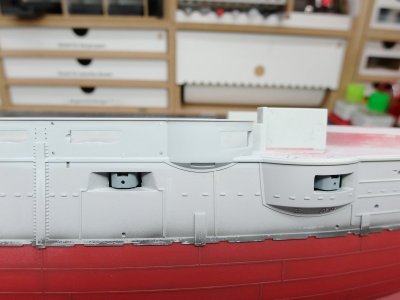
The slits in the four round casemates would still be manageable.

24c.JPG

But this one isn’t very nice.

24d.JPG

I think this is better.

25.JPG

After sanding three times…

25b.JPG

…and prime, I am very satisfied.

25c.JPG

And I especially like this one a lot better now. The extra two days of effort were worth it.

25d.JPG

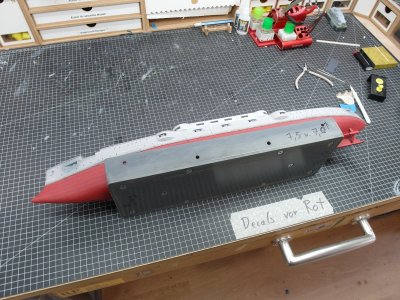
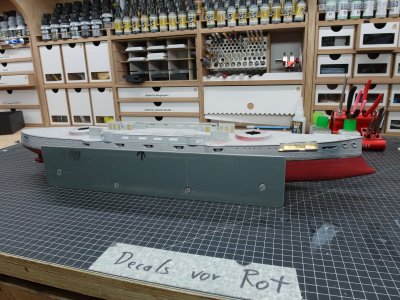
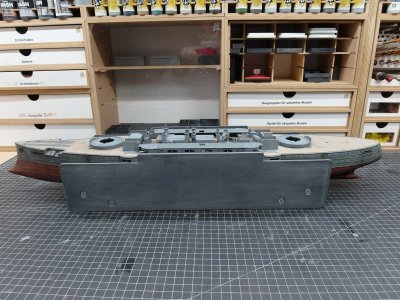
Off to the dry dock with the Mikasa. That's what I call my self-designed assembly stand.

26.JPG

There’s enough space in here on the port and starboard sides to protect the ship while you’re tinkering without it becoming too big and unwieldy..

26a.JPG

This means it can be safely laid on its side, for example to work on the portholes.

26b.JPG

I can also attach sheet pile walls of different heights to further increase the protection at the top.

26c.JPG

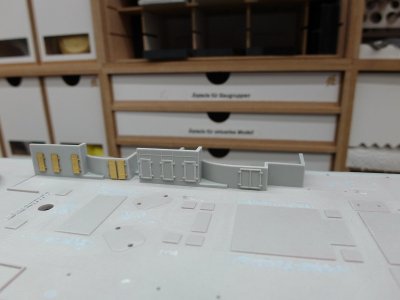
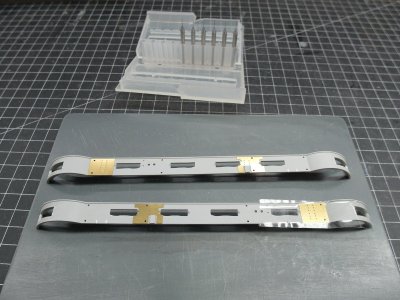
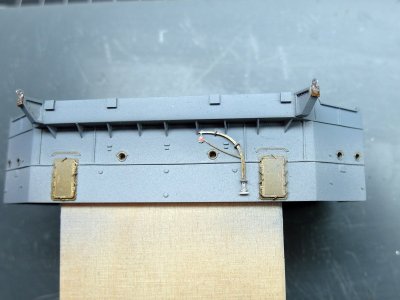
Let’s attach the first large etched parts. The anchor supports…

26f.JPG

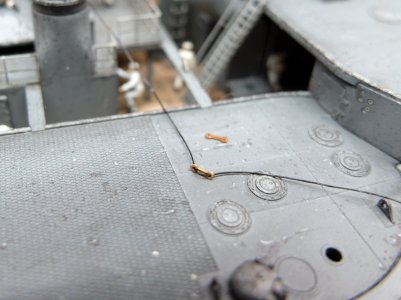
…and the doors at the rear. The ship also had electrical cables all around the back. What purpose they had, however, is unknown to me. It will not have been demagnetizing cables.

26g.JPG
 
Last edited:
Well friends of ship model building, I can do one more before going to bed.
Next, the portholes were installed.

29a.JPG

Furthermore, the grilles over the gun are still missing.

29c.JPG

I don’t use the crampons on the etched part boards. I don’t like these one hundred percent because they are of course flat. So I prefer to take thin wire and bend it to size.

29g.JPG

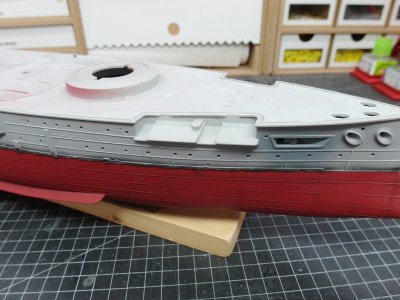
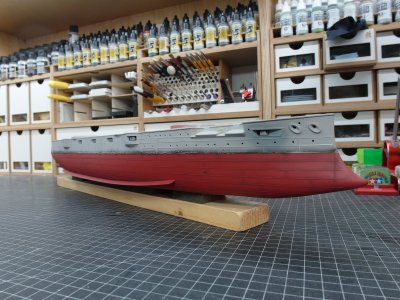
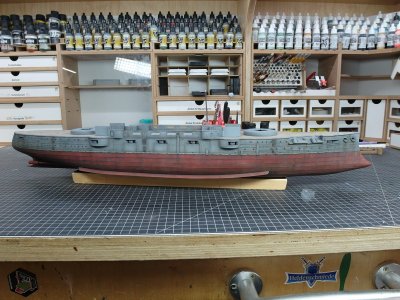
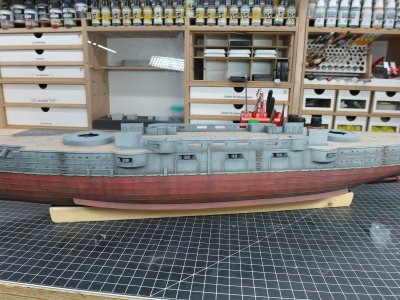
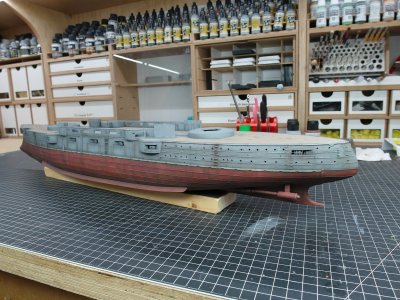
I finished all the rough work on the fuselage and was finally able to finish painting it.
After a proper preshading the whole thing now looks like this.

30.JPG

What followed was an accentuation. Which means nothing other than that I painted fine details in a lighter gray.

30c.JPG

Now I can start aging.

31.JPG

As always, very tedious. But the result that a little diluted dark gray paint leaves on a painted surface still amazes and fascinates me.

32b.JPG

Even after all the years I’ve been doing this.

32c.JPG

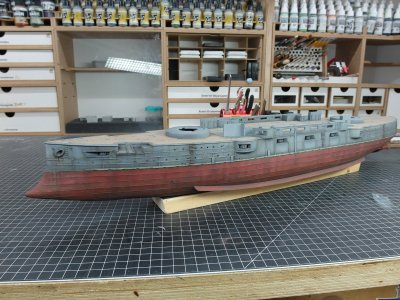
I have finished aging the hull for now and turned a new ship into an old veteran.

33.JPG

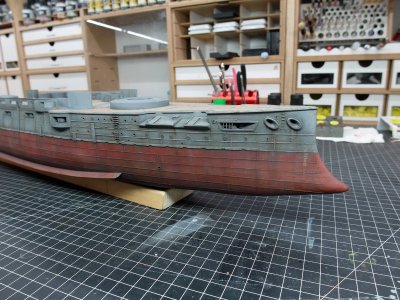
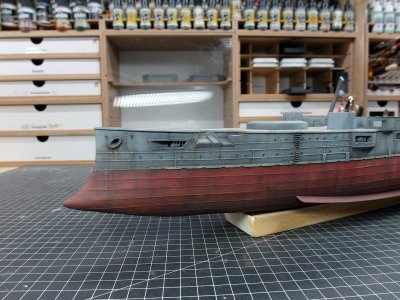
I particularly aged the anchor hawse and the area below the anchor berths, as a lot of dirt is likely to accumulate here.

33a.JPG

And port side.

33d.JPG

The chipping is also strongest here, as the anchors are likely to leave clear marks.

33e.JPG

Amidships I aged more subtly.

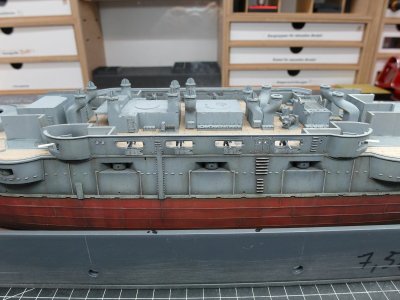
33f.JPG

And a little more at the rear.

33h.JPG

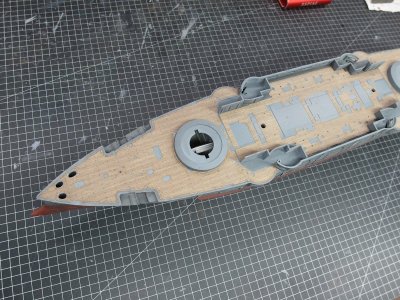
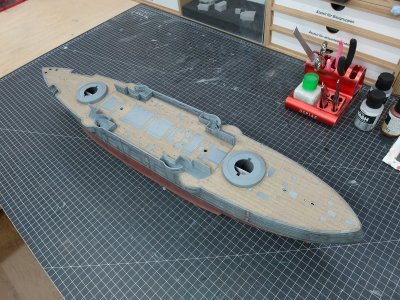
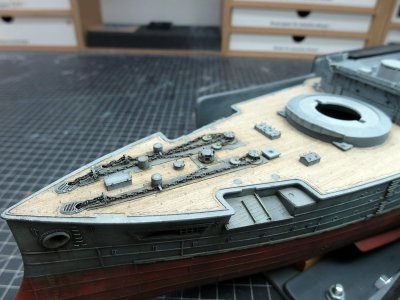
The wooden deck was also glazed and applied.

33i.JPG

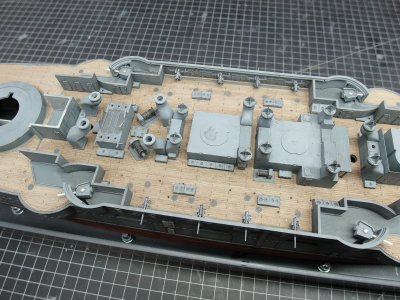
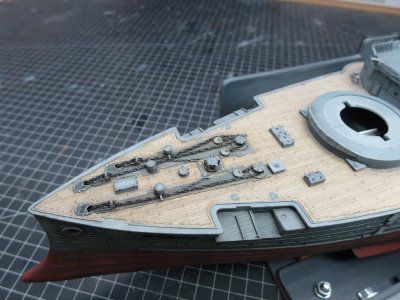
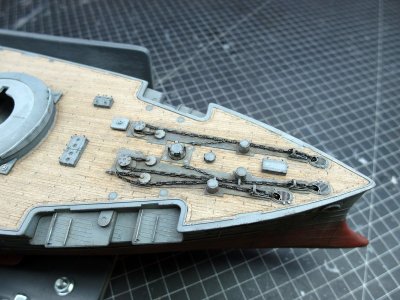
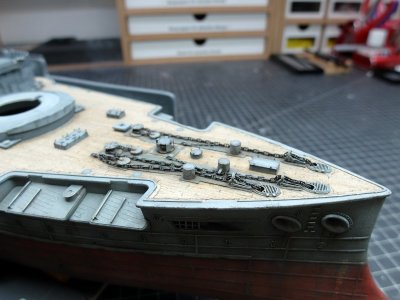
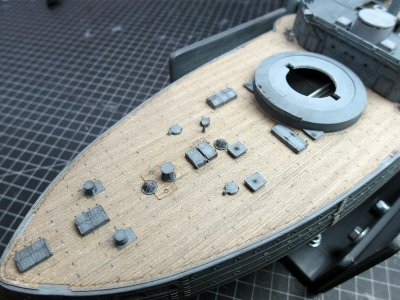
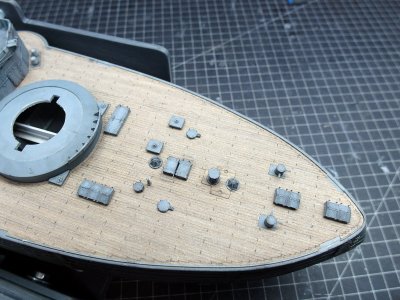
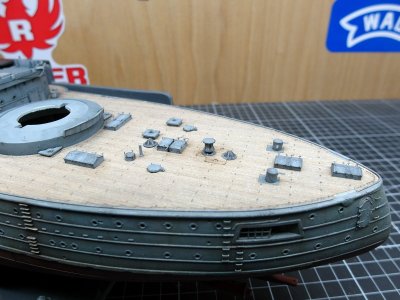
Now I can start equipping the deck, which I’m looking forward to.

33j.JPG
 
Thanks a lot, Bryan.
That's really cool. Did you create Mikasa in her black and white peace paint job or in her grey war dress? I couldn't find it here. But I don't have much time, as work is calling. It's just enough for one post. ;)

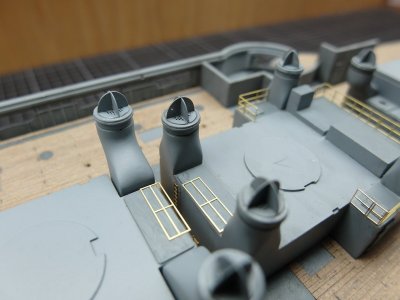
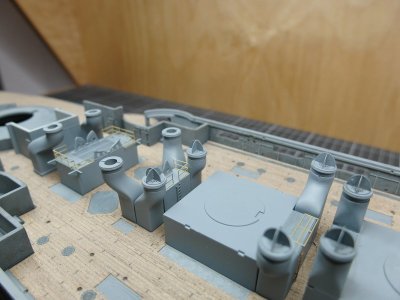
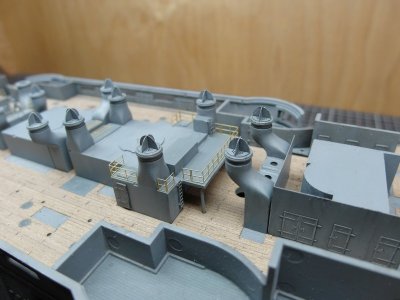
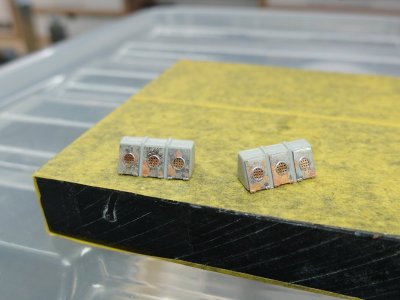
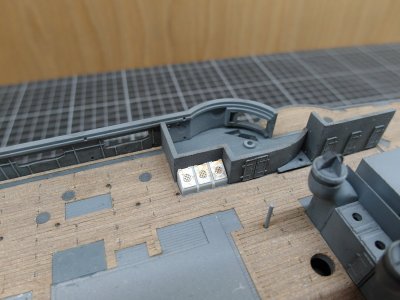
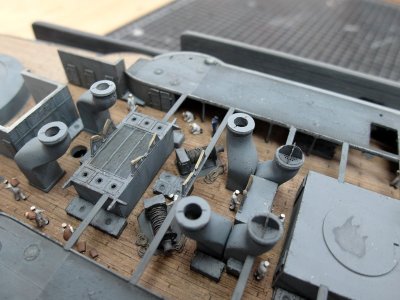
Let's start filling the deck. I soldered the internal parts of the fans. In 1905, not all of the fan scoops were there anymore and that’s how you saw them. But I don’t know why they were removed.

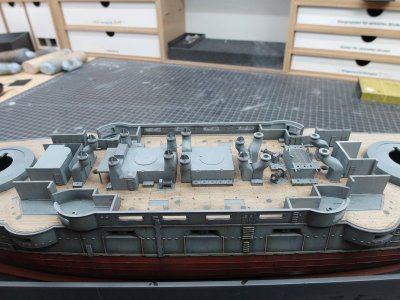
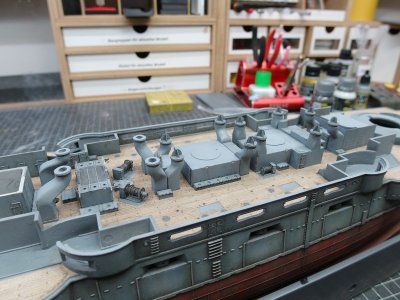
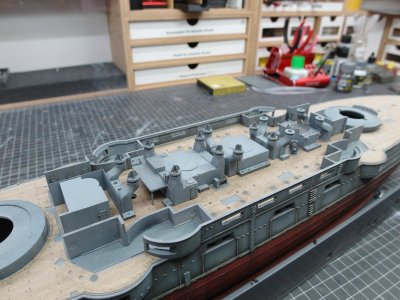
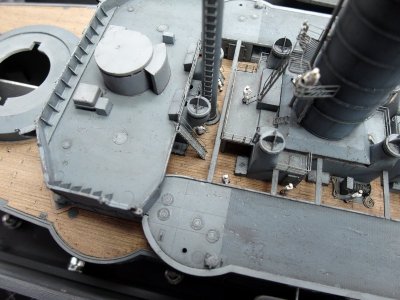
36b.JPG

And that’s how I installed them on the deck during the first superstructures.

36d.JPG

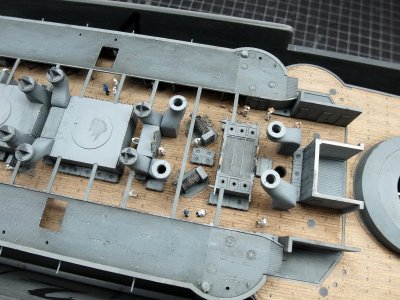
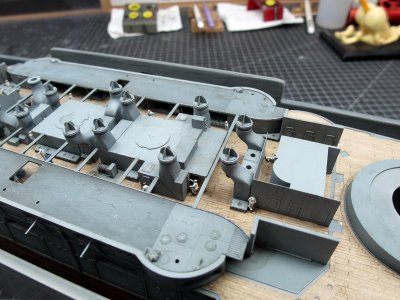
Let’s get to the internal structures.
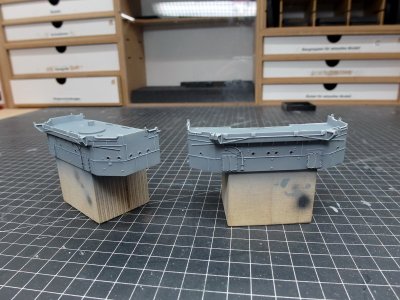
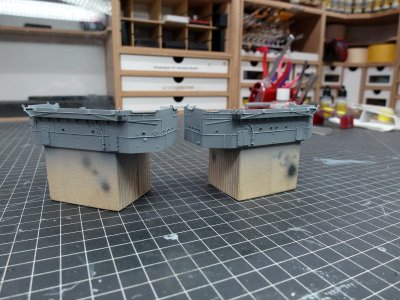
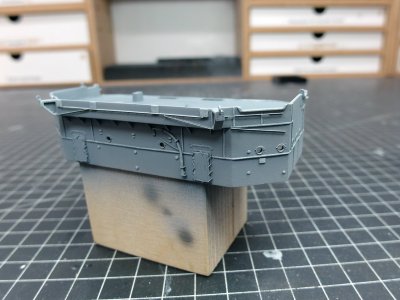
All relatively simple, geometric structures. Neatly sanded and primed.

37.JPG

Added a few doors and hatches to make the monotonous surface more interesting.
However, I am entering into an area of historically unprovable assumptions. Only the pictures of the museum ship show the inner deck of the Mikasa. But that certainly doesn’t have much to do with the original ship.
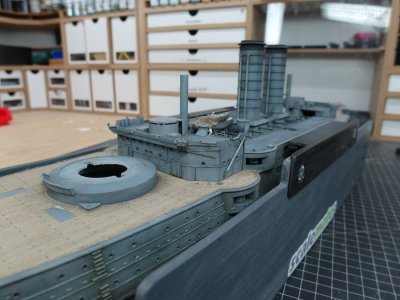
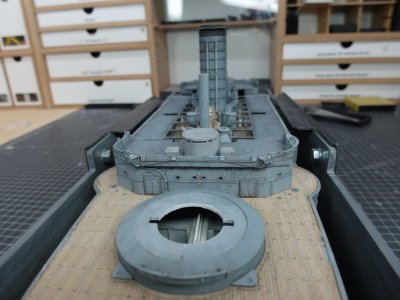
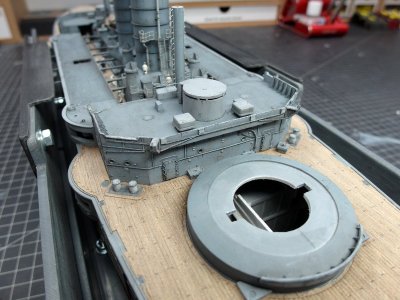
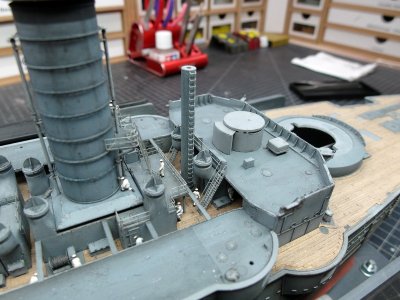
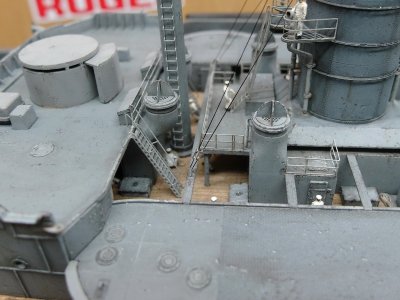
So I allow myself some artistic freedom here, such as the railing, which is only placed here for customization. It is not documented historically. But it made sense to me, as you could get to the platform at the chimney via the gallery.
And a ladder should also be attached to the component, otherwise how would you get up to the front gallery!?
And that’s how this came about.

37a.JPG

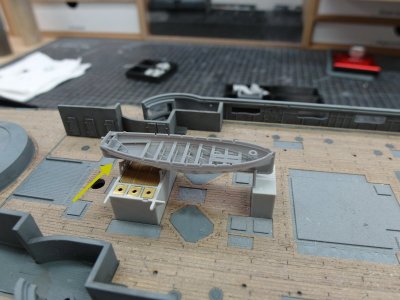
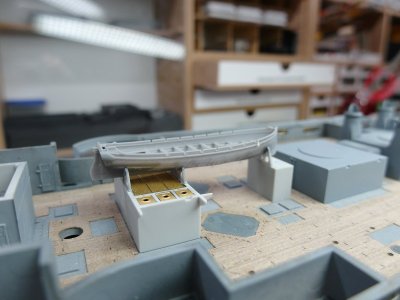
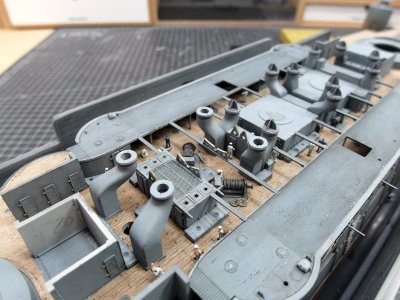
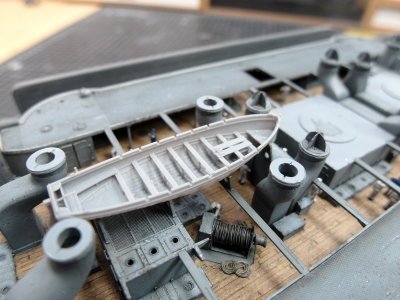
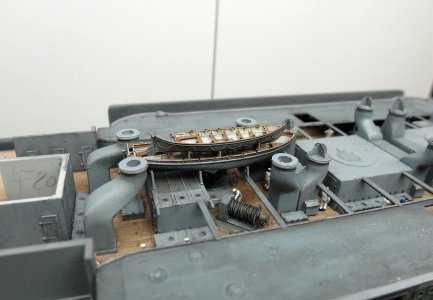
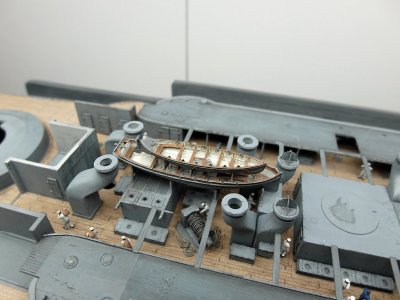
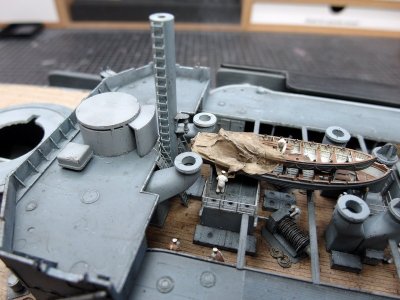
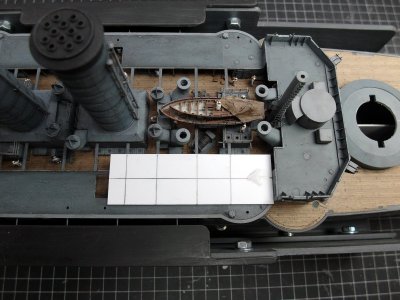
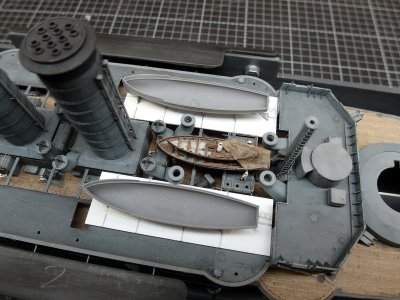
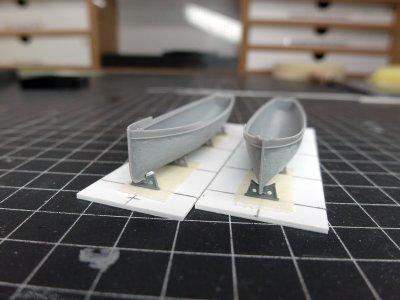
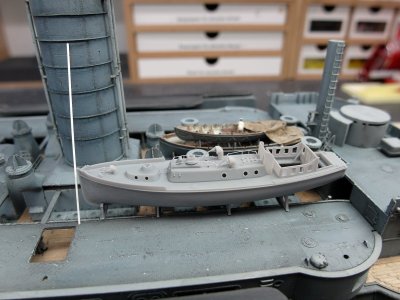
We continue with the first 32-foot rescue cutter. A dream detail from Micro master.
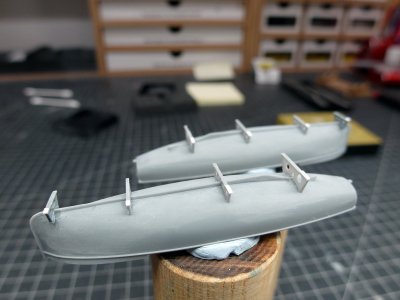
However, there is a small problem with the cradles. They are usually not in the places where they come onto the superstructure. That’s why you can see an unsightly gap between the cradle and the cutter, see arrow.

37b.JPG

Nothing that couldn’t be corrected with thin Styrene strips and now the boat is lying neatly in its cradles again.

37e - Kopie.JPG

Let’s move on to the internal structures and fans. The deck is slowly filling up.
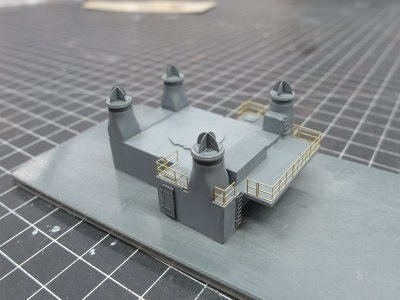
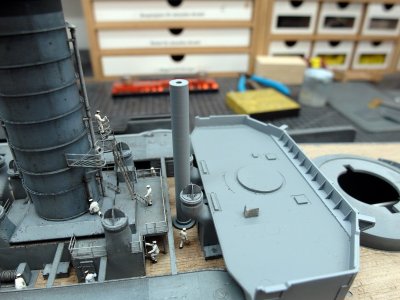
Especially since a small platform can be seen on both deckhouses. Probably to get to the funnels, so i will attach a ladder and a railing here.

38c.JPG

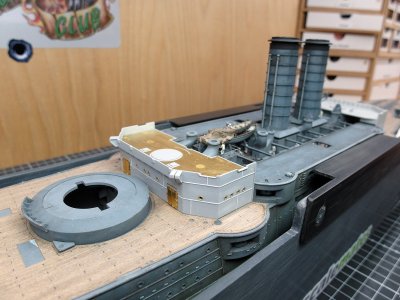
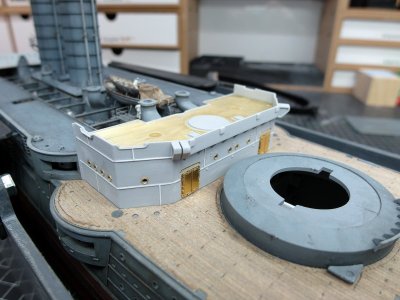
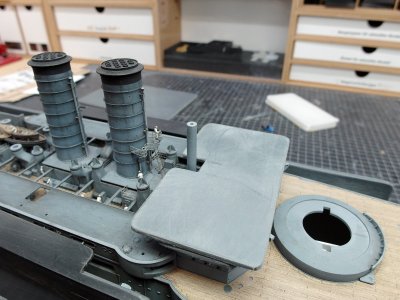
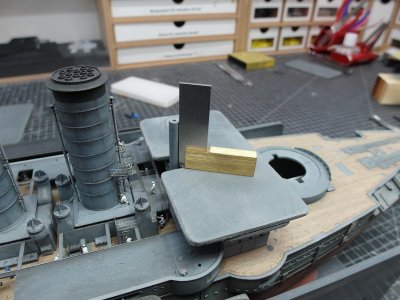
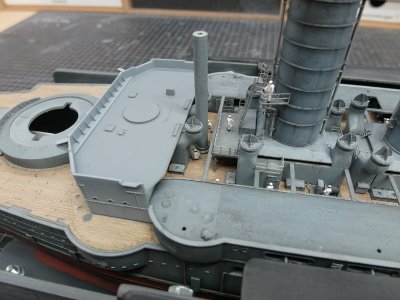
I further refined the superstructure that accommodates the rescue cutter.

38d.JPG

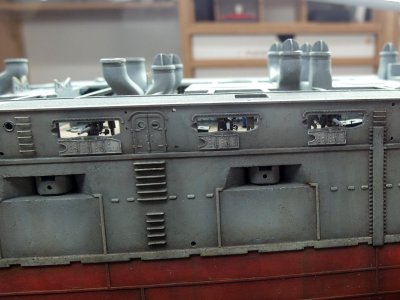
The doors are from the MK1 set, the railings are from the model’s original etched parts set.

38e.JPG

And the ladders come from the leftover box.

38f.JPG

I’m starting to like it that way

38g.JPG

And on to the next etched part.
Many small skylights had to be bent and soldered.

39.JPG

The first error in Pontos’ sentence is also quickly identified. The component of the skylights that is supposed to be attached to the front superstructure is unfortunately faulty. It would result in a skylights whose dimensions would not fit into the recess in the wooden decks. I checked the Pontos set what felt like a hundred times but unfortunately without success.
That’s why the KA sentence saved my butt.

39a.JPG

The slightly simpler lid was underlaid with cut-up etched part gratings and glued to the original component of the model
Then brought to its position for inspection.

39b.JPG

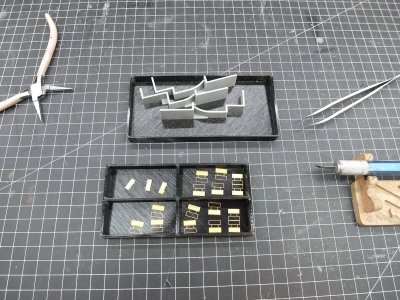
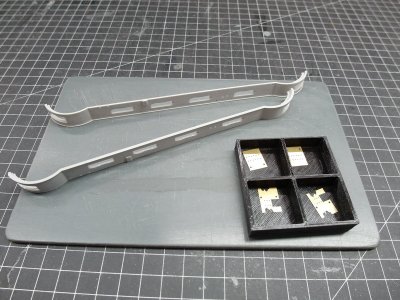
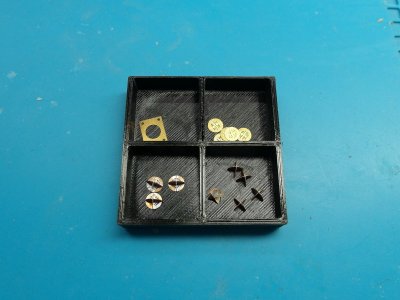
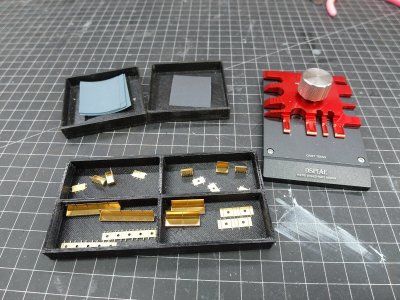
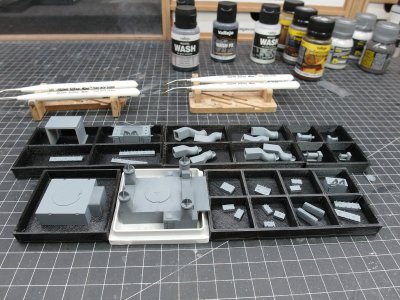
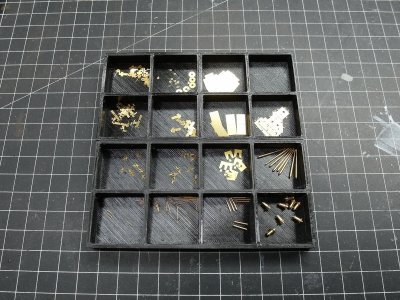
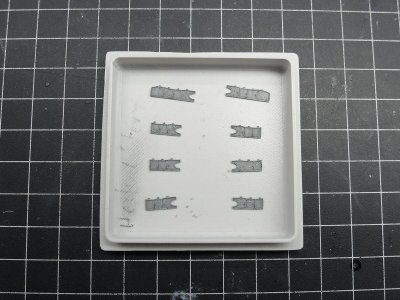
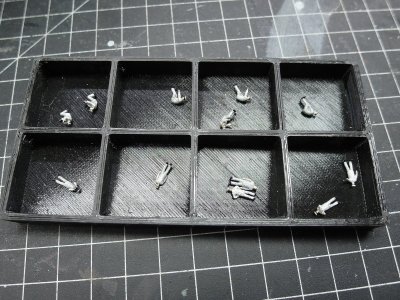
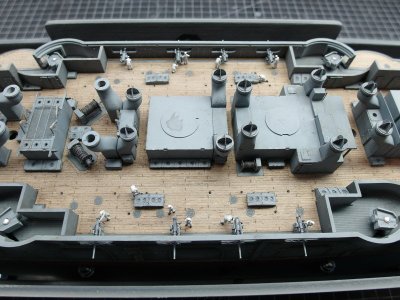
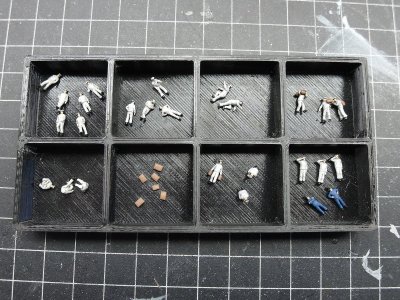
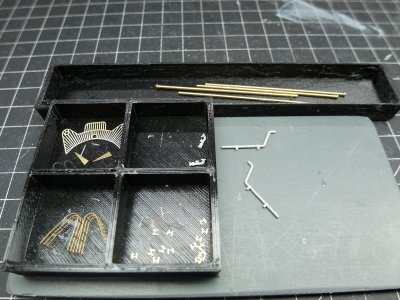
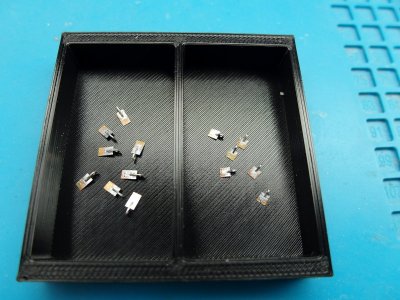
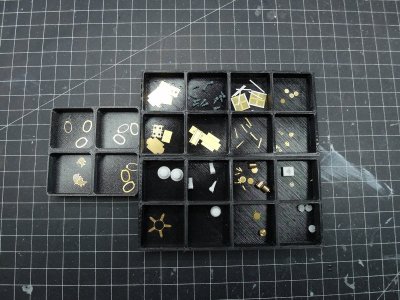
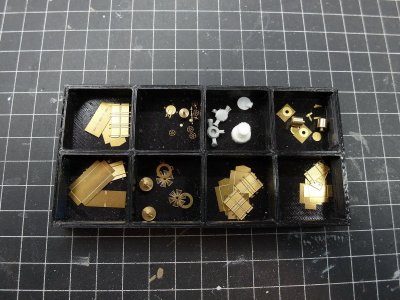
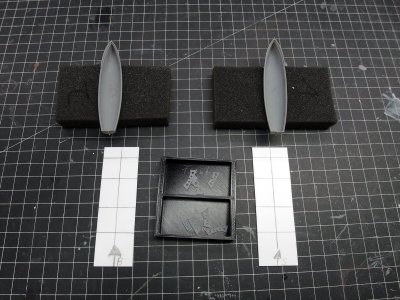
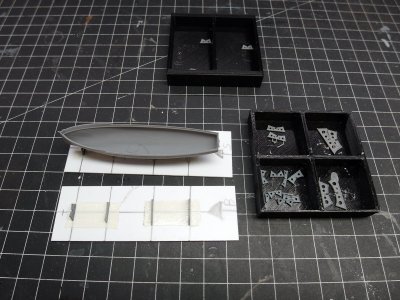
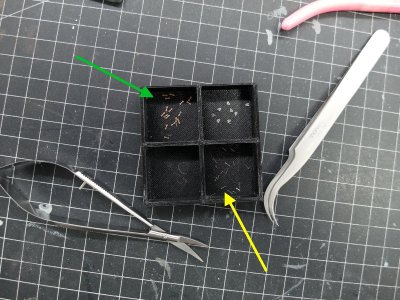
Little by little, the internal structures and boxes are made and collected in my printed organizers to be aged afterwards.

39c.JPG

I made a few improvements to the winches.
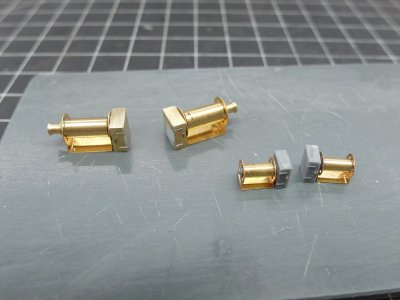
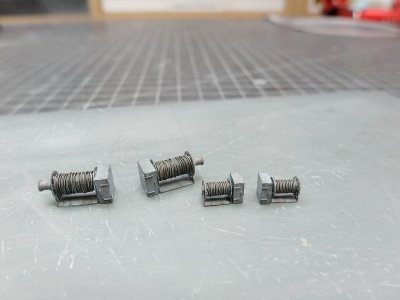
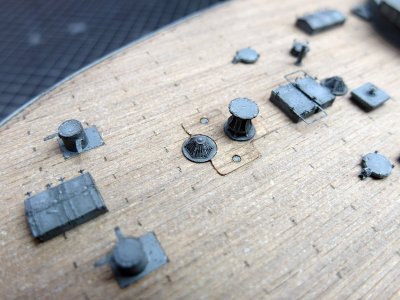
The large one did have a small cabinet included, I think a distribution box and the drive for the winch, but without any structure on the outside. So I did a little handwork and gave the big winch hinges and a closer made of thin lead wire. The little one got an upright box that functions as a closet. I liked it better.

39f.JPG

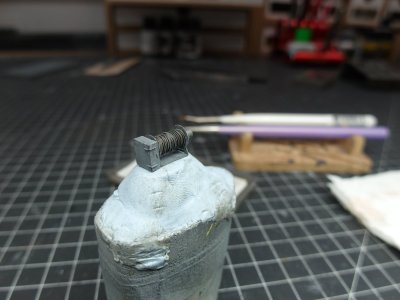
Still aging and with lead wire wrapped around the drum. I deliberately wrapped it layer by layer, not quite perfectly, to make it look more authentic.

39g.JPG

Accomplished.

39h.JPG

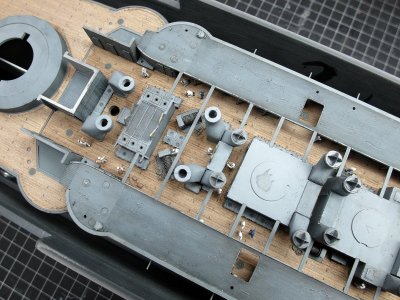
And so everything could get on deck.

39i.JPG


39k.JPG
39j.JPG
 
Now i built the 12 pounder. There are eight of these to build for this deck and eight to the rest. With 14 individual parts per gun.:eek:

41.JPG

First I solder the gun barrel. Just holds up better.

41a.JPG

The rest is then attached with superglue. What a fumble. But as always with Pontos, fantastically detailed.

41c.jpg

Painted and aged, they look so good.

41e.JPG

When I had finished all 16, I was very glad to have it behind me.

43a.JPG

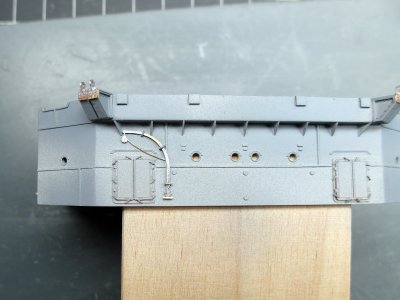
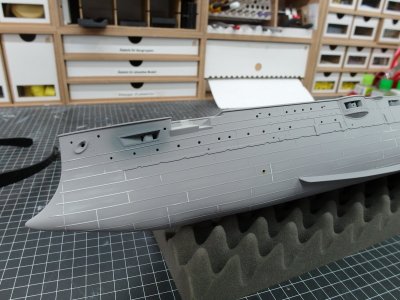
Let’s move on to the next conversion. Again, I liked the MK set better than the one from Pontos. Since I will be showing all the gun port covers open, I thought the rope shown was very nice.
What I changed are the hinges. Since they fold down when open, I simply replaced them with a narrow piece of profile.
43c.JPG

This is what it looks like for me. I used a slightly lighter grey to accentuate it.

43d.JPG

And attached to the gun ports.
These are the first external structures. Since it is inevitable that the gun barrels will stick out here, I wanted to have them attached already.

43e.JPG

And so the eight 12 pounders could take their place.

43f.JPG

Now they urgently need the protection of my sheet pile wall. After applying the clear varnish, I will screw it to the dry dock . I am curious to see if I will tear it down again before the construction is finished. o_O

43h.JPG

To protect my model from further harm, I wrapped it up nicely. This should protect it pretty well from any carelessness on my part.

Trockendock1.JPG.79e5ce4c2b84d580d514f627ea7386f0.jpg

On to the next construction phase.
The plan is to breathe a little life into the deck in the form of a crew. And this is where the next 3D print comes into play. This time I’m using the figures from ION Model, which I won in a competition with my Bismarck.
After an initial inspection, the quality is excellent.
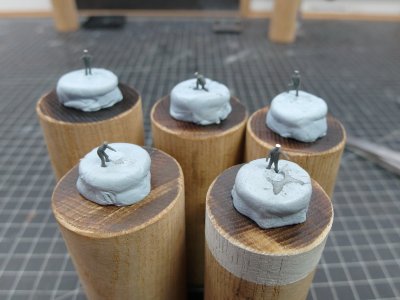
I had a few leftover Kriegsmarine sailors and wanted to use them to save on figures. The first ones were supposed to go behind the gun ports, where they’re almost invisible.
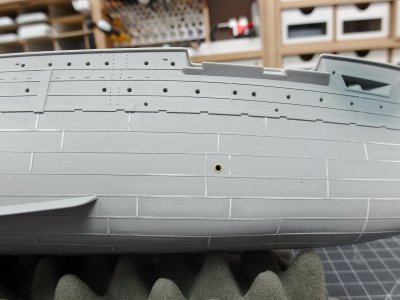
So I shaved his head and punched out flat caps from styrene. A small dot of superglue on the top hair, and the Japanese sailor is complete.
44a.JPG

Painted and ready to go on deck.

44b.JPG

To the cannon sailors, ahrrrrg…Fire free… Explosion

44d.JPG

And so the lid can go on.

44e.JPG

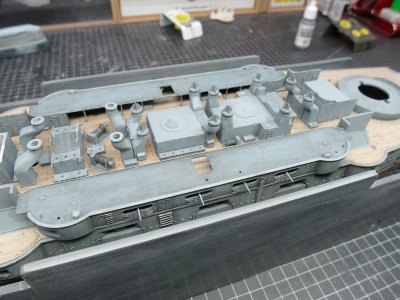
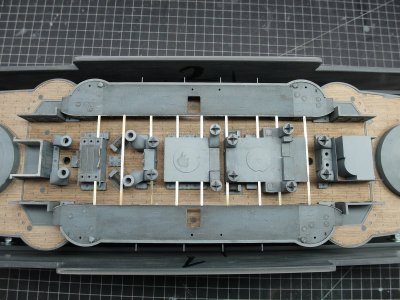
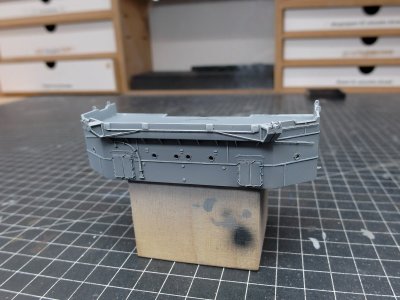
Let’s move on to the support structures that connect the boat deck and the internal superstructure.
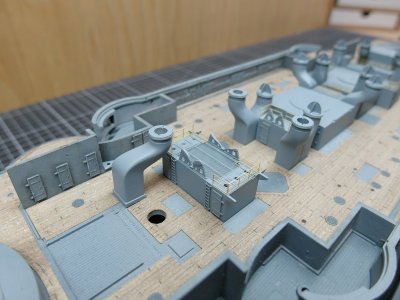
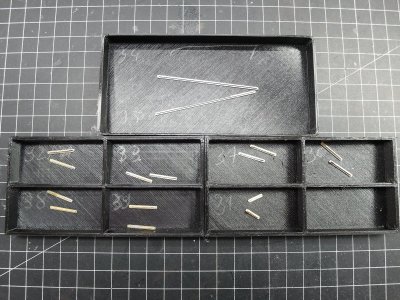
I soldered these to ensure maximum strength for these delicate T-beams.
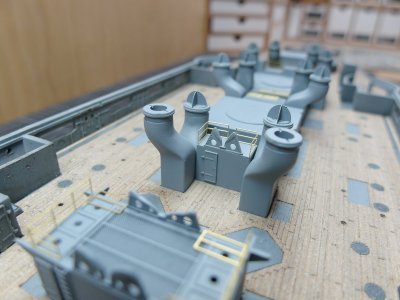
45.JPG

After testing it, everything seems to be fine.

45a.JPG

Only this connection needs to be slightly adjusted. It’s only provided by Pontos; it’s simply missing from the original kit, and it would create a large gap. Therefore, there’s no offset for it in the model, and the length of the component needs to be exactly right to ensure proper attachment.

45b.JPG

New sailors have taken up their duties.

45c.JPG

Get to work with them immediately.

45d.JPG

Spread nicely on the deck.

45e.JPG

Provisions have to go into the belly of the ship and the first sailors have to scrub the deck under the supervision of an officer.

45f.JPG

A sailor climbs the ladder to search for the missing funnel.

45g.JPG

Afterwards, I opened the dry dock again to see how it all looked through the gun ports.
I think it looks very lively.

45h.JPG
 
Then the fourth cradle for the cutter has also been adapted and installed.

46c.JPG

The boat should fit properly in there.

46d.JPG

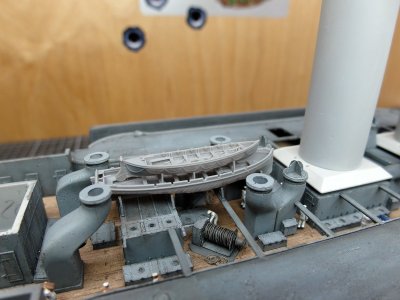
And so the boat can take its place.

46e.JPG

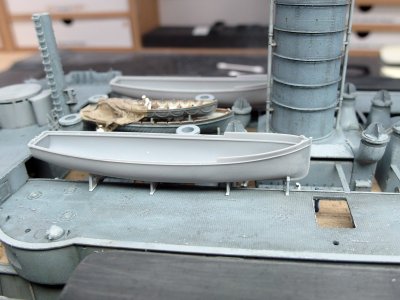
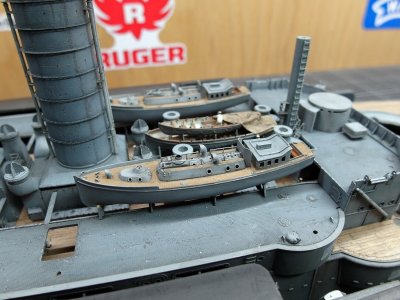
I then placed the rescue boat on its cradles and positioned it in the pinnace.
Liked it.

46g.JPG

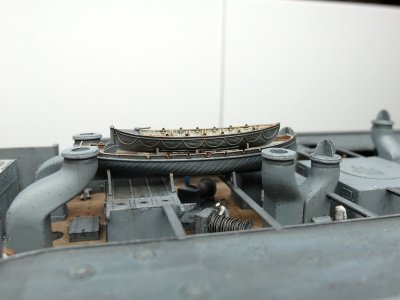
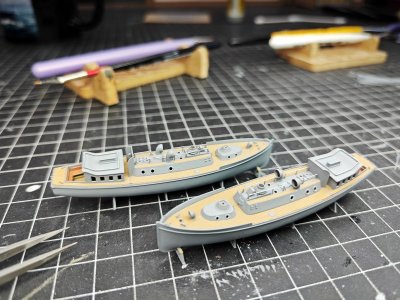
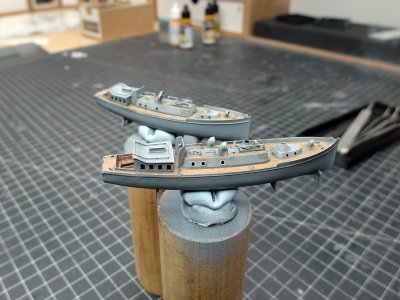
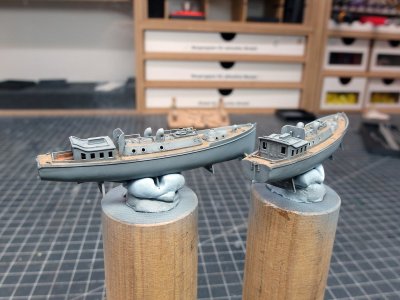
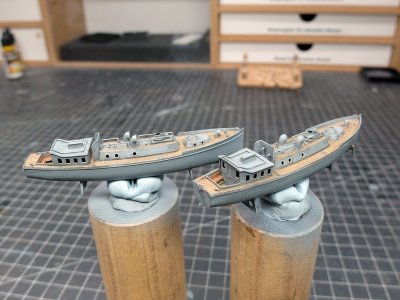
Micro Master’s boats look absolutely fantastic when painted, and I don’t want to keep that from you.
So here are the two of them, piggybacking.

47.JPG

A nice duo.

47a.JPG

When painted you can see all the fine details.

47c.JPG

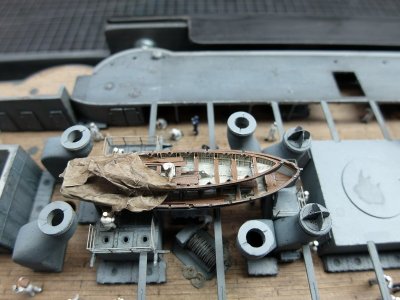
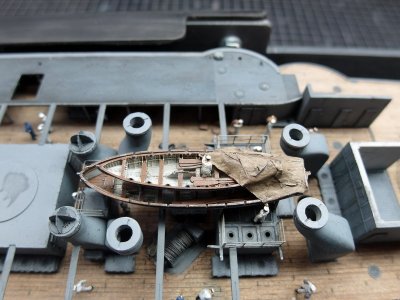
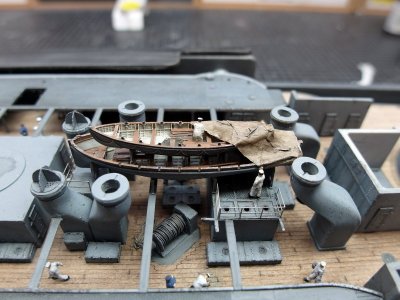
The extra expense was definitely worth but it brings me to my next dilemma. Micro Master’s boats look so incredibly good that I’m considering leaving the boat cover off.
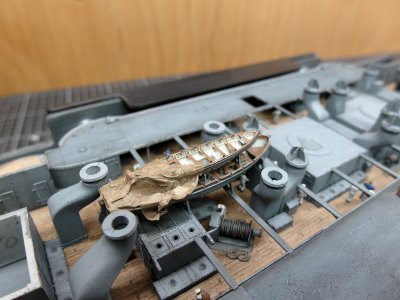
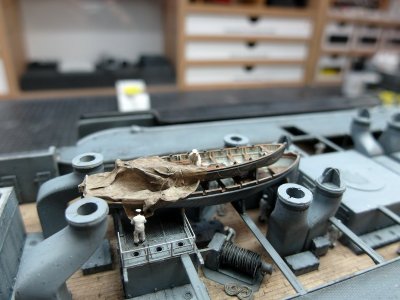
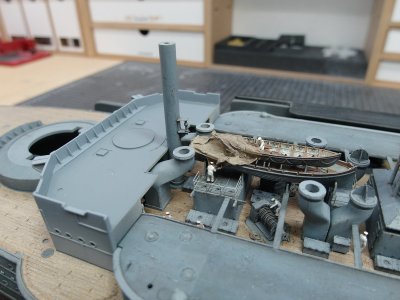
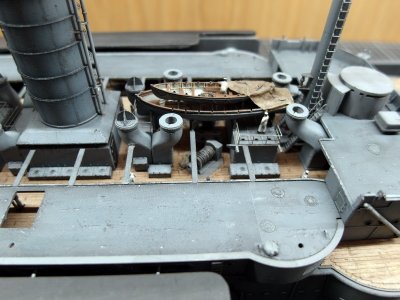
So It was clear that I didn’t want to cover them completely. So I designed a little scene to get around that.
I made a tarpaulin out of tissue paper and diluted wood glue. It took me a few tries.

47f.JPG

Then guys made to cover the boat.

48.JPG

Add the railing and rudder blades.

48a.JPG

Nice extra income, I don’t have to tie down the cutter anymore.

48b.JPG

And the first railing was also installed.

48c.JPG

A few spots are still shiny, so I need to apply another coat of clear coat.
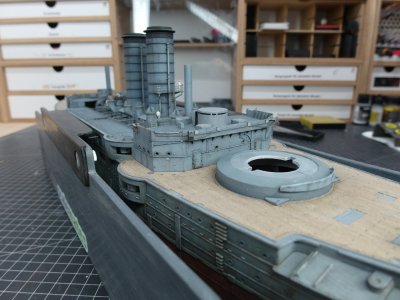
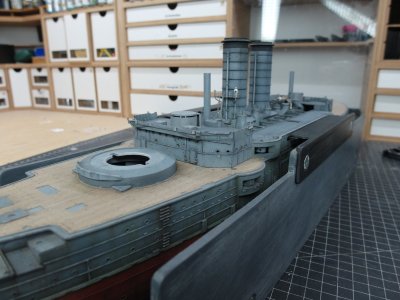
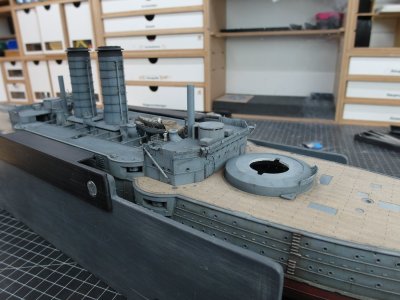
I’m pretty happy with the way it is, and now I can move on to the funnels.
 
Last edited:
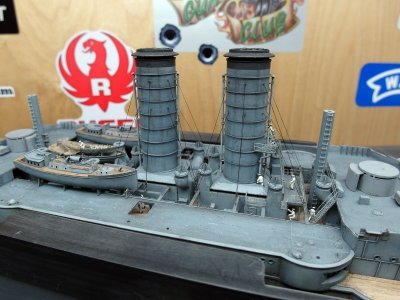
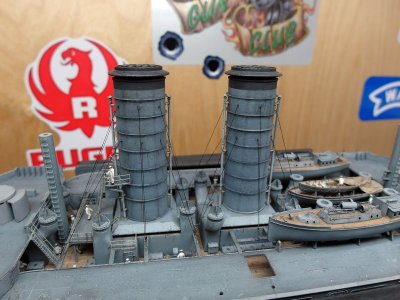
Continuing with the preparations for the next internal structures.
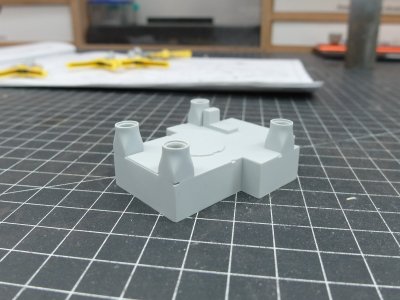
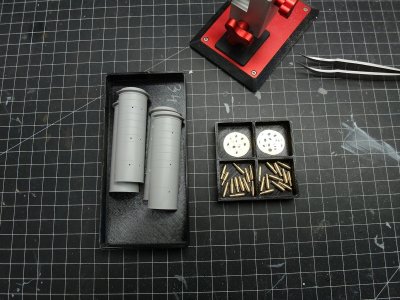
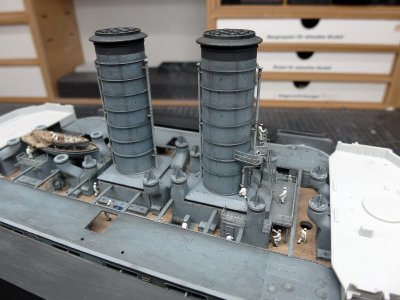
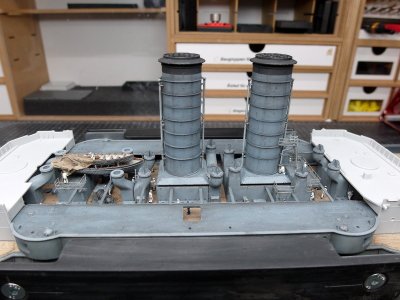
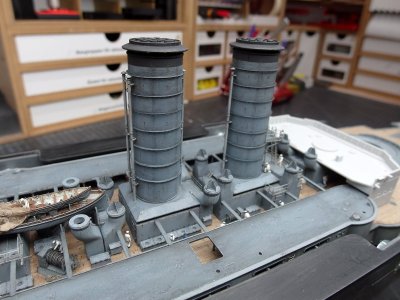
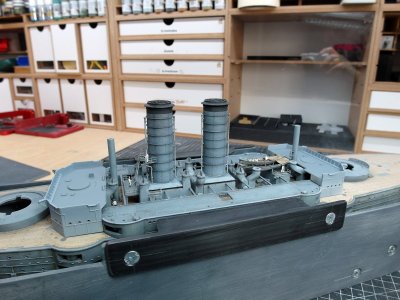
The MK set also clearly wins the race for the funnel stacks over the Pontos set.

46.JPG

The brass sleeves look excellent. Here too, Pontos had no improvement to offer for the original component.

46a.JPG

I’m amazed at how well the MK set is performing. The extra expense was definitely worth it for me.

46b.JPG

I was once again spoiled for choice between Pontos and KA for the funnel surface.
Pontos offers riveted struts, KA rings that run around the funnel.
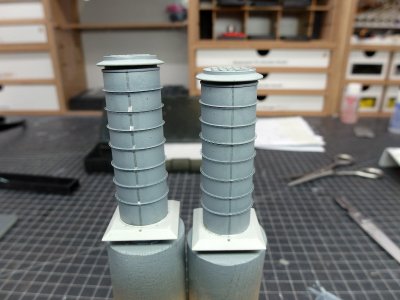
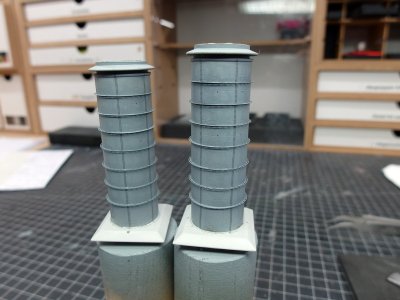
So, I once again rummaged through my archives of the original ship and looked at conflicting pictures. Of course, often of rather poor quality.
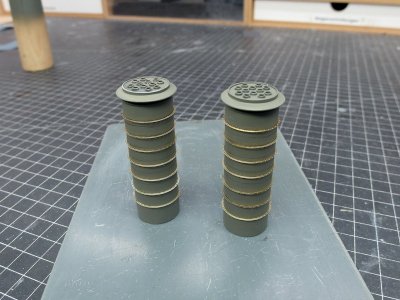
The deciding factor was a quite good picture from Vladivostok, which I believe shows rings. They are meant to represent hand and/or river courses. These are eyelets through which a wire runs. And the rings stylize them.

49a.JPG

And again, KA Model wins.
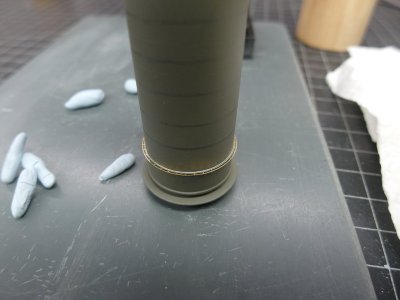
My enthusiasm was dampened slightly when attaching the rings. They were a little too big. That’s why they were touching on one side, leaving an unsightly gap on the other.
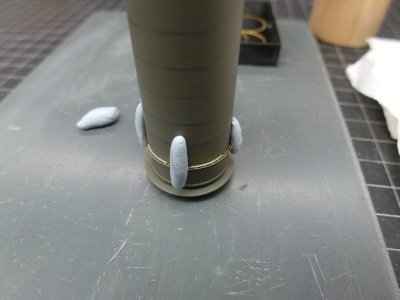
I took them off again, sanded them cleanly, and then primed them thoroughly. Another attempt with the blue BluTack putty. This allowed me to keep the rings centered.

49b.JPG

It works. And since I’m using Mig’s acrylic adhesive, there’s no mess like with superglue. Diluted and applied with a fine brush, it flows wonderfully evenly into the gap thanks to capillary action.
Excess glue can then be easily removed with a brush.

49c.JPG

Ring by ring it continues downwards.

49d.JPG

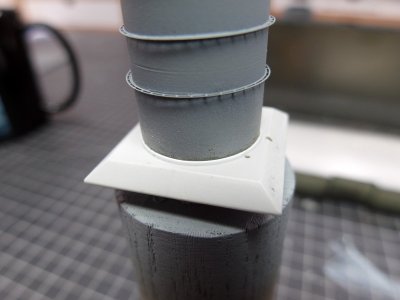
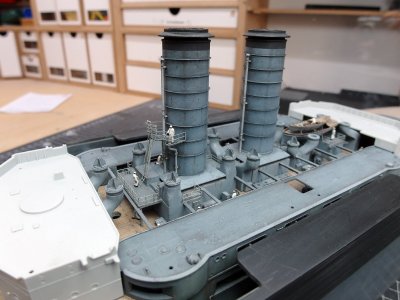
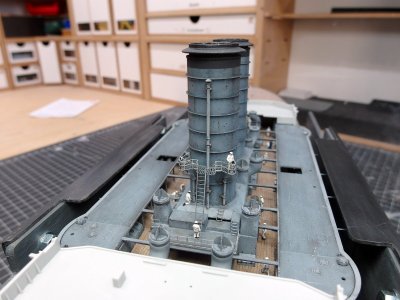
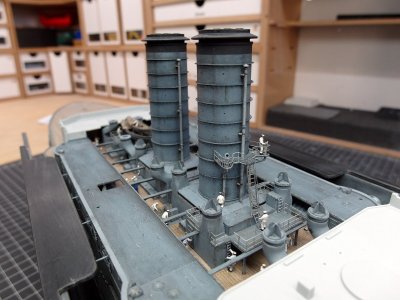
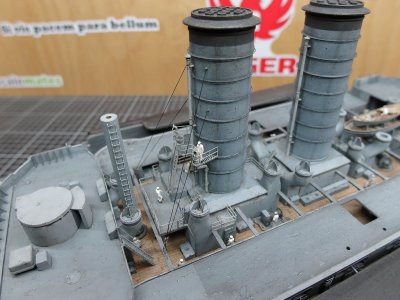
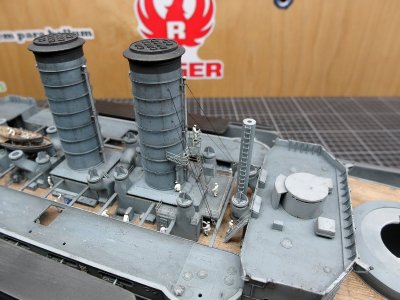
I had to remove all the structures from the chimneys, otherwise I wouldn’t have been able to fit the rings onto the cylinders. Now they’re installed, and I’ve recreated them with styrene profiles. Like this ledge at the bottom of the funnel.

50.JPG

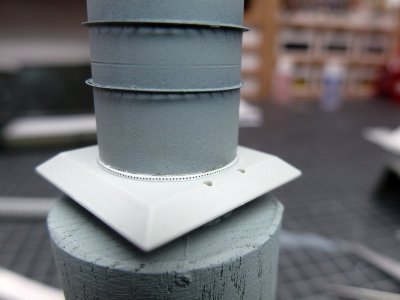
I got resin rivets on decal sheets from Eduard to make the surface more interesting.

50a.JPG

The same thing in a vertical orientation. I had to do a little trickery here to get them nice and straight and parallel. I applied them, let them dry, and then cut them with my sharp scalpel.

50b.JPG

Fits.

50c.JPG

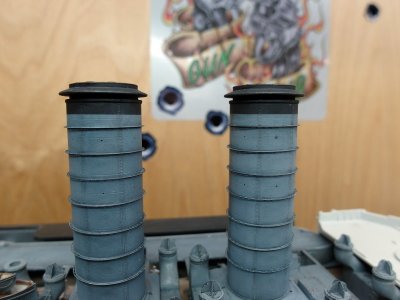
It looks good after the initial aging. It’s a bit annoying that I can still see traces of the rings’ original texture. I wasn’t paying attention.

50d.JPG

But afterwards they hardly matter anymore.

50e.JPG

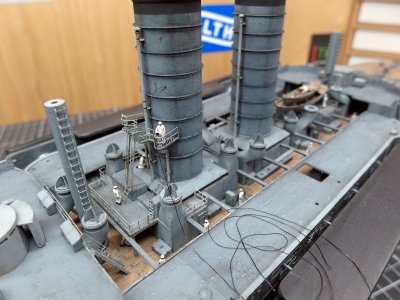
Now prepare everything for the next step. On the right, you can see the pipes leading to the gallery. Here, I had to add a little bit of styrene to the pipe clamps that hold them to the funnel. Otherwise, they wouldn’t have fit over the rings.

50f.JPG

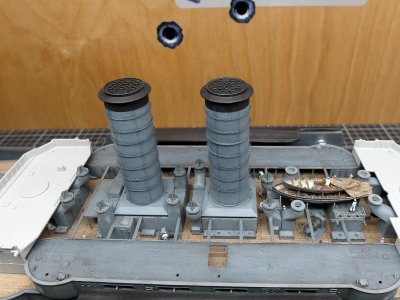
I can report that the symbiosis of Pontos and Ka Models on the Funnel has been a success.
It did require a bit of trickery, but I think it looks impressive.
Let’s start on the port side.

51.JPG

I had to position the rings so that the second ring wouldn’t interfere with the gallery. Therefore, it was important to measure the ring spacing precisely.

51a.JPG

Next came the task of threading the pipe into the gallery. The lower pipe clamp could only be attached after the pipe had already been installed on the funnel. A serious fiddly job.

51b.JPG

Additionally, the rings were in the way of the tubes to the right and left of the center. As mentioned in the last post, they needed to be slightly padded. Otherwise, they wouldn’t fit over the rings.

51c.JPG

It was not intended that the two accessory sets would be mixed together.

51d.JPG

I did have some initial difficulties, but I think I got the most out of both sets. And the result feels very satisfying.

51e.JPG
 
Last edited:
Back
Top