
-

SUBSCRIBE TO SHIPS IN SCALE TODAY!
The beloved Ships in Scale Magazine is back and charting a new course for 2026!
Discover new skills, new techniques, and new inspirations in every issue.
NOTE THAT OUR NEXT ISSUE WILL BE July/August 2026 -

Win a Free Custom Engraved Brass Coin!!!
As a way to introduce our brass coins to the community, we will raffle off a free coin during the month of August. Follow link ABOVE for instructions for entering.


You are using an out of date browser. It may not display this or other websites correctly.
You should upgrade or use an alternative browser.
You should upgrade or use an alternative browser.
Kunstvolle Modelle
- Thread starter Holger.Schwarz
- Start date
- Watchers 12



To whom are you referring? Holger or me? Normally folks try to use English in this forum. I’m just glad he’s posted here in SOS, and I wanted him to feel welcome.And by the way, you are the only one…


What's rude about using one's mother tongue? Was ist verkehrt daran seine Muttersprache zu gebrauchen? Es gibt genügend online Übersetzungsmöglichkeiten für die sprachlich minderbemittelten Forummitglieder.Aside from your wonderful works: why do you write in German? That's extremely rude on an international platform…
What's rude about using one's mother tongue? Was ist verkehrt daran seine Muttersprache zu gebrauchen? Es gibt genügend online Übersetzungsmöglichkeiten für die sprachlich minderbemittelten Forummitglieder.

- Joined
- Jan 21, 2022
- Messages
- 1,054
- Points
- 443

That's rude, unless you post your message in both your native language and English. I remember the days when the moderators would remind people to use English as the forum's main language.If this were a German or Czech forum, it would go without saying that we’d have to adapt to the requirements of that language, but for certain reasons, every user here has agreed that English is the modern Latin. So if someone can create an account on an international forum, they can also use a translator so that others aren’t forced to do it every time they post something.
It's a matter of politeness. On an international platform where there is a tacit consensus that English is spoken to facilitate communication, you are forcing everyone else to translate your text. That conveys a certain attitude that I would describe as rude.
Das ist eine Frage der Höflichkeit. Auf einer internationalen Plattform, auf der stillschweigend vereinbart ist, dass zur Erleichterung der Kommunikation Englisch gesprochen wird, zwingst du alle anderen dazu, deinen Text zu übersetzen. Das vermittelt eine gewisse Haltung, die ich als unhöflich bezeichnen würde.
Im übrigen ist meine Muttersprache Deutsch

- Joined
- Jun 3, 2026
- Messages
- 162
- Points
- 103

Hi Strand, sorry about the mix-up—it was a mistake. I’ve only had a computer for a few years and I’m not very familiar with it yet. I don’t know how the translation program works yet. I’m really trying my best to become a decent member here in your forum.
I’m a writer and have written books. It’s not the writing that’s the problem, Strand. When I post here in the forum, I first write everything down in German on paper, then type it into the translator on the computer to get it into English. I then write that down in English on paper and copy it into the forum.
That’s a lot of work, and apparently the translation isn’t working out. I’m sincerely sorry about that—especially to all of you other members.
Then there’s another problem. This is the first time I’ve been part of such a large and high-quality forum.
I haven’t quite found my footing yet. So far, I’ve felt very welcome from all of you members here in the forum, and I’m very grateful to you for that.
I’ll work on the translation and get some help with it—someone to show me how.
Until everything is fixed and you’re satisfied with me. Until then, I won’t be able to participate here anymore.
I wish you, Strand, and all of you members all the best—Warm regards, Holger
Last edited:
- Joined
- Jan 21, 2022
- Messages
- 1,054
- Points
- 443
Congratulations on being a writer—that’s really impressive.
It’s a little strange that no publisher has required you to work on a computer. Although, you never stop learning.
Here are some links to one of the best translation tools. One of the options might even help improve your sentence structure.

 www.deepl.com
All the best, and best regards
Die Glückwünsche zu deiner Karriere als Schriftsteller sind wirklich beeindruckend.
Es ist schon etwas seltsam, dass kein Verlag von dir verlangt hat, am Computer zu arbeiten. Aber man lernt ja sein ganzes Leben lang dazu.
Hier sind ein paar Links zu einem der besten Übersetzungsprogramme. In einer der Optionen kann es sogar den Satzbau verbessern.
www.deepl.com
www.deepl.com
Alles Gute und viele Grüße
It’s a little strange that no publisher has required you to work on a computer. Although, you never stop learning.
Here are some links to one of the best translation tools. One of the options might even help improve your sentence structure.
Tłumacz DeepL | Najdokładniejszy tłumacz na świecie
Natychmiast tłumacz teksty i całe dokumenty. Dokładne tłumaczenia dla użytkowników indywidualnych i zespołów. Codziennie miliony ludzi tłumaczą za pomocą DeepL.
DeepL Write: asystent pisania oparty na AI
DeepL Write to asystent pisania oparty na sztucznej inteligencji. Dzięki niemu Twoje teksty będą zrozumiałe, precyzyjne i bezbłędne. Wypróbuj za darmo już teraz!
All the best, and best regards
Die Glückwünsche zu deiner Karriere als Schriftsteller sind wirklich beeindruckend.
Es ist schon etwas seltsam, dass kein Verlag von dir verlangt hat, am Computer zu arbeiten. Aber man lernt ja sein ganzes Leben lang dazu.
Hier sind ein paar Links zu einem der besten Übersetzungsprogramme. In einer der Optionen kann es sogar den Satzbau verbessern.
Tłumacz DeepL | Najdokładniejszy tłumacz na świecie
Natychmiast tłumacz teksty i całe dokumenty. Dokładne tłumaczenia dla użytkowników indywidualnych i zespołów. Codziennie miliony ludzi tłumaczą za pomocą DeepL.
DeepL Write: asystent pisania oparty na AI
DeepL Write to asystent pisania oparty na sztucznej inteligencji. Dzięki niemu Twoje teksty będą zrozumiałe, precyzyjne i bezbłędne. Wypróbuj za darmo już teraz!
Alles Gute und viele Grüße


Many web browsers (including the one I use that is Chrome from Google) include a translator built into the browser. That is how I'm able to read his messages.Hello Strand, please excuse the misunderstanding – sorry, it's a mistake. I've only had a computer for a few years and I'm not very tech-savvy. I don't yet know how the translation program works. I'm really trying hard to become a decent member of your forum.
I'm a writer and I've written books. The writing isn't the problem, Strand. When I write here in the forum, I first write everything down in German on paper, then translate it into English using a computer translator. I then write that in English on paper and transfer it to the forum.
This is a lot of work and apparently doesn't work in translation. I'm truly sorry about that, and especially for all of you other members.
Then there's another problem. This is my first time in such a comprehensive and first-class forum.
I'm still finding my way around. So far, I feel very welcome by you members here in the forum and I'm very grateful for that.
I will work on the translation and get help with it – someone to show me how.
Until everything is sorted out and you are satisfied with me, I will no longer be able to participate here.
I wish you, Strand, and all the members all the best - Kind regards, Holger
 I didn't think it was rude of him to use his native language. I don't expect (and I don't think it's realistic to expect) everyone to be able to speak, read and write in English.
@Holger.Schwarz Please don't be deterred from posting because it's not in English.
Dear Corsair,Many web browsers (including the one I use that is Chrome from Google) include a translator built into the browser. That is how I'm able to read his messages.
@Holger.Schwarz Please don't be deterred from posting because it's not in English.
I completely agree with you that not everyone speaks, can read or can write in English. But anyone who comes across on a platform where common sense dictates that English is spoken can spare a little effort and run it through a translation programme, just as I’ve just done. DeepL, for example, is perfect and free. As I said, it’s got a bit to do with respect…
By the way, my mother tongue is German…
Oh, come on! Natürlich kannst du hier weitermachen. Als nicht-Englisch Schreibender bist du zwar eine Ausnahme, aber lang nicht der Einzige. Es gibt auch noch einige Forummitglieder die auf Spanisch, Französich, Russisch und noch ein Paar andere Sprachen schreiben. Hier soll es um Modellbau gehen, und da kann sich ja wohl so manch Einer von dir 'ne Scheibe abschneiden.An der Übersetzung werde ich arbeiten und mir Hilfe dazu holen – jemand, der es mir zeigt.
Bis alles richtig gestellt ist und ihr mit mir zufrieden seid . Bis dahin werde ich hier nicht mehr teilnehmen können.
Im Grunde hast du 2 Möglichkeiten: du hälst dich einfach nicht an der Meinung Anderer auf und schreibst weiter auf Deutsch. Wer es wirklich verstehen will, der wird Möglichkeiten dazu schon selbst finden. Und wer es nicht will, tja, der braucht es ja nicht. Oder du versuchst es eben auch auf Englisch zu schreiben, so gut wie du es kannst. Keine KI-Übersetzer nötig; besser am Anfang authentisch Du nicht so perfekt und mit der Zeit besser werden als ganz bequem nie was dazu lernen.
Holger, you are fine to post in any way you feel you need to. If we’re too lazy to translate or get offended, nobody is forcing us to look at your posts. There are many posts in this forum I do not care to view. I, for one, am super excited to see your posts. Keep them coming, please. My German May not be the best, but I can figure it out. Your thread is worth it.
- Joined
- Jun 3, 2026
- Messages
- 162
- Points
- 103
Holger, you can write your posts however you see fit. If we make mistakes in translation or feel attacked, no one is forcing us to read your posts. There are many posts in this forum that don’t interest me. I really look forward to your posts. Please keep writing! My German may not be perfect, but I can manage just fine. Your thread is worth it.
Thank you very much! Especially for your interest.
When I write freely in the English I know, I can’t quite express myself clearly here.
I’ll attach my report on weathering techniques for the Soleil Royal later!
If you can now read what I’ve written in English, please let me know.
See you soon—Best regards, Holger
Last edited:
- Joined
- Jun 3, 2026
- Messages
- 162
- Points
- 103
Holger, du kannst deine Beiträge so verfassen, wie du es für richtig hältst. Wenn wir zu faul zum Übersetzen sind oder uns angegriffen fühlen, zwingt uns niemand, deine Beiträge zu lesen. Es gibt viele Beiträge in diesem Forum, die mich nicht interessieren. Ich hingegen freue mich riesig auf deine Beiträge. Bitte schreib weiter! Mein Deutsch ist vielleicht nicht perfekt, aber ich komme schon zurecht. Dein Thread ist es wert.
- Joined
- Jun 3, 2026
- Messages
- 162
- Points
- 103
Alterung und Verwitterung von Schiffsmodelle aus Kunststoff
Bevor ich mit dem Bau der „Le Soleil Royal“ im Maßstab 1:100 des Herstellers Heller begann (der Bau dauerte von 2007 bis 2009), studierte ich vier Jahre lang intensiv zahlreiche Bücher über historische Seefahrt und den Bau historischer Schiffsmodelle, wobei ich mich hauptsächlich auf das 17. bis 19. Jahrhundert konzentrierte. Es war ungemein interessant und lehrreich.
Damals war es mein Ziel beim Bau dieses Schiffsmodells, es so realistisch wie möglich zu gestalten, angesichts meiner damaligen Fähigkeiten. Es war mein erstes Modell in diesem großen Maßstab, und ich wollte, dass es etwas ganz Besonderes wird.
Als ich den Kunststoffrumpf so weit fortgeschritten hatte, dass ich ihn bemalen konnte, hatte ich bereits eine klare Vorstellung davon, wie ich die Holzmaserung nachahmen sollte.
Aber es kostete mich damals viel Mut, das tatsächlich umzusetzen. Mein Plan war, die Holzmaserung mit einem gemischten Sandgelbton zu bemalen (auch heute noch – besonders in meiner Figurenmalerei – verwendet ich Revell-Ölfarben). Nachdem der sandgelbe Anstrich getrocknet war, schattierte ich die Konturen auf der sandgelben Oberfläche mit einem dunklen Stift. Das sah schon recht gut aus.
Am meisten brauche ich jedoch für den nächsten Schritt. Ich trug mit einem Pinsel eine Schicht dünnes dunkelbraunes Antikwachs auf und verblendete es. Anschließend fuhr ich vorsichtig mit der Flamme eines Feuerzeugs über die gewachsten Stellen (das erforderliche Fingerspitzengefühl) und musste schnell und konzentriert arbeiten, während ich gleichzeitig die Stellen, die der Flamme ausgesetzt waren, mit dem Pinsel abwischte. Zum Schluss streiche ich mit dem Finger über die Oberfläche.
Das Ergebnis dieser Technik war überraschend gut. Es hat mir sehr gut gefallen.
Doch Vorsicht ist geboten. Es empfiehlt sich, diese Technik zunächst an einem Probestück zu testen. Hält man die Flamme zu lange über eine Stelle, wird diese zu dunkel; In diesem Fall kann die Stelle vorsichtig wieder abgeschliffen werden. Auch heute noch wende ich diese Technik gelegentlich an Holzklötzen oder Ankerbalken an, um einen bestimmten Effekt zu erzielen.
Im Großen und Ganzen lässt sich das aber auch durch Malerei erreichen, wenn man diese künstlerische Fertigkeit beherrscht. Besucher, die das Modell bei mir gesehen haben, gingen immer davon aus, es sei ein sehr gut gearbeitetes Holzschiffsmodell. Für mich bedeutet Modellbau, mein Bestes zu geben, denn die Freude daran hält ein Leben lang.
Ich hoffe, mein Beitrag ist hilfreich.
Mit freundlichen Grüßen, Holger

Welcome! Thanks for sharing your gorgeous work!
- Joined
- Jun 3, 2026
- Messages
- 162
- Points
- 103
Thank you so much for your welcome TexBilly - Best greets HolgerHerzlich willkommen! Vielen Dank, dass Sie Ihre wunderschönen Arbeiten mit uns geteilt haben!
- Joined
- Jun 3, 2026
- Messages
- 162
- Points
- 103
Oh Ab, I’m glad to hear from you. I love Dutch sailing ships. It’s wonderful to read about them here... Have you seen my 1:30 scale flutes yet—or the galleot “Die Stadt Elbing”? I discovered a great model during my research. Can you please tell me if it’s of Dutch origin? I’m also planning to build the state yacht “Pegasus” and have sent you a photo of my planking design. It’s made of beech wood—the wooden pegs are made from toothpick tips.
I polished the strips with antique wax and then treated them with High Pina oil. What do you think, Ab—could that work for the Pegasus hull as well?
I hope you like my message. I’m really happy to be part of this community here with all of you.
I wish you a wonderful evening, Ab.
Best regards, Holger
P.S. My ancestors were Dutch. I’m happy to be of Dutch descent
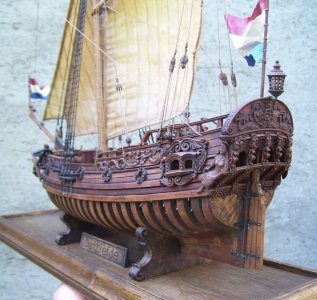
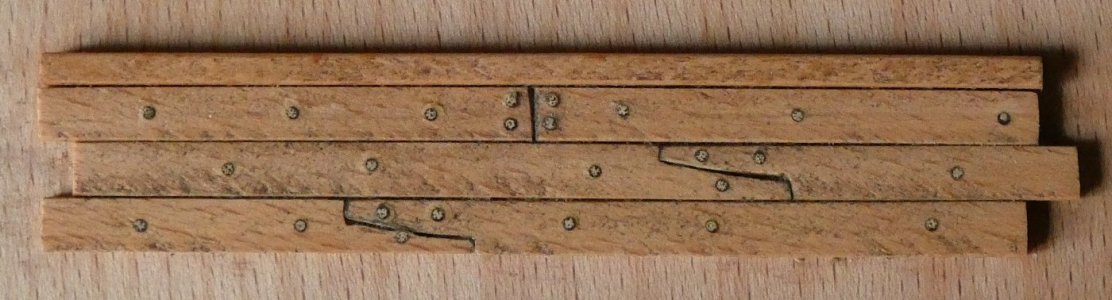
I polished the strips with antique wax and then treated them with High Pina oil. What do you think, Ab—could that work for the Pegasus hull as well?
I hope you like my message. I’m really happy to be part of this community here with all of you.
I wish you a wonderful evening, Ab.
Best regards, Holger
P.S. My ancestors were Dutch. I’m happy to be of Dutch descent
Last edited:

Dear Holger,
To be honest, I do not believe this model is of Dutch origin. It is certainly well made, but there are a number of peculiarities that point to a different origin. This model imitates the 'dockyard style' of the English, but to my knowledge, this construction style was never used in the Netherlands.
Unfortunately, I am not familiar with your flutes and galliot models. If you always work in 1/30 scale, beech is a usable material, although I would prefer to choose pear wood because of the recognizable grain pattern in beech (the small specks). Wood with a recognizable grain often feels at odds with the illusion of looking at a real ship from afar.
Antique wax can work very well on these types of models, although you must bear in mind that once wax has been applied to wood, it rules out using lacquer or varnish later. That will not dry properly.
Incidentally, the language used on this forum is English. It is a small effort to run your messages through Google Translate to meet the forum's requirements. You'll run the risk of getting comments from the moderators.
Regards,
Ab