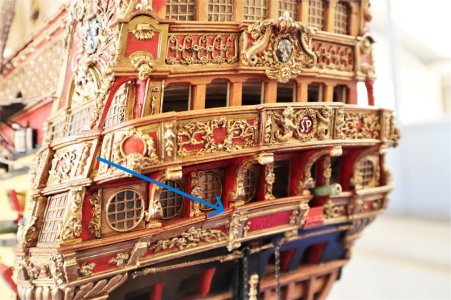
Sure thing, Shota. Keep an eye on your mailboxmy dear friend
the hinges & ports looking amazing!!!
If you have any extras I would be happy to receive a delivery

 !
!
 |
The beloved Ships in Scale Magazine is back and charting a new course for 2026! Discover new skills, new techniques, and new inspirations in every issue. NOTE THAT OUR NEXT ISSUE WILL BE July/August 2026 |
|
 |
As a way to introduce our brass coins to the community, we will raffle off a free coin during the month of August. Follow link ABOVE for instructions for entering. |
|
Sure thing, Shota. Keep an eye on your mailboxmy dear friend
the hinges & ports looking amazing!!!
If you have any extras I would be happy to receive a delivery
!
Hi Daniel!Paul, can you please tell me what was the thickness of the brass sheet you used for the hinges and the drill bit type for the holes.
When I try to do holes on the brass I use, for example to do the rudder metal parts, my brass always bent during the drilling process. Then I made them flat again with the hobby hammer.
Could be I am not using the correct drill bits type ? Or perhaps I use an Incorrect thickness brass sheet ?
Thanks
Daniel



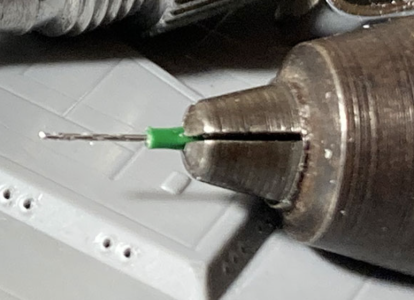
Another tip I am learning.... Thank you !!!!!Try this
View attachment 598749
The point where these bits most commonly break is near the chuck, since that area has no flexibility at all. To address this, I came up with a simple solution: placing a small piece of electrical wire insulation around the drill bit at the stress point. The added flexibility at this critical area significantly increases the durability and lifespan of the bits.
Source: https://www.therpf.com/forums/threads/revell-1-2700-imperial-star-destroyer.355643/

I know that feeling, Paul. Hanging over the drawing and ‘something’ isn’t right.Hello Friends,
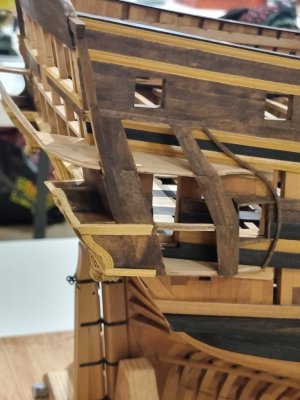
I have spent the last two days staring at drawings (well, not literally {I do have a job}, but you know what I mean) - and find myself frozen by ignorance paired with a lack of skill/experience.
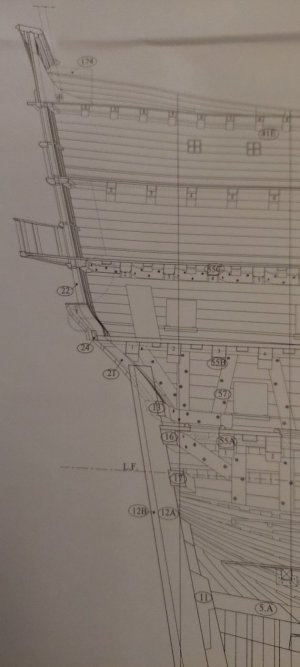
The subject before me is the build out of the stern structures (exterior of the ship). I cannot make sense of the drawings (to be honest - and I know I've grumbled about this in the past - the drawings sometimes disagree with themselves). And when I can make sense of the drawings, I cannot imagine how I could possibly build what I am seeing.
I am now considering several options:
1. set aside the model for now and come back to it later with more personally earned knowledge/experience
2. set aside the model for now and learn computer design in order to either print or CNC structures I don't think I can fabricate by hand (here I primarily have in mind the decorations along with a few other bits)
3. set aside the model for now until Oleg gets to this part of his build and then I can follow in his wake (though that may not work as he has computer design skills (or people) I don't have)
4. set aside the model for now and wait for Michele Padoan to return to his SP (or Nigel for that matter) - at least they primarily build by hand so it may be easier for me to follow after them
That was a lot of 'set asides.'
The last option, of course, is to forge ahead and accept that I will make design errors and will need to simplify parts I won't be able to duplicate as drawn at this scale (@NMBROOK Nigel actually warned me about this before I started).
I am open to our thoughts/suggestions.





Hello Friends,
I have spent the last two days staring at drawings (well, not literally {I do have a job}, but you know what I mean) - and find myself frozen by ignorance paired with a lack of skill/experience.
The subject before me is the build out of the stern structures (exterior of the ship). I cannot make sense of the drawings (to be honest - and I know I've grumbled about this in the past - the drawings sometimes disagree with themselves). And when I can make sense of the drawings, I cannot imagine how I could possibly build what I am seeing.
I am now considering several options:
1. set aside the model for now and come back to it later with more personally earned knowledge/experience
2. set aside the model for now and learn computer design in order to either print or CNC structures I don't think I can fabricate by hand (here I primarily have in mind the decorations along with a few other bits)
3. set aside the model for now until Oleg gets to this part of his build and then I can follow in his wake (though that may not work as he has computer design skills (or people) I don't have)
4. set aside the model for now and wait for Michele Padoan to return to his SP (or Nigel for that matter) - at least they primarily build by hand so it may be easier for me to follow after them
That was a lot of 'set asides.'
The last option, of course, is to forge ahead and accept that I will make design errors and will need to simplify parts I won't be able to duplicate as drawn at this scale (@NMBROOK Nigel actually warned me about this before I started).
I am open to your thoughts/suggestions.
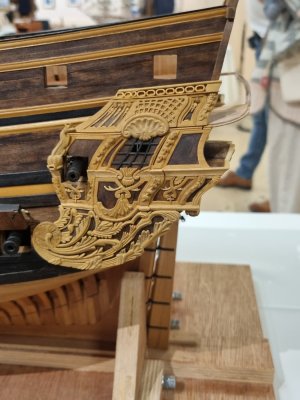
I know that feeling, Paul. Hanging over the drawing and ‘something’ isn’t right.
Can you show some of the related parts of the drawing?
Regards, Peter
Thank you, gentlemen. I set out to post some pictures of the plans, and it became something of a wandering montage of 'this thing and that thing.' Honestly, quite impossible for you to respond to in any meaningful way. I am going to take you up on your kind offer(s) but need to first establish an order of construction to add some organization to my desperation.Hi Paul !
I fully understand your predicament. I've been going through the same thing with the counter of my Enterprise. With me, after puzzling over it for quite a while and looking at the plans, I came to somewhat of a conclusion on how to approach it and have started executing my thoughts, even if they turn out to be wrong.
Can you be specific about what you are having an issue with, maybe we can offer some ideas. Our ideas may be wrong, but it might give you that "ah-ha" moment to help you figure it out just by a different description that we offer.
This is helpful, Wojtas. In my inexperience it is not obvious to me that other ships might use the same construction (though, in hindsight, perhaps it should be obvious).Firstly I have no doubt you possess enough skill and patience to finish it on your own without waiting on anybody to finish before you.
Second. Those plans are not easy to work with(at least some parts). Show as what your struggling with, I'm sure we will find solution to your problem, just point directly what you think is an obstacle.
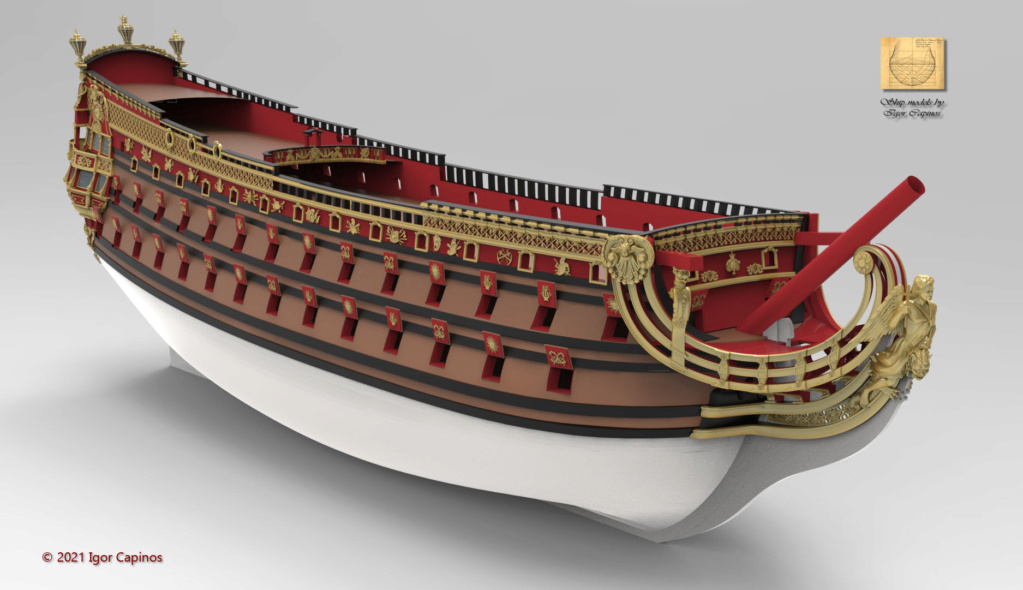
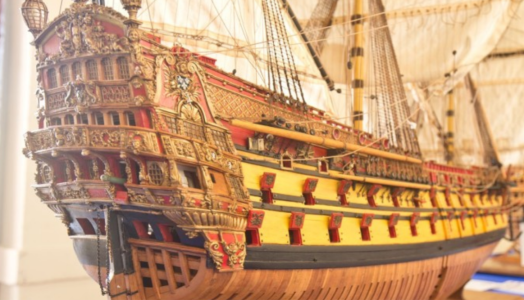
Maybe I will sound like Captain Obvious, but look how other similar models especially stern structure. Le Fleuron has very similar stern and quarter galerries structure. I would suggest going through some of the build logs of this ship
IgorCapinos has some great renders of SP
View attachment 599531
View attachment 599530
Well, I tried to make some progress today and ended up binning everything I made. Actually, it one of the most frustrating days of modeling in my brief career. I'll take your suggestion as a prescriptionSorry Paul, I can only offer moral support or a glass of wine to help with this conundrum.
View attachment 599258
.
To be specific is it only about walking part of balconies or sth else?I do see many similarities between the Le Fleuron and SP. But even looking at this fantastic model I am left with a puzzle: the lower balcony is an actual balcony on Le Fleuron (that is - you can stand on it). Even though SP is a larger ship it seems like that lower balcony is actually fake (you CAN'T stand on it). More confusion.
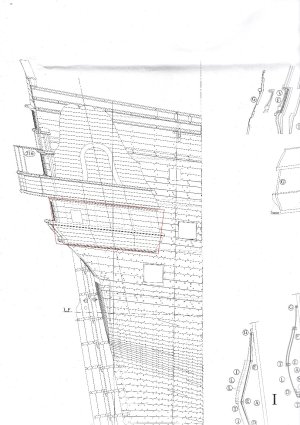
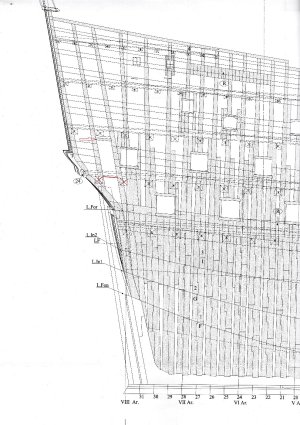
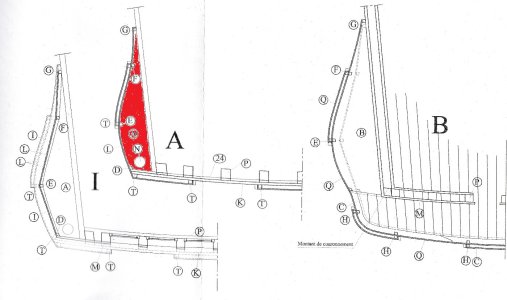
Only the walking part. It appears that the top of the lower balcony actually touches the stern of the ship (?).To be specific is it only about walking part of balconies or sth else?
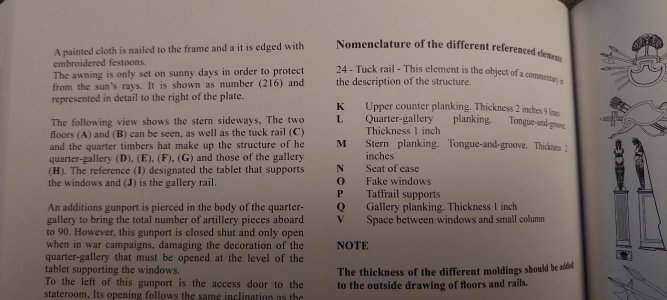
I believe the lower balcony is walkable, it even has a seat of ease. Thought entrance mabe a little confusing as entrance door only has beam on top
I told you don't reply- post in progressOnly the walking part. It appears that the top of the lower balcony actually touches the stern of the ship (?).
I cannot find a way to enter the lower balcony on the SP - unless it is from the quarter galleries (but that does not seem to be true).
You underestimate how frustrated I was last nightI told you don't reply- post in progress
! I'll go back now and look at your additional postings.
Don't worry it's pretty straight forward. It may look hard, but from what I see on first glance it consistentYou underestimate how frustrated I was last night
To be specific is it only about walking part of balconies or sth else?
View attachment 599636
I believe the lower balconys are walkable, they even have a seat of ease. Thought the entrance might be a bit confusing, as the front door only has a beam at the top and is separated by a floor laid on the deck beams.
View attachment 599635
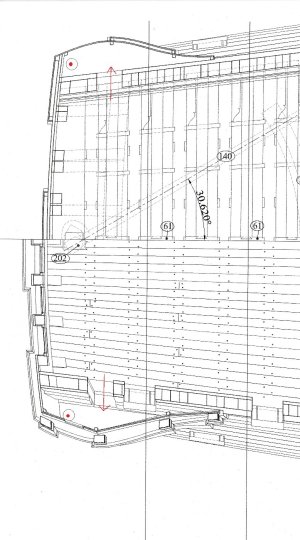
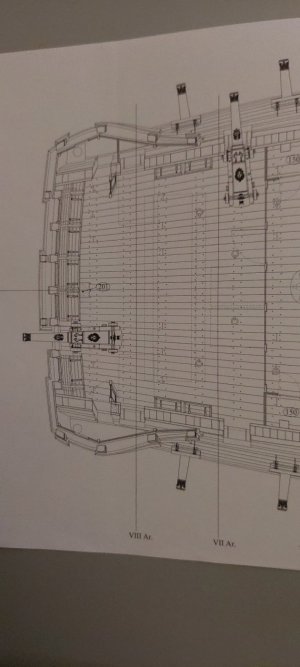
When you look from the top view of QG and balcony structure there's a "N" seat of ease and "A" marked as flors. The decorative rails must have sth to lie on.
Also when you look at the deck layout you see crealy an entrance and opening for gun port hidden behind fake window.
View attachment 599638
View attachment 599637
View attachment 599649
I made sure it isn't just my interpretation. On the model dipleaed in Rochefor you can clearly see a opening- panel with fake window is removed.
I don't recall exact date, but there was a transition period between fully open QG and closed buttelies were fake panels were removed to allow more guns to be engaged and at the same time protect valuable ornaments
View attachment 599634