- Joined
- Jun 29, 2024
- Messages
- 1,841
- Points
- 488

Lots of Classics there.

 |
The beloved Ships in Scale Magazine is back and charting a new course for 2026! Discover new skills, new techniques, and new inspirations in every issue. NOTE THAT OUR NEXT ISSUE WILL BE MARCH/APRIL 2026 |
|
 |
As a way to introduce our brass coins to the community, we will raffle off a free coin during the month of August. Follow link ABOVE for instructions for entering. |
|

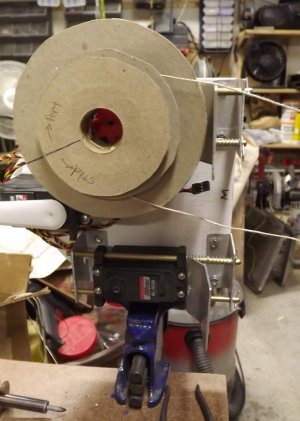
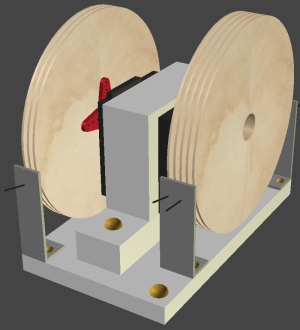
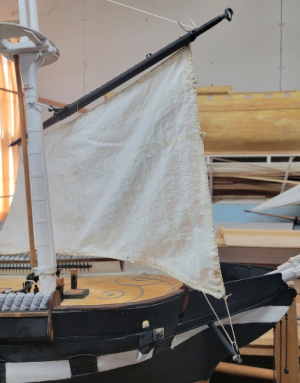
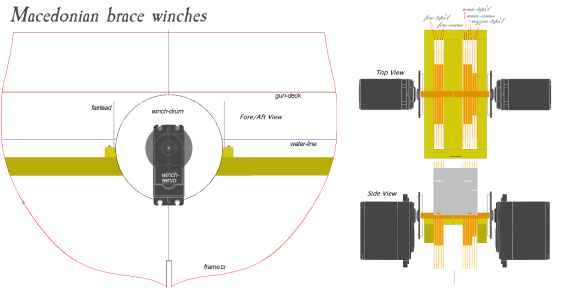
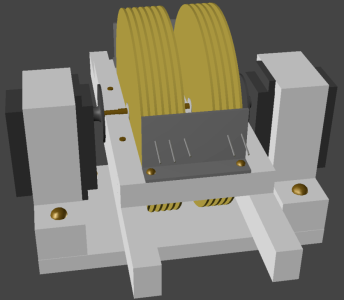
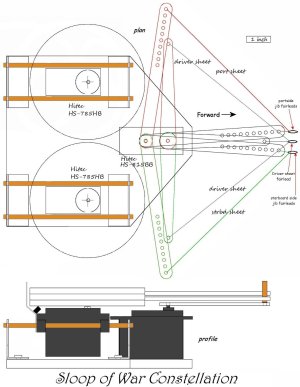
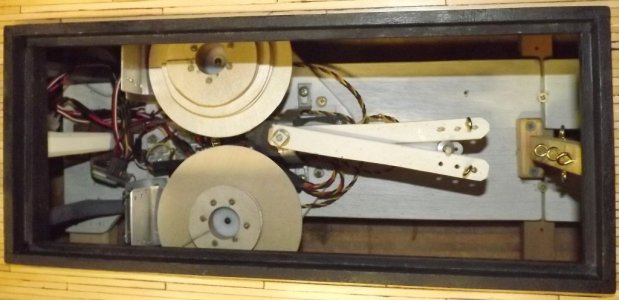

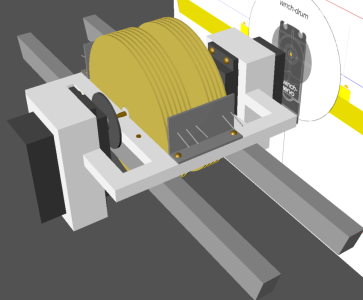
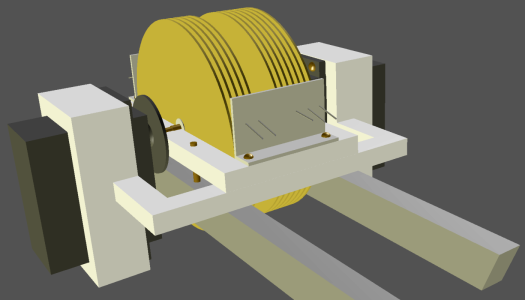
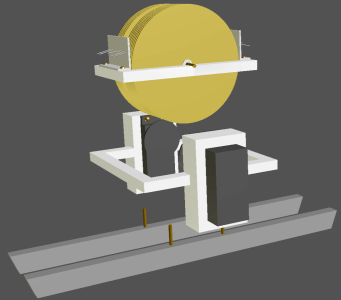


I've looked at loads of convoluted, over-engineered, cat's-cradles and simplified it while still getting the functionality and appearance I'm after.You've created a complex engineering solution that will demand increased maintenance and presents multiple failure points.

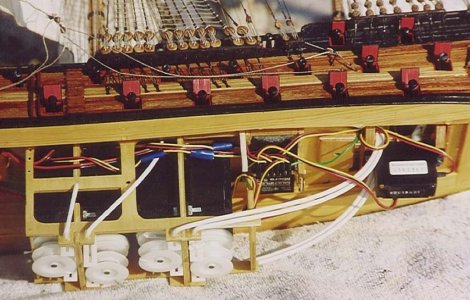
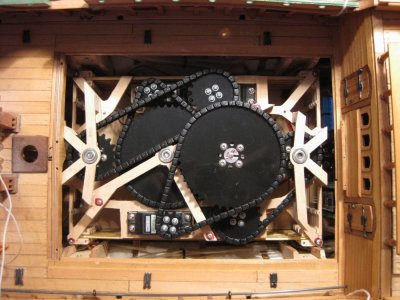
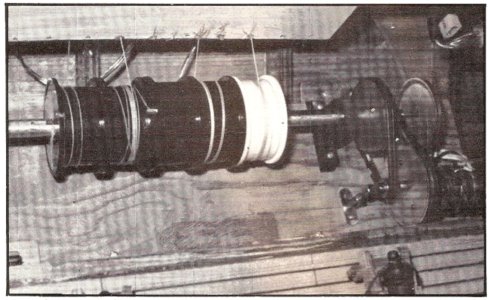
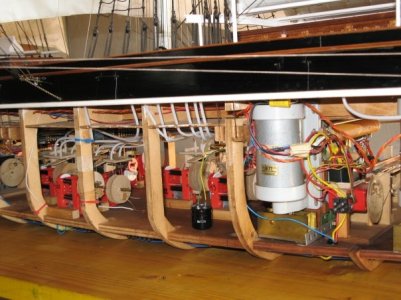
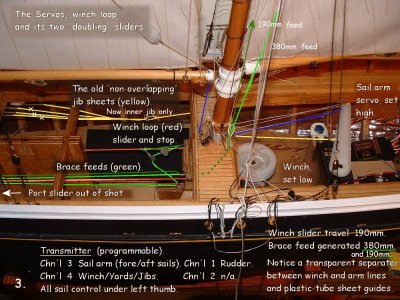
I've looked at loads of convoluted, over-engineered, cat's-cradles and simplified it while still getting the functionality and appearance I'm after.
How complex is my set-up compared to...
View attachment 588508 View attachment 588509 View attachment 588510 View attachment 588511 View attachment 588512 View attachment 588513
What you see as complexity is no more complex than remote controlled window blinds. I'm controlling only three of 12 yards, with two winches,designed to be accessible and removable if something needs servicing. I'm not bunting or furling any sails, no search-lights, radars, running lights, sound effects, firing guns, or any other fuwafuwa gimmicks.
The level of complexity is higher than a one meter yacht because remotely controlling a 19th century full-rigged ship model that weighs 80-100 pounds is more complex than a 2-sail sloop with a self tending rig.
My Constellation already successfully uses a more complex set-up than I'm planning for Macedonian, and both models use only 4 channels (rudder, fore-n-afts, fore-mast, main/mizzen-mast).
I, and I'm sure others reading here, would like to see your idea of how to set this up on-deck as you suggested.
Macedonian won't have deck houses to hide winches in, and I'm certainly not going to have exposed servos on deck. Why do you assume my set-up will be prone to fail and unserviceable? I already have a model that's sailed several times successfully. I want my models to operate realistically, and that means braces routed as the prototype was, and fore-n-afts not sheeted right to the centerline.
You do realize pretty much every traditional style RC model boat has it's controls below decks; even the Bearospace boats.
The only failure here was a t'gallant clew coming unhooked: Constellation on the Miles River
for waterproofing try uv resin sometime.As noted; this will be a working-sailing model 1/36th the size of the original. All my labor should net a model with the following dimensions:
This model will be smaller than Constellation which, in fact, is about the size of United States compared to her.
- Beam: 13.5" (34.3cm)
- Length of the hull: 59" (150cm)
- Length over the rig: 85-3/4" (218cm)
- Width over the rig: 36" (92cm) ~ Main yard w/o stuns'l booms.
- Length on deck: 55" (140cm)
- Draft: 6.7" (17.02cm) w/o ballast keel
View attachment 537601
The edges of the forms were covered with blue masking tape so the planking wouldn't be glued to them. The point is for the hull to be a shell that's fiber-glassed. A 1/4" plywood keelson/stem/sternpost was inserted, and battens were tacked on at the diagonals to steady everything, and on November 20th, 2011, planking commenced with the sheer-plank and the stern tuck. Planking was 3/16" thick by 3/8" wide white pine. It wasn't properly spiled, but was tapered to no less than half it's width where needed, and stealers placed as required. The garboards were 1-1/2" wide cause I was lazy. Absolutely none of this will be visible through paint and a copper bottom, but I know it's there. My quick and nasty planking of Pride still haunts me today, because despite all the paint ~ I know it's there.
View attachment 537609 View attachment 537608 View attachment 537607
Each plank was edge-glued to the one before it. As planking continued toward the keel, the rest of the transom was planked. The parts of the stem, keel, and stern post were templated and cut from 1/2" plywood to be installed later. When the hull was closed up, it was removed from the build-board and planking above the sheer-plank was installed.
View attachment 537606 View attachment 537605 View attachment 537604 View attachment 537603 View attachment 537602
The forms were popped out, one-by,one, and the inside sanded, painted with diluted wood glue and sanded again. A couple of forms were tacked back in to hold the hulls shape as I sanded and filled any gaps with Water-Putty. A template was made to transfer details like gunports, wales, moldings, etc to the hull.
View attachment 537614 View attachment 537613 View attachment 537612 View attachment 537611 View attachment 537610
The build table was leveled, then the hull on it leveled port and starboard, and blocked up so the waterline marks fore-n-aft were at the same height from the table. A sharp pencil resting on a block of wood cut to the right length was then used to mark the waterline.
View attachment 537970
The inside of the hull was given a couple of coats of polyester resin and about half the form were cut down to the dimensions of frames and epoxied back into the hull to hold it's shape from flattening out. The hull was ready to be fiber-glassed when the weather got warm enough.
View attachment 537616 View attachment 537615
