• Win a Free Custom Engraved Brass Coin!!!
    As a way to introduce our brass coins to the community, we will raffle off a free coin during the month of August. Follow link ABOVE for instructions for entering.
  • PRE-ORDER SHIPS IN SCALE TODAY!

    The beloved Ships in Scale Magazine is back and charting a new course for 2026!
    Discover new skills, new techniques, and new inspirations in every issue.

    NOTE THAT OUR FIRST ISSUE WILL BE JAN/FEB 2026

Making your own Ropes

Joined
Jun 2, 2025
Messages
218
Points
143

Making My Own Rope – Time to Take Control of Rigging

Over the course of my wooden ship builds – both completed and currently underway – one thing has consistently let the kits down for me: the supplied rigging rope.

Like many of you, I’ve tried to make do with what comes in the box… but honestly, I’ve never been all that impressed.

The issues are always the same:

• Incorrect lay and twist

• Fibres that look fuzzy and oversized

• Colours that don’t resemble scale tarred or natural rope

• Inconsistent diameter from one bundle to the next

Unfortunately, here in Australia, the situation doesn’t improve much.

What is available locally is often:

• Limited in sizes

• Not particularly accurate in appearance

• And very expensive for what you get


Ropes of Scale – Brilliant, But Costly

For my current two builds, I made the jump to Ropes of Scale (Canada) – and I’ll say this clearly:

The rope itself is excellent.

The scale, the twist, the consistency, the realism… absolutely top-notch.

But the reality is this:

By the time you:

• Replace all standing and running rigging

• Cover multiple diameters

• Add international freight

• Convert to Australian dollars

You’re looking at several hundred dollars just in rope for a single large build.

As much as I love quality, that’s simply not sustainable if you’re building multiple ships or working in larger scales like 1:50 or 1:48.


So I’m Looking at Making My Own Rope

This has led me down a new path…

I’m now seriously considering investing in a rope-making setup and producing my own scale rope.

The goals are:

• Full control over diameter

• Choice of fibre type

• Ability to make tarred vs natural rope

• Correct lay direction and tension

• Consistency across an entire build

• And most importantly… long-term cost savings

It’s becoming clear that after a few builds, a rope maker could easily pay for itself.


❓ Over to the Community

So I’d love to hear from those who’ve already gone down this road:

• Have you made your own ropes?

• What rope maker or setup are you using?

• Manual or motorised?

• What fibres have you had the best results with?

• Any tips, lessons learned, or “wish I knew this earlier” advice?

• Would you do it again?

This hobby is all about learning, refining, and pushing realism, and I feel like rope making might be the next logical step in that journey.

Looking forward to hearing your experiences and advice

Phil

B7E1779D-CEE9-4A61-BE69-E3DE6575B253.png

IMG_1157.jpeg

IMG_1119.jpeg

IMG_1129.jpeg
 
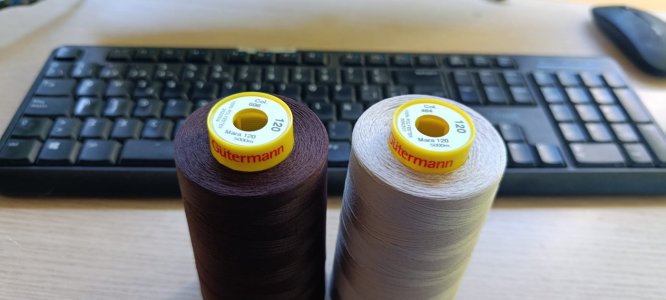
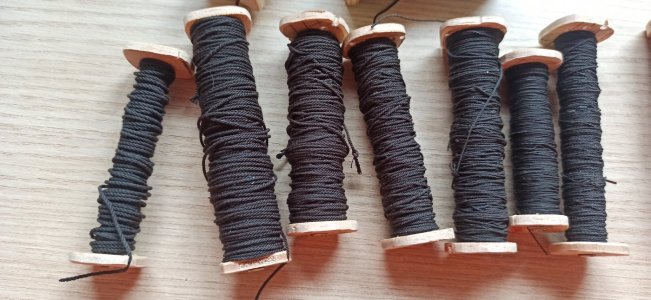
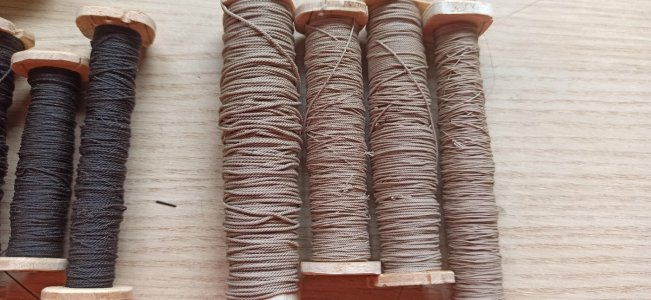
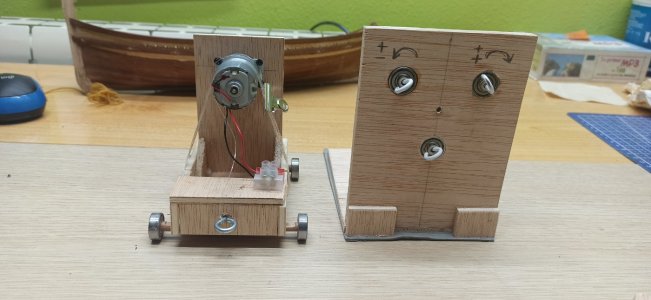
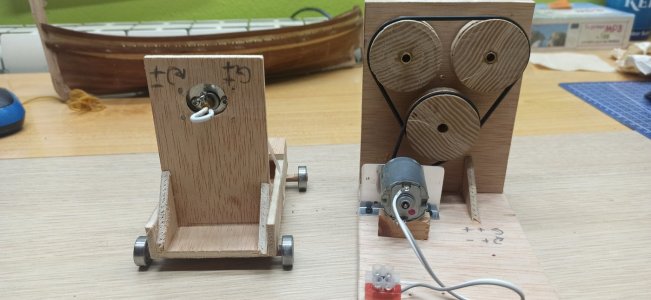
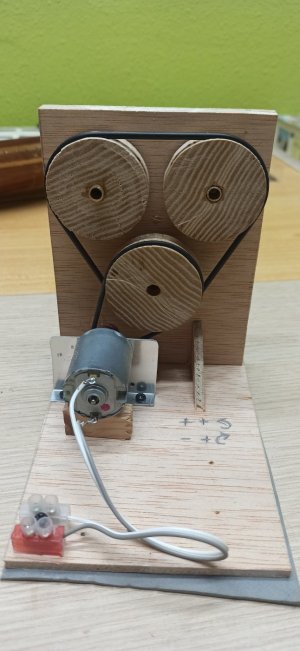
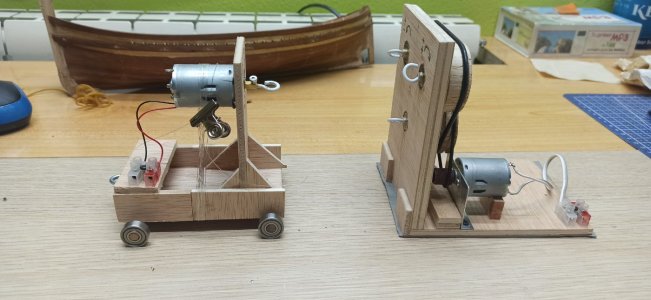
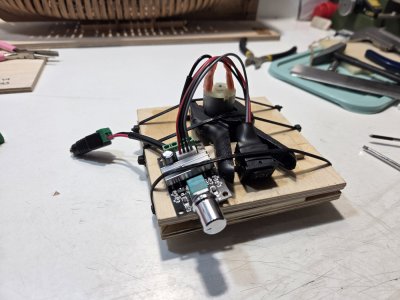
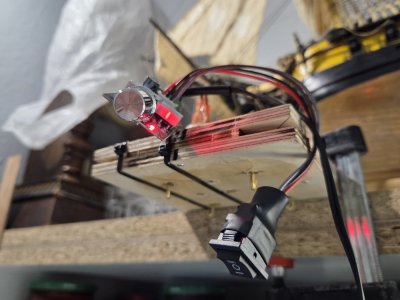
Buenos días, yo desde que me hago mis propios cabos, no he vuelto a usar otra cosa, uso hilo de poliéster para evitar asi las posibles decoloraciones, el pelo y demás del algodón, uso la marca Gütterman Mara 120, color 464 y 696, en carretes de 5000 m que tienes para toda la vida de modelista, la maquina de corchar me la fabrique yo, te dejo el hilo del foro español donde lo explica. Todo es material reciclado, salvo el regulador de velocidad.


WhatsApp Image 2026-01-30 at 10.02.48.jpegIMG_20250322_111622.jpgIMG_20250322_111615.jpgIMG_20241216_001201.jpgIMG_20241216_001154.jpgIMG_20241216_001144.jpgIMG_20241216_001138.jpgSi tienes dudas, no tengas problema en preguntar, un saludo desde España.
 
I highly recommend this simple device.it gave me complete control of rope making. save me lots of money.it is very simple to operate.I own it for many years.

 
i tried making my own. the machine was easy enough to fabricate, we did this with the cub scouts as a project after visiting mystic sea port where they had a real rope factory used in the 1800s.

the real challenge is finding quality threads thin enough to make scale rope. i realy dont like the synthetics and would prefer linin or even good quality cotton blends. in my 50 years building ships, i have noticed regardless of the material, they are all experiancing brittle rigging syndrom. i have used linin for much of my standing rigging and that seems to be the least problematic, aside whippings going bad.

these days, it seems we are stuck with synthetics and not much of a choice in weights for certain colors. my real problem is where to buy threads as sewing supply stores close shop... our once go to five n dimes, joanns and mom n pops in my area. so now im stuck with ordering online with no more than a guess as to the weights n collors because there really aren't any consistant standards to compare from brand to brand.

so if you are to roll your own or are doing it... please post links to sources and if possible, let us know what scales they are appropiate for?
 
I have purchased and used one of the nice machines from Europe, and I have used the Gutermann threads and with the limited rope I have made, I like it so far.

You don't need a permanent rope walk, but maybe a weekend or few days of dedicated time making rope when you cant get into the shop.

It takes some time to practice on each type design and thread combo to find what exact setting to use with most any method, even hand turning.

I did learn that I needed multiple storage containers to keep and separate ropes as made, because later it gets harder to measure them exactly.
 
You can always look in this topic:
There is a lot to find how to make rope and the experience of others. A lot of info to find. how, machines, material, etc.
I make a ropewalk for fellow modelmakers that I do sell. In a week I will have 3 machines ready to ship for those Who want one. You can always contact me in a pm about that.
 
I highly recommend this simple device.it gave me complete control of rope making. save me lots of money.it is very simple to operate.I own it for many years.

I like the looks of the PL4 on the same website.
 
I like the looks of the PL4 on the same website.
I did not buy PL4 because it is continuous rope making machine. It is 100 times more difficult to use and 5 times more expensive. I saw quite a few people on this site and on other one, who wanted to sell continuous rope making machines. I am sure they got into trouble with using these machines.

I do not need a piece of rope longer than 2 meters (6 feet) which is a limit for machine I recommended. The machine I recommend beats all machines I saw so far on the market for price and simplicity of use. All you do is mounting it somewhere close at the ceiling. You tie threads to it and tie the weight at bottom side of thread. The machine will make the rope for you.
 
You can always look in this topic:
There is a lot to find how to make rope and the experience of others. A lot of info to find. how, machines, material, etc.
I make a ropewalk for fellow modelmakers that I do sell. In a week I will have 3 machines ready to ship for those Who want one. You can always contact me in a pm about that.
I recommend this link.
Although my rope walk is very basic - made with plywood and 2 Epson printer motors, I can make quite presentable rope in lengths just over a metre long, which i find is enough.
Stephen's pages will give you probably all you need to know, I reckon.
 
Thanks everyone for the replies and suggestions on rope making

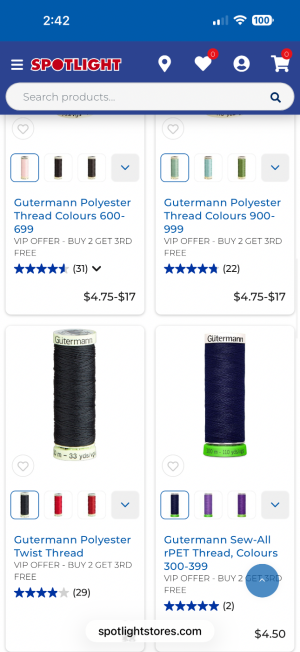
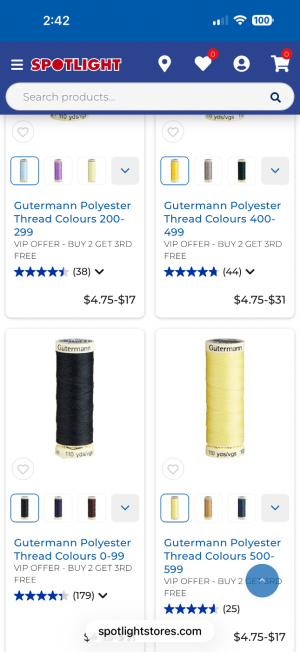
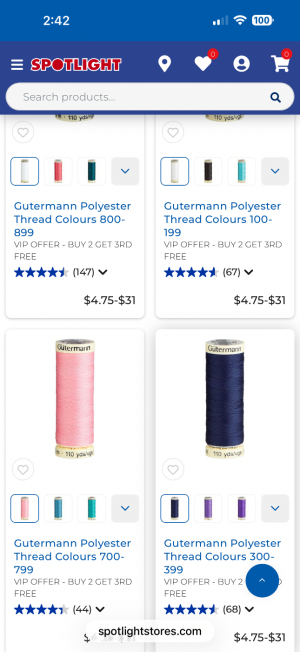
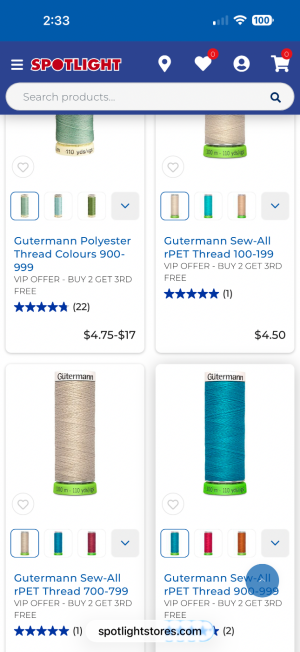
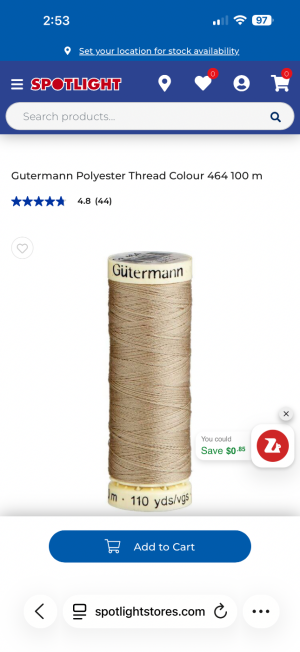
I’ve taken the advice on board and gone hunting locally for Gütermann polyester thread, mainly to avoid the huge cost of importing specialist rope from overseas.

Here in my home town in Australia, Spotlight is really the only readily available brick-and-mortar store that stocks Gütermann – but once you actually start looking, you quickly realise there’s very little technical information provided on most of their threads.


So the big question is:

Are any of these Spotlight / Gütermann threads actually suitable for making scale ropes for wooden ship models?

IMG_1211.png

IMG_1210.png

IMG_1209.png

IMG_1208.png
 
When you go to the link I shared (post #8), you will discover that not sewing thread but lock yarn will give the best result. Gunterman is a brand that sells this and will give a good result, but also Serafil 120/2 of the brand Amann will give you a good result. Ropes of scale, I believe, also sells lockyarn for those who want to make their on rope. An endless rope making machine is not difficult to use, but it is limited in use. Rope of scale and modeltakelgarn (Germany) use machines like I use. The Domanoff machine that YT speaks about is easy to use, but also limited in lenght (or you live in a castle with a high tower and you love to run the stairs up and down). A horizontal rope machine is the best to use (especially for use old guys), like the reel thing unlimeted in lenght. It's no higher mathematic to build your own, but if you don't like that there are a lot of machines on the market. I sell this one for a cheap price.
But like I said there are more to buy or DIY. Read the link I first share and @Masters Mate also repleyed (post #11).
 
I'm quite happy with my Domanoff/Shipworkshop PL4: https://www.shipworkshop.com/product-page/pl4-series-endless-rope-making-machines-with-traverse There's a learning curve to using it, but its compact size and versatility is a real advantage. This is also the only commercial machine I'm aware of which permits laying up four-strand rope with a core running down the middle of the lay which is essential to preventing the strands from collapsing in upon the center of the lay. I use Gutermann Mara thread which comes in many sizes and colors and is, I believe, sold internationally. In the U.S., I get it from WAWAK online: https://www.wawak.com/thread/thread...-wrapped-poly-core-thread-tex-30/#sku=gtda800 This thread on the PL4 produces any type of line anybody could want to use on a model and it is indistinguishable from any of the good aftermarket specialty model rigging threads I've seen. I "cook" the polyester thread after layup to "fix" the tension and prevent unraveling.

Note that it is extremely difficult to obtain linen thread in the sizes and quality required to make scale rope these days. The market demand necessary to warrant manufacturing it simply ceased to exist as synthetic fibers took over. The major museum curators and restorationists are now using quality polyester thread which, from all indications, possess archival qualities as good or better than linen or any of the other natural fibers. Additionally, the extruded polyester fibers are far longer than the natural fibers and so are far better for making strong, evenly spun thread. "Lumpy" natural fiber thread isn't suitable for making scale rope.

The rope making posts on SoS and MSW forums are goldmines of information on the subject. Learning from others' mistakes saves a lot of time! You will also find many recipes there for making up various scale sizes of rope which can save you trying to figure out the right combination of thread sizes to yield the scale rope sizes you will want to make.
 
Last edited:
I burned out motor in my screwdriver this way. Just install a standard Chinese motor with a power supply. Motor will cost you $5, a drill repair will cost $50, because it's a Makita...
Really? Was this a brand device?
I have had this Makita for 15 years or so with some extensive heavy duty use in house renovation. So far -apart from batteries- this thing has never let me down.
What kind of motor are you using?
 
Really? Was this a brand device?
I have had this Makita for 15 years or so with some extensive heavy duty use in house renovation. So far -apart from batteries- this thing has never let me down.
What kind of motor are you using?
I have a 2014 Bosch GSB 18V. It didn't give me any problems either. It's one thing to tighten screws, but it's another to run it continuously for several minutes. While cranking it a bit, motor simply melted, it must have overheated. I didn't expect that because it never had any work or power issues. I took it in for service, 240 PLN ~ 50 €, and now it works because it has to, but it's not as powerful...

Now i use a 12-24v, "type 775", 20000rpm motor, on a old laptop power supply, and a speed controller with left/right direction.
 
This is also the only commercial machine I'm aware of which permits laying up four-strand rope with a core running down the middle of the lay which is essential to preventing the strands from collapsing in upon the center of the lay.
With my machine you can do the same, there is an option to make 4 strand with core. The same way domanoff's door ropewalk. Works perfect.
 
I ordered the PL4 from Domanof

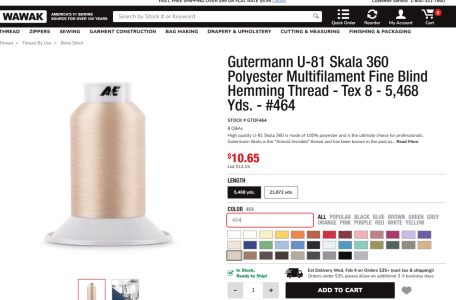
I will try the Guterman thread available locally and experiment. the suggested thread mentioned don’t appear to be available in Australia.

The Guterman treads available here in store where I live are just called Guterman polyester thread.

I will first try this one shown in image

IMG_1212.png
 
Back
Top