


• Ships of Scale has incorportated an extra level of security when you log In. Please follow on-screen prompts to acknowledge that you are not a robot via a "Check Box" or a "Pictorial Check Box Puzzle". This is needed due to higher level of AI Activity Security.
  • SUBSCRIBE TO SHIPS IN SCALE TODAY!

    The beloved Ships in Scale Magazine is back and charting a new course for 2026!
    Discover new skills, new techniques, and new inspirations in every issue.

    NOTE THAT OUR NEXT ISSUE WILL BE July/August 2026
  • Win a Free Custom Engraved Brass Coin!!!
    As a way to introduce our brass coins to the community, we will raffle off a free coin during the month of August. Follow link ABOVE for instructions for entering.

Making your own Ropes

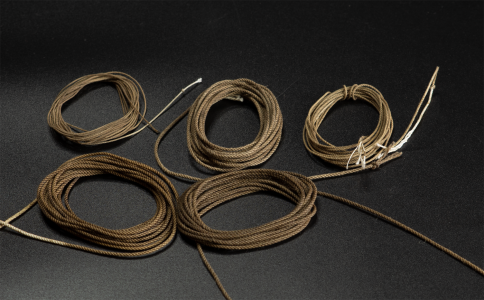
Gutermann E121 3x8 10% stretch. To much weight so I lifted the weight as the rope spun.

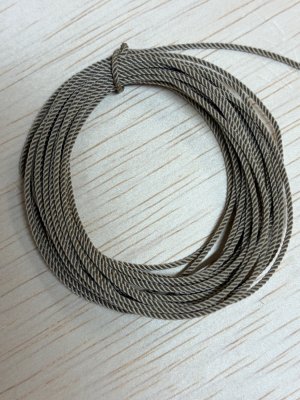
Final results still turned out perfect. 0.7mm rope

View attachment 592228
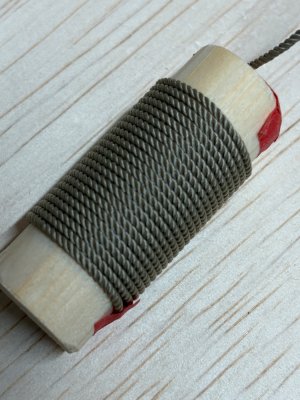
I love the grey, you can colour that with diluted Judea Bitume to give it an old age look. see here:
 
I love the grey, you can colour that with diluted Judea Bitume to give it an old age look. see here:
It’s Tan. Bad lighting. I need to improve the lighting.
 
I love the grey, you can colour that with diluted Judea Bitume to give it an old age look. see here:
That’s interesting on the Anti static.

Antistatic is a big problem here where I live especially winter. Often getting a nasty zap when I open the screen door.

Have to avoid wearing polyester clothing during winter.
 
Hi @Phillipsart and @Steef66 ,
Thank you guys very much with the help and tips i got from you guys. I am getting the hang of it, a lot goes wrong and some goes fine. The wrong ones are getting less and less. When i finished the Serafil i am going to start with the Gutermann Yarn.

I've rebuild my setup and the rope walk is 5m now does this make any difference in the tension of 10% or differs this with the yarn i am using?
 
Hi @Phillipsart and @Steef66 ,
Thank you guys very much with the help and tips i got from you guys. I am getting the hang of it, a lot goes wrong and some goes fine. The wrong ones are getting less and less. When i finished the Serafil i am going to start with the Gutermann Yarn.

I've rebuild my setup and the rope walk is 5m now does this make any difference in the tension of 10% or differs this with the yarn i am using?
Hi Robert, good to hear you make a learning curve up. The measure distance between the hooks, if that is 5 meters, the 10% is 50 cm., always keep that in mind when making rope. When you make a cable this could be less. The weight to get the tension should be pretty much the same if the ropewalk is 5 meters or 3 meters. It could be a little more weight on 5 meters. I hope this info will be a great help to you, maybe @Phillipsart could shine his light also on this subject. Success
 
The weight is found experimentally. There is no formula. It will depend on diameter of rope you make. Larger diameter requires heavier weighty. For my experience the more weight the better. One cannot increase weight indefinitely. At certain weight the yarn will break. I use 150 gram weight for larger diameter ropes and 63 gram weight for thin ropes. 150 g weight will break the Gattermann Skala 240 yearn.
 
I found with my setup 6.2 meters apart I had to use more weight than at 4 meters apart when I first set mine up.

I’m using 600 grams of weight making 1mm rope. At 10% with 3x8 Gutermann E151
 
Hello everyone,

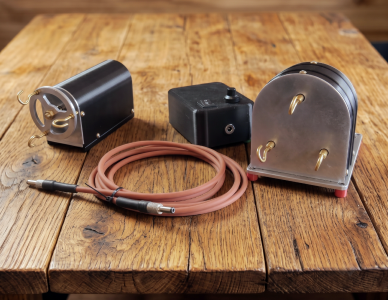
I make ropewalks myself, and I have also tried working with a planetary ropewalk. To be honest, I find it quite problematic and, at times, rather cumbersome to use.

I don't want to criticize anyone or any particular design, because the problem is more complex than that. If you want to make ropes ranging, for example, from 0.2 to 3 mm, a planetary ropewalk can present problems with the twist, how tightly the strands are twisted, and, above all, achieving consistent and repeatable results.

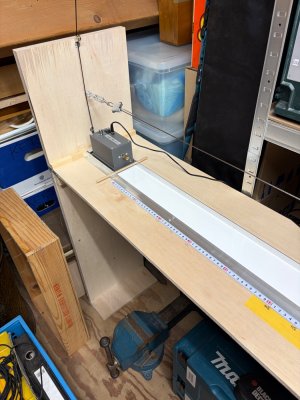
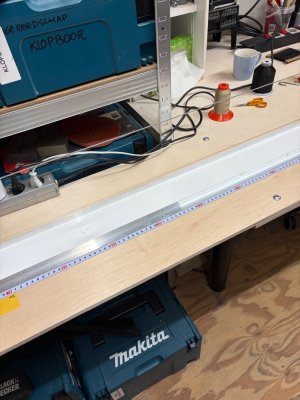
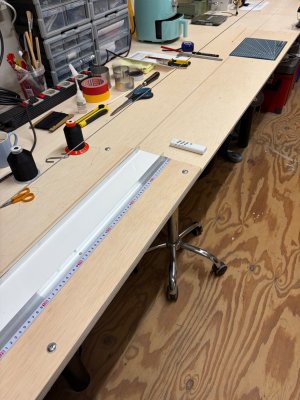
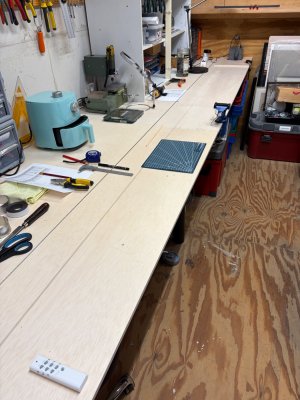
I use a traditional ropewalk, a photo of which I am posting below. In the next few days, I also plan to make a short instructional video showing how it works. In the video, I will be making ropes from both cotton and polyester.

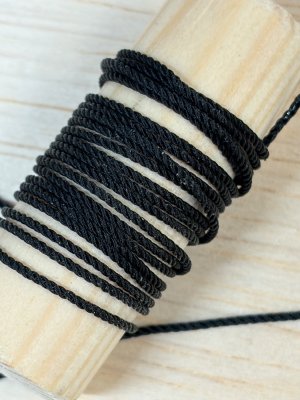
Below, I am also posting photos of ropes made on my ropewalk. I think the final result speaks for itself — especially when it comes to the regularity of the twist and the consistency of the finished ropes.

Roman

10.png


nowe 1.png
 
I don’t have any problems with rope wanting to un twist with my rope walk.
Neither do I, but with so much emphasis on doing things the way it was done full size, I don't know what the big deal is on rope that won't unravel.

Any full size rope will unravel when you cut it without whipping it. That's why there is a process for doing it..

Some of these rope machines seem like a lot of overkill.

Why not make rope the way it has been made for hundreds of years?

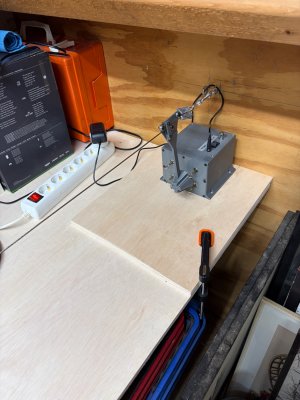
Here is my machine..
 
Neither do I, but with so much emphasis on doing things the way it was done full size, I don't know what the big deal is on rope that won't unravel.

Any full size rope will unravel when you cut it without whipping it. That's why there is a process for doing it..

Some of these rope machines seem like a lot of overkill.

Why not make rope the way it has been made for hundreds of years?

Here is my machine..
I now know why it was called a rope walk. After watching your video it hit me. The walking back and forth. lol. I’ve often wondered why is it called a rope walk.
 
Back
Top