
• Win a Free Custom Engraved Brass Coin!!!
    As a way to introduce our brass coins to the community, we will raffle off a free coin during the month of August. Follow link ABOVE for instructions for entering.

Midwest Fireboat

Joined
Dec 26, 2019
Messages
1,720
Points
488

Location
Miami
Announcement to All Members

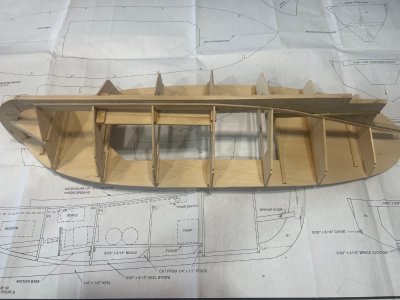
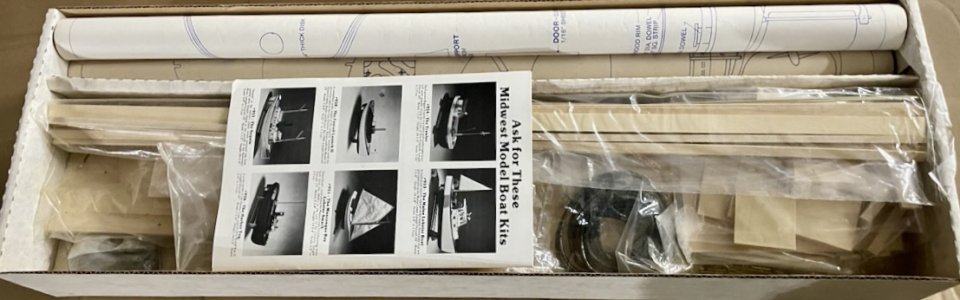
Model Expo has confirmed that production will soon commence on a new Midwest kit: the Fireboat, presented at a scale of 1/2" = 1 foot. I am pleased to share that I have been commissioned to construct the prototype model and to evaluate the kit for potential improvements prior to release.

History of the Fireboats
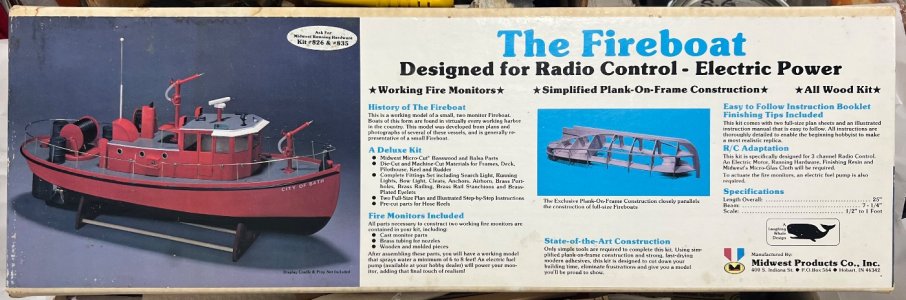
This model represents a small fireboat equipped with twin monitors, a type of vessel historically stationed in virtually every major working harbor across the country. Its configuration is derived from a composite of plans and photographic references documenting several representative examples. As such, it serves as a faithful depiction of the smaller fireboats, many of which continue to operate in select ports today.
It is probable that many of you have undertaken the construction of this longstanding kit; however, this marks my first occasion engaging with it.

For this build, I introduced only a limited number of modifications—implemented primarily to enhance its suitability for radio-control operation and to provide a heightened degree of realism—while preserving the essential characteristics of the original vessel.

Beginning today, I will be posting my official building log. Members are invited to contribute feedback, propose enhancements, and share any prior experience with this visually appealing and beginner-friendly model.
1.jpeg
2.jpeg
 
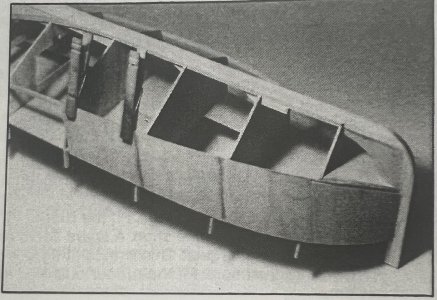
At the outset, I anticipated that the construction process would be relatively uncomplicated, given that the hull is assembled from pre-cut balsa components rather than employing conventional planking methods. In practice, however, the build presented a greater degree of complexity than expected.

THE KEEL
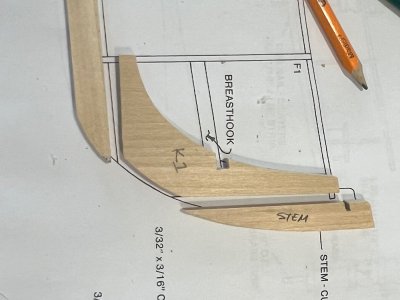
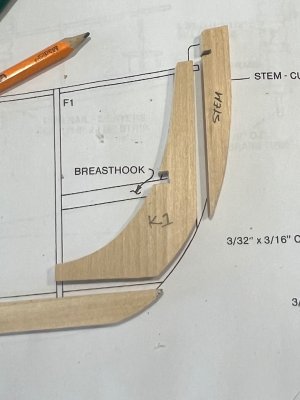
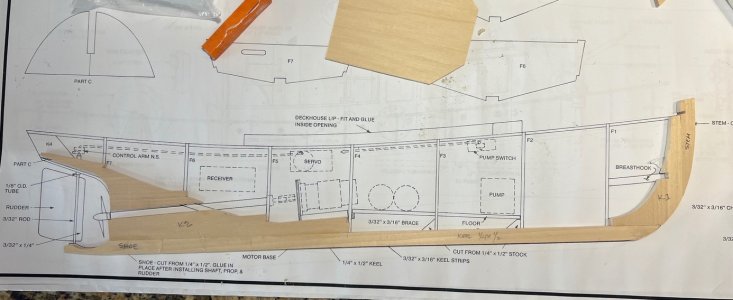
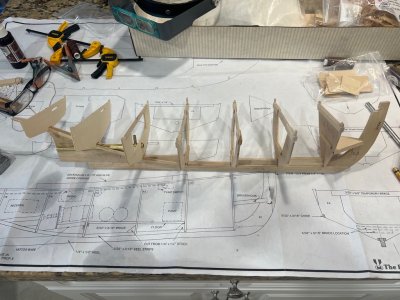
The keel consists of five discrete components, and its assembly is largely unambiguous due to the precision of the supplied blueprints, which provide clear dimensional references and alignment guidance. This is where my problems started.
1.jpeg
2.jpeg3.jpeg
4.jpeg
5.jpeg
6.jpeg
 
THE SHOE
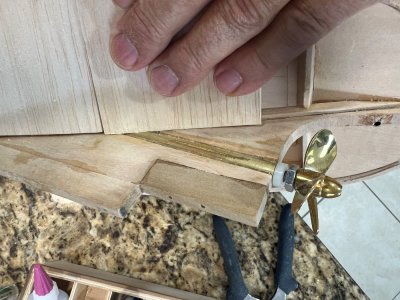
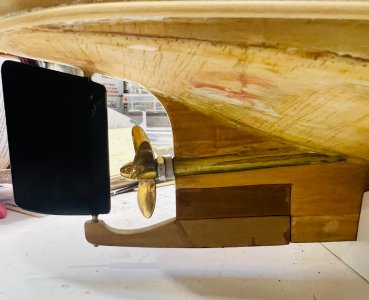
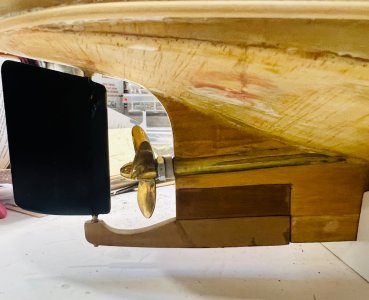
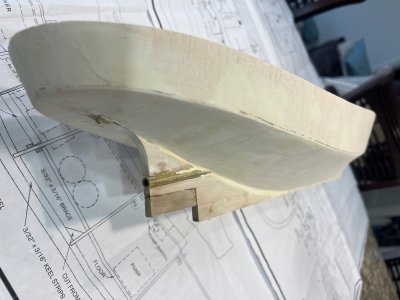
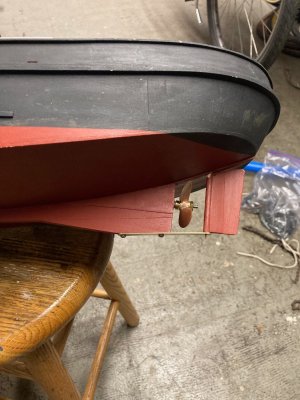
The shoe, milled from 1/4" × 1/2" stock, is specified for installation only after the propeller shaft, propeller, and rudder have been mounted. I initially adhered to these instructions; however, upon closer examination, I noted that the shoe—like the majority of the structural components—is fabricated from soft basswood. The documentation further recommends permanently bonding the shoe in place.

From a maintenance and serviceability perspective, this is impractical. A permanent installation prevents direct access to the propeller assembly, as the rudder must be removed to reach it. Bonding the shoe irreversibly would therefore obstruct essential disassembly procedures.

To resolve this design limitation, I developed an alternative method.

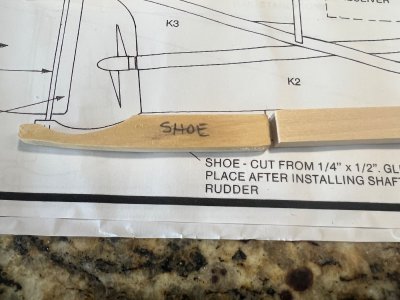
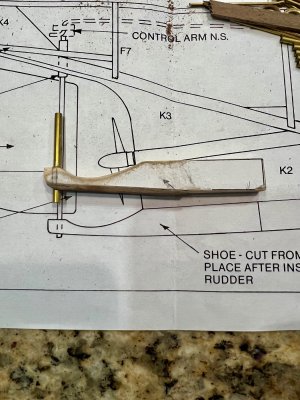
This is the original shoe.
1.jpeg

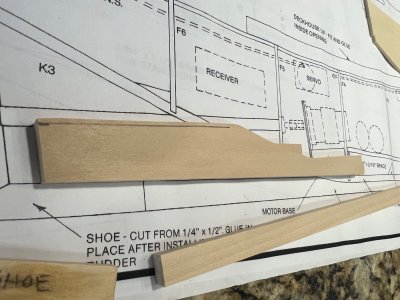
This illustrates the configuration of the keel’s receiving section as specified in the manufacturer’s instructions.
2.jpeg

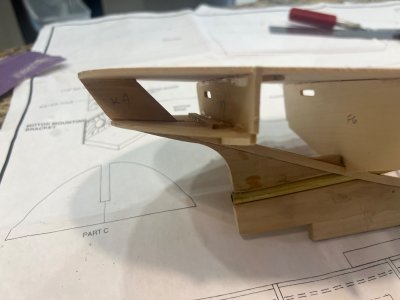
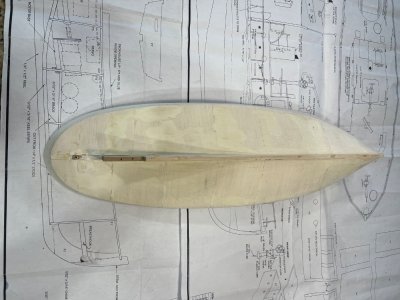
I designed the shoe-to-keel connection to be removable, and the following solution achieves that objective. To accomplish this, I routed a recess into the keel matching the exact dimensions of the shoe. This modification allows the shoe to be securely fastened with screws and removed repeatedly as required for maintenance or adjustments.

3.jpeg
4 2.jpeg
 
Last edited:
THE SHAFT
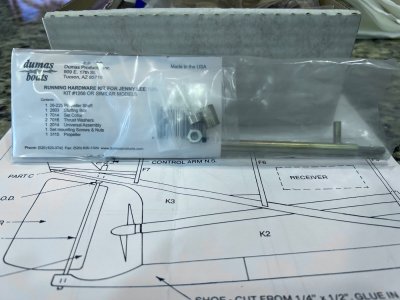
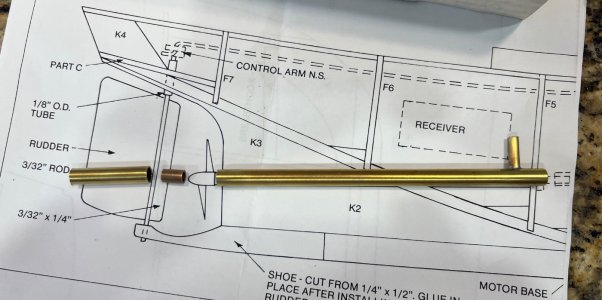
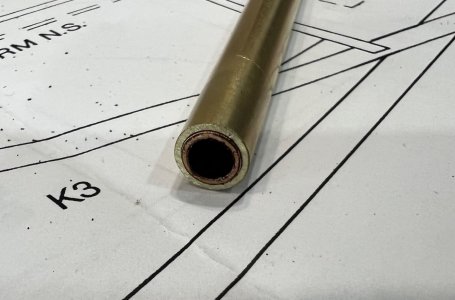
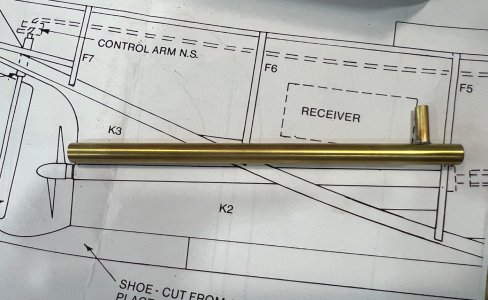
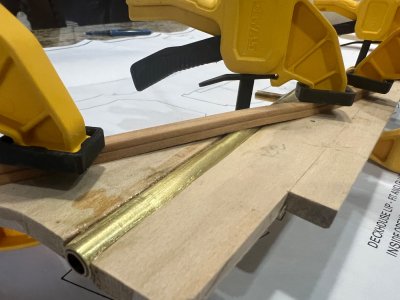
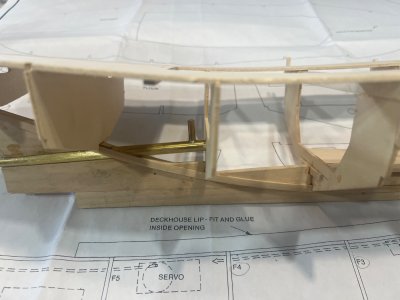
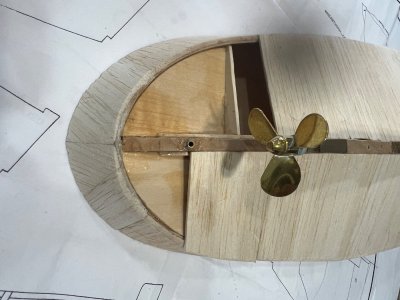
For the propeller shaft, Model Expo provided a Dumas Boat Running Hardware Kit #1269N along with a 1 1/2" Dumas brass propeller. I anticipate that this system will perform effectively during sea trials.

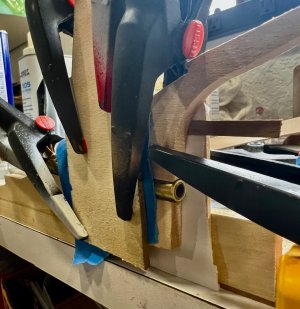
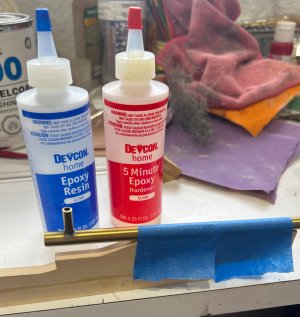
To integrate the shaft, I first cut it to the length specified in the blueprints. Once sized accurately, the shaft was secured in place using epoxy adhesive to ensure a rigid and precise installation.

1.jpeg
2.jpeg
3.jpeg
4.jpeg
5.jpeg
6 2.jpeg
7.jpeg
 
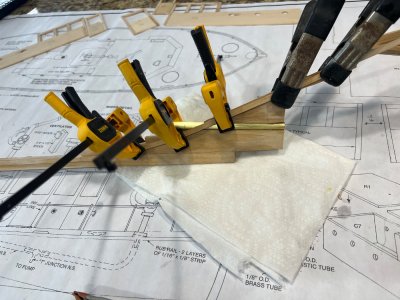
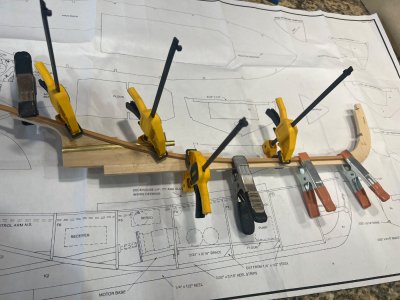
KEEL STRIP
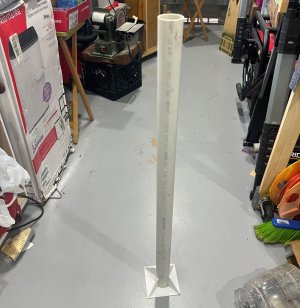
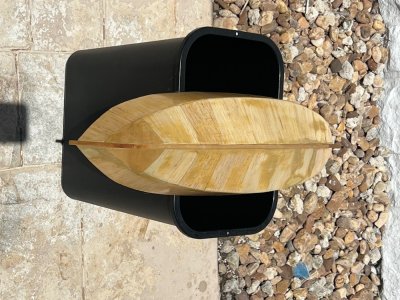
For the next step, I utilized two 3/32" × 3/36" kit-supplied strips. To facilitate controlled bending and minimize the risk of fiber fracture, the strips were submerged in a 1 1/2" PVC tube—a tool I routinely use for this purpose—for several hours. This process allows the lignin and cellulose fibers to relax, increasing their pliability and enabling precise shaping to the required profile. Also the Florida sun helps a lot to dry out the process.

1 2.jpeg
2.jpeg
3.jpeg
4.jpeg
 
THE FRAMES
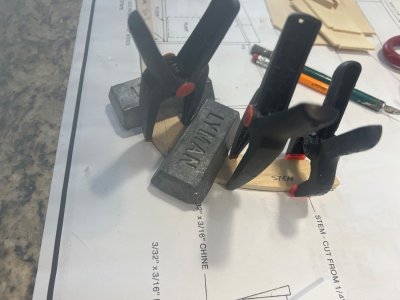
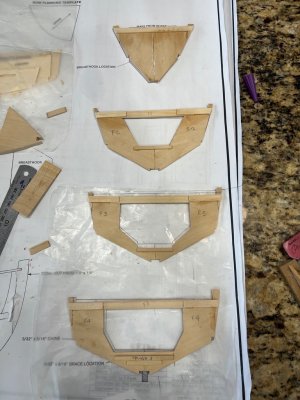
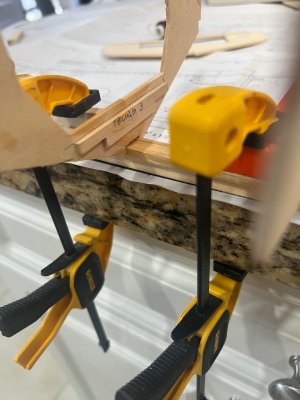
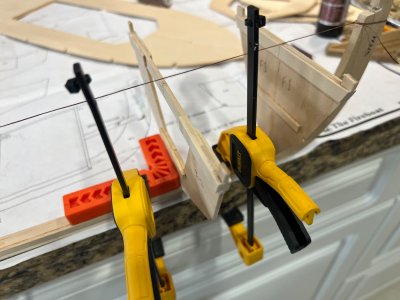
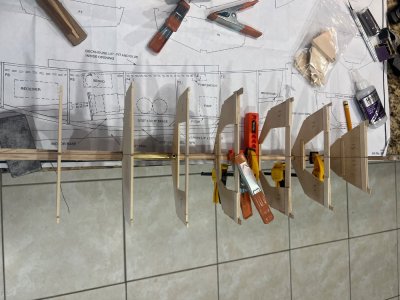
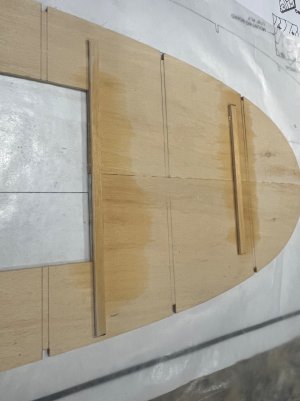
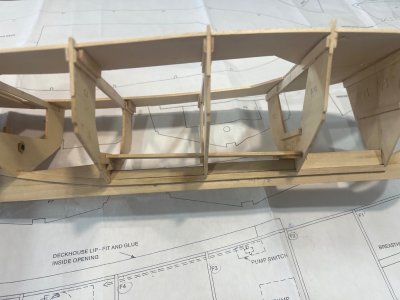
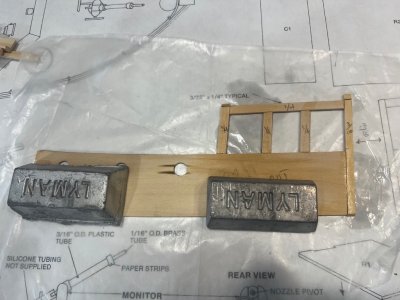
This stage of the build was relatively straightforward. After identifying the frame components according to the blueprints, I assembled them by placing a sheet of cooking wax paper over the plans to prevent adhesion and then gluing the parts together.

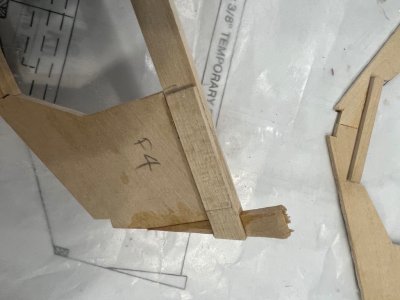
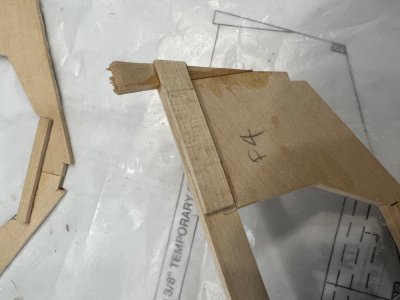
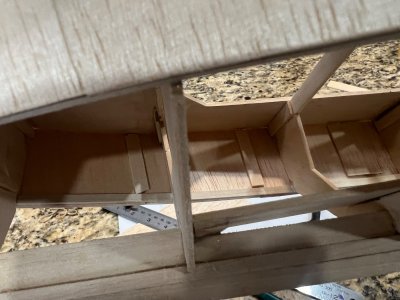
Additionally, I reinforced the areas where the deck will interface with the frames by adding small strips of wood. This modification facilitates a more precise and secure attachment of the deck later in the construction process.
1.jpeg

2.jpeg
2a.jpeg
4.jpeg

5.jpeg
8.jpeg
9.jpeg
 
THE RUDDER
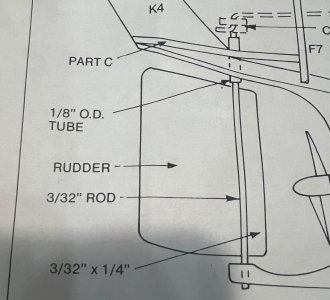
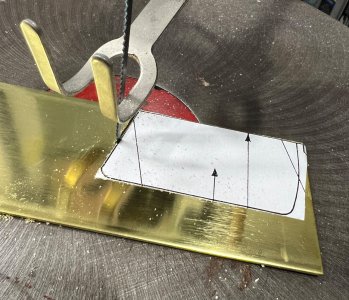
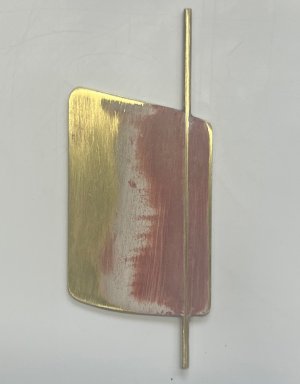
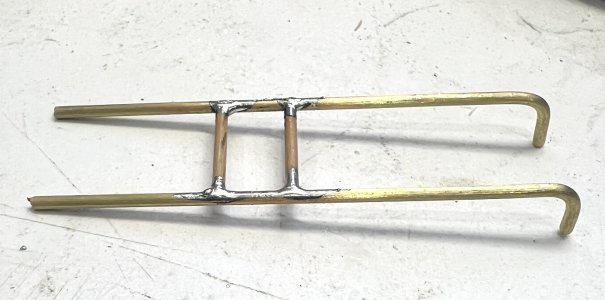
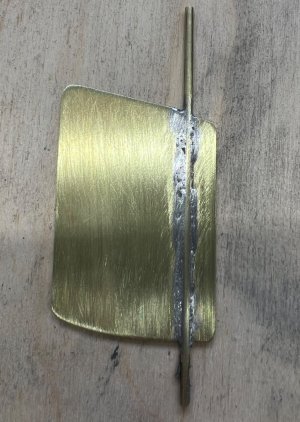
At this stage, the modeler must make a material decision. The instructions specify a 3/32" wooden rudder; however, I opted against this approach. Instead, I used a 0.064" brass sheet available in my workshop, cutting it to the shape indicated in the blueprints using a scroll saw.

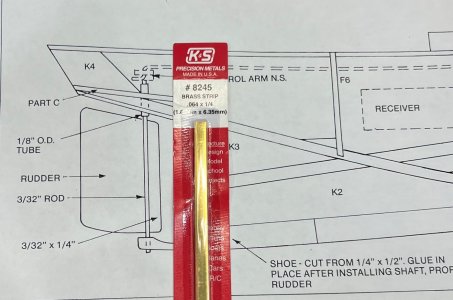
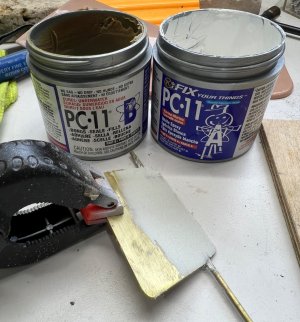
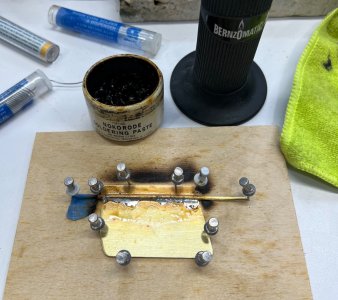
For the back piece of the rudder, I employed a section of K&S #8245, 1/4" brass stock. After soldering and trimming all three components to the correct dimensions, I sanded them to a smooth finish and bonded the assembly using PC-11 paste to ensure a secure and durable connection.
1 2.jpeg
2 2.jpeg

3.jpeg


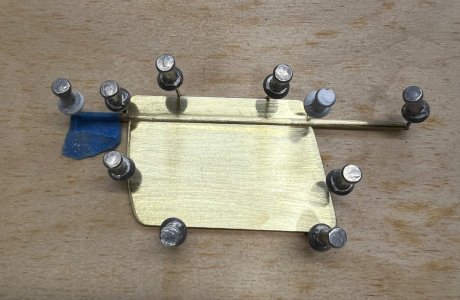
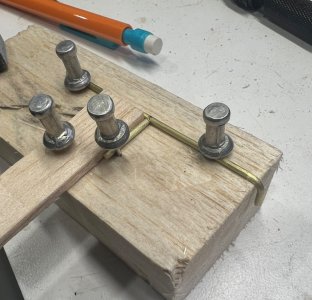
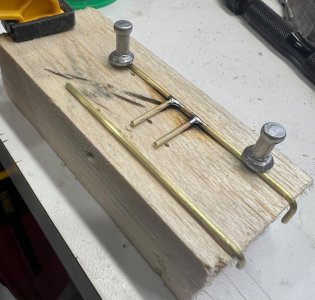
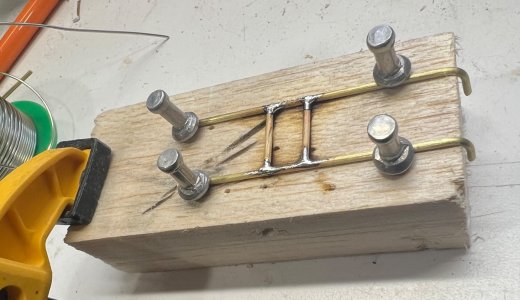
After cutting all components to the specified dimensions, I secured them with tack pins onto a piece of plywood. This setup ensured precise alignment and prevented any movement during the soldering process.

4.jpeg
5.jpeg
6.jpeg
7.jpeg
8.jpeg
9.jpeg
 
THE DECK
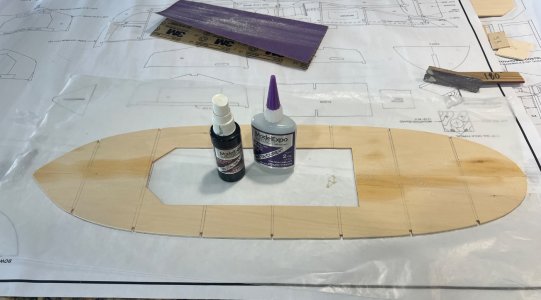
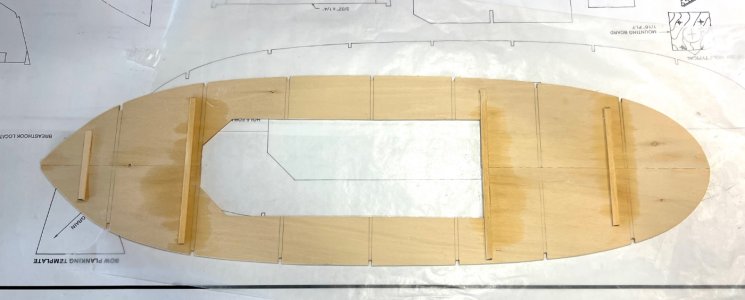
This section comes with two pieces that I glue together with Cyanoacrylate and accelatrator also provided by Model Expo. To make the deck strong and solid enough I reenforce the back with some small wooden strips after I had marked the area where the frames will make contact with it.
1.jpeg
2.jpeg
3.jpeg
4.jpeg
5.jpeg

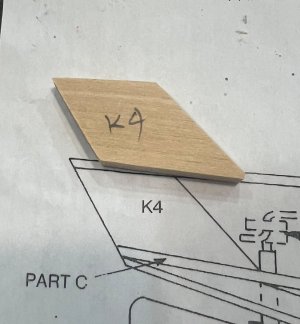
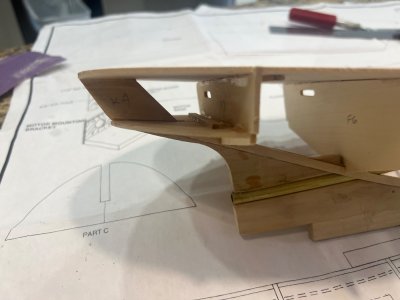
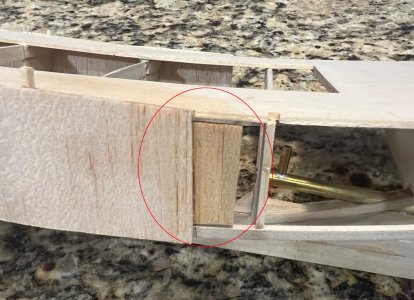
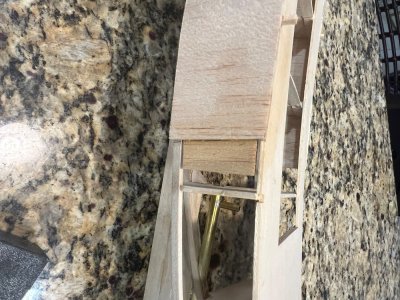
There is a small spacer piece (K4) located between the deck and the frames at the aft end of the structure. It is crucial not to overlook this component, as I initially did. As a point of reference, some grinding and trimming of K4 will be required to accommodate the rudder arm-to-servo connection.
6.jpeg
7.jpeg
8.jpeg

As a cautionary note, this is the stage at which all electronics and internal mechanisms should be installed. This includes the motor, servos (a custom servo tray will be required), the water pump, motor coupling, and battery. I made the mistake of installing these components after planking the hull, which proved to be extremely difficult and time-consuming.
 

THE PLANKING

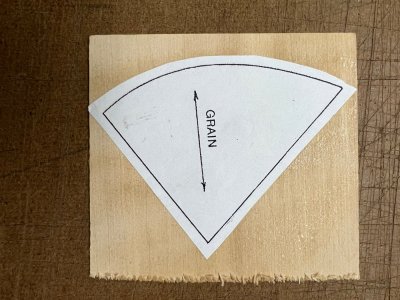
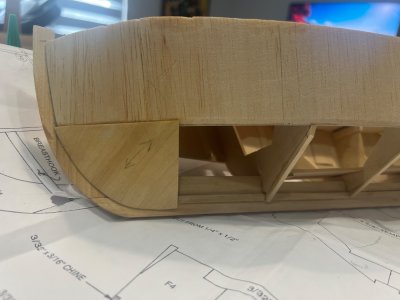
After fairing the hull to establish a smooth, continuous load path for the planking, the next step is to fabricate and install the hull panels. Begin by cutting the planking sections from the supplied 3/32" sheet stock, ensuring that the wood grain is oriented vertically. This orientation increases stiffness across the plank height and reduces the likelihood of edge-cupping once installed. Installation should start at the bow and progress aft to maintain proper geometric alignment and minimize cumulative error.

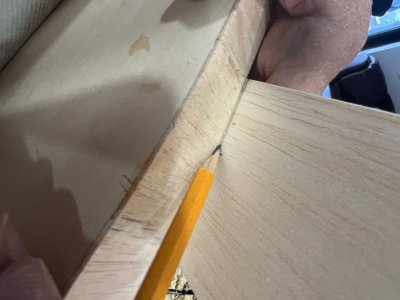
From the stern to the F1 frame, the hull incorporates a defined chine where the side and bottom planking meet. Because these surfaces butt directly against one another rather than overlapping, the side planks must be notched to accurately interface with the chine line. This provides a flush mechanical fit and helps maintain the designed hull cross-section.

To improve surface continuity and reduce local discontinuities between adjacent planks, I installed small scrap-wood shims in the gaps during planking. These fillers help maintain uniform spacing and support the plank edges, resulting in a smoother exterior surface with minimal waviness prior to final sanding and sealing.
1a.jpg
1b.jpeg


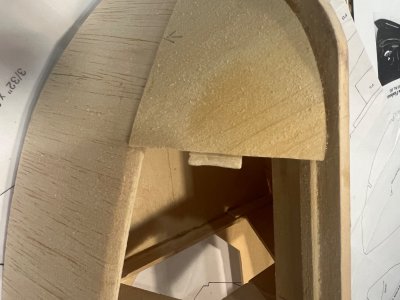
This is how the joining pieces looks from the inside.

2.jpeg

bottom.jpeg


After completing the upper section, you should also fair the bottom surfaces in preparation for planking. To do this properly, begin at the bow and lay a 3/32" sheet with the grain oriented as indicated in the blueprint. I made a copy of this section and glued it in place, matching the grain direction to that of the first bottom plank piece. You can also lay the planking directly on the hull and trace its outline to achieve a more accurate shape.

bootom first piece.jpeg5.jpeg
6.jpeg

7.jpeg9.jpeg
12.jpeg
13.jpeg
15.jpeg
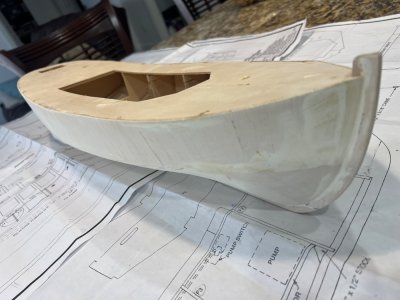
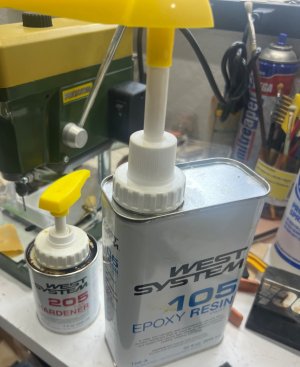
After the hull was completely planked, I sanded it smooth and applied wood filler where needed to create an even, continuous surface. Once the hull was fully faired, I sealed it inside and out with West System 105 resin and 205 hardener, mixed according to the manufacturer’s instructions. The supplied pumps make this easy, as each pump delivers the correct ratio of both components. I applied three coats inside and out, which made the hull very strong and durable.

16 2.jpeg
drying.jpeg
 
Last edited:

THE PILOTHOUSE

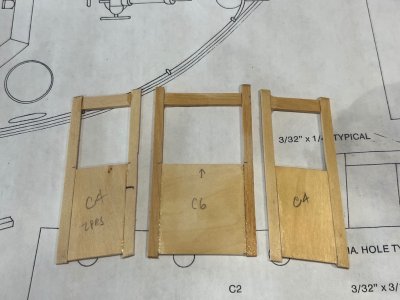
You may encounter difficulty and frustration if you follow the kit instructions exactly when building the pilothouse components that contain windows. The following parts include window sections: two C-2, two C-4, one C-6, and one C-1.

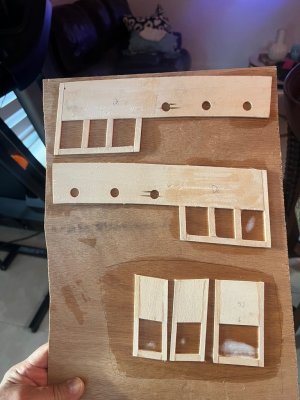
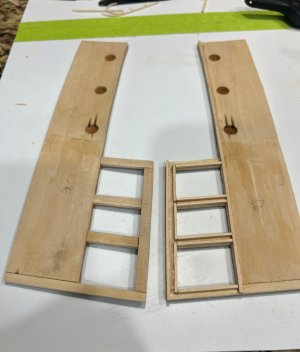
According to the instructions, the window frames are to be assembled from the 3/32" × 1/4" strip wood supplied with the kit. When I attempted this, the pieces were so delicate and fragile that any small movement caused them to break apart. There simply isn’t enough material in the joints to create a strong, stable frame.

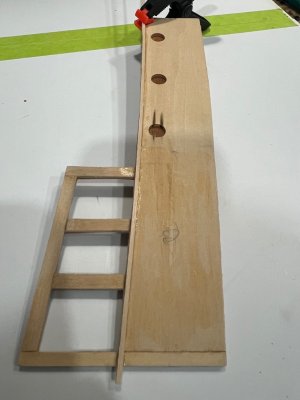
After getting frustrated and stopping for the day, I decided a different approach was needed. My solution was to carefully glue the assembled wall-and-window units onto a very thin mahogany veneer I had at work. This created a much stronger structure and also provided a beautiful interior finish, since the inside of the pilothouse now has a warm mahogany tone.

I showed this modification to Carlos, the General Manager at Model Expo, and we came up with an improved solution: parts C-2, C-4, C-6, and C-1 should all be redesigned as individual laser-cut pieces. This eliminates the hassle, fragility, and time-consuming process caused by the current instructions.

1.jpeg
2.jpeg
3.jpeg
4.jpeg

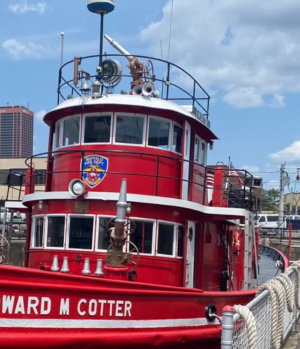
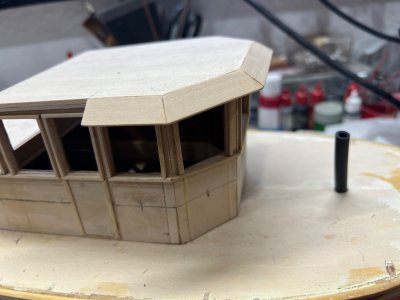
This last picture shows a noticeable improvement to the model. As I studied the details more closely, I realized I’d like to reproduce a bit of moulding around the pilothouse windows and the surrounding structures. The real boat has a subtle trim that gives the pilothouse character and depth, and adding something similar to the model would bring it much closer to the look of the actual vessel.
5b.png

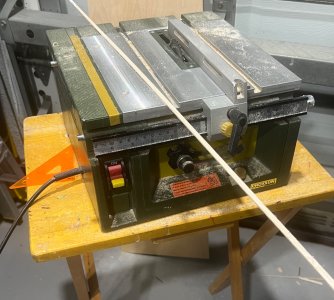
To create this effect, I ripped some wood just slightly thinner than 1/16" using my Proxxon table saw, which was also supplied by Model Expo.
5a.jpeg
5.jpeg

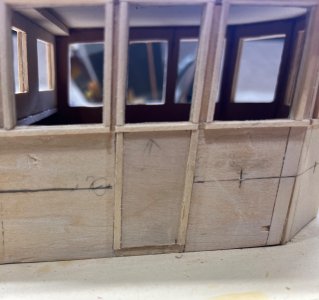
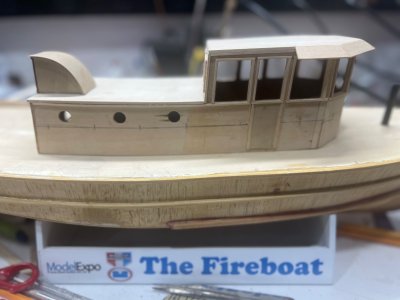
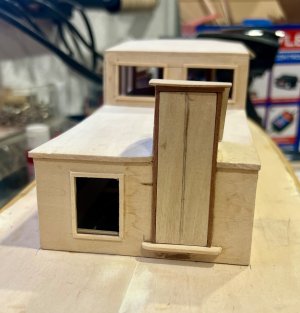
This is another improvement I decided to make to the kit: real doors. The instructions suggest creating the door by simply scribing lines and adding ink, but I wasn’t satisfied with that approach. Instead, I put together a simple solution using a few framing strips and a piece of 1/16" plywood for the door panel. With these additions, the door looks far more realistic. I still need to add the threshold, which should sit slightly raised above the deck.
9 2.jpeg

THE AWNING

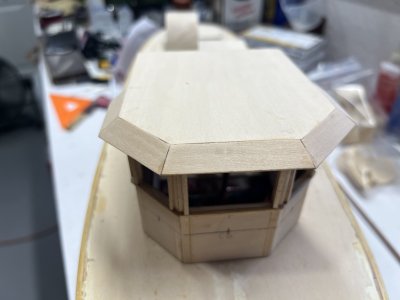
The awning was another tricky construction for me. The problem was that the instructions never explain what angle the material should be cut to. After many attempts and a lot of trial and error, I finally found that a 35-degree angle worked perfectly. That’s the angle I would recommend to anyone building this beautiful model.
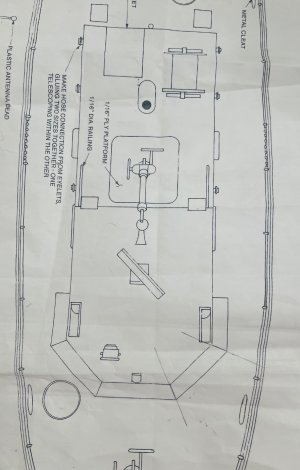
Once the angle was figured out, joining the five pieces was much easier. As long as you stick to the angles shown in the top view of the pilothouse blueprint, everything lines up nicely.
IMG_0220.jpeg

This the final results.
6.jpeg
7.jpeg
12.jpeg

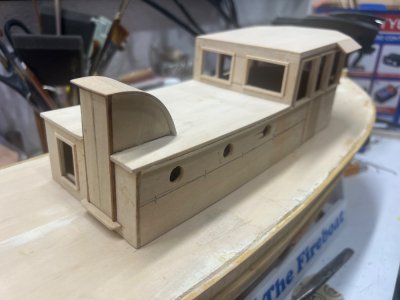
When adding the rear door, make sure that the upper section aligns properly with the bottom wall. Unfortunately, I overlooked this detail and had to remove both the upper and lower sections to redo the entire assembly correctly. I also added a door jamb, which gives the door a more realistic and finished appearance.
11.jpeg

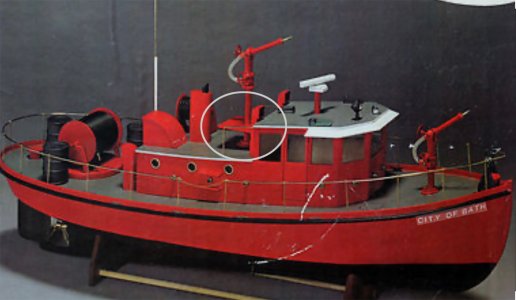
Notice another improvement here: I added a window beside the rear door. It looked right to me, and as they say, “beauty is in the eye of the beholder.” All f these improvements will be included in the new kit.
100.jpeg
 
Last edited:

RUDDER/CLEVIS CLIP HATCH

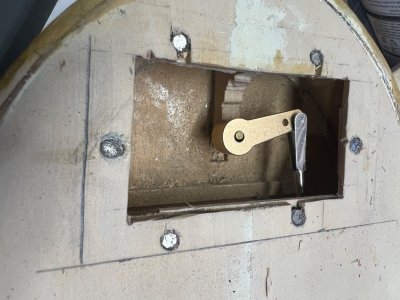
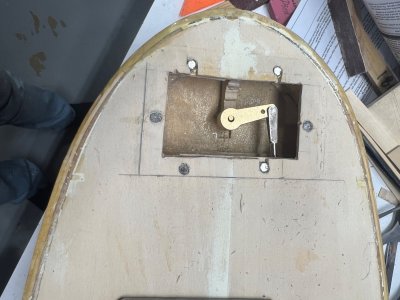
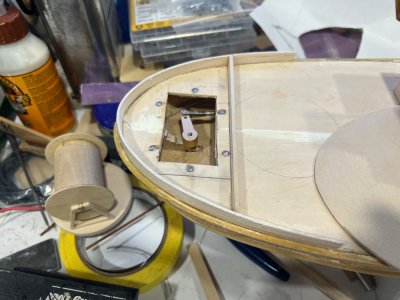
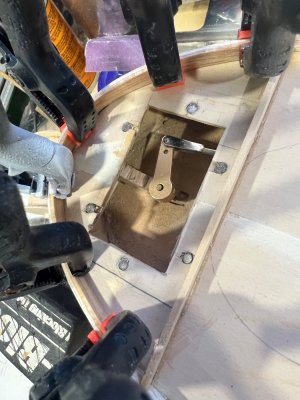
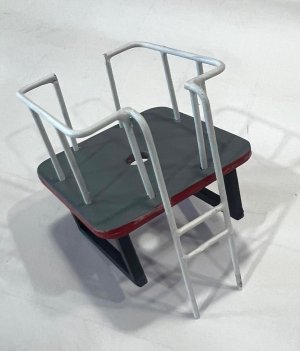
I couldn’t follow the kit instructions for this very important part of the build, since they don’t provide guidance on creating a hatch that allows adjustment of the rudder/servo connection when necessary. After figuring out how to make a hatch, I decided to cut out a section of the deck and create one. I also discovered that part K-4 needed a slight trim to accommodate the rudder clevis.

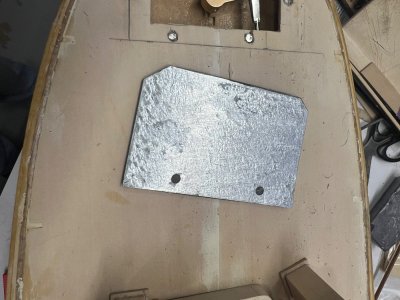
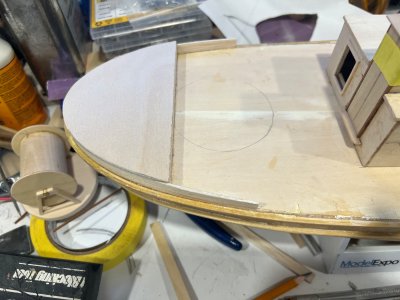
My first attempt was a magnetized metal cover, but once it was finished, I didn’t like the way it looked. I then took it a step further and built a raised stern deck section, which is where the build currently stands.

In this picture you can see K-4 trimmed and the magnets I used.
1.jpeg
2.jpeg


The metal I used came from a piece of galvanized hurricane tie, cut down to size and covered with a 1/32" sheet of plywood. The adhesion between the metal and the magnet is fantastic.
3.jpeg
IMG_0222.jpeg

RAISED STERN DECK

At the moment, I am in the process of properly finishing this section. More updates will follow as the work progresses.
68.jpeg
7.jpeg

6.jpeg
 

RECENT DECK ITEMS BUILT

For the deck items, I mostly followed the instructions, but there are plenty of improvements that fellow modelers could apply, such as adding navigational lights, an active radar, or a functional horn.

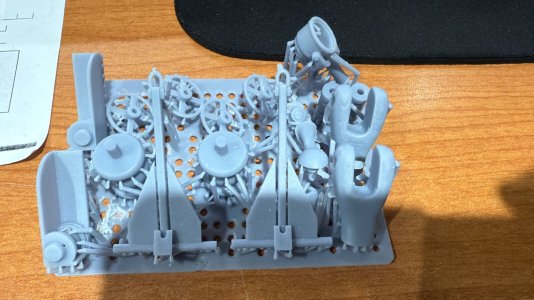
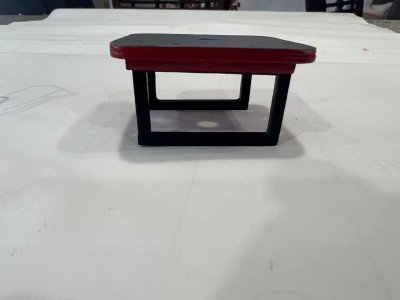
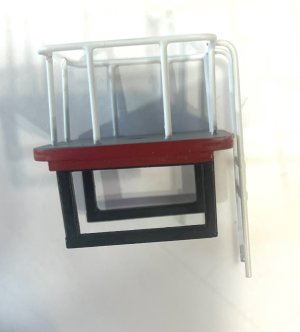
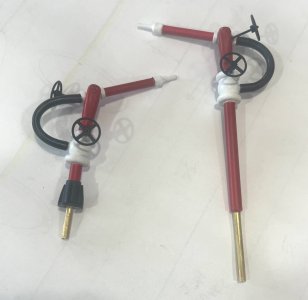
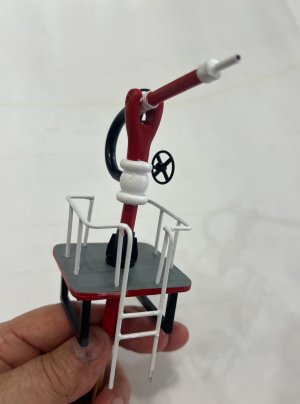
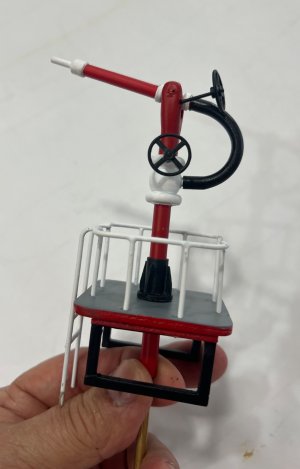
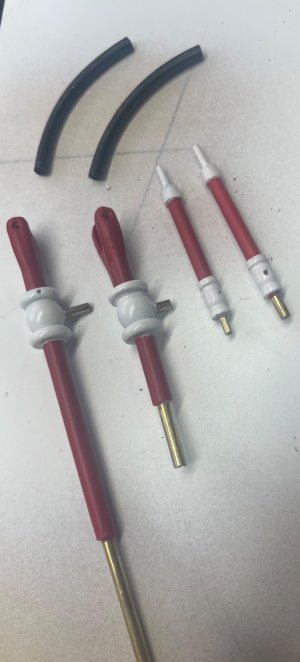
The deck items include: two fire monitors, one radar, one large and one small firehose reel, a funnel, and four ventilators (two small and two large).

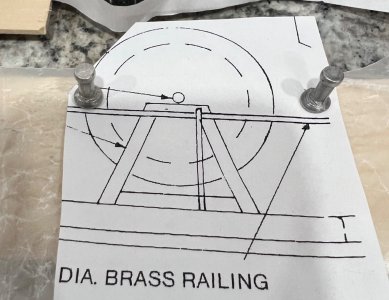
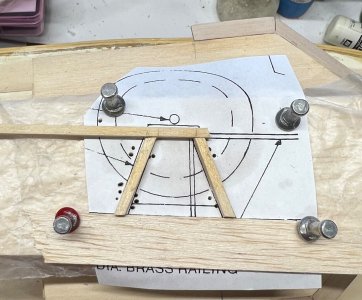
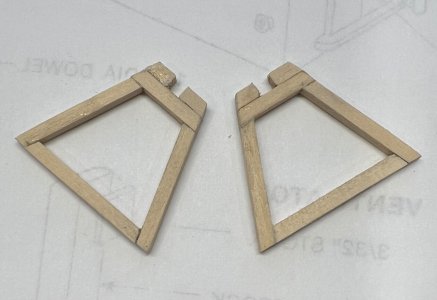
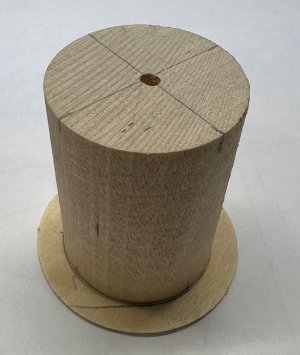
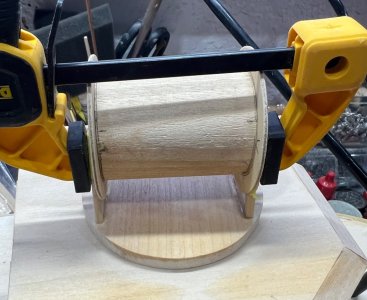
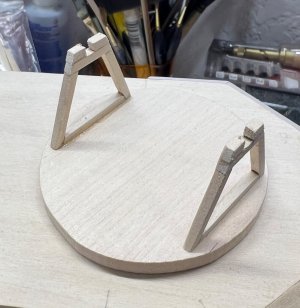
To build the large firehose reel brackets, I made a copy of the blueprints and tacked it down onto a piece of balsa wood to assemble the parts.1 2.jpeg
4 2.jpeg

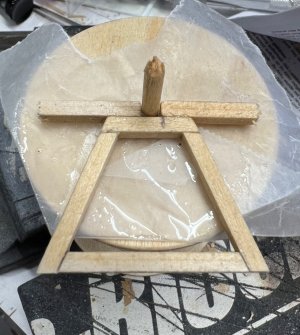
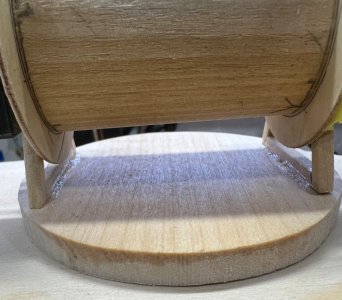
I added small pieces of leftover 1/8" square strip to serve as guides for the reel shaft.
5a 2.jpeg
5 2.jpeg

5a 2.jpeg6 2.jpeg

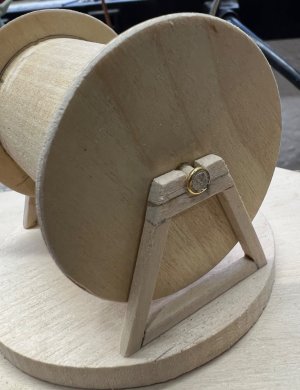
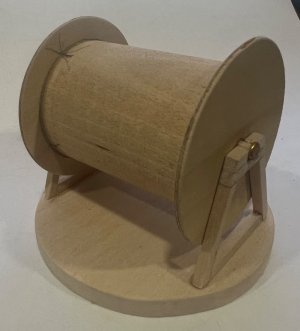
When gluing the reel to the stand, I used a clamp to hold it straight at the correct angle, applying glue only to the inside.
8a 2.jpeg

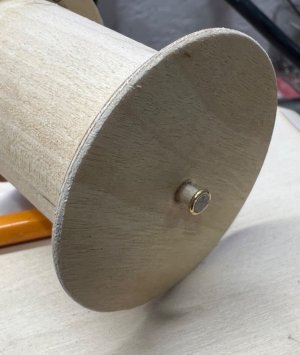
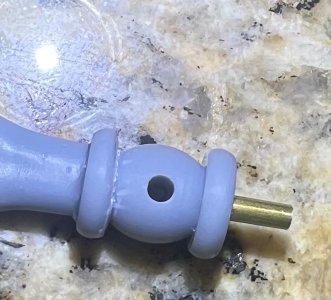
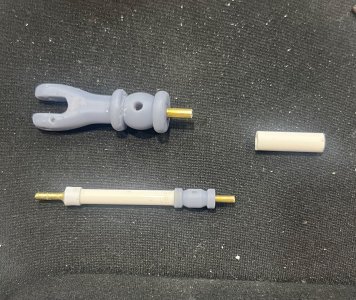
Another small but important detail was adding a stopping ring to the 1/8" rod on the outside, which gives it a nice, finished appearance.
10 2.jpeg

7 2.jpeg

8 3.jpeg
IMG_0229.jpeg
 
Last edited:
FUNNEL AND VENTILATORS
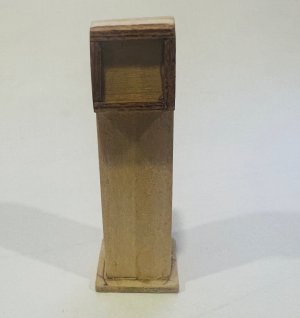
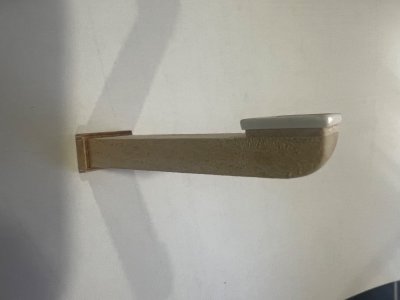
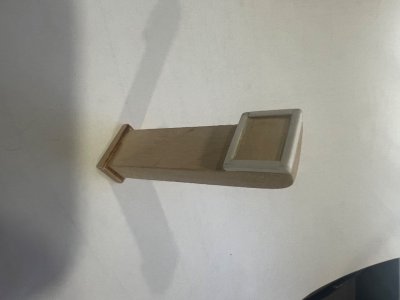
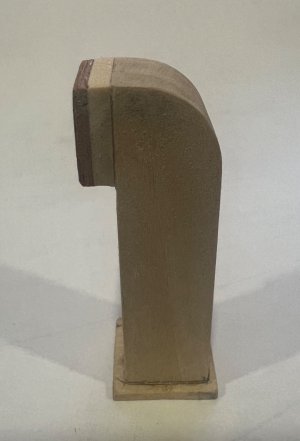
I made very few modifications to the blueprint. The main changes were adding a small base and extending the intake section of the ventilators, which gave them a more realistic and visually appealing look.
1.jpeg
4.jpeg
3.jpeg
2.jpeg
1.jpeg

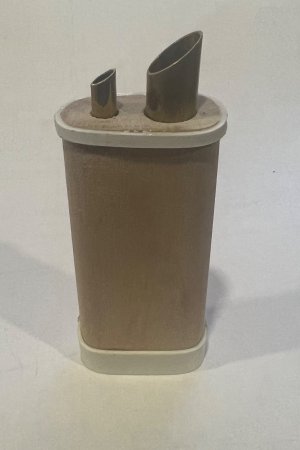
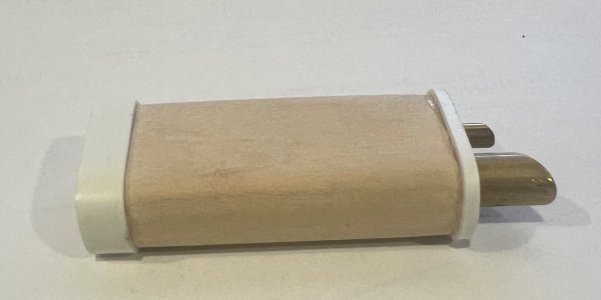
The basswood material for the exhaust muffler is included with the kit, and the instructions suggest wrapping strips of paper around the upper part of the muffler. I chose instead to use styrene strips and brass tubing, which resulted in a cleaner and more durable finish.
5.jpeg
6.jpeg
 
Back
Top