• Win a Free Custom Engraved Brass Coin!!!
    As a way to introduce our brass coins to the community, we will raffle off a free coin during the month of August. Follow link ABOVE for instructions for entering.
  • SUBSCRIBE TO SHIPS IN SCALE TODAY!

    The beloved Ships in Scale Magazine is back and charting a new course for 2026!
    Discover new skills, new techniques, and new inspirations in every issue.

    NOTE THAT OUR NEXT ISSUE WILL BE MARCH/APRIL 2026

New member, first build

Joined
Feb 15, 2026
Messages
4
Points
3
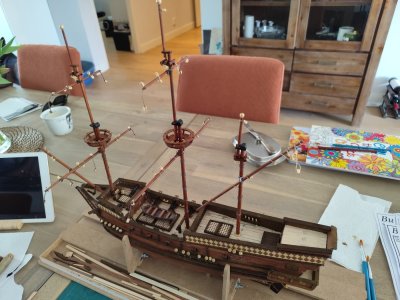
I’m building the Occre Buccaneer! I started in February, just added the bowsprit and masts. It’s my first wooden ship model and I am making more than my share of mistakes. ;-)

I’m looking at the rat lines and rigging with a bit of dread, my eyesight is not awesome. I wear multifocal contacts and the compromise was between driving and close work.

My question for others would be did you ream out the wooden blocks? I tried to shove some threads through and had zero success, so I took my twist drill and made the holes bigger. Lot of work and I broke a few but now I can get a thread through.
 
I’m building the Occre Buccaneer! I started in February, just added the bowsprit and masts. It’s my first wooden ship model and I am making more than my share of mistakes. ;-)

I’m looking at the rat lines and rigging with a bit of dread, my eyesight is not awesome. I wear multifocal contacts and the compromise was between driving and close work.

My question for others would be did you ream out the wooden blocks? I tried to shove some threads through and had zero success, so I took my twist drill and made the holes bigger. Lot of work and I broke a few but now I can get a thread through.

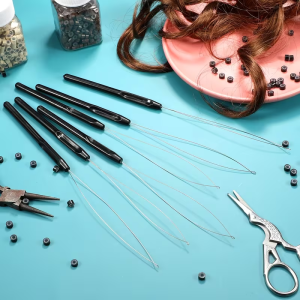
Welcome aboard from Connecticut. There are many ways to help thread the lines. One it to use needle threaders that are used to help thread needles. any place that sells needles and threads will have them. Another method is to place a drop of CA (super glue) on the end of the thread to make it stiff. You can then use a sharp blade to cut the end on a diagonal to make it "pointy". That should make the thread easier to pass through. There are many many pieces of advice here. One place to start is


The best piece of advice it to start a build log so others can see how you are doing and offer advice. Friendly people here!

Rob
 
Welcome and let us see your build and progress.

Sometimes a small needle can be used to open the holes.

Use CA or clear nail polish to turn end of thread into hard shaft that helps get rope in the block.

With either substance just dip about an inch of end of line in liquid, and then pull thru fingers while spinning to keep if from sticking, do several times till dry, then cut end with sharp blade to fine point.
 
I did buy some needle threaders, but couldn't force them through the blocks either. I can now that I've reamed them out. I thought of using a needle but thought that was more work. Not sure I was right about that
 
I have purchased some fine micro drills online, designed for use in micro mills, but they have nice size shaft and collars that allow for hand turning with blocks, and they come in very small sizes just for our blocks.

Try a search for PCB Micro drills.
 
I have purchased some fine micro drills online, designed for use in micro mills, but they have nice size shaft and collars that allow for hand turning with blocks, and they come in very small sizes just for our blocks.

Try a search for PCB Micro drills.
Yes, as I said I was reaming out all the small blocks, I was using a twist drill. I did break a couple, but think (hope) I have extras.
 
My question for others would be did you ream out the wooden blocks? I tried to shove some threads through and had zero success, so I took my twist drill and made the holes bigger. Lot of work and I broke a few but now I can get a thread through.
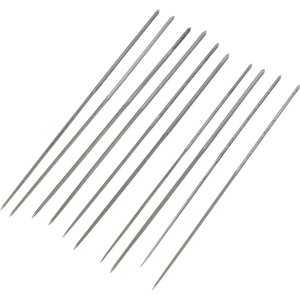
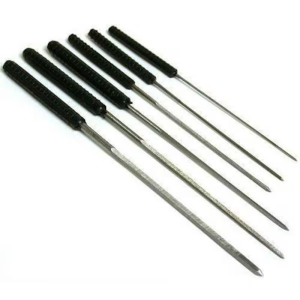
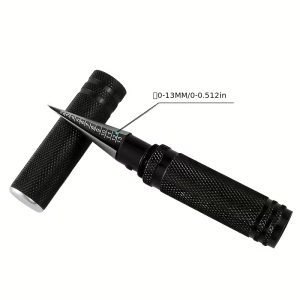
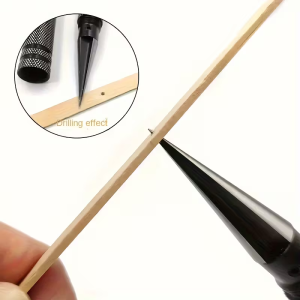
The proper tool for enlarging an existing hole is a tapered cutting broach.
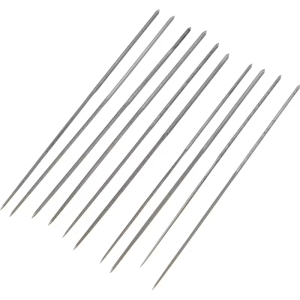
TEMU has a set of 10 for about $1 US each broache cutting.jpg

Looking at them -they probably could stand to have a rubber handle - either that rubber stuff that is dipped into to form a coating that hardens or take one to a local hardware and find a size of Tygon tubing with a push fit bore.

A reamer has an aggressive taper better used on a hole in a plate.

While at TEMU take a look at fly tying tools - interesting threading tools and clamps.
 
The line tip can be stiffened enough to be a stick to push thru a hole if:
It is wet with PVA and you wait a few minutes - not even fully polymerized.
or
Dipped in full strength shellac and wait even less time.

neither have a poisonous vapour or are looking for the slightest chance to harden in a small dispenser bottle becoming an expensive mini brick.
 
Last edited:
One thing you will find here is that there are many ways to do the same task, and many opinions on best way.

The fine sailors here are always willing to provide help when you need it, or just asking questions in general.
 
Back
Top