• SUBSCRIBE TO SHIPS IN SCALE TODAY!

    The beloved Ships in Scale Magazine is back and charting a new course for 2026!
    Discover new skills, new techniques, and new inspirations in every issue.

    NOTE THAT OUR NEXT ISSUE WILL BE MARCH/APRIL 2026
  • Win a Free Custom Engraved Brass Coin!!!
    As a way to introduce our brass coins to the community, we will raffle off a free coin during the month of August. Follow link ABOVE for instructions for entering.

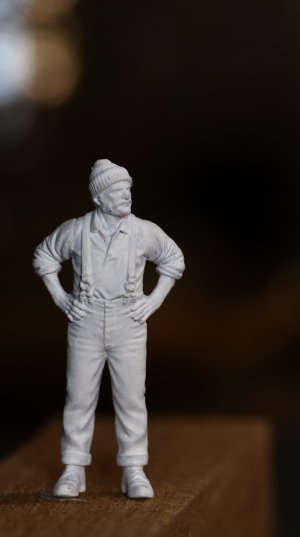
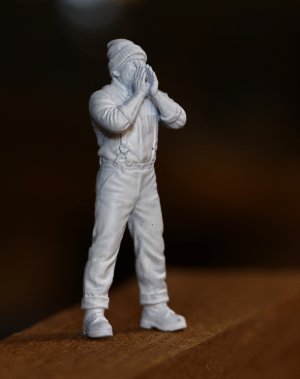
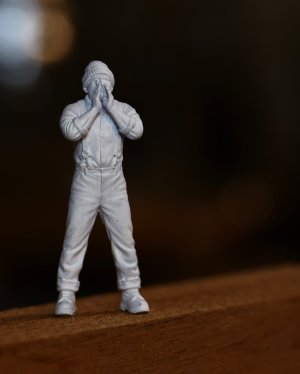
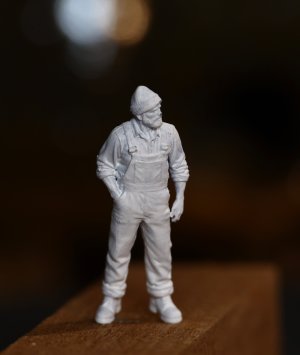
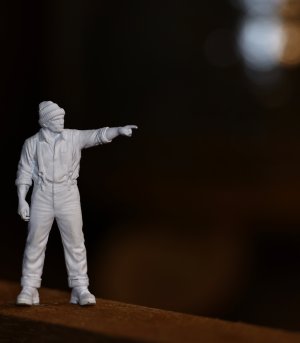
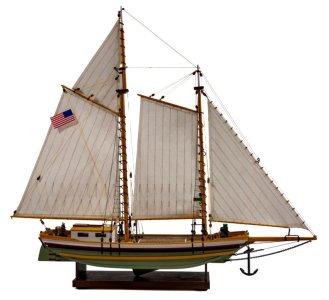
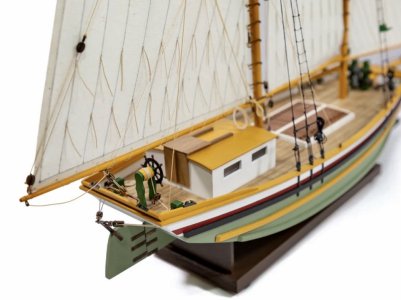
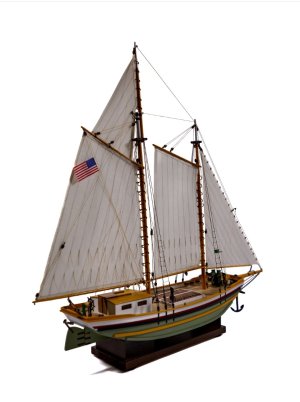
New release available… Crew for San Francisco Bay Scow Schooner 1:48 – Midwest 972 Heritage Edition (or other 1:48 scale)

Joined
Feb 19, 2026
Messages
81
Points
58

Location
Kennebunkport, Maine
The story behind these figures is that the young mate sees something off in the water and is yelling through cupped hands for someone to hear his voice. Finaaly the 2nd mate hears something and begins to point to something in the water, Finally the first mate because to pick jump on it and by the this the captain is aware there is something wrong and he begins to understand what the big stink about. This could be the type ship…San Francisco Bay Scow Schooner 1:48

Captain…
987A6332.jpeg

987A6336.jpeg

987A6335.jpeg

987A6333.jpeg

987A6330.jpeg

IMG_4267.jpeg

IMG_4266.jpeg

IMG_4265.jpeg
 
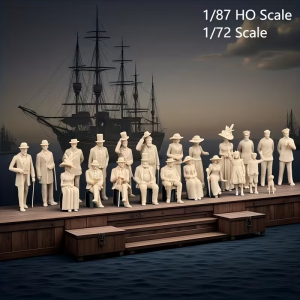
Just noticed this set of Titanic crew and passengers in 1:87 (HO) and 1:72 scales for $9.26 on TEMU.
1780086968209.png


Lots and lots more similar figures at: https://www.temu.com/search_result....4561_g6q1g8qyzr&refer_page_sn=10032&is_back=1
 
Last edited:
If those are the figures you need, buy them. I don’t compete with the mass manufactured figures. I make figures you can’t buy anywhere. There are lots of manufactured figures out there, but when you try to find a scale or theme that you can’t find ANYWHERE, thats when you contact me. My figures are not cheap, but they come with a guarantee that you like them or don’t pay. I send you photos of what you wanted and if it meets your approval I mail them to you. All I ask is that you pay for the shipping ahead of time. Generally $14.00 for USPS PRIORITY MAIL. None of those other sites offer that kind of guarantee offer.
 
If those are the figures you need, buy them. I don’t compete with the mass manufactured figures. I make figures you can’t buy anywhere. There are lots of manufactured figures out there, but when you try to find a scale or theme that you can’t find ANYWHERE, thats when you contact me. My figures are not cheap, but they come with a guarantee that you like them or don’t pay. I send you photos of what you wanted and if it meets your approval I mail them to you. All I ask is that you pay for the shipping ahead of time. Generally $14.00 for USPS PRIORITY MAIL. None of those other sites offer that kind of guarantee offer.

Apologies. I only posted the comment because I came across this source for scale figures which are generally difficult to come by and thought it might be helpful to anybody searching for them. I was not aware that your post was an advertisement and I had no intention of making any comparison between your product and those I referenced in my post. Myself, I don't buy manufactured scale ship model parts, opting to fabricate them myself, but I know that others do, so I just passed on the information I came across as a courtesy to them.

1780100460726.png

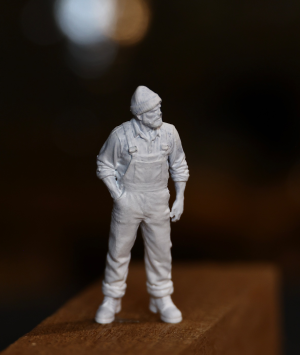
However, since you mentioned it, I will share the observation that bib overalls, as depicted in the figure above, were patented by Lee clothing company in 1921. The knit wool "watch cap" worn by the figure above became popular with mariners following its introduction as standard issue by the United States Navy shortly prior to WWII. By 1920, working sailing scow schooners such as the model pictured in the first post were virtually extinct on San Francisco Bay, surviving hulls having been stripped of their rigs and converted to motorized barges, such as Alma, ultimately the last surviving hull, which was long in motorized service dredging oyster shells for use as a chicken feed supplement.

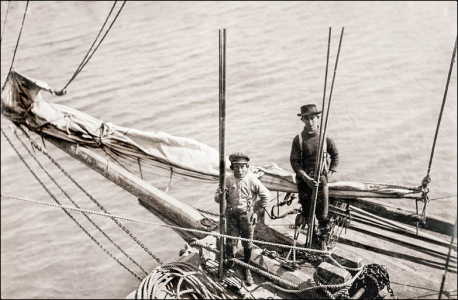
Scow schooners did not have "second mates." Customarily, they were crewed by a "captain," often simply the vessel's owner, and a deckhand, and sometimes additionally an "idiot boy," examples of the latter two pictured below in scow schooner era period clothing. While little mentioned in the present day, perhaps for considerations of political correctness, "idiot boys" were an integral part of the inshore maritime workforce. What might be called today "neurologically divergent" boys and men who were unable to perform more complex employment tasks, as well as otherwise fully abled child laborers, were employed as "half a hand" on many small vessels in the sailing era and paid accordingly. While perhaps abhorrent to modern sensibilities, such employment was at that time society's way of providing an opportunity for individuals with physical and neurological challenges to respectably support themselves in the absence of any form of public assistance. Perhaps someday a history doctoral candidate will write their thesis on the "idiot boys," but until then, I'm afraid they and their contributions will be "swept under the rug" as an uncomfortable footnote to our maritime history.

1780101122394.png
 
Apologies. I only posted the comment because I came across this source for scale figures which are generally difficult to come by and thought it might be helpful to anybody searching for them. I was not aware that your post was an advertisement and I had no intention of making any comparison between your product and those I referenced in my post. Myself, I don't buy manufactured scale ship model parts, opting to fabricate them myself, but I know that others do, so I just passed on the information I came across as a courtesy to them.

View attachment 607943

However, since you mentioned it, I will share the observation that bib overalls, as depicted in the figure above, were patented by Lee clothing company in 1921. The knit wool "watch cap" worn by the figure above became popular with mariners following its introduction as standard issue by the United States Navy shortly prior to WWII. By 1920, working sailing scow schooners such as the model pictured in the first post were virtually extinct on San Francisco Bay, surviving hulls having been stripped of their rigs and converted to motorized barges, such as Alma, ultimately the last surviving hull, which was long in motorized service dredging oyster shells for use as a chicken feed supplement.

Scow schooners did not have "second mates." Customarily, they were crewed by a "captain," often simply the vessel's owner, and a deckhand, and sometimes additionally an "idiot boy," examples of the latter two pictured below in scow schooner era period clothing. While little mentioned in the present day, perhaps for considerations of political correctness, "idiot boys" were an integral part of the inshore maritime workforce. What might be called today "neurologically divergent" boys and men who were unable to perform more complex employment tasks, as well as otherwise fully abled child laborers, were employed as "half a hand" on many small vessels in the sailing era and paid accordingly. While perhaps abhorrent to modern sensibilities, such employment was at that time society's way of providing an opportunity for individuals with physical and neurological challenges to respectably support themselves in the absence of any form of public assistance. Perhaps someday a history doctoral candidate will write their thesis on the "idiot boys," but until then, I'm afraid they and their contributions will be "swept under the rug" as an uncomfortable footnote to our maritime history.

View attachment 607945
Actually:
  • 1850s–1860s: Simple work overalls without a bib were already being worn by laborers.
  • 1870s: The familiar bib-front overall design began appearing in the United States.
  • 1873: Levi Strauss & Co. and tailor Jacob Davis patented riveted work pants, which helped establish durable workwear, although these were not yet the classic bib overalls.
  • 1890s: Bib overalls became widely popular among railroad workers, farmers, and factory laborers.
  • 1900s–1920s: Companies such as Carhartt, OshKosh B'gosh, and Lee Jeans made bib overalls a standard part of American work clothing.
For an Age of Sail or maritime modeling project, bib overalls would generally be too modern. They are appropriate for:
  • Late 1800s waterfront workers
  • Early 1900s fishermen
  • Railroad workers
  • Industrial laborers
2. Knitted wool caps existed for centuries, but the style shown on the figure became common among sailors and fishermen in the late 1800s. By 1900–1920, watch caps were extremely common among New England fishermen, dockworkers, and merchant seamen.

Just to add a bit mor3 color to your comments....thank you for your clarity.
 
En garde! Dueling AI's: :D :D :D

Invention of Bib Overalls​

The first bib overalls were invented in 1911 by Harry David Lee, a clothing manufacturer, and were made from pants with pockets and a bib with shoulder straps Wikipedia. This design was a significant evolution from earlier waist-high denim overalls, which Levi Strauss & Co. had mass-produced in the 1890s but lacked a bib Wikipedia.

Lee’s 1911 bib overalls were practical workwear, combining the durability of denim with the torso coverage of a bib, making them suitable for a range of labor tasks. Over the next decade, Lee continued to innovate, introducing a hook-less fastener in 1927 and later a button-less design with zippers Wikipedia. These changes improved comfort and functionality, helping bib overalls become a staple in both workwear and casual fashion.

While other companies like Carhartt were producing overalls before 1921, Lee Jeans was the first to patent the bib style, formalizing it as a distinct garment middclover.com+1. This patent marked the beginning of the modern bib overalls we recognize today, which have since been adopted by both industrial workers and the general public.

In summary:
  • 1911 – First bib overalls created by Harry David Lee.
  • 1921 – Lee Jeans patents the bib overalls design.
  • 1927 – Lee introduces hook-less fasteners and button-less zippers.
These developments cemented bib overalls as a durable, versatile garment that has remained popular for over a century.

*********************************************************************************************************************************************************

Not to worry. They're nice figures and anybody who builds that model isn't going to be bothered by "counting rivets" on a pair of overalls! :D Custom figures to the modeler's specifications are a pretty neat idea if you want to include figures on your model.

It was maybe forty years ago when somebody told the people who were designing that kit that I was the guy to talk to about SF scow schooners. The guy who was doing the job asked me to review his drawings and comment. I took a look at them and sent him a letter back (being as it was before email) suggesting that instead of trying to reinvent the wheel by drawing up plans for some imaginary scow schooner, they'd be better off using the actual lines and scantlings of one of the several actual vessels for which lines, elevations, scantlings, and even photographs were readily available in the public domain. I then gave them a list of errors in their model plans some of which were rather significant omissions of details which were distinctively characteristic of the type. Apparently, they weren't sufficiently impressed to make any changes. (I've since learned that people only take your advice when you make them pay money for it.) So now this scow schooner model has recently resurfaced under the (new) Model Shipways label and it's quite surprising that after all these decades, nobody's done a single thing to correct the errors or improve the kit in any way. The only thing that's changed is the label and, I presume, the price of the kit

 
Back
Top