En garde! Dueling AI's: 
Invention of Bib Overalls
The
first bib overalls were invented in 1911 by Harry David Lee, a clothing manufacturer, and were made from pants with pockets and a bib with shoulder straps
Wikipedia. This design was a significant evolution from earlier waist-high denim overalls, which Levi Strauss & Co. had mass-produced in the 1890s but lacked a bib
Wikipedia.
Lee’s 1911 bib overalls were practical workwear, combining the durability of denim with the torso coverage of a bib, making them suitable for a range of labor tasks. Over the next decade, Lee continued to innovate, introducing a
hook-less fastener in 1927 and later a
button-less design with zippers Wikipedia. These changes improved comfort and functionality, helping bib overalls become a staple in both workwear and casual fashion.
While other companies like Carhartt were producing overalls before 1921,
Lee Jeans was the first to patent the bib style, formalizing it as a distinct garment
middclover.com+1. This patent marked the beginning of the modern bib overalls we recognize today, which have since been adopted by both industrial workers and the general public.
In summary:
- 1911 – First bib overalls created by Harry David Lee.
- 1921 – Lee Jeans patents the bib overalls design.
- 1927 – Lee introduces hook-less fasteners and button-less zippers.
These developments cemented bib overalls as a durable, versatile garment that has remained popular for over a century.
*********************************************************************************************************************************************************
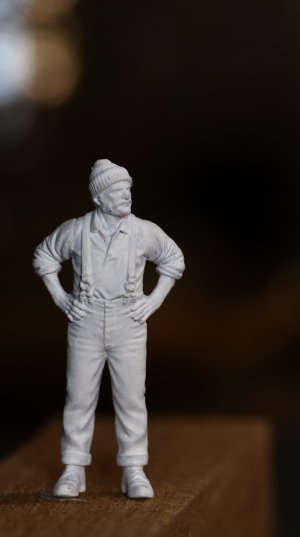
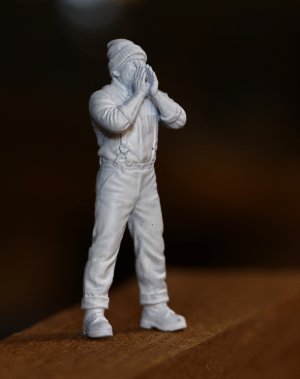
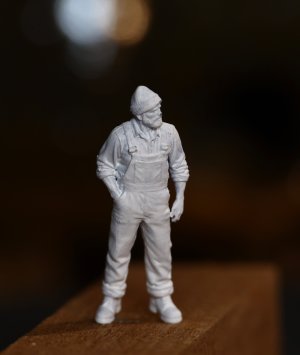
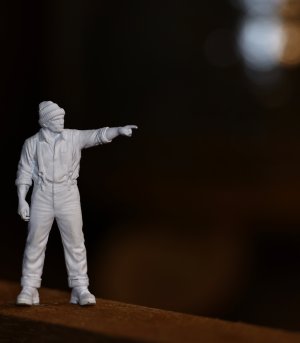
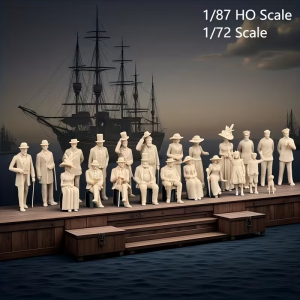
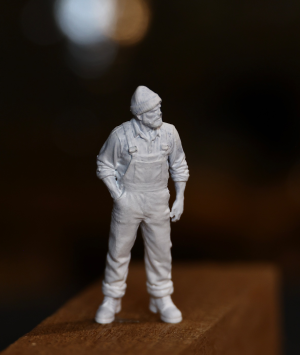
Not to worry. They're nice figures and anybody who builds that model isn't going to be bothered by "counting rivets" on a pair of overalls!
Custom figures to the modeler's specifications are a pretty neat idea if you want to include figures on your model.
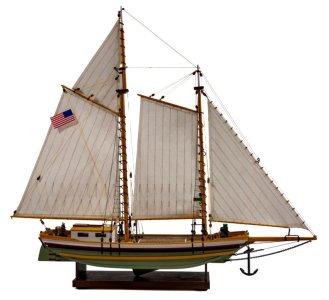
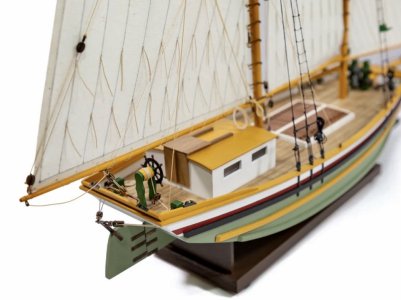
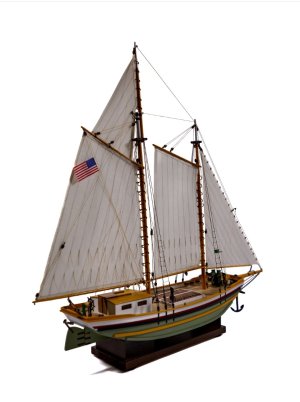
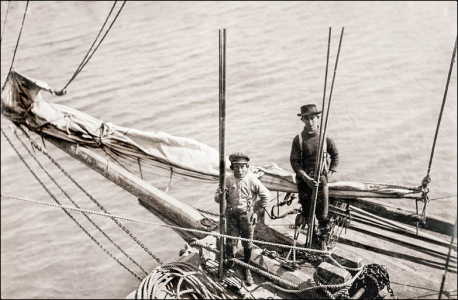
It was maybe forty years ago when somebody told the people who were designing that kit that I was the guy to talk to about SF scow schooners. The guy who was doing the job asked me to review his drawings and comment. I took a look at them and sent him a letter back (being as it was before email) suggesting that instead of trying to reinvent the wheel by drawing up plans for some imaginary scow schooner, they'd be better off using the actual lines and scantlings of one of the several actual vessels for which lines, elevations, scantlings, and even photographs were readily available in the public domain. I then gave them a list of errors in their model plans some of which were rather significant omissions of details which were distinctively characteristic of the type. Apparently, they weren't sufficiently impressed to make any changes. (I've since learned that people only take your advice when you make them pay money for it.) So now this scow schooner model has recently resurfaced under the (new) Model Shipways label and it's quite surprising that after all these decades, nobody's done a single thing to correct the errors or improve the kit in any way. The only thing that's changed is the label and, I presume, the price of the kit