This is hilarious! I am also a lawyer, so that explains why I felt compelled to lock horns with you! I passed the bar in 1991, so I've been practicing for almost 35 years now. I haven't had much time for hobbies until now since I've started thinking about retirement.
I must say I agree with just about everything you said, except for the manhood part, but I sense you would not disagree that there are some great lady model builders out there. Ohla Batchvarov comes to mind. Also, I never use AI or ChatGPT...still an oldtimer when it comes to tech.
I do agree that some of this master/pupil stuff feels like fraternity rush all over again. If you have interest, you may want to check one of my build logs on SOS to let me know how far I need to go!
This is hilarious!
I'm greatly relieved that my presuming you had a sense of humor was accurate. I've been wrong about that before in my exchanges with other modelers!
 I finally retired a couple of years ago after 47 years in the game. As Dirty Harry said, "A man's got to know his limitations!" It's a wonderful thing to be able to wake up each morning without a collection of other people's problems on my mind. I've been seriously modeling scale model ships and been in the full-size classic wooden ship game for as long as that. I'd have to say that the "learning curves" of lawyering and scale ship modeling are about the same. I'd also say that the impact of digital information resources has also been about equal between the two pursuits, and sometimes not for the better!
I sense you would not disagree that there are some great lady model builders out there.
When it comes to "lady ship model builders," I'd have to say a single man would hardly find ship modeling a "target rich environment." In terms of equal opportunity, though, I think the women more than make up for that with the demographics of pastimes such as "dollhouse miniatures," and quilting. Like model railroading, scale ship modeling is "a guy thing." I don't think that women are at all unwelcome. It's just that it's not something that interests many of them.
I agree there are some great lady model builders out there, most perhaps unknown, as are the many master modelers of the male persuasion who find their time better spent on building models than chatting about them on social media platforms. The first that comes to my mind would be the late Portia Takakjian, author of The 32 Gun Frigate Essex: Building a Plank-on-Frame Model and Ship Modeling Techniques. (See: https://www.amazon.com/Books-Portia-Takakjian/s?rh=n:283155,p_27
 ortia+Takakjian ) I've followed Ohla Batchvarov's YouTube channel with interest from its beginning, primarily as a window on Eastern European scale ship modeling which they consider and pursue as an international "sport." Quite unlike our approach in North America, their "competition based" modeling culture requires beginning modelers' to serve "apprenticeships" under master modeler "coaches" within their local club system to qualify them for participation in local and international competitions. It was within that community that Ohla met her husband, Kroum Batchvarov, the noted maritime archaeologist who now has his own YouTube channel as well. I have to say that while watching Olha's videos improve as her skills grew should serve as encouraging progression for anybody eager to seriously pursue quality scale ship modeling, I would have to say that I see Olha as primarily a worthwhile "social media influencer" at this stage of her ship modeling career, while Kroum, a Ph.D. graduate of the University of Texas' famous maritime archaeology program, University of Connecticut professor, and archaeological authority on Vasa, has more of substance to offer an experienced modeler. (See: https://www.researchgate.net/profile/Kroum-Batchvarov) (His wickedly accurate critiques skewering certain kit models Ohla has built are not to be missed!) Also, beginning modelers who can learn much from Ohla's videos, should not be discouraged and keep in mind that although she has only been seriously modeling ships for only about sixteen years, (not long at all compared to some of us old pharts
  ) She began ship modeling as a civil engineer, so she had a leg or two up on most beginning modelers of any gender with modeling related skills and experience, such as reading mechanical drawings and drafting, and, I'm sure, a lot of manual arts training. Then, too, she learned a lot from her husband along the way. Absent prior applicable skills, the beginning modeler shouldn't be discouraged that they find challenging the material that Ohla presents as easy.
If you have interest, you may want to check one of my build logs on SOS to let me know how far I need to go!
As "how far you have to go," the answer is that there is no end to the infinite. One of the things about scale ship modeling is that it is essentially an exercise in the endless pursuit of excellence in a very complex subject matter area where, owing to the vicissitudes of scale, absolute perfection is impossible. A high-quality ship model is an exercise in doing the common thing uncommonly well, but in the case of ship modeling, it's an incredibly large number of diverse things that must be done well. The building of ship models, just as the building of ships, requires a working knowledge, if not mastery, of a large number of trade skills, some of which are now "extinct in the wild." Depending upon the historical period of the ship they are modeling, a skilled modeler must know how ships are built in wood or metal, riveted or welded, and in a variety of engineering methods, how to rig a sailing vessel accurately as to type and period, how to make sails, accurately as to their construction, how to make the metal work to scale. A serious modeler must know the purpose of every detail they include in their model and how it was employed by the ship's crew. Indeed, every aspect of maritime engineering and seamanship in the historical period of the prototype vessel should be understood to create a high-quality miniature. Nobody's ever going to be able to do that perfectly, but only those who aspire to do so will come ever closer with each model they build.
That said, I expect that your work on the "bashing" of the Elcano kit into Moshulu has already given you enough of a taste of kit modeling to understand why few kits are held in much regard by experienced modelers. One's first effort, like all "first loves," will always be fondly remembered, but, in most instances, not dwelled upon too often or for too long. The Elcano model you have been working on won't teach you all that much about ship modeling. Building kits is a great way to learn how to build kits, but not so helpful at all in building high-quality ship models. Unfortunately, to avoid the consequences of their products' shortcomings, the ship model kit industry seems to have created impressions of quality which substantially lower the bar. (For example, how many mast hoops are there on each of Elcano's masts and how many on the model?) The sooner a ship modeler turns his attention away from "building his next kit," to building a unique scale model of a ship of his own choice, perhaps even one never modeled before, and preferably a simple build to begin with, the sooner he will be on his way to scratch-building and never having to buy another kit again, which means the sooner he will be working to his own standards, whatever they may be, than to be constrained by the standards of a kit manufacturer which are guaranteed to sacrifice perfection in favor of profit.
There actually is a generally accepted definition of a high-quality scale ship model and I have in other posts addressed it in some detail. I believe it is essential for a serious ship modeler to be completely familiar with this definition and be able, by applying it to any model whatsoever, to determine the quality of that model. Without such an ability, I do not believe it is possible for a modeler to know in his mind's eye the standard of quality to which he should strive to attain in his own models. Regardless of whether he is presently capable of doing so and, harking back to the concept of "the pursuit of unattainable perfection," very, very few of us will ever attain perfection, but we'll never come closer if we don't continually aim higher. What makes scale ship modeling not only a craft, but in its highest expressions, a recognized fine art, is that there is a philosophy to it. If a modeler comes to appreciate and apply the philosophy of it to their modeling, they will elevate themselves from mere craftsmen, however skilled, to the level of fine artists. I recognize that many will offer reasons for not caring to do so and I can only presume that they find their excuses satisfying. They are entirely entitled to do so.
Rob Napier explains the definition of a high-quality scale ship model in depth in his book Caring for Ship Models - A Narrative of Thought and Application, (2022) Seawatch Books. See: https://seawatchbooks.com/products/...tive-of-thought-and-application-by-rob-napier
"A high-quality scale ship model provides a compelling impression of an actual vessel within the constraints of historical accuracy."
"Historical accuracy" encompasses all the objective, or measurable, standards of technical exactness that might apply to a ship model. These embrace the obvious hull shape and fairness; precision in fittings, rigging, and colors; lack of anachronisms; and so forth. But it also encompasses all aspects of craftsmanship because the lack of craftsmanship creates unrealistic and, therefore, historically inaccurate blemishes on a model. ... The phrase "historically accurate" alone effectively replaces the intention of the now-vapid "museum quality."
"... (A "compelling impression") allows and encourages aesthetic interpretation of a vessel that will help propel the viewers to make the leap of faith that allows a model to work or to willingly suspend the disbelief that keeps a model from working. Both processes help viewers accept the invitation to visit a ship instead of a model. Compelling impression is the result of applying artistic and interpretive decision-making processes... to amplify a model beyond being a mere assemblage of parts.
"It is important to recognize that neither arm of our definition considers how a model was made. There is no assessment of whether entire models or components of them are built from scratch, built from kits, or built by teams of modelers. The main thing is the appearance of the finished model. The ends justify the means."
Every model speaks for itself. Whatever excuses or explanations may be made for it are irrelevant. What the viewer should "hear" when a scale ship model "speaks" is "a compelling impression of an actual vessel within the constraints of historical accuracy." The quality of any scale model is equal to the extent to which it gives you the impression that you are looking at a real ship. There is no other criteria. However, this is not to say that a ship model which is not to scale or historically inaccurate may not be of "high-quality" by other applicable standards, for example because of its age or because of its "folk art" characteristics.
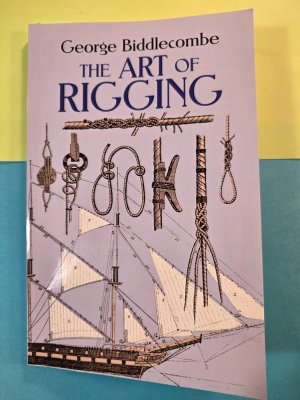
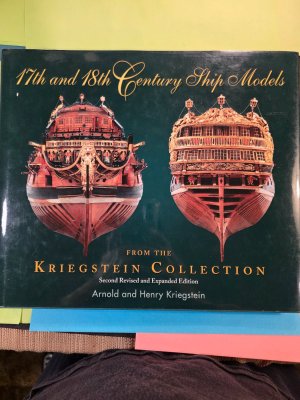
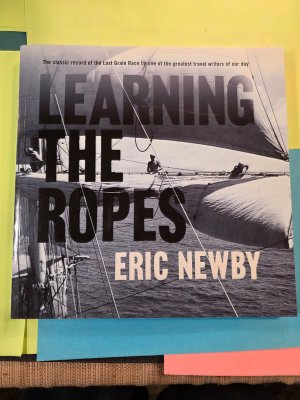
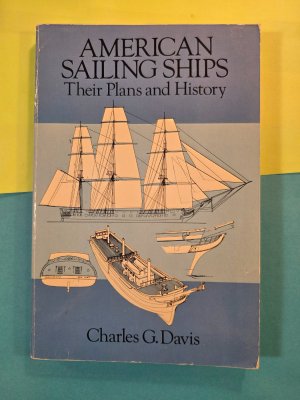
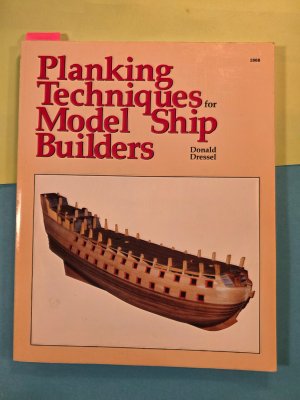
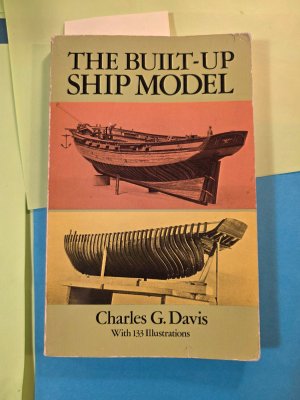
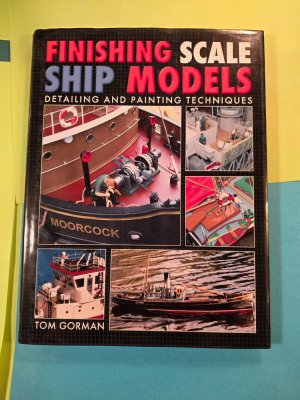
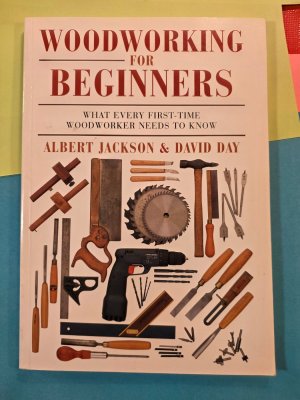
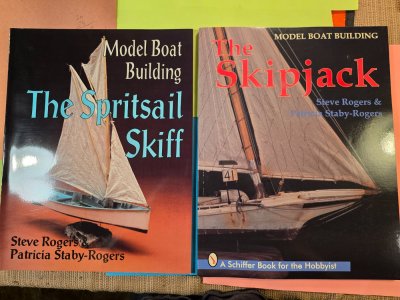
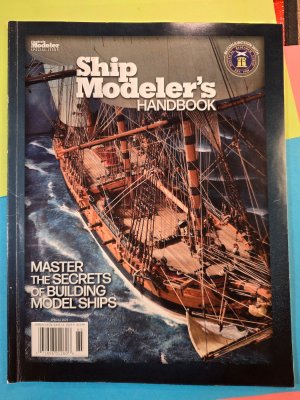
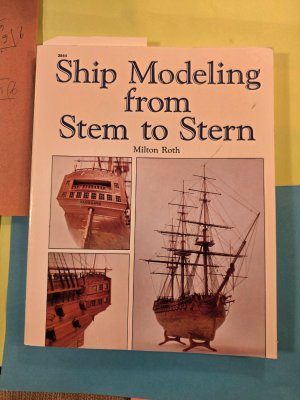
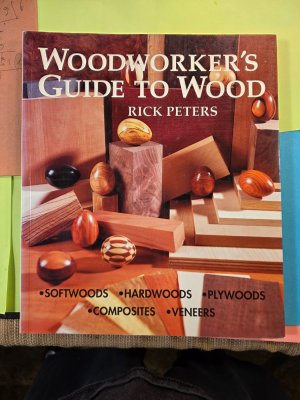
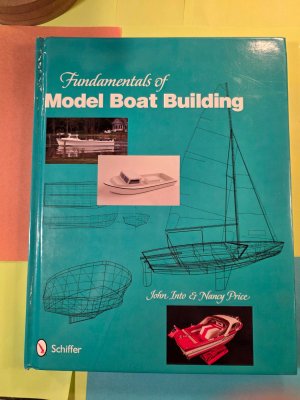
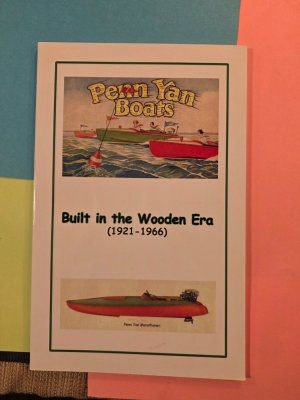
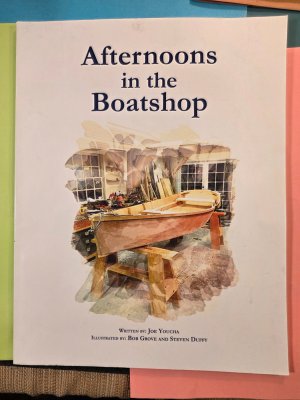
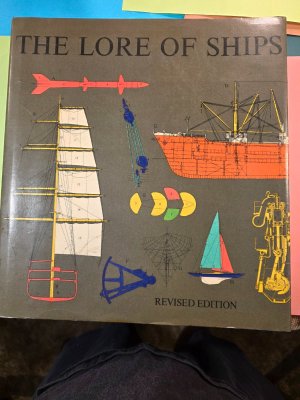
Your experience as a lawyer gives you what I consider to be the most valuable skill and experience in handling the most essential tool of scale ship modeling: the ability to "look it up." It's no different than law. The answer is in a book somewhere. Your workmanship appears to be quite good, as far as it goes. As previously discussed, you are in the process of filling in the blanks in terms of processes and procedures. To that end, I'd recommend a few classic basic books on the subject that will also stand the test of time as good research references.
Most all of these books are available used online, some for less that ten bucks. They have all been around for a long time, but each in their way sets out basic skills the ship modeler really should acquire. The two Chapelle books listed address full-scale yacht design and construction, but they are excellent basic texts on reading naval architectural drawings and drafting and lofting (creating patterns for constructing vessels from drawings), as well as basic construction which is generally applicable to wooden vessels. The two volumes of Underhill's Plank on Frame Models are often found used bundled as a set. Acquiring both is strongly advised.


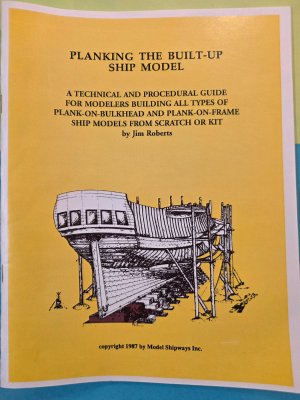
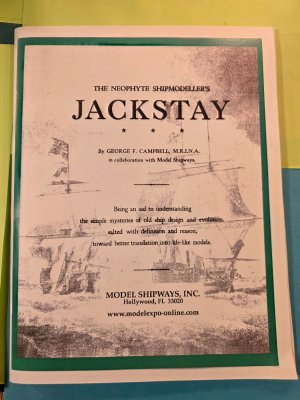


 When I write, the original post serves as my inspiration, and I write in the hope that what I write will be of some help to a wider audience than the original poster alone. That said, at your age and number of years in a profession where the last years are usually the most profitable, I'm sure we agree that a lawyer of mature years has got to make hay while the sun still shines.