• Win a Free Custom Engraved Brass Coin!!!
    As a way to introduce our brass coins to the community, we will raffle off a free coin during the month of August. Follow link ABOVE for instructions for entering.
  • PRE-ORDER SHIPS IN SCALE TODAY!

    The beloved Ships in Scale Magazine is back and charting a new course for 2026!
    Discover new skills, new techniques, and new inspirations in every issue.

    NOTE THAT OUR FIRST ISSUE WILL BE JAN/FEB 2026

Royal William, Euromodel, a retro log

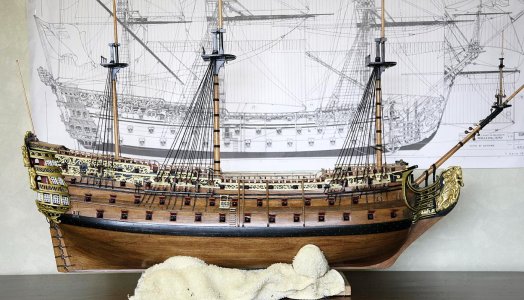
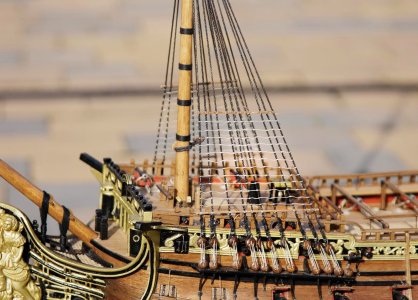
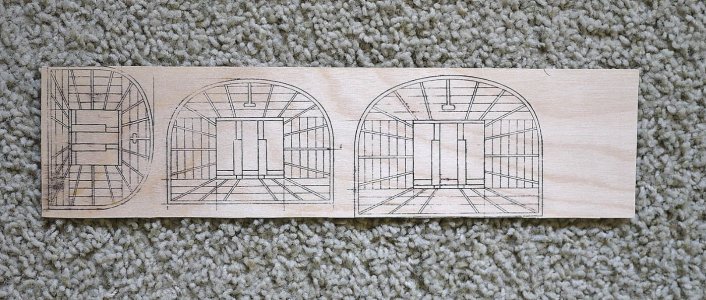
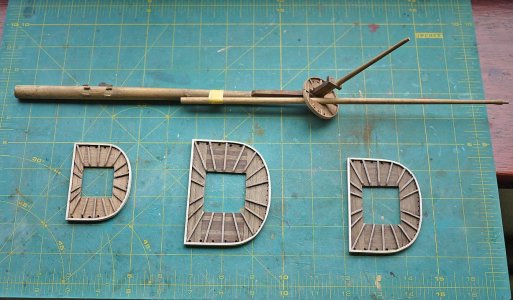
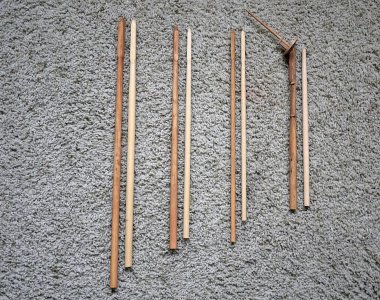
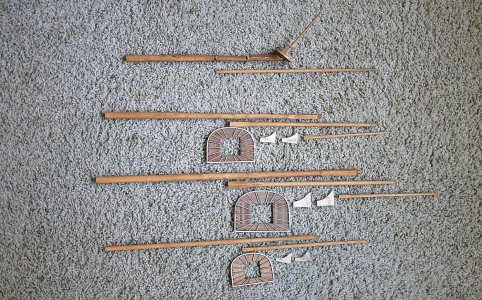
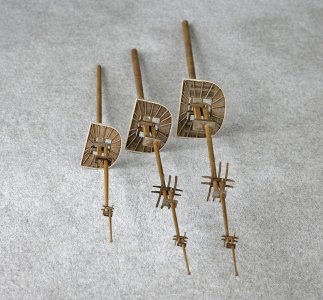
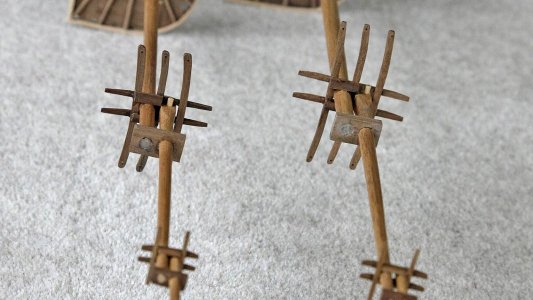
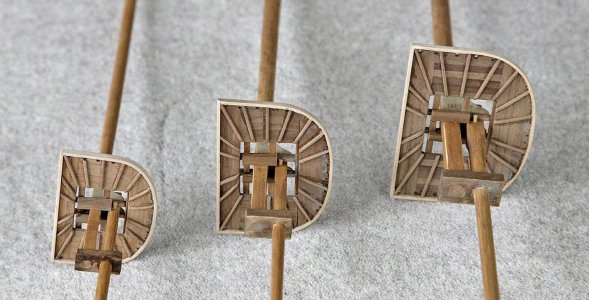
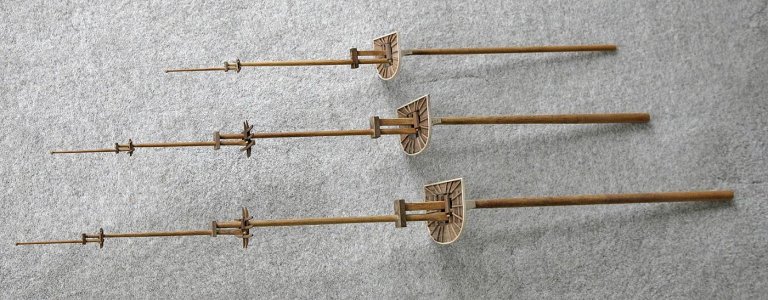
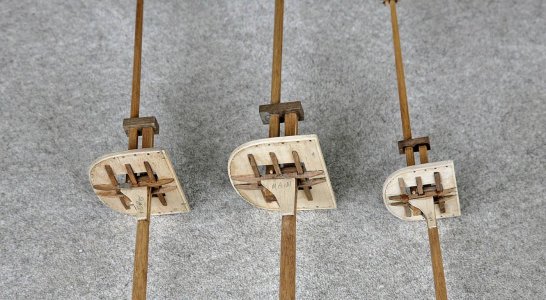
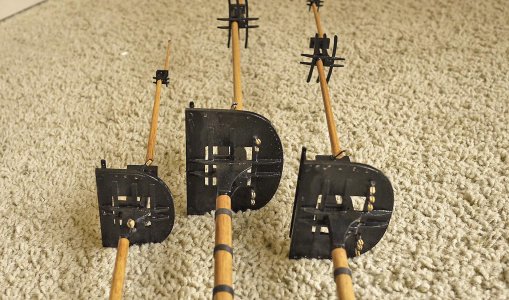
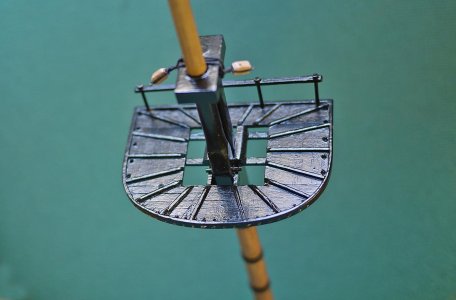
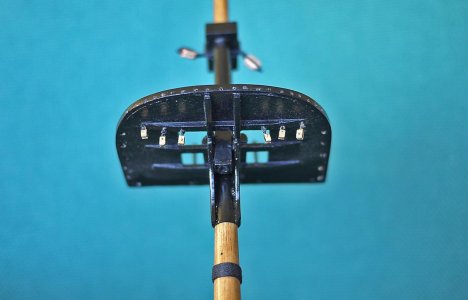
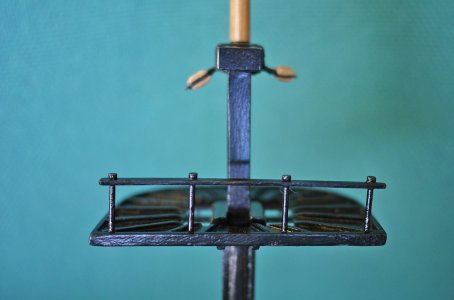
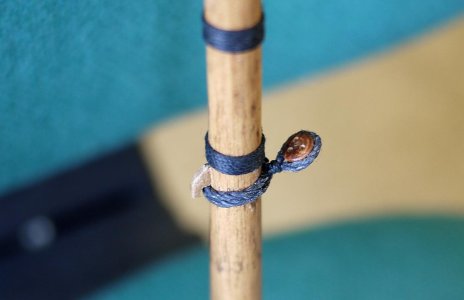
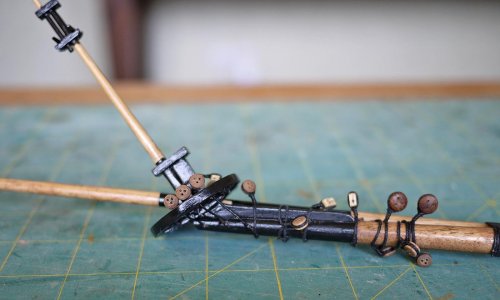
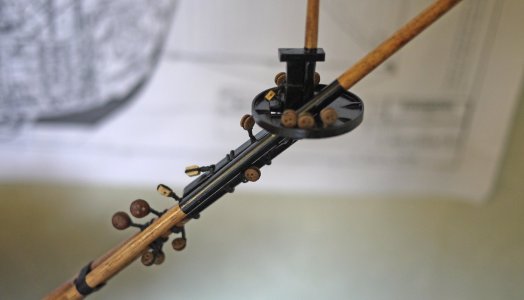
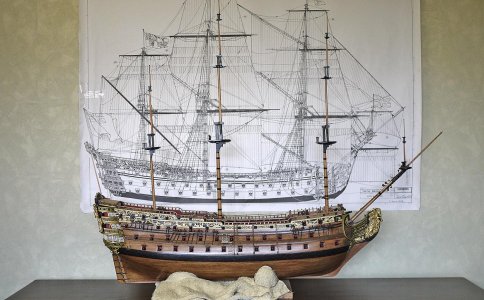
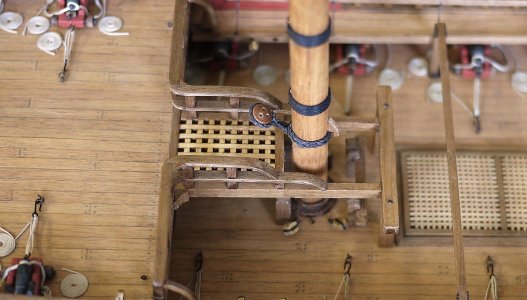
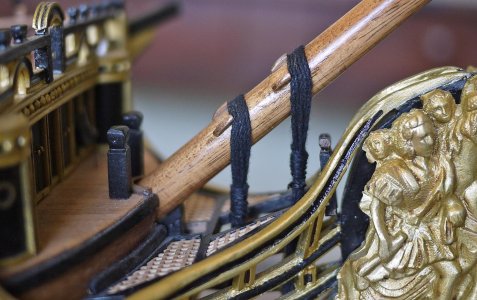
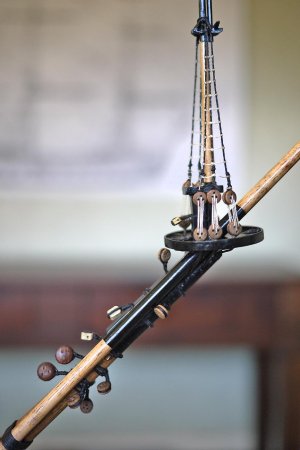
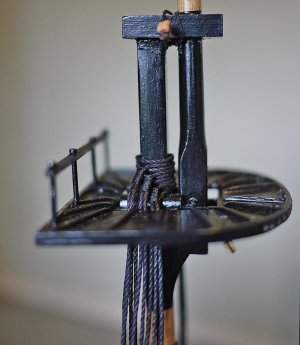
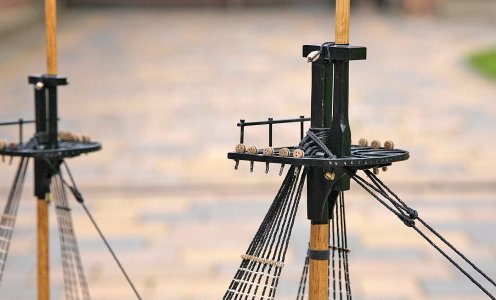
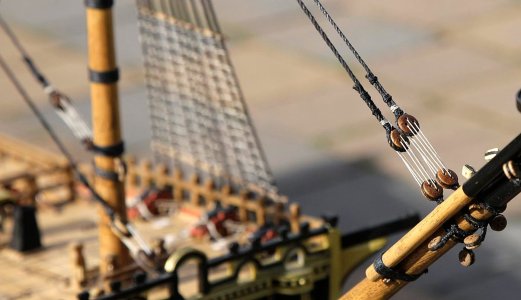
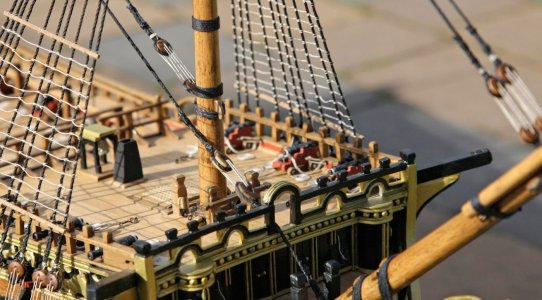
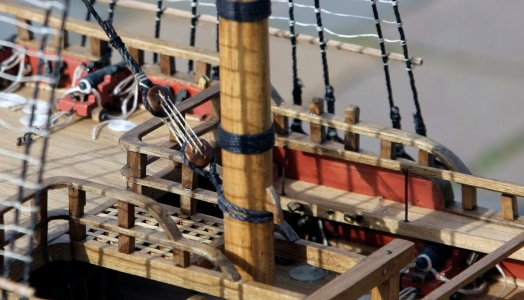
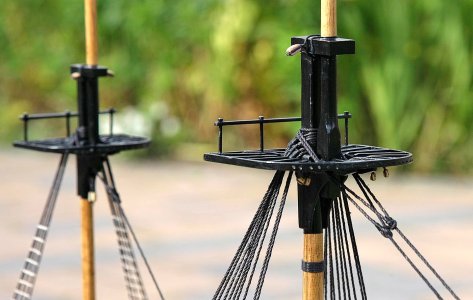
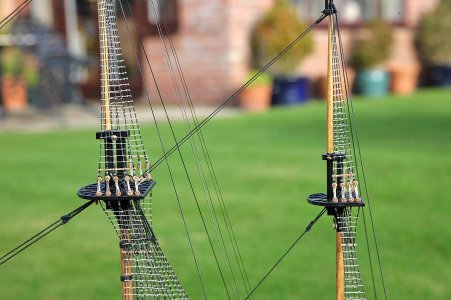
Hello again. The masting continued. With this kit there were no pre made wooden parts, you had to scratch build everything. To make the tops I used my usual method of transferring the plan to a piece of ply and built them up using strip. I didn’t have any difficulty, as with my previous builds the masts appear to follow a very similar pattern so no nasty surprises, just a lot of sanding. The photos show the progress I made.


574.jpg


581.jpg


582.jpg


583.jpg


585.jpg


586.jpg


587.jpg


588.jpg


589.jpg
 
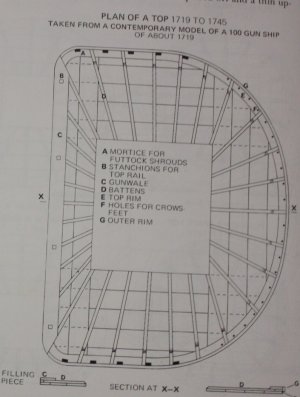
The tops look really neatly made. Laminating the planking as was actually done is great to see. Love the different color wood for the outer rim. I am guessing the kit plans forgot the gunwales and top rims. :( For the future, if it matters, from Lees's Masting and Rigging English Ships of War, page 22 (ISBN 0-87021-948-0)

Thanks

Allan
1768417058276.jpeg
 
Last edited:
The tops look really neatly made. Laminating the planking as was actually done is great to see. Love the different color wood for the outer rim. I am guessing the kit plans forgot the gunwales and top rims. :( For the future, if it matters, from Lees's Masting and Rigging English Ships of War, page 22 (ISBN 0-87021-948-0)

Thanks

Allan
View attachment 570439
Hi Allan, Thanks again for your comments, appreciated. As you know I was too lazy to do much research so this was my best shot just using the supplied plans. At the time of building as it was it was way above my grade, a huge learning curve which set me up for future builds. Ken
 
Hello , and thanks again for showing an interest and for your likes.

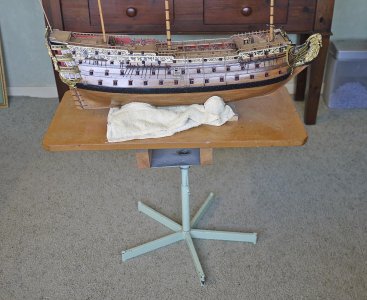
I couldn't fit models on my bench and use it for a work area at the same time so I made this table up from an old office chair that I found at the tip. I took the seat off and replaced it with a 20mm piece of MDF, it's suitably heavy and stable but unlike a fixed table I can spin it around like a turntable and raise or lower it, it's especially useful for when rigging, oh and it didn't cost anything.

I blackened the supplied rope with a suede leather dye, that gave a deep rich black. I stretched the rope, put some dye on a small piece of rag and rub it in. The rope is one of the best that I've had from any kit but there was nowhere near enough so had to buy more.

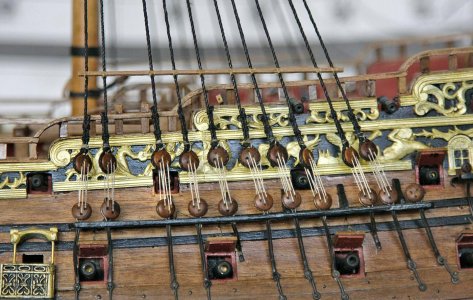
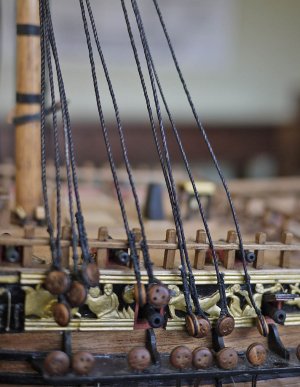
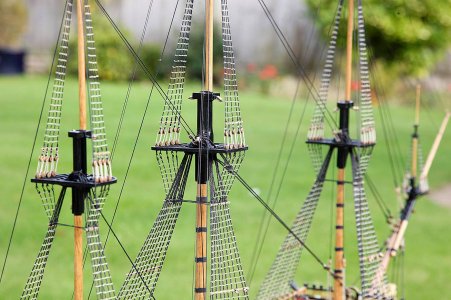
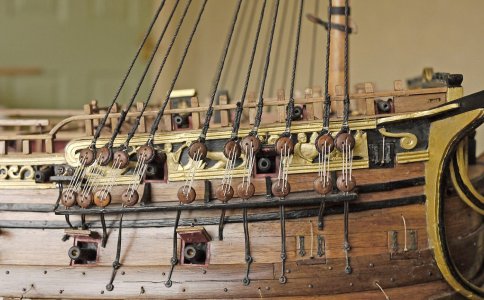
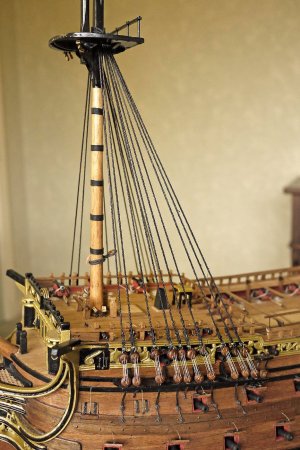
I completed fitting the dead eyes to the shrouds. It didn't take too long after I'd got the hang of getting the finished height and tension about right so that when the lanyards are attached they would be at a uniform height. I used a wire jig for this, from what I'd seen this seems to be the simplest and preferred method of doing it. The first ten took me about the same time as the next forty. I'd made it a bit difficult for myself, I don't know why but I'd made up twelve shrouds for the fore and main masts instead of the ten needed and got a bit confused. In fairness to Euromodel this was why I found myself very short of cord and there was perhaps sufficient if I'd done it correctly.

Next I started the lanyards.

I finished the lanyards on the fore mast shrouds, after quite a few re fits they eventually came out ok. I hadn't realised just how many mistakes that one could make doing what looks a not too difficult task, not just mistakes but making the same ones over and over again. I found that getting the height of the deadeyes uniform was the trickiest part.

Talk about doing things over again, I decided that I needed to redo the bowsprit rigging again. After I'd fitted the mast shrouds I realised that I'd used the same diameter thread for the bowsprit as for the mizzen, I wasn't concerned about exact scale but I thought that things should look in proportion, in isolation they looked ok but against the rest they looked too thick, anyway I thought that the second time around they came out neater, that's practice for you.

I finished the lanyards and put in the lower batons on the shrouds. I made fewer mistakes this time around, I got about 80% right first time, the other 20% I had to redo, sometimes more than once, but it ended up to my satisfaction.

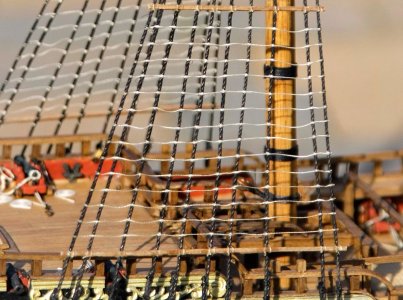
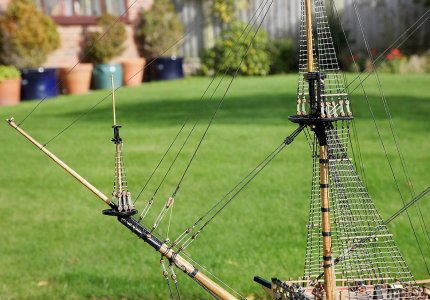
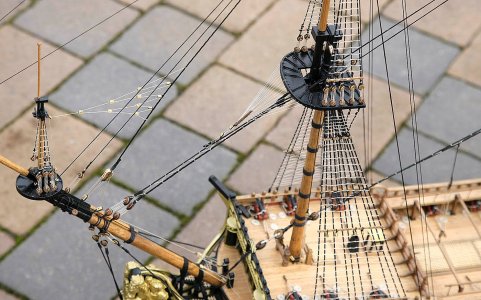
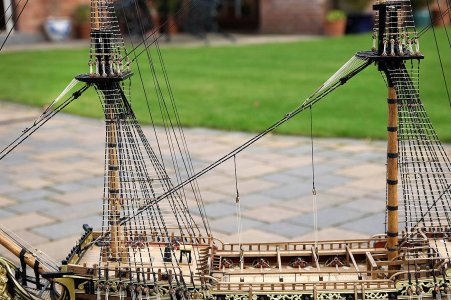
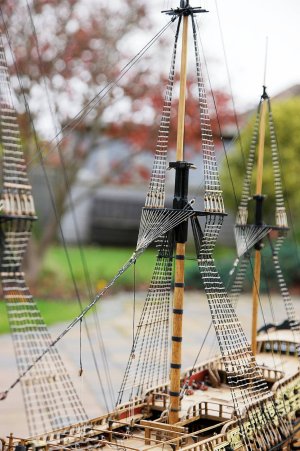
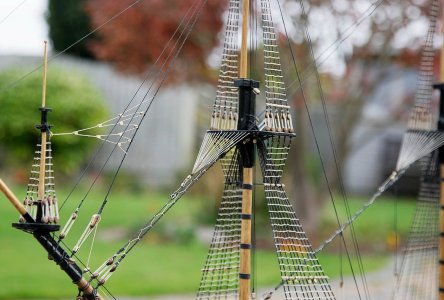
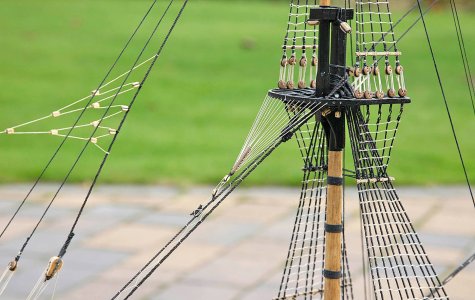
For the ratlines I first tried the method of using marked grid lines behind the stays to get the correct spacing, in theory it sounds like a good idea but in practice I found it impossible. To make it work you needed to place the lined paper immediately behind the shrouds but this prevented passing the cord through and guiding it from behind with your other hand. In order to be able to thread them the paper needed to be placed and supported away from the shrouds, but this then gave a different perspective of the spacing especially as you're working from slightly above. I gave up and just did it bye eye, I found them fairly quick and easy to do and only needed to slightly adjust a few when done. I put the sheaves in last to line up with the upper ratline and I didn't have much problem getting the tension right to keep the shrouds even. They came along nicely and once I'd got into the rhythm I even found doing them was therapeutic.
601.jpg


619.jpg


620.jpg


621.jpg


623.jpg


625.jpg


626.jpg


627.jpg
 
Last edited:
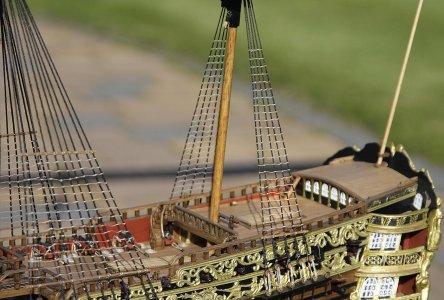
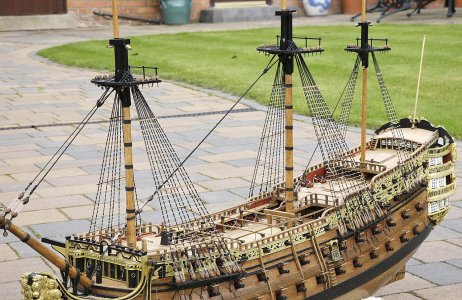
Hello again. Just more photos of how I progressed with the rigging. The pictures can’t show the many hours of work that I put in or the frustrations of numerous re-does that were needed to got what I thought was an acceptable result. I’m sure that you’ve all been there, why do we do it!


628.jpg


629.jpg


631.jpg


632.jpg


633.jpg


634.jpg636.jpg


637.jpg
 
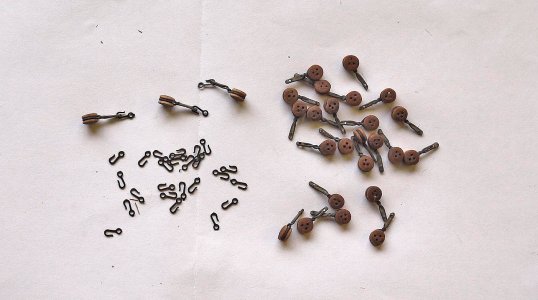
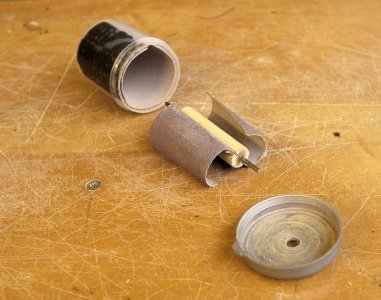
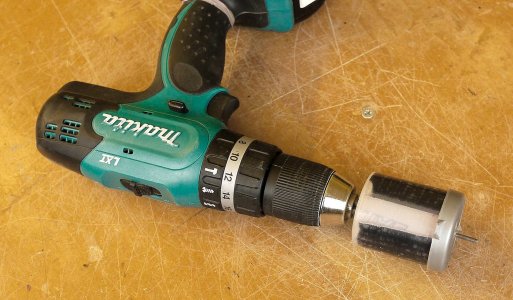
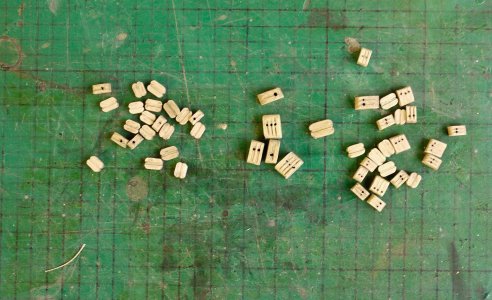
I decided to refine the supplied blocks a bit so I made up my version of a block sander. Using a small round container I lined it with 150 grit sandpaper then using a length of dowel I glued sandpaper flaps into slots that I'd cut then glued a nail as a shaft through its centre. A hole was drilled into the base and lid to take the shaft. In use I put in some blocks fastened the shaft to my drill and spun it for about 20 seconds. When done I saw that all the small surface roughness had been removed and the edges were slightly less square, I think that if I’d spun them a little longer the edges would be rounder. This only took about five minutes to make and it worked well so I think it was worth the effort.

The rigging continued to go pretty well to plan, the only difficulty for me were the 3mm dead eyes for the upper stays, they were too small for me to hold. I got my wife to assist with these, between us we managed. I wonder what she'd be like with making spars!

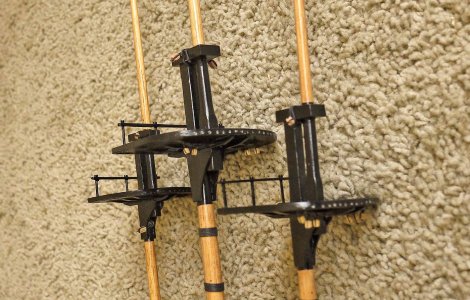
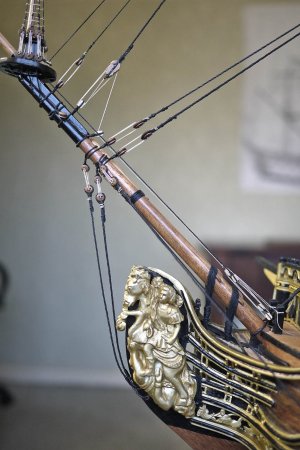
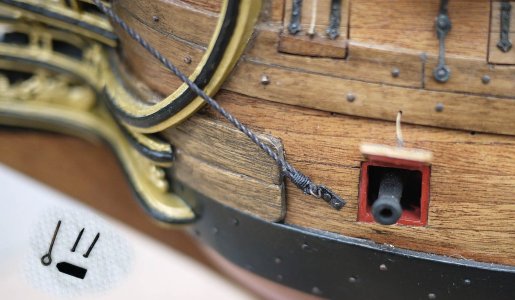
I made up the backstays and the bowsprit stay, a picture shows how I made the attaching bracket it is just black card cut up, easy to do and you can't tell that its not metal.

Just some photos to show the progress


647.jpg


648.jpg


649.jpg


650.jpg


651.jpg


654.jpg


656.jpg


657.jpg
 
I decided to refine the supplied blocks a bit so I made up my version of a block sander. Using a small round container I lined it with 150 grit sandpaper then using a length of dowel I glued sandpaper flaps into slots that I'd cut then glued a nail as a shaft through its centre. A hole was drilled into the base and lid to take the shaft. In use I put in some blocks fastened the shaft to my drill and spun it for about 20 seconds. When done I saw that all the small surface roughness had been removed and the edges were slightly less square, I think that if I’d spun them a little longer the edges would be rounder. This only took about five minutes to make and it worked well so I think it was worth the effort.

The rigging continued to go pretty well to plan, the only difficulty for me were the 3mm dead eyes for the upper stays, they were too small for me to hold. I got my wife to assist with these, between us we managed. I wonder what she'd be like with making spars!

I made up the backstays and the bowsprit stay, a picture shows how I made the attaching bracket it is just black card cut up, easy to do and you can't tell that its not metal.

Just some photos to show the progress


View attachment 572064


View attachment 572065


View attachment 572066


View attachment 572067


View attachment 572068


View attachment 572069


View attachment 572070


View attachment 572071
Good evening Ken. Now we are talking…
Cheers Grant
 
  • Like
Reactions: Ken
Hello again and welcome back, the build continued.

I started doing the snaking between the stays and soon realized that it wasn't going to be easy to keep an even distance between the upper and lower stays. First I tried just looping the thread around, that didn't work, I then tried stitching through the stay using a needle, that didn't work, I then tried tying the thread on, no joy the stays still came together. I tried stiffening the middle sections of thread with cyno, that made things worse and with all the work the stays were starting to look frayed. As a last resort I cut the stays off and made new ones but this time made sure they were as taut as was acceptable. It was worth the extra effort, tensioning the upper stays had obviously slackened the lower ones, with the extra tension and a little care all went well.

After my experience on the forestay I first re-tensioned the mainstay. Because of its extra length I again couldn't keep the stays apart so I decided to fit some boat lifts, when fastened down and tensioned these pulled down the lower mainstay, I knew that when I fitted the crows feet that they would pull the top stay up a little thus giving the separation needed.

I fitted the uphroe and blocks then made up the crows feet. This took some time and thought but proved to be easier than I'd expected and for once I didn't need to redo something.

Next up was the crowsfeet from the sprit to the preventer stay. I made this up on the plan off the model then fitted it, all I can say is it got done and I was very pleased with the result. It was like trying to do a Rubicks Cube for the first time, get one part right and all the other sections move out of alignment, over and over again.

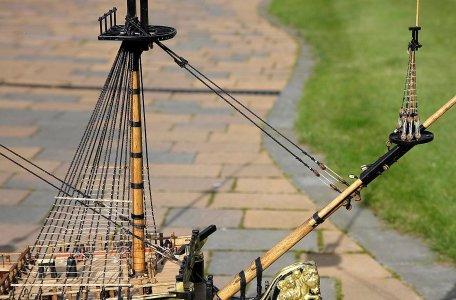
That was the standing rigging done, Phew! Next would be the spars and running rigging.

Thanks for looking in.


670.jpg


671.jpg


672.jpg


673.jpg


674.jpg
 
Hello again and welcome back, the build continued.

I started doing the snaking between the stays and soon realized that it wasn't going to be easy to keep an even distance between the upper and lower stays. First I tried just looping the thread around, that didn't work, I then tried stitching through the stay using a needle, that didn't work, I then tried tying the thread on, no joy the stays still came together. I tried stiffening the middle sections of thread with cyno, that made things worse and with all the work the stays were starting to look frayed. As a last resort I cut the stays off and made new ones but this time made sure they were as taut as was acceptable. It was worth the extra effort, tensioning the upper stays had obviously slackened the lower ones, with the extra tension and a little care all went well.

After my experience on the forestay I first re-tensioned the mainstay. Because of its extra length I again couldn't keep the stays apart so I decided to fit some boat lifts, when fastened down and tensioned these pulled down the lower mainstay, I knew that when I fitted the crows feet that they would pull the top stay up a little thus giving the separation needed.

I fitted the uphroe and blocks then made up the crows feet. This took some time and thought but proved to be easier than I'd expected and for once I didn't need to redo something.

Next up was the crowsfeet from the sprit to the preventer stay. I made this up on the plan off the model then fitted it, all I can say is it got done and I was very pleased with the result. It was like trying to do a Rubicks Cube for the first time, get one part right and all the other sections move out of alignment, over and over again.

That was the standing rigging done, Phew! Next would be the spars and running rigging.

Thanks for looking in.


View attachment 572287


View attachment 572288


View attachment 572289


View attachment 572290


View attachment 572291
Nice rigging details and instructive pictures, Ken.
Regards, Peter
 
Back
Top