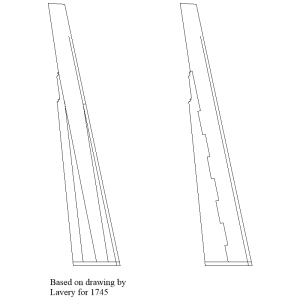
I would use Steel's work for most builds after about 1790 as well as scantlings for boats as it is a great source for the appropriate period. Unfortunately it is not reliable for my 1744 project. Looking at scantlings from 1719, 1745, 1750, 1788 and Steel, they are all quite different so not much help for a ship built 50 years earlier.
Thanks, now I have another item for the Christmas list!!!! Dimensions are not the problem as I have the contemporary drawings of the rudder and keel as well as scantlings from the 1719 and 1745 Establishment so I know the taper of the thickness goes from about 18" at the hance to match the siding of the keel at the aft end which tapers from 14" in the dead flat to 9 1/4" at the aft end.
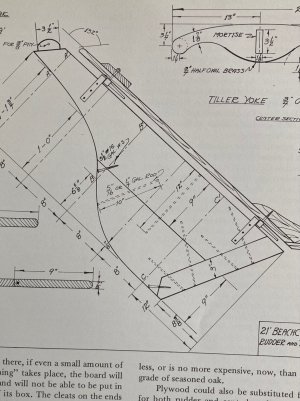
Andy, Many thanks for your reply. Unfortunately, modern rudder designs are not contemporary to the 1744 rudder and the archeological team (and me too

) wants the model to be built to duplicate the actual ship as closely as possible using the wreck and contemporary information. The actual rudder would be the best source but it has not been found at the wreck site and will likely not be found unless another hurricane uncovers it. The tabled construction was actually more complex than can be seen in the drawing I posted. I just cannot find any information to confirm if this style of construction was used on HMS
Fowey or other ships in the group.
Allan