
-

SUBSCRIBE TO SHIPS IN SCALE TODAY!
The beloved Ships in Scale Magazine is back and charting a new course for 2026!
Discover new skills, new techniques, and new inspirations in every issue.
NOTE THAT OUR NEXT ISSUE WILL BE July/August 2026 -

Win a Free Custom Engraved Brass Coin!!!
As a way to introduce our brass coins to the community, we will raffle off a free coin during the month of August. Follow link ABOVE for instructions for entering.


You are using an out of date browser. It may not display this or other websites correctly.
You should upgrade or use an alternative browser.
You should upgrade or use an alternative browser.


Hi.
Just build yourself any kind of dust collector.
Just build yourself any kind of dust collector.
Desk dust remover/collector. Simple, quiet, cheap, effective - DIY Project
Hi. I'll share something with you friends. I've been hand-grinding-sanding a lot lately. Small proxxon tools aren't that loud - pen sander, disc sander, dremel tool don't make big noise, but using a vacuum cleaner to clear that dust for a long time is inconvenient for other family members, and...
shipsofscale.com


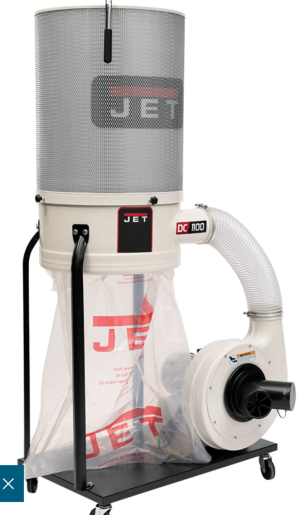
I have a decent sized dust collector that I move the connection between my band saw and my oscillating drum sander. I also have an airborne dust collecter over my head when I'm doing other sanding.

- Joined
- Jun 11, 2026
- Messages
- 81
- Points
- 78

I have two methods of dealing with the issue of sawdust in my workshop. Sawdust in my workshop is a problem because it makes a mess, gets all over everything, and creates a poor environment for applying fine finishes. I really don't do a lot of worrying about getting sawdust in my lungs, frankly.
The first tactic to keep sawdust out of the shop is to prevent creating sawdust in the shop as much as possible. Sanding is a poor method of shaping wood and a great method of creating sawdust. A sharp blade leaves a much better surface than an abrasive of any kind. Therefore, as a matter of habit, I use knives, planes, hand saws, and so on, as much as possible. On smaller hand-held power tools and my Brynes saw, disk sander and thickness sander, I and wherever else possible, I use a hose connected to my Shop Vac. Plane shavings are a lot easier to clean up and don't make any sawdust at all.
My second tactic for keeping sawdust out of the ship when more aggressive cutting is required, is to do that cutting outside the shop. I have all my stationary power tools on rolling stands and when I use them, I roll them outside the shop in the open air, or just inside the doors in bad weather. When I am using power tools that throw a lot of sawdust into the air, like table saws, planers, and wood lathes, I will also position a standing air fan to circulate the air from inside the shop to the outside to prevent the dust from entering the shop from the doorway area. I also have a separate area of my shop which serves as am office and "clean room" where no sanding is ever done. This enables me to spend a considerable amount of my shop time outside of areas where sawdust might linger.
The first tactic to keep sawdust out of the shop is to prevent creating sawdust in the shop as much as possible. Sanding is a poor method of shaping wood and a great method of creating sawdust. A sharp blade leaves a much better surface than an abrasive of any kind. Therefore, as a matter of habit, I use knives, planes, hand saws, and so on, as much as possible. On smaller hand-held power tools and my Brynes saw, disk sander and thickness sander, I and wherever else possible, I use a hose connected to my Shop Vac. Plane shavings are a lot easier to clean up and don't make any sawdust at all.
My second tactic for keeping sawdust out of the ship when more aggressive cutting is required, is to do that cutting outside the shop. I have all my stationary power tools on rolling stands and when I use them, I roll them outside the shop in the open air, or just inside the doors in bad weather. When I am using power tools that throw a lot of sawdust into the air, like table saws, planers, and wood lathes, I will also position a standing air fan to circulate the air from inside the shop to the outside to prevent the dust from entering the shop from the doorway area. I also have a separate area of my shop which serves as am office and "clean room" where no sanding is ever done. This enables me to spend a considerable amount of my shop time outside of areas where sawdust might linger.

- Joined
- Apr 11, 2022
- Messages
- 26
- Points
- 58

I tried many methods from designated commercial woodworking vacuums, to shop vacs and even a battery powered air circulating air shield/mask system. I think I have 5 various size vacuums in my shop. My issue is space. The ideal way is to have a central Vac system located in a separate room properly plumbed with PVC piping, valves and for proper nozzle attachments at each work location. I have a Byrnes saw with sanders, a lathe, assembly station, scroll saw, etc. etc. Because all these tools were acquired over time, I kept buying a vac for each location. While this does the job, the individual shop vacs are very are irritable. The power circulating air shield is excellent for removing irritants like CA glues, glue accelerators and petroleum based paints from my lungs and face. If I had the time and patients to start all over knowing what I know now I would have installed a central system. Now at 81 years old, it's 20/20 hindsight. 

- Joined
- Jun 29, 2024
- Messages
- 2,173
- Points
- 488

My tools range from my Byrnes saw to a 12” planer. The only ship modeling activity that produces clouds of dust is milling my wood so my full sized table saw lives in a heated room used for storing garden equipment and my planer is wheeled outdoors when needed. Fitted with a .030” thick slitting blade my Byrnes saw produces very little dust so a periodic sweeping of my workshop is sufficient.
Roger
Roger
Yeah. I think you're right.Make it simple and get a very good quality mask. That should do it.


- Joined
- Sep 23, 2021
- Messages
- 388
- Points
- 238

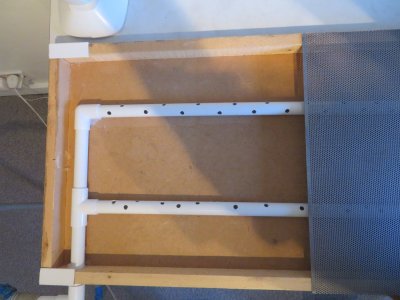
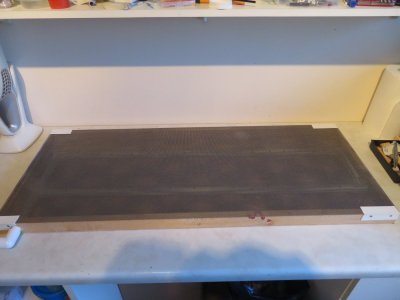
I made a very simple dust extraction table with some perforated metal sheet, scrap wood and some plumbing pipe. Connected it up to my shop vac and it is brilliant. The air flow is down, so the dust does not rise at all. I made a large one for doing hulls etc. and a small one when making detail parts.Other than wearing a mask, does anybody have any strategies to keep sawdust out of their lungs?

Dust? Oh, just blow it away  .
.
.
I haven’t built anything yet to control the dust in my workspace. I’m still wearing a mask and using my home vacuum cleaner whenever I’m doing anything that creates dust indoors. When sanding, I normally move out to the backyard—and I keep my mask on!
I’ll definitely see what everyone shares in this post, as I really need to do something more permanent. It’s not just our lungs that need protecting; our eyes need protection too
I’ll definitely see what everyone shares in this post, as I really need to do something more permanent. It’s not just our lungs that need protecting; our eyes need protection too

- Joined
- May 25, 2025
- Messages
- 132
- Points
- 78

I use a shop vac as well as a JET overhead dust collector.
I also tend to do any table saw cutting outside because the amount of dust from these are so great.
Even with my Byrnes table saw I use it outside.
And I use a dust mask outside as well while using it.
I also tend to do any table saw cutting outside because the amount of dust from these are so great.
Even with my Byrnes table saw I use it outside.
And I use a dust mask outside as well while using it.