
• Win a Free Custom Engraved Brass Coin!!!
    As a way to introduce our brass coins to the community, we will raffle off a free coin during the month of August. Follow link ABOVE for instructions for entering.

SS NORMANDIE PROBLEMS WITH THE PLANS

Joined
Apr 4, 2023
Messages
5
Points
13

Hi everyone!

I have various questions. I'm going to explain shortly.

1.-I have a navy plan's for SS Normandie(1935), but they have a quite distorsion, how can I keep it out? I have been working with photoshop and with the tool(deformación de posición libre), I don´t know the English name, something like: free tool of deformation, I think. The problem is that maybe this tool is quite freehand.

2.-How can I translate the information of plating plan into a 2D profile view of Normandie? I think that the lenght of the steel sheet is easy because I only need to count couples in the keel, but how can I know the real vertically lenght?

Kind Regards from Spain

Iván.
 
I will move the topic to the general area - maybe more members are reading and will have the chance to help
 
Hi!

In addition to the second question I'm going to add one photo.

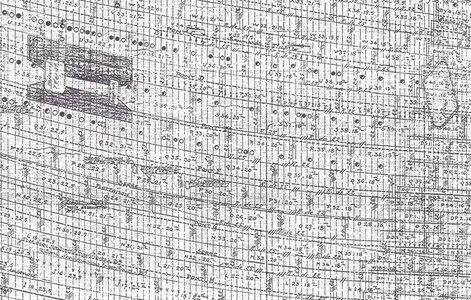
This is one part of the plating plan for Normandie

Captura de pantalla 2023-04-11 154405.jpg

I think that the limited between every steel sheet are the lines with 3 inclinated lines, with a number, in this case, almost all lines have a 25, this referes to the riveting of the hull, if I not wrong. The question is, how I can know the real lenght and widht of every steel sheet? The lenght I think is easy because I can count couples in the keel, but, what happens with de vertically lenght?

Kind Regards,

Iván.
 
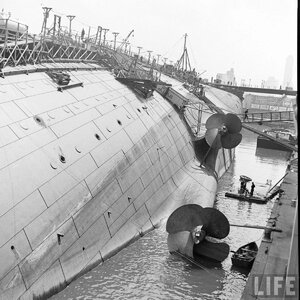
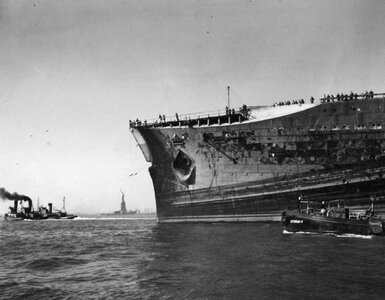
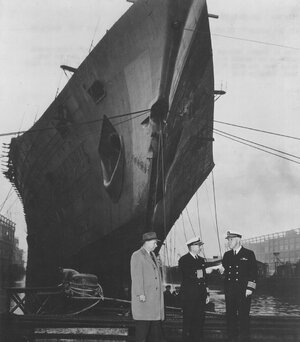
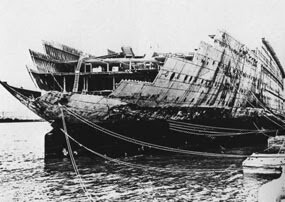
There are several photos existing showing the USS Lafayette after the fire and the listing - maybe they are helping

Lipset 06.jpg


diinw6mly2i81.jpg


092205332.jpg 092205333.jpg


40131149682_c5585b7643_o.jpg

 
Hi everyone!

I have various questions. I'm going to explain shortly.

1.-I have a navy plan's for SS Normandie(1935), but they have a quite distorsion, how can I keep it out? I have been working with photoshop and with the tool(deformación de posición libre), I don´t know the English name, something like: free tool of deformation, I think. The problem is that maybe this tool is quite freehand.

2.-How can I translate the information of plating plan into a 2D profile view of Normandie? I think that the lenght of the steel sheet is easy because I only need to count couples in the keel, but how can I know the real vertically lenght?

Kind Regards from Spain

Iván.

Hallo @Ivan Lopez
we wish you all the BEST and a HAPPY BIRTHDAY
Birthday-Cake
 
Hi everyone!

I have various questions. I'm going to explain shortly.

1.-I have a navy plan's for SS Normandie(1935), but they have a quite distorsion, how can I keep it out? I have been working with photoshop and with the tool(deformación de posición libre), I don´t know the English name, something like: free tool of deformation, I think. The problem is that maybe this tool is quite freehand.

2.-How can I translate the information of plating plan into a 2D profile view of Normandie? I think that the lenght of the steel sheet is easy because I only need to count couples in the keel, but how can I know the real vertically lenght?

Kind Regards from Spain

Iván.
Hallo @Ivan Lopez
we wish you all the BEST and a HAPPY BIRTHDAY
Birthday-Cake
 
Hi everyone!

I have various questions. I'm going to explain shortly.

1.-I have a navy plan's for SS Normandie(1935), but they have a quite distorsion, how can I keep it out? I have been working with photoshop and with the tool(deformación de posición libre), I don´t know the English name, something like: free tool of deformation, I think. The problem is that maybe this tool is quite freehand.

2.-How can I translate the information of plating plan into a 2D profile view of Normandie? I think that the lenght of the steel sheet is easy because I only need to count couples in the keel, but how can I know the real vertically lenght?

Kind Regards from Spain

Iván.
Dear Ivan, I fear I cannot help you, but may I allow myself to ask if you could share your plans with me? I am also considering the Normandie as my next project, and am especially intereseted in cross sections/frames to be able and match her great hull shape. Thank you so much!
And, to at least have done something, you might want to check out this youtube video:
in the last part, Mike brady covers the Normandie, including a nice longitudinal (2d) plan and pictures which highlight the plating. Cheers!
 
Last edited:
Hi!

In addition to the second question I'm going to add one photo.

This is one part of the plating plan for Normandie

View attachment 368571

I think that the limited between every steel sheet are the lines with 3 inclinated lines, with a number, in this case, almost all lines have a 25, this referes to the riveting of the hull, if I not wrong. The question is, how I can know the real lenght and widht of every steel sheet? The lenght I think is easy because I can count couples in the keel, but, what happens with de vertically lenght?

Kind Regards,

Iván.
Iván,
The width / height of the steel plating is usually consistent across the hull.
In the US most steel plate is either 8’ or 10’ wide.
There would be what’s called “stealer” plates installed at the ends of the vessel where a wider plate is impractical due to the shape of the hull getting narrower.
Does this answer your question?
 
Ivan, the drawing that you have posted appears to be what Naval Architects call a Plating Expansion Plan.

The numbers that you mention are probably plating thicknesses. Naval Architects usually refer to plating thicknesses by the weight of a known area of plating. For example here in the USA 1 square foot of steel plate, 1” thick weighs 40.8 lbs, so it’s called “40 pound plate.” Likewise, 1/2 inch plate is called “20 pound plate” and so forth. You can make the conversions to the metric world.

The longitudinal axis of the drawing shows actual dimensions, but dimensions on the vertical axis have been stretched to be equal to the GIRTH of the hull from the keel centerlline to the deck edge at each longitudinal location. These girths were probably measured from a half model. The plating expansion drawing allowed the design office to create a bill of material for the steel to be ordered from the mill as it shows the actual “flat” shape of the hull plates.

I know of no way to convert this design information back to a 2-D profile drawing. Above the waterline strakes of plating would be arranged to be parallel to the vessel’s sheer, especially on a prestigious vessel like Normandie. Below the waterline things get messy as curvature changes increase.

If you are building a model strakes of plating can be easily laid out from the plating drawing using battens temporarily tacked to the hull.

Roger
IMG_0659.jpeg
 
It’s also possible that the numbers, ie. 26, 33.2, etc are not weights but plate thicknesses in millimeters, although 33.2 mm would be very thick plate even for a ship like Normandie.

The little diagonal slashes indicate the number of rows of rivets for the joint in question. /// would be three rows of rivets. The number next to the slashes could indicate the rivet spacing. Or possibly the rivet diameter.

The shaded areas are “doubler plates” reinforcing the area around the opening in the hull.

Roger
 
Back
Top