



• SUBSCRIBE TO SHIPS IN SCALE TODAY!

    The beloved Ships in Scale Magazine is back and charting a new course for 2026!
    Discover new skills, new techniques, and new inspirations in every issue.

    NOTE THAT OUR NEXT ISSUE WILL BE MARCH/APRIL 2026
  • Win a Free Custom Engraved Brass Coin!!!
    As a way to introduce our brass coins to the community, we will raffle off a free coin during the month of August. Follow link ABOVE for instructions for entering.

The Black Swan by OcCre 1:75: Build Log

Joined
Dec 20, 2020
Messages
1,596
Points
488

Location
Connecticut, U.S.A.
Last year I was luck enough to wind the raffle for OcCre's kit of the Black Swan, a fictional ship. The kind folk of OcCre donated the kit. In addition the wonderful people of Luczorama donated the OcCre's paint kit that provides the paints for the ship. Jimsky did a wonderful review of the kit and officiated for the raffle. Here is the review of the kit by Jimsky.


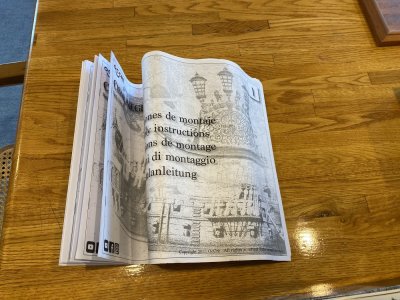
I will not waste space by duplicating Jimsky's work. I received the box in fine shape, My first task was to try to straighten out the instruction manual that comes in 5 language4s and is mostly pictorial.

IMG_2053.jpeg

I straightened the instructions out and pressed them under some heavy weights. They have become a bit more manageable.

OcCre also has a series of videos of their construction of the ship.


You can also view or download a PDF version of the instructions (a bit tricky to find on the OcCre site)


Next I had to label the parts on the laser cut wood sheets. This was a bit laborious to do. I do not understand why OcCre did not label the parts when the laser was cutting the pattern. It probably would have taken a minute or two more and eliminated some possible mistakes.
 
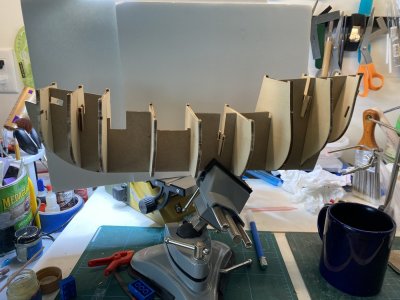
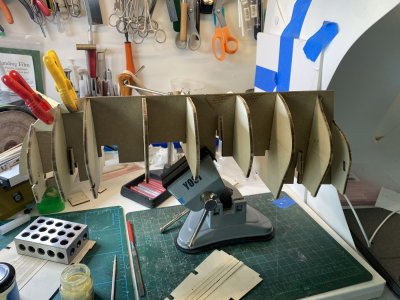
I am impressed by the quality of the laser cut sheets. They are all flat and without any obvious warp. I cut the keel and the bulkheads out, sanded off most of the char and dry fitted them.
IMG_2076.jpeg

A few observations: once in place the tops of all the bulkheads were absolutely level with the top of the keel element next to them. The bow 2 bulkheads extend a fraction of an inch below the keel. The stern most end above the keel. The other 5 end at the edge of the keel. There is no space to make any kind of rabbet. I am not sure at this point how the planking up to the keel is suppose to lay. This also means the usual keel holder to support the ship will not work. I am using my vise, which has rubber padded jaws as a support. I can see on the pictures included in the instructionthat the front 2 bulkheads extend past the keel in the companies build also.


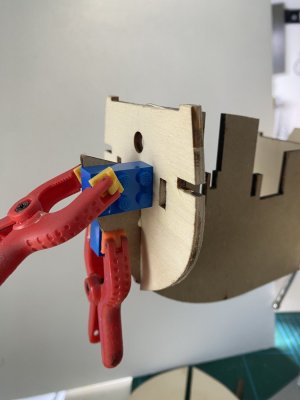
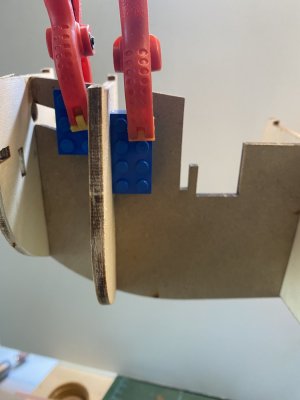
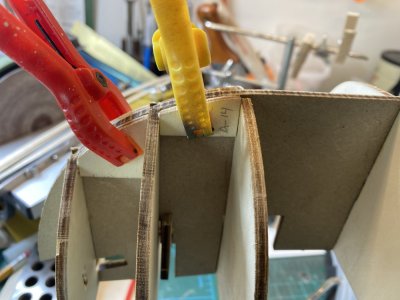
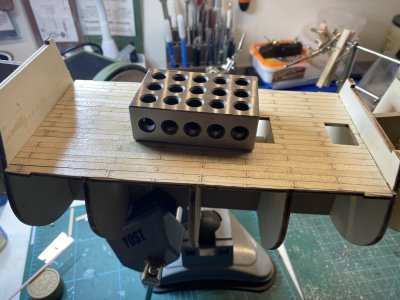
The bulkheads fit a bit loosely in the keel slots. After coating the slots with wood glue (I use Elmers carpenters glue) I used a machinist 1,2,3 square to make sure the bulkheads were at a 90 degree angle to the keel. I used Lego pieces clamped next to the bulkheads to keep the piece in alignment as the glue dried.

IMG_2075.jpeg

IMG_2079.jpeg
 
Last year I was luck enough to wind the raffle for OcCre's kit of the Black Swan, a fictional ship. The kind folk of OcCre donated the kit. In addition the wonderful people of Luczorama donated the OcCre's paint kit that provides the paints for the ship. Jimsky did a wonderful review of the kit and officiated for the raffle. Here is the review of the kit by Jimsky.


I will not waste space by duplicating Jimsky's work. I received the box in fine shape, My first task was to try to straighten out the instruction manual that comes in 5 language4s and is mostly pictorial.

View attachment 596229

I straightened the instructions out and pressed them under some heavy weights. They have become a bit more manageable.

OcCre also has a series of videos of their construction of the ship.


You can also view or download a PDF version of the instructions (a bit tricky to find on the OcCre site)


Next I had to label the parts on the laser cut wood sheets. This was a bit laborious to do. I do not understand why OcCre did not label the parts when the laser was cutting the pattern. It probably would have taken a minute or two more and eliminated some possible mistakes.
Rob, I am glad you're on this kit. I wish you good luck building it. But please let us help you one way or another if you might require one down the road...
 
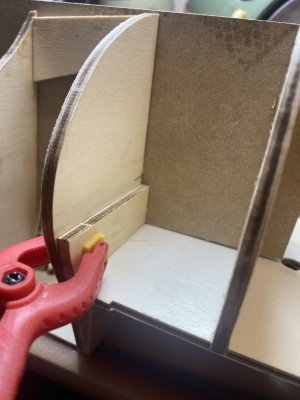
The build has small support pieces for the the front and rear two bulkheads almost like horn timers (perhaps that what they are) the front 2 are shown to be even with the curve of the keel, the rear two go from the edge of the bottom of one bulkhead to the next one. I flipped the hull over to attach them. They fit into place perfectly.

IMG_2085.jpeg
IMG_2084.jpeg

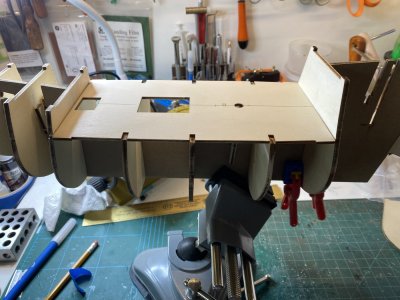
Next up is the decks. I dry fitted the main deck. It fits into slots an a bulkhead in the front and fit very well.

IMG_2080.jpeg


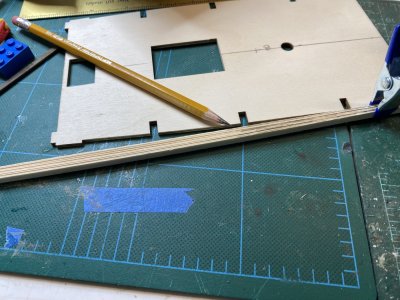
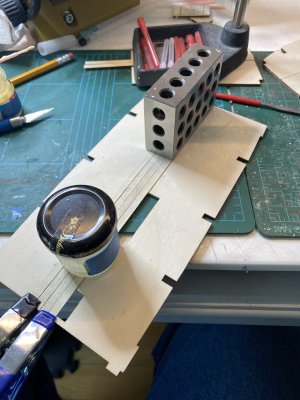
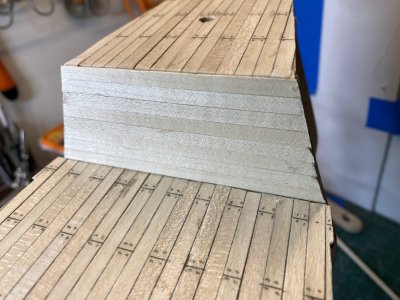
this piece of thin ply is covered with some thing strips. The instructions do not mention the thickness of the strips needed (there are many strips of various thicknesses) but looking at the construction videos it is fairly evident the thin pieces are what is used. The instruction would have you cover one side of the strips and the deck with what looks like contact cement (they call it shoemakers glue) and then stick the strips on the plywood surface. After that they would have you scribe along the edges of the strips with a pencil to accentuate the edges of the strips. Instead of that I took a bunch of the strips calmed them together and rubbed the pencil graphite along the edges, saving time.
IMG_2081.jpeg

The strips were then glued to the deck individually using my usual wood glue.

IMG_2083.jpeg
 
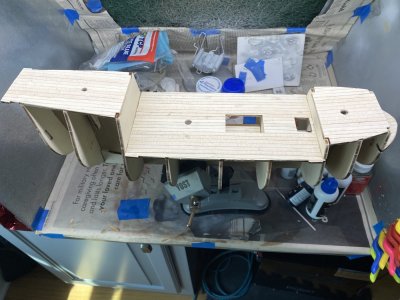
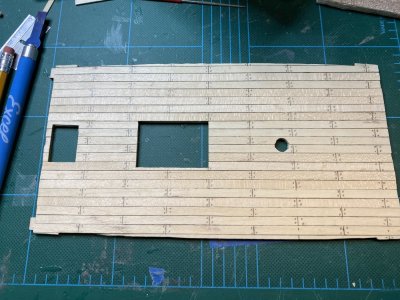
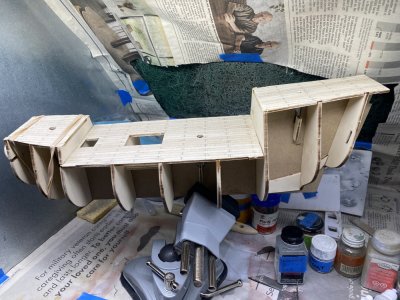
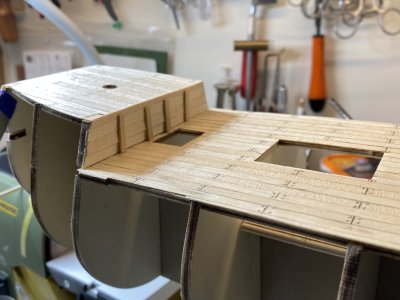
After the decks were covered with the veneer. I trimmed the edges and the openings. I test fitted the decks onto the frame.

IMG_2091.jpeg

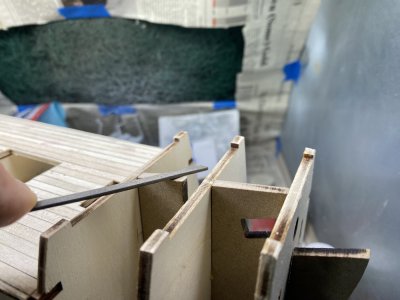
Most of the decks popped into place with just some minor adjustments. The only real problem was the forecastle deck. I traced the problem to one of the parts of the keel structure being a fraction to high, lifting the forecastle deck up a fraction. Some quick work with a file fixed it.

IMG_2090.jpeg

I sanded the decks with some 320 grit sanding blocks. I then penciled in the seams and nail marks. After cleaning with a tack cloth I sealed it with some provided varnish.

IMG_2094.jpeg
 
Love seeing the use/abuse of the Lego blocks, since you or someone here suggested them, and the Admiral prohibited me from going after the grandkids stash, I went to local Brick Store in Oklahoma City and bought a bunch of usable blocks for only a few dollars. I am lucky in some ways to have a store in town, but I can't only buy one thing when I go there.
 
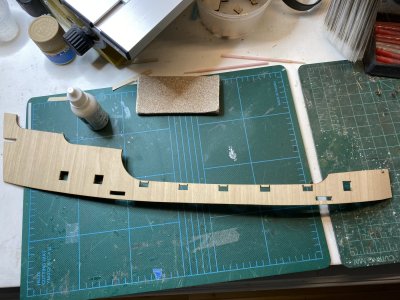
The sidewalls of the ship were then covered with the same veneer material used for the decks.

IMG_2099.jpeg

After everything was trimmed and sanded the sidewall were "decorated" by some 1mm X 3mm strips. The directions ore less than clear about the size of this material but if you look at the illustrated directions and refer back to the parts list you can figure it out. I am not sure why they call the same material by different letters and the parts list list it as different lengths when the lengths appear to be the same. Also being of European manufacture, the measurements are metric.

IMG_2100.jpeg
 
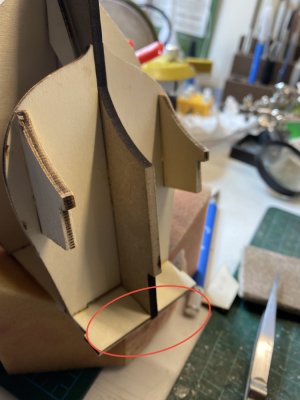
Looking over the parts sheet I realized that I had forgotten to install part B-13, which is a brace that supports the rear of the deck along bulkhead 8. You can see where it is to be placed here.

IMG_2104.jpeg

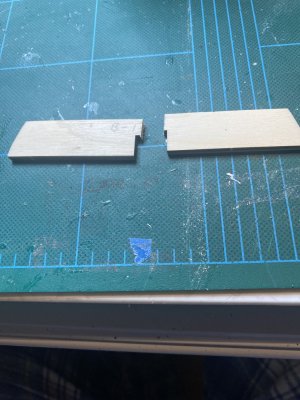
Everything was assembled and tight. However being semi compulsive, I decided to install the part. I cut it along the slotted area.

IMG_2103.jpeg

And glued the 2 pieces into place. It will definitely hold thing in place a little better.

IMG_2105.jpeg

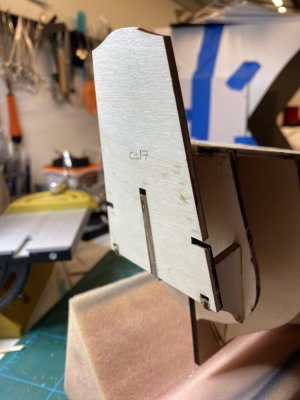
The rear most bulkhead was next to be installed. When test fitting the part It wasn't lying quiet even with the parts it slotted into. I traced that as an overhang of the poop deck was a tad to long.

IMG_2106.jpeg

I sanded this down a bit and the part fit perfectly.

IMG_2109.jpeg
 
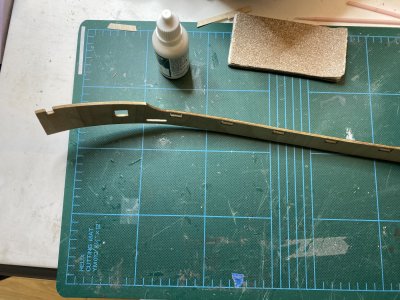
Next is attaching the bulwarks. These are one piece and must be curved to fit the hull. I soaked the bow end in water for a while and then using a hot iron, curved the pieces.

IMG_2113.jpeg
IMG_2114.jpeg

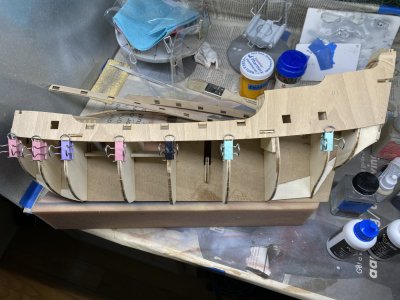
The were then clamped and glued onto the hull.

IMG_2112.jpeg

You can see I used some rubber bands on the top of the stern area as a clamp. The bottom of the stern area and the bow area I had to use some of the supplied nails to hold things into place as the glue set. I removed the nails after everything dried.
 
Last edited:
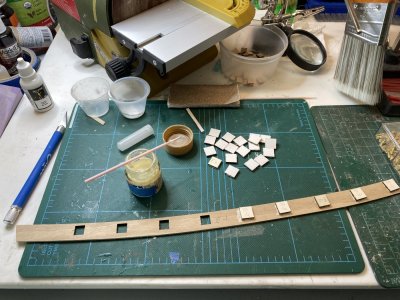
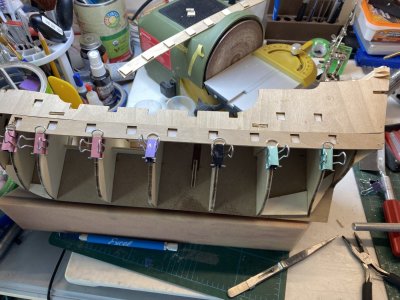
There are dummy gun ports that are painted while before being installed behind the strip where the guns go. For some reason the instructions have you install the strip and then glue the dummy ports in back of them. I decided to install those before installing the wood strip, much easier.

IMG_2115.jpeg
 
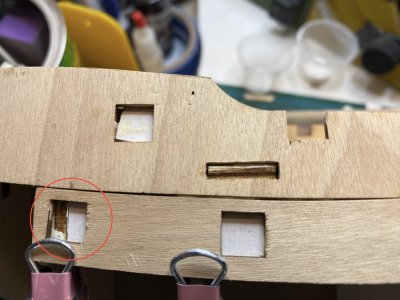
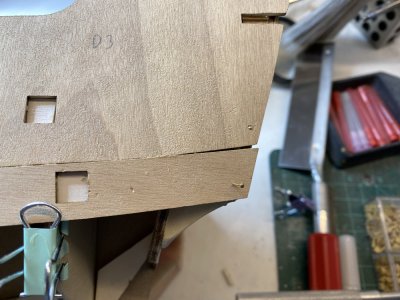
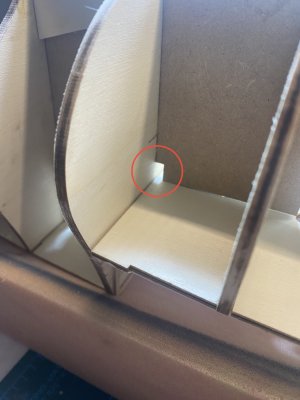
Well I discovered why they want you to put in the dummy gun ports after you install the strip. The engineering of these strips has been less than stellar. Some of the openings are interrupted by the bulkheads. I had to trim three of the dummy ports to fit.

IMG_2118.jpeg

I would still place the upper bulwark gunports before I put in the lower gun port strip it is much easier with that out of the way.

The curve of this gunport strip towards the stern left a significant gap. I believe it will be covered up when you do the walnut veneer second planking. I Will probably fill it with wood filer first and sand it flush.

IMG_2117.jpeg

Other than this complaints things went well.

IMG_2116.jpeg
 
Back
Top