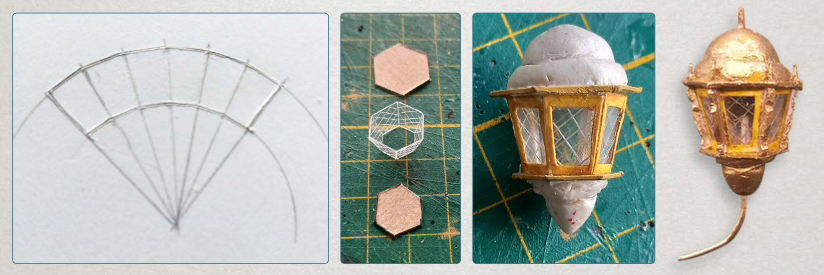
Yes, I know—I had previously announced that I would stop building and rigging three-masted ships. Problems with my hands and eyes forced me to do so. Yet, I find it difficult to give up a hobby I have pursued for some seventy years.Even after the last three-masters had been delivered to a few museums and a private collector, I couldn't resist the temptation and built a small frigate; it sat in my cabinet for a long time because I dreaded the rigging process. I built it purely for the pleasure of crafting a beautiful hull.
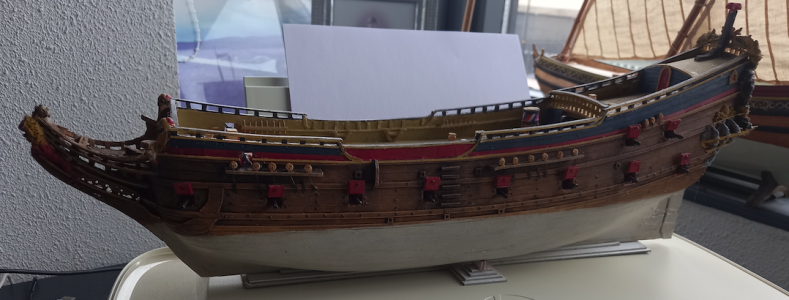
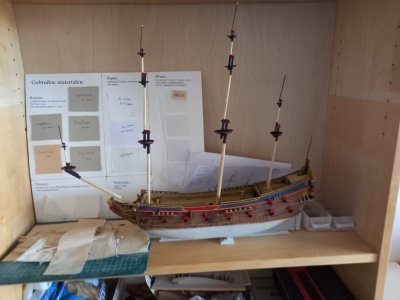
My average time for completing a three-masted ship used to be around three months—rigging included—but those days are gone. I did recently finish this model, though; yet if I ever stood a chance ofgetting into heaven (assuming such a place actually exists), I have utterly destroyed that prospect by rigging this particular ship. I am glad no one had to witness the blasphemous, vulgar outbursts and curses I unleashed whenever I had to repeat the exact same step for the fourth or fifth time in a row. The inability to perceive depth makes complex rigging tasks nearly impossible—and, come to think of it, simple ones too—while trembling hands certainly don't add to the joy of the work.
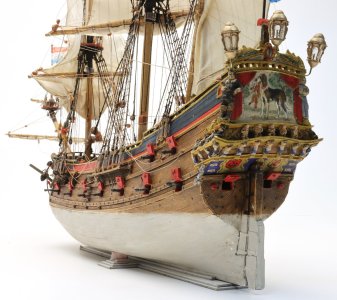
In short, the work is no longer fun, and this is where it ends. I’ve run out of steam. Despite myself, I did build one last small frigate this spring; Emiel can now take over by placing it in a historically accurate setting. Photos are attached.
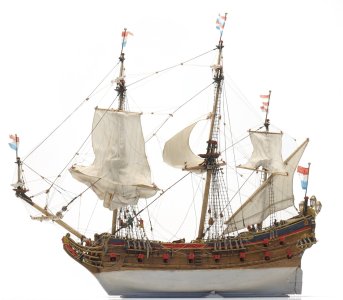
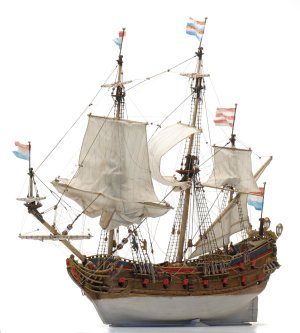
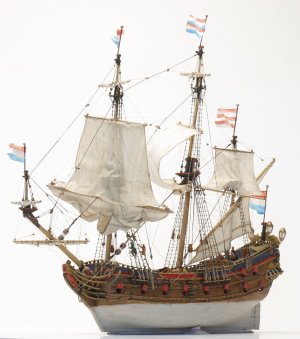
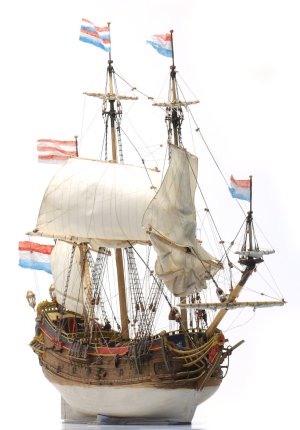
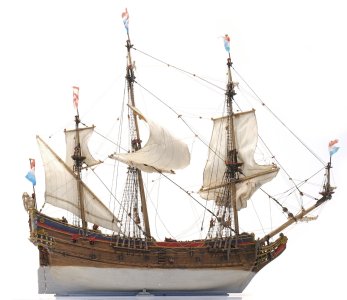
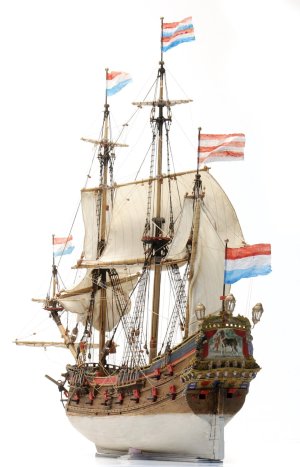
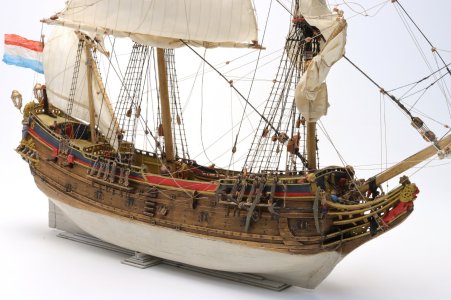
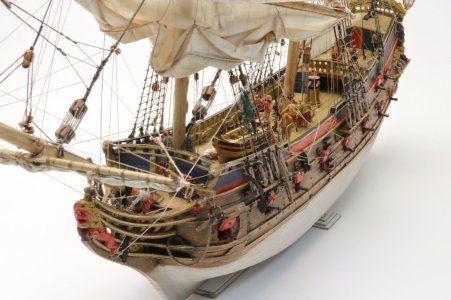
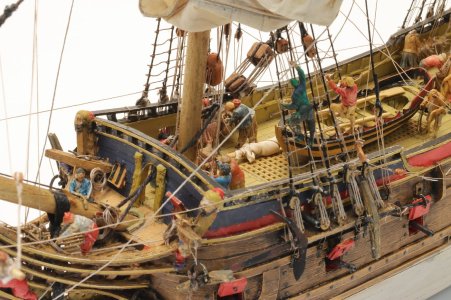
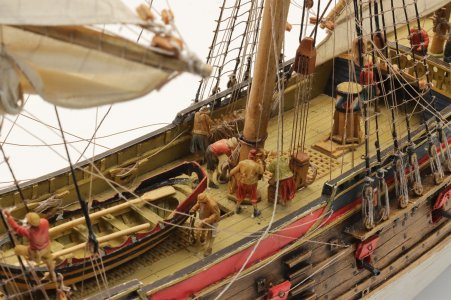
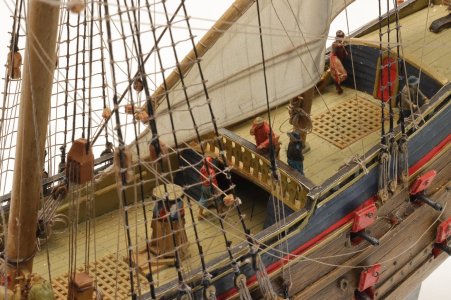
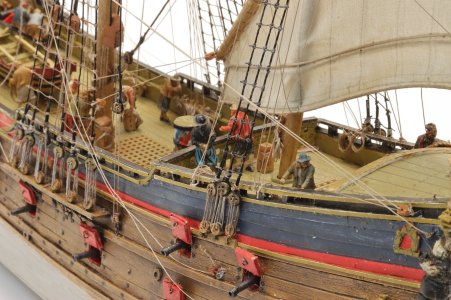
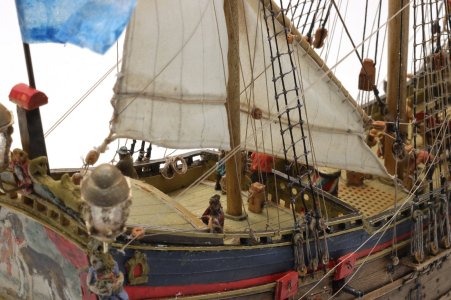
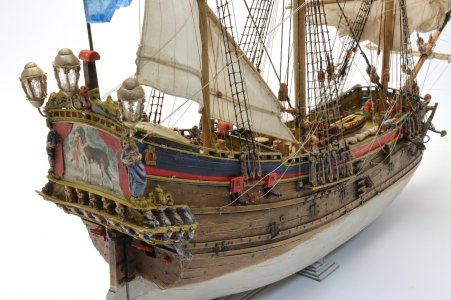
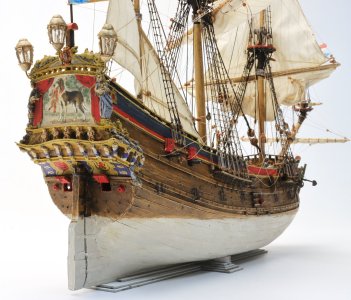
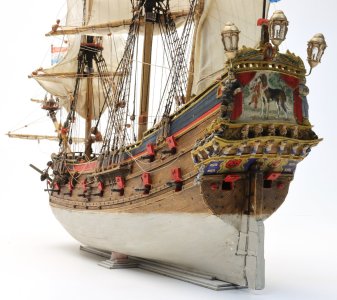
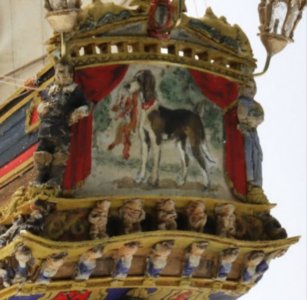
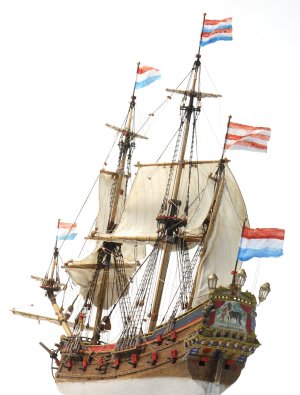
It is an intriguing little vessel—one of the small frigates that took part in the Raid on the Medway (often referred to as the Raid on Chatham) in 1666. Its name is 'De Brak'. I hadn't realized it before, but a 'brak' is a type of hound; today, we know the breed as the 'beagle'. Naturally, knowing this was crucial for designing the ship's stern.This time, I decided not to sculpt the design in relief but simply to paint the image. I am a painter's son, yet my (partial) colorblindness has always prevented me from using that technique on a ship model. I put a great deal of effort into the sails, as I wanted to depict them in a specific configuration. If Emiel does his job well, we will see an impression of the moment De Ruyter's fleet was ordered to muster for the attack—hence the red-white-red-white-red-white flag on the mizzenmast. And all this during a sudden squall...
The crew figures were supplied by the company Artitec. The owner, my good friend Herbert Tomesen—himself an excellent model maker—printed them especially for me in my preferred 1:77 scale. I am delighted that the model is finished and has turned out exactly as I had hoped.
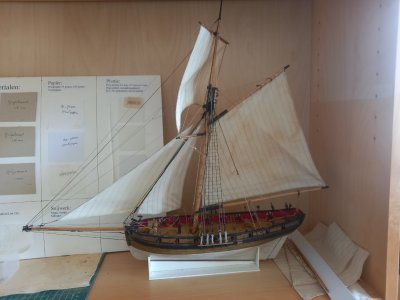
Does that mean I will stop building altogether? I cannot imagine that. Over the past year, I tried to build a model of a cutter with a relatively simple rigging setup, but even that is beyond my capabilities now without compromising my own principles or offending religiously minded colleagues. O, I nearly forgot. I also made this model, because the original Dutch name was 'de Brak', just like the 1661 frigate I built recently. It was a Dutch ship, built after British example, but bigger. The British renamed her into 'Braak' (for unclear reasons) after it was taken and rebuild and re-rigged to make it suitable for English naval services. The ship sank off the American coast in 1798. It was ketch rigged by then, because the new owners found working with her too heavy. There is no mentioning of such complaints when it was in Dutch hands....
What I do still make are ships that require no rigging—dockyard models—even though these are, by definition, of English origin. Moreover, due to the material chosen (cardboard) combined with my physical limitations, they are far from flawless; still, they do at least somewhat resemble a ship model. I recently fitted three of them with display cases, as can be seen here: https://shipsofscale.com/sosforums/threads/hms-sussex-a-dockyard-model-made-of-card.17693/ .the thread will be updated in a minute.
These lend the models a certain status.
I thank my followers and readers for their stimulating words and positive reactions to my work, and I will continue to use this forum at least as a reader, hopefully for a longtime to come.
My average time for completing a three-masted ship used to be around three months—rigging included—but those days are gone. I did recently finish this model, though; yet if I ever stood a chance ofgetting into heaven (assuming such a place actually exists), I have utterly destroyed that prospect by rigging this particular ship. I am glad no one had to witness the blasphemous, vulgar outbursts and curses I unleashed whenever I had to repeat the exact same step for the fourth or fifth time in a row. The inability to perceive depth makes complex rigging tasks nearly impossible—and, come to think of it, simple ones too—while trembling hands certainly don't add to the joy of the work.
In short, the work is no longer fun, and this is where it ends. I’ve run out of steam. Despite myself, I did build one last small frigate this spring; Emiel can now take over by placing it in a historically accurate setting. Photos are attached.
It is an intriguing little vessel—one of the small frigates that took part in the Raid on the Medway (often referred to as the Raid on Chatham) in 1666. Its name is 'De Brak'. I hadn't realized it before, but a 'brak' is a type of hound; today, we know the breed as the 'beagle'. Naturally, knowing this was crucial for designing the ship's stern.This time, I decided not to sculpt the design in relief but simply to paint the image. I am a painter's son, yet my (partial) colorblindness has always prevented me from using that technique on a ship model. I put a great deal of effort into the sails, as I wanted to depict them in a specific configuration. If Emiel does his job well, we will see an impression of the moment De Ruyter's fleet was ordered to muster for the attack—hence the red-white-red-white-red-white flag on the mizzenmast. And all this during a sudden squall...
The crew figures were supplied by the company Artitec. The owner, my good friend Herbert Tomesen—himself an excellent model maker—printed them especially for me in my preferred 1:77 scale. I am delighted that the model is finished and has turned out exactly as I had hoped.
Does that mean I will stop building altogether? I cannot imagine that. Over the past year, I tried to build a model of a cutter with a relatively simple rigging setup, but even that is beyond my capabilities now without compromising my own principles or offending religiously minded colleagues. O, I nearly forgot. I also made this model, because the original Dutch name was 'de Brak', just like the 1661 frigate I built recently. It was a Dutch ship, built after British example, but bigger. The British renamed her into 'Braak' (for unclear reasons) after it was taken and rebuild and re-rigged to make it suitable for English naval services. The ship sank off the American coast in 1798. It was ketch rigged by then, because the new owners found working with her too heavy. There is no mentioning of such complaints when it was in Dutch hands....
What I do still make are ships that require no rigging—dockyard models—even though these are, by definition, of English origin. Moreover, due to the material chosen (cardboard) combined with my physical limitations, they are far from flawless; still, they do at least somewhat resemble a ship model. I recently fitted three of them with display cases, as can be seen here: https://shipsofscale.com/sosforums/threads/hms-sussex-a-dockyard-model-made-of-card.17693/ .the thread will be updated in a minute.
These lend the models a certain status.
I thank my followers and readers for their stimulating words and positive reactions to my work, and I will continue to use this forum at least as a reader, hopefully for a longtime to come.











 see the bottom right of my post ….