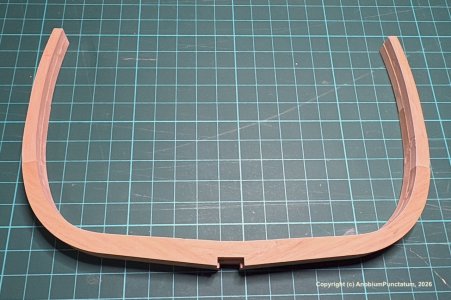
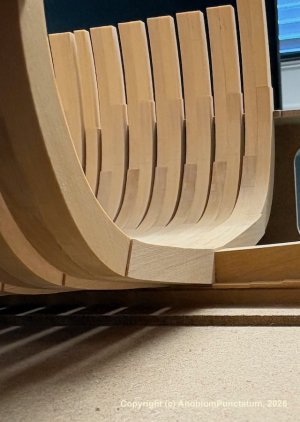
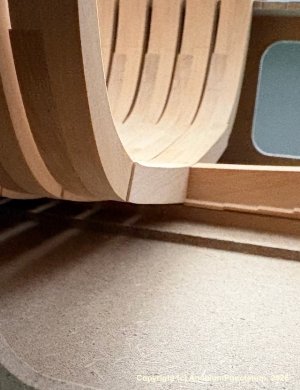
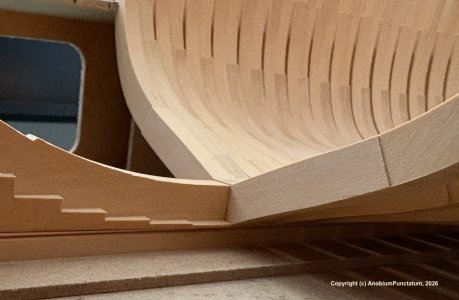
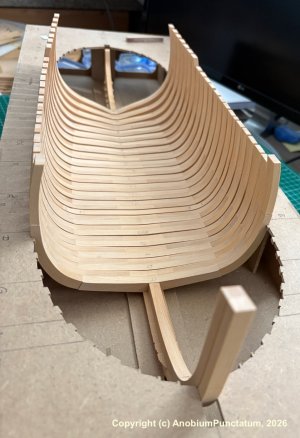
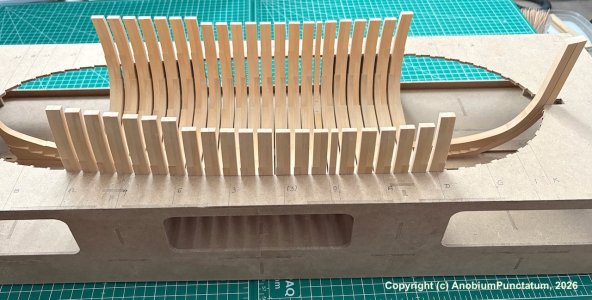
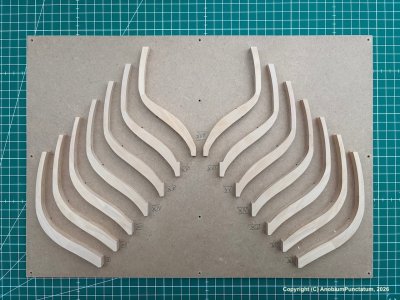
In mid-February, I began building the parallel frames. As shown on the Disposition of Frames plan, the parallel frames consists of 21 double frames and one single frame (midship frame).
To compensate for any inaccuracies during assembly, I added 2/10 mm to the inner and outer sides for the frame thickness when preparing the individual parts for my CNC machine. Only time will tell whether this allowance is sufficient or if I will need to add another 1/ to 2/10 mm in the future for my next project.
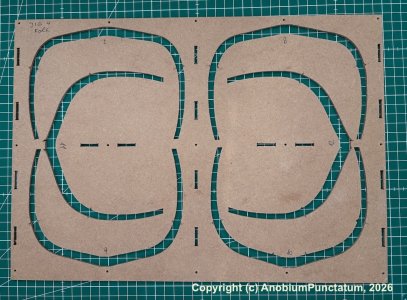
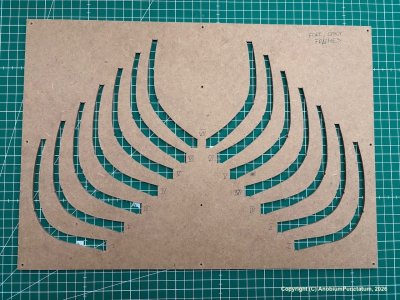
Due to the tight tolerances, I milled a small jig for each double frame. This allows the components to be assembled very precisely and quickly.
View attachment 608120
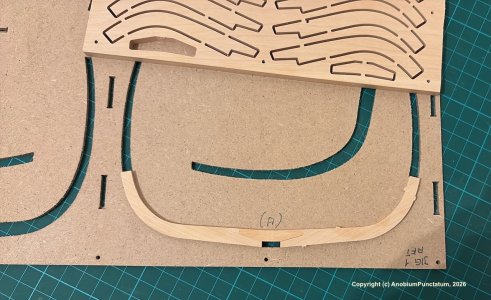
View attachment 608121
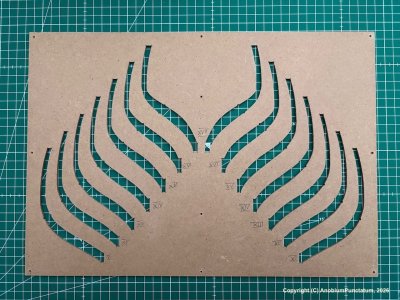
Originally, I had planned to use a two-part template; however, this idea didn't work out as intended. So I decided right away not to use the upper part of the template after the second frame.
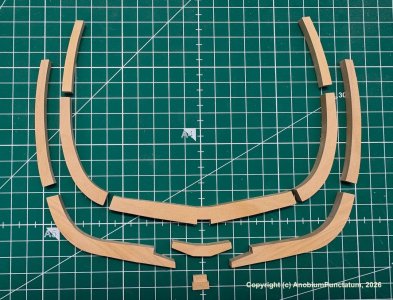
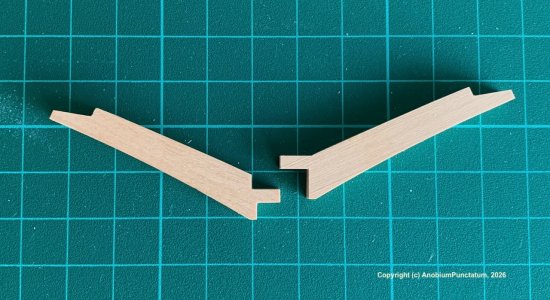
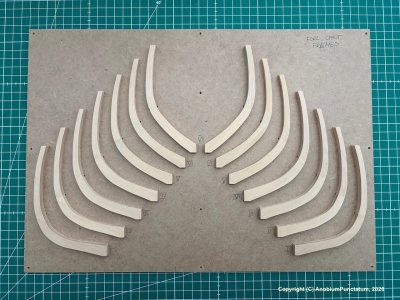
One half of the frames consists of floor timber (10'‘), second futtock (9’'), and toptimber (8'‘), while the other half consists of a crosschock (9.5’'), first futtock (9.5'‘), and second futtock (8.5’').
View attachment 608122
First, I assemble the half consisting of the first and second futtocks in the template.
View attachment 608123
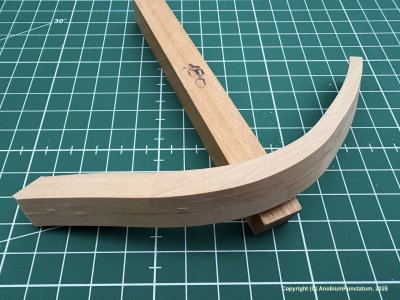
Then I glue small spacers onto the second futtock to compensate for the 7/10mm offset. Now I flip the component over and place it back into the template. Now the other half is glued onto the first half. The small part shown in the photo with the individual frame members is very helpful for aligning the floor timbers.
View attachment 608124
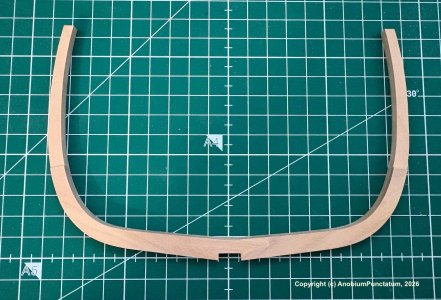
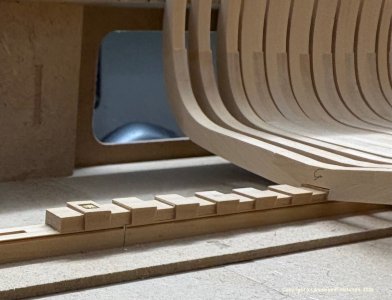
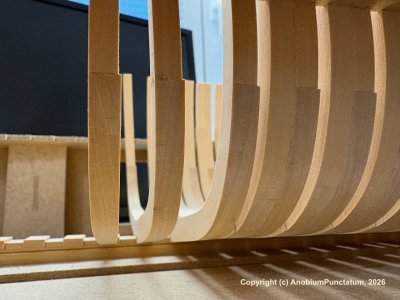
I assembled the floor timbers for frames 10–12 from two separate pieces. This way, the grain of the wood aligns better with the direction of the frames. David Antscherl described this technique in his book "The Fully Framed Model", Volume I. You can’t see this on the finished model.
View attachment 608125
(The photo is from my Alert project)