

• SUBSCRIBE TO SHIPS IN SCALE TODAY!

    The beloved Ships in Scale Magazine is back and charting a new course for 2026!
    Discover new skills, new techniques, and new inspirations in every issue.

    NOTE THAT OUR NEXT ISSUE WILL BE MARCH/APRIL 2026
  • Win a Free Custom Engraved Brass Coin!!!
    As a way to introduce our brass coins to the community, we will raffle off a free coin during the month of August. Follow link ABOVE for instructions for entering.

USS Constitution - Model Shipway’s 5/32” = 1 ft. (1:76.8) Kit No.: MS2040

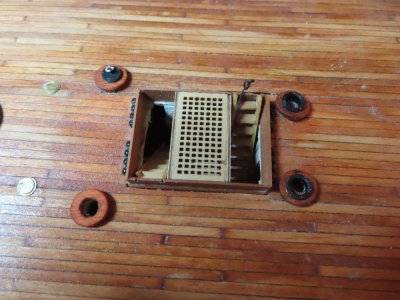
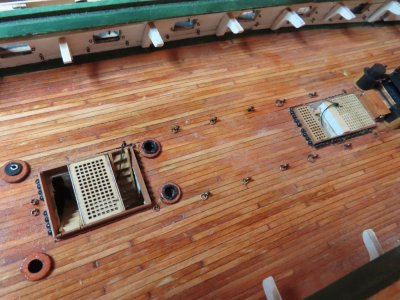
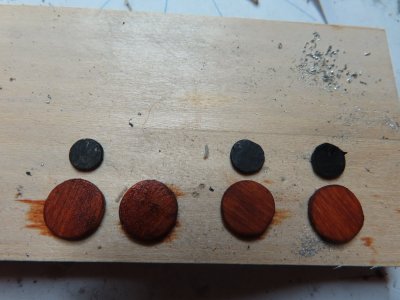
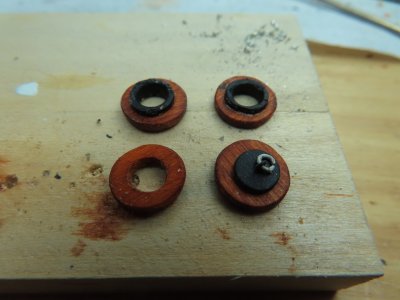
The pots which made from discs I carved out of basswood and 1/32” plywood. One rope pot has a cap on it and the remaining pots were left open to receive either rope or chain. 3/16” holes were drilled very carefully into the discs and the gun deck.
IMG_1771.JPG

IMG_1772.JPG

IMG_1773.JPG

IMG_1774.JPG
 
Gun Deck Sea Chests

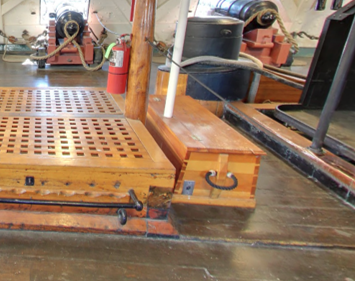
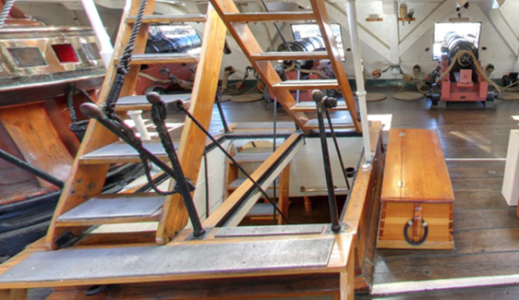
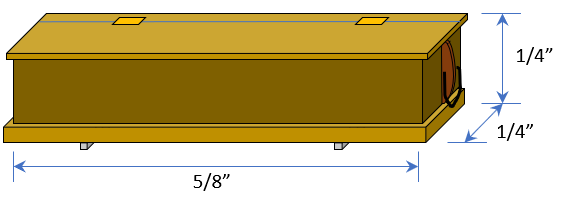
This next gun deck item I will call “Sea Chests” for lack of a more accurate term, I couldn’t find any plans or diagrams, so size and shape are my best guess; there are two of them as far as I know. One is near the stove and the other is near the capstan. They appear to be built as part of the ship because at least one of them appears to have vertical structure going through it.

Sea Chest near stove.png

Sea Chest near capstan.png
 
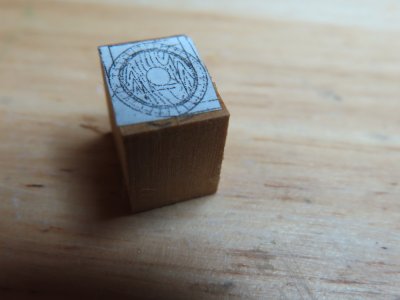
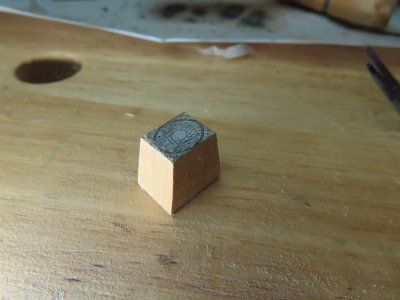
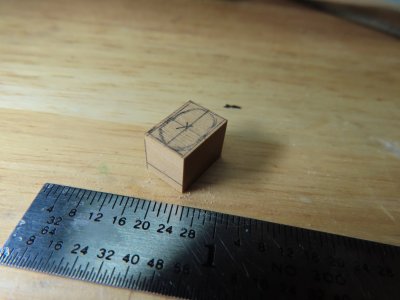
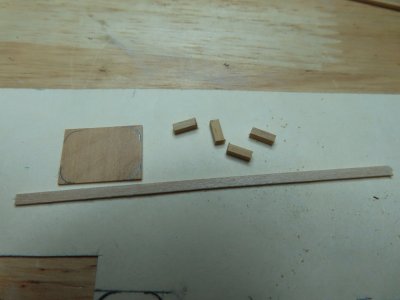
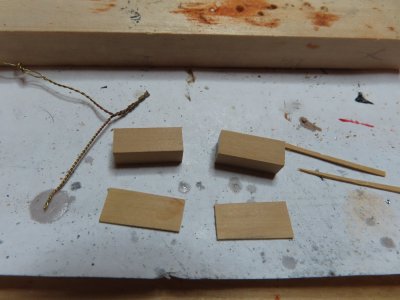
Because the sea chests have a natural wood finish, they were made from boxwood. Below is an image of my starting materials.

IMG_1775.JPG

IMG_1776.JPG
 
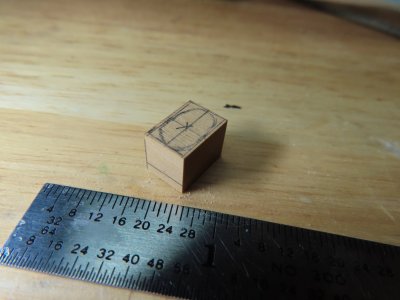
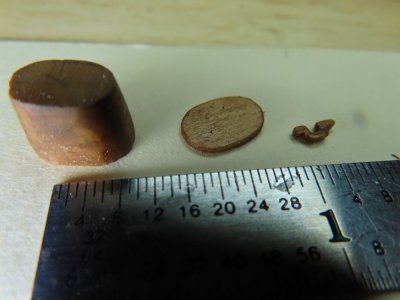
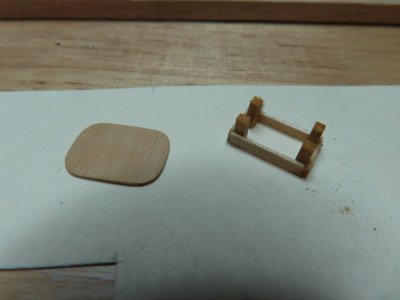
They were relatively easy to make due to their simply construction. The hardest part were the baseboards and the handles due to their delicateness and tiny size. The handles consisted of a vertical arced shaped piece of wood with a loop of rope passing through its center. Those pieces of wood worked out to be about 5/32” long, 1/32” wide at its widest point, and 3/64” thick. I could barely hold them, let alone shape them.

I had two choices for materials to use as the handle rope, left-over twisted brass wire I used for the construction of the bilge pump handles or thread. The thread at these short lengths and scale, is very stiff and does not hang naturally. The twisted wire on the other hand looks like rope and can be shaped to drape properly with little effort. So, twisted wire it was.

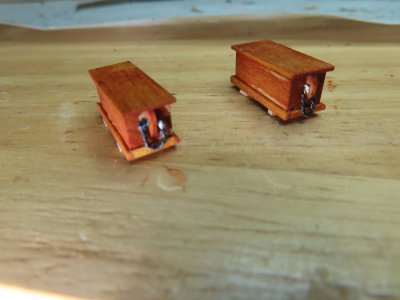
The completed sea chests:

IMG_1778.JPG

IMG_1779.JPG

IMG_1780.JPG

IMG_1781.JPG
 
Gun Deck Eye Bolts and Rings

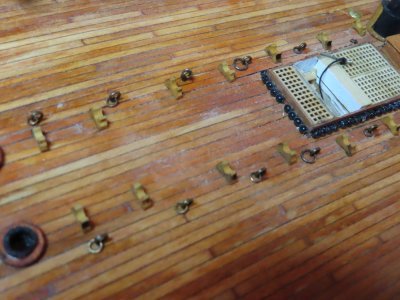
Eye bolts and rings for the gun train tackle (pulls the gun back from gun port) and the messenger and anchor lines were added to the gun deck.

IMG_1782.JPG

IMG_1783.JPG
 
Gun Deck Anchor Chain Guides
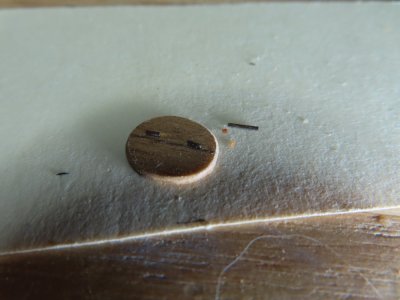
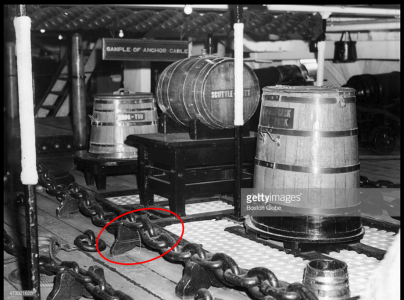
I was going to work on the scuttlebutt, grog tub, and harness cask, but in the process of doing my research to figure out what their dimensions were, I ran across an old B&W photo showing all three of those items, but it also showed something else that I could not identify earlier while working on the deck eyebolts and rings. Indicated on the 1931 US Navy arrangement plans (Note, they are not shown on the 1927 arrangement plans), was something that appeared to be under the anchor chain, but I didn’t know what they were (example in red circle). The B&W photo cleared that up They were, for lack of a proper technical term, chain guides. So, that is what I worked on.

As I count, there are 11 pairs of them, but only 10 pairs will be potentially visible on my model. Presently, on the actual ship, they don’t exist. I suspect they were removed, like many of the eyebolt and rings, due to tripping hazards for the tourists. Also, the anchors and their chains and ropes are not present on the ship either.

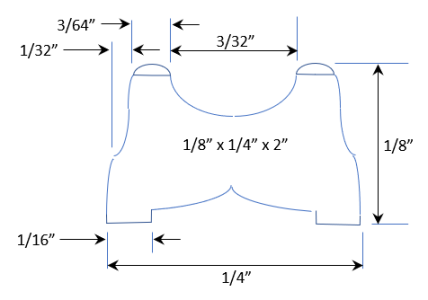
Anchor Chain Guide Plan.png

Anchor Chain Guides.png
 
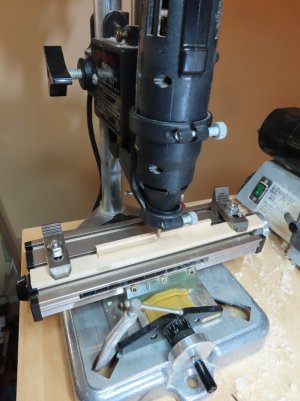
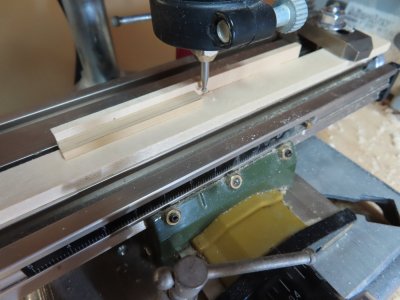
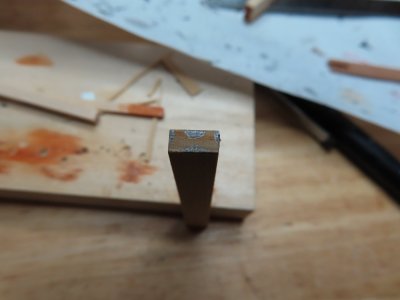
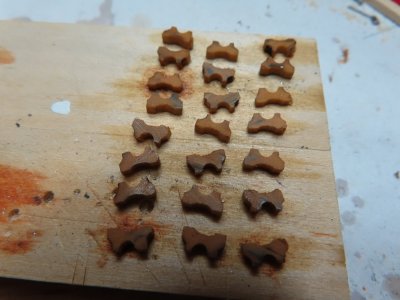
Then using my Dremel drill press accessory, a jig was constructed so I could slide a piece of wood under a cutting bit of the drill. A piece of 1/8” x ¼” x 2” boxwood was the material of choice to be shaped. To aid in the setups, I sketched a profile of the guide on the end of the wood stock.

IMG_1784.JPG

IMG_1785.JPG

IMG_1786.JPG
 
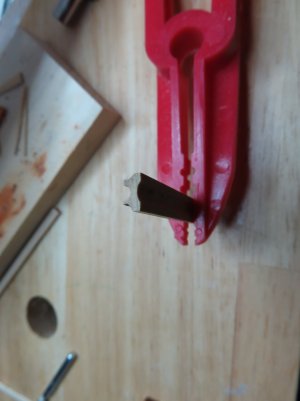
The set up worked fairly decently using what cutters and grinding bits that I had, the end result was close enough to what I wanted, but not anywhere near to the exactitude of my original plan. But then it didn’t need to be.

IMG_1787.JPG
 
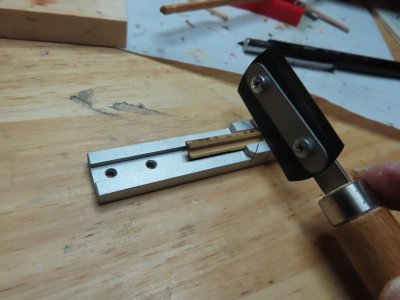
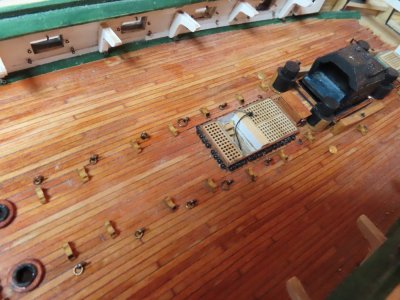
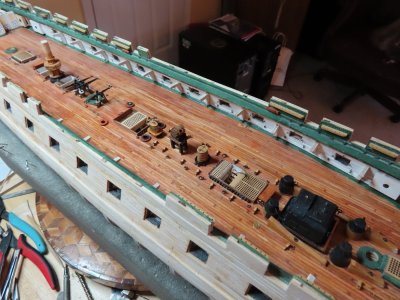
The shaped wood stock was then sliced like a loaf of bread into twenty 1/16” slices and stained with Minwax Golden Pecan. Due to the B&W photos, I didn’t know the color of the guides. I assumed they were of natural wood finish as paint would have just worn off from the sliding chain. The last two images below show the guides on the deck as a dry fit. These will be glued into place before I move on.
IMG_1788.JPG

IMG_1790.JPG

IMG_1791.JPG

IMG_1792.JPG
 
Scuttlebutt and Scuttlebutt Table

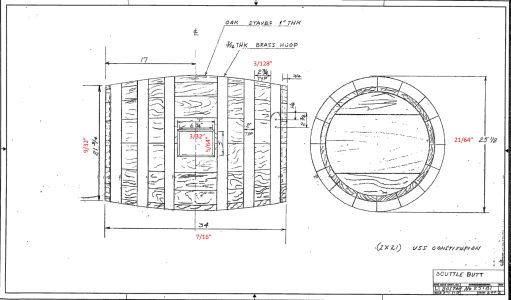
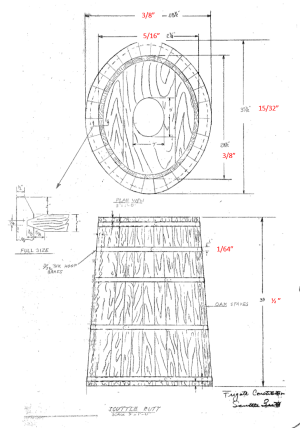
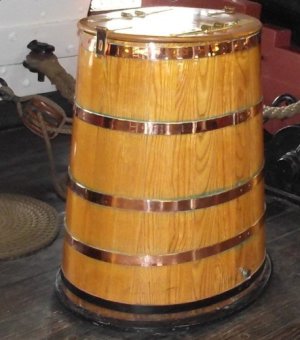
I found the US Navy plans for the scuttlebutt, but surprisingly, there were two types. The first one is the one you see on the ship today. It’s the barrel on its side with a square opening. The other, is an upright cask, oval in cross section, almost identical to today’s harness cask. I’ll using that plan as a guide when I make harness cask. The US Navy plan below has my working dimensions (in red) for the fabrication of the scale barrel.

Scuttlebutt Scale Plan.png
 
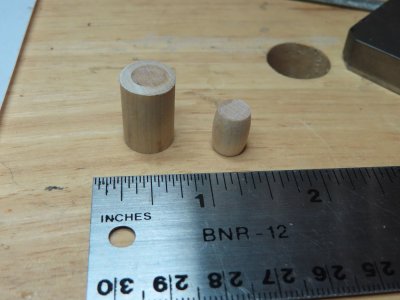
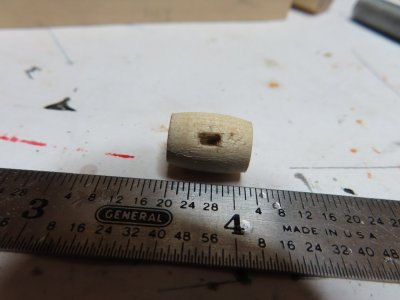
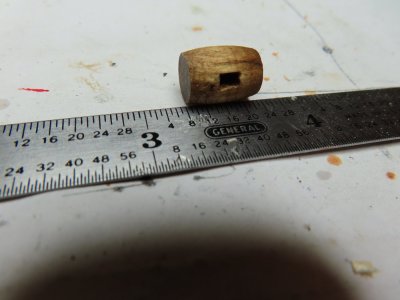
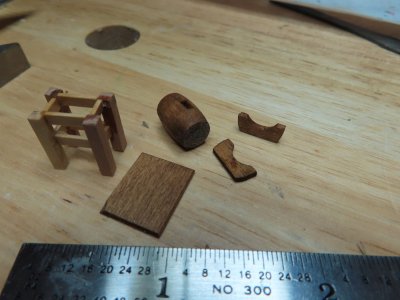
I have a simple tabletop Micro-Mark wood lathe that I have hardly used and have not much skill with. With this I made my very first wooden barrel using a short length of ½” dia. dowel. The barrel was cut, shaped, and then sliced off the dowel with the Byrnes saw. Surprisingly, I did it right on the first try! That is not my usual experience. The square hole was cut and then the barrel was stained with Minwax Early American 230.

IMG_1795.JPG

IMG_1796.JPG

IMG_1797.JPG
 
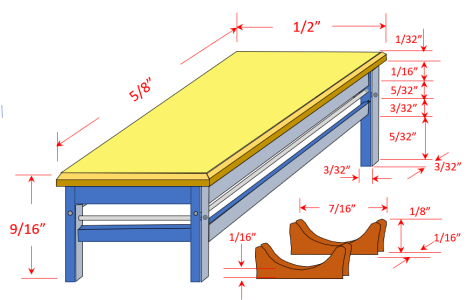
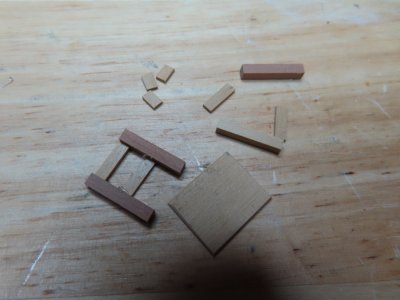
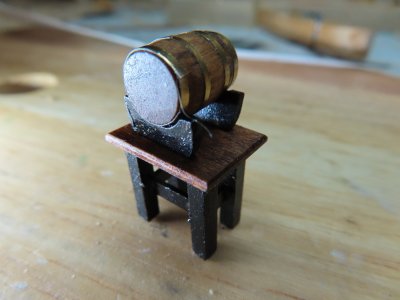
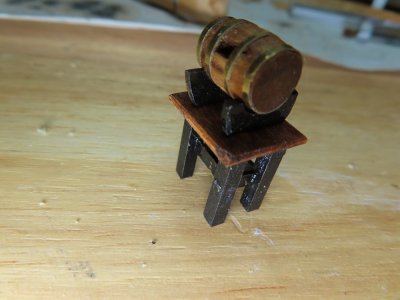
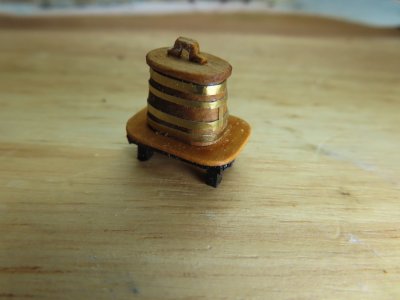
I did not have any plans for the scuttlebutt table or the barrel stand, so their dimensions were guesstimated and came up with the following plan. It was just a matter of making the boxwood pieces and assembling them. The tabletop was stained Minwax Mahogany 225. I initially tried to stain the table structure with Minwax Ebony 2718, but the stain was too transparent, so it was painted with gloss enamel black.

Brass tape was used for the brass barrel bands. This was the same kind of tape I used for the copper cladding on the stove pan. You may have noticed that the images show there are six brass bands on the scuttlebutt whereas I have only four. That was a matter of practical necessity because I could not cut the tape any narrower with consistent precision.

Scuttlebutt Table Plan.png

IMG_1798.JPG

IMG_1799.JPG

IMG_1800.JPG

IMG_1801.JPG

IMG_1802.JPG
 
Harness Cask

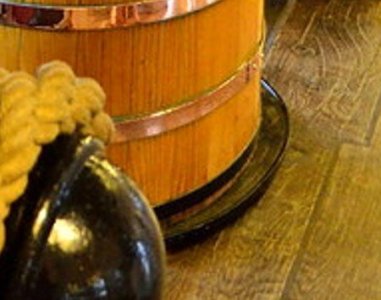
As I mentioned in my earlier post, I based my harness cask on a plan of a version of the grog tub not shown on the actual ship (that I know of). The obvious difference is that the grog cask plan shows a circular opening in its top while the actual harness cask has a hinged top.

Harness Cask Plan.png

Harness Cask 1.jpg
 
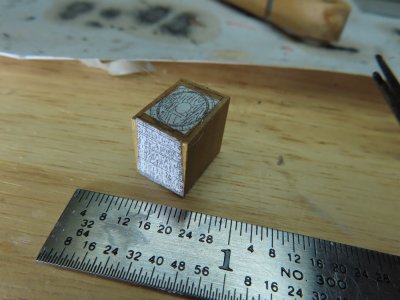
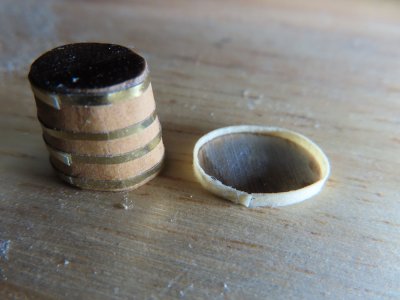
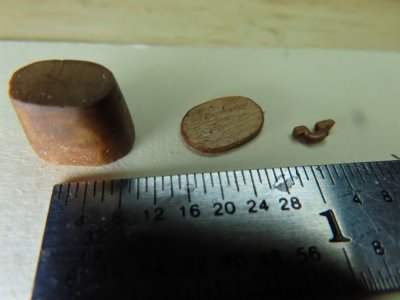
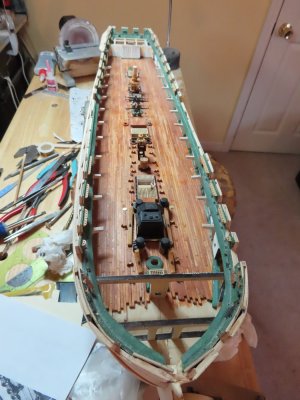
The plan was used as a template, by gluing a scaled version onto a piece of boxwood with rubber cement. The top side image was trimmed so I wouldn’t confuse top from bottom. The sides were angled in to match the template and then sanded and filed to the final cask shape. The lid was fabricated separately.
IMG_1805.JPG

IMG_1804.JPG

IMG_1806.JPG

IMG_1807.JPG

IMG_1809.JPG
 
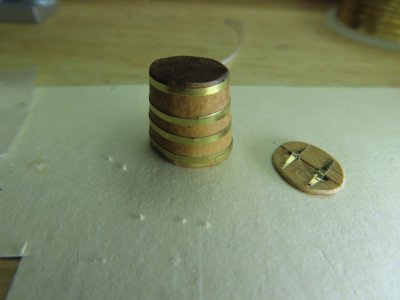
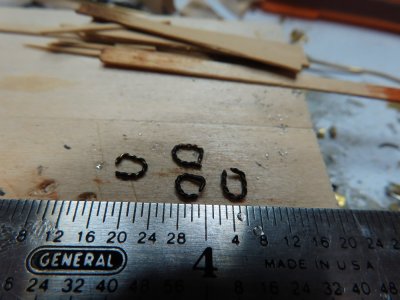
I did not have any plans for the lid, so I winged it. I scored a line into the lid to simulate where the lid would swing open. If you look really close, you may notice there are too sets of hinges on the harness cask, one set for each side as the lid opens from either side. I chose not to have a double hinge due to scaling limits. I used a couple of pieces of eyebolt “legs” wire. Every time I snipped off piece of excess eyebolt, I kept the scrap for situations such as this one. The tiny pieces of wire made the hinge more realistic. Next, I added the brass bands and hinges.
IMG_1813.JPG

IMG_1814.JPG
 
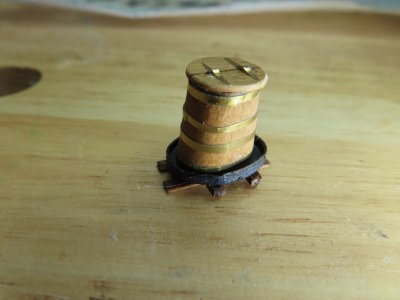
The last bit of the cask was its base. I noticed that this cask sat in a pan for some reason. The base of the pan was carved from 1/64 spruce plywood. The rim was a strip of card stock CA’d to the plywood. To do this, the plywood was lying on a piece of wax paper while I liberally applied the CA as I worked my way around the plywood edge. The card stock soaked up the glue which gave it stiffness. The wax paper easily peeled off the construct. The pan was painted flat black.

The pan in turn sat on two layers of dunnage which was a few pieces of scrap wood and stained.

Harness Cask 2.jpg

IMG_1815.JPG

IMG_1817.JPG
 
The Grog Tub and Table

I had no plans for either the grog tub or its table. This was strictly eyeball stuff based on pictures. Constructed like the harness cask, I used a piece of 3/8” x 3/8” x 3/8” boxwood and shaped it. The lid was a separate piece. I took my best shot carving the lid handle, but I think its too big. I just couldn’t make it any smaller

IMG_1807.JPG

IMG_1809.JPG
 
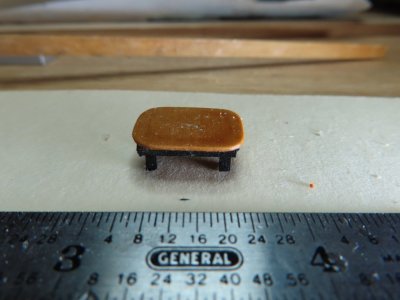
The table was also fabricated from boxwood. Pieces were cut, shaped, and assembled. I gave the table top a light color stain and painted the support structure gloss black.

IMG_1810.JPG

IMG_1811.JPG

IMG_1812.JPG

IMG_1816.JPG
 
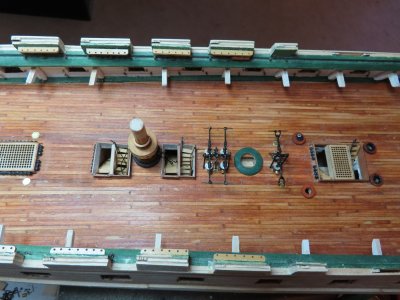
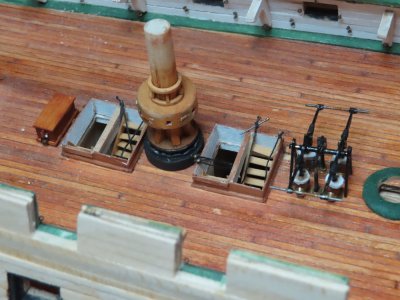
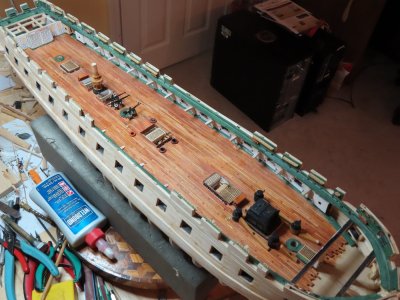
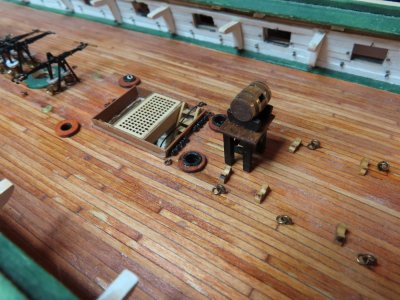
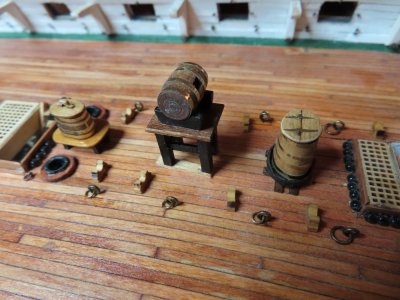
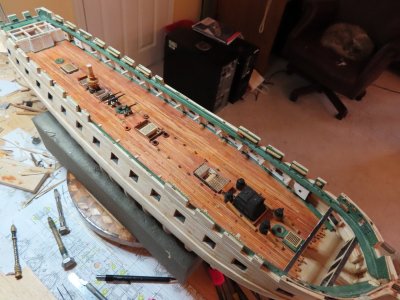
Here are the three items in dry fit position on the gun deck along with all the other components. At this point I am entertaining various scenarios as to which areas to work on next. I’m reluctant to install anything permanent on the gun deck yet because I haven’t fabricated the quarter galleries, or for that matter finished the hull itself. I had thought I might close in the gun deck to get to the spar deck and get in sync with the practicum which did not address the gun deck interior. But I fear the manipulation of the hull for planking, coppering, etc. might damage the delicate items on the gun deck. As it is, the gun deck ladder stanchions all must be fixed. We’ll see.

IMG_1818.JPG

IMG_1819.JPG

IMG_1820.JPG
 
Back
Top