• SUBSCRIBE TO SHIPS IN SCALE TODAY!

    The beloved Ships in Scale Magazine is back and charting a new course for 2026!
    Discover new skills, new techniques, and new inspirations in every issue.

    NOTE THAT OUR NEXT ISSUE WILL BE MARCH/APRIL 2026
  • Win a Free Custom Engraved Brass Coin!!!
    As a way to introduce our brass coins to the community, we will raffle off a free coin during the month of August. Follow link ABOVE for instructions for entering.

USS Constitution - Model Shipway’s 5/32” = 1 ft. (1:76.8) Kit No.: MS2040

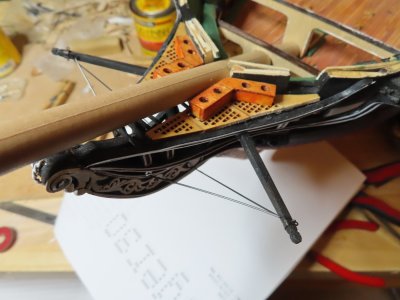
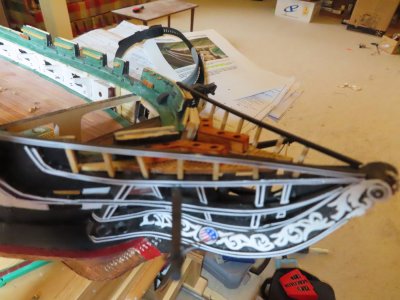
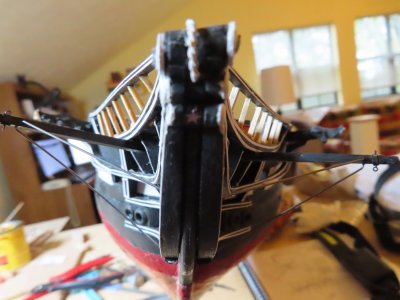
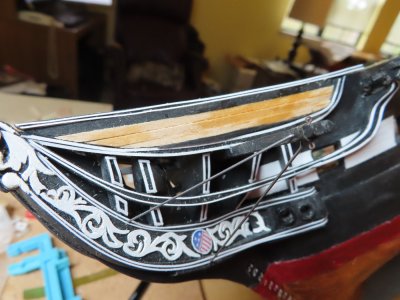
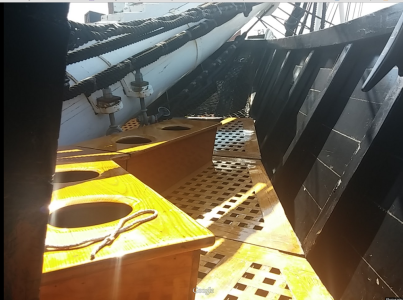
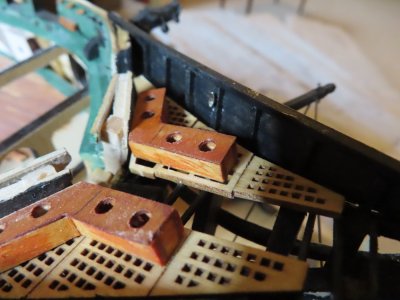
There is a slight swoop up towards the stem tip that required some fine tweaking, but I eventually got the seat of eases installed on top of the rail support bracing beams. This image shows the seats installed with the unfinished bowsprit dowel dry fitted in place for show. The top rail will complete the bow.

IMG_2305.JPG
 
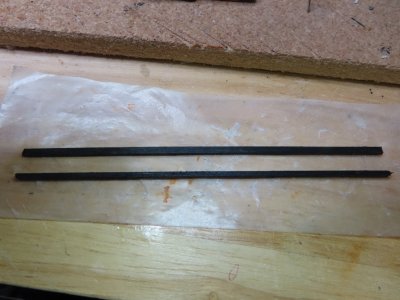
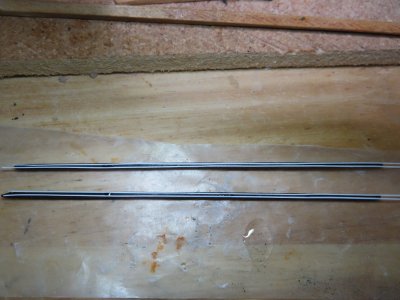
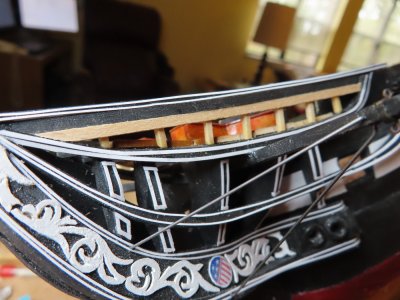
The final major part of the bow is the bow top rail and the planking below it. Finally, a simple rail to construct. It is a straight piece of 1/16” x 3/32” stock basswood, cut to length, painted black with 1/64” white pinstripes added.

IMG_2306.JPG

IMG_2307.JPG

IMG_2308.JPG
 
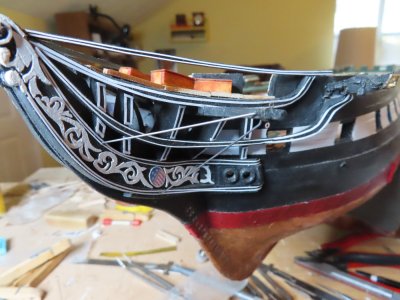
Using a 3/8” spacer, seven 1/16” x 1/16” vertical posts were spaced and glued into place from the second rail up to the first. The plans appear to show an eighth post right next to the hull, but since that rail would be buried behind the forthcoming planking, it wasn’t worth the effort to install it.

IMG_2311.JPG

IMG_2309.JPG

IMG_2310.JPG
 
1/32” x 3/32” basswood was used as the planking material in lieu of the plan called 1/64” x 3/32” stock because that was not supplied in the kit as noted in the practicum. I believe that the 1/16” was a typo in the plans. Each plank had to be custom sized and shaped before installation. I painted the top and bottom planks black before installing them to make painting near the rails easier later on. Bothe sides of the planking were painted black.

IMG_2312.JPG

IMG_2313.JPG
 
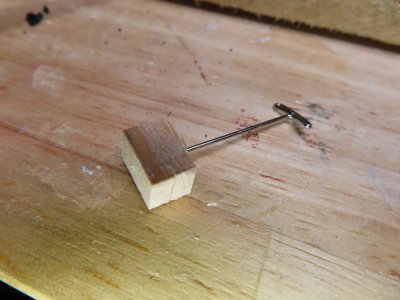
One last check of my photos revealed one more detail, a cleat had to be installed. I was going to check my supply of cleats I previously purchased building the Rattlesnake but for the life of me, I couldn’t find them. They were not where I thought I stored them. This gave me a chance to brush up on making them with a method I taught myself some years back.

Seats of Ease 02.png
 
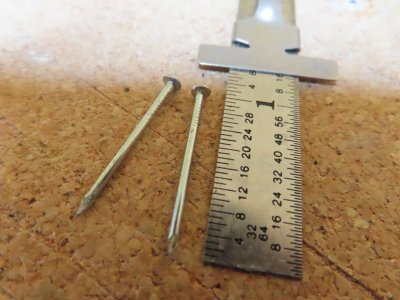
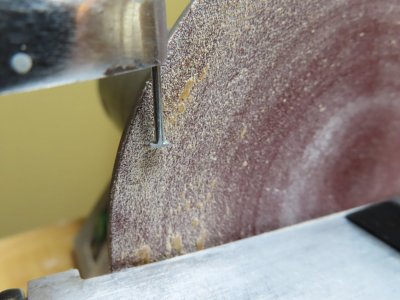
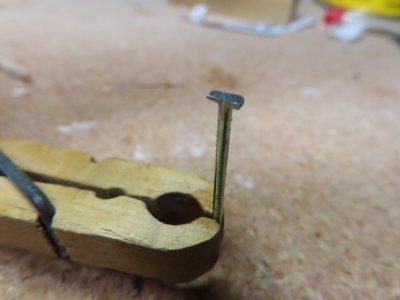
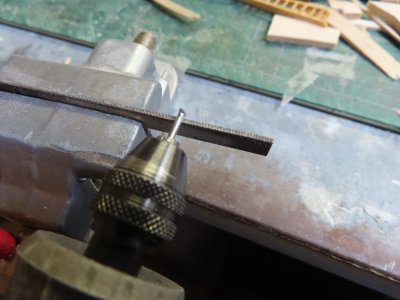
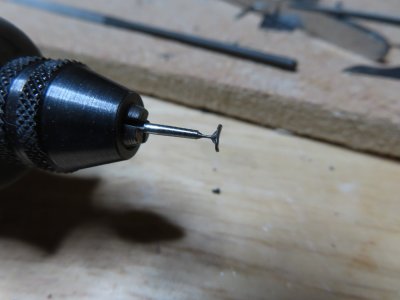
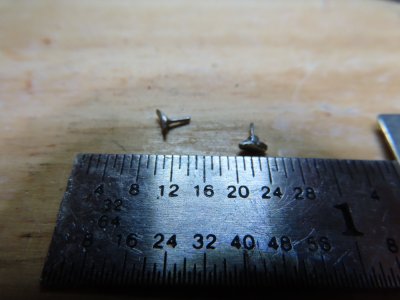
Using a 1” nail with a flat head, I ground off two opposing side flush to the shaft. Then with a Dremel rotary tool and needle files, the remaining portion of the nail head was fashioned to look like a cleat. Next, the shaft of the nail was placed into the Dremel rotatory tool so it acted like a mini lathe. A file was clamped with a vise and the nail shaft was ground such that the shaft was narrowed down to a very small diameter while leaving a small section at the top, thick. When satisfied, the part was cut off resulting in two tiny cleats with a pin at their base which were inserted into drilled holes (#44 bit) on the fourth posts port and starboard.

IMG_2314.JPG

IMG_2315.JPG

IMG_2318.JPG

IMG_2322.JPG

IMG_2321.JPG

IMG_2323.JPG

IMG_2324.JPG
 
Rudder Post Ports

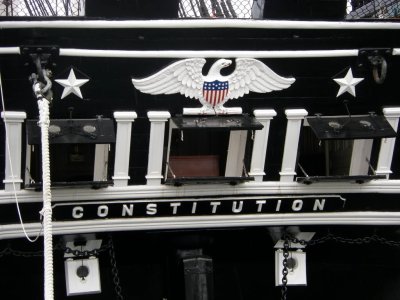
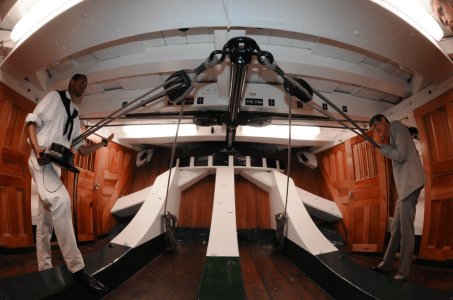
For the time being, I’ve finished with the bow excluding the bowsprit and rigging. It’s time to work once again on the stern. First up, the two ports on either side of the top of the rudder post. The practicum calls them “chase ports” but chase ports are gun ports facing forward at the bow or aft at the stern. These are not gun ports on the USS Constitution. When the port is opened, you can see there is a round cross-section tunnel leading up to the tiller room area in the berth deck above. There is no room for a gun or even a man standing. Surprisingly, I could not identify where the tunnel opened in the tiller room.

IMGP1945.jpg

Sally_Jewell_on_USS_Constitution_(14449863371).jpg
 
I don’t know what the purpose of these ports is. I can only speculate that maybe they are used for the maintenance of the rudder assembly or even repair of the rudder at sea. Possibly, ropes could be lowered down to facilitate an ad hoc rigging of the rudder due to battle damage. Or it could be simply a way of venting air in the tiller room. If anyone knows what these ports are called or what their purpose is, please let me know.

The kit plans for the port doors show they are to be fabricated and installed in the closed position on the model. The practicum goes one step further and just etches the port door seams into the hull with an X-acto knife. No fabrication at all except for the round porthole because as the practicum states: “These ports are barely visible close up so no need to go overboard with them.” Well, as most of you readers know by now, I like detail. So, not only will I fabricate them, but I will also attempt to install them in the open position. I just can’t help myself.

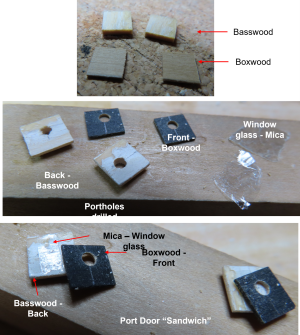
My port doors were constructed like a sandwich. The outer layer was 1/32” boxwood to be painted black on the outside face, The middle layer is a piece of mica to be the porthole glass, and 1/16” basswood for the inside layer with its face to be painted white.

Rudder Post Port Door - Fabrication.png
 
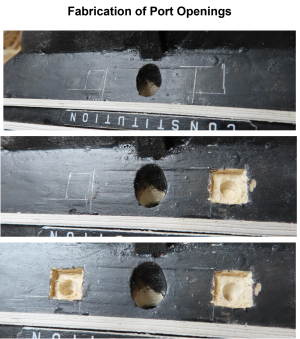
The port openings were marked on the transom and chiseled out using fine chisels and a Dremel rotary tool to a depth approximately equal to the port door thickness. Next, a hole was drilled vertically towards the tiller room area. The round opening size was determined by my calibrated eyeballs. The openings were painted white.

Rudder Post Port Openings - Fabrication.png
 
The kit provided photoetched hinges which were not suitable for my purposes:

  • The hinges on the actual ship extend the whole vertical length of the port door and over to the transom below the port opening. The kit’s photo-etched hinges are the same hinges to be used on the gun ports. Those are half of the hinge. The other half would be fastened to the inside of the gun port opening.
  • I needed physical support for the doors. Because there is so little glueable surface area on the hinges, actual nails were required to secure the hinges to port doors and transom face.
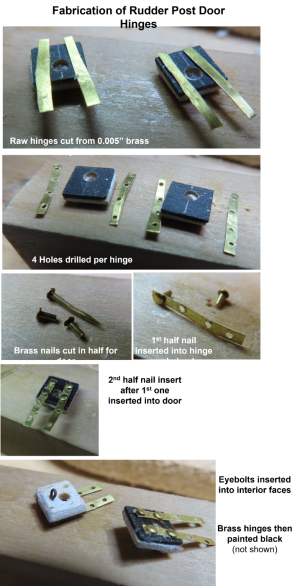
With a pair of small scissors, four 1/16 strips of 0.005” brass plate were cut to size; the vertical length of the door plus the extension to attach to the transom. Two pieces per door were required.

Four holes were drilled into the hinges with a #69 bit to accept the small brass nails for each hinge. Two nails to go into the door and two nails to go into the transom. The brass nails for the port door had to be cut in half because their length was longer than the thickness of the doors. Getting the brass nails through the hinge and into the meat of the door was a little tricky.

  1. Locate the position of the first nail and mark it with a pin indentation.
  2. Drill the hole using the pin indentation to start the drill, to a sufficient depth to accept the nail.
  3. CA glue the half nail in the first hole on the hinge.
  4. Place the hinge with the half-nail into the drilled hole in the door. This positions the second hole.
  5. Drill the second hole in the port door through the hole in the hinge.
  6. Insert the second half nail into the second hole.
  7. CA glue the nails and hinges
  8. Repeat for the remaining hinges
Once all the brass nails were inserted into the port door, the hinges were painted black as well as any required painting re-touches. You may have noticed that the nail heads appear to out of scale with the hinges. This couldn’t be helped as I had no other smaller brass nails. No mater though, they won’t be seen in the final assembly.

Rudder Post Door Hinges - Fabrication.png
 
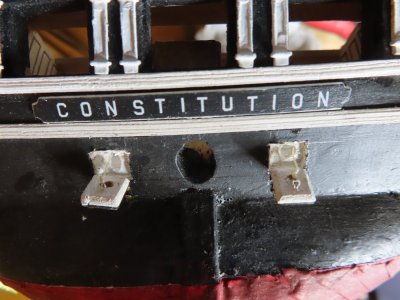
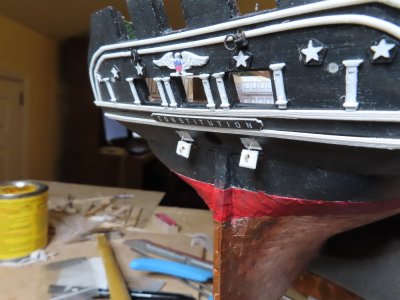
The last step was to add eyebolts on the inside face of the doors for the pull cord that opens and closes the door. Plain sewing thread was used. One end tied to the eyebolt and the other loose. Once the thread was stiffed with CA glue, the loose end was inserted into the round tunnel after the port doors were nailed to the transom. The stiffened thread looks taught, and no one can see it’s not secured to the inside the hull. The doors were positioned by bending the hinges, so they hung perfectly vertically.

IMG_2340.JPG

IMG_2341.JPG
 
WTF

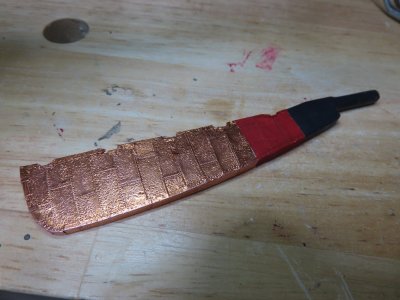
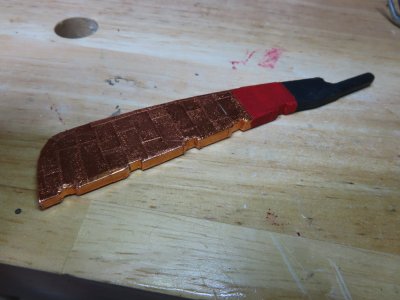
I had expected that my next post would be the fabrication and installation of the rudder hinges. Since my last post, I have fabricated the gudgeons and was about to install them onto the hull. To do that, I was going to use the rudder I finished last August, to mark the positions of the hinge and gudgeons on the hull so they would align with the rudder pintles. There was only one teeny, weeny, little problem. My rudder has vanished! It wasn’t in the box I thought I would put it in. I’m pretty good at finding tiny bits of stuff I drop on the rug in my work area. I swear that rug eats anything, and things don’t bounce on it in a logical manner. Yet, I manage to find what I’m looking for (most of the time) given enough motivation. This is a painted and copper plated object about 5” x 1” x 3/16” and I can’t find it after two days of searching!

There is no one else in my house as I am a lifelong bachelor except for my 14-year-old cat who grazes on her food throughout the day when she is not sleeping or asking for affection. She has never ever touched any of my model stuff in her life, but even so, I did check under the furniture in the whole room just in case. Nothing. It appears it has vanished to the realm of missing socks or some such place.

I do know of one method of finding it, and I’m afraid I am going to use it. All I must do is fabricate a new one. Once I’ve done that, the original one will miraculously reappear. So, today I reluctantly ordered a replacement part from Model Expo. In the meantime, to keep working on the model, I plan to work on the sea steps. I will post my progress with that then post what I have already done on the rudder hinges to keep the processes coherent for the readers. We’ll see what happens.

 
Sea Steps

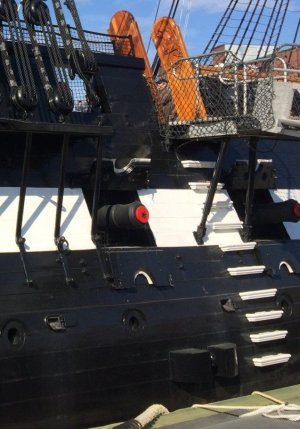
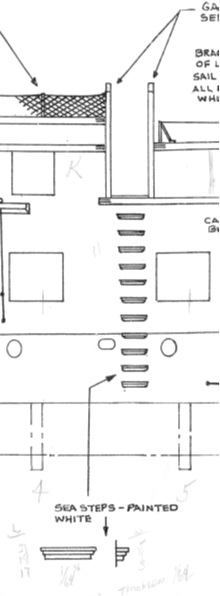
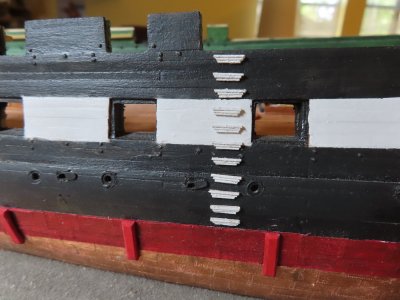
The kit plans indicate there are eleven sea steps on each side of the hull, climbing from the water line up to the spar deck. Each step is comprised of an upside down, three-piece, four-sided pyramid. Three sides step outwards by 1/64” per tier on the edges while the fourth side is flush with and is attached to the hull. Surprisingly, there are very few images of the sea steps with detail. This one will have to do.

Sea Steps.jpg

Sea Steps - Kit.png
 
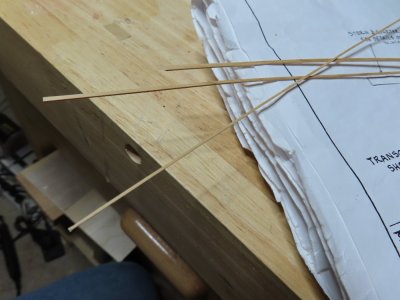
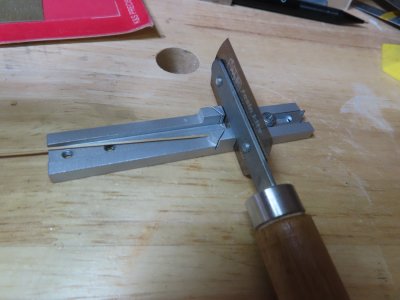
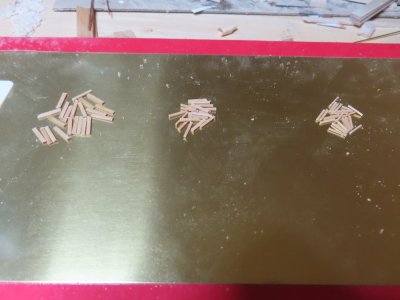
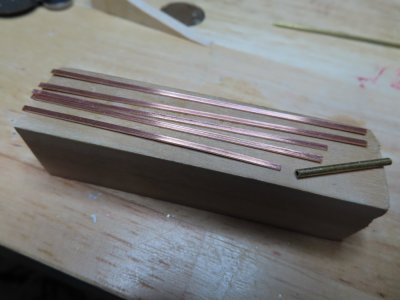
The practicum uses styrene as the material of choice. I chose to use wood instead of plastic. I used boxwood because it doesn’t splinter apart when cut to short narrow pieces and it can hold an edge. I used my Byrnes saw to cut a 3/8” wide strip, 1/64” thick from some stock material. Then I cut the strip into 5/64”, 4/64”, and 3/64” length strips. These strips were then cut again to 21/64”, 19/64”, and 17/64” length pieces respectively using my micro miter and razor saw.

IMG_2352.JPG

IMG_2353.JPG

IMG_2354.JPG
 
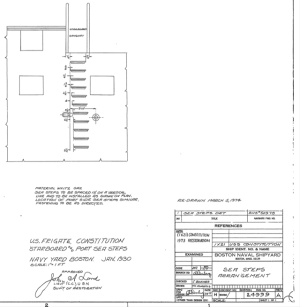
Comparing the US Navy plan No. 24999001 vs the kit’s, I noticed that the steps on the kit’s plan drop vertically straight down while the US Navy plan, six steps skew diagonally forward a maximum of 6.5” or 5/64” scale. The reason for the skew is there is a scupper cover the steps are avoiding. As it turned out, I did have the scupper located where it should be but did not have to make any adjustment that the eye could perceive.

Sea Steps Arrangement - US Navy.png
 
To make matters more confusing, although both the Kit’s plan and the US Navy show eleven steps, the US Navy plan shows seven of the steps are below the gun port while the kit shows only six. To clear this up I checked my photos, only to find the actual ship only has ten steps total. It did show, however, that there are only six steps below the gun port. I think the eleventh step was removed at the very top to allow for the visitor gangway to be installed.

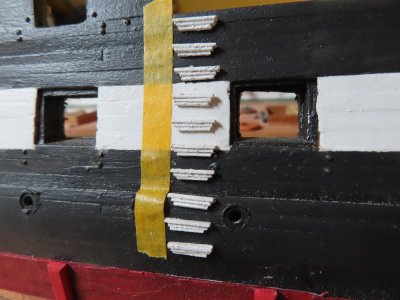
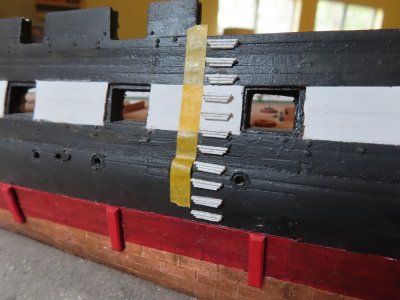
The step locations were marked by a piece of tape positioned on the hull which aligned the steps horizontally. A spacer block was used to ensure vertical spacing was consistent.

BTW, it’s been a week and I’m still waiting for the replacement rudder.

IMG_2358.JPG

IMG_2359.JPG

IMG_2360.JPG
 
Well, Model Expo came through sending me, at no cost, kudos for their excellent customer service, the laser cut sheet that had the raw rudder. Just like before, the raw stock part was shaped, coated four times with Wipe-on Poly, copper plated, and painted. Now I’m ready to get back to the hinges. However, as of this writing, I still have not found the original rudder.

IMG_2364.JPG

IMG_2365.JPG
 
Rudder Hinges

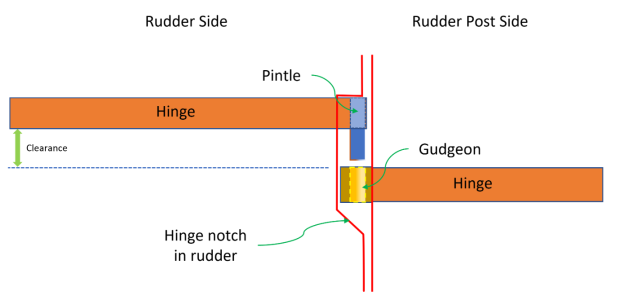
For a simple mechanism, the hinges will require a high degree of precision to allow the rudder to pivot effortlessly. All the hinge parts must line up precisely or the rudder will bind. Also, the rudder must be able to move vertically to provide sufficient clearance space for the pintles to move into position to drop down into the gudgeons.
2015 -Pintles & Grudgeons - Drydock.png

Gudgeons & Pintles.png
 
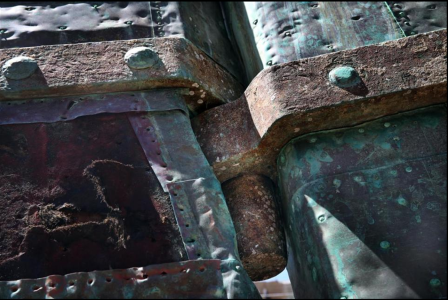
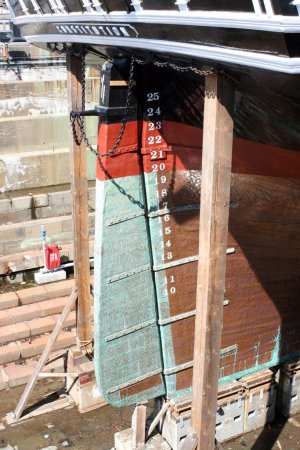
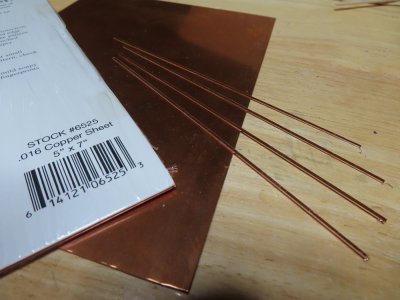
I had to do some thinking about how to fabricate the rudder hinges. Robert Hunt’s practicum opted to make a non-functioning rudder using styrene as the build material of choice. Looking at Ken Forman’s (xKen) build log (my go to alternative guidance), he created functioning rudder using brass which I liked. Both builders painted their hinges black. Others who used brass sometimes left their hinges as bare shiny metal. However, looking at the pictures of the actual rudder, I noticed the color of the hinges matched the background colors of the green patina of the copper plate, the red waterline, and black painted hull. Does that mean the green hinges are made of copper? More than likely, they were made of iron but were colored by the bleeding patina of the copper plates. For my model to have the same color of the copper plates as it ages, my hinges were made from 0.016” copper sheet. Remember, it’s a model, not a miniature replica.
Rudder - Drydock.jpg

IMG_2342.JPG
 
I used my Byrne’s saw with a fine-tooth blade to slice the 1/32” strips of copper from the sheet without any problem. The strips were cut to length. Some builders attempted to simulate the hinge fastening bolts, but I decided, as much as I wanted to, to forego the attempt as the final product would most likely be out of scale or be too small to matter at 1/76.8 scale and not worth the effort, less than 1/128” in diameter or about 1/3 the width on the hinge.

IMG_2343.JPG
 
Back
Top