-

SUBSCRIBE TO SHIPS IN SCALE TODAY!
The beloved Ships in Scale Magazine is back and charting a new course for 2026!
Discover new skills, new techniques, and new inspirations in every issue.
NOTE THAT OUR NEXT ISSUE WILL BE MARCH/APRIL 2026 -

Win a Free Custom Engraved Brass Coin!!!
As a way to introduce our brass coins to the community, we will raffle off a free coin during the month of August. Follow link ABOVE for instructions for entering.
You are using an out of date browser. It may not display this or other websites correctly.
You should upgrade or use an alternative browser.
You should upgrade or use an alternative browser.
San Felipe 1690 by ZHL
- Thread starter Etwas_63
- Start date
- Watchers 21
-
- Tags
- san felepe zhl

- Joined
- Oct 1, 2023
- Messages
- 2,227
- Points
- 488

Probably need one like that for this kit

Just as an FYI a culverin is not a type or pattern, it is the English name of a size/caliber of cannon that shot balls that weighed about 17 to 18 pounds. It was lighter in construction than later 18 pounders, a trend started by the French navy at that time. There was a small percentage of culebrinas on Spanish ships but again, they were mounted on four truck carriages and looked like barrel #7 and carriage in #1 in your post.the Chinese meant this type of culverin
Allan

After all, we're just building a fantasy about a Spanish sailboat, not a museum model, so we're enjoying the process without delving too deeply into the subject.Just as an FYI a culverin is not a type or pattern, it is the English name of a size/caliber of cannon that shot balls that weighed about 17 to 18 pounds. It was lighter in construction than later 18 pounders, a trend started by the French navy at that time. There was a small percentage of culebrinas on Spanish ships but again, they were mounted on four truck carriages and looked like barrel #7 and carriage in #1 in your post.
Allan
Haha, your comments about the Kulevrin reminded me of the slightly toxic audience on Russian-language model ship forums))). It's a bit amusing to observe the differences in communication, competence, and atmosphere between Russian and Western websites. On your website, a person is building a model for the first time, making mistakes and sometimes failing. The commenters say, "Wow, man, you're awesome, keep going, we're looking forward to your new posts and photos of the construction!" Inspired by the positive feedback, the person continues to create with enthusiasm, learning from their mistakes... In our case, a man has been building a 100-gun battleship for five years, complete with rigging and almost museum-quality accuracy...
Russian-speaking forum participants: "Dude... Well, the foremast's diameter should be half a millimeter thicker, the mainmast should be tilted one degree to the left, the gun carriages are complete crap, and the boats should be thrown away and forgotten like a bad dream. In short, everything needs to be redesigned, or even better, rebuilt from scratch... This model is completely inadequate. In any case, it doesn't seem to be your thing, so why don't you try something else?" A person burns the model to hell and gets drunk, falling into depression))).
There's a certain amount of humor in this, but the difference in communication is quite noticeable. However, I must admit that it was only on our Russian-language forums that I found the most useful information and specific tips for building this particular model, both the Chinese model and the Mantua model, with all the necessary drawings, dimensions, and even translations of the instructions into Russian. On English-language or German websites, I couldn't find even half of the answers to my problems.

- Joined
- Jun 2, 2025
- Messages
- 328
- Points
- 238

I didn’t get any instructions with mine. All I could find are the mantua instructions that seam to stop at the mast stages. I’ve been mainly working off the plans.
It’s not been an easy build. Very frustrating at times. In the end. I’ve got a mostly completed hull.
The instructions for this kit appears at least to myself rarer than gold. lol. It’s like it’s the most important possession and dare not be shared. No disc. Nothing all I have is a book on the parts list, which has been very helpful.
I do love the size at 1/50 scale. I think it’s going to look great when completed.
It’s not been an easy build. Very frustrating at times. In the end. I’ve got a mostly completed hull.
The instructions for this kit appears at least to myself rarer than gold. lol. It’s like it’s the most important possession and dare not be shared. No disc. Nothing all I have is a book on the parts list, which has been very helpful.
I do love the size at 1/50 scale. I think it’s going to look great when completed.
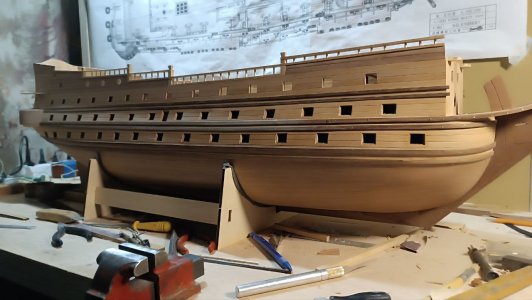
I've finished sheathing the sides below the quarterdeck. I still haven't decided what to finish the forecastle and quarterdeck with. The blue hornbeam issue is still unsolved. I'm leaning toward mahogany, which I used for the lower hull. But I still have work to do on the forecastle and head, and I've also thought about using padauk (a solid red material) to frame the gunports. I'll also use it later to make the inside of the gunport covers, so I don't have to paint them.


- Joined
- Oct 1, 2023
- Messages
- 2,227
- Points
- 488
This is absolutely phenomenal. The view of the stern cements what I’m looking at to get started again. I’m doubly determined to get out of the hospital and get back to buildingsI've finished sheathing the sides below the quarterdeck. I still haven't decided what to finish the forecastle and quarterdeck with. The blue hornbeam issue is still unsolved. I'm leaning toward mahogany, which I used for the lower hull. But I still have work to do on the forecastle and head, and I've also thought about using padauk (a solid red material) to frame the gunports. I'll also use it later to make the inside of the gunport covers, so I don't have to paint them.
View attachment 558250View attachment 558252
View attachment 558259View attachment 558253View attachment 558254View attachment 558255View attachment 558257View attachment 558258
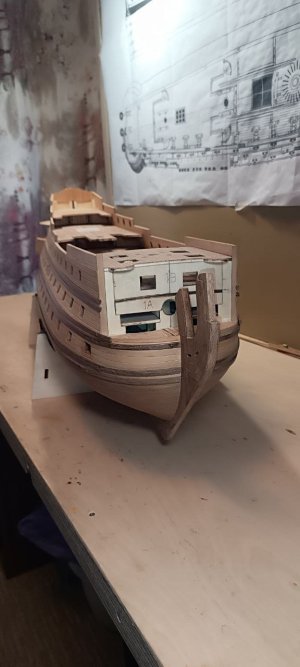
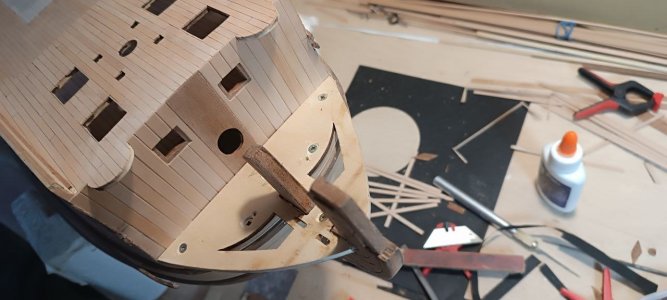
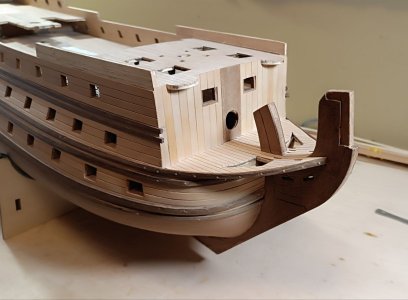
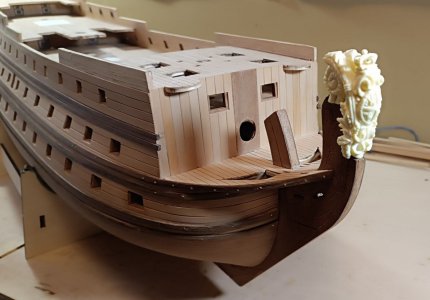
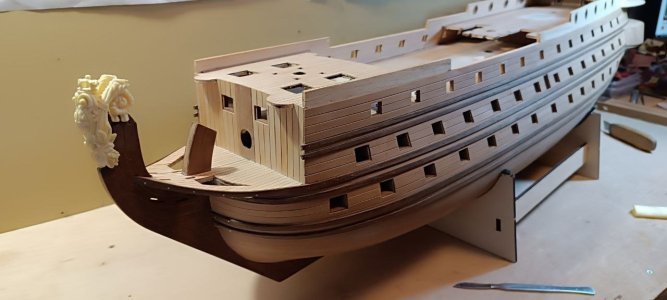
Some preliminary work on the bow. I glued and screwed the base tightly to the basswood boss and keel frame. I think this is more secure and without gaps. I covered the bottom with mahogany veneer, and the deck with the same pear wood planks as the rest of the deck. I also extended the valance so it runs smoothly to the knyadiged. I glued it in place and nailed it with brass nails. The vertical board in the forward bulkhead is made of 1.5-gauge mahogany plywood. For now, work on the bow is put on hold; first, I need to finish the stern, so I can plank the quarterdeck and finally get to the gunwale railings.
A small remark. I had to edit the translation several times, even of such a small text, and still the same Google translator translates the ship's terms disgustingly, however, he is not the only one. It often turns out to be complete gibberish. I hope that the general meaning of my messages is clear to native English speakers.)))
A small remark. I had to edit the translation several times, even of such a small text, and still the same Google translator translates the ship's terms disgustingly, however, he is not the only one. It often turns out to be complete gibberish. I hope that the general meaning of my messages is clear to native English speakers.)))
- Joined
- Oct 1, 2023
- Messages
- 2,227
- Points
- 488
Were getting what you are saying. Nice workSome preliminary work on the bow. I glued and screwed the base tightly to the basswood boss and keel frame. I think this is more secure and without gaps. I covered the bottom with mahogany veneer, and the deck with the same pear wood planks as the rest of the deck. I also extended the valance so it runs smoothly to the knyadiged. I glued it in place and nailed it with brass nails. The vertical board in the forward bulkhead is made of 1.5-gauge mahogany plywood. For now, work on the bow is put on hold; first, I need to finish the stern, so I can plank the quarterdeck and finally get to the gunwale railings.
View attachment 560171
View attachment 560169View attachment 560167View attachment 560170View attachment 560168
A small remark. I had to edit the translation several times, even of such a small text, and still the same Google translator translates the ship's terms disgustingly, however, he is not the only one. It often turns out to be complete gibberish. I hope that the general meaning of my messages is clear to native English speakers.)))
- Joined
- Jun 2, 2025
- Messages
- 328
- Points
- 238
lol. Must admit I was confused. Thought it was just me as I’m still learning all the ships terms. Sometimes I get lost with all the ship terms
- Joined
- Oct 1, 2023
- Messages
- 2,227
- Points
- 488
Me too. I feel like a fool when I find I've been using the wrong names for parts.
But I don't think it matters as long as they ve communicated my.problem or idea.
But I don't think it matters as long as they ve communicated my.problem or idea.
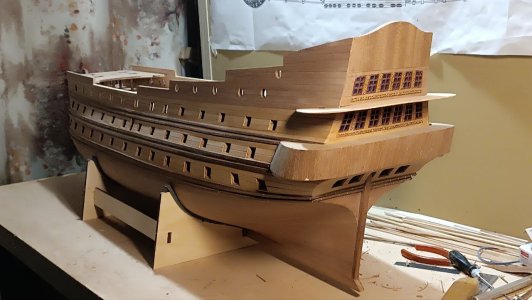
Nevertheless, I decided that I would not paint the hull of the quarterdeck and stern blue. I stopped at a red tree. I have just the slats left, which I sheathed the hull with below the waterline. After I cover it with tung oil, there will be a dark red shade of natural wood, I think gilding on jewelry will look good.
- Joined
- Oct 1, 2023
- Messages
- 2,227
- Points
- 488
I am impressed. I was also thinking of gilding. It should make a nice contrast tothe oiled woodNevertheless, I decided that I would not paint the hull of the quarterdeck and stern blue. I stopped at a red tree. I have just the slats left, which I sheathed the hull with below the waterline. After I cover it with tung oil, there will be a dark red shade of natural wood, I think gilding on jewelry will look good.
View attachment 560539


I can't wait to see it.Nevertheless, I decided that I would not paint the hull of the quarterdeck and stern blue. I stopped at a red tree. I have just the slats left, which I sheathed the hull with below the waterline. After I cover it with tung oil, there will be a dark red shade of natural wood, I think gilding on jewelry will look good.
It's going to be very different from what we usually see for the San Felipe.
I'm sure it's going to be very beautiful, like the rest of your work.
- Joined
- Oct 1, 2023
- Messages
- 2,227
- Points
- 488
I'm happy to have Etwas in the lead so I can follow his good results. He is the picture I'm building toI can't wait to see it.
It's going to be very different from what we usually see for the San Felipe.
I'm sure it's going to be very beautiful, like the rest of your work.
I started working on the tablet. I show you where to attach and which parts are designed for this purpose. There were questions about who didn't have instructions, and there were a lot of ambiguities in the instructions. Of course, the photos are just approximate calculations, you will need to adjust everything in place, but still.
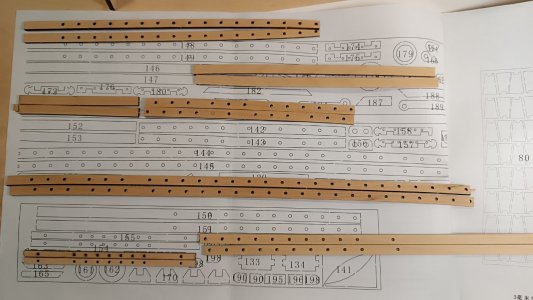
These are the details of the gunwale by numbers. Parts without holes 146, 147, as well as 152 and 153 are glued to the gunwale itself, and then drilled.
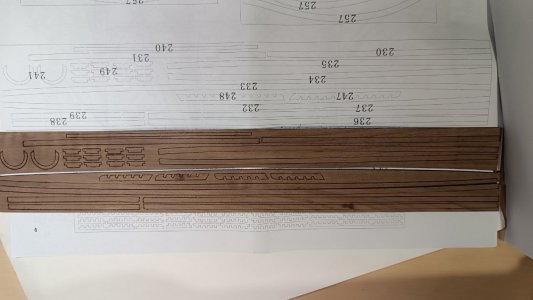
The walnut slats are already glued to the finished gunwale rails and cover the rack openings. I recommend gluing them after completing all the basic work on the hull and deck. This way they will better preserve their appearance.
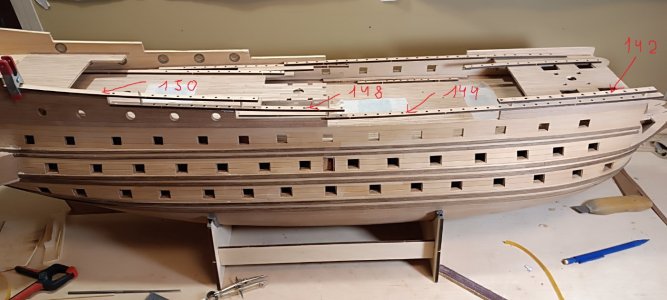
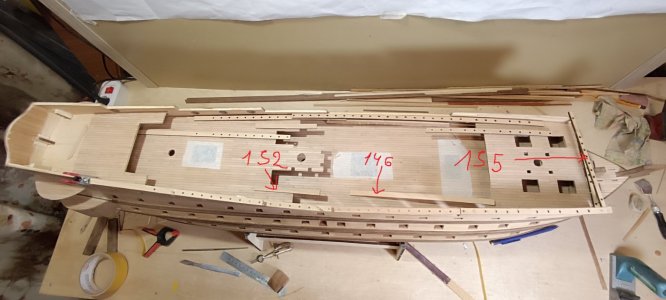
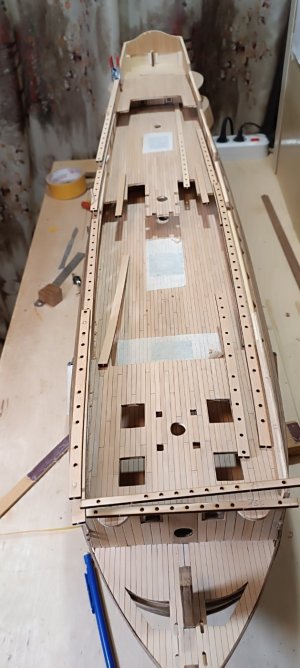
I hope everything is more or less clear in the photos. The only remark about the details of the most solid beech gunwale is that the slats are too thick — 3.3 mm. According to the drawing, their thickness should be from 2 to 2.5 mm.
These are the details of the gunwale by numbers. Parts without holes 146, 147, as well as 152 and 153 are glued to the gunwale itself, and then drilled.
The walnut slats are already glued to the finished gunwale rails and cover the rack openings. I recommend gluing them after completing all the basic work on the hull and deck. This way they will better preserve their appearance.
I hope everything is more or less clear in the photos. The only remark about the details of the most solid beech gunwale is that the slats are too thick — 3.3 mm. According to the drawing, their thickness should be from 2 to 2.5 mm.
Last edited:
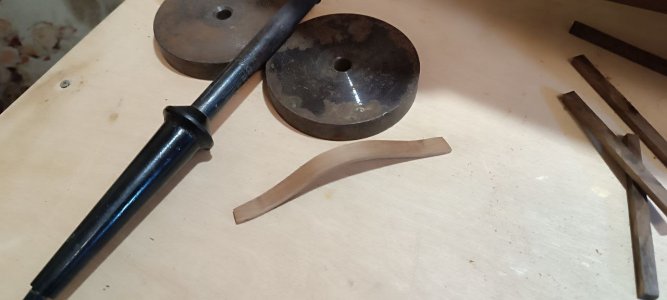
I've assembled it in rough form. Of course, everything needs to be adjusted to fit. The planks were initially cut with a slight allowance. The shaded areas in the top view will need to be removed later. The Chinese messed up the vertical posts here too; they're 1 mm smaller in diameter than the holes in the gunwale planks and dangle loosely. Life is a pain. I also bent the walnut plank for the top of the transom with a soldering iron.
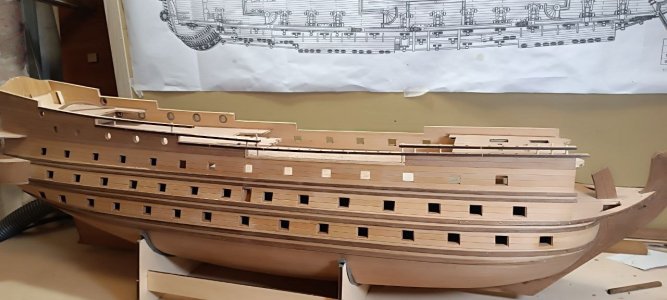
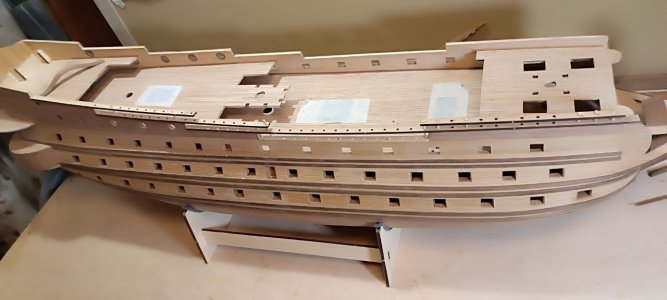
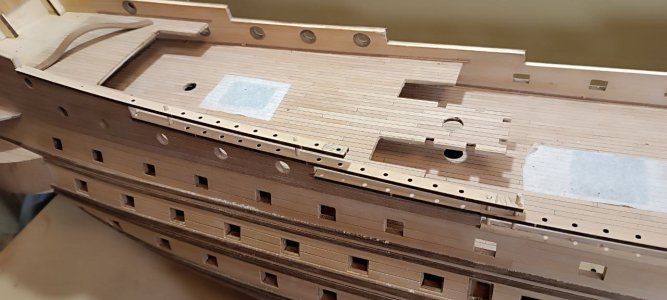
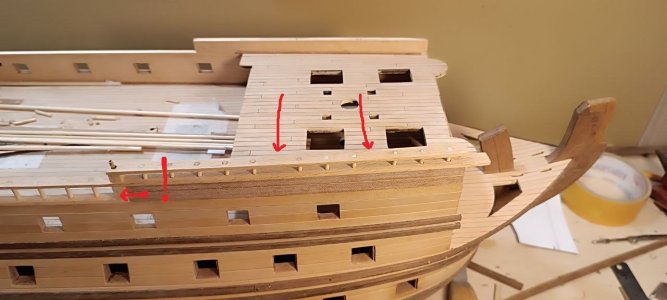
I continue to work with the tablet. And then the Chinese again made a mistake with the dimensions and holes on the slats. They just copied from Mantua. And everything would be fine, but the guns on the forecastle are too long and the round porticoes for them will be located where I indicated with the arrows, otherwise the carriages will rest against the hatch grating, and this will happen if they are assembled as is. Initially, when I took the dimensions of the inner sides of the gunwale and laid them out higher, I immediately noticed this and shifted the slats a little back. Who will proceed from my size, take this into account. But if you decide to redesign the guns and carriages by reducing them, then in principle you can not follow my advice, but do it as it is, but then recalculate the markings of the inner sides of the gunwale according to the drawing, and do not blindly follow my alterations and measurements of the sides.
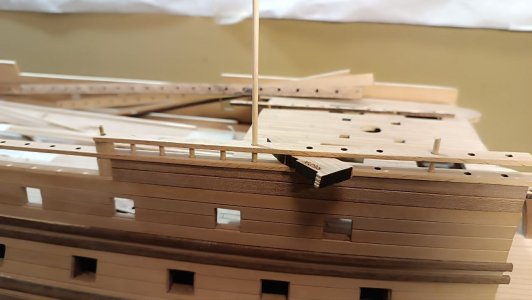
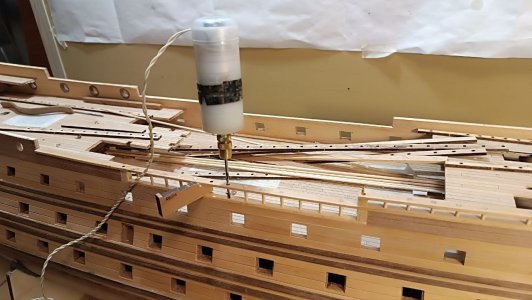
By the way, by the way, if you noticed, I not only glued the end posts, but I drilled through them by inserting a brass rod into them and connecting them to the side of the gunwale, I think it's more reliable than just gluing.
By the way, by the way, if you noticed, I not only glued the end posts, but I drilled through them by inserting a brass rod into them and connecting them to the side of the gunwale, I think it's more reliable than just gluing.