- Joined
- May 25, 2020
- Messages
- 1,418
- Points
- 443

What ho, shipmates!
I've had a cold all week and decided to forego working (except to teach my classes ). I also decided not to let my cold keep me from some productivity.
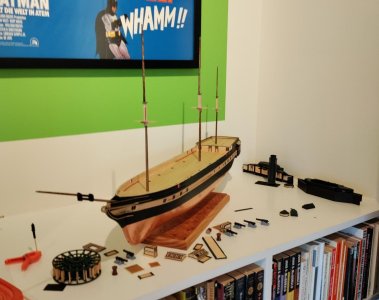
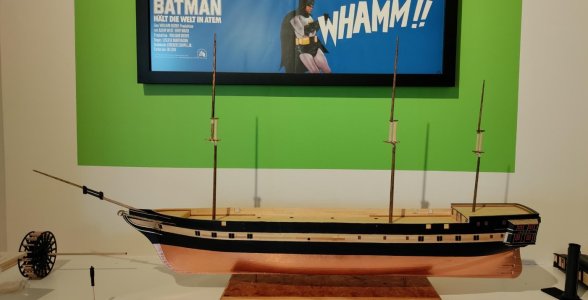
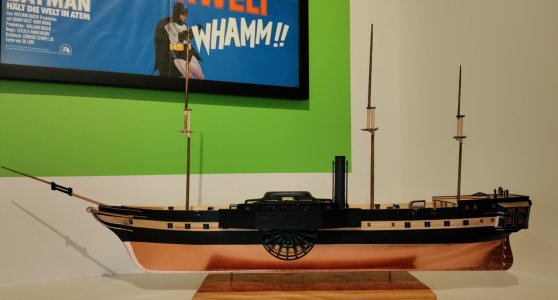
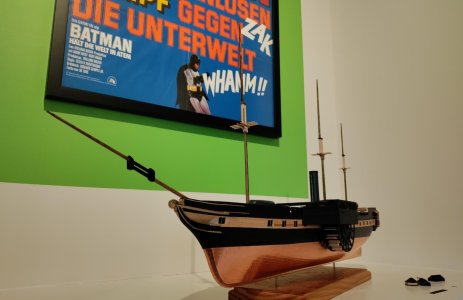
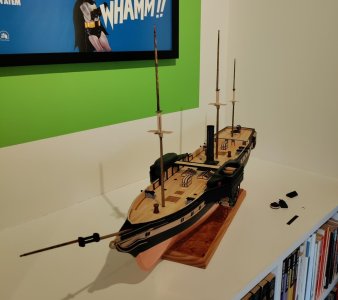
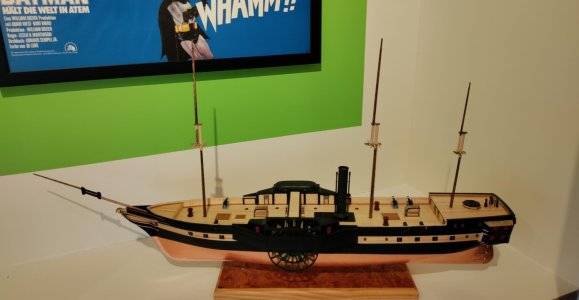
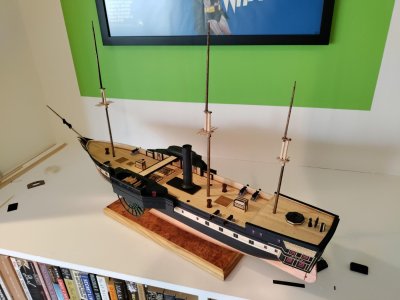
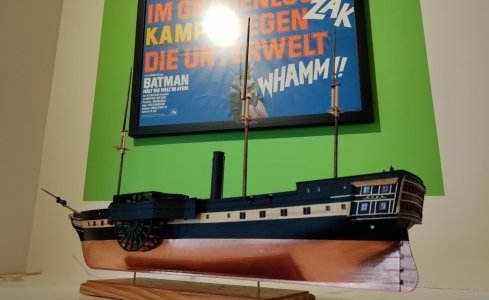
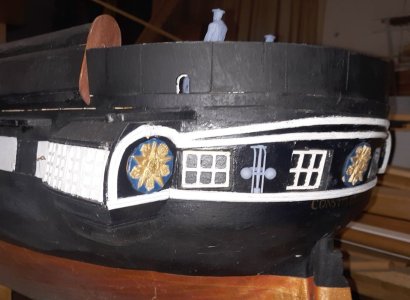
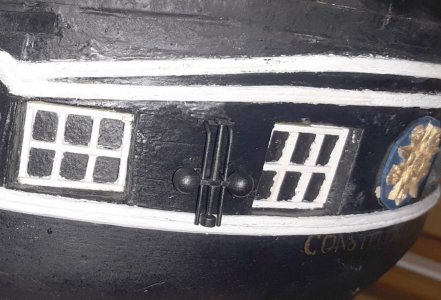
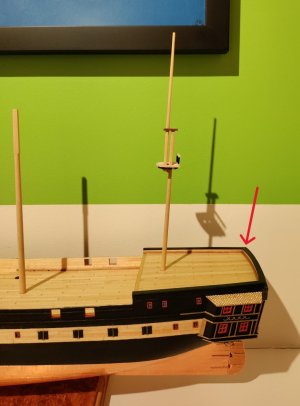
As you know I have a ton of brass work ahead of me. That work, happily, is for a later stage. At this point I still have much to do on the hull and there's always the work of turning masts . So, I placed the coaling chutes and got the poop deck cap rail on - nice to see the cap rail in place. My idea was to get the aft done - caprail and davits. I had it in mind to build one of the boat kits I sourced from @Model Shipways and use its finished dimensions to help with final davit placement. Well, friends, when I opened the plastic on the boat kit I realized that I was going to have a serious scale problem with the thickness of the planks. You'll probably say - duh! Yep.
I don't know why I keep thinking to "hack" a problem on this build. Don't worry. I've given up "hacking." I'll need to carve forms for the ships boats and build them from brown grocery bag paper planks the same way I did the bateaux-tamours. Another sub-project for another phase of the build. I'll also wait to add the stern davits because I'll be handling the hull quite a bit in the near future and don't want to break them off.
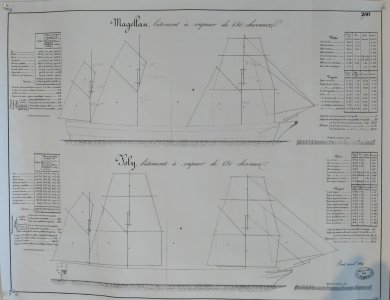
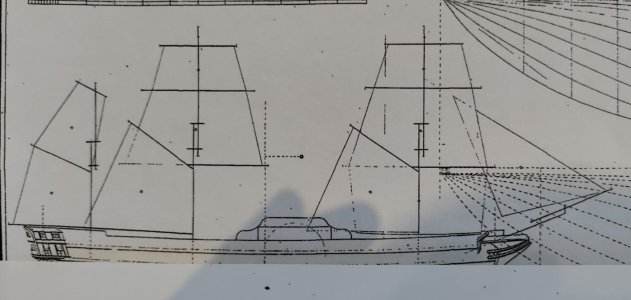
So, what's next? I decided to take Martin's advice and work on the masts. In an earlier post Martin noted that the model plan seems to have the foremast taller than the main. Indeed, that it what the kit would have one do. Taking measurements from the plans of similar ships and the proprtions of the masts from the sail plans of similar ships I determined that the foremast was not the tallest mast. The main mast was tall, but not by that much. Also the foretop and maintopmasts were the same height.
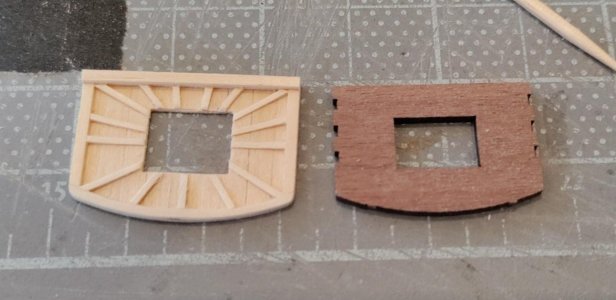
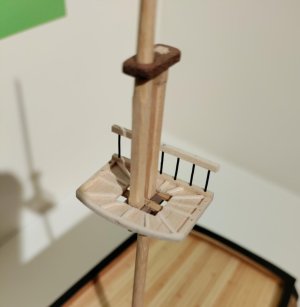
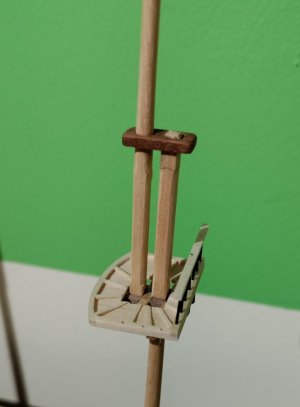
I have turned all of the lower masts. The mizzen cheeks, trestle trees and cross trees are complete as is the cap. Next up - the mizzen topmast and the mizzen top. Other than as a guide, the kit suppled cheeks and top were not used. The top is very thick (3mm) and not suitable to scale.
Pics later today And, Paul - I am plannng to paint the trestle trees, cross tress and the doubling - GREEN! (At least, that's the plan for now). I plan to leave the tops natural wood with some black accents.
I finally got paint from which to mix the red-ochre color Martin suggested for the carriages. Obviously I've gotten carried away, but at least with the masts built I can get the channels in place and set up the lower deadeyes. I also need to spend a lot of time making and placing tiny eyebolts for all of the riggin attachment points on deck etc. Any resemblance to Grant's ricochet rabbit is purely accidental
Blessings. Peace. Gratitude.
Chuck
Then, perhaps
I've had a cold all week and decided to forego working (except to teach my classes
). I also decided not to let my cold keep me from some productivity. As you know I have a ton of brass work ahead of me. That work, happily, is for a later stage. At this point I still have much to do on the hull and there's always the work of turning masts
. So, I placed the coaling chutes and got the poop deck cap rail on - nice to see the cap rail in place. My idea was to get the aft done - caprail and davits. I had it in mind to build one of the boat kits I sourced from @Model Shipways and use its finished dimensions to help with final davit placement. Well, friends, when I opened the plastic on the boat kit I realized that I was going to have a serious scale problem with the thickness of the planks. You'll probably say - duh! Yep. I don't know why I keep thinking to "hack" a problem on this build. Don't worry. I've given up "hacking." I'll need to carve forms for the ships boats and build them from brown grocery bag paper planks the same way I did the bateaux-tamours. Another sub-project for another phase of the build. I'll also wait to add the stern davits because I'll be handling the hull quite a bit in the near future and don't want to break them off.
So, what's next? I decided to take Martin's advice and work on the masts. In an earlier post Martin noted that the model plan seems to have the foremast taller than the main. Indeed, that it what the kit would have one do. Taking measurements from the plans of similar ships and the proprtions of the masts from the sail plans of similar ships I determined that the foremast was not the tallest mast. The main mast was tall, but not by that much. Also the foretop and maintopmasts were the same height.
I have turned all of the lower masts. The mizzen cheeks, trestle trees and cross trees are complete as is the cap. Next up - the mizzen topmast and the mizzen top. Other than as a guide, the kit suppled cheeks and top were not used. The top is very thick (3mm) and not suitable to scale.
Pics later today
And, Paul - I am plannng to paint the trestle trees, cross tress and the doubling - GREEN! (At least, that's the plan for now). I plan to leave the tops natural wood with some black accents.I finally got paint from which to mix the red-ochre color Martin suggested for the carriages. Obviously I've gotten carried away, but at least with the masts built I can get the channels in place and set up the lower deadeyes. I also need to spend a lot of time making and placing tiny eyebolts for all of the riggin attachment points on deck etc. Any resemblance to Grant's ricochet rabbit is purely accidental
Blessings. Peace. Gratitude.
Chuck
Then, perhaps





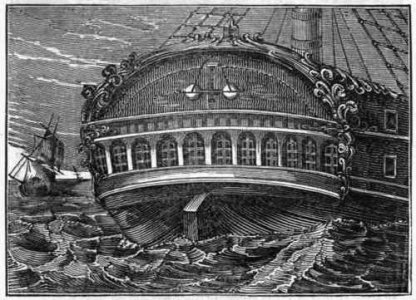
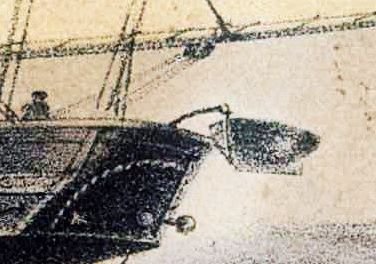
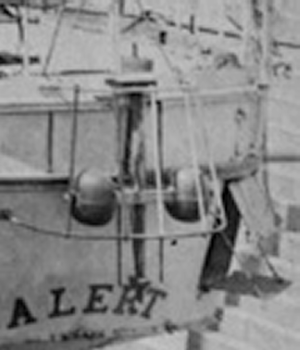
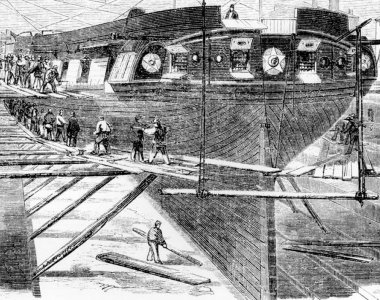

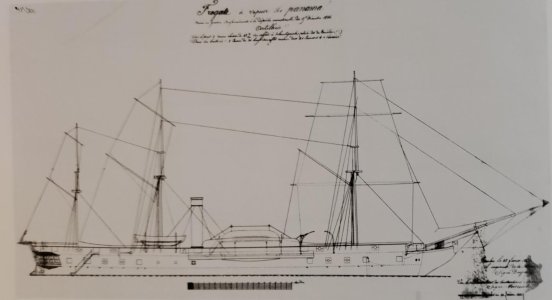
 I turned to my main resource for this class of ship, French Warships in the Age of Sail - it has a short chapter on paddlewheel ships. There I saw a fully rendered sail plan of L'Oreneoque's sister, Panama. Turns out the topmasts were the same length at the masts. Glad I got that figured out