
Very nice.

 |
The beloved Ships in Scale Magazine is back and charting a new course for 2026! Discover new skills, new techniques, and new inspirations in every issue. NOTE THAT OUR NEXT ISSUE WILL BE MARCH/APRIL 2026 |
|
 |
As a way to introduce our brass coins to the community, we will raffle off a free coin during the month of August. Follow link ABOVE for instructions for entering. |
|


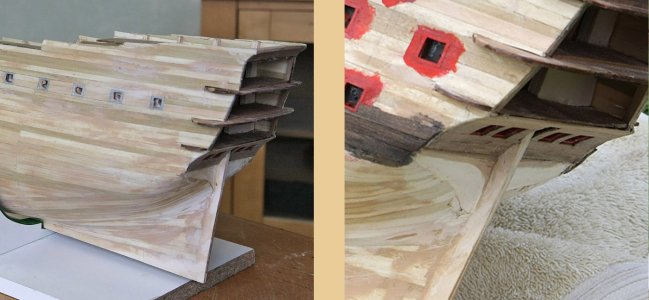

Hi Vic. I’ve built quite a few models now but this was the first time I’ve done the wales this way, it was so simple yet effective I wish I’d started doing it much soonerBeen there done that on the wales.
I’ll have to scrutinize what you did when I do wales again. I’m currently working on a cargo ship and have a paddle boat in the wings. It may be a while.Hi Vic. I’ve built quite a few models now but this was the first time I’ve done the wales this way, it was so simple yet effective I wish I’d started doing it much sooner
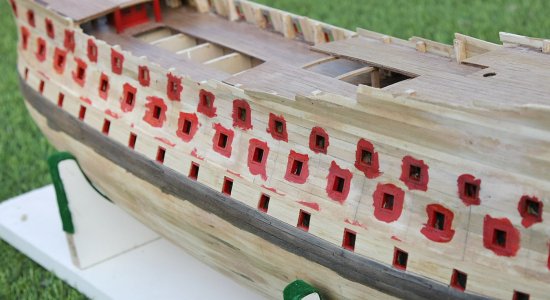
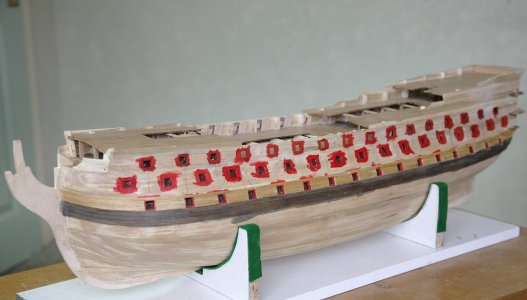
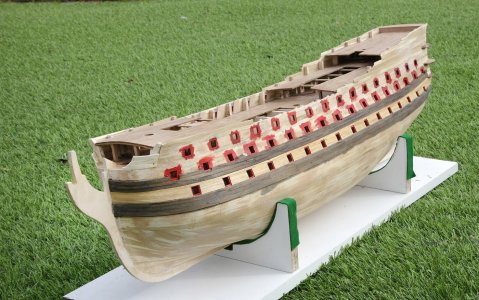
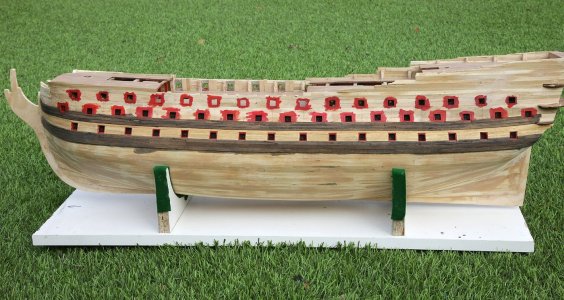
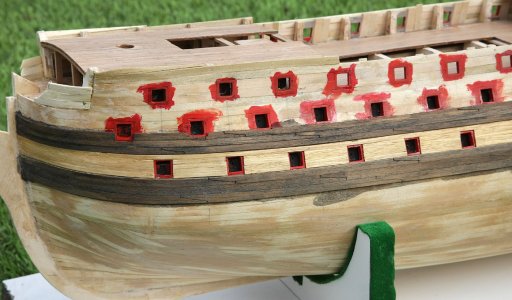


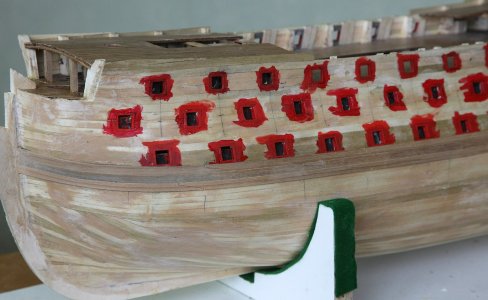
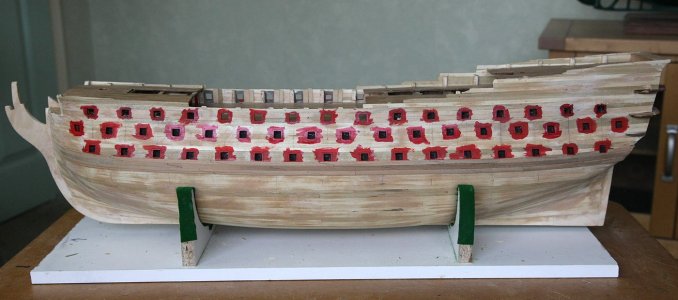
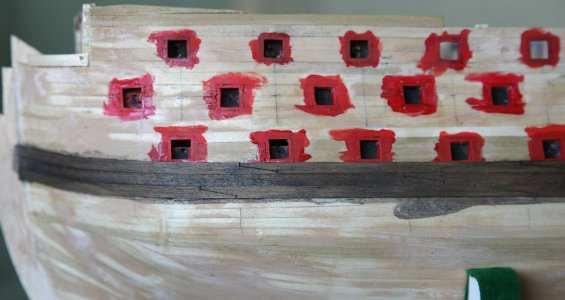
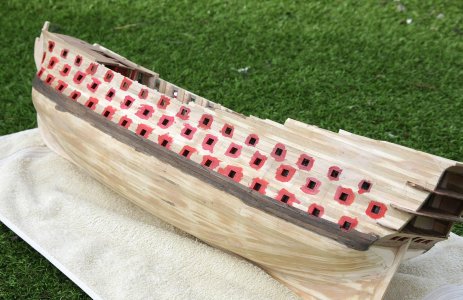
It is always the case, hours and hours of work and you wonder where the time went sometimes!The build continued. Not a great deal to show for many hours of work, but good progress all the same. The planking on the upper part of the hull is made up from boxwood, 1x3mm strips, this gives distinctive lighter colour bands between the ports without the need to paint, I like seeing the wood grain so was pleased with the unusual choice of wood. This is quite a large hull so I’m sure you’ll appreciate the extra time that it took using narrow 3mm planks and having to size them exactly between the ports. I completed the first section then put the middle wale on which was made up from 2x3mm walnut strips. I stained the wale ebony again but before doing that I sealed the boxwood so that I would be able to wipe it clean if some stain got onto it. It was coming along nicely as I’d hoped.
View attachment 580314
View attachment 580315
View attachment 580317
View attachment 580318
View attachment 580319
Nice scarfs!The build continued. Not a great deal to show for many hours of work, but good progress all the same. The planking on the upper part of the hull is made up from boxwood, 1x3mm strips, this gives distinctive lighter colour bands between the ports without the need to paint, I like seeing the wood grain so was pleased with the unusual choice of wood. This is quite a large hull so I’m sure you’ll appreciate the extra time that it took using narrow 3mm planks and having to size them exactly between the ports. I completed the first section then put the middle wale on which was made up from 2x3mm walnut strips. I stained the wale ebony again but before doing that I sealed the boxwood so that I would be able to wipe it clean if some stain got onto it. It was coming along nicely as I’d hoped.
View attachment 580314
View attachment 580315
View attachment 580317
View attachment 580318
View attachment 580319
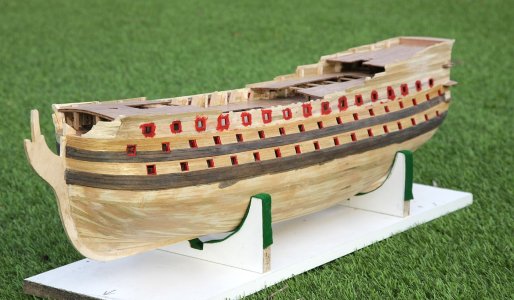
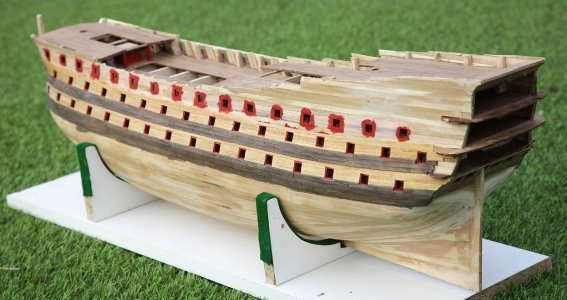
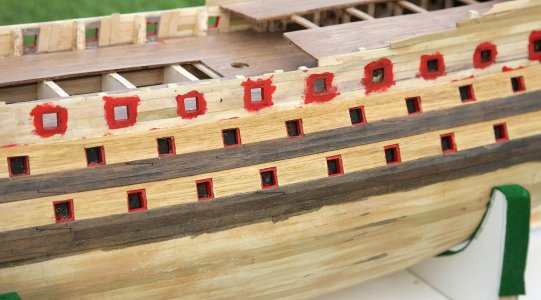
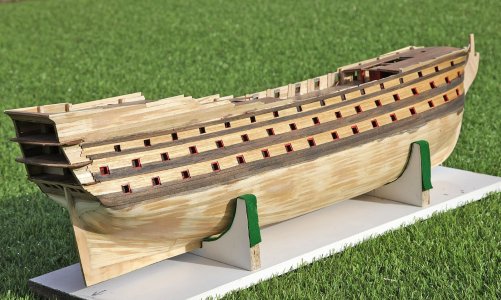
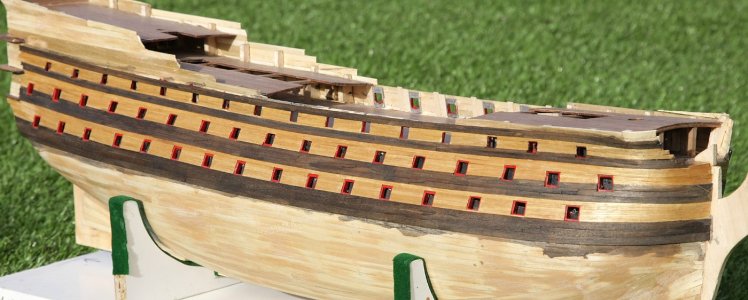
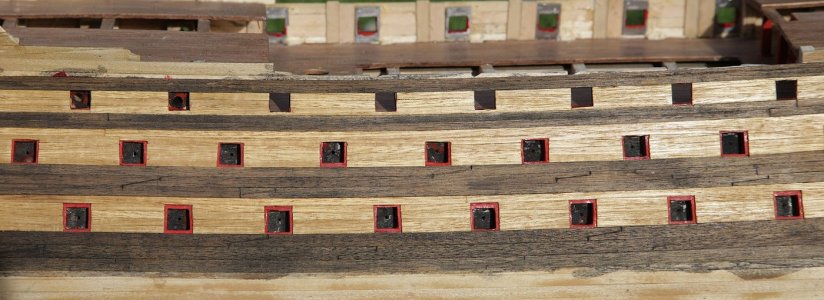
Hello. More of the same. Working my way up with the boxwood planking, wales and strakes. The wood is good quality and it is all coming together nicely.
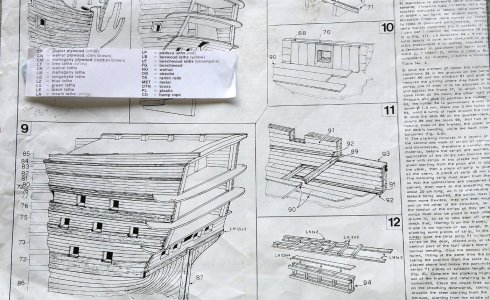
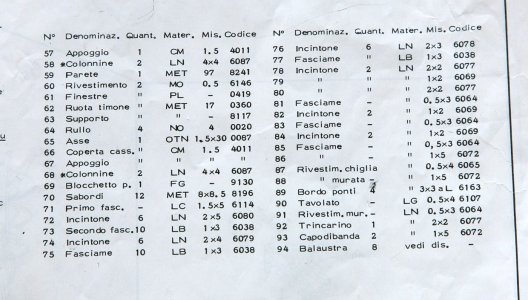
A word about Mamoli instructions which are quite comprehensive. You get a plan, a detailed diagram of each section and a reasonable description. You will see that every part is given a number, even individual planks, this number can be found in a list at the end of the instructions, it shows the type, size and quantity of wood to be used, you really can’t go wrong. It would be nice if all manufactures, especially Chinese ones could be as good.
View attachment 580923
View attachment 580924
View attachment 580925
View attachment 580926
View attachment 580927
View attachment 580928
View attachment 580929
View attachment 580930
Hi Dom. Thanks for commenting on my post. Yes I’ve built a Billings kit, Danmark, never again. You must have got their deluxe kit to have got those instructions.Very neatly done! If you've ever built a Billing's model you can appreciate good instructions......... Billing's typical instructions: Thank you for buying the kit. Part 1 use the the parts in the kit to build the model, Part 2. rig the model ...... end!
Hi Kurt, Thanks for the compliment, coming from you it was appreciated. I think that good instructions in a kit gives you confidence and takes away stress from the build. Manufacturers should understand that if your build is enjoyable and successful you are more likely to buy another of their products. Love your SOS build, awesome.I have Mamoli's Privateer Rattlesnake. Mamoli seems to have instructions that are well put together with decent illustrations. Corel provides a few large, well sequenced drawings and detail schematics, but the written instructions are almost nonexistant, with no descriptions on how to fashion parts, so you have to draw upon building experience to build them. In both cases, having an Italian dictionary or translator is needed for non-Italians.
Nice work on the upper final planking, Ken!

 !
!
Ha, so true. The smooth but unruly looking stage.at the moment I’m sanding the hull planks to get crisp clean edges, a task that doesn’t show any result for the amount of time that it takes.
Hi Paul. It always looks easy when it’s done, especially when someone else has done it.You make it all look easy, Ken. Just like your lawncare
It really is a lot of work, but I’m sure you’ll find the results worthwhile. Every time I FaceTime with my daughter, I see the Soleil Royal I built for her in the background, and I smile. I’m sure she sets up her iPad just so that I can see it.Good morning all. I’ve decided to bring you fully up to date on my build otherwise I’ll never catch up. What looks like just a small progress represents many hours work.
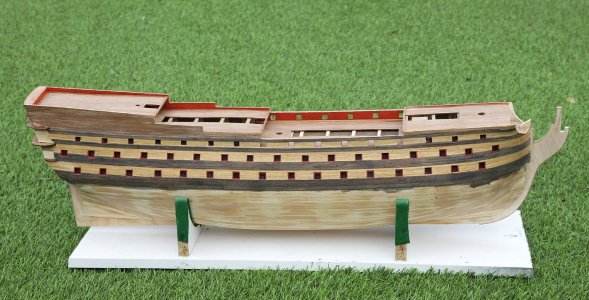
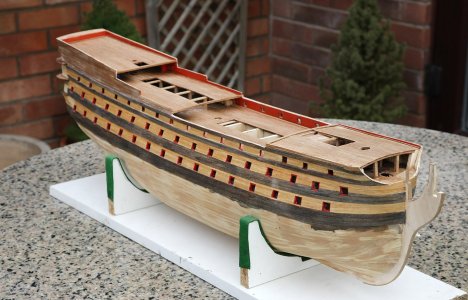
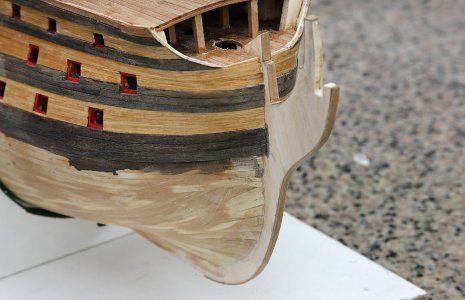
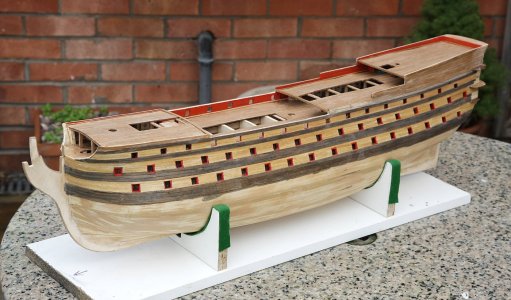
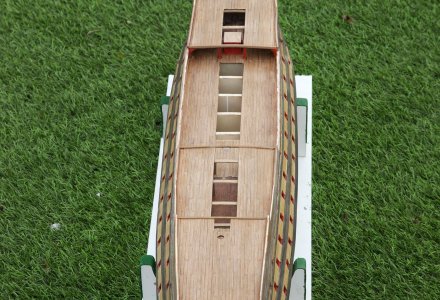
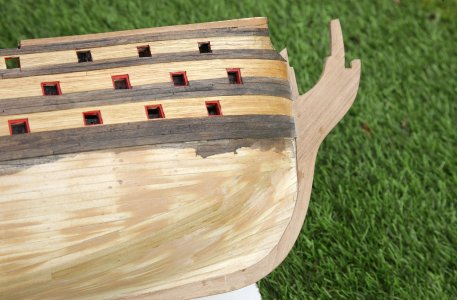
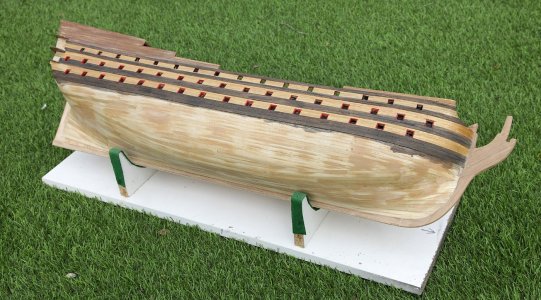
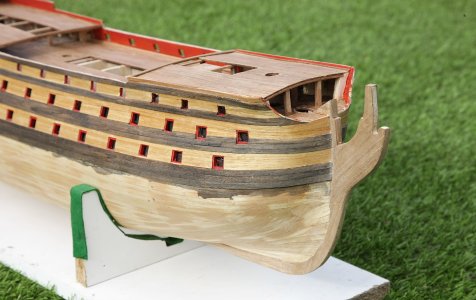
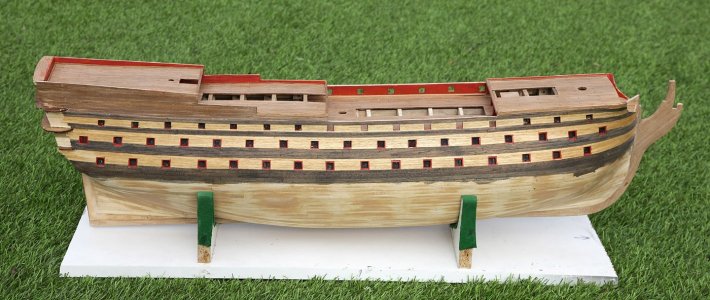
I covered the rear upper hull with .5mm walnut strip, it didn’t matter that it was different than the other woods, it was easier to apply and finish and it will be painted a French blue. I removed the bulkhead uprights from above the deck and completed the deck planking. I determined the height and positioning of the side walls and finished them off, a tricky task. I lined and painted the inner walls red before adding the waterways and I put in the deck edgings. The keel and prow are covered with 1x4mm walnut strip as is used for the lower hull planking. I first covered the edges then worked out the pattern to apply for the sides. I fitted them so that I gave myself a rabbet line to fit the hull planks into. There you have it, at the moment I’m sanding the hull planks to get crisp clean edges, a task that doesn’t show any result for the amount of time that it takes.
View attachment 581331
View attachment 581332
View attachment 581333
View attachment 581334
View attachment 581335
View attachment 581336
View attachment 581337
View attachment 581338
View attachment 581339
I wish I had a lawn that looked like that. Or did you take those pictures at the golf course?You make it all look easy, Ken. Just like your lawncare
Ken is way ahead of us dullards - he has astroturf!I wish I had a lawn that looked like that. Or did you take those pictures at the golf course?