My Honest Experience with the PL4-4 Rope Making Machine (and What I Wish I Knew First)
Hi everyone,
I wanted to share my honest experience with the PL4-4 rope making machine, especially for those who are just starting out or considering buying one. I’ve seen some great advice from John Cleek on here, and it lines up very closely with what I’ve personally gone through.
Why I Bought the PL4-4
To be completely upfront — when I first bought the PL4-4, I knew absolutely nothing about rope making.
- I didn’t understand S twist vs Z twist
- I didn’t know the difference between yarns, threads, and rope lay
- I had no idea how rope diameter was actually built up
Like many, I thought:
“Load up some bobbins, press go, and out comes perfect scale rope.”
That couldn’t have been further from the truth.
The Reality Check
Very quickly, I ran into the same problems many beginners face:
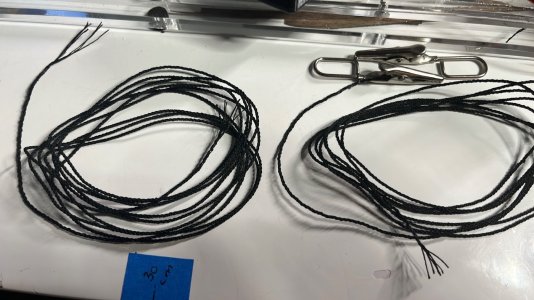
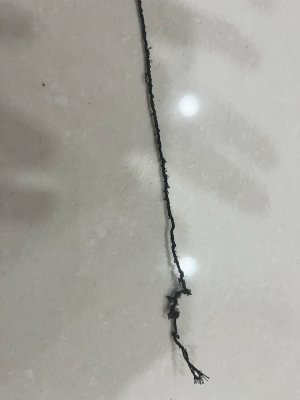
- Rope twisting into a mess
- Inconsistent lay
- Thin, unusable rope
- Poor tension control
At the time, I didn’t understand why it was happening — which made it even more frustrating.
The Big Learning Curve
Everything started to change when I began learning the fundamentals:
- Rope is made from yarns → twisted into threads → twisted into rope
- To get thicker rope, you don’t just twist more — you must:
- Increase the number of yarns per thread
- The direction matters:
- Threads twisted one way (say S)
- Rope formed in the opposite direction (Z)
Once this clicked, things finally started to make sense.
The Problem I Was Trying to Solve
I build large-scale model ships (some up to 2 metres long), so I needed:
- ~1.3mm rope
- ~1.8mm rope
- Even 2mm+ in some cases
This is where the PL4-4 started to show its limitations for my needs.
Where the PL4-4 Became Difficult
To get thicker rope, I tried:
- Twisting multiple yarns together to make a thicker thread
- Winding those onto bobbins
- Then combining those threads into rope
Sounds simple… but in practice:
- It took hours of preparation
- After ~2 hours work… I ended up with about 1 metre of rope
That’s just not practical when you’re rigging large models.
The Bobbin Limitation
The biggest issue I ran into:
The bobbins limit both capacity and workflow
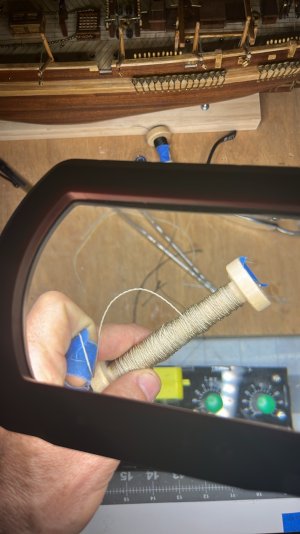
- You can only fit so much thread onto each bobbin
- Thicker threads = even less capacity
- Constant rewinding becomes necessary
- It severely limits rope length
For large-scale builds, this becomes a major bottleneck.
Tension — The Make or Break Factor
One of the most critical things I discovered:
Tension is EVERYTHING in rope making
With the PL4-4, I found:
- Each bobbin must feed at equal tension
- The thread must come off with controlled resistance
- Too loose → messy, loose rope
- Too tight → breakage or mechanical stress
- The take-up spool tension must be just right
On top of that:
- Machine speed must be carefully set
- The rotation speeds between:
- The bobbin assembly
- The take-up spool
…must be precisely set
Mechanical Stress & Failure
To get proper rope formation, I had to apply significant tension.
This eventually led to:
- A stripped gear in the yellow gear assembly
I ended up:
- Measuring it
- 3D printing a replacement
- Installing a stronger gear
That solved the issue, but it highlighted how hard I was pushing the machine to achieve what I needed.
The Turning Point — Rope Walk
After all this, I moved to a traditional rope walk setup.
And honestly…
It completely changed everything.
Why a Rope Walk Works Better (for my needs)
- Allows long rope lengths (meters, not centimeters)
- No bobbin limitations
- Easier to:
- Apply consistent tension
- Control twist
- Scale up rope diameter
- Much more suited to:
Most importantly:
You can properly “lock” the structure of the rope under tension — something that was much harder to achieve with the PL4-4.
Final Thoughts on the PL4-4
I want to be fair here — the PL4-4 does have its place.
It’s good for:
- Small-scale models
- Fine rope (≤ 1mm)
- Limited workspace setups
- People willing to invest time learning the machine
But…
For large-scale ship builders, especially those needing thicker rope:
It becomes very time-consuming
Limited by bobbin capacity
Requires significant tuning and patience
What I Wish I Did Differently
If I could go back:
- Learn rope making fundamentals first
- Understand:
- Yarn count
- Thread formation
- S vs Z twist
- Then choose the right tool for the job
Instead of assuming one machine could do everything.
Final Advice
If you’re struggling right now — you’re not alone.
I went through:
- The same frustration
- The same confusion
- The same messy results
But once it clicks… it’s incredibly rewarding.
And there’s something pretty special about:
Using the same rope-making principles that were used 300–400 years ago on the real ships we’re modelling.