
-

SUBSCRIBE TO SHIPS IN SCALE TODAY!
The beloved Ships in Scale Magazine is back and charting a new course for 2026!
Discover new skills, new techniques, and new inspirations in every issue.
NOTE THAT OUR NEXT ISSUE WILL BE July/August 2026 -

Win a Free Custom Engraved Brass Coin!!!
As a way to introduce our brass coins to the community, we will raffle off a free coin during the month of August. Follow link ABOVE for instructions for entering.


You are using an out of date browser. It may not display this or other websites correctly.
You should upgrade or use an alternative browser.
You should upgrade or use an alternative browser.
HMS Agamemnon by Caldercraft
- Thread starter HMSFly
- Start date
- Watchers 38
-
- Tags
- agamemnon caldercraft



- Joined
- Oct 9, 2020
- Messages
- 2,557
- Points
- 538
well, 1765 is what I saw. That is why I was wondering about that. I know this is about Agamemnon and not Victory, but I thought whatever they did to the Victory, they must have done to the Agamemnon? Perhaps my logic is flawed?Great question. What year? I would bet she had them when built in 1765 but when completely rebuilt in 1803 it was still a transition period so ???
Marine artists who sketched Victory as she looked after her 1803 rebuild, including Turner, Constable, and Pocock did not depict crow's feet on the masts.
Allan

mmmmmm...difficult one.
Exactly my problem. I also think that none needs to be installed since the Agamemnon was built much later (1781)... remains difficult.
The Victory has none...so until somebody comes with an other argument I will NOT install it...
Some other photo's of the progress...
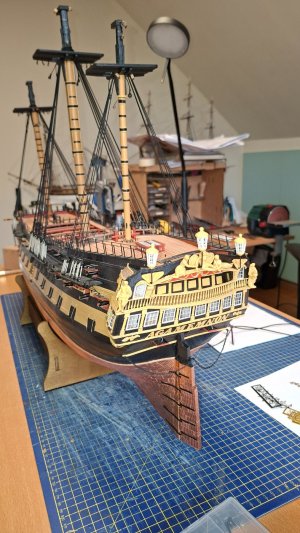
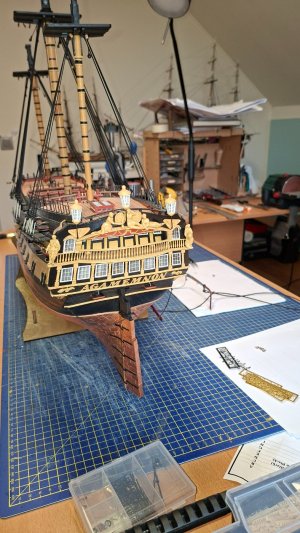
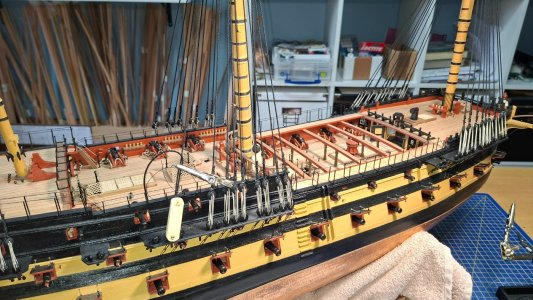
Exactly my problem. I also think that none needs to be installed since the Agamemnon was built much later (1781)... remains difficult.
The Victory has none...so until somebody comes with an other argument I will NOT install it...
Some other photo's of the progress...
- Joined
- Oct 9, 2020
- Messages
- 2,557
- Points
- 538
great looking photos of your build, by the way. Congratulations!
My friend William got the remark to paint the lanyards black, I also followed this suggestion...
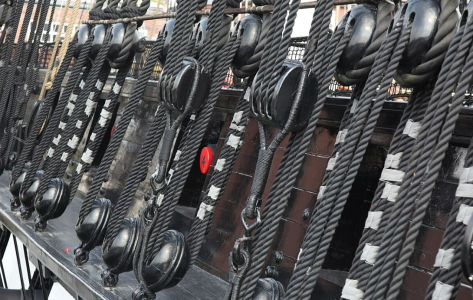
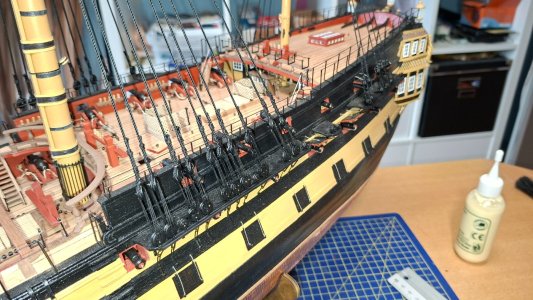
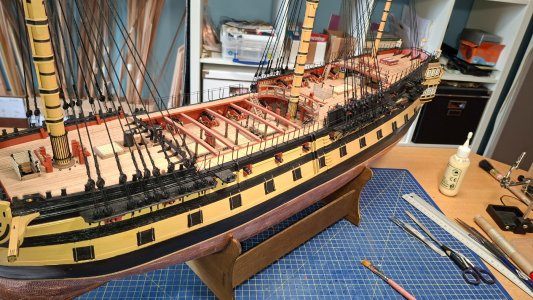

Hi,
Just found your log - excellent work indeed!!
Just found your log - excellent work indeed!!

 , since you haven't heard my suggestions to study how topsails are laid, what the leading edge of the topsail plate has to do with it, and how the goosefoot works, then let's take a simpler approach. USNA Museum. This model dates back to 1810. Any other questions?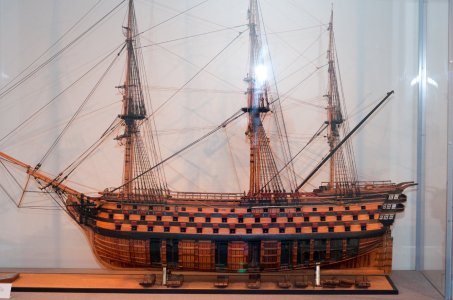
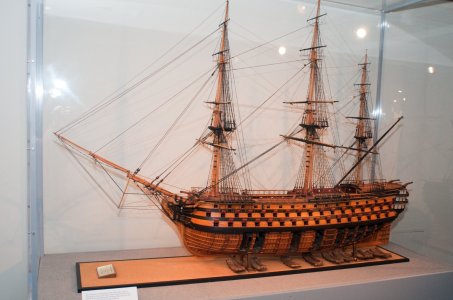
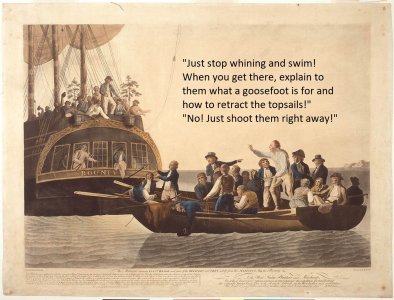
Iutar, What ship is this? It would help a lot if you could please identify the ships in the photos you post. THANK YOU.
As mentioned before, there were not many absolutes in the ships of that era. Exceptions seem to be more of the rule.
Allan
As mentioned before, there were not many absolutes in the ships of that era. Exceptions seem to be more of the rule.
Allan
Patience is a good quality..... 
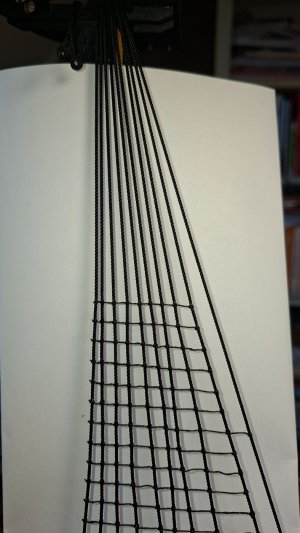
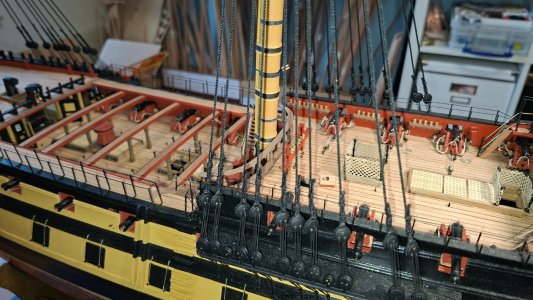
The installation of the Catharpins.
Glueing the topmasts in order to be able to install the upper shrouds.
But now it is becoming difficult to complete the rigging on the topmasts. After all, the total height of the Agamemnon is 1 meter.
A tabletop is at a height of 90 cm, so the total height is 1.90 m.
I bought a table that I can lower all the way to 20 cm above the ground to make it easier to complete the rigging. Photos will follow.
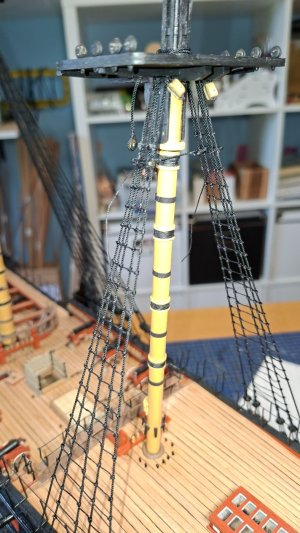
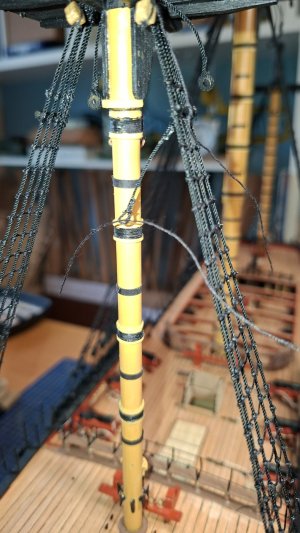
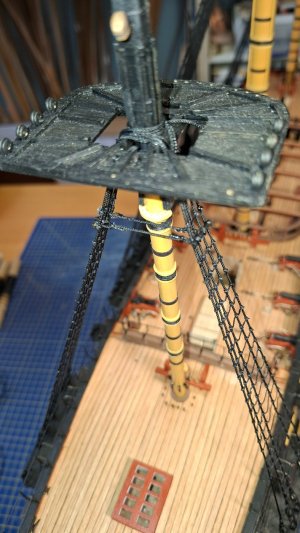
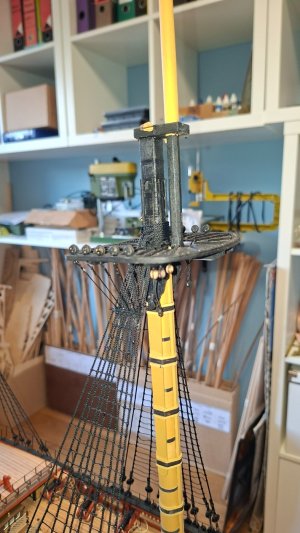
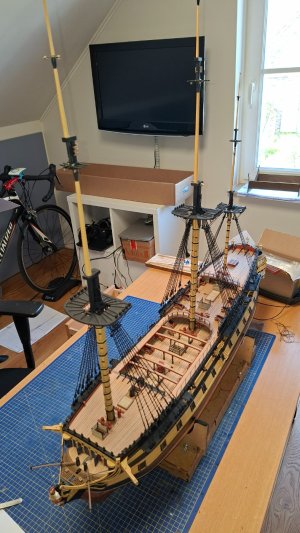
Glueing the topmasts in order to be able to install the upper shrouds.
But now it is becoming difficult to complete the rigging on the topmasts. After all, the total height of the Agamemnon is 1 meter.
A tabletop is at a height of 90 cm, so the total height is 1.90 m.
I bought a table that I can lower all the way to 20 cm above the ground to make it easier to complete the rigging. Photos will follow.
It's going slowly... I'm trying to work as ergonomically as possible. As mentioned earlier, the model has a total height of +/- 1 meter. This means you almost have to stand up to rig the top mast sections. That's why I placed the model on a table with a height of 50 cm... this way I can work much more accurately.
The next step is attaching the ratlines to the shrouds to the top mast sections...
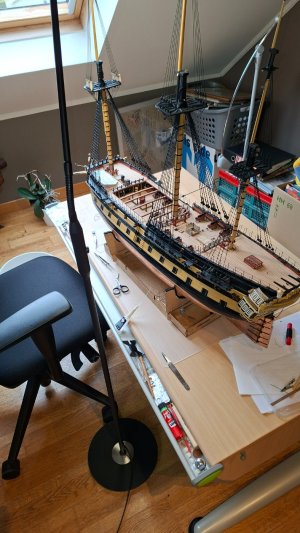
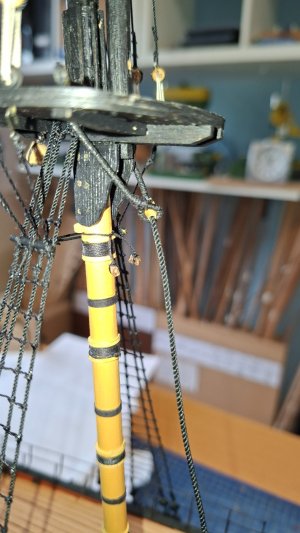
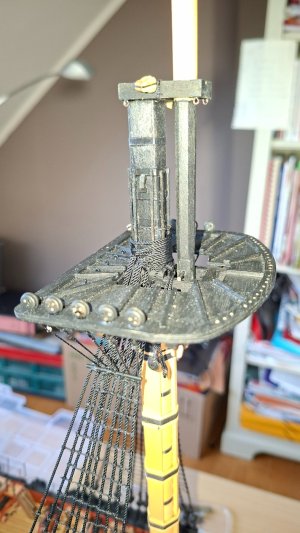
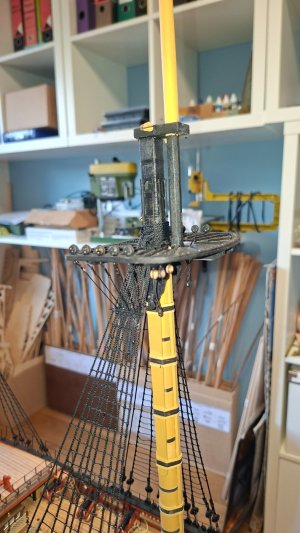
The next step is attaching the ratlines to the shrouds to the top mast sections...
Slowly but surely: installing the Topgalant shrouds....and cleats....
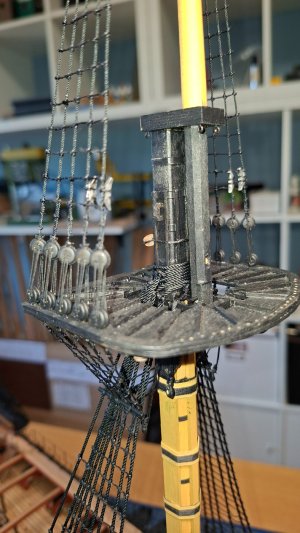
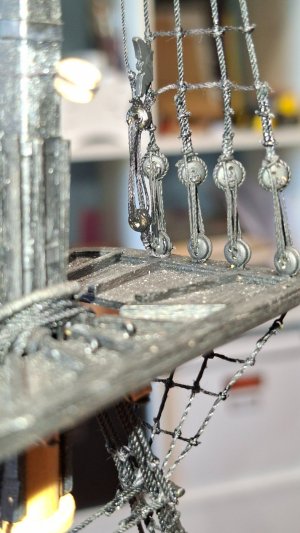
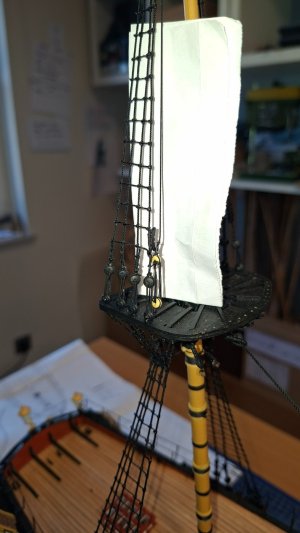
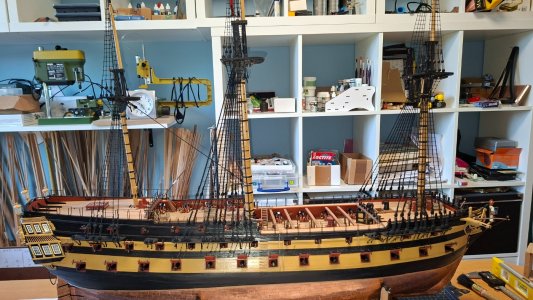
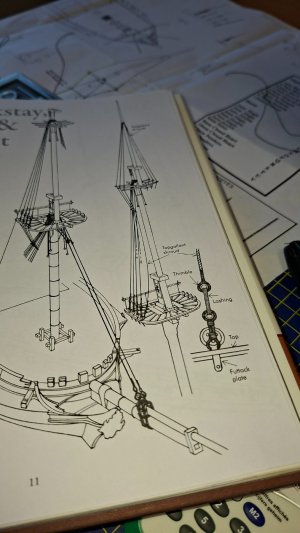
PS
Painting job not finished....details later on
Painting job not finished....details later on
She's getting there!!
PS: Are you speaking French and also using Dutch? just curious.
PS: Are you speaking French and also using Dutch? just curious.
She's getting there!!
PS: Are you speaking French and also using Dutch? just curious.
Dear John,
The language groups in Belgium are clearly geographically distributed and form an important part of the state structure. Broadly speaking, it looks like this:
1. Dutch (Flemish) –
NorthSpoken in FlandersApproximately 60% of the population
This includes cities such as Antwerp, Ghent, and Bruges
The official language is Dutch (often referred to as Flemish in the context of Belgium)
2. French –
SouthSpoken in Wallonia
Approximately 40% of the population
Important cities are Liège, Namur, and Charleroi
3. Bilingual area (Dutch & French)
Brussels is officially bilingualIn practice, French is mainly spoken there, but Dutch has equal official status
4. German –
Small Eastern Community
Spoken in a small area in the east, the German-speaking CommunityLess than 1% of the population
Around cities such as Eupen
As a Flemish one, I speak multiple languages: Dutch, French, and fluent German. English is widely spoken, and thanks to my studies, English is a matter of course.
Easy, isn't it???

Assuming your model is Agamemnon when she was launched, using the Petersson book may be dicey. The book is based on a single contemporary model, Melampus (36) so may have some differences with a 64. According to James Lees in The Masting and Rigging of English Ships of War. the topgallant shrouds normally belayed to the topmast futtock stave, not to the topmast shroud deadeyes from 1719 through the 18th century. The rigging in the drawing shows how it was done starting sometime in the 19th century, so probably not appropriate for Agamemnon. If nothing else, it will save you a lot of extra work if you belay the topgallant shrouds to the futtock staves.
Allan
Allan
Thanks Iutar, Can you please give your source as you are very specific about 1780? Is this for all English 3rd rates? I rely on Lees' work which disagrees with your comment but his book may not be without mistakes. Perhaps there is a better source that you can share with us. I looked in Steel's work even though it is after 1780 and it is not very clear from what I could find so far. He does mention the thimbles being used in the two foremost topgallant shrouds but does not mention where they are belayed but again this is more than a decade after 1780.Mark, you are doing everything correctly. Since 1780, on 3rd rank ships, the topgallant shrouds have been tensioned in exactly the way you showed on the model.
Thanks again for your help.
Allan
Last edited:
Sorry to be a pest, but I want to learn more and would love to look at the source you used. Thank you very much.Thanks Iutar, Can you please give your source as you are very specific about 1780?
Allan
Allan, I told you last time: I don’t want to communicate with you.
Regarding your question.
I have several sources, I process the information, and then present the final result immediately. The date 1780 is given, in particular, by Karl-Heinz Marquardt.
I don't want to waste time and energy on a detailed story, you don't listen to me anyway.
Regarding your question.
I have several sources, I process the information, and then present the final result immediately. The date 1780 is given, in particular, by Karl-Heinz Marquardt.
I don't want to waste time and energy on a detailed story, you don't listen to me anyway.
Last edited: