
-

SUBSCRIBE TO SHIPS IN SCALE TODAY!
The beloved Ships in Scale Magazine is back and charting a new course for 2026!
Discover new skills, new techniques, and new inspirations in every issue.
NOTE THAT OUR NEXT ISSUE WILL BE July/August 2026 -

Win a Free Custom Engraved Brass Coin!!!
As a way to introduce our brass coins to the community, we will raffle off a free coin during the month of August. Follow link ABOVE for instructions for entering.


- Home
- Forums
- Ships of Scale Group Builds and Projects
- HMS Alert 1777 1:48 PoF Group Build
- HMS Alert 1777 1:48 Group Build Logs
You are using an out of date browser. It may not display this or other websites correctly.
You should upgrade or use an alternative browser.
You should upgrade or use an alternative browser.
HMS Alert [1777] 1:48 POF by serikoff. (Two hulls: skeleton and fully rigged)


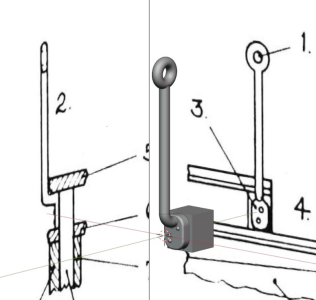

Thanks for the praise. Yes! eyebolt, "Enlarge 90 degrees" is incorrect in the anatomy! The cable passed through these holes and served as handrails. And since the cable runs along the deck, the holes should be positioned so that the cable doesn't zigzag at the bottom of the passage.Beautiful modelling, Sergey!
Question - isn't the eyebolt off by 90 degrees on this part?
View attachment 592697

I'm just finishing up transcribing the basic rules into the drawings today and updating my original drawings for everyone to download. There are many corrections to the anatomy errors, of which, unfortunately, there are a lot.
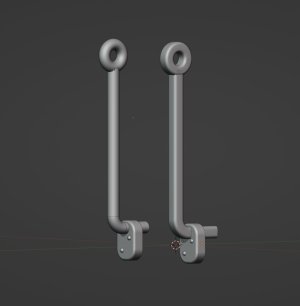
P.S. Thanks for the question... I just realized that the cylindrical shape doesn't engrave very well, and I'll remake it into a more square one.
UPD:
I did rework the handrails and made them more square, it looks more authentic and I like it better.
Last edited:
Friends, I've finally updated my original Alert anatomy drawings, which have been adapted to the Trident kit dimensions, which correspond to a 1:48 scale.
I previously presented this work, but since then I've made many significant changes, additions, and corrections to the anatomy.
The original can be downloaded from Google Drive. Below, I'll show you a sample of what's changed.
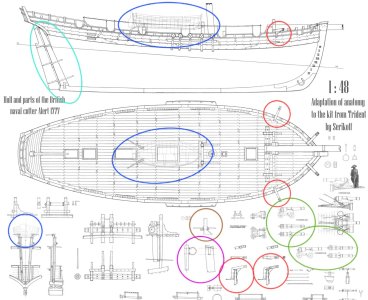
Blue - The ship had only one boat (a cutter). The second one shown in the anatomy has no relation whatsoever (neither to scale nor in dimensions). Besides, I've definitely seen this boat in another anatomy, line for line. In my drawings, I placed the boat above the central grating. Later, I'll add details of the boat's holding platform to the drawings.
Red - The mechanism for raising the anchor from the water. Even the original drawings and the anatomy itself mention a duplicate mechanism that helped raise the anchor's clevis. The photo below clearly shows this. This mechanism (the cathead) is described in detail in books, particularly in Wolfram zu Mondfeld. Few people do this, but the point is that this part is necessary for safely pulling the anchor alongside without damaging it. On larger ships, this was different and was called a fish davit (a massive beam that essentially served the same function).
Light Green - Rudder Hinges. I already mentioned that I increased the length of two of the rudder hinges so they would extend onto the planking, or more precisely, onto the beams underneath. This is also indicated in the anatomy drawings, but it wasn't used in the main view, which is a shame.
Dark Green - I added two types of cannons: 4- and 6-pounder. The ship carried 10 of the former until 1778, when it was re-armed with 12 6-pounder cannons.
Brown - I made corrections to the smokestack and handrails where there were errors in the anatomy.
Purple - Changed the scale.
Mustard (light brown) - I completely redesigned the central grate, as the anatomy doesn't include that specific type.
Light Blue - s. I added three more types (sizes). Because, as I already said, there were at least 4 different anchors on the ship, and not two identical ones, as in the set.
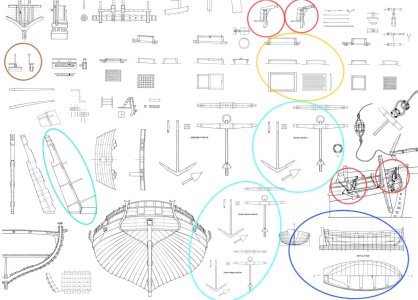
The drawings are printed on A0 paper (841 x 1189 mm), so if you print them at this size, you'll have the true dimensions of all the parts at a scale of 1:48.
If you have any questions or comments, please don't hesitate to contact me.
I previously presented this work, but since then I've made many significant changes, additions, and corrections to the anatomy.
The original can be downloaded from Google Drive. Below, I'll show you a sample of what's changed.
Blue - The ship had only one boat (a cutter). The second one shown in the anatomy has no relation whatsoever (neither to scale nor in dimensions). Besides, I've definitely seen this boat in another anatomy, line for line. In my drawings, I placed the boat above the central grating. Later, I'll add details of the boat's holding platform to the drawings.
Red - The mechanism for raising the anchor from the water. Even the original drawings and the anatomy itself mention a duplicate mechanism that helped raise the anchor's clevis. The photo below clearly shows this. This mechanism (the cathead) is described in detail in books, particularly in Wolfram zu Mondfeld. Few people do this, but the point is that this part is necessary for safely pulling the anchor alongside without damaging it. On larger ships, this was different and was called a fish davit (a massive beam that essentially served the same function).
Light Green - Rudder Hinges. I already mentioned that I increased the length of two of the rudder hinges so they would extend onto the planking, or more precisely, onto the beams underneath. This is also indicated in the anatomy drawings, but it wasn't used in the main view, which is a shame.
Dark Green - I added two types of cannons: 4- and 6-pounder. The ship carried 10 of the former until 1778, when it was re-armed with 12 6-pounder cannons.
Brown - I made corrections to the smokestack and handrails where there were errors in the anatomy.
Purple - Changed the scale.
Mustard (light brown) - I completely redesigned the central grate, as the anatomy doesn't include that specific type.
Light Blue -
s. I added three more types (sizes). Because, as I already said, there were at least 4 different anchors on the ship, and not two identical ones, as in the set.The drawings are printed on A0 paper (841 x 1189 mm), so if you print them at this size, you'll have the true dimensions of all the parts at a scale of 1:48.
If you have any questions or comments, please don't hesitate to contact me.


Not a small amount of work ! Thanks for allowing us to have it !Friends, I've finally updated my original Alert anatomy drawings, which have been adapted to the Trident kit dimensions, which correspond to a 1:48 scale.
I previously presented this work, but since then I've made many significant changes, additions, and corrections to the anatomy.
The original can be downloaded from Google Drive. Below, I'll show you a sample of what's changed.
View attachment 592761
Blue - The ship had only one boat (a cutter). The second one shown in the anatomy has no relation whatsoever (neither to scale nor in dimensions). Besides, I've definitely seen this boat in another anatomy, line for line. In my drawings, I placed the boat above the central grating. Later, I'll add details of the boat's holding platform to the drawings.
Red - The mechanism for raising the anchor from the water. Even the original drawings and the anatomy itself mention a duplicate mechanism that helped raise the anchor's clevis. The photo below clearly shows this. This mechanism (the cathead) is described in detail in books, particularly in Wolfram zu Mondfeld. Few people do this, but the point is that this part is necessary for safely pulling the anchor alongside without damaging it. On larger ships, this was different and was called a fish davit (a massive beam that essentially served the same function).
Light Green - Rudder Hinges. I already mentioned that I increased the length of two of the rudder hinges so they would extend onto the planking, or more precisely, onto the beams underneath. This is also indicated in the anatomy drawings, but it wasn't used in the main view, which is a shame.
Dark Green - I added two types of cannons: 4- and 6-pounder. The ship carried 10 of the former until 1778, when it was re-armed with 12 6-pounder cannons.
Brown - I made corrections to the smokestack and handrails where there were errors in the anatomy.
Purple - Changed the scale.
Mustard (light brown) - I completely redesigned the central grate, as the anatomy doesn't include that specific type.
Light Blue -
View attachment 592762
The drawings are printed on A0 paper (841 x 1189 mm), so if you print them at this size, you'll have the true dimensions of all the parts at a scale of 1:48.
If you have any questions or comments, please don't hesitate to contact me.
3D Modeling. Part 3/3. Final.
I've finished modeling. This time, it's the main and hand cannon.
Half-Pounder Swivel Gun.
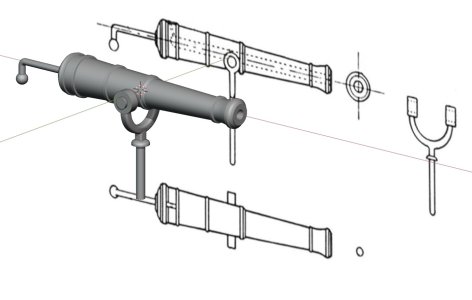
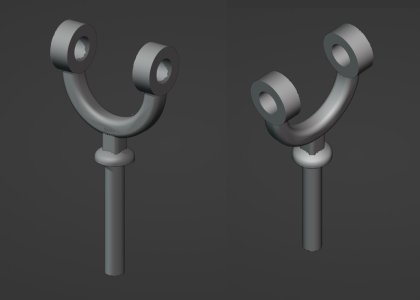
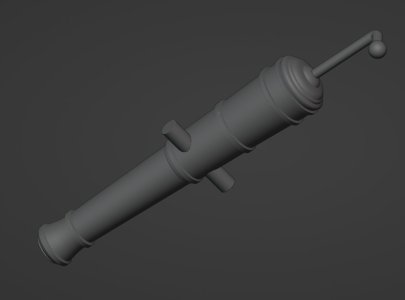
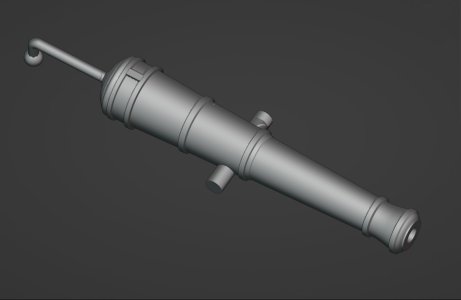
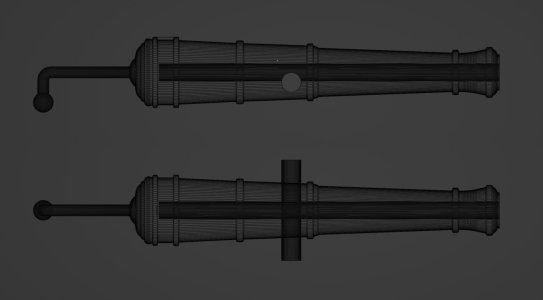
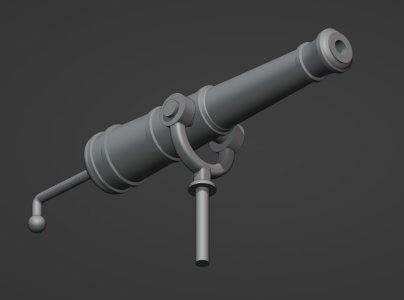
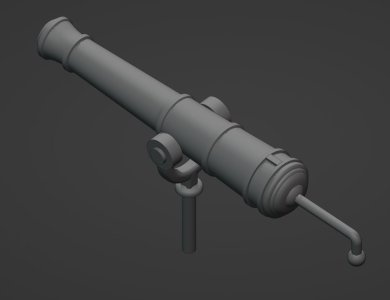
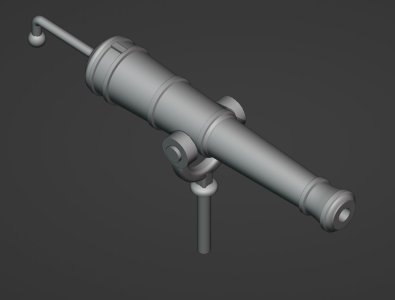
Since the hand cannon is very small, about 2 cm, I expressed the rings a little more, otherwise they would merge into a single array after copper plating.
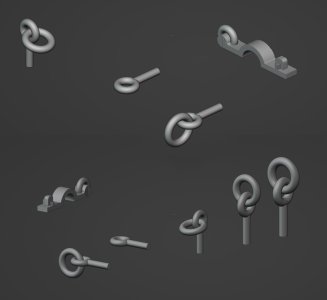
6 Pounder Gun.
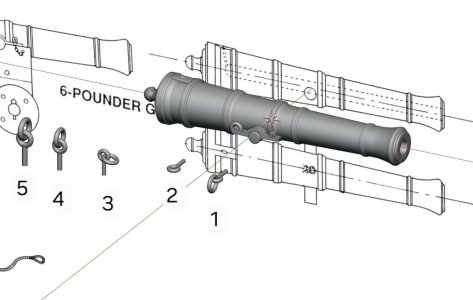
Basic rims and rings. In the photo above, from right to left: 1) rim for the recoil rope; 2) rim for fixing the hook with the rigging; 3) rim with a ring on the deck for the rear rigging of the gun; 4) rigging rim 0.7 mm; 5) rigging rim 0.8 mm. (1-3 rims 0.6 mm).
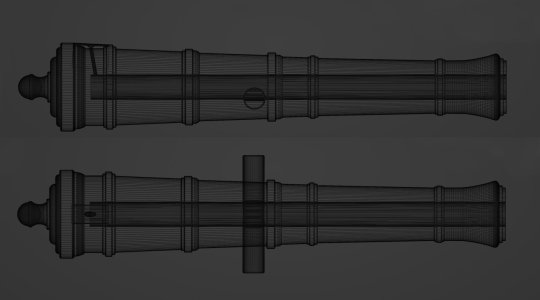
The cannon even has a channel for the gunpowder from the fuse (let it be so).
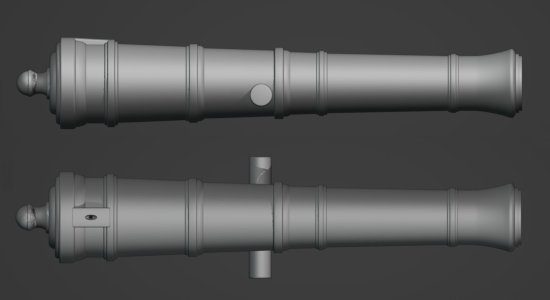
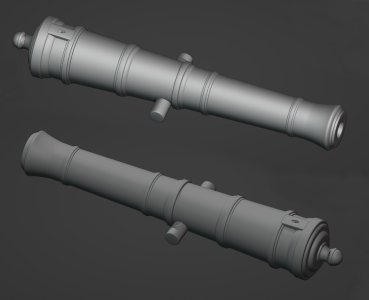
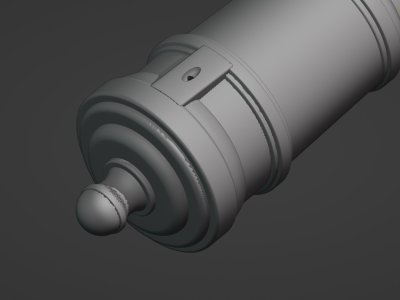
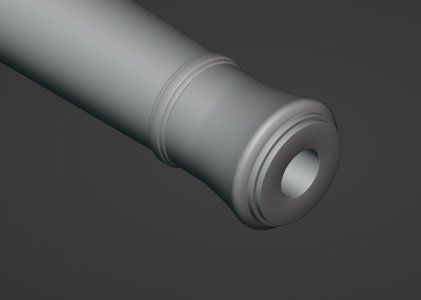
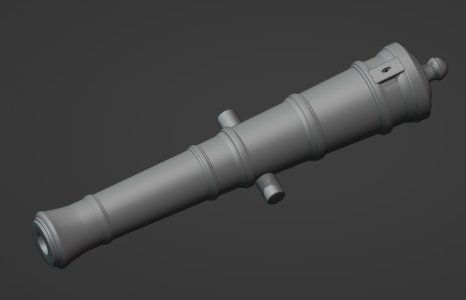
Everything is ready for printing and copper plating.
I've finished modeling. This time, it's the main and hand cannon.
Half-Pounder Swivel Gun.
Since the hand cannon is very small, about 2 cm, I expressed the rings a little more, otherwise they would merge into a single array after copper plating.
6 Pounder Gun.
Basic rims and rings. In the photo above, from right to left: 1) rim for the recoil rope; 2) rim for fixing the hook with the rigging; 3) rim with a ring on the deck for the rear rigging of the gun; 4) rigging rim 0.7 mm; 5) rigging rim 0.8 mm. (1-3 rims 0.6 mm).
The cannon even has a channel for the gunpowder from the fuse (let it be so).
Everything is ready for printing and copper plating.


Wieder eine fantastische Arbeit. Toll,daß wir daran teilhaben können. Da sieht man auch, was man aus einem sehr guten Bausatz als Basis machen kann. Eben ein fantastisches Modell. Bravo! Ich bewundere die Recherche dazu, die Hartnäckigkeit und Ausdauer mit den pfiffigen Ideen der Umsetzung. Mein allergrößter Respekt zu diesem Projekt.
Vielen Dank! Ich freue mich sehr über die freundlichen Worte, besonders von jemandem, der selbst hervorragende Modelle herstellt!Wieder eine fantastische Arbeit. Toll,daß wir daran teilhaben können. Da sieht man auch, was man aus einem sehr guten Bausatz als Basis machen kann. Eben ein fantastisches Modell. Bravo! Ich bewundere die Recherche dazu, die Hartnäckigkeit und Ausdauer mit den pfiffigen Ideen der Umsetzung. Mein allergrößter Respekt zu diesem Projekt.
Thank you very much for your activity and interest in my work.Not a small amount of work ! Thanks for allowing us to have it !
BITUMEN.
Someday, after another 100,500 tests and experiments, I'll write an article about bitumen... but for now, I'll share some exclusive information with my blog readers that you're unlikely to hear in full from anyone else.
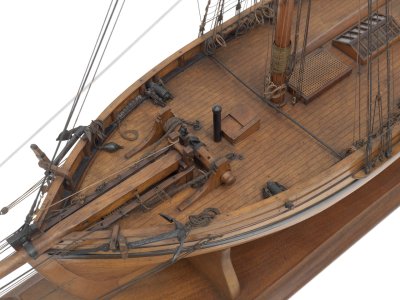
Many people know that I want to make the second Alert building in a museum style... something like this museum piece:
...based on the principle that Dmitry Shevelev does, here is his model (below):
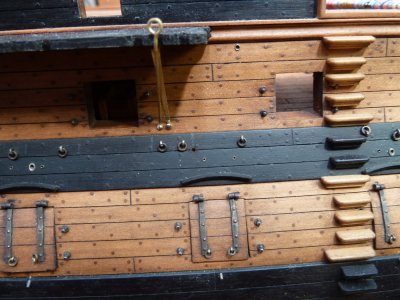
Not everyone might like this style, and that's understandable; tastes differ, but I really like it!
A quick introduction. What is bitumen? It's a pigment (essentially oil) diluted in a solvent.
So, what you need to know about bitumen:
1. If you do everything correctly before applying the bitumen (prepare the surface properly), the result is almost completely reversible within a short time. This is precisely what scares many people about using bitumen. The idea is that you can make the model very black or stained, and it won't look aged, but dirty. Well, if the surface is properly prepared, applying solvent with a brush to a fresh layer of bitumen can almost completely remove it. But after a day, this will no longer be possible.
2. Bitumen VERY clearly shows all defects, scratches, chips, and dents! Therefore, if the surface isn't perfectly prepared, it's best not to use bitumen, otherwise everything will be 100 times more visible!
3. Bitumen CANNOT be applied to bare wood. Bitumen should be applied one month after oiling. Sometimes it takes two months, sometimes two weeks... It all depends on the desired result, but if this is your first time, no sooner than one or two months!
4. The rougher the surface (sandpaper below 200 grit), the stronger the effect will be. And the smoother and more polished the surface (320 grit + steel wool 00 grit and higher), the lesser the effect will be.
5. The deeper the oil penetrates (brush application and long exposure), the thicker the film (which smooths the surface) and the lesser the effect. However, if the oil is applied with a cloth (especially if semi-dry) and wiped dry as quickly as possible, the effect is much stronger.
6. The effect also depends on the oil. Linseed and tung oil penetrate very deeply even in a short time, so the effect may be lesser. But with Danish and Teak (which don't penetrate deeply and dry quickly), the effect will be more visible.
7. By "effect," we mean the wood grain. If the grain isn't filled or smoothed, the pigment will be retained and will be more visible. If the pigment has nothing to adhere to, less of it will remain on the surface. We're talking about wood species similar to pear. On light-colored, soft, and highly porous woods, bitumen may behave differently.
8. But we haven't yet discussed the length of time the bitumen remains on the surface before the excess is removed. The same applies here: the longer the bitumen remains on the surface, the darker it will be... and vice versa. Even if the bitumen has nothing to adhere to (the surface is smooth), if the bitumen remains on the surface for a long time, it will darken... not because the wood grain is filled, but because the varnish acts like a varnish. That is, very small particles will remain on the surface if the solvent doesn't mechanically lift them off the surface during rubbing or if it evaporates.
9. If the surface is large and it's impossible to apply the bitumen all at once, spots or transition lines may appear. But this isn't a problem. If you take a brush with solvent and rub the transitions or spots, the surface will smooth out evenly, becoming uniform in color.
10. I use Idea Patina 710 Patinatura Bitume - Bitumen Patina. I dilute it with odorless solvent for oil-based paints. The resulting odor is generally tolerable (though it should still be used in a ventilated area). Other bitumens are very smelly, downright strong. After applying the solvent, shiny spots sometimes appear on wood (especially on very smooth surfaces). Remember to wipe them off periodically until they disappear completely.
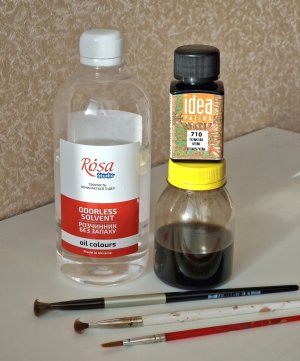
11. Proportions. There's no exact ratio. I added about 1 cubic cm of bitumen to 80 ml of solvent, but most of it still didn't dissolve. Since this bitumen is very viscous, it needs to be dissolved in small portions in a small amount of solvent, constantly rubbing the clumps with a brush. And before use, don't shake it; stir it gently, while drawing a circle with the bottom of the bottle on the table.
12. Technique. How I do it.
First, I dip a medium-sized brush into the solution (stir it first, but don't shake it) and squeeze out most of the solvent on the sides of the bottle to prevent drips. Then I apply the bitumen to the surface and rub it in, filling corners, joints, and crevices. Another important factor is the time the bitumen sits on the surface before removing it. This needs to be tested on samples. As stated earlier, all these factors affect the time. But first, it's best to apply a thin, non-dark layer for a short period of time, then add more if needed. You should also monitor the surface, not letting certain areas dry too quickly to avoid blotchiness. Then, use a second, dry brush to wipe off excess bitumen, constantly wiping the brush on a napkin (so it stays dry and absorbs the bitumen). Essentially, apply the bitumen with one brush and wipe off the excess with the other. Experience will tell you when to wipe off the excess with a napkin. Doing this immediately will remove the entire effect. If the bitumen remains on the surface for a long time, you won't be able to remove it. But remember, if you feel the effect is excessive, apply solvent with a brush, rub it in, and then wipe off almost all the bitumen with a napkin. Repeat the process if you've removed almost all of it.
I apply bitumen first to the main surface (for example, the deck) and then separately to the other elements (gratings, bits, etc.). Then I secure the parts to the deck. Then, I add bitumen to the joints between the parts and the deck with a fine brush (this also applies to the hull if it's on the outside of the model). I leave a little extra bitumen in the joints and evenly blend the rest into the surrounding tone. This creates the effect of enhancing the dark tones in the corners. It also gives me more control when doing everything separately first. You can also pre-tint the areas on the deck under the guns a little more to naturally accentuate the darkness underneath.
13. I recommend coating samples, and especially the finished product, testing it in different lighting conditions. Because under artificial light, it may look different, but under daylight, it may appear different. Under strong direct light, the surface may appear lighter, but in low light, it can be very dark. After coating, it's essential to check everything and, if necessary, remove any excess. Otherwise, there's no other way to do it without mechanical treatment.
14. And finally, there are two options. Option 1 is a more pronounced texture and a darker look. Option 2 is a light tint... and everyone chooses what they prefer.
Below, I'll show my results for option 1. Since the lower deck will be practically invisible, I decided to go for a more intense museum-style tint to see if it would suit me or just a light tint. The surface was polished with 320 grit and 000 grit steel wool. However, the wool couldn't penetrate the corners well, so they're not as smooth as the center, and that's important! Plus, I applied the oils not with a brush, but with a semi-dry cloth, which also didn't penetrate the corners well, resulting in less oil in the corners... and that's also important; you'll understand why later. In the corner of the photographs it will be indicated that a certain oil (Tung or Danish) was applied before the bitumen.
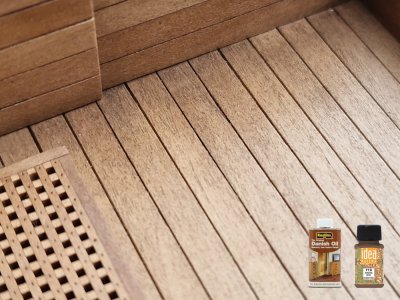
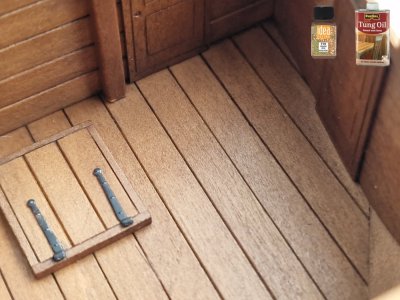
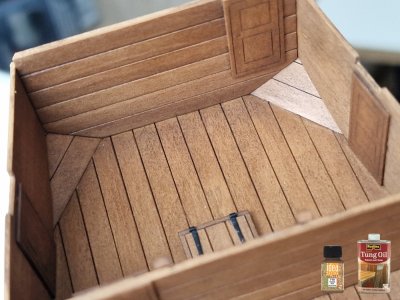
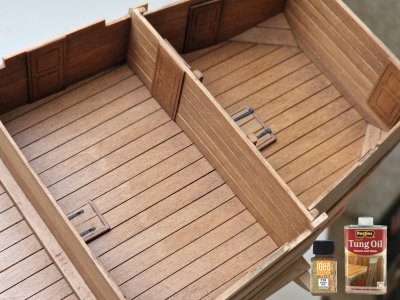
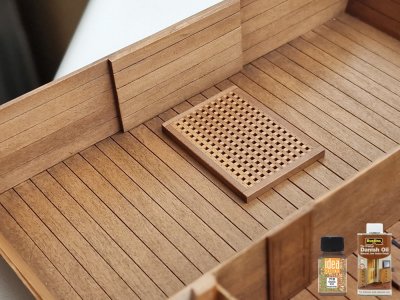
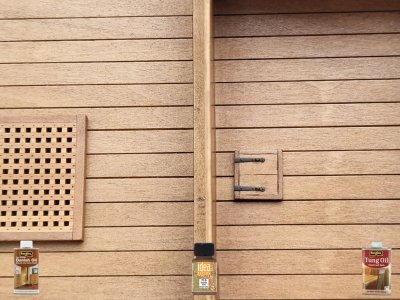
The photos above and below clearly show that the oil not only affects the overall color of the wood, but also that, even with the same wood treatment and oil application method, Bitumen adheres less well to Tung Oil than to Danish Oil. Danish Oil has a more pronounced texture.
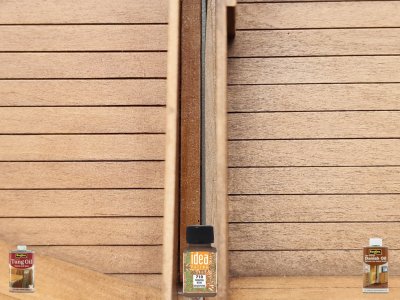
And in the photo below you can see that if the part was poorly polished, all the flaws will appear on it.
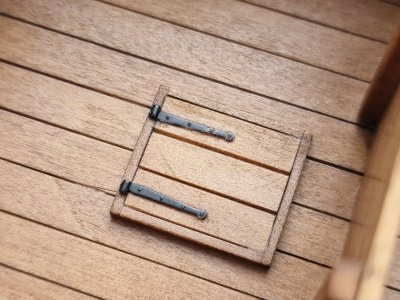
By the way, the bitumen has caused the black plastic hinges, which are coated with paint, to have a slight sheen, and this sheen is very similar to metal. This needs to be verified on the rims.
It's important to keep in mind that the entire lower deck is assembled from scrap material, especially the walls... Also, unfortunately, photographs can't accurately convey the color, shade, or degree of darkness. Some have black surfaces, others are lighter, or brown or gray. Therefore, I'll show different ones to give a general impression. And the hull has a different shade...
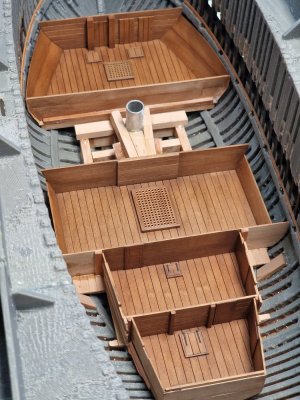
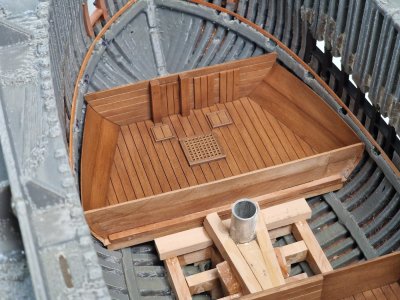
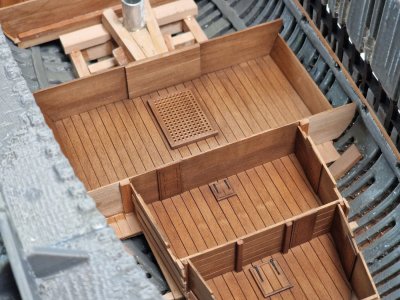
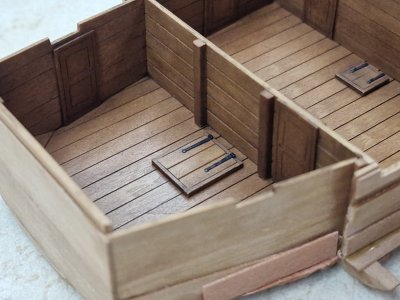
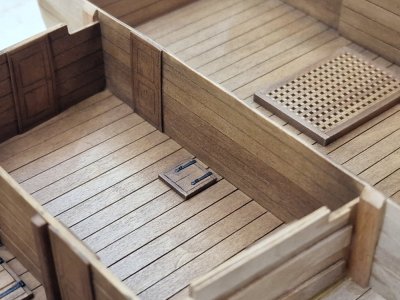
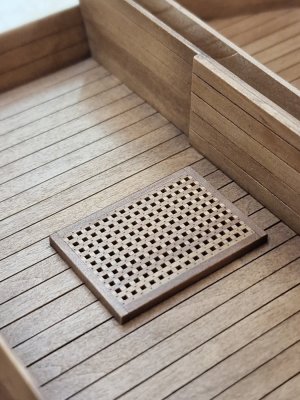
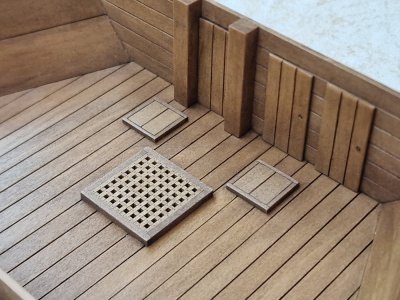
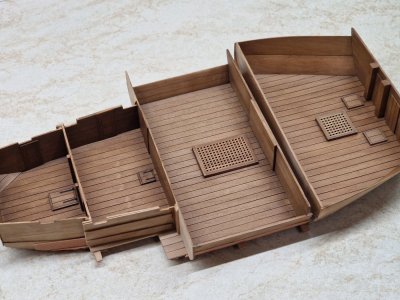
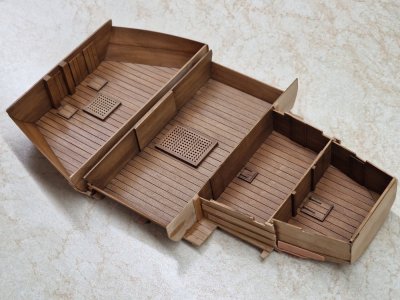
So, in essence, the colors and shades in the three groups of photographs are completely different... from reddish-beige to gray to reddish-brown... But the most annoying thing is that none of these colors convey the original shade, which is a shame. Although there are some similar tones in the first and last photos, it is difficult to say for sure, but the gray and very bright brown ones are definitely not the same.
What do you think?
Someday, after another 100,500 tests and experiments, I'll write an article about bitumen... but for now, I'll share some exclusive information with my blog readers that you're unlikely to hear in full from anyone else.
Many people know that I want to make the second Alert building in a museum style... something like this museum piece:
...based on the principle that Dmitry Shevelev does, here is his model (below):
Not everyone might like this style, and that's understandable; tastes differ, but I really like it!
A quick introduction. What is bitumen? It's a pigment (essentially oil) diluted in a solvent.
So, what you need to know about bitumen:
1. If you do everything correctly before applying the bitumen (prepare the surface properly), the result is almost completely reversible within a short time. This is precisely what scares many people about using bitumen. The idea is that you can make the model very black or stained, and it won't look aged, but dirty. Well, if the surface is properly prepared, applying solvent with a brush to a fresh layer of bitumen can almost completely remove it. But after a day, this will no longer be possible.
2. Bitumen VERY clearly shows all defects, scratches, chips, and dents! Therefore, if the surface isn't perfectly prepared, it's best not to use bitumen, otherwise everything will be 100 times more visible!
3. Bitumen CANNOT be applied to bare wood. Bitumen should be applied one month after oiling. Sometimes it takes two months, sometimes two weeks... It all depends on the desired result, but if this is your first time, no sooner than one or two months!
4. The rougher the surface (sandpaper below 200 grit), the stronger the effect will be. And the smoother and more polished the surface (320 grit + steel wool 00 grit and higher), the lesser the effect will be.
5. The deeper the oil penetrates (brush application and long exposure), the thicker the film (which smooths the surface) and the lesser the effect. However, if the oil is applied with a cloth (especially if semi-dry) and wiped dry as quickly as possible, the effect is much stronger.
6. The effect also depends on the oil. Linseed and tung oil penetrate very deeply even in a short time, so the effect may be lesser. But with Danish and Teak (which don't penetrate deeply and dry quickly), the effect will be more visible.
7. By "effect," we mean the wood grain. If the grain isn't filled or smoothed, the pigment will be retained and will be more visible. If the pigment has nothing to adhere to, less of it will remain on the surface. We're talking about wood species similar to pear. On light-colored, soft, and highly porous woods, bitumen may behave differently.
8. But we haven't yet discussed the length of time the bitumen remains on the surface before the excess is removed. The same applies here: the longer the bitumen remains on the surface, the darker it will be... and vice versa. Even if the bitumen has nothing to adhere to (the surface is smooth), if the bitumen remains on the surface for a long time, it will darken... not because the wood grain is filled, but because the varnish acts like a varnish. That is, very small particles will remain on the surface if the solvent doesn't mechanically lift them off the surface during rubbing or if it evaporates.
9. If the surface is large and it's impossible to apply the bitumen all at once, spots or transition lines may appear. But this isn't a problem. If you take a brush with solvent and rub the transitions or spots, the surface will smooth out evenly, becoming uniform in color.
10. I use Idea Patina 710 Patinatura Bitume - Bitumen Patina. I dilute it with odorless solvent for oil-based paints. The resulting odor is generally tolerable (though it should still be used in a ventilated area). Other bitumens are very smelly, downright strong. After applying the solvent, shiny spots sometimes appear on wood (especially on very smooth surfaces). Remember to wipe them off periodically until they disappear completely.
11. Proportions. There's no exact ratio. I added about 1 cubic cm of bitumen to 80 ml of solvent, but most of it still didn't dissolve. Since this bitumen is very viscous, it needs to be dissolved in small portions in a small amount of solvent, constantly rubbing the clumps with a brush. And before use, don't shake it; stir it gently, while drawing a circle with the bottom of the bottle on the table.
12. Technique. How I do it.
First, I dip a medium-sized brush into the solution (stir it first, but don't shake it) and squeeze out most of the solvent on the sides of the bottle to prevent drips. Then I apply the bitumen to the surface and rub it in, filling corners, joints, and crevices. Another important factor is the time the bitumen sits on the surface before removing it. This needs to be tested on samples. As stated earlier, all these factors affect the time. But first, it's best to apply a thin, non-dark layer for a short period of time, then add more if needed. You should also monitor the surface, not letting certain areas dry too quickly to avoid blotchiness. Then, use a second, dry brush to wipe off excess bitumen, constantly wiping the brush on a napkin (so it stays dry and absorbs the bitumen). Essentially, apply the bitumen with one brush and wipe off the excess with the other. Experience will tell you when to wipe off the excess with a napkin. Doing this immediately will remove the entire effect. If the bitumen remains on the surface for a long time, you won't be able to remove it. But remember, if you feel the effect is excessive, apply solvent with a brush, rub it in, and then wipe off almost all the bitumen with a napkin. Repeat the process if you've removed almost all of it.
I apply bitumen first to the main surface (for example, the deck) and then separately to the other elements (gratings, bits, etc.). Then I secure the parts to the deck. Then, I add bitumen to the joints between the parts and the deck with a fine brush (this also applies to the hull if it's on the outside of the model). I leave a little extra bitumen in the joints and evenly blend the rest into the surrounding tone. This creates the effect of enhancing the dark tones in the corners. It also gives me more control when doing everything separately first. You can also pre-tint the areas on the deck under the guns a little more to naturally accentuate the darkness underneath.
13. I recommend coating samples, and especially the finished product, testing it in different lighting conditions. Because under artificial light, it may look different, but under daylight, it may appear different. Under strong direct light, the surface may appear lighter, but in low light, it can be very dark. After coating, it's essential to check everything and, if necessary, remove any excess. Otherwise, there's no other way to do it without mechanical treatment.
14. And finally, there are two options. Option 1 is a more pronounced texture and a darker look. Option 2 is a light tint... and everyone chooses what they prefer.
Below, I'll show my results for option 1. Since the lower deck will be practically invisible, I decided to go for a more intense museum-style tint to see if it would suit me or just a light tint. The surface was polished with 320 grit and 000 grit steel wool. However, the wool couldn't penetrate the corners well, so they're not as smooth as the center, and that's important! Plus, I applied the oils not with a brush, but with a semi-dry cloth, which also didn't penetrate the corners well, resulting in less oil in the corners... and that's also important; you'll understand why later. In the corner of the photographs it will be indicated that a certain oil (Tung or Danish) was applied before the bitumen.
The photos above and below clearly show that the oil not only affects the overall color of the wood, but also that, even with the same wood treatment and oil application method, Bitumen adheres less well to Tung Oil than to Danish Oil. Danish Oil has a more pronounced texture.
And in the photo below you can see that if the part was poorly polished, all the flaws will appear on it.
By the way, the bitumen has caused the black plastic hinges, which are coated with paint, to have a slight sheen, and this sheen is very similar to metal. This needs to be verified on the rims.
It's important to keep in mind that the entire lower deck is assembled from scrap material, especially the walls... Also, unfortunately, photographs can't accurately convey the color, shade, or degree of darkness. Some have black surfaces, others are lighter, or brown or gray. Therefore, I'll show different ones to give a general impression. And the hull has a different shade...
So, in essence, the colors and shades in the three groups of photographs are completely different... from reddish-beige to gray to reddish-brown... But the most annoying thing is that none of these colors convey the original shade, which is a shame. Although there are some similar tones in the first and last photos, it is difficult to say for sure, but the gray and very bright brown ones are definitely not the same.
What do you think?
Last edited:
Tolle Vorgehensweise. Analytische Beschreibung.klasse Ergebniss. Ganz großes Kino. Besser kann man es nicht machen. Schön, dass Du uns Alle an deiner Vorgehensweise und Ergebissen teilhaben lässt. Man kann in deinem Baubericht soooooo viel lernen. Danke dafür.
Es zeigt und bestätigt sich immer wieder,daß eine sorgfältige Oberflächenvorbereitung das A und O für alles Weitere ist
Es zeigt und bestätigt sich immer wieder,daß eine sorgfältige Oberflächenvorbereitung das A und O für alles Weitere ist
Interior lighting. (test)
Although I want to make the second hull museum-style, I want to make this project even brighter...
I want to install interior lighting in the cabins.
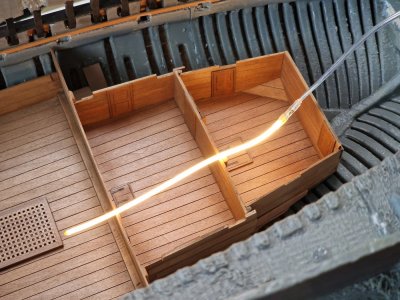
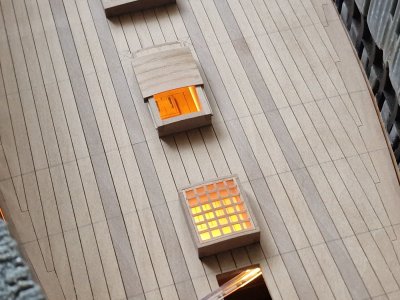
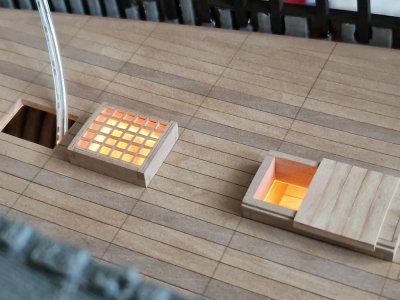
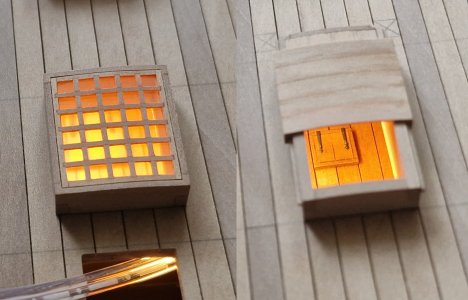
Initially, I wanted to install a few LEDs (these ones from AliExpress)... but it's a good thing I ordered flexible tape (this one, also from AliExpress. It's a warm 2700K). Because the LEDs turned out to be sооооo dim, I couldn't see anything. Yes, there shouldn't have been much light, since there was no electricity back then, and the only light source was a kerosene lamp or candles. But the LEDs turned out to be very weak. The tape, however, worked perfectly, as pictured below.
The connection diagram is not complicated.
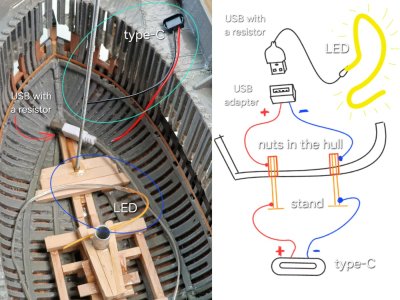
1. Since the flexible LED strip comes with a USB port with a resistor, it must be connected only through this port.
2. Therefore, I'll either order a USB adapter or simply solder the wires to the USB port.
3. Then I'll solder these wires to the brass holders that I previously glued into the case.
4. Bolts will be screwed into these holders through the columns and will secure the case to the stand.
5. Wires with a Type-C port (this one is from AliExpress) will be connected to these bolts, which will be glued into the stand.
6. A wire will be connected to this Type-C port like a regular phone. The wire can be powered from either a wall outlet or a power bank, if I ever get to an exhibition.
I'll order two more of these strips, each 30 cm long, so that each strip will be long enough to cover the entire length of the frame, from the first grating to the last. I want to install two LED strips, but since two will produce too much light, I'll only partially cover part of the strip, leaving the other half lit. Why two then? To be on the safe side. Even if something happens to one, the other will at least provide partial illumination; I doubt they'll both die at the same time. LEDs are very durable, especially when used very rarely. I think they'll last for about 100 years. Moreover, the manufacturer claims up to 80,000 hours...
These are just tests so far. The LED strip is barely holding on, and I just wanted to see how it would look, but to me... there's something about that warm light...

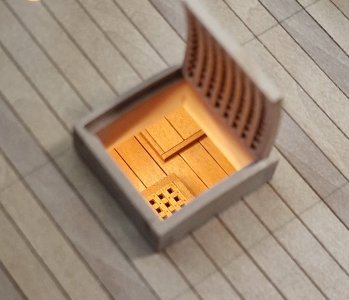
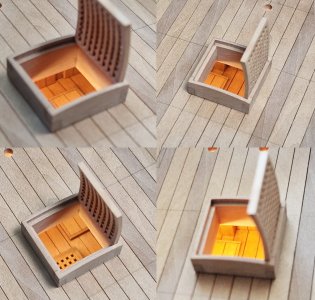
The thing is, there will be a staircase here, and this grating won't be visible because of it, but at least I'll know it's there, ahahaha))
One downside... I'll have to wait another month for the bulbs from AliExpress... it'll be interminable...
P.S. @Charlie1805 Danke, Kumpel. Es freut mich, dich kennenzulernen. Danke für die netten Worte, und ich freue mich schon sehr darauf, dein Projekt zu sehen und einen detaillierten Fortschrittsbericht zu erhalten.
Although I want to make the second hull museum-style, I want to make this project even brighter...
I want to install interior lighting in the cabins.
Initially, I wanted to install a few LEDs (these ones from AliExpress)... but it's a good thing I ordered flexible tape (this one, also from AliExpress. It's a warm 2700K). Because the LEDs turned out to be sооооo dim, I couldn't see anything. Yes, there shouldn't have been much light, since there was no electricity back then, and the only light source was a kerosene lamp or candles. But the LEDs turned out to be very weak. The tape, however, worked perfectly, as pictured below.
The connection diagram is not complicated.
1. Since the flexible LED strip comes with a USB port with a resistor, it must be connected only through this port.
2. Therefore, I'll either order a USB adapter or simply solder the wires to the USB port.
3. Then I'll solder these wires to the brass holders that I previously glued into the case.
4. Bolts will be screwed into these holders through the columns and will secure the case to the stand.
5. Wires with a Type-C port (this one is from AliExpress) will be connected to these bolts, which will be glued into the stand.
6. A wire will be connected to this Type-C port like a regular phone. The wire can be powered from either a wall outlet or a power bank, if I ever get to an exhibition.
I'll order two more of these strips, each 30 cm long, so that each strip will be long enough to cover the entire length of the frame, from the first grating to the last. I want to install two LED strips, but since two will produce too much light, I'll only partially cover part of the strip, leaving the other half lit. Why two then? To be on the safe side. Even if something happens to one, the other will at least provide partial illumination; I doubt they'll both die at the same time. LEDs are very durable, especially when used very rarely. I think they'll last for about 100 years. Moreover, the manufacturer claims up to 80,000 hours...
These are just tests so far. The LED strip is barely holding on, and I just wanted to see how it would look, but to me... there's something about that warm light...
The thing is, there will be a staircase here, and this grating won't be visible because of it, but at least I'll know it's there, ahahaha))
One downside... I'll have to wait another month for the bulbs from AliExpress... it'll be interminable...
P.S. @Charlie1805 Danke, Kumpel. Es freut mich, dich kennenzulernen. Danke für die netten Worte, und ich freue mich schon sehr darauf, dein Projekt zu sehen und einen detaillierten Fortschrittsbericht zu erhalten.

Patience is a virtue . Keep in mind those of us following your build must also wait.One downside... I'll have to wait another month for the bulbs from AliExpress... it'll be interminable...

Allan

You could use the time to print and plate some gun port hinges for me...One downside... I'll have to wait another month for the bulbs from AliExpress... it'll be interminable...

Naturally, I won’t stand still (I have a lot to do), but light would be very appropriate now..... but let’s wait and see what to do.Patience is a virtue . Keep in mind those of us following your build must also wait.
Allan

Hahahaha, the most annoying thing is that I can't even print my own steering wheel hinges because it's so cold here. And when printing, the apartment needs to be ventilated because of the printing smell. It's all slowing me down, but I stubbornly move forward.You could use the time to print and plate some gun port hinges for me...
I had left and right hinges printed for a 1695 ship as I did not want to make them by hand. I have the name of the printer guy if you want it. He did excellent work and was really inexpensive. They were only 1:64 scale but came out very well, including the bolt heads. Now for a little rant directed at those that say resin is not appropriate on a wooden ship model if it is to be of the highest quality and accurate. I used to be a naysayer about plastic and resin, but with fewer and fewer years left before turning to ash I would rather spend time on other things than filing metal hinges or turning or casting guns. Unless the metal cannon are cast iron or bronze as appropriate, I see no reason not to use resin. Metal guns are no more faithful to the real thing than resin unless they are cast in iron or bronze. There are very few guns seen on models that are the correct pattern or length but it is easily done with printed guns and accurate drawings that are readily available in many cases. Many forget or do not know a 9 foot English barrel was closer to 10 feet overall as the named length is not measured from one end to the other.You could use the time to print and plate some gun port hinges for me
And so my little rant ends and my apology is extended for any offense this may cause.
Allan
Sorry for not having more clear pic where you can more easily see the hinges and bolt heads
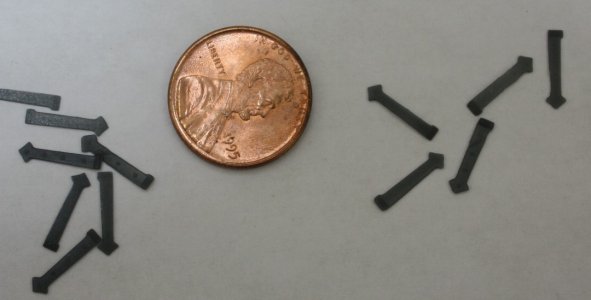
rather spend time on other things than filing metal hinges
too late!
More tests... this time, nails (plugs) on the deck.
While 100,500 processes are paused for various reasons, I decided to finish the deck. But...
...I really didn't like the visualization of the nails. On the hull, it's excellent (since the toothpicks weren't cut flush), but on the deck, when they're cut flush, there's no clear shape, and not all the nails are visible at all... That is, at certain angles, some seem to be missing (marked in red in the photo below), and many have no recognizable shape at all (anything not in the green oval).
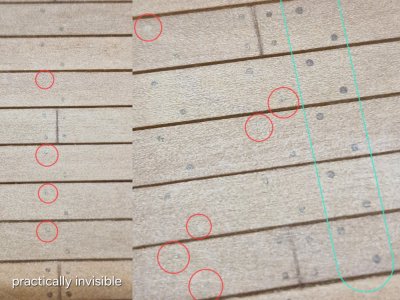
Yes, we all know that the nails were covered with wooden plugs made from the same wood as the board... and what's more, they had the same grain as the board. This was to prevent the wood from wearing away and the end of the plug from cracking or swelling. Essentially, these plugs were installed very tightly through resin, a layer that practically disappeared during use.
It's logical that at any scale, these plugs would be completely invisible. But a model is a work of art, and we want to show off the detail. It's more appropriate to make these plugs have a low contrast, meaning they don't stand out too much. But I was still bothered by the fact that they weren't all clear and visible... so I started experimenting.
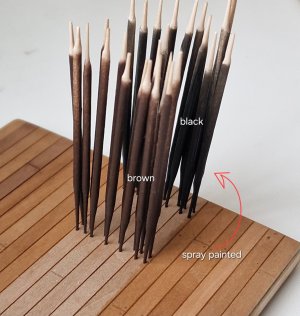
I sharpened some toothpicks and spray painted them black and brown.
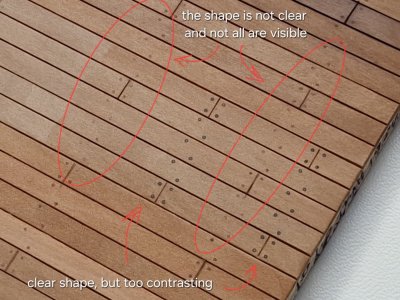
But I didn't like the effect. The plugs became very visible and didn't have the halo around them that I'd planned, and they got dirty after sanding with this paint and became darker.
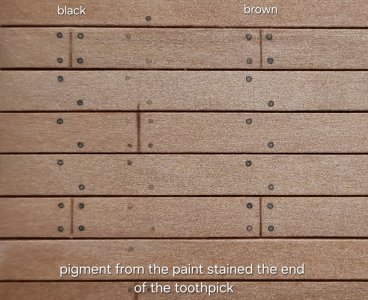
Yes, they became a more recognizable shape, but much darker than expected.
Then I decided to color the toothpicks with pencil graphite, hoping the rim would be small...
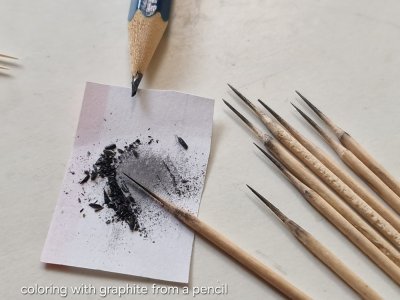
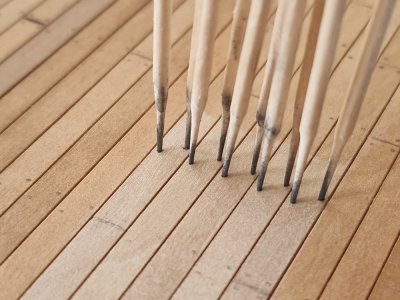
... but the result was similar, just like with painted PVA.
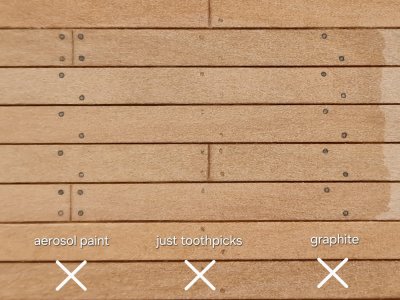
When sanding, the soft birch (the end of the toothpick) stained and became darker.
So, I didn't like any of these options. So, I tried a different approach.
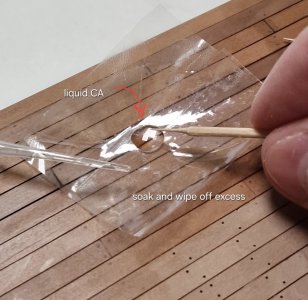
I dipped the tip of a toothpick in liquid CA and immediately wiped it off and fixed it in the hole.
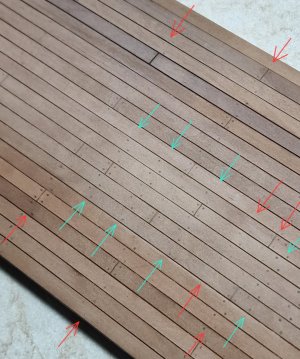
In the end, I achieved a repeatable shape and the same color for all the plugs. Between the red arrows are the belts without glue, between the green arrows are the belts with glue.
I agree that even with glue, not all the plugs are visible everywhere, but these are isolated cases, and at least they are all round... But without glue, it's like a lottery...
I hope the deck will be ready soon...
While 100,500 processes are paused for various reasons, I decided to finish the deck. But...
...I really didn't like the visualization of the nails. On the hull, it's excellent (since the toothpicks weren't cut flush), but on the deck, when they're cut flush, there's no clear shape, and not all the nails are visible at all... That is, at certain angles, some seem to be missing (marked in red in the photo below), and many have no recognizable shape at all (anything not in the green oval).
Yes, we all know that the nails were covered with wooden plugs made from the same wood as the board... and what's more, they had the same grain as the board. This was to prevent the wood from wearing away and the end of the plug from cracking or swelling. Essentially, these plugs were installed very tightly through resin, a layer that practically disappeared during use.
It's logical that at any scale, these plugs would be completely invisible. But a model is a work of art, and we want to show off the detail. It's more appropriate to make these plugs have a low contrast, meaning they don't stand out too much. But I was still bothered by the fact that they weren't all clear and visible... so I started experimenting.
I sharpened some toothpicks and spray painted them black and brown.
But I didn't like the effect. The plugs became very visible and didn't have the halo around them that I'd planned, and they got dirty after sanding with this paint and became darker.
Yes, they became a more recognizable shape, but much darker than expected.
Then I decided to color the toothpicks with pencil graphite, hoping the rim would be small...
... but the result was similar, just like with painted PVA.
When sanding, the soft birch (the end of the toothpick) stained and became darker.
So, I didn't like any of these options. So, I tried a different approach.
I dipped the tip of a toothpick in liquid CA and immediately wiped it off and fixed it in the hole.
In the end, I achieved a repeatable shape and the same color for all the plugs. Between the red arrows are the belts without glue, between the green arrows are the belts with glue.
I agree that even with glue, not all the plugs are visible everywhere, but these are isolated cases, and at least they are all round... But without glue, it's like a lottery...
I hope the deck will be ready soon...
I definitely agree with you. I'm also all for using every opportunity to achieve the best possible result. Especially since you've seen that even plastic can be coated with metal, and then no one will be able to tell the difference. This is very useful for me, especially if there are a lot of parts and it takes forever to make them.I had left and right hinges printed for a 1695 ship as I did not want to make them by hand. I have the name of the printer guy if you want it. He did excellent work and was really inexpensive. They were only 1:64 scale but came out very well, including the bolt heads. Now for a little rant directed at those that say resin is not appropriate on a wooden ship model if it is to be of the highest quality and accurate. I used to be a naysayer about plastic and resin, but with fewer and fewer years left before turning to ash I would rather spend time on other things than filing metal hinges or turning or casting guns. Unless the metal cannon are cast iron or bronze as appropriate, I see no reason not to use resin. Metal guns are no more faithful to the real thing than resin unless they are cast in iron or bronze. There are very few guns seen on models that are the correct pattern or length but it is easily done with printed guns and accurate drawings that are readily available in many cases. Many forget or do not know a 9 foot English barrel was closer to 10 feet overall as the named length is not measured from one end to the other.
And so my little rant ends and my apology is extended for any offense this may cause.
Allan
Sorry for not having more clear pic where you can more easily see the hinges and bolt heads
View attachment 594710
It's never too late)))

Super interesting and informative Sergey. Freaking awesome modelling and print designs. Cheers Grant


Looks great. If you drill the treenail holes then popa sharp pencil into it it will darken the rim. Then you can use a normall toothpick. Saves potentially making a mess with lots of graphite, which seems to get everywhere"
Thank you for your high rating. I'm glad you were impressed with the 3D modeling.Super interesting and informative Sergey. Freaking awesome modelling and print designs. Cheers Grant
Thank you. Yes, that's an option, but it's still darker than I'd like. The glue option makes a slight difference, but it's not noticeable enough.Looks great. If you drill the treenail holes then popa sharp pencil into it it will darken the rim. Then you can use a normall toothpick. Saves potentially making a mess with lots of graphite, which seems to get everywhere"