



• SUBSCRIBE TO SHIPS IN SCALE TODAY!

    The beloved Ships in Scale Magazine is back and charting a new course for 2026!
    Discover new skills, new techniques, and new inspirations in every issue.

    NOTE THAT OUR NEXT ISSUE WILL BE MARCH/APRIL 2026
  • Win a Free Custom Engraved Brass Coin!!!
    As a way to introduce our brass coins to the community, we will raffle off a free coin during the month of August. Follow link ABOVE for instructions for entering.

The Black Swan by OcCre 1:75: Build Log

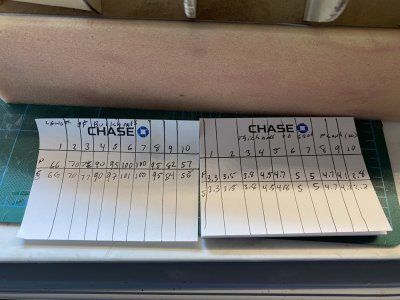
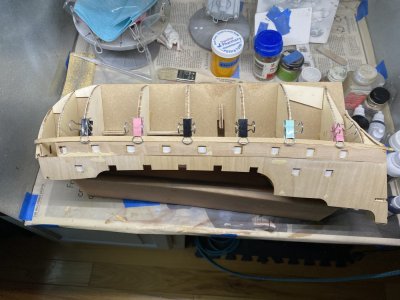
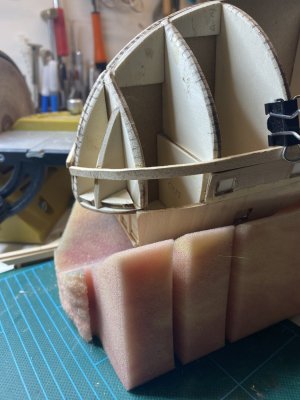
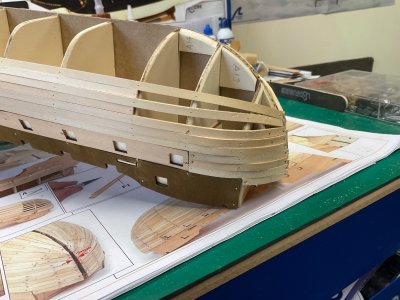
To start planking the hull I measured the length of all the bulkheads to taper the planks. It looks like it will take about 20 planks on each side to do the trick.
IMG_2131.jpeg

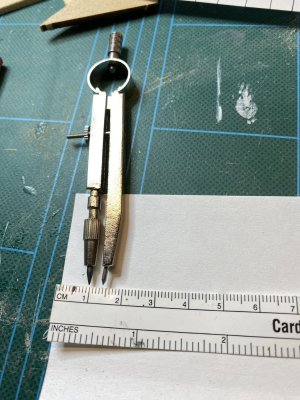
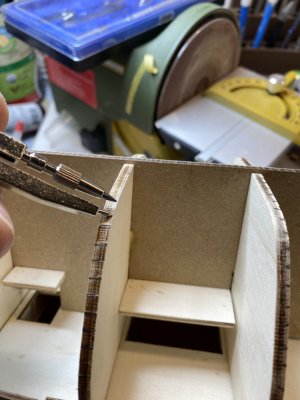
Reh thickness of the planks which are 5mm wide will vary from the full 5mm to 3.3 mm for the bow of the ship. To transfer the tick marks to each bulkhead I used a compass, setting the with that each plank will use at a particular bulkhead and marking them.

IMG_2132.jpeg

IMG_2134.jpeg

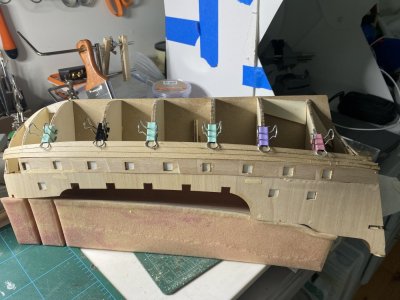
The first plank was soaked in water for a few minutes, the bow bent using an iron to wrap around the curve of the bow. The stern which curves down a bit was also curved slightly. The next plank in the stern will be made a bit wider to make up for that curve and produce straighter planks. I used CA glue to secure the front curved area and wood glue for the rest of the length.

IMG_2136.jpeg
 
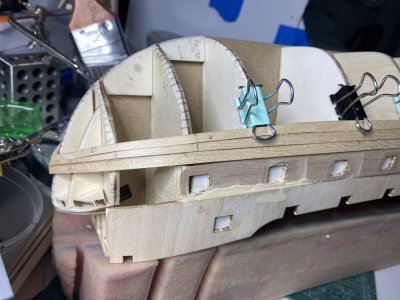
After laying down the first planks I realized that there is an unplanked space above the first planks where the gun ports are. This means the remains 19 planks will actually have less space in the bow that I calculated and will have to be tapered more. I remeasured the area and each plank will have to be about 2.5 mm in width at the bow.

IMG_2141.jpeg
 
Last edited:
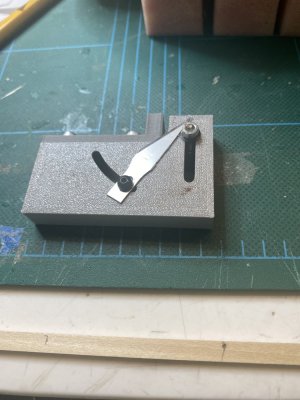
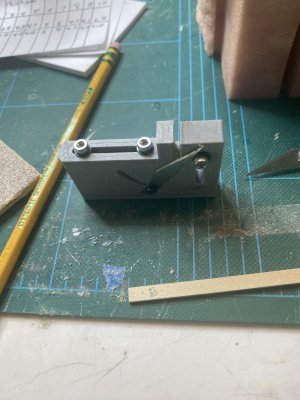
A little while back I bought this mini plane trim the edge of the plank that lies against the hull bulkheads. Forgot where I first saw it, but I believe I picked it up on Amazon for about $4. It is 3D printed. You can adjust for the width of the plank you want and the angle of the blade which is just a replaceable x-acto blade. It works well. After passing the plank through the plane a few times I finish with a quick pass of sandpaper.

IMG_2145.jpeg
IMG_2146.jpeg
 
I decided to start laying a few planks from the keel up. In my limited experience it is better to meet in the middle, so to speak, to more easier fit in the last few planks. The "garboard plank here is set very differently than other ships I have built. There is no rabbet to key the plank into. In addition on the bow the plank rises up above the keel on both sides forming a slot where apparently the false keel is placed. Of course this is really mentioned no place in the sparse directions but if you study the pictorial included and looking on their you tube building directions you can figure it out.

You can see in this picture how the planking in the front sets proud of the keel.
IMG_2152.jpeg

I soaked th stern end of the plank in water for a few hours to make it more flexible to bend 90 degrees to clamp onto the back of the keel piece. I first glued and held into place the plank along the main structure of the hull then clamped the stern part into place.

IMG_2153.jpeg

The bow part of the plank was kept a bit long so I could tack it in place and then trim it to size after. The piece was motioned and curved using a hot iron.

IMG_2154.jpeg

Slow progress is being made.

IMG_2155.jpeg
 
The planking is going along slowly, mostly because I do not enjoy it a lot and am taking my time. I have to say planking the Bluenose was a lot more fun with its smoother lines.

IMG_2159.jpeg

IMG_2160.jpeg

When I made my first measurements I forgot to include the deadwood in the stern to be planked. I realized that a few planks in and lessened the tapering of the stern area of the planks to account for this.
 
The planking is going along slowly, mostly because I do not enjoy it a lot and am taking my time. I have to say planking the Bluenose was a lot more fun with its smoother lines.

View attachment 606923

View attachment 606924

When I made my first measurements I forgot to include the deadwood in the stern to be planked. I realized that a few planks in and lessened the tapering of the stern area of the planks to account for this.
I hope that my planking will be as good as yours
 
Like I said the planking of the Bluenose was much more fun. The curves on the bow take a lot of careful bending of the planking. Luckily they provide a lot of planks for those of us who need more than the minimum amount! :rolleyes:
Very nice Rob, I am a bit in front of you on the same model and it has its challenges.
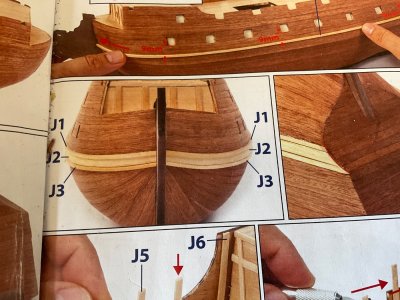
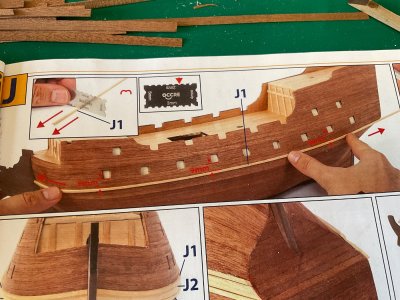
I thought I might ask for advice with the next bit of my build. I have got to the part after completing the planking where I have to attach a few strips alongside the hull but below the lower gun ports. I have bent the strip to the same shape of the hull and I have to attach it to the hull. I intend putting large elastic bands along the straight sides of the hull but how do i hold the bow section in place after glueing. I have attached a photo showing it from the instruction sheet.

IMG_0333.jpeg

IMG_0332.jpeg
 
Very nice Rob, I am a bit in front of you on the same model and it has its challenges.
I thought I might ask for advice with the next bit of my build. I have got to the part after completing the planking where I have to attach a few strips alongside the hull but below the lower gun ports. I have bent the strip to the same shape of the hull and I have to attach it to the hull. I intend putting large elastic bands along the straight sides of the hull but how do i hold the bow section in place after glueing. I have attached a photo showing it from the instruction sheet.

View attachment 607220

View attachment 607221
That will indeed be a challenge. On the planking of the bow pieces I have sometimes use gel like CA cement. I would put a few dots of CA along the curve and hold it in place until it sets. You can use a CA accelerator (ZAP kicker is one brand we have here) to cause the CA to instantly set. The rest of the strip I would use PVA glue.

Rob
 
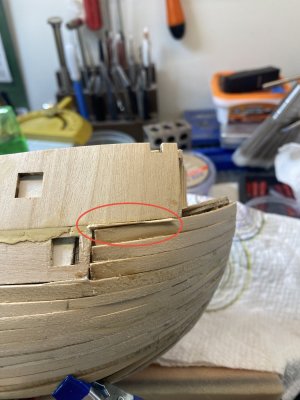
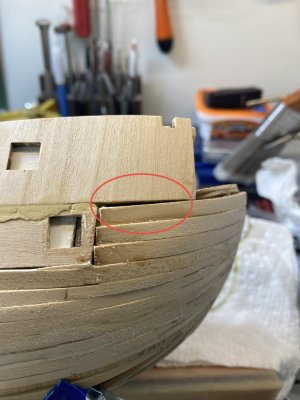
It is a joy to see that you marked out the plank breadths so the planking does not look like the instruction photos above, which are someone's fantasy. (I know this is a fantasy ship, but....) Note that the wales in the photos above stand proud of the planking at the stem which is also unrealistic. When you get to that point, remember to sand the thickness to match the adjacent planks as close as you can so the strakes of the wales fit into the rabbet the same as the other planking and does not stick up at the rabbet.
Allan
 
It is a joy to see that you marked out the plank breadths so the planking does not look like the instruction photos above, which are someone's fantasy. (I know this is a fantasy ship, but....) Note that the wales in the photos above stand proud of the planking at the stem which is also unrealistic. When you get to that point, remember to sand the thickness to match the adjacent planks as close as you can so the strakes of the wales fit into the rabbet the same as the other planking and does not stick up at the rabbet.
Allan
Thank you Allan, I am unsure why they do the planking the way they do. It strikes me as being very ugly and I doubt any similar method was used on actual ships. I think one reason they may do it is to simplify the "instructions" which makes a passing mention of tapering. Also it would be difficult to explain the tapering by the visual method they use. But it goes to show there is certainly more than one way to skin a cat.

Rob
 
Last edited:
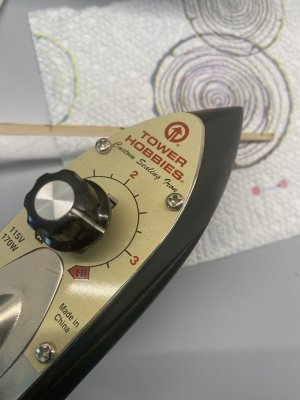
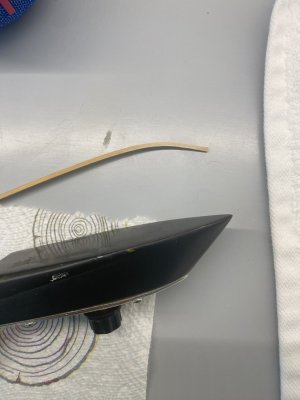
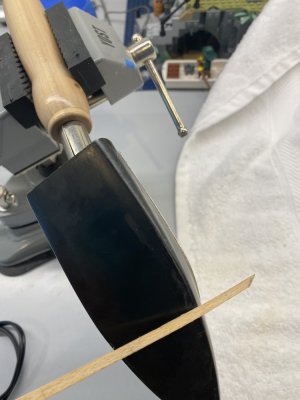
After bending a lot of planks I thought they may be a better way. What I did it mount the handle of the iron into the jaws of my vise. I then passed the planks across the face of the iron, using a paper towel to hold the close end. It actually seemed to work well and gave me better control of the bending process.

IMG_2162.jpeg
 
With my so - so planking ability, more frequently than I want there are gaps in areas between planks.

IMG_2168.jpeg

If the spaces are large enough I take the shavings from the planks and use pieces with a little glue to fill the space.

IMG_21692.jpeg

These are sanded down to match the hull.

As a side note, I have to say the planks provided by Occre are first class. Each side has been milled flat and smooth and each plank that I have used is exactly 5mm wide. They provide way more planking than you need. Well done Occre!
 
With my so - so planking ability, more frequently than I want there are gaps in areas between planks.

View attachment 607489

If the spaces are large enough I take the shavings from the planks and use pieces with a little glue to fill the space.

View attachment 607490

These are sanded down to match the hull.

As a side note, I have to say the planks provided by Occre are first class. Each side has been milled flat and smooth and each plank that I have used is exactly 5mm wide. They provide way more planking than you need. Well done Occre!
Hi Rob,
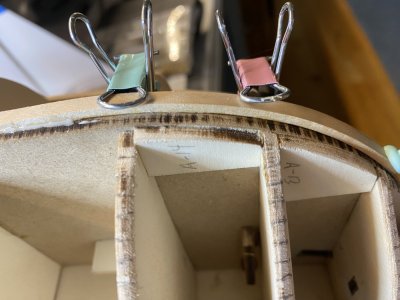
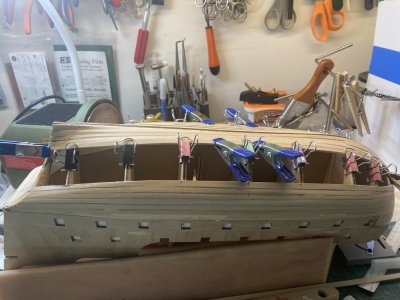
Interesting seeing your photos with your issue. When I did mine I tacked the planks to the bulkhead behind the planks then removed the pins a day later after the glue has dried. As you can see in my photo the planks finish at the bulkhead so that I can pin the plank to it. Then removed the pins a day later. You can see the holes from the planks that have had the pins removed.

IMG_0326.jpeg
 
Back
Top