
-

SUBSCRIBE TO SHIPS IN SCALE TODAY!
The beloved Ships in Scale Magazine is back and charting a new course for 2026!
Discover new skills, new techniques, and new inspirations in every issue.
NOTE THAT OUR NEXT ISSUE WILL BE July/August 2026 -

Win a Free Custom Engraved Brass Coin!!!
As a way to introduce our brass coins to the community, we will raffle off a free coin during the month of August. Follow link ABOVE for instructions for entering.
You are using an out of date browser. It may not display this or other websites correctly.
You should upgrade or use an alternative browser.
You should upgrade or use an alternative browser.



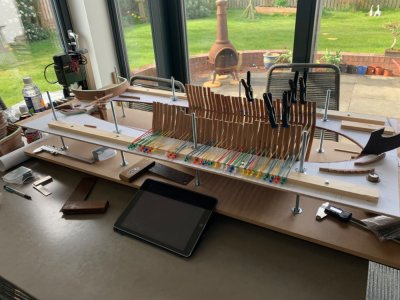
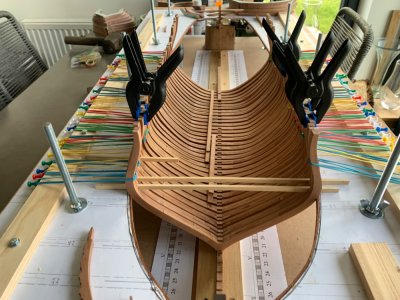
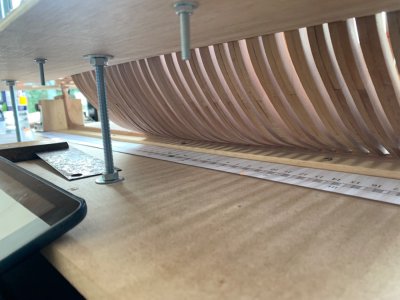
This is a work in progress. At the moment I am thinking of planking both port and starboard sides down to the main wale which will be in black hornbeam. As far as inserting chocks are concerned, I intend to place one at each frame above the limber passage together with floor timber chocks which would allow the flow of water from port and starboard down to the limber passage. Hope this answers your questions.Are you going to mount the main wale?
Do you care if water between the bends cannot move from port to stb. and back? That is - Does it matter to you if the deadwood is continuous along the whole hull?

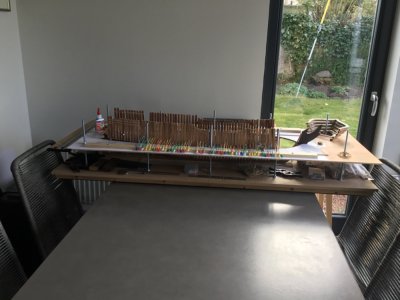
Does this mean your current wife - or your wife is currently understandingIn terms of the dining room table, I have a very understanding wife……..currently.
 ?
?- Joined
- Oct 2, 2025
- Messages
- 492
- Points
- 158

I am suggesting a way to make the frame assembly a bit easier:
To see if we are on the same page as far as dimensions: When I lofted Venus, I have each frame in a bend as sided 10" and the space 6" The station interval as 105". Four bends and their spaces per station to station interval. I do not use a jig and I place the keel after the hull is assembled - so I can afford to round my stock thickness more than you can.
But anyway: you could do what was done in the yard to assist with hull framing: liberal use of chocks along the way. In a pair of bends a space thickness chock at the deadwood - Pear here. Place another chock behind the wale on either side - this can be any species of wood - it being hidden. Mike it after a pair of bends is joined to be sure. Error creep is real. Two pair of bonded bends can be so bonded into a unit of four bends either using the jig or or your mike if it jaws open that wide. It makes for a rigid hull as you go.
Now for the stern problem: you can always go to an original plan - Leda print from RMG ZAZ4909 - You can't make the same mistake that I did because RMG no longer sells reduced size prints. The plan is all beat up. The Leda class was large and they seemed to have used it to make a copy for every ship in this huge class. It even includes the replacement of a flat stern with an elliptical and enclosing the forecastle.
If you wish to convert the hull over to an RN version - there is a contract with the exact scantlings used. The framing that you have is much more attractive than anything derived from actual RN framing (cough! wall of timber cough!) - so you are already miles ahead there.
Venus being one of six French frigates in the Hebe class:
There is also ZAZ2585 Hebe as captured. The negative here is that, as with most as captured taken off plans, the station positions are arbitrary - have no association with the actual framing and the minimum number of stations were drawn.
To see if we are on the same page as far as dimensions: When I lofted Venus, I have each frame in a bend as sided 10" and the space 6" The station interval as 105". Four bends and their spaces per station to station interval. I do not use a jig and I place the keel after the hull is assembled - so I can afford to round my stock thickness more than you can.
But anyway: you could do what was done in the yard to assist with hull framing: liberal use of chocks along the way. In a pair of bends a space thickness chock at the deadwood - Pear here. Place another chock behind the wale on either side - this can be any species of wood - it being hidden. Mike it after a pair of bends is joined to be sure. Error creep is real. Two pair of bonded bends can be so bonded into a unit of four bends either using the jig or or your mike if it jaws open that wide. It makes for a rigid hull as you go.
Now for the stern problem: you can always go to an original plan - Leda print from RMG ZAZ4909 - You can't make the same mistake that I did because RMG no longer sells reduced size prints. The plan is all beat up. The Leda class was large and they seemed to have used it to make a copy for every ship in this huge class. It even includes the replacement of a flat stern with an elliptical and enclosing the forecastle.
If you wish to convert the hull over to an RN version - there is a contract with the exact scantlings used. The framing that you have is much more attractive than anything derived from actual RN framing (cough! wall of timber cough!) - so you are already miles ahead there.
Venus being one of six French frigates in the Hebe class:
There is also ZAZ2585 Hebe as captured. The negative here is that, as with most as captured taken off plans, the station positions are arbitrary - have no association with the actual framing and the minimum number of stations were drawn.

- Joined
- Oct 23, 2018
- Messages
- 988
- Points
- 403

La Venus was one of my first book about historic shipmodelling many years ago. I will follow your log with great interest.
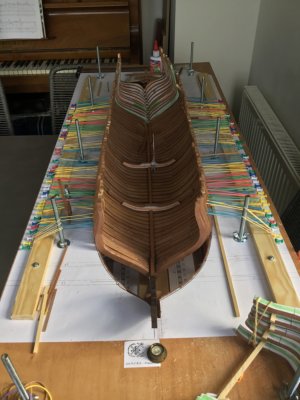
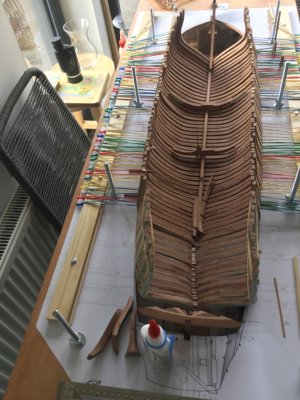
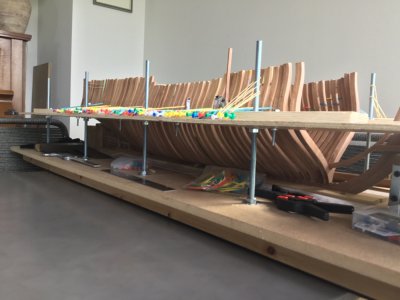
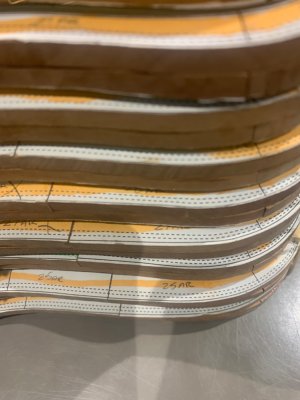
I’ve run into the frame 26AR problem as other builders of La Venus from the ANCRE plans have come across. I’m thinking the way to overcome the issue is to make fr26 oversize on the outside profile and by sanding back, hopefully, this will resolve the issue!!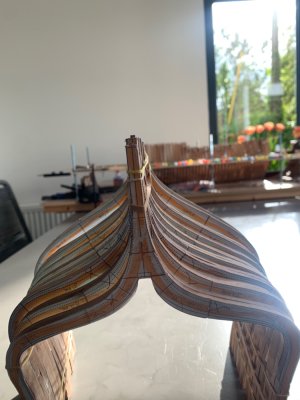
- Joined
- Oct 2, 2025
- Messages
- 492
- Points
- 158
Or - you could take the Last known shape from 25AR and first known shape of 27AR for your patterns.
Add wood to cover the additional distance.
Have enough stock that is the thickness of the space between the bends to make two frames. Pine would be excellent for this.
A Pine board wide enough for half of the frame should be possible. Or piece it up - it does not matter.
Use rubber cement for the patterns to Pine and Duco (nitrocellulose/acetone) to bond the Pine to the actual frame stock.
Do the shaping on the 4 layer stack. Exposure to acetone will debond the Pine.
The alignment of the patterns over 25AR over 27AR will be your greatest challenge.
I checked my lofting of Venus -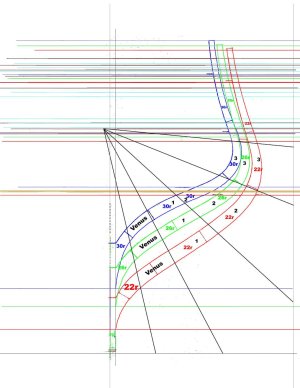
I would not use someone else's lofting of frame shapes now. I think I used the monograph shapes because there was no Body plan.
I see it now. The gap between 22r and 26r is wider than 26r and 30r - The reverse should be the situation. There will be a hollow in the run aft.
The bevel is such that 25AR and 27AR will have zero area in the body of the frames where a vertical pin will intersect even this small run of frames.
Taking inspiration from the title of a Jerry Lewis movie: Don't Raise the Bridge - Lower the River - if a common alignment of frames is not possible using the the inside body of the frames go outside. There are zero limits here. There is the whole Universe. Except that size of the frame stock does impose a limit.
I build and shape my frames in stacks of layers of bend timbers and space filling timbers.
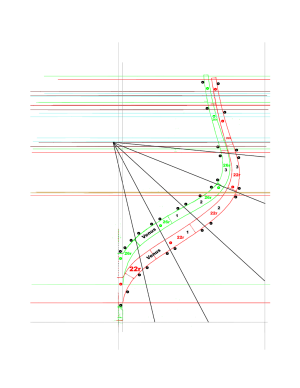
Here is my alignment for 22r to 26r - The black "o" with the #70 drill bit size white center is for my drill press
Here it the same as the full frame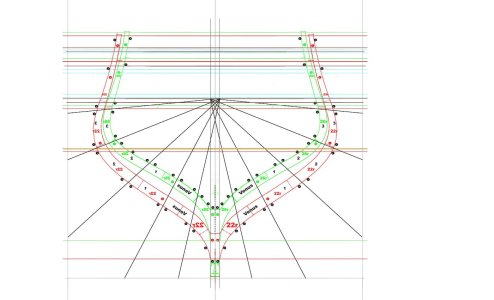
With this -the gap jump is more obvious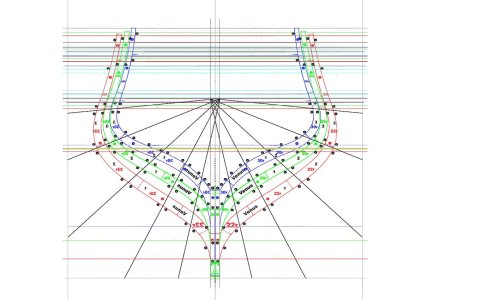
I do not know what your computer graphic program resources are but this will solution will require some time in them.
I lofted Venus a while ago with much less experience. I have no intention to build Venus. If I were going to do it, I would not now use secondhand filtered lofting. I would start at first cases and use the closest we have to the original Sane design - The RN take-off plans of Leda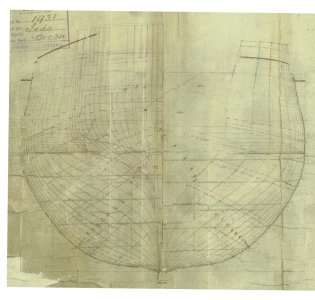
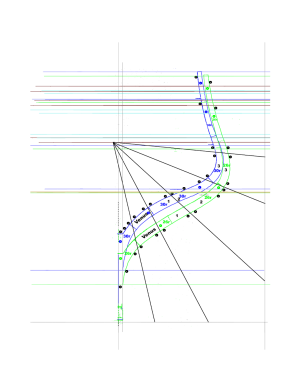
I can't make this go away
Add wood to cover the additional distance.
Have enough stock that is the thickness of the space between the bends to make two frames. Pine would be excellent for this.
A Pine board wide enough for half of the frame should be possible. Or piece it up - it does not matter.
Use rubber cement for the patterns to Pine and Duco (nitrocellulose/acetone) to bond the Pine to the actual frame stock.
Do the shaping on the 4 layer stack. Exposure to acetone will debond the Pine.
The alignment of the patterns over 25AR over 27AR will be your greatest challenge.
I checked my lofting of Venus -
I would not use someone else's lofting of frame shapes now. I think I used the monograph shapes because there was no Body plan.
I see it now. The gap between 22r and 26r is wider than 26r and 30r - The reverse should be the situation. There will be a hollow in the run aft.
The bevel is such that 25AR and 27AR will have zero area in the body of the frames where a vertical pin will intersect even this small run of frames.
Taking inspiration from the title of a Jerry Lewis movie: Don't Raise the Bridge - Lower the River - if a common alignment of frames is not possible using the the inside body of the frames go outside. There are zero limits here. There is the whole Universe. Except that size of the frame stock does impose a limit.
I build and shape my frames in stacks of layers of bend timbers and space filling timbers.
Here is my alignment for 22r to 26r - The black "o" with the #70 drill bit size white center is for my drill press
Here it the same as the full frame
With this -the gap jump is more obvious
I do not know what your computer graphic program resources are but this will solution will require some time in them.
I lofted Venus a while ago with much less experience. I have no intention to build Venus. If I were going to do it, I would not now use secondhand filtered lofting. I would start at first cases and use the closest we have to the original Sane design - The RN take-off plans of Leda
I can't make this go away
Last edited:
- Joined
- Aug 19, 2024
- Messages
- 90
- Points
- 213

Hello.
It is exactly as was stated. Take the outer dimension at Frame 25, and for the inner dimension, use Frame 27—allowing for a little extra material in each case. In principle, the exact measurement matters very little here; what is important is having at least these two reference points. During sanding, Frames 25 and 27 serve as the references; Frame 26 will therefore be adjusted automatically.
Have fun as you continue!
Andreas
It is exactly as was stated. Take the outer dimension at Frame 25, and for the inner dimension, use Frame 27—allowing for a little extra material in each case. In principle, the exact measurement matters very little here; what is important is having at least these two reference points. During sanding, Frames 25 and 27 serve as the references; Frame 26 will therefore be adjusted automatically.
Have fun as you continue!
Andreas
I'm with the Captain here. I also had a framing irregularity on the Saint Philippe in a similar location. I tried my best to draw and redraw the patterns but it was all just a bridge too far for me (no knowledge, no software, no experience). I just built an oversized frame using the good lines fore and aft and shaped it into proper form to create fair lines.Hello.
It is exactly as was stated. Take the outer dimension at Frame 25, and for the inner dimension, use Frame 27—allowing for a little extra material in each case. In principle, the exact measurement matters very little here; what is important is having at least these two reference points. During sanding, Frames 25 and 27 serve as the references; Frame 26 will therefore be adjusted automatically.
Have fun as you continue!
Andreas
Thanks guys for your advice. I will try the fr25/27 approach you describe and with any luck all will be well.Hello.
It is exactly as was stated. Take the outer dimension at Frame 25, and for the inner dimension, use Frame 27—allowing for a little extra material in each case. In principle, the exact measurement matters very little here; what is important is having at least these two reference points. During sanding, Frames 25 and 27 serve as the references; Frame 26 will therefore be adjusted automatically.
Have fun as you continue!
Andreas
Cheers
Jon
Thinking the Fr26 problem has been overcome thanks to your superb insights. Dry fitting all looks good.
Next issue is the bow structure and all the angles required to mill the various port and starboard pieces. I have bought a digital protector (yeh) but that’s not much use without a suitable jig to mount the wood in prior to milling. I have an idea for this …… more later.
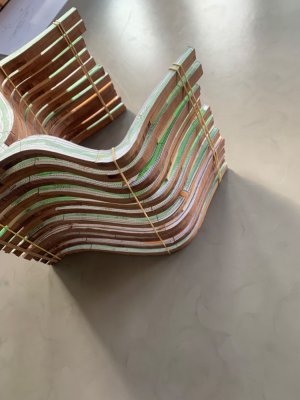
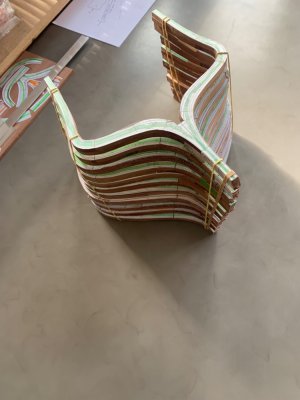
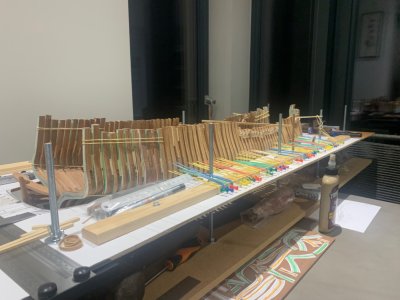
Next issue is the bow structure and all the angles required to mill the various port and starboard pieces. I have bought a digital protector (yeh) but that’s not much use without a suitable jig to mount the wood in prior to milling. I have an idea for this …… more later.
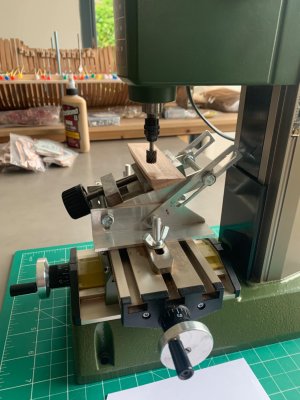
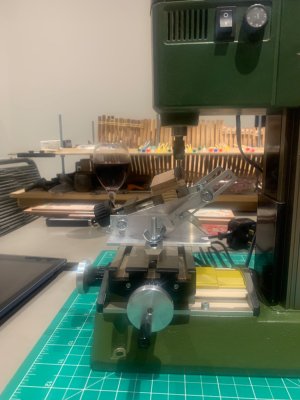
My thoughts on the angle platform for the Proxxon MF70 mill didn’t work out too well so I have copied a design I saw elsewhere on this site (so sorry I can’t credit the jig designer because I stupidly didn’t copy his page name).
However, here is my attempt at reproducing his “angle plate” along with reproductions of the plans to make the parts required for the bow enclosure.
Haven’t milled any parts yet but let’s see how I get on - hopefully not more expensive fire wood!!!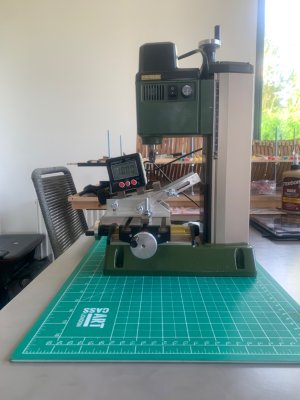
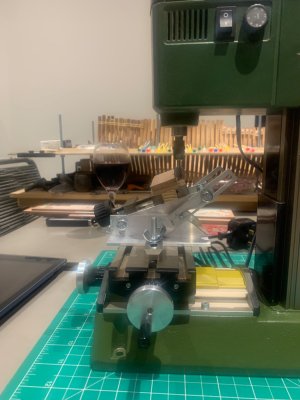
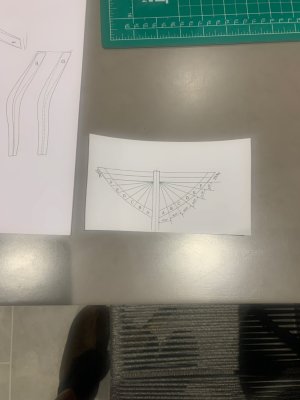
However, here is my attempt at reproducing his “angle plate” along with reproductions of the plans to make the parts required for the bow enclosure.
Haven’t milled any parts yet but let’s see how I get on - hopefully not more expensive fire wood!!!
The jig worked reasonable well but did take about 4 hours of milling to make the first piece! Has anyone got any better/ faster thoughts or ideas to make the bow/ hawse sections?My thoughts on the angle platform for the Proxxon MF70 mill didn’t work out too well so I have copied a design I saw elsewhere on this site (so sorry I can’t credit the jig designer because I stupidly didn’t copy his page name).
However, here is my attempt at reproducing his “angle plate” along with reproductions of the plans to make the parts required for the bow enclosure.
Haven’t milled any parts yet but let’s see how I get on - hopefully not more expensive fire wood!!!View attachment 607045View attachment 607046View attachment 607049
Drink less wine during the production processHas anyone got any better/ faster thoughts or ideas to make the bow/ hawse sections (faster)?
 ?
?Full disclosure: my cellar exceeds 1500 bottles
 ...
...- Joined
- Aug 19, 2024
- Messages
- 90
- Points
- 213
Hi Jon!
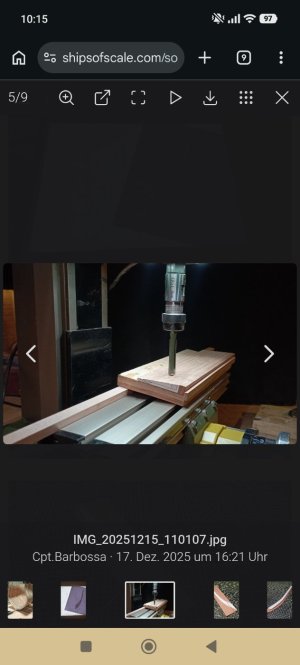
That’s a great jig you’ve got there. For the Artesien, I attached the part to a piece of wood using double-sided tape. To set the angle, I glued a wooden strip underneath it—adjusting it until I achieved the correct angle. This effectively creates a "sled" that allows you to slide the entire setup—workpiece included—back and forth.
Best of luck with the rest of the project!
Regards
Andreas
That’s a great jig you’ve got there. For the Artesien, I attached the part to a piece of wood using double-sided tape. To set the angle, I glued a wooden strip underneath it—adjusting it until I achieved the correct angle. This effectively creates a "sled" that allows you to slide the entire setup—workpiece included—back and forth.
Best of luck with the rest of the project!
Regards
Andreas
Hi Jon,
These pieces take a long time, at least in my case, because I have made multiple attempts at each one to get them right. I use to use a Mill but not the Proxxon one as I upgraded mine to a larger sturdier TAIG Mill. But the principle is much the same. I bought a tilt mount from Sherline that fits my vice and use that in conjunction with a digital angle finder to get the precise angle. Then I use 3M extreme mounting tape to mount the wood to a wooden block that I fit into the vice. Thru trial and error I have learned to make multiple passes as these angles are very acute and if you're not careful they will split as the wood gets narrower. Lastly rather than mill the final bit I will remove the piece and hand sand the angles to spec. This will save you a lot of wood and frustration. Better to spend 2 hours on a piece than hours remaking the same piece over and over....
Hope this helps,
Chris
These pieces take a long time, at least in my case, because I have made multiple attempts at each one to get them right. I use to use a Mill but not the Proxxon one as I upgraded mine to a larger sturdier TAIG Mill. But the principle is much the same. I bought a tilt mount from Sherline that fits my vice and use that in conjunction with a digital angle finder to get the precise angle. Then I use 3M extreme mounting tape to mount the wood to a wooden block that I fit into the vice. Thru trial and error I have learned to make multiple passes as these angles are very acute and if you're not careful they will split as the wood gets narrower. Lastly rather than mill the final bit I will remove the piece and hand sand the angles to spec. This will save you a lot of wood and frustration. Better to spend 2 hours on a piece than hours remaking the same piece over and over....
Hope this helps,
Chris