You must be happy Peter- they are playing so well right nowOh wait, the Netherlands is about to play now!

 |
The beloved Ships in Scale Magazine is back and charting a new course for 2026! Discover new skills, new techniques, and new inspirations in every issue. NOTE THAT OUR NEXT ISSUE WILL BE July/August 2026 |
|
 |
As a way to introduce our brass coins to the community, we will raffle off a free coin during the month of August. Follow link ABOVE for instructions for entering. |
|
You must be happy Peter- they are playing so well right nowOh wait, the Netherlands is about to play now!

Well Grant, usually I just watch the Dutch team's matches in the background while doing other things. I like it when they win, but I'm not really a die-hard supporter. The next match is at 03:00 Dutch time. I'll have something better to do thenYou must be happy Peter- they are playing so well right now

The same goes for South Africa... If you win tonight and we beat Morocco, our teams will play against each other.You must be happy Peter- they are playing so well right now

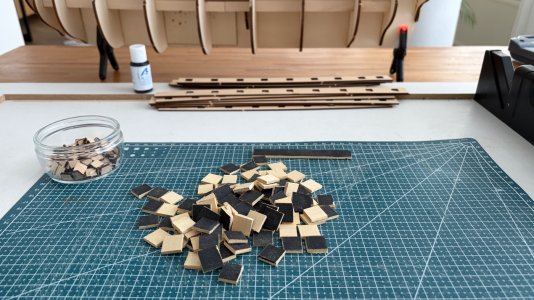
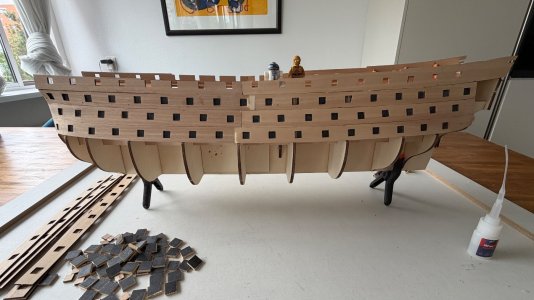
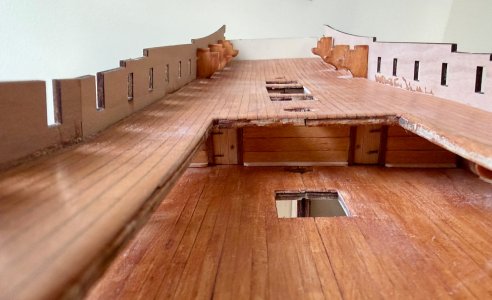
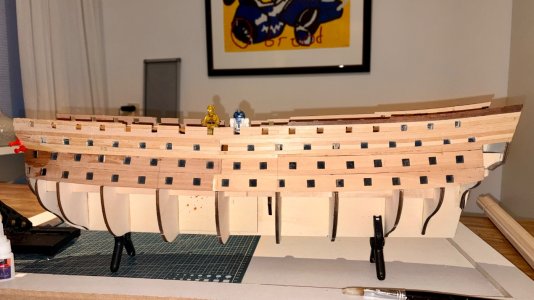
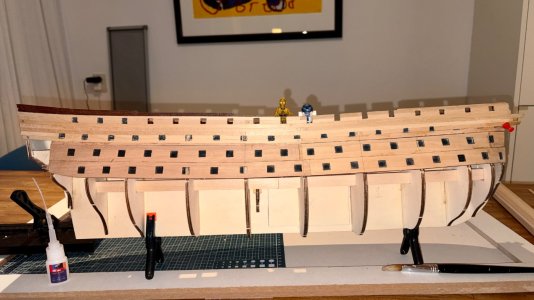
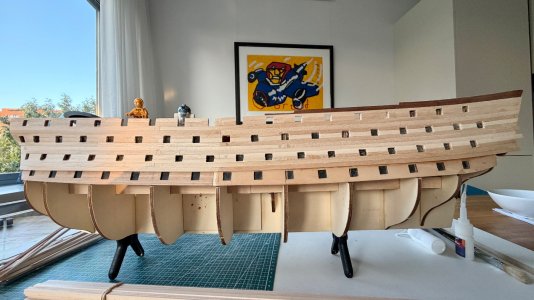
Your deck planking looks neatly done! At this small scale it is great that you are not using spikes or treenails.
I cannot find any information on this so a question maybe you can answer. Were the decks of Spanish ships flat unlike British ships which had various degrees of rounding depending on the deck and ship size, or is this a kit design mistake?
Thanks
Allan
Thanks Peter, I thought that might be the case but wanted to give OcCre the benefit of the doubt.This is indeed a design flaw in the kit, or rather a deliberate simplification by OcCre.
....I guess not....... Our lads ran out of steam in the second half. Still we are very proud of our team to make the last 32.The same goes for South Africa... If you win tonight and we beat Morocco, our teams will play against each other.
I watched it yesterday and am disappointed and indeed you can be very proud!....I guess not....... Our lads ran out of steam in the second half. Still we are very proud of our team to make the last 32.
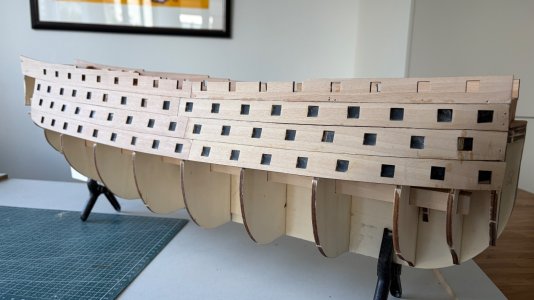
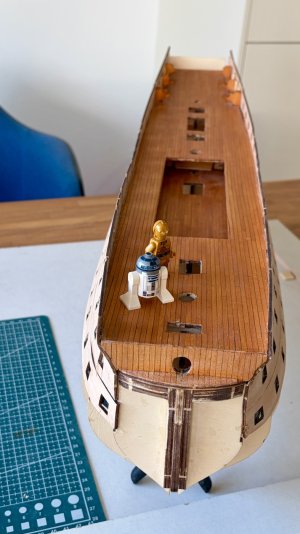
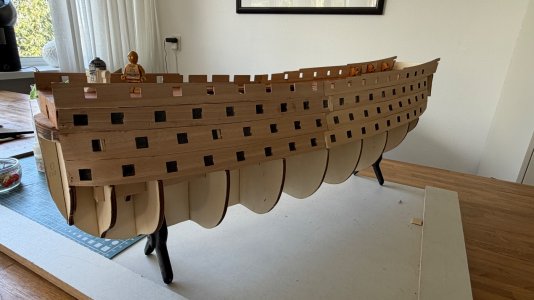
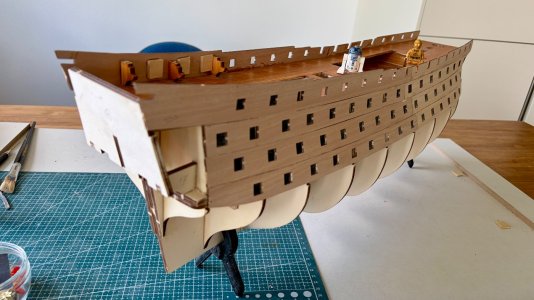

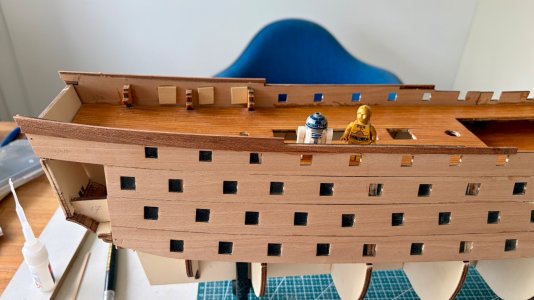
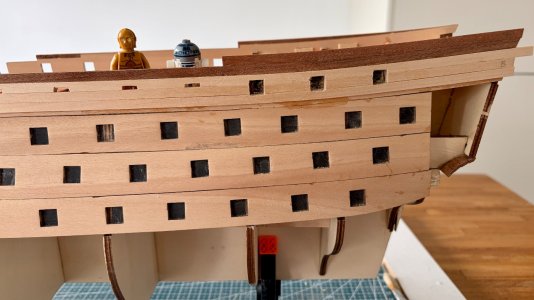
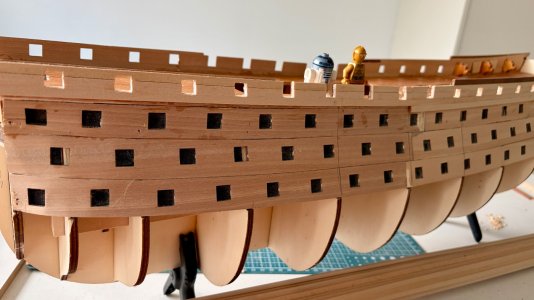

Thank you, Tom.She's looking really good.


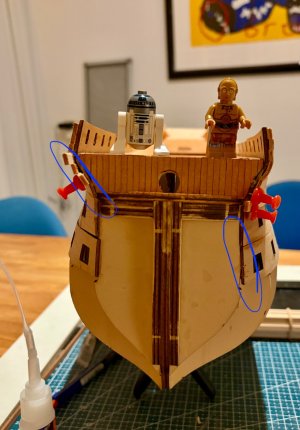
Hallo Peter, wie ich sehe, arbeitest du voran. Für den Anfang sieht es schon gut aus. Du hast dir wirklich eine Hercules-Aufgabe gesucht und an den auf dich zukommenden Herausforderungen wirst du wachsen. Wichtig finde ich für mich, sich Zeit zu geben.Die ersten Planken wurden mit Sekundenkleber auf die Schanzkleider geklebt.
Die ersten Reihen sind gar nicht so schlecht. Selbst ohne Schleifen sieht es schon recht ordentlich aus (wenn ich das mal so sagen darf).
View attachment 616993
Von nun an wird es wahrscheinlich nur noch langsam vorangehen, da das Ausschneiden der Geschützpforten viel Zeit in Anspruch nimmt.
View attachment 616994View attachment 616995
Einen habe ich noch Peter. Am liebsten arbeite ich mit dickflüssigen Sekundenkleber. Der ist sauber zu verarbeiten und verbindet schnell und sicher.Hallo Peter, wie ich sehe, arbeitest du voran. Für den Anfang sieht es schon gut aus. Du hast dir wirklich eine Hercules-Aufgabe gesucht und an den auf dich zukommenden Herausforderungen wirst du wachsen. Wichtig finde ich für mich, sich Zeit zu geben.
Weiterhin alles Gute für dich und viel Freude beim Fertigen eines prächtigen Segelschiffes.
Beste Grüße Holger
Peter verwendetst du dünnflüssigen Sekundenkleber ?Hallo Holger,
Vielen Dank für deine aufmunternden Worte und deinen Rat bezüglich des dickflüssigen Sekundenklebers. Leider habe ich noch einen Vorrat von 25 Fläschchen à 20 Gramm, den ich erst einmal aufbrauchen möchte. Die Planken, die ich damit verklebe, werden später lackiert, daher gehe ich davon aus, dass die Flecken, die mein Sekundenkleber hinterlässt, unsichtbar werden.
Ich weiß deine Tipps wirklich sehr zu schätzen und hoffe, dass du mir auch weiterhin mit Rat und Tat zur Seite stehst.
Beste Grüße, Peter
Hallo Holger,
Vielen Dank für Ihre aufmunternden Worte und Ihren Rat bezüglich des dickflüssigen Sekundenklebers. Leider habe ich noch 25 Flaschen à 20 Gramm, die ich erst aufbrauchen möchte. Die Bretter, die ich damit verklebe, werden anschließend lackiert, daher gehe ich davon aus, dass die Flecken des Sekundenklebers verschwinden werden.
Ich schreibe Ihren Beitrag sehr und hoffe, dass Sie auch weiterhin Ihre Ratschläge mit uns teilen werden.
Mit freundlichen Grüßen, Peter