


• Ships of Scale has incorportated an extra level of security when you log In. Please follow on-screen prompts to acknowledge that you are not a robot via a "Check Box" or a "Pictorial Check Box Puzzle". This is needed due to higher level of AI Activity Security.
  • SUBSCRIBE TO SHIPS IN SCALE TODAY!

    The beloved Ships in Scale Magazine is back and charting a new course for 2026!
    Discover new skills, new techniques, and new inspirations in every issue.

    NOTE THAT OUR NEXT ISSUE WILL BE July/August 2026
  • Win a Free Custom Engraved Brass Coin!!!
    As a way to introduce our brass coins to the community, we will raffle off a free coin during the month of August. Follow link ABOVE for instructions for entering.

Black Swan - Black Swan custom VOC-pirate ship conversion / first wooden ship build

Hey Naima,

Here are roughly the dimensions of a 30-gun frigate (English).

A typical English 30-gun frigate of the late 17th and early 18th centuries (usually classified as a ‘Fifth Rate’ or a ship of the 5th rank) had a very low headroom on the main gun deck of only about 1.52 to 1.65 metres (approx. 5 feet to 5 feet 5 inches). As this type of ship was built extremely flat and narrow at that time to achieve maximum speed and manoeuvrability, the space below deck was even more drastically confined than on the large ships of the line or the bulbous East Indiamen.

The deck layout of a 30-gun frigate
The Upper Deck (main battery deck): On early frigates (prior to the major reforms from 1745 onwards), this is where the main guns (usually 6- or 9-pounders) were mounted. The headroom was rarely more than 1.60 metres. The gunners had to work in a crouched position at all times whilst manoeuvring the guns.

The Lower Deck: This deck lay just above, or in some cases even below, the waterline. In this era, on 30-gun ships, it often carried no or only very few light guns and served primarily as sleeping quarters for the crew of around 120 to 150 men. The headroom here was often less than 1.50 metres – tall men could only move about on all fours or by leaning heavily forwards.

The quarterdeck and the captain’s cabin: it was only at the rear of the ship, beneath the raised quarterdeck, that there was a little more space. The headroom in the officers’ quarters there was, after all, just under 1.75 to 1.80 metres.

The best thing to do, though, is to mount a cannon on a carriage, secure it to the deck and use the side with the gun ports. Then you’ll be able to see whether the guns are positioned too high or too low. If they’re too low, you won’t be able to attach the side wall without adjusting the carriage … :D
 
Ciao Naima,

Ecco le dimensioni approssimative di una fregata da 30 cannoni (in inglese).

Una tipica fregata inglese da 30 cannoni della fine del XVII e dell'inizio del XVIII secolo (generalmente classificata come "di quinta classe" o nave di quinto rango) aveva un'altezza interna molto ridotta sul ponte principale dei cannoni, di soli 1,52-1,65 metri circa. Poiché questo tipo di nave veniva costruito in modo estremamente piatto e stretto per massimizzare velocità e manovrabilità, lo spazio sottocoperta risultava ancora più drasticamente limitato rispetto alle grandi navi di linea o alle navi della Compagnia delle Indie Orientali, dalla forma bulbosa.

Disposizione del ponte di una fregata da 30 cannoni
Ponte superiore (ponte delle batterie principali): sulle prime fregate (prima delle grandi riforme a partire dal 1745), era qui che venivano montati i cannoni principali (di solito da 6 o 9 libbre). L'altezza interna raramente superava 1,60 metri. I cannonieri dovevano lavorare sempre in posizione accovacciata durante le manovre dei cannoni.

Ponte inferiore: Questo ponte si trovava appena sopra, o in alcuni casi addirittura sotto, la linea di galleggiamento. In quell'epoca, sulle navi da 30 cannoni, spesso non ospitava cannoni leggeri o ne ospitava solo pochissimi, e fungeva principalmente da alloggio per l'equipaggio di circa 120-150 uomini. L'altezza interna era spesso inferiore a 1,50 metri: gli uomini alti potevano muoversi solo a quattro zampe o sporgendosi pesantemente in avanti.

Il ponte di poppa e la cabina del capitano: solo nella parte posteriore della nave, sotto il ponte di poppa rialzato, c'era un po' più di spazio. L'altezza interna degli alloggi degli ufficiali, infatti, era di poco inferiore a 1,75-1,80 metri.

La cosa migliore da fare, comunque, è montare un cannone su un affusto, fissarlo al ponte e usare il lato con le feritoie. In questo modo potrai vedere se i cannoni sono posizionati troppo in alto o troppo in basso. Se sono troppo in basso, non potrai fissare la parete laterale senza regolare l'affusto...:D
Yes thanks, now I am less worried for the constrained spaces, which seem mor enatural there, but I am still undecided on the size of cannons to order and eventually which ones, I was chekcing the Korabell ones from Etsy or Amati ones, with decorations, I am thinking to go for the 30 mm but I am not sure if are too big ?
 
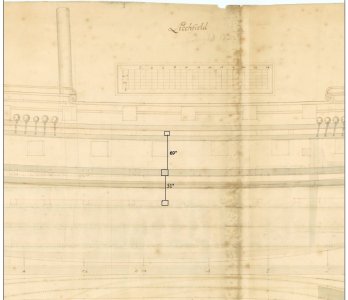
To add to Gunther's great post the below may be interesting for you. There were obviously variations from ship to ship. The amount of roundup on each deck also contributes to the amount of clearance, especially down the center line. The heights on the centerline between decks are given in the 1719 Establishment which is little later and there are thousands of drawings to scale including hundreds in high resolution on the Wiki Commons site that you can download and then measure the space,
Allan

Litchfield 1695, midships at full scale showing the distance from the top of the decking to the bottom of deck beams above.
1786039722921.jpeg
 
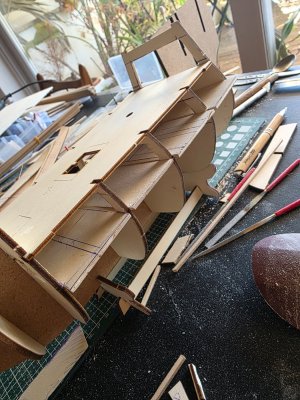
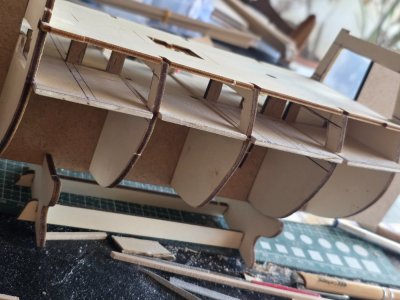
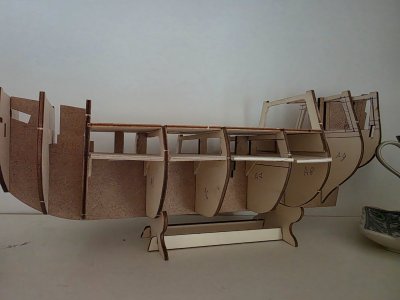
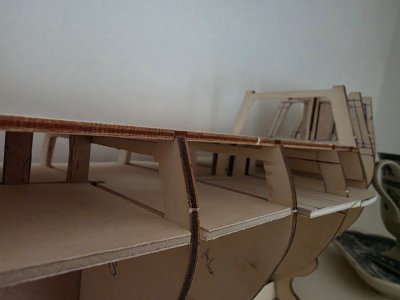
A little update, I made the lower deck support for the later planking , I am wondering if I should paint, decorate and furniture it before closing the deck.

Btw what dice mm should I get the new guns lenght?

20260808_110220.jpg

20260808_110236.jpg
 
Btw what dice mm should I get the new guns lenght?
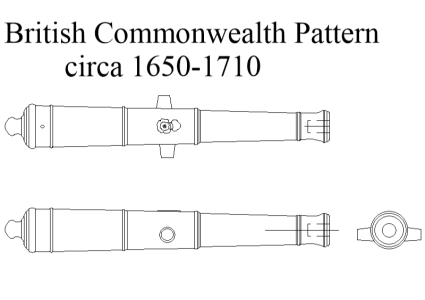
As it is a dream ship, is it important? If you stay with the 30 gun frigate mentioned in Gunther's post above, and 1700 as the year, Commonwealth or even Browne pattern sakers (5- 6 pounders) and demi-culverins (8-9 pounders) would be appropriate. Length would be somewhat dependent on the breadth on the deck on which the guns are placed. I am not sure what the OcCre guns or carriages that is mentioned earlier look like but the below may be helpful. Unless someone demands metal guns I quit turning my own most of the time and have gone to casting them in resin or having them 3D printed by sending the 3D drawings to an outside vendor.
Allan

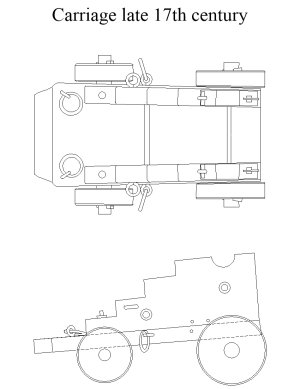
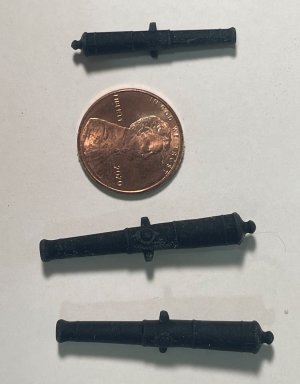
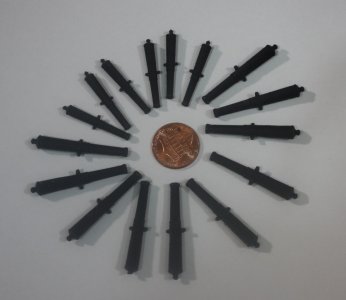
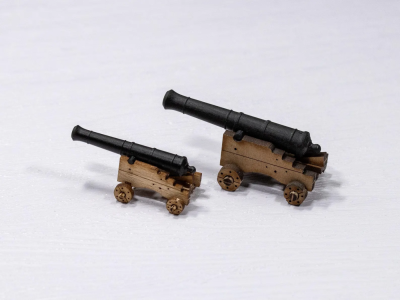
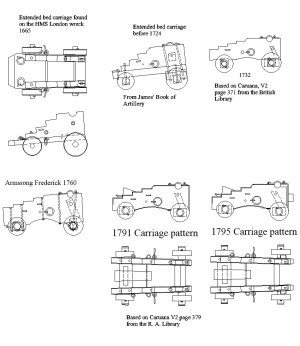
Drawing of what should be appropriate Commonwealth pattern cannon primarily used from about 1650-1710 is below. Pattern for the correct carriage is also below being a bed style at that time. Samples in 1:64 scale are also below. Note they have the conical trunnions used on that pattern cannon at that time. A tiny detail that probably does not mean much, but it is there none the less.
1786358322097.png
1786358543922.jpeg

1786357930904.jpeg
1786358043519.jpeg
Hope some of this information will be helpful for you.
 
Last edited:
Thankyou , I ended up ordering a settembre of 30mm 8x4 from korabel without logo, the 4 of 25 mm and 4 of 35 mm to simulate higher and lower caliber mix on the pirate ship.
 
ended up ordering a settembre of 30mm 8x4 from korabel without logo, the 4 of 25 mm and 4 of 35 mm to simulate higher and lower caliber mix on the pirate ship.
Can you post a picture and the price per cannon barrel that they charge? I went on their website and cannot find cannon.
Grazie
Allan
 
Thanks Naima. Price for four barrels at 2.65 Euros looks very good. Hope I am not misreading and they are not 2.65 each which would be exorbitant.
Allan
 
Thanks Naima. Price for four barrels at 2.65 Euros looks very good. Hope I am not misreading and they are not 2.65 each which would be exorbitant.
Allan
No I ordered more or less 40 cannons so a pack of 10 , acrtally 11x4 , but carriages are apart. But similar prices and in case you get discount if you take both guns and carriages.
 
They look good indeed but are more like mid 18th century. Bed type carriages like in the drawing above would be more appropriate if this kind of thing matters to you. Most kit companies do not provide era appropriate guns or carriages so I doubt many will notice if you just go with what you have. :)

1786389162237.jpeg
 
They look good indeed but are more like mid 18th century. Bed type carriages like in the drawing above would be more appropriate if this kind of thing matters to you. Most kit companies do not provide era appropriate guns or carriages so I doubt many will notice if you just go with what you have. :)

View attachment 625525
Mmm , I wish I knew before lol , well they only have those anyway and I explored all possible places up to the extremely expensive ones of Caldercraft but from the researches I did I focused more on the gun rather than the carriage as I though this was standard . Glad to know though.

That said I choose plain cannons without logo because the one they had is from 1760 , and in general I would have opted for a mix of logos from France, Voc or England or spain but I didn't find any ... so yes it matters to me but to a limited point, as this is anyway a fantasy ship , totally made up and on the Stern I will make things worst with Fancy pirate stuff lol .

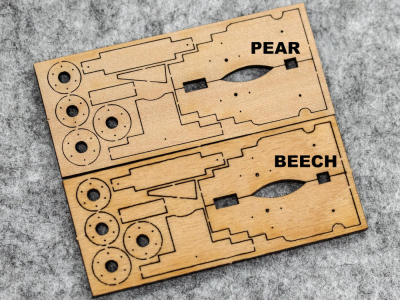
But checking their Laser cut Pear wood May be its editable :) .

1786395385642.png
 
Just as an aside, how do you round the axle trees so they are the diameter of the hole in the trucks? If you have not already seen it, the piece on doing this in the Tricks of the Trade topic will save hours and do a perfect job.
Allan
 
Just as an aside, how do you round the axle trees so they are the diameter of the hole in the trucks? If you have not already seen it, the piece on doing this in the Tricks of the Trade topic will save hours and do a perfect job.
Allan
Sorry I didnt understand what you mean or what to look at specifically.

Here is an update on the holes I carved in the hull.

20260814_192019.jpg

20260814_192025.jpg

20260814_192032.jpg

I still have to finisch to carve the space for the captain cabin and place the lower deck level for rear cannons .

I am still undecided on how to craft the new stern for the ship , I decided that the ship is an Hybrid French Dutch pirate , basically a refitted merchant high status transport ship of French army worked on a dutch base by Dutch workers and French craftsmen .
 
Sorry I didnt understand what you mean or what to look at specifically.
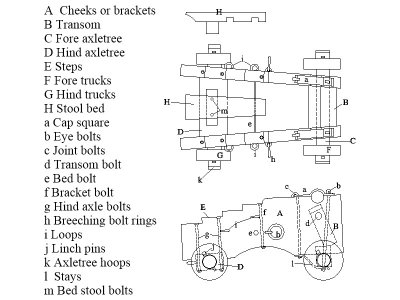
Nomenclature gets us in trouble when translating, my fault. Attached are some pictures than may help to identify parts of a carriage and a sample of a cutter to round the axletrees.
Allan

1786734050341.jpeg

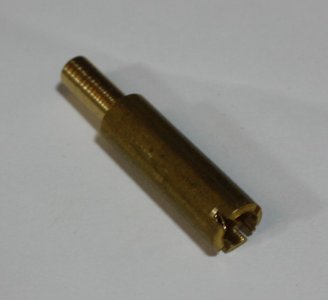
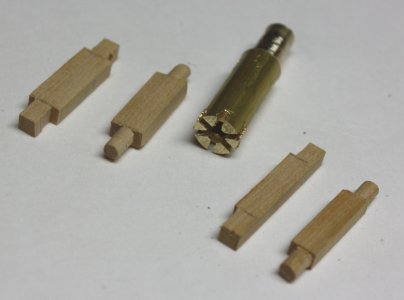
Cutter, Just as an FYI, The diameter of the axle is about the same dimension as the thickness of brackets/cheeks which is about the same dimension as the diameter of the cannon barrel bore.
1786734181106.jpeg

Rear axle tree on left, forward on the left for mid to late 18th century cannon
1786734219677.jpeg
 
Nomenclature gets us in trouble when translating, my fault. Attached are some pictures than may help to identify parts of a carriage and a sample of a cutter to round the axletrees.
Allan

View attachment 626613

Cutter, Just as an FYI, The diameter of the axle is about the same dimension as the thickness of brackets/cheeks which is about the same dimension as the diameter of the cannon barrel bore.
View attachment 626614

Rear axle tree on left, forward on the left for mid to late 18th century cannon
View attachment 626615
Very Interesting thankyou , but I am wondering if those details are going to be visible at 25 - 30 mm scale.
 
I know this is probably a translation issue Naima. :( Sorry but what is 25mm scale. If it is the system of mm to the height of a standing person it would be a scale of about 1:64. Details at 1:64 are easily noticeable. The ones in the photos above are 1:64.
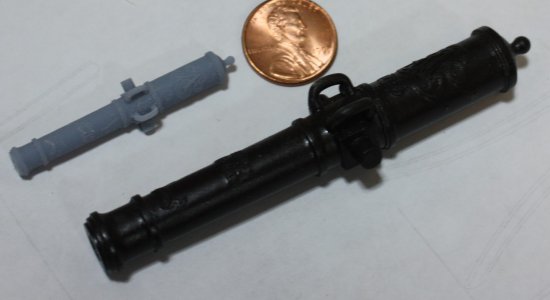
Even the details for the cannon barrel itself are noticeable at our most common scales. Below is a sample of the same Spanish cannon at 1:24 and 1:64.

For those builders that do not want square axles in round truck holes regardless of the scale, it is a lot faster and more accurate to use the cutting tools shown to round hundreds of axle ends compared to doing it by hand with a file or sand paper.

1786789313470.jpeg
 
I know this is probably a translation issue Naima. :( Sorry but what is 25mm scale. If it is the system of mm to the height of a standing person it would be a scale of about 1:64. Details at 1:64 are easily noticeable. The ones in the photos above are 1:64.

Even the details for the cannon barrel itself are noticeable at our most common scales. Below is a sample of the same Spanish cannon at 1:24 and 1:64.

For those builders that do not want square axles in round truck holes regardless of the scale, it is a lot faster and more accurate to use the cutting tools shown to round hundreds of axle ends compared to doing it by hand with a file or sand paper.

View attachment 626811
Those are nice cannons, which I knew where to get before I ordered mines lol , at 25 mm I considered 4 lb cannons , and 30 mm 6 lb cannons and 35 8 lb cannons , if I am not wrong considering lenght of the gun .
 
Back
Top