• Ships of Scale has incorportated an extra level of security when you log In. Please follow on-screen prompts to acknowledge that you are not a robot via a "Check Box" or a "Pictorial Check Box Puzzle". This is needed due to higher level of AI Activity Security.
  • SUBSCRIBE TO SHIPS IN SCALE TODAY!

    The beloved Ships in Scale Magazine is back and charting a new course for 2026!
    Discover new skills, new techniques, and new inspirations in every issue.

    NOTE THAT OUR NEXT ISSUE WILL BE July/August 2026
  • Win a Free Custom Engraved Brass Coin!!!
    As a way to introduce our brass coins to the community, we will raffle off a free coin during the month of August. Follow link ABOVE for instructions for entering.

Le Saint Philippe 1693 after Jean-Claude Lemineur (Ancre) in scale 1:48

Hello Friends!

There has been very little modeling the past several weeks - too many things competing for my time and attention.

Of course, all work and no play makes Paul a grumpy boy, so I did spend a few hours one afternoon processing two steamed pear boards I purchased this spring. I wasn't going to do this right now, but the boards (which were supposed to have been dried) were beginning to twist. I cut the boards into workable lengths and then processed them into large billets. I'll leave them like this for now stacked in my basement with spacers between each layer. Hopefully they will settle down.

View attachment 642335

These billets are 34 mm thick so they will each produce a number of panels. And if you are wondering...steamed pear is spendy. This stack was just shy of $500 USD. Yikes.

Back at the workbench... I managed to squeeze in a few hours over the past two days which allowed me to finish some decorative carvings that flank the oval lights (windows) on the stern of the ship... I then installed these new carvings along with the balcony brackets I completed previously.

View attachment 642337

View attachment 642338

View attachment 642339

View attachment 642340

There is no finish on anything you see here - the batch I mixed up earlier this summer had set up.

It felt good to work on the SP again.
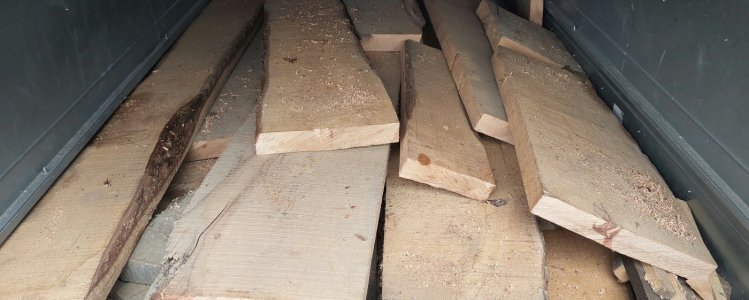
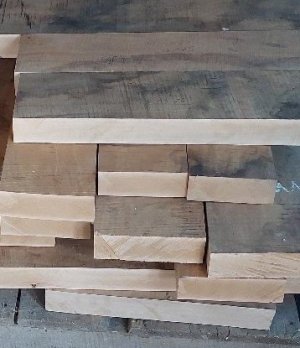
Good job, Paul. I’d consider that pear wood a real score. Here in Poland, you’d pay three times as much for boards processed like that—and even then, it’s a rare find. Most of the market deals in rough-sawn timber, so you have to process it yourself or send it to a sawmill. I thought I’d end up with a larger stockpile, but after processing, I don't have much more than you do—and I paid a bit over $500. Last time I checked, the only pear wood available in my area was freshly felled logs.

20260517_105452.jpg
20260419_114057++.jpg
 
It has always amazed me that there are so many trees and people in the world, yet for our hobby, we hunt for pear wood as if it were gold or even diamonds. Over the past couple of years, I’ve bought so much pear wood that my apartment has turned into a warehouse, but in reality, very little of it is truly good—most of it is just junk. For Ukraine, $500 is obviously a huge amount of money; there are suppliers with plenty of pear wood—you could buy a whole forest for that price—but the logistics of transporting it and the challenge of cutting up those massive logs... ROTF аhaha. So, sourcing material is a perennial headache for modelers. As for the work itself—excellent results, as always!It has always amazed me that there are so many trees and people in the world, yet for our hobby, we hunt for pear wood as if it were gold or even diamonds. Over the past couple of years, I’ve bought so much pear wood that my apartment has turned into a warehouse, but in reality, very little of it is truly good—most of it is just junk. For Ukraine, $500 is obviously a huge amount of money; there are suppliers with plenty of pear wood—you could buy a whole forest for that price—but the logistics of transporting it and the challenge of cutting up those massive logs... haha. So, sourcing material is a perennial headache for modelers. As for the work itself—excellent results, as always!

 
It has always amazed me that there are so many trees and people in the world, yet for our hobby, we hunt for pear wood as if it were gold or even diamonds. Over the past couple of years, I’ve bought so much pear wood that my apartment has turned into a warehouse, but in reality, very little of it is truly good—most of it is just junk. For Ukraine, $500 is obviously a huge amount of money; there are suppliers with plenty of pear wood—you could buy a whole forest for that price—but the logistics of transporting it and the challenge of cutting up those massive logs... ROTF аhaha. So, sourcing material is a perennial headache for modelers. As for the work itself—excellent results, as always!It has always amazed me that there are so many trees and people in the world, yet for our hobby, we hunt for pear wood as if it were gold or even diamonds. Over the past couple of years, I’ve bought so much pear wood that my apartment has turned into a warehouse, but in reality, very little of it is truly good—most of it is just junk. For Ukraine, $500 is obviously a huge amount of money; there are suppliers with plenty of pear wood—you could buy a whole forest for that price—but the logistics of transporting it and the challenge of cutting up those massive logs... haha. So, sourcing material is a perennial headache for modelers. As for the work itself—excellent results, as always!

Well! Cherry is much more available, but from what I've read in recent years, it isn't as highly regarded as pearwood, with which I partially agree. Pearwood is unique, but sometimes maple with a bit of shellac can deliver astonishing results.
 
Good job, Paul. I’d consider that pear wood a real score. Here in Poland, you’d pay three times as much for boards processed like that—and even then, it’s a rare find. Most of the market deals in rough-sawn timber, so you have to process it yourself or send it to a sawmill. I thought I’d end up with a larger stockpile, but after processing, I don't have much more than you do—and I paid a bit over $500. Last time I checked, the only pear wood available in my area was freshly felled logs.

View attachment 642949
View attachment 642948
Well, it looks like a nice supply, Wojtas.
 
It has always amazed me that there are so many trees and people in the world, yet for our hobby, we hunt for pear wood as if it were gold or even diamonds. Over the past couple of years, I’ve bought so much pear wood that my apartment has turned into a warehouse, but in reality, very little of it is truly good—most of it is just junk. For Ukraine, $500 is obviously a huge amount of money; there are suppliers with plenty of pear wood—you could buy a whole forest for that price—but the logistics of transporting it and the challenge of cutting up those massive logs... ROTF аhaha. So, sourcing material is a perennial headache for modelers. As for the work itself—excellent results, as always!It has always amazed me that there are so many trees and people in the world, yet for our hobby, we hunt for pear wood as if it were gold or even diamonds. Over the past couple of years, I’ve bought so much pear wood that my apartment has turned into a warehouse, but in reality, very little of it is truly good—most of it is just junk. For Ukraine, $500 is obviously a huge amount of money; there are suppliers with plenty of pear wood—you could buy a whole forest for that price—but the logistics of transporting it and the challenge of cutting up those massive logs... haha. So, sourcing material is a perennial headache for modelers. As for the work itself—excellent results, as always!

It's probably worth mentioning that I am working with a very specific type of pearwood: European Pearwood. We have pear trees here in the US that grow like weeds. I have three of them in my yard. But these are Bradford Pear and while the hardness is reported to be similar, I find Bradford pear to be quite irregular with pockets that are hard (even brittle) right alongside pockets that are quite mushy (dents easily just with finger pressure). Bradford pear wood is cheap and available in abundance locally - but it is not useful for the purpose of modeling. It does work very nicely in my smoker however ROTF.

I think we have all seen kits offered in cherry wood from a certain country that is not the same species as the cherry we all know and love.
I don't believe the kit manufacturer is being deceptive (at least not entirely) - it's just that there is no standardization to the use of common names. Boxwood is an even greater problem in this regard. I know nothing about pearwood from Ukraine - are those forests you can buy the same thing as European pear?
 
It's probably worth mentioning that I am working with a very specific type of pearwood: European Pearwood. We have pear trees here in the US that grow like weeds. I have three of them in my yard. But these are Bradford Pear and while the hardness is reported to be similar, I find Bradford pear to be quite irregular with pockets that are hard (even brittle) right alongside pockets that are quite mushy (dents easily just with finger pressure). Bradford pear wood is cheap and available in abundance locally - but it is not useful for the purpose of modeling. It does work very nicely in my smoker however ROTF.

I think we have all seen kits offered in cherry wood from a certain country that is not the same species as the cherry we all know and love.
I don't believe the kit manufacturer is being deceptive (at least not entirely) - it's just that there is no standardization to the use of common names. Boxwood is an even greater problem in this regard. I know nothing about pearwood from Ukraine - are those forests you can buy the same thing as European pear?
We prize the wild pear—not the kind that bears standard fruit. Wild pear trees produce a multitude of tiny fruits. Such trees are rarely encountered, as the fruit itself is of no practical use; however, the wood is ideal for model-making. As the tree grows and ages, it can display a range of radically different hues simultaneously: from light tones on the outer edges and intermediate shades in the middle layers to pinks and dark browns at the core. Crucially, the heartwood is typically just as strong as the rest and—up to a certain point—perfectly sound. Naturally, after many decades, the core begins to decay, but until that happens, the tree is a real find for us. The key is sawing it correctly along the grain; improper cutting causes the grain layers to clash, resulting in an unsightly striped appearance. This presents a challenge: it requires extensive sawing and a keen eye to locate the straight, uniform sections we value like gold.
 
Back
Top