• Win a Free Custom Engraved Brass Coin!!!
    As a way to introduce our brass coins to the community, we will raffle off a free coin during the month of August. Follow link ABOVE for instructions for entering.
  • PRE-ORDER SHIPS IN SCALE TODAY!

    The beloved Ships in Scale Magazine is back and charting a new course for 2026!
    Discover new skills, new techniques, and new inspirations in every issue.

    NOTE THAT OUR FIRST ISSUE WILL BE JAN/FEB 2026

Royal William, Euromodel, a retro log

A classic Ken model- you have skills. Cheers Grant
Hi Grant, Thanks for the compliment. I don't know about skills, this was built some years ago well before I joined the forum and it proved to be my biggest learning curve. Ken
 
Hello and thanks for showing an interest in my build.

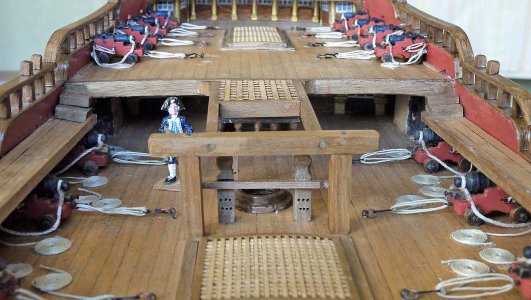
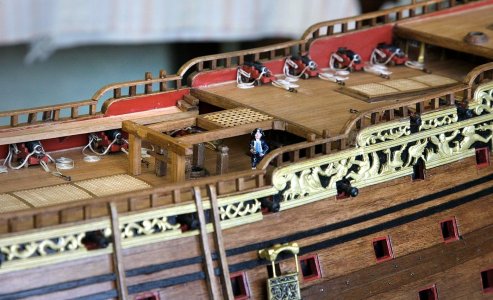
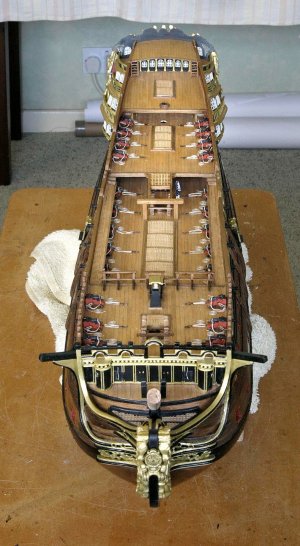
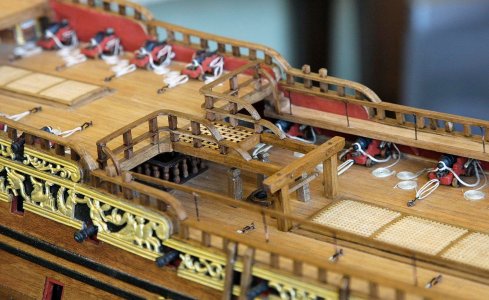
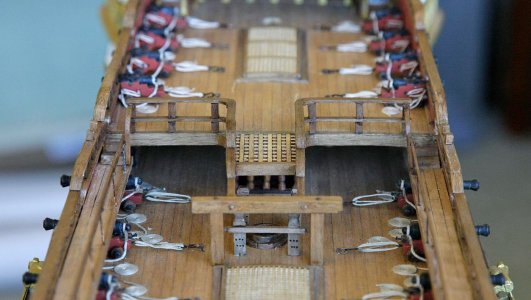
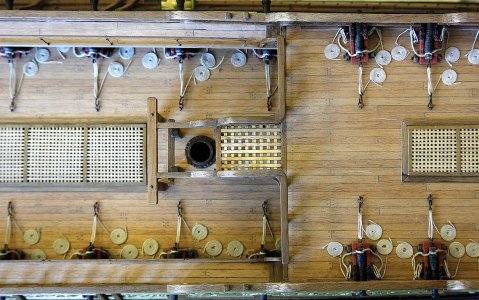
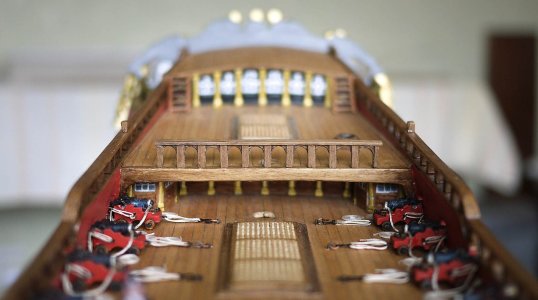
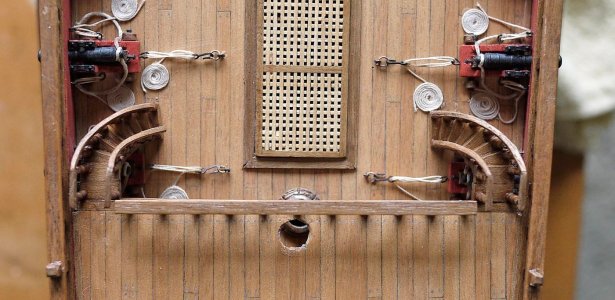
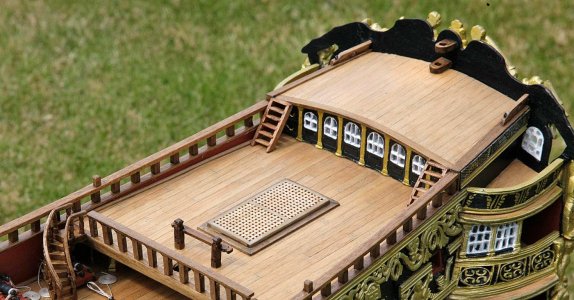
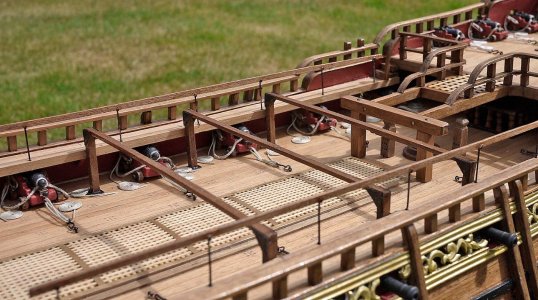
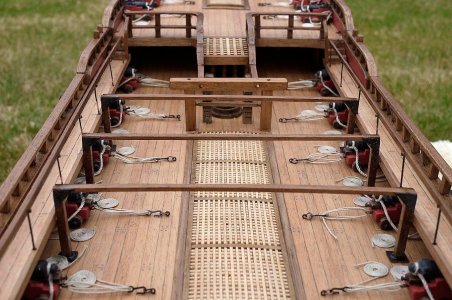
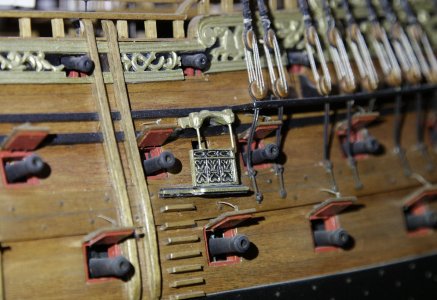
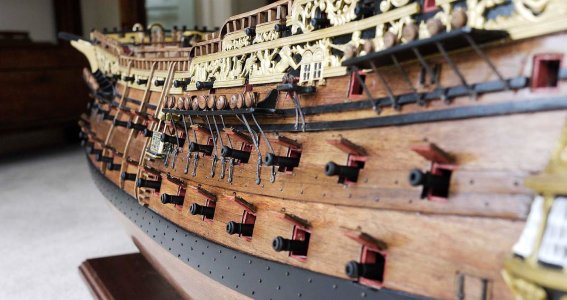
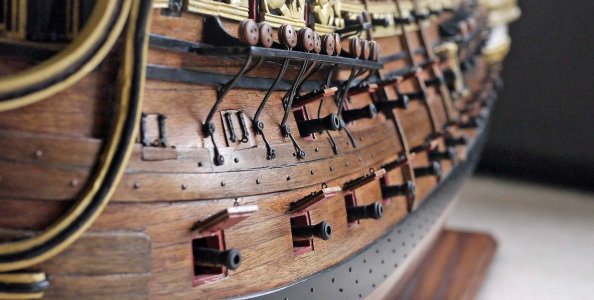
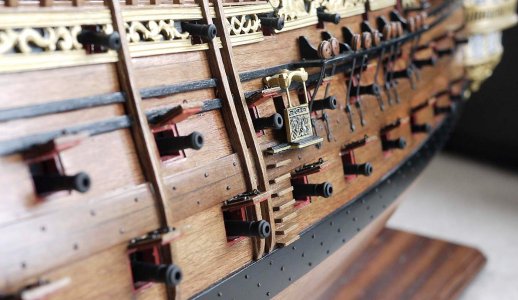
I completed the last of the visible canons, the eight on the quarter deck. I rigged them same as before so that they w0uldl be consistent in appearance.

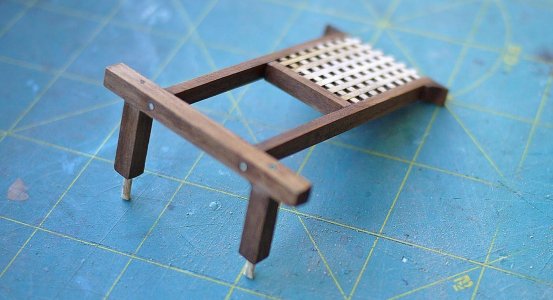
I also completed the grated walkway off the quarter deck. Nothing of note, the pictures will show the build better than me describing it. It had to be scratch built but once again very little of this part was shown in the plan and without getting other pictures I would have struggled quite a bit, but was happy that I got it about right.


385.jpg


386.jpg


388.jpg


391.jpg


392.jpg
 
Hi. Thanks for following. Again just a small update.

The next step was to make up and fit the breast and gangway rails. I didn't do them as accurate or elaborate as many of you would have done but as with other detailed sections I kept it as simple as possible. I think that by keeping things easy I didn’t get intimidated by the build and I could just concentrate on getting the sections neat, it worked for me and kept the build moving forward.


393.jpg


394.jpg


395.jpg
 
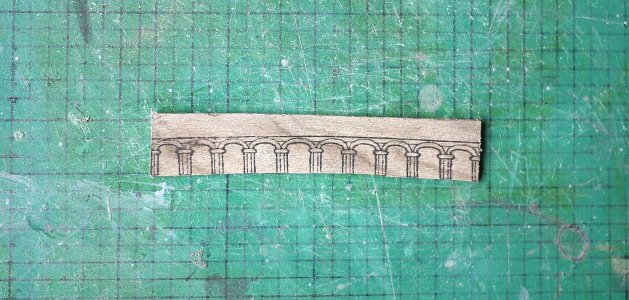
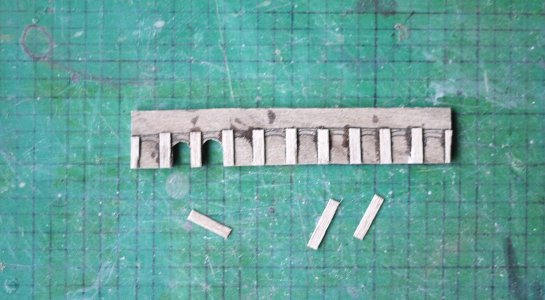
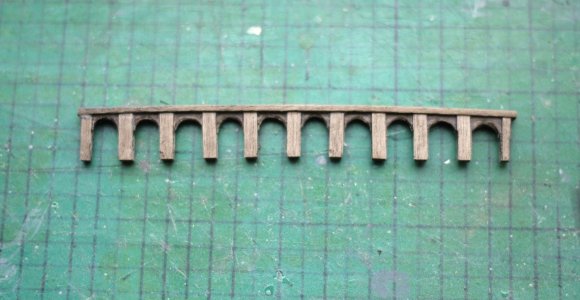
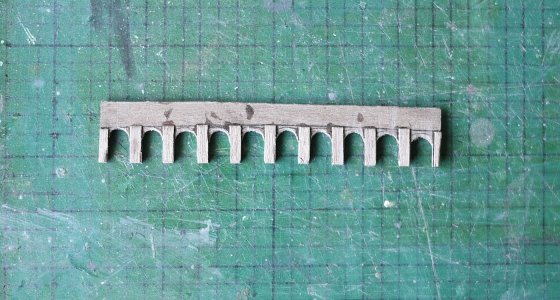
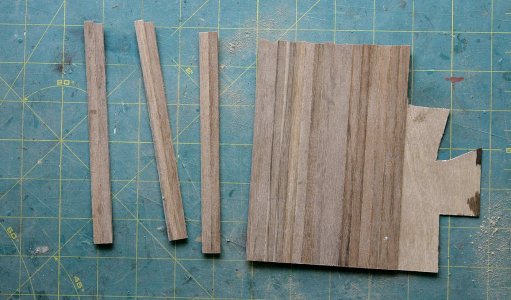
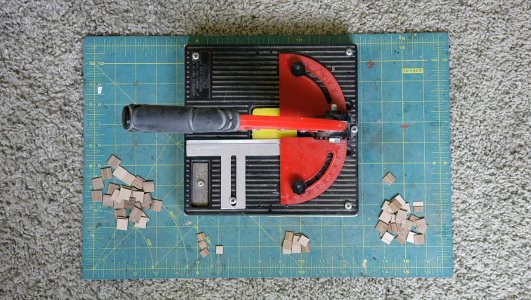
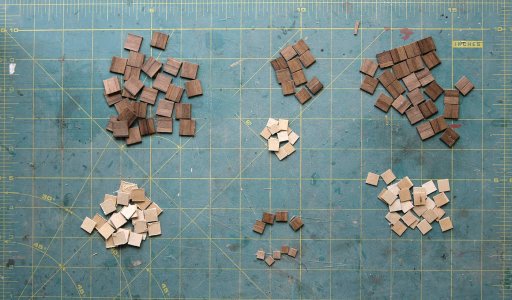
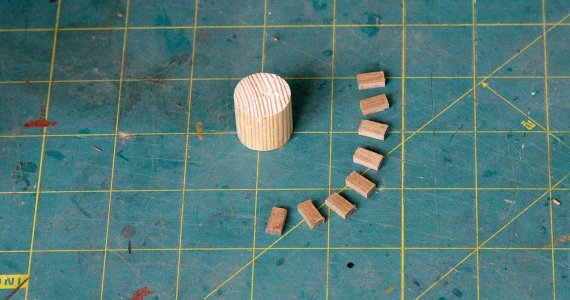
I now moved on to making the upper quarter deck rails. Again I went for the easiest method that I could think of. It proved easier than expected, from start to mounting on the deck took only about an hour. I've shown step by step how I did it.

I copied the plan onto a piece of 1.5mm walnut ply, I put 3 x 0.5mm strips on both sides of the ply for the uprights then cut the arches and filed them to shape. I cut these out as a unit then added the 4 x 1.5mm rail at the top and glued the finished rails into place, they were sealed and varnished. Another successful little project.

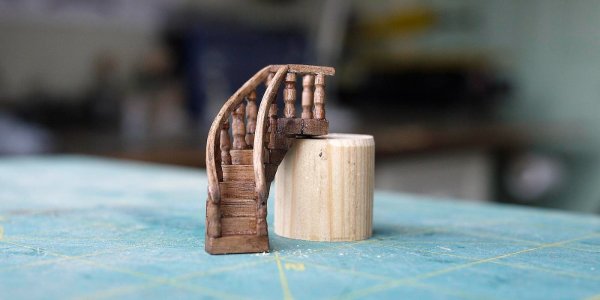
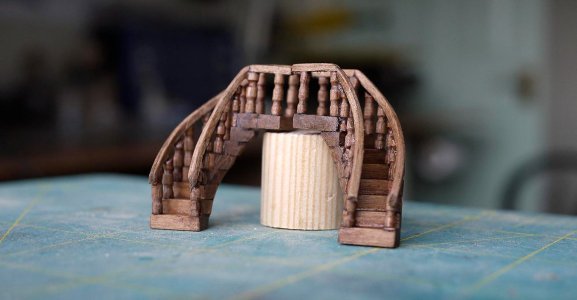
Next will be the dreaded curved staircase

Thanks for staying with the build


396.jpg


397.jpg


399.jpg


400.jpg

398.jpg
 
Last edited:
Hi Paul, It’s one of the very useful and easy tricks that I’ve picked up, I’ve explained the technique in detail on page three of the log. I’ve also shown how accurate I was able to transfer the gunport positions from plan to hull. Ken
Thank you, Ken. I am following your log but must have missed that posting. As I read it I seem to remember others showing something similar. My thanks!
 
Hello, Many thanks for the likes that I’ve been given, I’m very pleased to have you along.

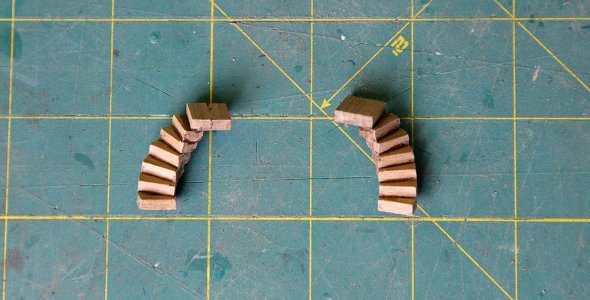
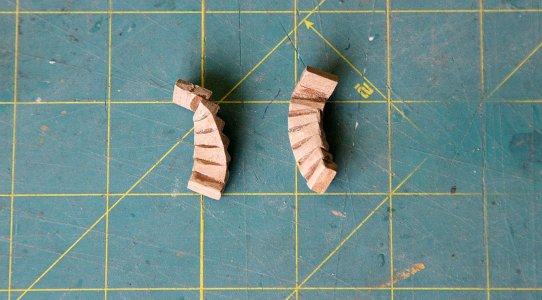
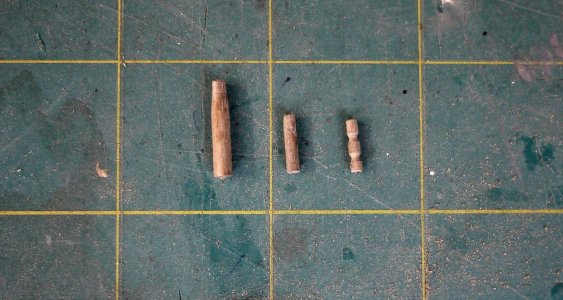
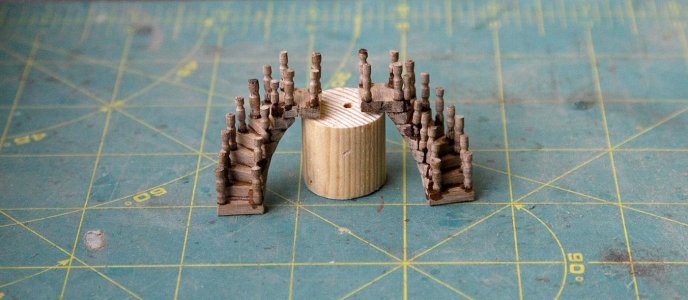
Todays update is the making of the curved stairs leading to the quarter deck, these are quite a feature, I’d put off doing them for as long as I could but they couldn’t wait any longer. There were no indications on how these could be made and little info as to their size, just a one dimensional view on the plan. After much thought and a few false starts I did manage to produce an acceptable set which when mounted looked ok. Rather than explain I’ve shown pictures of each stage so that you can see how I went about it.


404.jpg


405.jpg


406.jpg


407.jpg


408.jpg


500.jpg


501.jpg


502.jpg
 
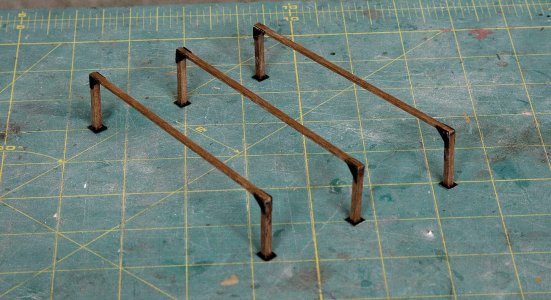
I was happily still making good progress, I’d completed the aft bitts, the flagstaff support, ladders and the sledge beams for the ships boat.

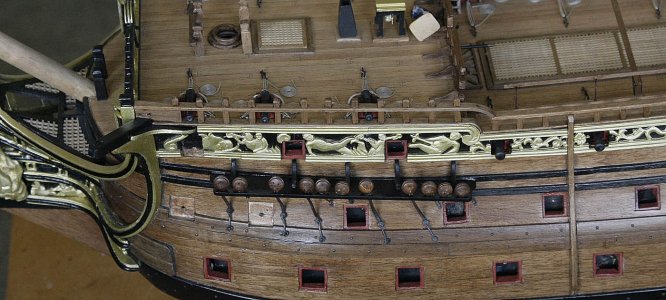
I made the uprights for the beams from 3 x 3mm strip and the crossbars from 2 x 3mm, the gussets were cut out of .5mm ply sheet and stained black before gluing on. Needless to say the position of the coiled rope on the deck fouled the uprights, I had to remove and remake eight of them. The sticky tape that I'd used for holding them down was like trying to get chewing gum off the soles of your shoes, I had to use white spirits to get the sticky goo off then re varnish the deck. I then realized that I’d positioned and glued the bars in the wrong positions about 25mm too rearward at the front and the rear one was about 5mm out. I hadn't checked the plans prior to fitting, there were just too many plans to wade through, ( twenty 1:1 sheets) I just couldn’t keep them all out, I took a guess as to their position but checking later I saw that they were wrong. I thought that although not correct they look ok where they were so I just left them, only I will know. The last picture is a snapshot of where the ships boat would sit as it was.


503.jpg


505.jpg


506.jpg


507.jpg


508.jpg
 
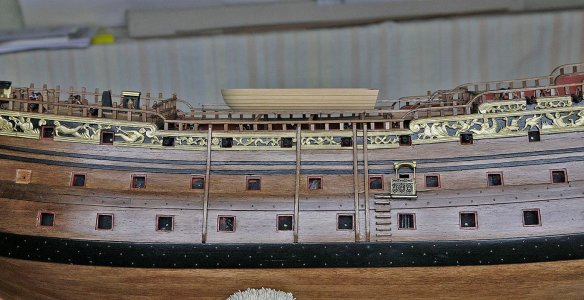
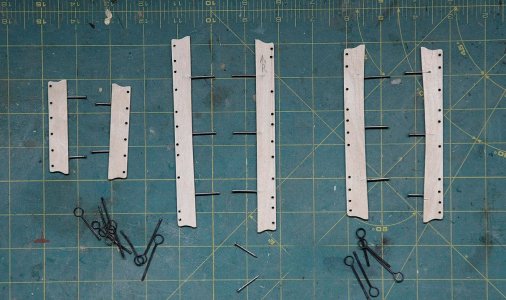
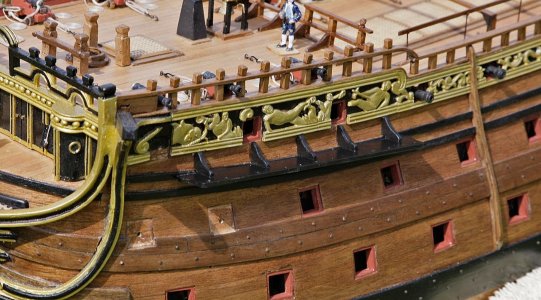
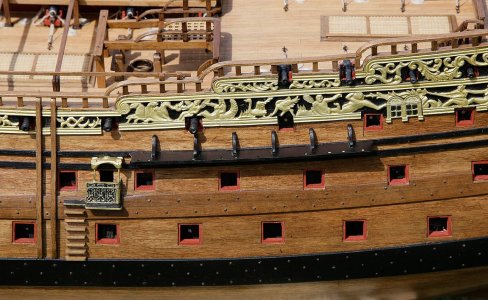
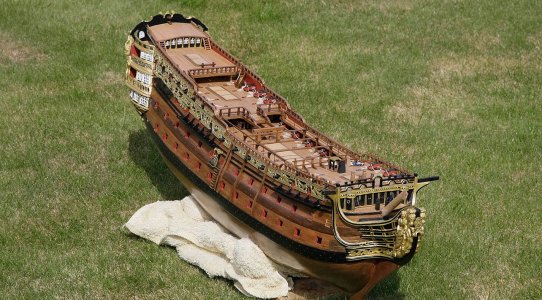
The channels were made up, fitted then painted. I also made up and fitted the support brackets. They are not accurate but just a simple generic version in keeping with the rest of the build. I thought that as they would be masked by the dead eye lanyards my eyes wouldn’t focus on them so they would look ok.

Next I made up and fitted the dead eyes. The material supplied with the kit was pretty good stuff, the dead eyes were very good quality, the ready made strops were nice to use, they were made from a very malleable copper wire and were a nice color, the eyelet straps were perhaps too thick if you were concerned about scale, I used them and thought that once in place they looked ok. Although I followed the plan I found that not all the strops cleared the gun ports and I had to fill in a few holes that I’d made in the channels and drill new ones to get a better fit. This was probably my fault, a little out with the ports plus a little out with the channel adds up. I think that if I were to do it again I would wait until the channels were in place before drilling the holes for the strops, or improve the accuracy of my building.

My next job will be to start making up the port lids.

Thanks for visiting.


504.jpg


509.jpg


510.jpg


511.jpg


512.jpg


513.jpg


514.jpg


515.jpg


516.jpg
 
The channels were made up, fitted then painted. I also made up and fitted the support brackets. They are not accurate but just a simple generic version in keeping with the rest of the build. I thought that as they would be masked by the dead eye lanyards my eyes wouldn’t focus on them so they would look ok.

Next I made up and fitted the dead eyes. The material supplied with the kit was pretty good stuff, the dead eyes were very good quality, the ready made strops were nice to use, they were made from a very malleable copper wire and were a nice color, the eyelet straps were perhaps too thick if you were concerned about scale, I used them and thought that once in place they looked ok. Although I followed the plan I found that not all the strops cleared the gun ports and I had to fill in a few holes that I’d made in the channels and drill new ones to get a better fit. This was probably my fault, a little out with the ports plus a little out with the channel adds up. I think that if I were to do it again I would wait until the channels were in place before drilling the holes for the strops, or improve the accuracy of my building.

My next job will be to start making up the port lids.

Thanks for visiting.


View attachment 569825


View attachment 569826


View attachment 569827


View attachment 569828


View attachment 569829


View attachment 569830


View attachment 569831


View attachment 569832


View attachment 569833
You are very productive with your build, Ken. And it’s all looking very nice.
Regards, Peter
 
Your model is looking great.
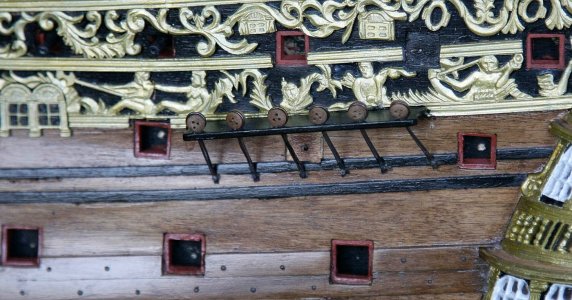
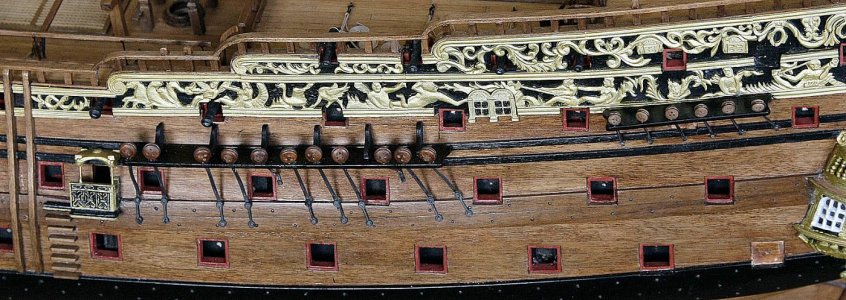
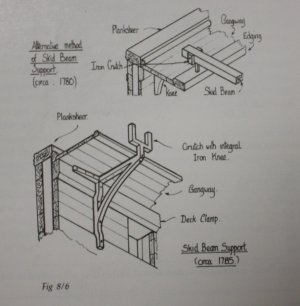
Not sure if it matters to you but gangboards were not used until about 1740 and skid beams to support the boats came about around the end of the century. Prior to that spare spars were laid across the waist opening from the gallows or, in some cases the QD, to the forecastle and the boats rested on these. When skid beams were introduced, they sat in cradles that were inserted into the gangboards as they were not permanent. They did become a permanent feature by 1800 when the crutches or cradles were as shown below. I am guessing this is a kit idea, but in reality they were never done as in the photo in post #130. Look at the scantlings of the Establishments and there is nothing about the gangways or skid beams. On the other hand the Shipbuilder's Repositoy 1788 and Steel's The Elements and Practice of Naval Architecture (circa 1795) list these and give dimensions.

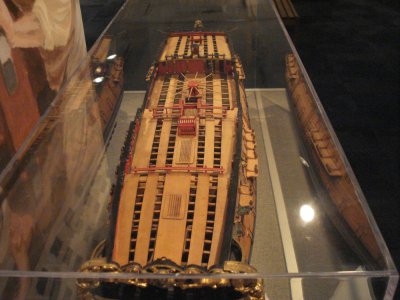
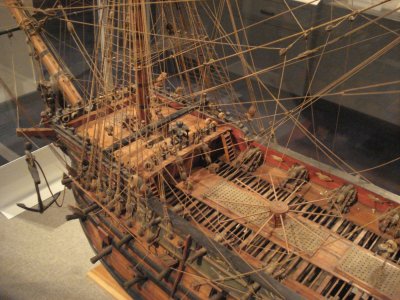
A later model of Royal Willaim, around 1740 at RMG does show narrow gangways. When they came into use to replace ladders from the upper deck to the QD and FC they were as much as 48" broad on first rates (0,66"" at 1:72 scale) according to Peter Goodwin in The Construction and Fitting of English Ships of War) but there were no skid beams as they had not come into use until 25 years later.

Allan

1768160423582.png


The below pic is from page 210 of The Construction and Fitting of English Men of War by Peter Goodwin
1768160451777.jpeg


Model at Preble Hall 1725
1768160573524.jpeg


Model at Preble Hall of British 2nd rate 1720
1768160637755.jpeg
Allan
 
Last edited:
Hey Ken,

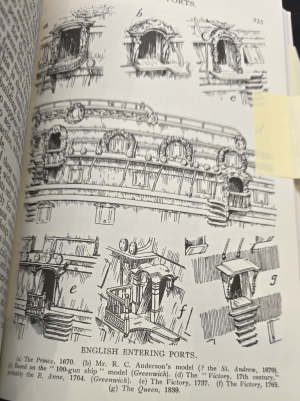
Really nice work, and you've got quite a few tricks up your sleeve. Really great. The Royal William looks beautiful. I have a question about the main entrances. Is the panelling made of wood or brass? Could you maybe take a few photos that are a little closer? The reason is that I want to use this design for my 1765 Victory. I found it in the book "Old Ship Figureheads and Sterns" by L. G. Carr Laughton.

P.S. I hope you don't mind me posting the photo here in your construction report –!!

Best regards,

Günther Ship-1

1768154840793.png
 
Your model is looking great.
Not sure if it matters to you but gangboards were not used until about 1740 which I believe and skid beams to support the boats came about around the end of the century. Prior to that spare spars were laid across the waist opening from the gallows or, in some cases the QD, to the forecastle and the boats rested on these. When skid beams were introduced, they sat in cradles that were inserted into the gangboards as they were not permanent. They did become a permanent feature by 1800 when the crutches or cradles were as shown below. I am guessing this is a kit idea, but in reality they were never done as in the photo in post #130. Look at the scantlings of the Establishments and there is nothing about the gangways or skid beams. On the other hand the Shipbuilder's Repositoy 1788 and Steel's The Elements and Practice of Naval Architecture (circa 1795) list these and give dimensions.

A later model of Royal Willaim, around 1740 at RMG does show narrow gangways. When they came into use to replace ladders from the upper deck to the QD and FC they were as much as 48" broad on first rates (0,66"" at 1:72 scale) according to Peter Goodwin in The Construction and Fitting of English Ships of War) but there were no skid beams as they had not come into use until 25 years later.

Allan

View attachment 569847


The below pic is from page 210 of The Construction and Fitting of English Men of War by Peter Goodwin
View attachment 569848


Model at Preble Hall 1725
View attachment 569849


Model at Preble Hall of British 2nd rate 1720
View attachment 569850
Allan
Hi Allan. I’m impressed with your knowledge of these ships and the way that you are able to explain in a way that make sense of historical detail. Thanks for taking the time to comment on my humble build and for your liking. I must confess that my enjoyment in building models is in the actual making and not the historical accuracy, I build mainly out of the box using the plans and what’s supplied in a kit, just doing the best job that I can. I do however enjoy reading the logs of some very expert builders that post on this forum and often wish that I had the perseverance and patience to emulate their models.
Thanks for taking the time
 
Hey Ken,

Really nice work, and you've got quite a few tricks up your sleeve. Really great. The Royal William looks beautiful. I have a question about the main entrances. Is the panelling made of wood or brass? Could you maybe take a few photos that are a little closer? The reason is that I want to use this design for my 1765 Victory. I found it in the book "Old Ship Figureheads and Sterns" by L. G. Carr Laughton.

P.S. I hope you don't mind me posting the photo here in your construction report –!!

Best regards,

Günther Ship-1

View attachment 569843

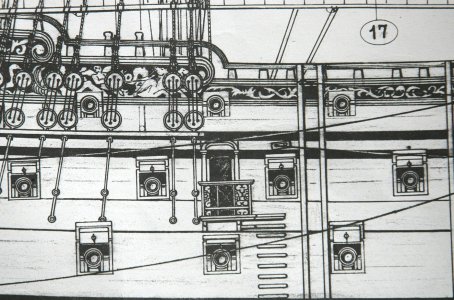
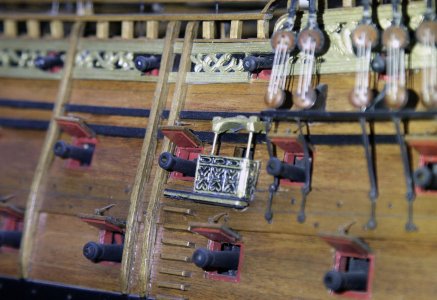
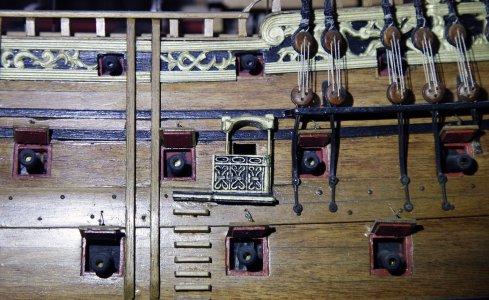
Hi Gunther, Thanks for your compliment, these comments really do motivate and make it worth the effort to post. With regard to your question I've attached a few photos of the entrance port, one from the plan and the others from the completed model, these are the best that I could do with the light available where I display it. They were castings supplied with the kit. I hope that these help.

037.jpg

038.jpg

040.jpg

041.jpg
 
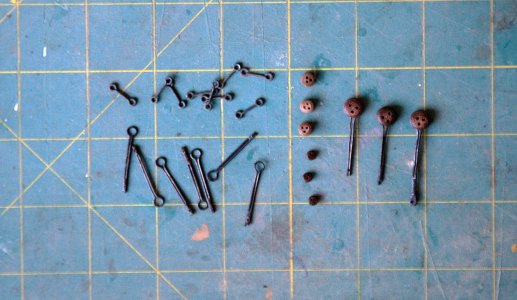
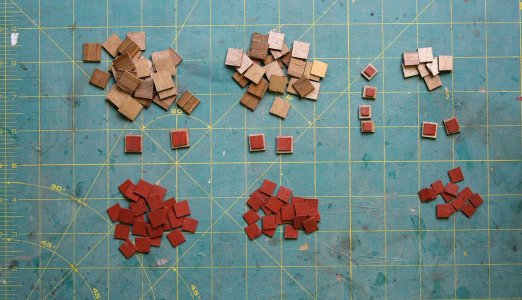
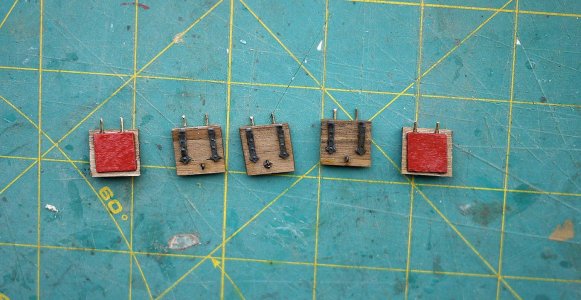
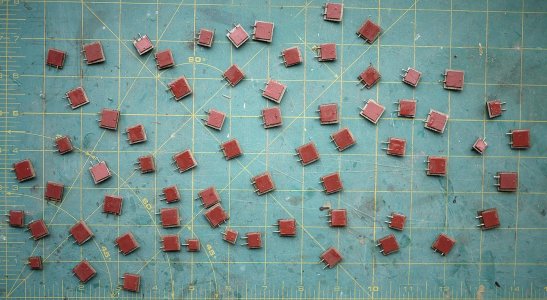
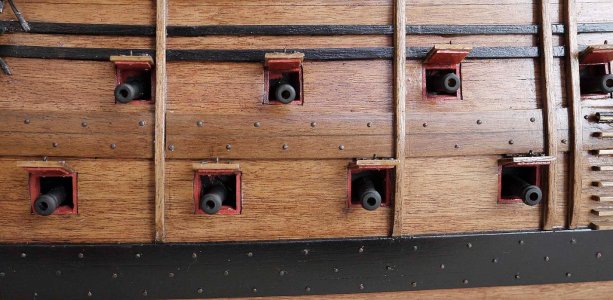
It was now time to do the many port lids. I blackened the supplied cast hinges, they only needed a few seconds in the solution to turn them a very nice deep dull black, I know they are not really to scale like quality photo etch would be but I liked the look of them they suited this model well and like most of the ship were a bit larger than life but with character.

The hinges supplied I think look good but the tab for securing to the hull was too fat and would need about 3mm holes drilled, they were also very brittle and would snap easily. I have found to my cost that port lids are very vulnerable to being knocked and broken off so I decided that this time I would pin them securely in place. I drilled and inserted a couple of pins into each lid, I'm glad that I did as I found them much easier to fit than relying on the hinges to hold them in place. I cut the hinges to size and glued them on the lids using cyno, then I gave them a coat of poly. I was amused when I saw the picture I'd taken showing the lids, I thought that they looked like a colony of beetles!

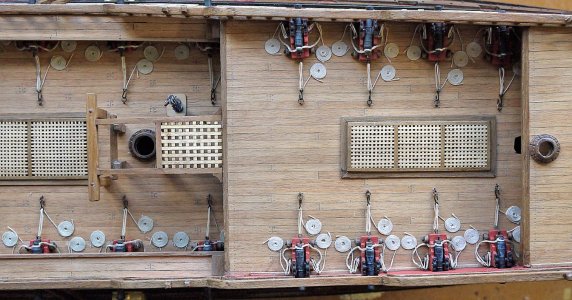
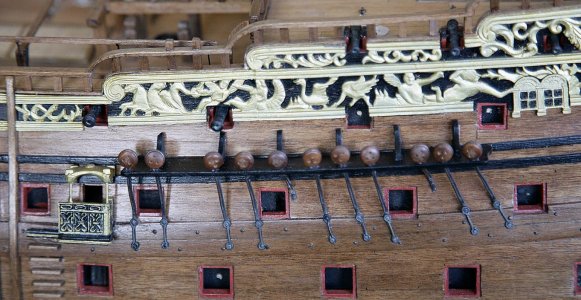
I tried the canons for fit, all looked ok so I removed them prior to fitting the lids. I was pleased to see that there were enough canons with some to spare. After fixing the lids I glued the canons into place and painted them a matt black. I had previously tried blackening them but the results were inconsistent. I also put on the security chain on the rudder and the supports, dead eyes and strops for the upper backstays.

During this building stage I felt somewhat overwhelmed by the sheer amount of work involved, the enormity of what was required to complete this model was starting to sink in, but nothing that a few beers put right.


518.jpg


519.jpg


561.jpg


562.jpg


564.jpg


565.jpg


566.jpg


567.jpg


568.jpg


569.jpg


570.jpg
 
Hi Gunther, Thanks for your compliment, these comments really do motivate and make it worth the effort to post. With regard to your question I've attached a few photos of the entrance port, one from the plan and the others from the completed model, these are the best that I could do with the light available where I display it. They were castings supplied with the kit. I hope that these help.

View attachment 569948

View attachment 569949

View attachment 569950

View attachment 569951
Dear Ken,

Thank you very much for taking photos. That will definitely help me with my planning. I love your model and your ideas... :D Thumbsup
 
Hi. Thanks for visiting my log and for taking an interest in my build.

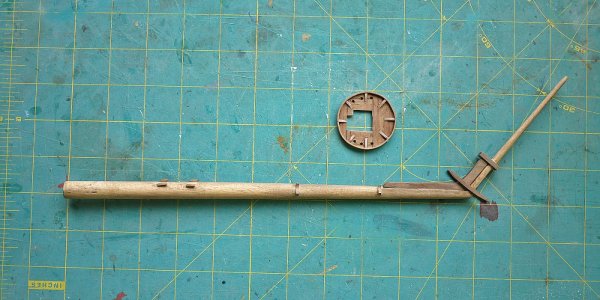
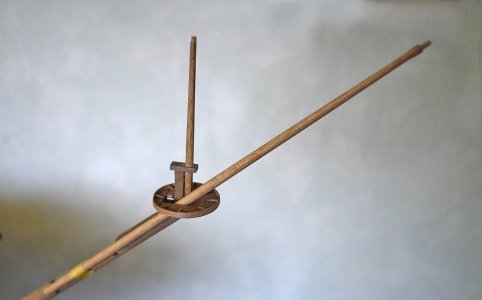
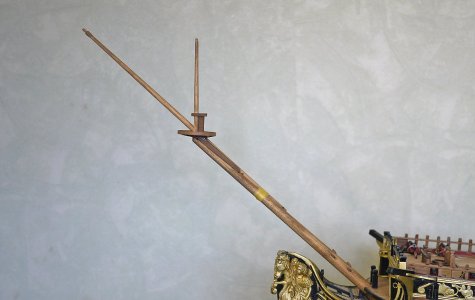
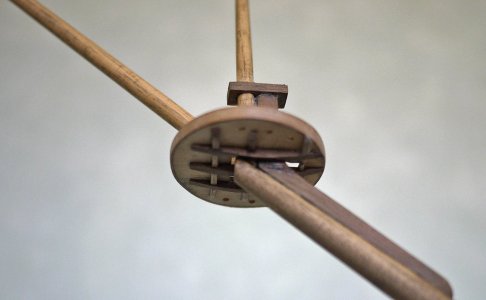
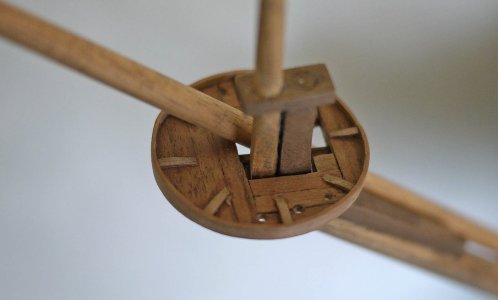
I continued by making a start on the masting. I thought that the plans for these could have been arranged better, all the info and measurements were there but they were in no particular sequence, a bit like a mad woman's diary. Whilst all the necessary details of the individual pieces were shown, there wasn’t any guidance as to how they should be assembled into complete masts, the views of the completed masts are shown in the rigging plans and much of the necessary details was masked by the rigging, I think that it was assumed that at this level you should already know. I tried to get things as correct as I could and didn’t worry about perfect accuracy, as long as they looked about right and were neat that's all I set out to achieve, I'll leave the super fine detailing to others that strive to achieve perfection.

I’ll show my progress with photos as I don’t think any explanation is needed.


576.jpg


577.jpg


578.jpg


579.jpg


580.jpg
 
Back
Top