• Win a Free Custom Engraved Brass Coin!!!
    As a way to introduce our brass coins to the community, we will raffle off a free coin during the month of August. Follow link ABOVE for instructions for entering.
  • PRE-ORDER SHIPS IN SCALE TODAY!

    The beloved Ships in Scale Magazine is back and charting a new course for 2026!
    Discover new skills, new techniques, and new inspirations in every issue.

    NOTE THAT OUR FIRST ISSUE WILL BE JAN/FEB 2026

Royal William, Euromodel, a retro log

Very nice build.

Use glue nozzles for CA. Cost virtually nothing online. When they clog just nip the tip off.

Remember that CA should be thrown away after three months opened. I occassionaly use the same type as you, but have never got through a bottle............

View attachment 562775
Hi Richard, Thanks for the compliment. Like you I use these nozzles and like them, I do find that the tips are a bit long and not rigid enough like the needle for accurate control, however I mostly use low odour cyno now and this clogs up the needles more easily so these tips are proving better for this type of cyno.
 
Good morning, it’s good to have you following my build.

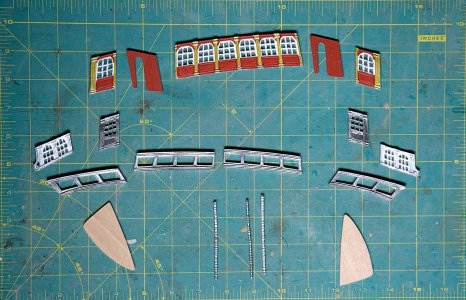
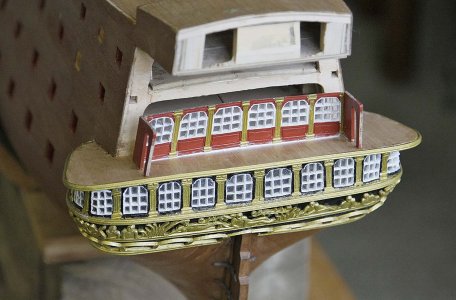
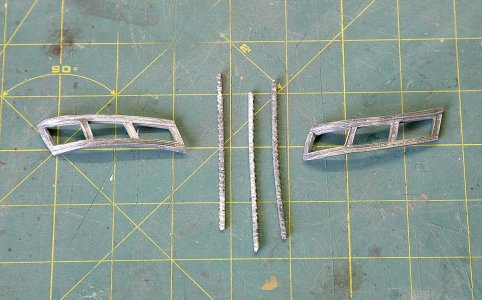
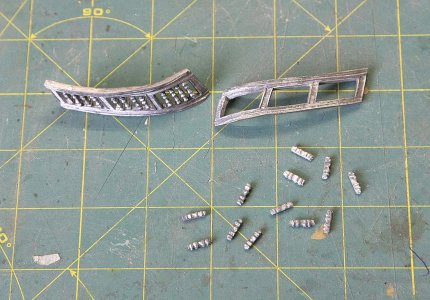
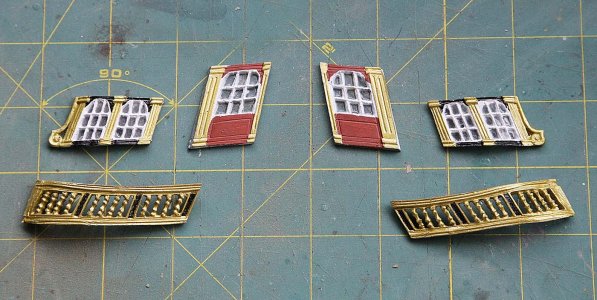
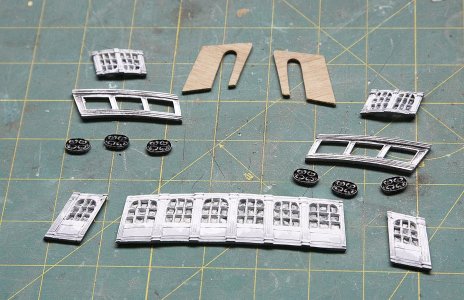
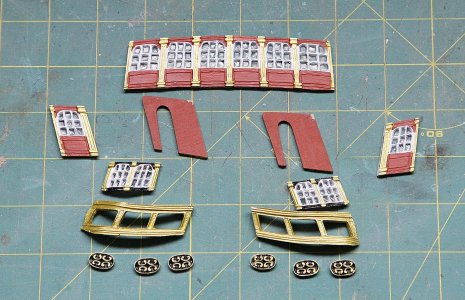
This is now where things got tricky. There were a large number of cast parts and a few pre cut ply bits that made up the transom but there was no guide as to what parts to use where or how it was to be assembled and the plans were of no use at all, they just showed the completed transom, this area was pure guesswork. It was like a Chinese puzzle that you needed two pairs of hands to hold parts whilst you tried to assemble it.

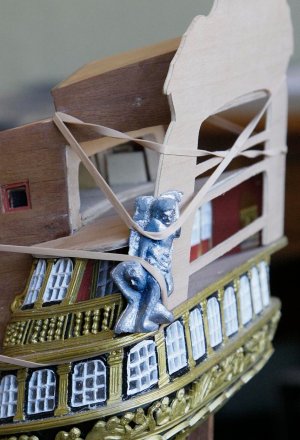
I selected the parts I thought were needed for this part of the build and then spent quite some time coaxing them into shape so that they would sit on the transom support and have some sort of relation to each other, had I not seen examples of it having been done on Keith Julliers book I would have said that it was impossible and given up but perseverance and I think a bit of luck got me there. I used clear canopy glue to attach the castings with some small dots of cyno to hold them in place whilst it set. I used this stuff because of its gap filling qualities, it is water soluble so any excess can be wiped away unlike epoxy which is pretty messy. I painted the parts prior to fitting. For making the deck above Euromodel supplied some precut pieces, I found that these appeared to be the wrong shape and couldn't be made to fit so I made up the deck from one piece of ply instead of the three supplied, I planked it and glued it into place, I also had some spare decorative strip which I glued around it's edge. I then touched up the whole area.

It’s too difficult to explain exactly how I assembled this transom level but maybe the sequence of photos might show in part how it was done.


210.jpg

211.jpg

212.jpg

213.jpg

214.jpg

215.jpg

216.jpg

217.jpg

218.jpg

220.jpg

221.jpg

222.jpg

223.jpg
 
Last edited:
Good morning, it’s good to have you following my build.

This is now where things got tricky. There were a large number of cast parts and a few pre cut ply bits that made up the transom but there was no guide as to what parts to use where or how it was to be assembled and the plans were of no use at all, they just showed the completed transom, this area was pure guesswork. It was like a Chinese puzzle that you needed two pairs of hands to hold parts whilst you tried to assemble it.

I selected the parts I thought were needed for this part of the build and then spent quite some time coaxing them into shape so that they would sit on the transom support and have some sort of relation to each other, had I not seen examples of it having been done on Keith Julliers book I would have said that it was impossible and given up but perseverance and I think a bit of luck got me there. I used clear canopy glue to attach the castings with some small dots of cyno to hold them in place whilst it set. I used this stuff because of its gap filling qualities, it is water soluble so any excess can be wiped away unlike epoxy which is pretty messy. I painted the parts prior to fitting. For making the deck above Euromodel supplied some precut pieces, I found that these appeared to be the wrong shape and couldn't be made to fit so I made up the deck from one piece of ply instead of the three supplied, I planked it and glued it into place, I also had some spare decorative strip which I glued around it's edge. I then touched up the whole area.

It’s too difficult to explain exactly how I assembled this transom level but maybe the sequence of photos might show in part how it was done.


View attachment 562955

View attachment 562956

View attachment 562957

View attachment 562958

View attachment 562959

View attachment 562960

View attachment 562961

View attachment 562962

View attachment 562963

View attachment 562964

View attachment 562965

View attachment 562966

View attachment 562973
Good morning Ken. As always quality work. Very neat and tidy. Cheers Grant
 
Good morning, it’s good to have you following my build.

This is now where things got tricky. There were a large number of cast parts and a few pre cut ply bits that made up the transom but there was no guide as to what parts to use where or how it was to be assembled and the plans were of no use at all, they just showed the completed transom, this area was pure guesswork. It was like a Chinese puzzle that you needed two pairs of hands to hold parts whilst you tried to assemble it.

I selected the parts I thought were needed for this part of the build and then spent quite some time coaxing them into shape so that they would sit on the transom support and have some sort of relation to each other, had I not seen examples of it having been done on Keith Julliers book I would have said that it was impossible and given up but perseverance and I think a bit of luck got me there. I used clear canopy glue to attach the castings with some small dots of cyno to hold them in place whilst it set. I used this stuff because of its gap filling qualities, it is water soluble so any excess can be wiped away unlike epoxy which is pretty messy. I painted the parts prior to fitting. For making the deck above Euromodel supplied some precut pieces, I found that these appeared to be the wrong shape and couldn't be made to fit so I made up the deck from one piece of ply instead of the three supplied, I planked it and glued it into place, I also had some spare decorative strip which I glued around it's edge. I then touched up the whole area.

It’s too difficult to explain exactly how I assembled this transom level but maybe the sequence of photos might show in part how it was done.


View attachment 562955

View attachment 562956

View attachment 562957

View attachment 562958

View attachment 562959

View attachment 562960

View attachment 562961

View attachment 562962

View attachment 562963

View attachment 562964

View attachment 562965

View attachment 562966

View attachment 562973
Those parts are not the most flexible and manageable parts. But you did a very nice job to fit them together, Ken.
Regards, Peter
 
Hello all, Thanks for staying aboard.

As this build was some years ago I’m finding it a bit difficult remembering the exact sequence and details but fortunately I have plenty of photos which should help you follow.

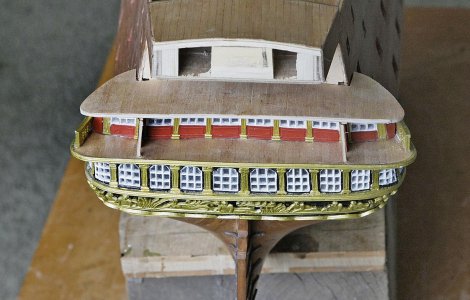
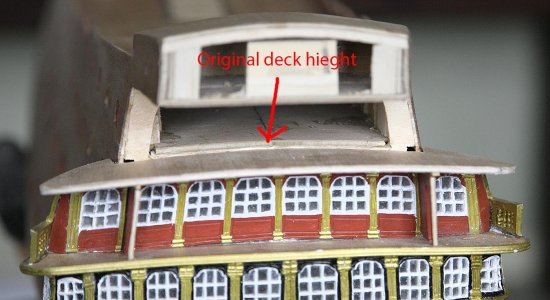
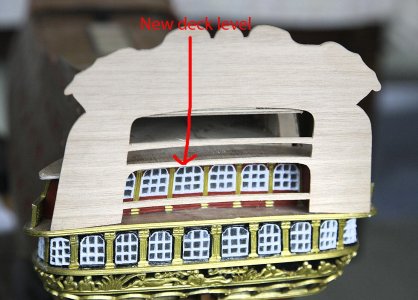
The next level of the gallery was very similar to the previous one. First I checked the position of the deck using the supplied rear facia, I altered the position of this deck accordingly. I prepared, painted and glazed the castings before gluing into place.

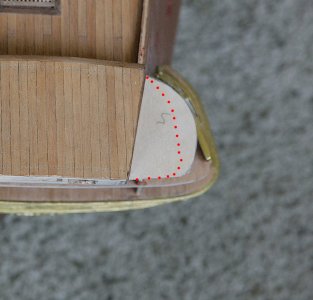
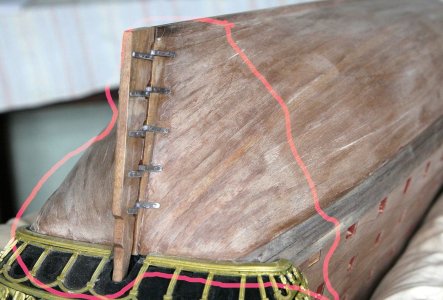
I ended up with quite an issue. You will realize that it was impossible to dry fit all of the gallery parts because each level needed to be fixed before the one above could be fitted. There were no locating points and the shaping and lean in angles were all done by eye, this led to a slightly wrong lean in angle at the first level, accentuated by the same mistake with the next levels and by the time that the roof of the final tier needed to be fitted I found that the top was out by more than was acceptable, I had no alternative but to take the galleries apart and start again. Oh Dear I said!!!


224.jpg

225.JPG

226.jpg

228.jpg

229.jpg

230.jpg


231.jpg

232.jpg

233.jpg

The dotted lines shows the shape and size that the top should have been

234.jpg
 
Last edited:
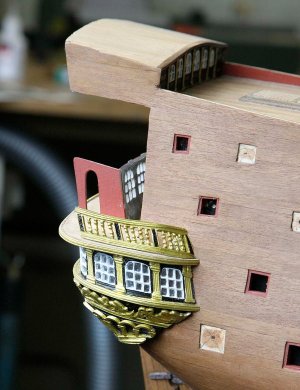
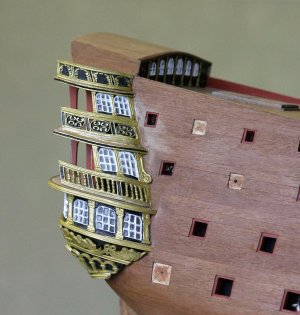
Continuing, I dissasembled the upper stern galleries, only a small amount of re touching was needed before tackling it again. Having done it once, albeit not very well I now had a much better idea of how it needed to be built. It was re-assembled almost the same way but with more care taken regard the final fit. The pictures show not the stages of the re build but just the end result showing the three tiers of side galleries. It was a lot of extra work but was well worth the effort.


237.jpg

238.jpg

239.jpg

240.jpg

241.jpg

242.jpg
 
Hello again. Todays log explains how I made up and fitted the rear transom facia along with all the castings.

I couldn’t find anything about building this part only illustrations of the end result, so once again I was on my own.

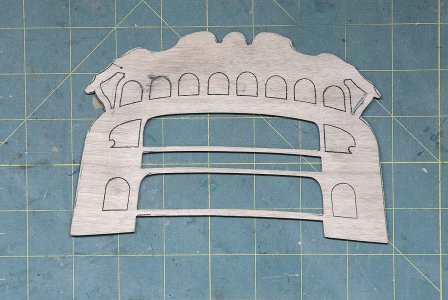
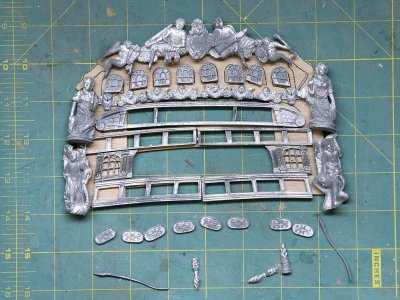
First I copied the stern facia from the plan and transferred it to the ply part supplied, there was some adjustment needed but not too much. I sorted out the cast parts needed and loosely tried them for fit. This wasn’t straight forward as some of the castings didn’t look anything like shown on the plan and some areas needed modifying to work.

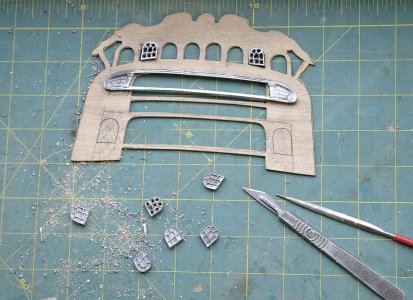
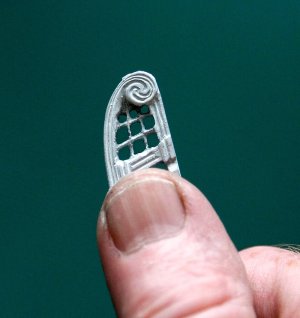
I decided to recess the windows into the facia so my first task was to cut out the openings, the outlines for these openings matched perfectly with the castings and no further adjustment was needed. I hadn't intended to open the windows in these castings as the pane areas was so small I wouldn't be able to get a file into the space but thinking that with the other windows glazed they would look out of place just painted so I once again got stuck in. I drilled a pilot hole and using a narrow scalpel I picked out the panes bit by bit. I've shown a picture using my thumb for scale to show just how small these windows are.

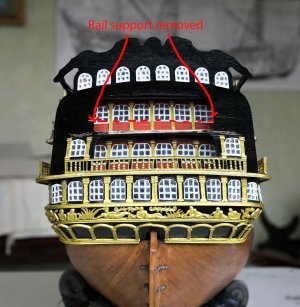
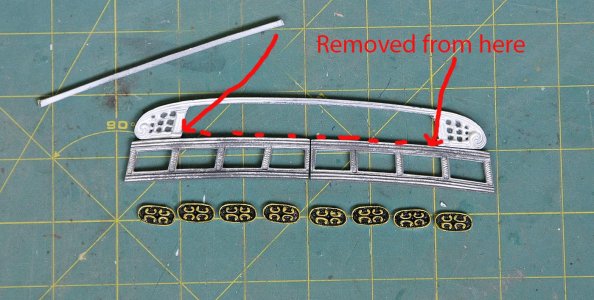
Once all the windows were done and loosely placed I checked the position of the balustrades, as you can see the supplied middle one appears to be wrong. I have shown the line that I thought it should fit in with, I wasn’t sure how to adjust it and still keep the eight inserts supplied and shown on the plan.

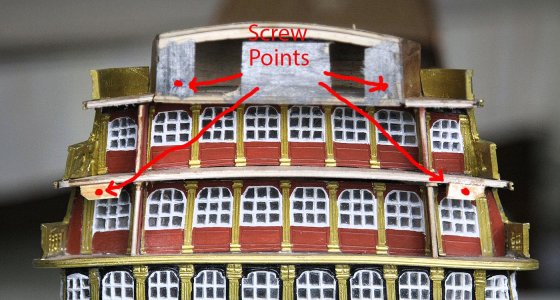
I realized that this facia with all the castings was going to be quite heavy and that attaching it with just glue wouldn’t have been a safe option so I decided to use four small brass screws that the castings will hide to fix it in place, I epoxied the blocks into place underneath the deck for this.
After screwing down the transom and re jigging the castings I found that everything fell into place, all the castings fitted perfectly and looked good

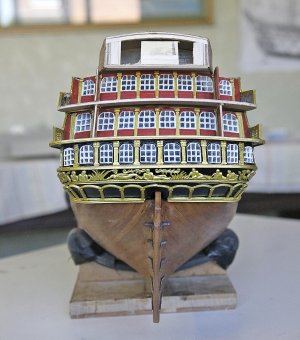
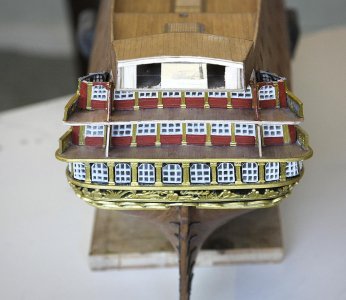
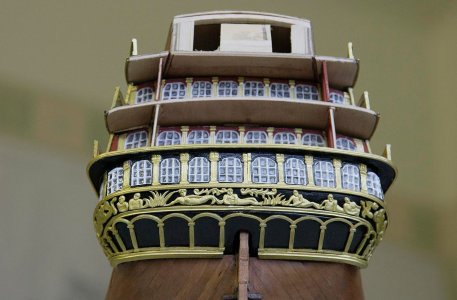
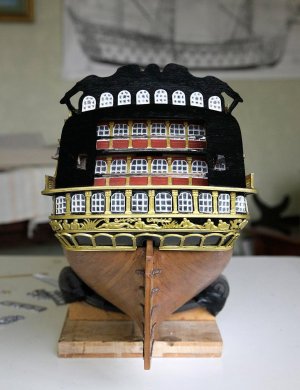
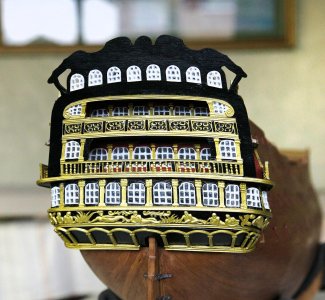
The next task was fitting the top level of windows into the transom, I had already painted and glazed them and wanted them fitted before I attached the transom. I had visions of me pushing them in too far and loosing them forever if I had put them in later. I glued and screwed the transom into place, it was very secure and isn't going to fall off ever, I then painted the transom black. I made up the balustrades, again from the kit parts, it was coming together nicely, this was like the icing on the cake to me and the trials of the side galleries was worth the effort.

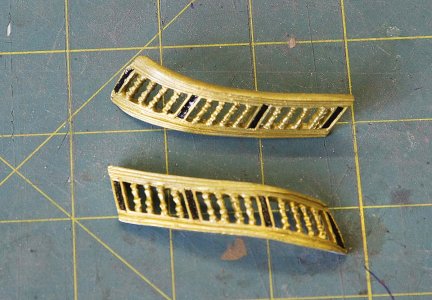
I assembled the first level of balustrade from the cast parts supplied, they went together well, but were fiddly. I painted and fitted them into place, the two halves when in place fitted well. I had already glazed the side windows, these were now painted and fitted, they to were a good fit. I'd earlier decided to keep the colour scheme very simple, for the outer just black and gold, even though it probably isn't correct I prefer the aesthetics of simple colour contrasts and for me it works.

I assembled the next level of balustrade, I painted the small decorative inserts first before putting them in then painted the rest. There were two cross members in the ply for support but when I offered the piece up the top one made the handrail look too thick and was not really needed as with the lower support and the side area there was plenty of contact for strength.

The next piece was a decorative strip with two small side windows, this casting had a bar at both the top and bottom. When I offered it up the lower bar which rested on the handrail below looked unusual, checking it against the plan I saw that this bottom part of the casting was not wanted, I think that it was there for the casting process and left for support when handling I cut this bar away it then fitted in well and looked ok as per plan. Once I was sure I painted and fitted this piece.

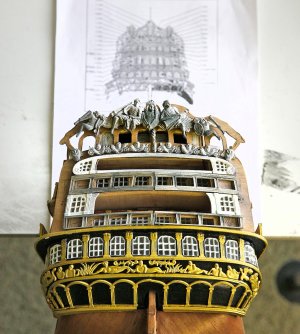
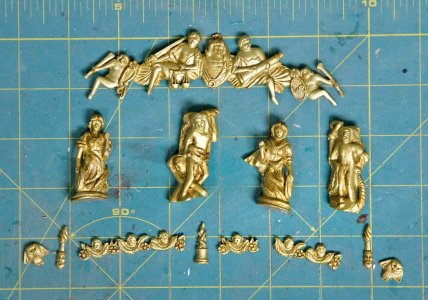
Next was the cherry on the cake, lots of decorative figurines, big heavy and quite impressive.


243.jpg

244.jpg

246.jpg

248.jpg


251.jpg

252.jpg

253.jpg

255.jpg

256.jpg

257.jpg
 
Hello and again thanks for the many likes received, they do encourage me to continue the log. I’ve even been encouraged by my wife to start another major build, but more on that another time.

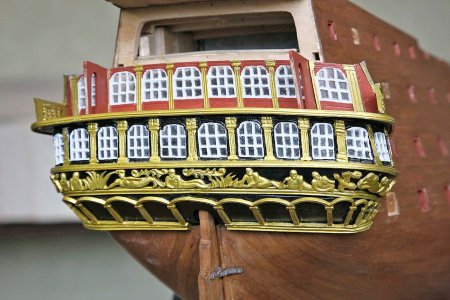
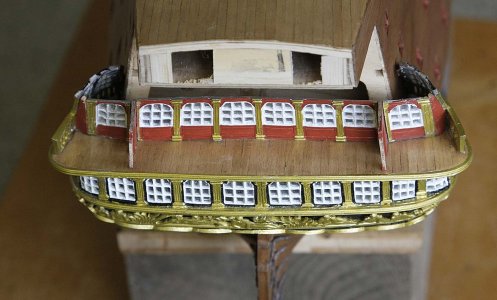
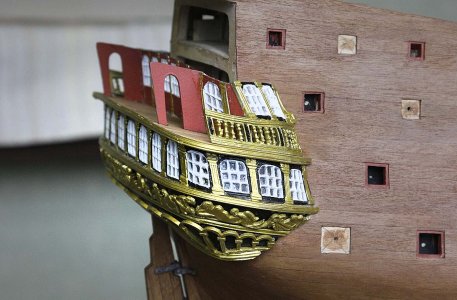
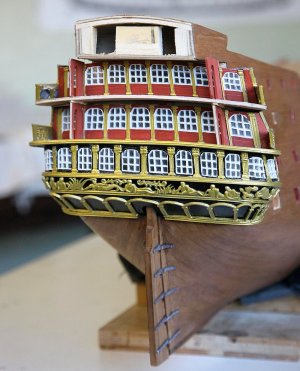
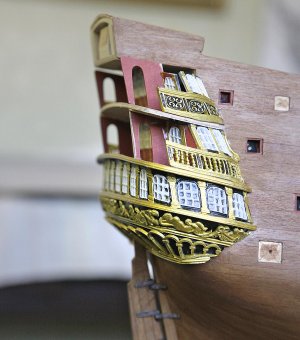
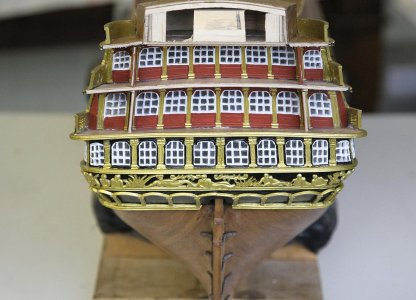
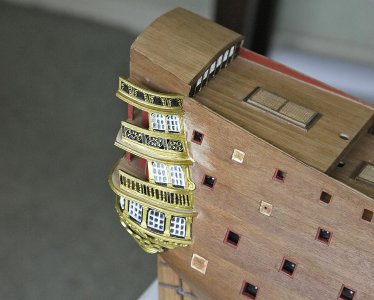
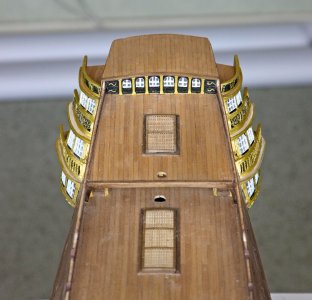
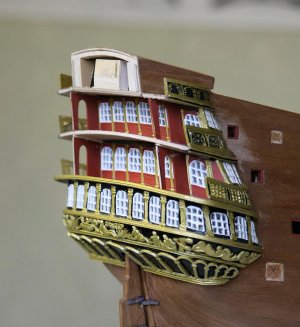
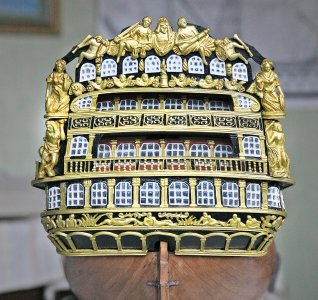
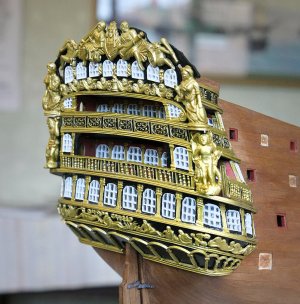
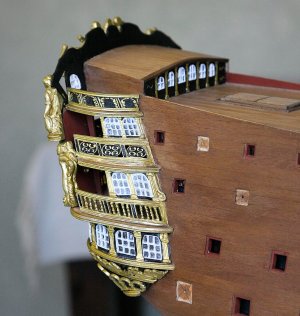
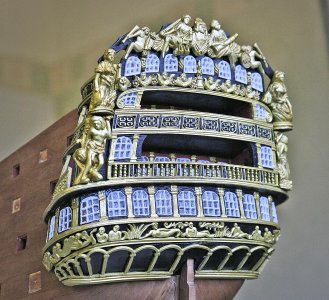
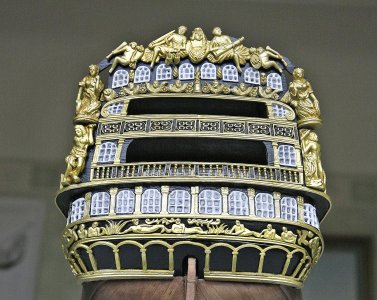
This episode shows the completed galleries. All the castings had been painted and fixed in place. I couldn’t stop looking at it and grinning like an idiot all day, with ornamentation like this it should be in the Sistine Chapel. Pictures don’t do it justice, it has real depth that only seeing it in the flesh can do it justice, oh and its now getting heavy.

Here’s some pics.


259.jpg

260.jpg

261.jpg

262.jpg

264.jpg
 
Hello and again thanks for the many likes received, they do encourage me to continue the log. I’ve even been encouraged by my wife to start another major build, but more on that another time.

This episode shows the completed galleries. All the castings had been painted and fixed in place. I couldn’t stop looking at it and grinning like an idiot all day, with ornamentation like this it should be in the Sistine Chapel. Pictures don’t do it justice, it has real depth that only seeing it in the flesh can do it justice, oh and its now getting heavy.

Here’s some pics.


View attachment 563852

View attachment 563853

View attachment 563854

View attachment 563855

View attachment 563856
You did a great job with all those metal parts, Ken. With a very nice color contrast.
Regards, Peter
 
  • Like
Reactions: Ken
Hey Ken,

Really nice work, and I know from experience how difficult it is to work with castings. I think the rear end looks really beautiful. Great work and great achievement. The Royal William is truly a beauty. I'll keep following your progress and watching you make it even more beautiful. ...:) Thumbsup
 
Hey Ken,

Really nice work, and I know from experience how difficult it is to work with castings. I think the rear end looks really beautiful. Great work and great achievement. The Royal William is truly a beauty. I'll keep following your progress and watching you make it even more beautiful. ...:) Thumbsup
Hi Gig. Thanks for the compliment. I agree with you that it is a beautiful ship, I think that Euromodel have done it justice
 
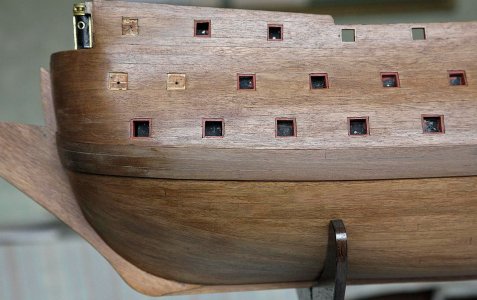
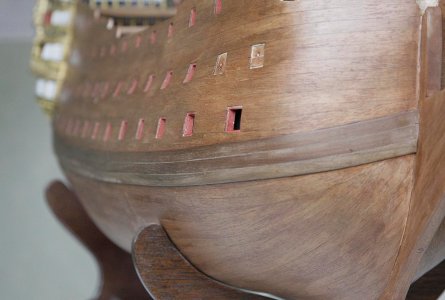
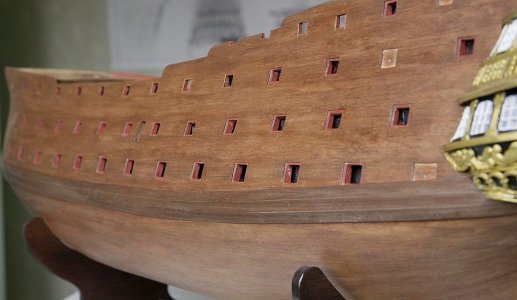
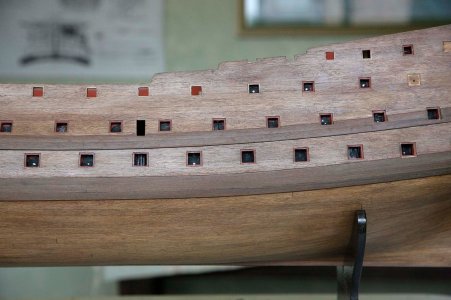
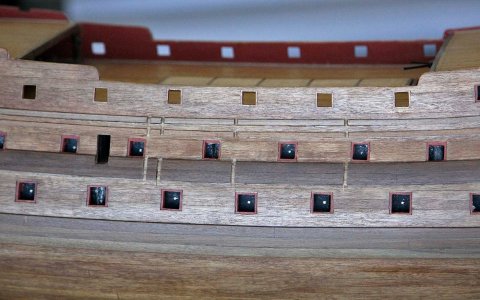
Hello. Now for the wales. This post is a little out of sequence, I had a disaster after fitting the lower ones which I had to repair before the upper ones were fitted. I’ll just deal with the wales on this post and go back to the disaster in my next post.

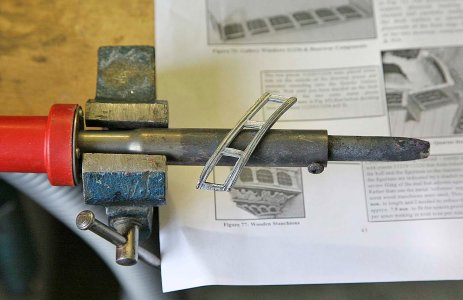
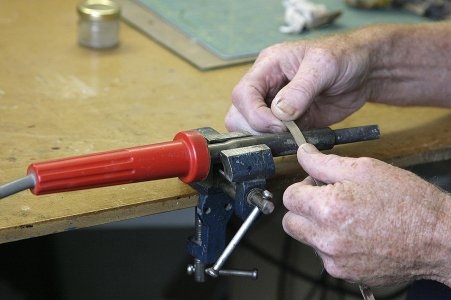
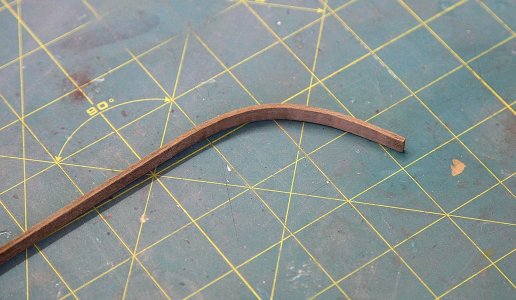
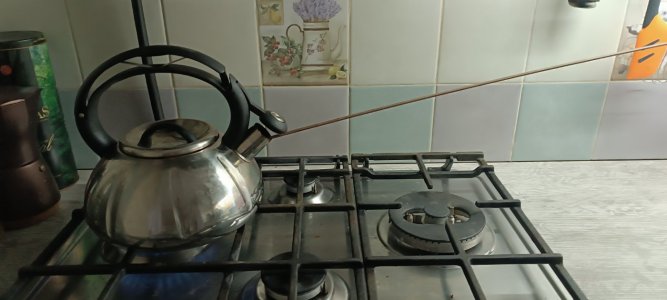
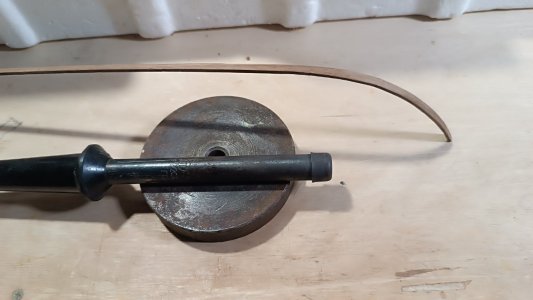
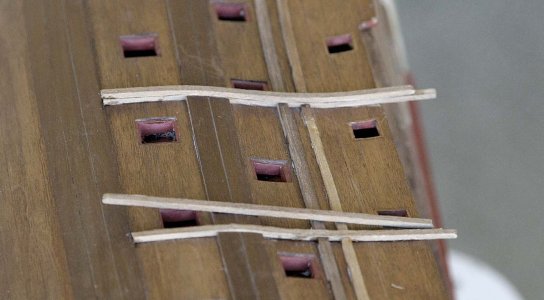
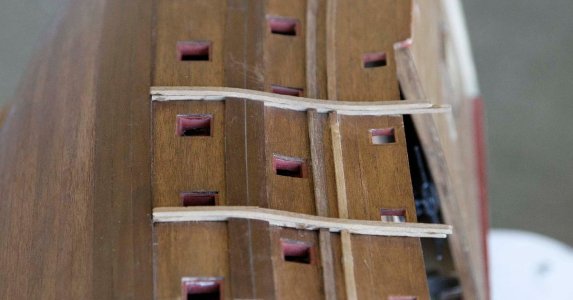
The wales were made up from three strips of 2x7mm walnut. First I put these into a flask of boiling water to soak for about three hours. I marked out their position relative to the lower gun ports then turned my attention to bending them. My preferred method for anything over 1mm is after soaking I use my heavy duty soldering iron clamped in a vice, I grip the strip wood between both hands leaving about an inch between. I hold the strip on the shaft of the iron with a little downward pressure, nothing happens initially but there comes a moment when the wood suddenly becomes soft and pliable, it will readily bend or twist to any shape, I think that it's as the internal moisture turns to steam and the resins soften. This state only lasts about a second before the wood dries, leaving it in place any longer doesn't help and there is a chance of charring the wood, lift it off whilst it is still moist. I then move it along a bit at a time and continue the bend. I have the hull to hand and keep checking that I'm getting the bend correct. I have tried using a curved block the Amati way but I found that this dried and charred the wood, as you can see in my picture my method gives a good clean curve with no charring and it is quick and easy.

Next I will tell you of my disaster, the angels wept for me


274.jpg

275.jpg

266.jpg

267.jpg

268.jpg

269.jpg

285.jpg

286.jpg

I gave myself a reward

288.jpg
 
I also bend the straps with a soldering iron, moistening them. But I keep the thicker and wider nut strips in boiling water for about five minutes, they become plastic and bend better without breaking, and only then I begin to bend and twist them a little in two planes at once. But the best thing, from my experience, is to bend the planks from a pear, a very plastic material.

IMG_20251027_163654.jpgIMG_20251027_165704.jpg
 
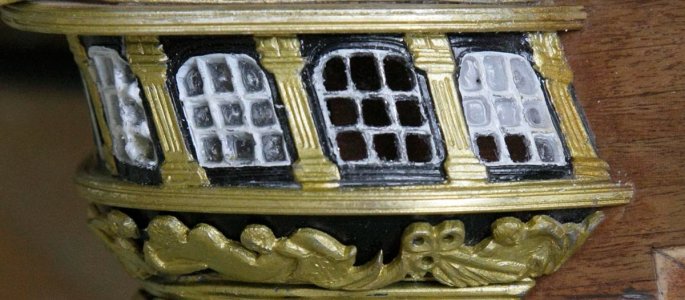
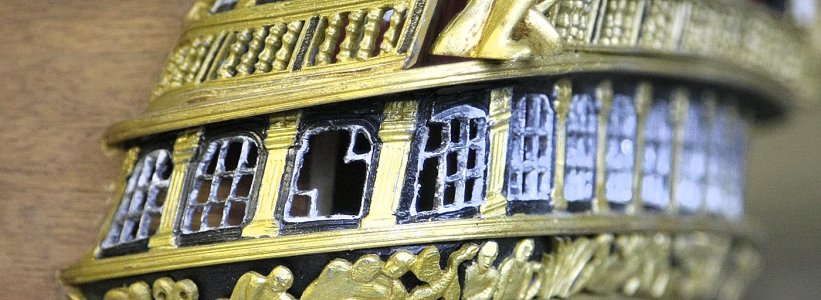
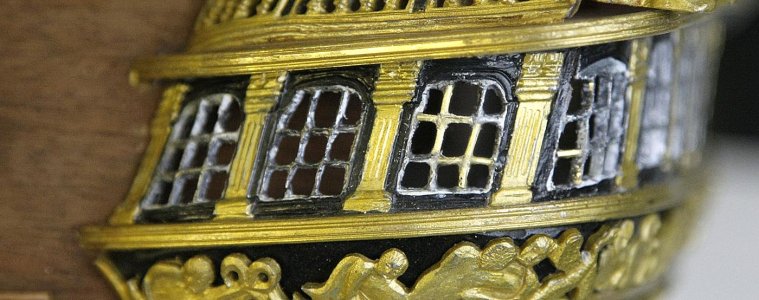
After my high of finishing the stern came quite a low that took a while to recover from, a mini disaster. I'll explain.

I had just fitted the lower wales, I noticed that at the stern one of the planks had not stuck down fully. I positioned the hull almost upside down at an angle so that I could trickle some cyno under it. Using my needle nozzle under the plank I inserted a little glue but on taking it away the needle got trapped and as I pulled the whole top came off the container and the entire contents, almost a full bottle of cyno poured over the hull, rudder and lower underside of the transom support. I quickly wiped away as much as I could before it started to set, the fumes were hard to stand and this amount when drying became too hot to touch. My mind was screaming, NO!!!
As you may imagine it left quite a mess. It took me a while to get the stuff off my hands and even longer to repair the damage. Fortunately the side and upper transom hadn't been effected except some of the glazing in the windows had melted and needed re doing.

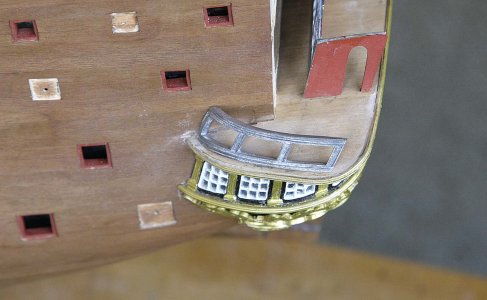
The picture shows the effected area and the recovery in progress.

I sanded off what I believed was all the hardened Cyno from the hull and went as deep as I dared, to get a uniform finish I then sanded the rest of the hull, as I had previously stained it I needed to take enough off to get to just plain wood. The area effected now had different colour streaks in the grain so to try and get some colour consistency I tested some stains and found that light oak gave the best result, so used this giving the hull a couple of well rubbed in coats. It came out much better than expected. I rounded the upper and lower edge of the wales then gave the hull a coat of sanding sealer. I prefered the newer shade and finished look over my previous one, there were very slight variations in the colour as you would have expected and the grain was showing up more, it looks like very subtle well done ageing. The grin came back.

The galleries needed major work done to bring them back to their former glory and I wasn’t going to shy away from doing what was needed.

I went through a variety of thoughts about this often changing my mind on what needed doing for me to be satisfied. On first assessing the damage I saw other than the hull, the black area underside of the transom support was stained and would need re- painting, the glazing in the side gallery windows both sides had gone white with the heat and fumes, some of the starboard ones had even melted and all the lower windows at the rear had whitened, a sort of opaque appearance. I initially decided that I would re paint the black area and just re-glaze the melted panes, hoping that I could accept opaque windows. I did this, but on working close up with magnifiers on I could see that a lot of the gold had been rubbed away from many of its detailed edges due to rough handling at the time and that the nice newly painted sheen had gone. I decided that all the gold should also be re-painted. I remembered all the effort that I had put into cutting out and glazing those windows and still had the vision of how good it had looked just a couple of days before and couldn't get it out of my mind that I wouldn't be able to settle for less. So biting the bullet I decided on a compete renovation, a complete re-paint and re-glaze.

Have you ever worked in an office, having almost, through hard work nearly finish when someone walks in through the door carrying an armful of files and says, " these must be done by tomorrow " Well that's how I felt

You may remember that I had glazed using glue on the inside of the frames, well because of that it was no simple matter now getting it all out from the front through the small pane area, this glue having set was very tenacious and clung on. I first cut it away with a scalpel, I then made up from wire some small hooks and picks, with the help of fine curved tweezers I managed to eventually remove all the glazing/glue. Some of the windows were damaged in the process but have since been repaired. I cleaned up the area using a fine wire brush and then repainted. I reckon that I got it pretty close to how it was before the incident, I don’t think even Nelson could tell the difference with both eyes.


265.jpg

271.jpg

276.jpg

277.jpg

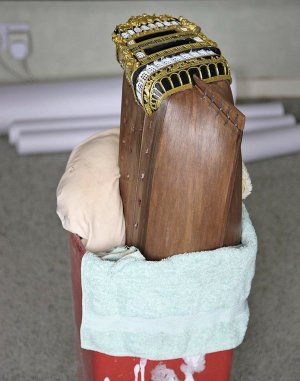
Not binned but how I supported it for re painting.

279.jpg

Like New again

282.jpg
 
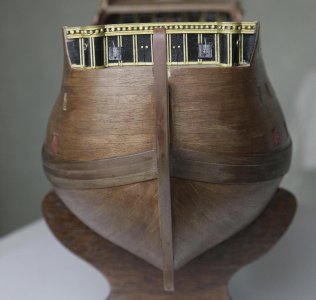
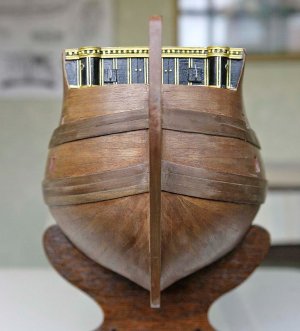
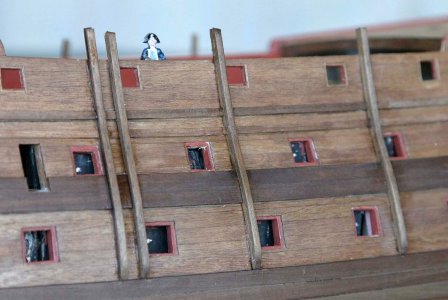
Continuing, I made up and attached the upper strakes, nothing of interest to report there. I then did the side fenders, I always try and find an easy way to do things and the fenders were no exception. They are made from 3x5mm walnut, I felt that these would be extremely difficult to bend to the shape of the hull, some builders make up templates and cut them from larger stock to shape, most soak them for a long time, but that would still be difficult to bend. I decided to use 3x2mm strips and cut a groove in the wales for them to fit into. I used two strips layered for each fender, sticking one down and then the other on top. Being much thinner they were easy to bend to shape without any soaking or aids and when done and sanded you would be hard pressed to tell that they weren't one piece, it was simple. I stained them a dark oak again for the contrast.


289.jpg


290.jpg


291.jpg


293.jpg
 
After my high of finishing the stern came quite a low that took a while to recover from, a mini disaster. I'll explain.

I had just fitted the lower wales, I noticed that at the stern one of the planks had not stuck down fully. I positioned the hull almost upside down at an angle so that I could trickle some cyno under it. Using my needle nozzle under the plank I inserted a little glue but on taking it away the needle got trapped and as I pulled the whole top came off the container and the entire contents, almost a full bottle of cyno poured over the hull, rudder and lower underside of the transom support. I quickly wiped away as much as I could before it started to set, the fumes were hard to stand and this amount when drying became too hot to touch. My mind was screaming, NO!!!
As you may imagine it left quite a mess. It took me a while to get the stuff off my hands and even longer to repair the damage. Fortunately the side and upper transom hadn't been effected except some of the glazing in the windows had melted and needed re doing.

The picture shows the effected area and the recovery in progress.

I sanded off what I believed was all the hardened Cyno from the hull and went as deep as I dared, to get a uniform finish I then sanded the rest of the hull, as I had previously stained it I needed to take enough off to get to just plain wood. The area effected now had different colour streaks in the grain so to try and get some colour consistency I tested some stains and found that light oak gave the best result, so used this giving the hull a couple of well rubbed in coats. It came out much better than expected. I rounded the upper and lower edge of the wales then gave the hull a coat of sanding sealer. I prefered the newer shade and finished look over my previous one, there were very slight variations in the colour as you would have expected and the grain was showing up more, it looks like very subtle well done ageing. The grin came back.

The galleries needed major work done to bring them back to their former glory and I wasn’t going to shy away from doing what was needed.

I went through a variety of thoughts about this often changing my mind on what needed doing for me to be satisfied. On first assessing the damage I saw other than the hull, the black area underside of the transom support was stained and would need re- painting, the glazing in the side gallery windows both sides had gone white with the heat and fumes, some of the starboard ones had even melted and all the lower windows at the rear had whitened, a sort of opaque appearance. I initially decided that I would re paint the black area and just re-glaze the melted panes, hoping that I could accept opaque windows. I did this, but on working close up with magnifiers on I could see that a lot of the gold had been rubbed away from many of its detailed edges due to rough handling at the time and that the nice newly painted sheen had gone. I decided that all the gold should also be re-painted. I remembered all the effort that I had put into cutting out and glazing those windows and still had the vision of how good it had looked just a couple of days before and couldn't get it out of my mind that I wouldn't be able to settle for less. So biting the bullet I decided on a compete renovation, a complete re-paint and re-glaze.

Have you ever worked in an office, having almost, through hard work nearly finish when someone walks in through the door carrying an armful of files and says, " these must be done by tomorrow " Well that's how I felt

You may remember that I had glazed using glue on the inside of the frames, well because of that it was no simple matter now getting it all out from the front through the small pane area, this glue having set was very tenacious and clung on. I first cut it away with a scalpel, I then made up from wire some small hooks and picks, with the help of fine curved tweezers I managed to eventually remove all the glazing/glue. Some of the windows were damaged in the process but have since been repaired. I cleaned up the area using a fine wire brush and then repainted. I reckon that I got it pretty close to how it was before the incident, I don’t think even Nelson could tell the difference with both eyes.


View attachment 564241

View attachment 564242

View attachment 564243

View attachment 564244

Not binned but how I supported it for re painting.

View attachment 564245

Like New again

View attachment 564246

Good morning Ken. I always admire how quick your ships come together with so much accuracy and neatness. She is starting to look very impressive. Cheers Grant
 
  • Like
Reactions: Ken
Hi Grant, Thanks for your thumbs up on my Royal William. I think that I'm no different to other members here, we all strive to do our best
 
Back
Top