• SUBSCRIBE TO SHIPS IN SCALE TODAY!

    The beloved Ships in Scale Magazine is back and charting a new course for 2026!
    Discover new skills, new techniques, and new inspirations in every issue.

    NOTE THAT OUR NEXT ISSUE WILL BE MARCH/APRIL 2026
  • Win a Free Custom Engraved Brass Coin!!!
    As a way to introduce our brass coins to the community, we will raffle off a free coin during the month of August. Follow link ABOVE for instructions for entering.

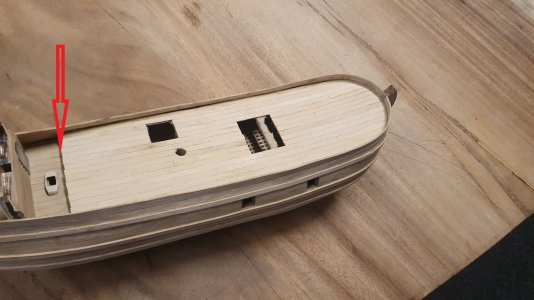
HIGH HOPES, WILD MEN AND THE DEVIL’S JAW - Willem Barentsz Kolderstok 1:50

Hi Maarten - it is great to hear from you. I have thought about that challenge, but to be honest, a full scratch-build seems unlikely (for me). I would like to think / hope that I have one or two options in this regard, but only time will tell. Conversely, it would be a brilliant project for someone with the experience and the tools wanting to build a Dutch model of this era. Whoever wants to take up the challenge will have a superbly researched and accurate set of plans at their disposal.
 
Dear Friends

In recognition of all the help that I received from the Zeeuws Archives and Michiel van Wijngaarden in particular, I have posted an article on Michiel which appeared a few years ago on the website of the archives.

Please find the link below:


For our Dutch friends who would like to read the original article in Dutch, here is the link to the Zeeuws Archives:

 
Dear Friends

After I have received the build contract for De Zwane exactly two weeks ago, I have spent my free time reading and re-reading its contents in an attempt to familiarise myself with it. Whilst Waldemar is busy with the design process, I have uncovered a few interesting facts about De Zwane. I suppose it's only human to compare De Zwane to Barentsz's ship, especially seeing that well-known Dutch historian and expert translator of 17th century Dutch manuscripts and transcripts, Menno Leenstra, argues that the “Vlieboot” Zwaan is, in all likelihood, the best example of what Willem Barentsz’s ship could have looked like during the 1596 expedition.

Tonight, I want to draw your attention to the deck configuration.

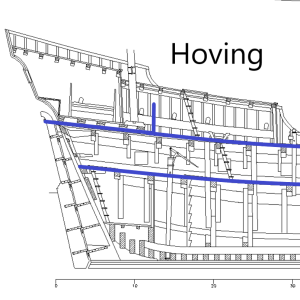
In his book HET SCHIP VAN WILLEM BARENTS EEN HYPOTHETISCHE RECONSTRUCTIE VAN EEN LAAT-ZESTIENDE-EEUWS JACHT, Hoving writes:

“It is striking that in paintings and drawings, even when it concerns relatively small ships, two completely continuous decks are often depicted. This probably had to do with the…… necessity to place the armament as much as possible in a dry spot, out of reach of rain or barrel water. Based on the smooth line which the gun ports follow (neatly between the timbers along the entire length), it appears that both continuous decks were not bent or even lowered in the aft ship (to give the guns a stable platform), but that the deck ran unbroken from front to back.

Hoving.png
Hoving's interpretation of the deck configuration.

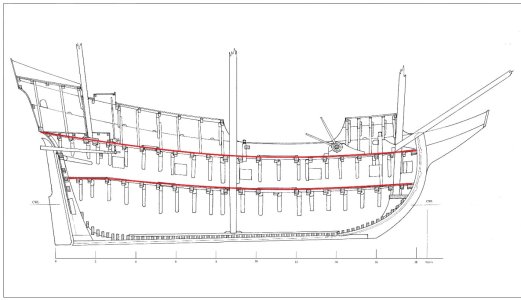
Gerald de Weerdt had pretty much the same take on matters. “The ship had two continuous decks; the lower one carried the artillery. - The decks follow the curve of the bilge timbers.” However, examining De Weerdt’s drawings, it is clear that the orlop deck is "bent" at the stern. (See picture below)

WLangs.jpg

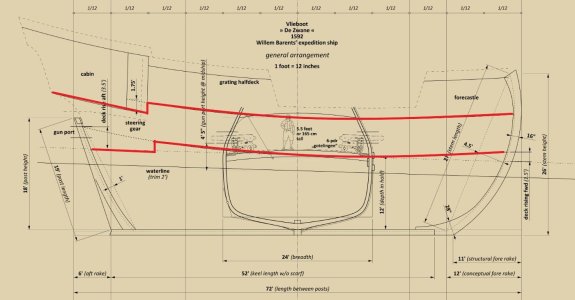
The build contract of the 1592 De Zwane states the following.

Further, at the stern, a cabin will be built approximately two feet below the orlop [deck] which makes it clear that the decks in this construction were not continuous. In fact, out of the 10 build contracts that Waldemar and I have, 9 of them specify that the orlop deck is lowered “neertrappend” in the aft ship. (One build contract stipulates that the cabin is to be created one or two feet above the orlop deck. So, out of the 10 build contracts, not a single one specifies a continuous deck.

003 - Copy.jpg
The deck configuration on De Zwane. Since this rendering, Waldemar has increased (fine-tuned) the height between the decks from 6 feet to 6.5 feet, primarily to avoid excessive deck rise in the aft half of the ship, which would have made it too steep longitudinally and thus uncomfortable for the crew.

This just demonstrates the difference between inferred interpretations and an actual build-contract.

Interestingly, there is also another very famous Dutch ship which also follows the stepped deck configuration - the Halve Maen.

20250324_170310.jpg
Here you can clearly see the stepped orlop (lower) deck in the @Kolderstok version of the Halve Maen

20250409_122253.jpg
as well as the step in the verdek (upper deck). Hans has portrayed this beautifully.

As an aside, Hans has based his model of the Halve Maen on the drawings of the late F. Baay, an ex-employee of the Rijksmuseum.
 
.​

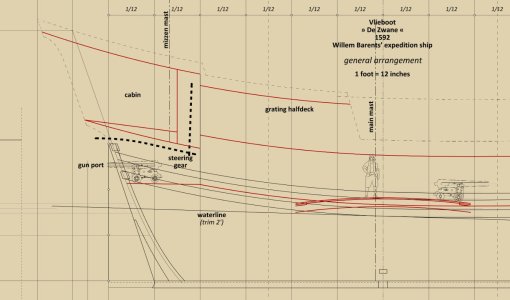
I have finally arrived at the following solution for the deck layout in the aft section of De Zwane hull. It is essentially the same as what Heinrich has already shown above, only in slightly greater detail.

In my opinion, generally speaking and in this specific case as well, the necessity or possibility of incorporating a step in the decks is not so much related to the placements of the cannons, but primarily to the relationship between the heights of the decks and their rise in this stern section, the height of the stern post (which should be as high as possible for the structural strength of the hull), the appropriate placement of the steering gear, and, at the same time, the need to reduce the hull height as much as possible for navigational reasons.

Furthermore, as Heinrich already pointed out, the very contracts for vlieboots mention these steps (of various amount), and, moreover, there is an interesting provision for (in loose translation) „construction of something akin to a cockpit within the cabin, similar to a helmsman’s station, as found on fishing boats”. This specific provision is reflected in my interpretation as shown in the diagram below.

It is also worth noting the position of the mizzen mast relative to the steering gear components.


009.jpg
.​
 
This is an excellent interpretation of the build contract, @Waldemar. I don't think it is possible to follow more accurately than what you have done.

Quick question: Would the mizzen be inside the cabin or can the cabin wall still be positioned directly behind the mizzen towards the stern?
 
.​
Quick question: Would the mizzen be inside the cabin or can the cabin wall still be positioned directly behind the mizzen towards the stern?

And that is a very good question :).

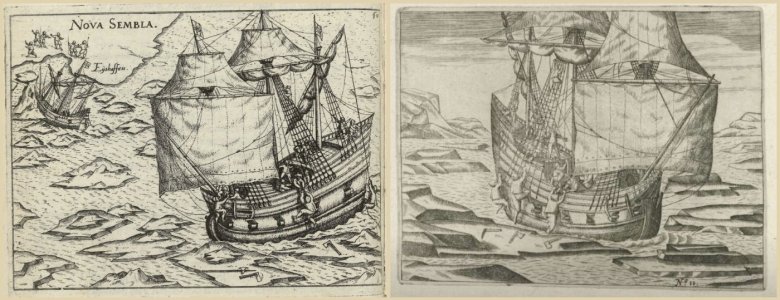
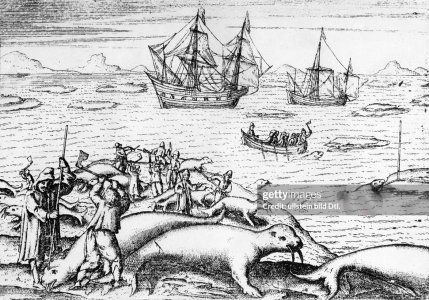
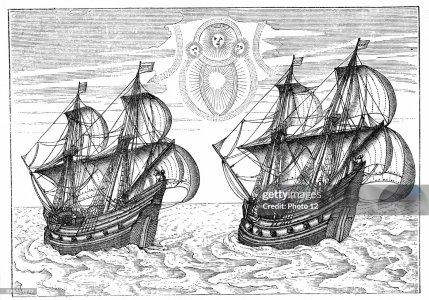
On the one hand, amongst all the others, there are two engravings from the expedition that show the mizzen mast in front of the cabin. I have already shown them in my thread, but here they are again to help follow the narrative. On the other hand, all the others show the mizzen mast set well aft, which is, incidentally, advantageous from a sailing point of view and seems more correct.

At the same time, at least one of the contracts specifies the cabin length as 12 feet, so placing the mizzen in front of the cabin bulkhead would result in its unsatisfactory, overly forward position.


The mizzen placed in front of the cabin bulkhead:

004.jpg

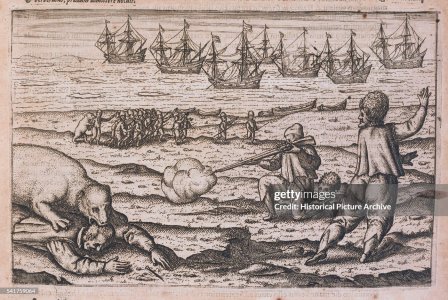
The mizzen in a more correct sailing position, i.e. closer to the stern, on a few sample engravings from the same expedition:


gettyimages-541759064-2048x2048.jpg

gettyimages-545973059-2048x2048.jpg

gettyimages-898034872-2048x2048.jpg
.​
 
.​

In order to possibly reconcile all this evidence, the length of the cabin could be measured not from the aft perpendicular, as it is now, in the current stage of the reconstruction, but from the rear edge of the ship's side (the dashed, sloping line in the diagram), which is still possible.
 
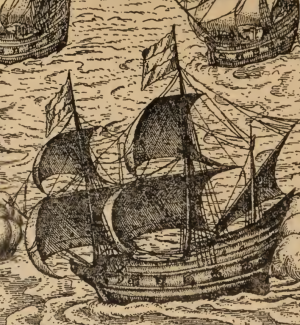
@Waldemar Based on the position of the four ships as they met at the Vaygats during the 1594 expedition and matching the illustration with the actual description in Van Linschoten's journal, I am fairly certain that the ship below is De Zwane.

Swane.png
We can see that the mizzen is positioned quite far aft and close to the stern. If that adds to good sailing characteristics, then I would say we leave the mizzen exactly where it is as per your rendering!
 
.​

In order to possibly reconcile all this evidence, the length of the cabin could be measured not from the aft perpendicular, as it is now, in the current stage of the reconstruction, but from the rear edge of the ship's side (the dashed, sloping line in the diagram), which is still possible.
I understand perfectly! Even better! Thumbsup
 
Congratulations Heinrich, if I did my math correctly, you're into this project for 53 months so far. That's a little over 9400 views per month average!
Thank you for the warm words, Daniel. I appreciate it very much and am still humbled by the whole experience. The strange thing is that for the last two-and-a-half years I have not done any building as such. It seems some of these logs have a life of their own! ROTF
 
Brilliant, Heinrich. Onward you go to even greater heights!

Thank you, Paul. I have mixed feelings about this log but the one thing that I will always cherish and carry with me is the tremendous support of and participation by our SOS members.

I would love to start a new log on De Zwane, but there are simply too many logistical questions that still need to be answered - most important of which - will she be built in China or South Africa?
 
Back
Top