Update 9
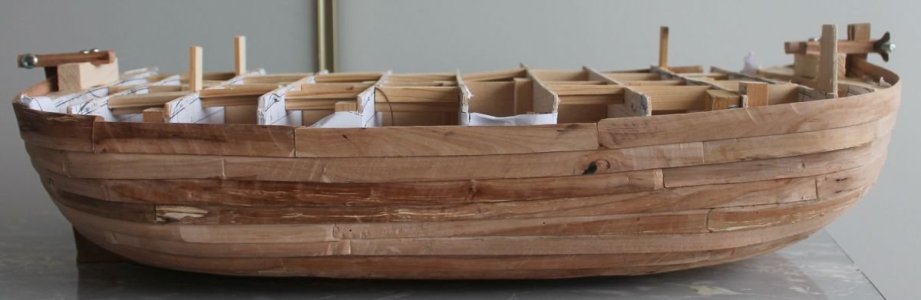
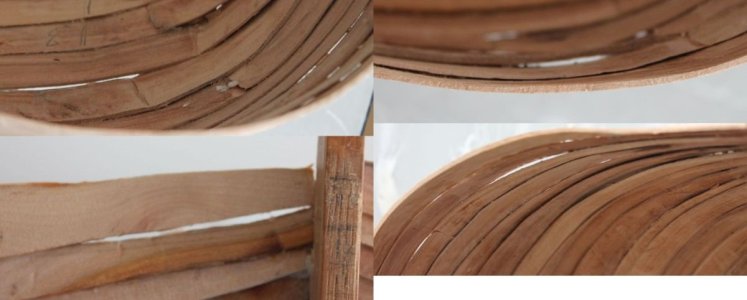
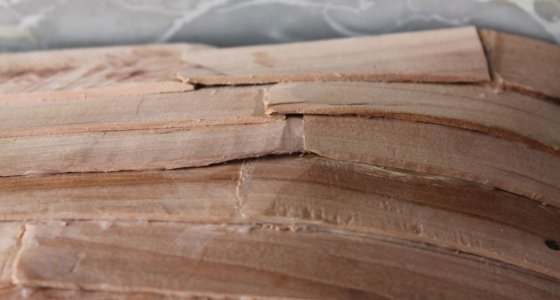
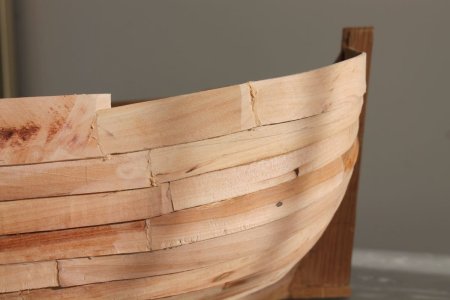
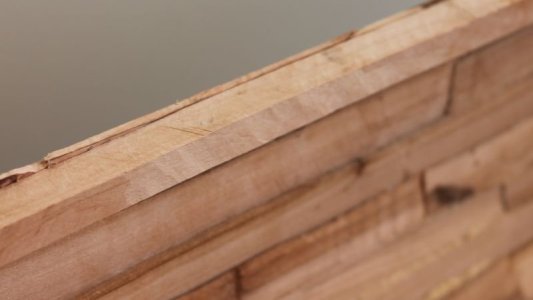
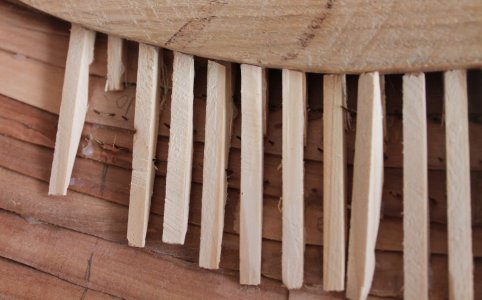
It took a while, but there have been some developments in the construction of the bomschuit. As mentioned in the last update, I removed a few strakes and reattached them, but in such a way that they fit better against the frames by beveling the previous strake.
And then, taking into account the necessary beveling, I applied a few more planks. It makes little sense to show a set of photos of each new strake. That would be very monotonous, so now just the current state of the ship.
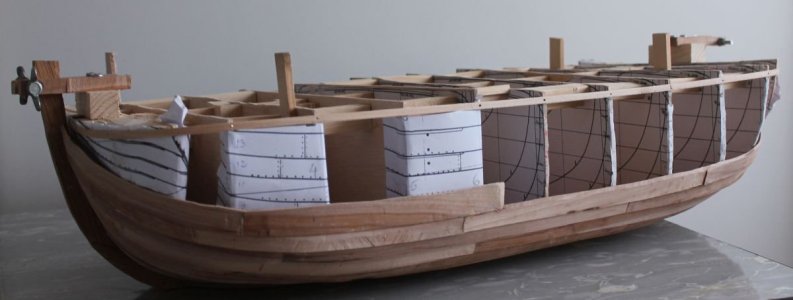
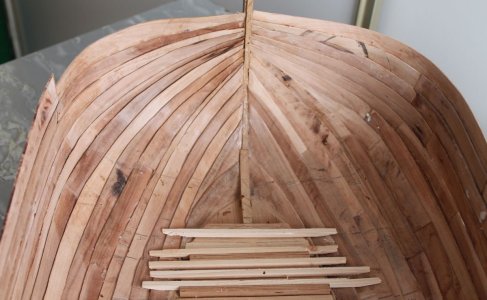
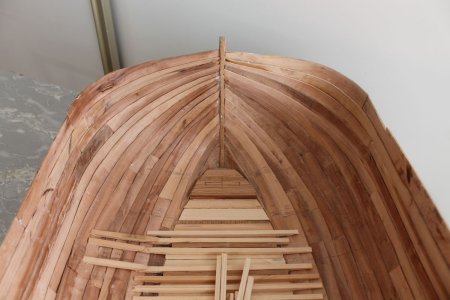
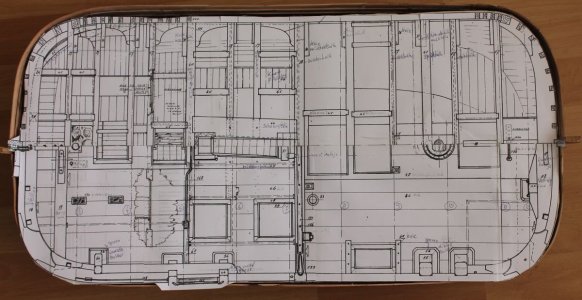
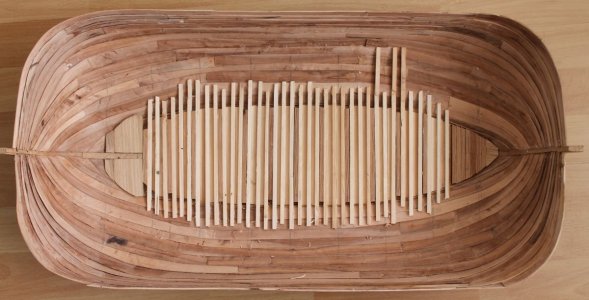
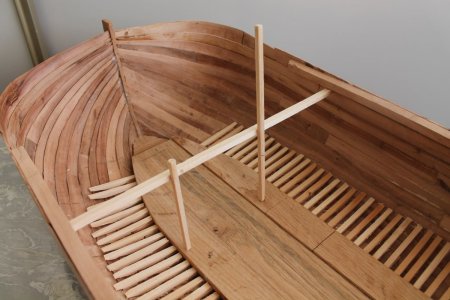
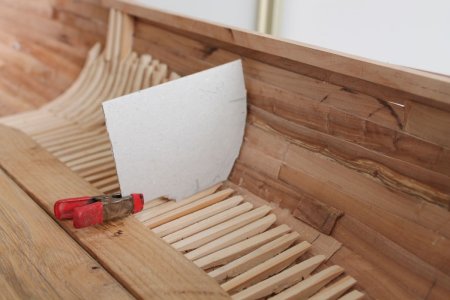
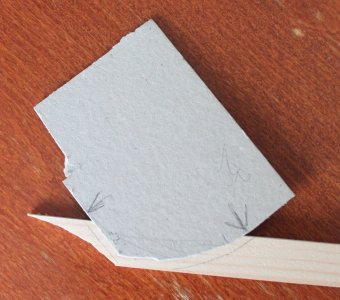
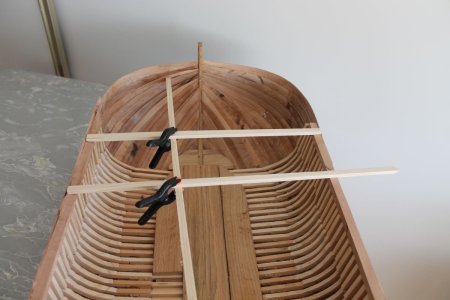
Here, a start has been made on the tenth strake from the bow. I have added some aids to see where I need to end up. At deck level, I have added a strip. The bottom of this is the top of the deck level. I have added pieces of the side drawing to the side to check the sheer.
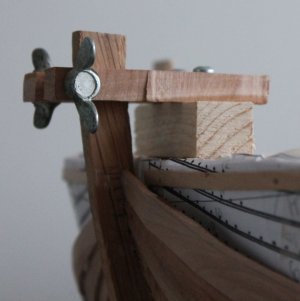
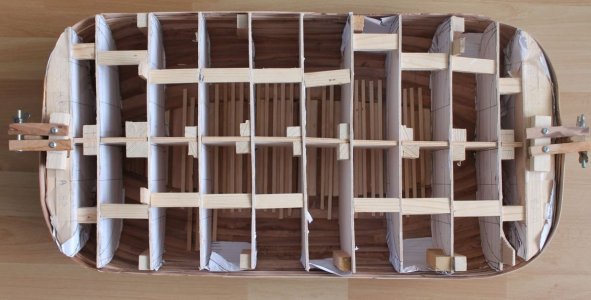
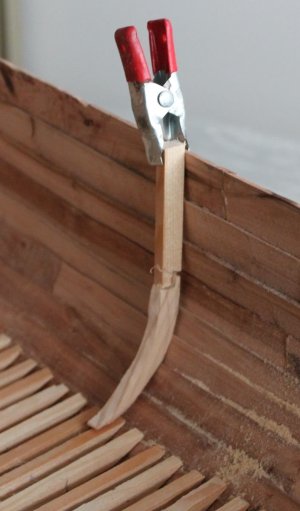
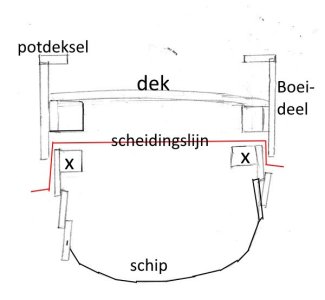
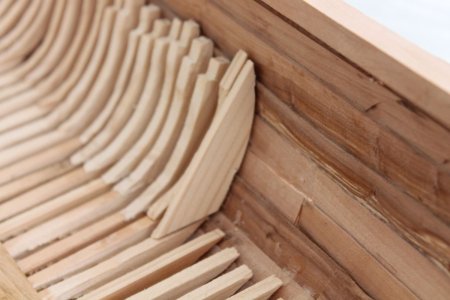
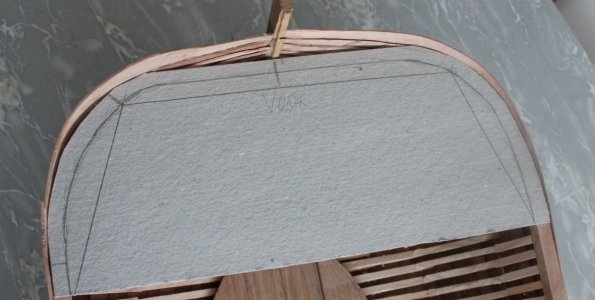
At the bow, and also at the stern, I have clamped the internal frame. Because the strakes here extend above the deck, as can be seen from the centering, I had to raise the clamp a little.
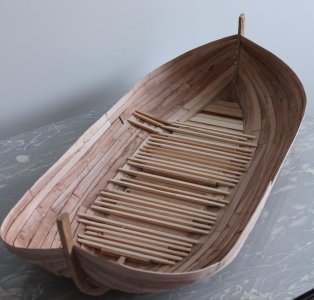
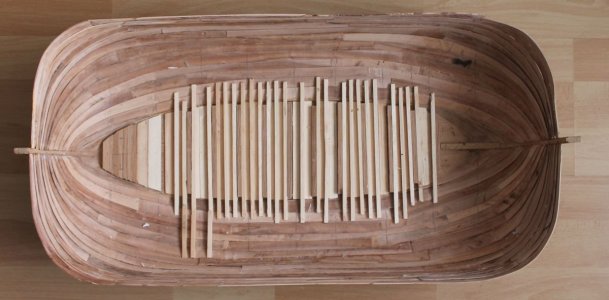
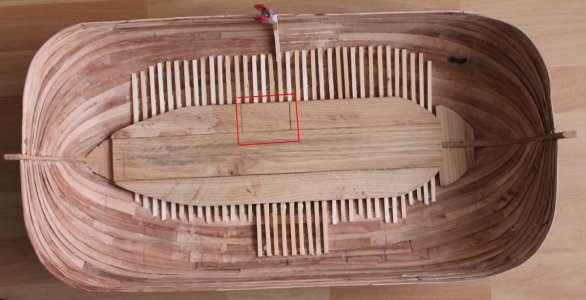
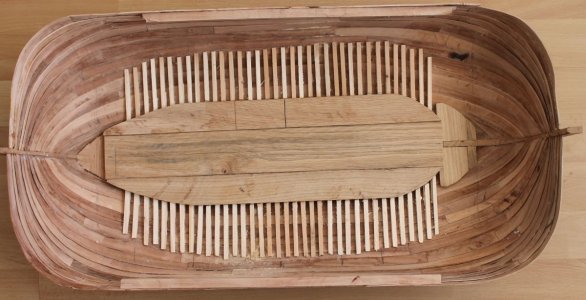
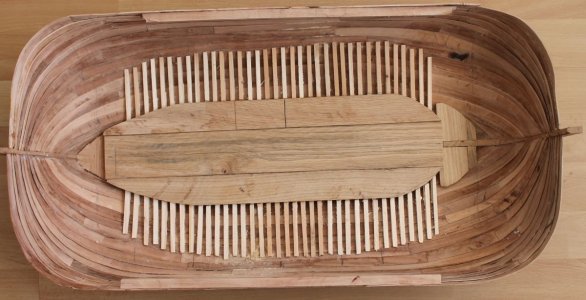
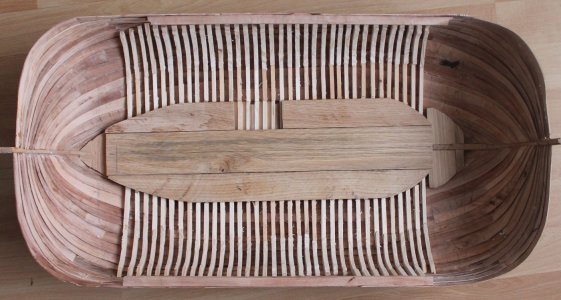
This is what it looks like from above.
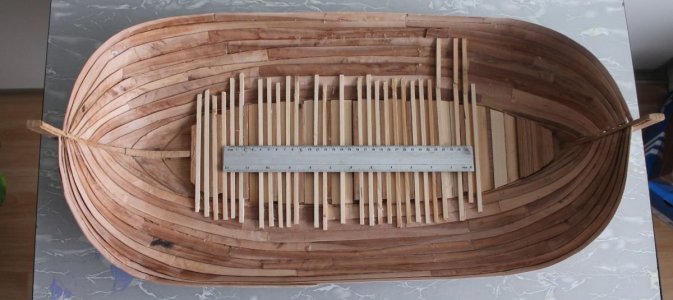
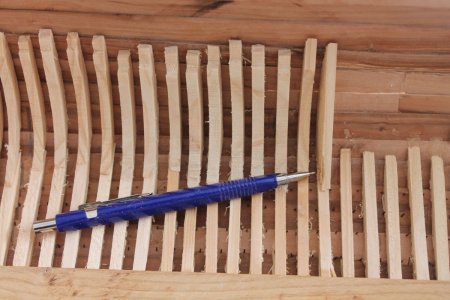
To give a better idea of the size, I inserted a 30 cm ruler. My table is almost too small.
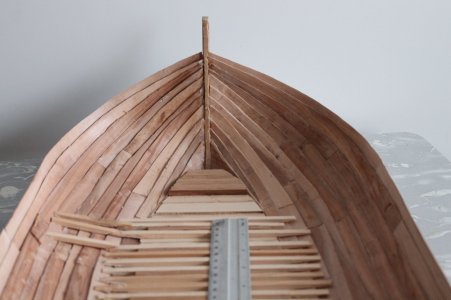
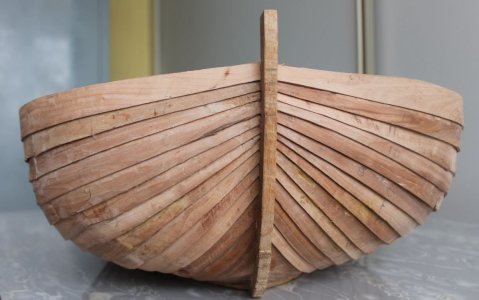
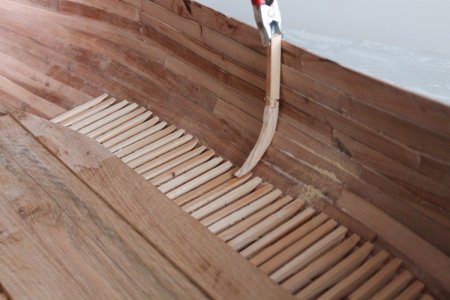
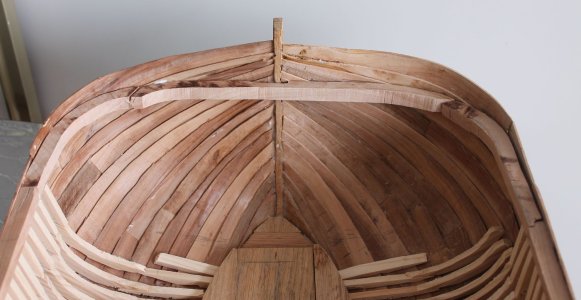
This is the stern seen from the inside,
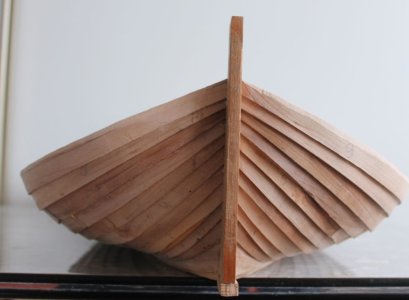
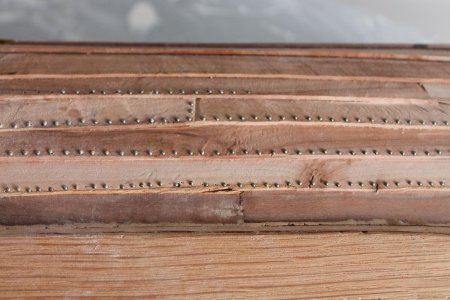
and from the outside.
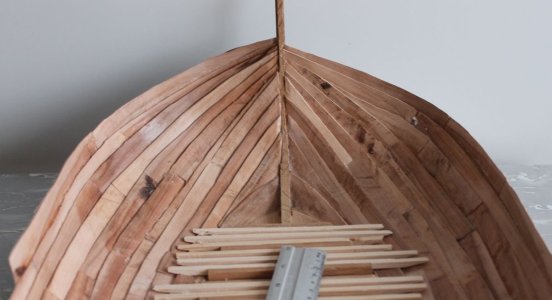
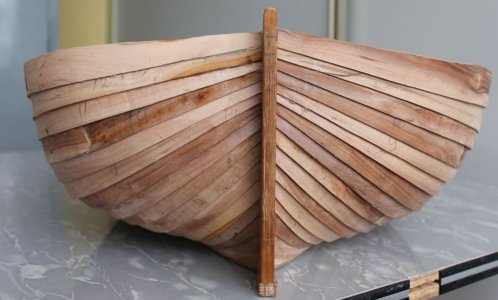
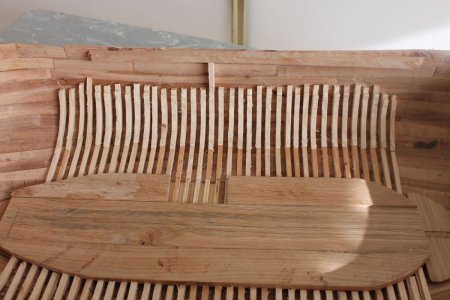
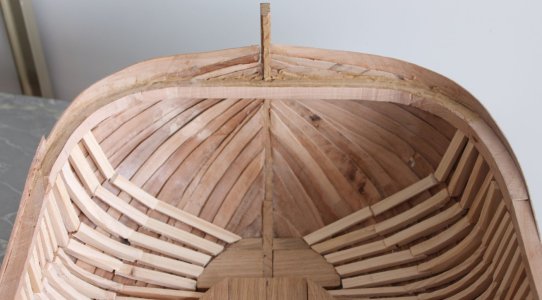
And the bow seen from the inside,
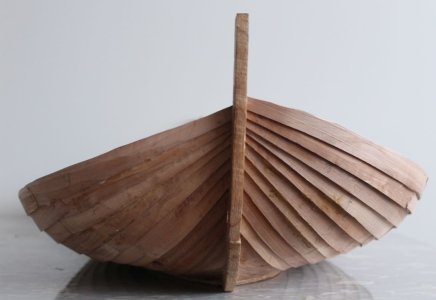
and from the front. Including the beginning of the 10th strake.
I am also busy thinking about how to present this model at the model builders' day in the Maritime Museum.
As you have come to expect from me, there must be action to be seen. That is not so difficult on a fishing vessel, where there is plenty of action.
The problem is that not all the action happens at the same time, or is even possible. How do you deal with that?
I am now thinking of showing the ship in different situations on both sides. For example, on the port side is the ship at sea. Action on the nets, hauling in or setting out. And on the starboard side the ship is on the beach. Then you can show the unloading and action on the nets.
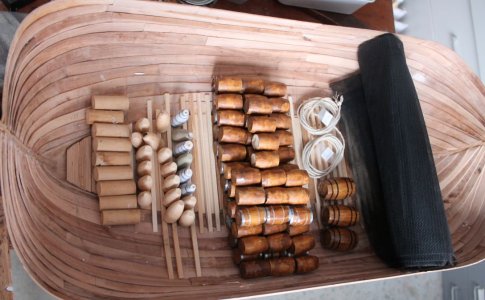
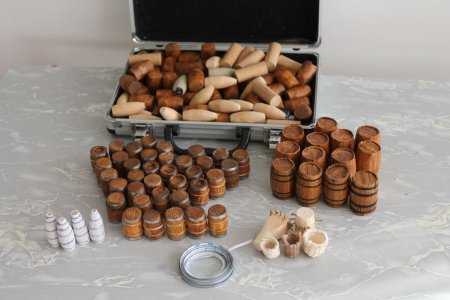
To make all this come alive, I need a lot of props.
First of all, people. I'm going to call in Bert Mogelin for that, that's already been agreed. I've also found a large piece of black tulle that will be perfect for representing the nets. Unfortunately, I can't show it to scale. On a scale of 1:20, a complete kiddle is about one meter high and 70 meters long. I don't have that much space in the shipping museum. So it will probably be 1:50 or so.
A bomschuit also has a few hundred barrels, called “kantjes,” on board. They are filled on the port side and unloaded on the starboard side. So I need barrels. Lots of barrels. A kantje has a capacity of 102 liters, according to Staatsblad 83 of the Netherlands of 1928. In Scotland, it's 118 liters. But I also need baskets.
After being caught, the herrings were placed in a basket and given to the fishmongers, who gutted them and, after salting them in a warbak, stored them in a kantje. After a few days, they had thickened and a barrel was topped up from another barrel. A topped-up barrel was no longer called a kantje but a packed barrel. Five kantjes yielded four packed barrels. Thanks to Peter Voogt, who also described this process in his report.
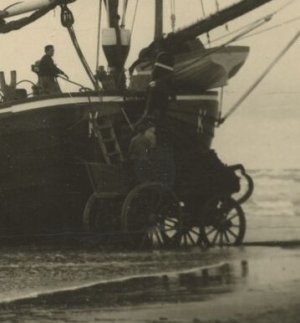
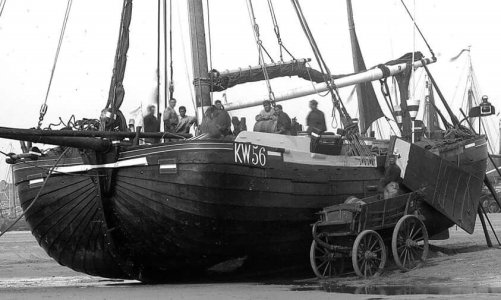
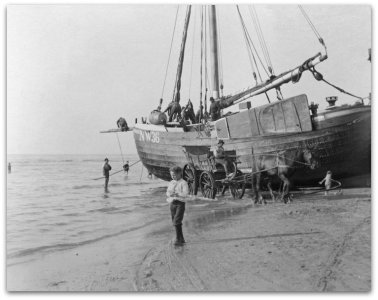
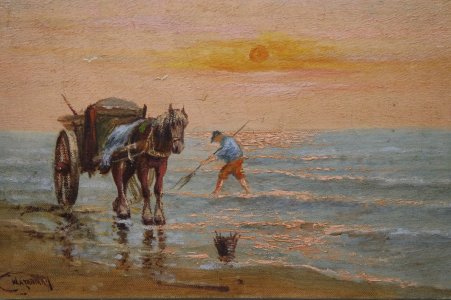
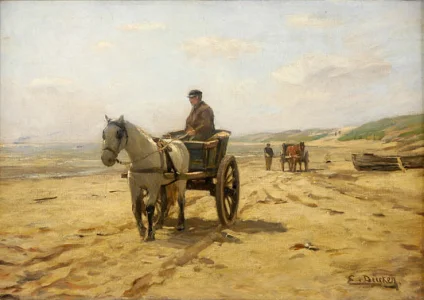
The barrels were unloaded on the beach, hoisted over the embankment onto a horse-drawn cart, and transported further.
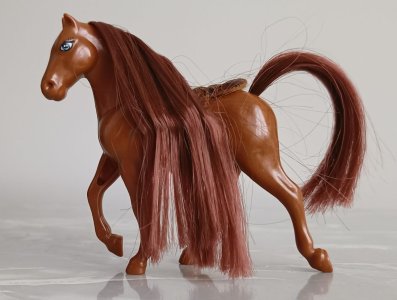
So I need a cart with a horse in front of it. Who has a neat drawing of a horse-drawn cart,
scale 1:20? I already have a horse.
When a bomschuit was on the beach, it was used for all sorts of things. Pulling it further onto the beach, turning it around to sail out again. So pulling and lashing such a boat was a common occurrence, and they had special tools for that.
In short, there is a lot of action possible. I will tell you more about it in later updates.
But first I have to finish it.
To be continued
Translated with DeepL.com (free version)












 Find another, that one looks like something for the sunday morning church and picnic type and not to pull carts in a muddy enviroment.