It is my objective to be of help. Your positive response is excellent encouragement to continue.
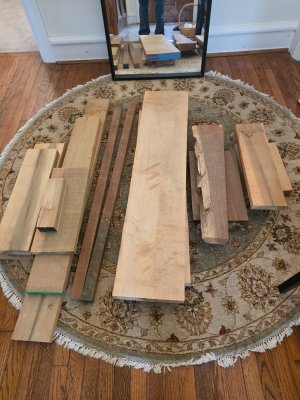
https://www.woodboardsandbeams.com/hardwoods
How close are you to these guys?
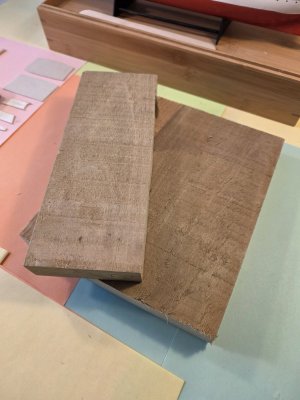
For wood - There are two categories for the first cut:
A: Is it for display? or
B: will it be hidden or painted?
If it is B: the useful species list is much longer
If it is A: I see zero species of Nutwood as being appropriate. This group encompasses the majority of species used for furniture in North America.
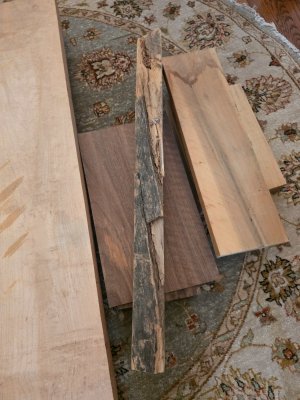
The grain is too coarse - the pores are too large - most everything else about them is good. In Nutwood I include - Oak (Red and White) Ash Hickory Willow Butternut Walnut - there are more. It is a shame about Walnut too. Black Walnut (Juglans nigra) is a man cave dream species. The stuff in most kits called walnut is not any sort of Juglans. Most likely it is one of many African - low cost - brittle crap species that just happens to be brown in color.
The 'grifters really saw you coming' sort of stuff.
Nutwood: The micro: rough - irregular surface is the reason that a finishing material called sand-n-sealer even exists. It is essentially thick nitrocellulose (lacquer) with "dirt" suspended in it if freshly stirred. The "dirt" is fine particles of a material that is transparent when dry. It fills the open pores so that the finished surface looks glass smooth when viewed at an oblique angle.
Fruitwood and Maple: there is no reason for something like sand-n-sealer to even exist. Any effects of using it on this group of wood will be negative. You may as well cover the wood surface with a sheet of clear vinyl the look will be the same.
If it is A - As far as I have seen everything in the Fruitwood group is perfect for our needs. The whole Rosaceae is good. Unfortunately most of it is too small for commercial inventory. DIY chainsaw/bowsaw or being friendly with your local tree services or an orchard is more the way to get it.
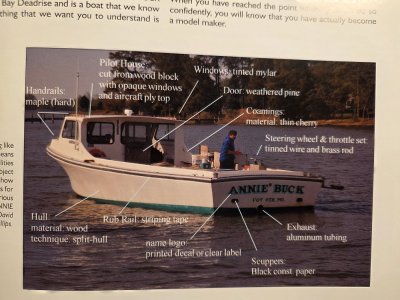
Hard Maple - Sugar Maple - Rock Maple are all the same wood - It is essentially the North American substitute for Boxwood. It is not as hard and the grain on view can get tricky because the plane of the resaw cut relative to the growth rings makes a difference. It is plenty hard enough.
Black Cherry - the Fruitwood that is most easily obtained.
Pear - an expensive import - fun for small parts - there is not much that it can't do well - I cannot justify the cost-benefit equation result for framing in North America. We have a lot of Callery Pear - ornamental - street planting Pear - excellent - DIY - after a serious wind storm it is probably possible to get tons of logs and branches for free from cities.
Boxwood - in our world this is a very ambiguous name for wood. Buxus sempervirens - real Boxwood - formal garden box - is small logs and near impossible to find. For carving and ship board statues and friezes and knightheads it is the first choice. For major structures - it is too valuable to use for this.
Castelo - what is usually what is meant by Boxwood around here - is not any sort of Buxus - it is a marketing name. The wood shares most every useful characteristic of Buxus. It has also become so popular that the cost is going sky high and is becoming difficult to source. Save it for carving and for miniature scale models.
Yellow Poplar - under used - low cost - easy to obtain in eastern North American - carves like a dream for hulls - for molds to plank ships boats over. -but not a figurehead or a statue. Good for POF framing at larger scales as long as it is then hidden from sight.